

P0456 on 2016-2019 Mazda CX-3: EVAP Small Leak Causes and Fixes
For a 2016-2019 Mazda CX-3 with the 2.0L Skyactiv-G engine, the P0456 code almost always means the gas cap is loose or has a bad seal. Before buying any parts, tighten the cap until it clicks several times, ensuring it rotates more than 200 degrees as specified by Mazda. If the light returns, a new OEM gas cap (part #KD35-42-250A) is the most likely fix and costs about $30-$60.
- P0456 on your CX-3 is an emissions code for a very small leak and is not a safety concern.
- Always check your gas cap first. Remove it, inspect the seal, and reinstall it, making sure it clicks several times and rotates over 200 degrees. This fixes the problem most of the time, per Mazda's own TSBs.
- If a tight cap doesn't fix it, a new OEM gas cap (Part #KD35-42-250A) is an inexpensive and highly effective next step.
- Do not replace other more expensive parts like the purge valve or charcoal canister without confirming the gas cap is not the issue.
- If the code still returns after a new gas cap, the next most likely culprits are the purge valve (Part #PE01-18-751) or a cracked hose, but a professional smoke test is the best way to find the exact source of the leak.
What's Unique About the 2016-2019 Mazda CX-3
On this generation of Mazda vehicles, the P0456 code is exceptionally common and overwhelmingly caused by a simple gas cap issue. Mazda has issued multiple Technical Service Bulletins (TSBs), with the most current being #01-005-19-3548, which covers the 2016-2019 CX-3. The TSB explicitly states that the 'concern is most likely the result of the customer not getting the fuel cap completely closed after fueling the vehicle.' It further specifies that for a proper seal, the cap must be rotated between 200 and 360 degrees. This makes the diagnosis much more straightforward than on many other vehicles.
Diagnostic Flowchart
Tap your situation to follow the diagnostic path that matches what you're seeing on this vehicle.
Symptoms You May Notice
- Check Engine Light is on
- A faint fuel smell near the rear of the vehicle (rare, but can indicate a leak in the canister or a hose).
- Difficulty refueling (gas pump clicks off repeatedly), which can point to a clogged charcoal canister or vent valve.
- Immediately replacing the purge valve or other EVAP components without first checking, cleaning, and properly tightening the gas cap.
- Replacing the gas cap with a cheap aftermarket version that doesn't seal correctly, leading to the code returning.
- Giving up after a smoke test shows no leaks. Some forum users report that even after a negative smoke test, the issue was eventually traced to a component like a purge valve or a very small hose crack that was missed.
Most Likely Causes
- Loose or Faulty Gas Cap 🔴 High Probability → Shop Fuel Tank Cap Mazda TSB #01-005-19-3548 states this is the most likely cause. The design requires a turn of over 200 degrees to seal, which users may not complete. The cap's rubber O-ring can also wear out, crack, or harden over time, preventing a proper seal.
How to confirm: Remove the gas cap, inspect the rubber O-ring for cracks or stiffness, and check the fuel filler neck for debris. Reinstall it, ensuring you turn it until it clicks multiple times. Clear the code and drive for a few days to see if it returns. Some owners report temporarily fixing the seal with a light coat of Vaseline on the gasket, confirming the cap is the issue.
Typical fix: Replace the gas cap with a new OEM part (KD35-42-250A). Aftermarket caps are often reported to cause sealing issues.
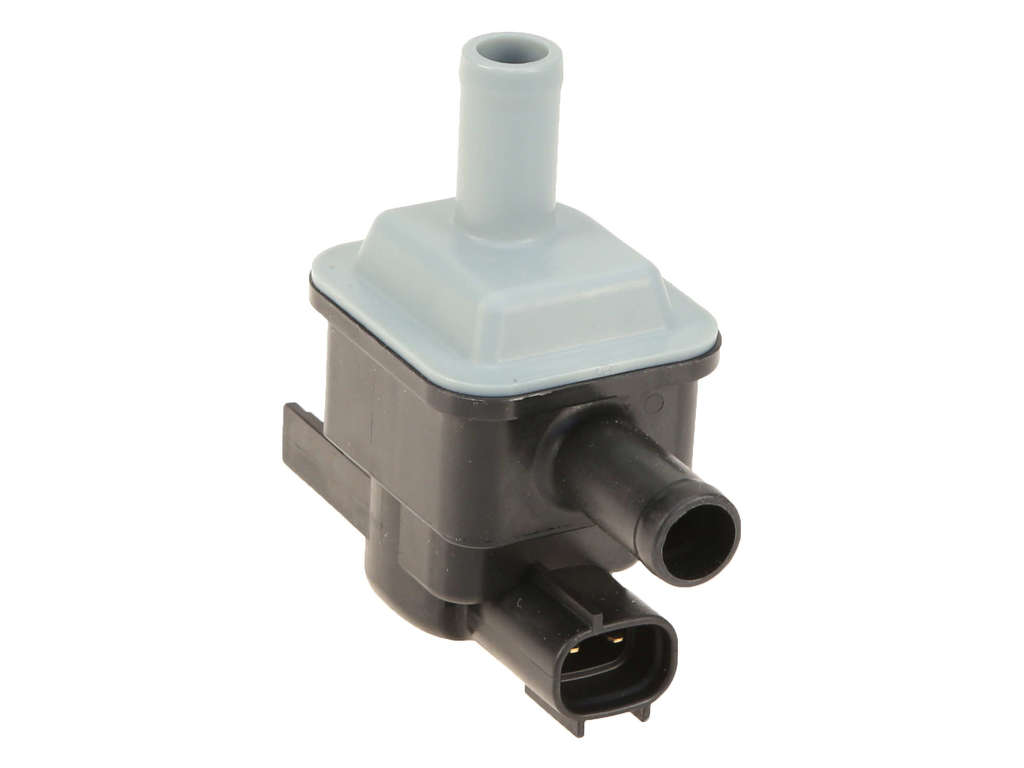
Est. part cost: $30-$60 - Faulty Vapor Canister Purge Valve 🟡 Medium Probability → Shop Vapor Canister The purge valve (or purge solenoid) is a common failure point in many modern EVAP systems. It can get stuck partially open due to carbon buildup or wear, creating a small, persistent leak.
How to confirm: The valve is normally closed. With the engine off, remove the valve (located in the engine bay) and try to blow through it. If air passes through, it is stuck open and needs replacement. A mechanic can also command it open and closed with a bidirectional scan tool to test its function.
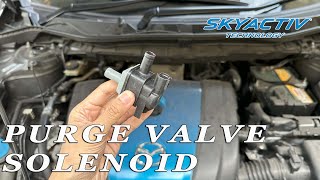
Typical fix: Replace the purge valve solenoid. 🎬 Watch: See how to replace the purge valve solenoid yourself. It is typically an easy-to-access part in the engine bay.
Est. part cost: $70-$120 - Cracked or Disconnected EVAP Hose ⚪ Low Probability Rubber hoses can become brittle and crack due to heat and age, though it's less common than component failure on newer vehicles. Hoses near the fuel tank are also susceptible to damage.
How to confirm: Visually inspect all accessible EVAP lines between the engine bay, charcoal canister, and fuel tank for obvious cracks, disconnections, or rot. A professional smoke test is the most effective way to find a small hose leak.
Typical fix: Replace the damaged section of the hose. One owner on a Mazda forum reported a final fix for a persistent P0456 was a cracked EVAP hose near the fuel tank, which cost $620 at a dealership to replace.
Est. part cost: $10-$50 for a hose section, but labor can be significant if the location is hard to access.
Rare But Worth Checking
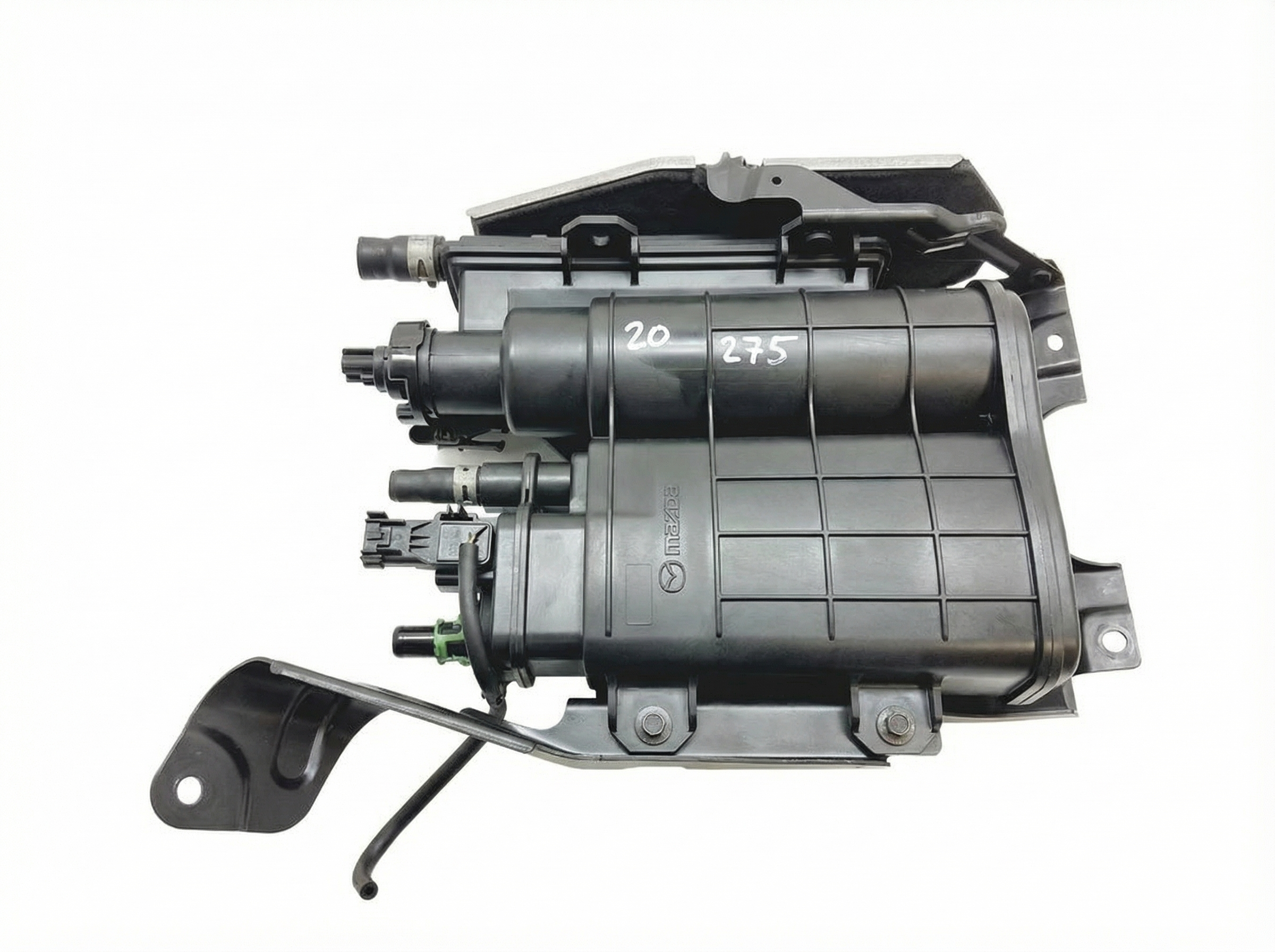
- Leaking Charcoal Canister: → Shop Vapor Canister The plastic housing of the charcoal canister can develop hairline cracks over time, creating a leak that is difficult to see without a smoke test. For the FWD CX-3, the part number is PEES-13-96Z; the AWD model uses a different part. Overfilling the fuel tank can also saturate the canister with liquid fuel, damaging it.
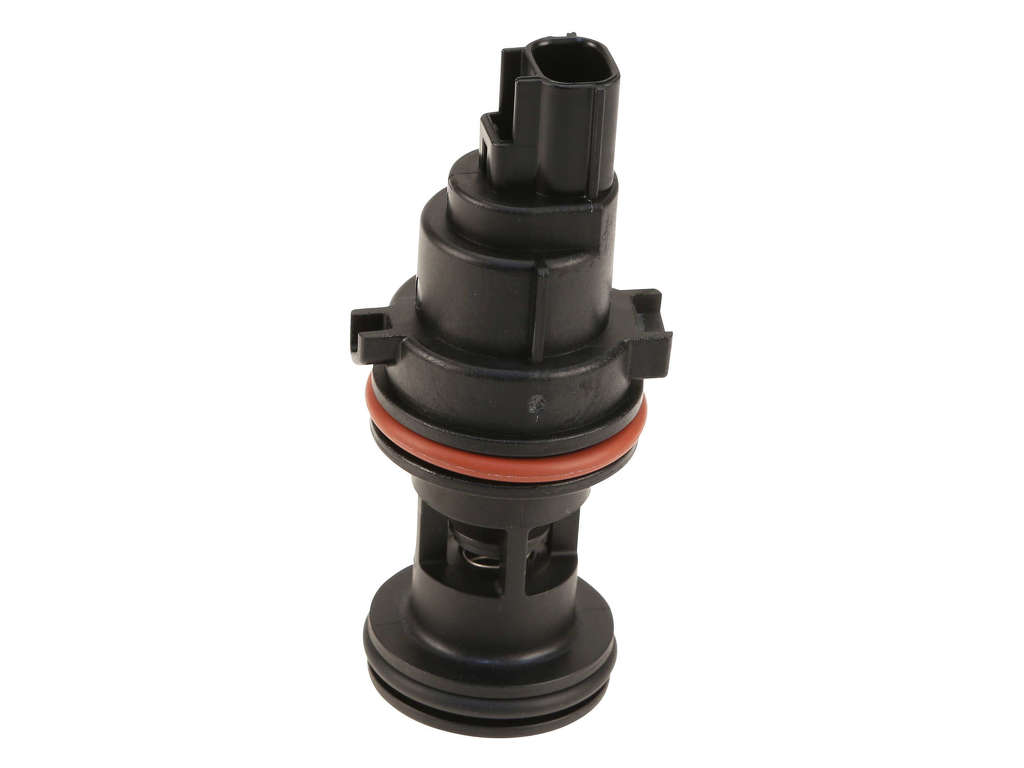
- Faulty Canister Vent Valve/Solenoid: → Shop Vapor Canister Similar to the purge valve, the vent valve (located near the charcoal canister) can fail, but it is generally less common. It's normally open and closes during the EVAP self-test. If it fails to close completely, it will cause a leak.
- Leaking or Rusted Fuel Filler Neck: → Shop Fuel Filler Neck In regions that use road salt, the metal fuel filler neck can corrode and develop pinhole leaks, which are often only found with a smoke test. This has been documented on related platforms like the CX-9.
Diagnosis Steps
- Read the code with an OBD-II scanner to confirm P0456 is the only code present.
- Inspect the gas cap. Remove it, check the seal for damage, and reinstall it, tightening until it clicks at least three times. Per TSB 01-005-19-3548, ensure it has been rotated more than 200 degrees.
- Clear the code using the scanner. 🎬 Watch: A helpful explanation of how the P0456 code is fixed.
- Drive the vehicle for several days. The EVAP system self-test runs under specific conditions (e.g., fuel level between 15-85%, specific ambient temperatures), so it may take a few trips for the light to return if the issue is not resolved.
- If the code returns, replace the gas cap with a new, OEM-spec part (KD35-42-250A). This is an inexpensive and very high-probability fix.
- If the code still persists, perform a visual inspection of all visible EVAP hoses in the engine bay for cracks or disconnections.
- Test the purge valve solenoid in the engine bay. Disconnect it and attempt to blow through it; if air passes, it's stuck open and faulty.
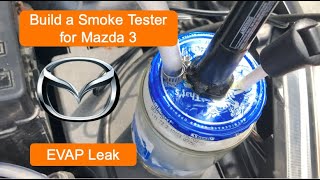
- If the leak source is still not found, a professional smoke test is the most definitive diagnostic step. This involves injecting vaporized smoke into the EVAP system (usually through the service port) to visually identify where it escapes. 🎬 Watch: How to build a DIY smoke tester for EVAP leaks.
Parts You'll Likely Need
- Fuel Cap
(OEM #KD35-42-250A)— This is the most common cause of P0456 on this vehicle, as confirmed by Mazda TSB 01-005-19-3548. The seal wears out or the cap is not tightened properly.
Trusted brands: Mazda (OEM)
OEM price range: $30-$60
Aftermarket price range: $15-$30 - Vapor Canister Purge Valve
(OEM #PE01-18-751)— This is the second most likely component to fail. It can get stuck partially open, causing a persistent small leak that the system detects. It's a shared part across many Mazda models from this era.
Trusted brands: Mazda (OEM), Bosch, Denso
OEM price range: $70-$120
Aftermarket price range: $40-$80
Technical Service Bulletins (TSBs) & Recalls
- 01-005-19-3548: CHECK ENGINE LIGHT ON WITH DTC P0456. States that P0456 is most likely caused by an improperly closed fuel cap and applies to the 2016-2019 CX-3, among other models.
Platform-Specific Known Issues
- Mazda Technical Service Bulletin #01-005-19-3548 explicitly states that for many models, including the 2016-2019 CX-3, DTC P0456 is most likely the result of the fuel cap not being completely closed after fueling. The TSB clarifies that a rotation of 200-360 degrees is required for a proper seal, and that a repair for this specific cause is not covered under warranty.
Mechanic-Grade Diagnostic Values
- Purge Solenoid Valve Airflow (unpowered) — expected: No airflow. Failure: If air can be blown through the valve when no voltage is applied, it is stuck open and faulty.
- Purge Solenoid Valve Airflow (powered) — expected: Airflow detected. Failure: If no air flows when battery voltage is applied to the terminals, the solenoid is stuck closed or has failed electrically.
- Purge Solenoid Valve Coil Resistance — expected: 15 - 30 Ohms (generic value). Failure: A reading far outside this range indicates an internal electrical failure in the solenoid.
Scan Tool Commands That Help
- Mazda M-MDS / Advanced Bidirectional Scanner: EVAP System Leak Test (Smoke Test Mode) — Used in conjunction with a physical smoke machine. The scanner commands the vent valve to close, sealing the system to allow the smoke machine to build pressure and reveal external leaks.
- Advanced Bidirectional Scanner: Purge Valve Activation / Duty Cycle — To test if the purge valve is responding to the PCM's command. A technician can command the valve open and listen for a click or monitor fuel tank pressure data to see if vacuum is being drawn.
- Advanced Bidirectional Scanner: Vent Valve Activation — To test if the vent valve, which is normally open, will close on command. This is critical for the system's self-test. A failure to close will cause a leak code.
Wiring & Ground Locations
- Purge Solenoid Connector — In the engine bay, attached to the intake manifold area.. This connector provides power and ground to the purge solenoid. A loose or corroded connection can prevent the valve from operating correctly, mimicking a failed valve and potentially setting circuit codes (P0443, P0444, P0445) or contributing to a leak code if the valve is not commanded properly.
- Vent Valve / LDP Connector — Near the charcoal canister at the rear of the vehicle, under a protective cover.. Provides power to the vent valve (or leak detection pump on some systems). A bad connection here will prevent the system from sealing during its self-test, causing a guaranteed leak code.
- Engine Room Ground Points — Various points on the chassis and engine block within the engine bay.. The purge solenoid and other engine-bay sensors rely on a solid ground connection to function. A corroded or loose ground point can cause intermittent and difficult-to-diagnose electrical issues with EVAP components.
Real Owner Repair Stories
- Reddit r/askcarguys (2012 Mazda3 (similar Skyactiv platform)) — Persistent P0456 code returning after multiple drive cycles.
❌ Tried (didn't work) Replacing the gas cap with a new OEM part., Lubricating the gas cap seal with Vaseline (provided a temporary fix)., Having a professional smoke test performed, which showed no leaks.
✅ What actually fixed it The thread is unresolved, but the top-voted, logical next step suggested by another user was to test the purge valve to see if it was stuck open, as this would not be found by a standard smoke test. - YouTube - Cars and Service (2009 Mazda 6 (related Mazda platform)) — P0456 small leak code.
❌ Tried (didn't work) The owner was told the gas cap was new, leading the mechanic to initially suspect other components.
✅ What actually fixed it A smoke test revealed a clear leak from the gas cap area. Upon inspection, it was discovered that while the gas cap was new, it was the incorrect part for the vehicle and did not seal properly. Replacing it with the correct OEM cap fixed the issue.
"I Checked Everything" — The Actual Cause
- In a case involving a 2012 Mazda3, a professional smoke test came back negative for any leaks. The owner had already replaced the OEM gas cap. The persistent P0456 code pointed towards a component that would not show a leak during a static smoke test, with the most likely culprit being a faulty purge valve that was intermittently sticking open while driving.
OEM Part Supersession History
KD35-42-250→KD35-42-250A— Standard part revision/update by the manufacturer.
Heads up: KD35-42-250A is the correct and current part for a wide range of Mazda vehicles from 2013-2024, including the CX-3. Using the older part or an aftermarket equivalent is a common cause of failure.
Model Year Variations Within This Range
- 2016-2017: Mazda officially discontinued the EVAP system leak inspection function within the M-MDS (dealer scan tool) for these model years. The official workshop procedure was changed to rely solely on an external EVAP leak tester (smoke machine) for diagnosis.
- 2016-2019: The EVAP charcoal canister has a different part number for Front-Wheel Drive (FWD) vs. All-Wheel Drive (AWD) models. The FWD version is part number PEES-13-96Z.
Helpful Videos

Used OEM Parts in Stock
New Aftermarket Parts Available


The information in this article is provided for general reference and educational purposes only. Vehicle specifications, procedures, and part compatibility can vary by production date, trim level, and region. Always consult your vehicle's factory service manual and verify part numbers before purchasing or performing repairs. Safety-critical components such as airbags, seat belts, and braking systems should be installed by a qualified professional.
- Mazda CX-3:
- 🧭 Diagnostic Flowchart
- 🎬 Helpful Videos
- 🛍️ Shop This Part
- What's Unique About the 2016-2019 Mazda CX-3
- Symptoms You May Notice
- Most Likely Causes
- Rare But Worth Checking
- Diagnosis Steps
- Parts You'll Likely Need
- Technical Service Bulletins (TSBs) & Recalls
- Platform-Specific Known Issues
- Mechanic-Grade Diagnostic Values
- Scan Tool Commands That Help
- Wiring & Ground Locations
- Real Owner Repair Stories
- "I Checked Everything" — The Actual Cause
- OEM Part Supersession History
- Model Year Variations Within This Range
- 🎟️ Get 5% Off