

P0456 on 2014-2019 Mazda CX-5: EVAP Small Leak Causes and Fixes
For a 2014-2019 Mazda CX-5, code P0456 is almost always caused by a loose or faulty gas cap, a fact highlighted in Mazda Technical Service Bulletins (TSBs). Before buying any parts, tighten the cap until it clicks multiple times and clean the filler neck sealing surface. If the code returns, an OEM replacement cap (Part No. BNYF-42-250) costs about $50-$65 and is the next logical step.
- P0456 on a CX-5 means a very small emissions leak has been detected.
- Start with the cheapest and most likely fix: ensure your gas cap is tight (clicks multiple times). This solves the problem for a majority of owners.
- If tightening the cap doesn't work, replace it with a genuine Mazda OEM cap before attempting more expensive repairs.
- If the code persists after replacing the cap, the next most likely cause is a faulty EVAP purge solenoid valve located in the engine bay.
- The car is safe to drive with this code, but you will not pass an emissions inspection until it is resolved.
What's Unique About the 2014-2019 Mazda CX-5

On the Mazda CX-5, this code is so frequently caused by an improperly tightened gas cap that Mazda has issued multiple Technical Service Bulletins (TSBs) about it. TSB 01-005-19-3548 explicitly states the issue is 'most likely the result of the customer not getting the fuel cap completely closed'. The bulletin advises technicians that if a smoke test reveals no other leaks, the root cause is improper cap closure, and the customer should be educated on turning it until at least two clicks are heard.
Diagnostic Flowchart

Tap your situation to follow the diagnostic path that matches what you're seeing on this vehicle.
Generation note: The 2014-2019 year range covers the first generation (KE, models up to 2016.5) and the second generation (KF, 2017 and newer). While the body style and interior were significantly updated in 2017, the EVAP system's core function and the common causes for code P0456 are consistent across both generations, as confirmed by TSBs that cover both.
Symptoms You May Notice
- Check Engine Light is on
- A faint fuel smell near the rear of the vehicle (less common for a very small leak, but possible)
- Rough or erratic idle (less common, but can be a symptom of a faulty purge valve)
- Immediately replacing the purge valve or other expensive components without first checking, tightening, and if necessary, replacing the gas cap with an OEM part.
- Paying for an expensive smoke test before replacing the gas cap. One owner reported a shop charged $170 for a smoke test that concluded the $13 gas cap was the issue.
Most Likely Causes

- Loose or Faulty Gas Cap 🔴 High Probability → Shop Fuel Tank Cap Mazda TSBs #01-005-19-3548 and #01-008-15-3045 directly state this is the most likely cause, often from not tightening it enough after refueling. Aftermarket caps are also a frequent cause of recurring codes, as they often use inferior seal materials that cannot hold the required pressure compared to the OEM's fluoroelastomer seal.
How to confirm: Remove the gas cap. Clean the filler neck's metal sealing surface with a cloth or light abrasive pad to remove any grit or corrosion. Reinstall the OEM cap, ensuring you turn it clockwise until it clicks at least two or three times. Clear the code. If it returns after a few days, inspect the cap's rubber O-ring for cracks or stiffness. If the seal is damaged or you are using an aftermarket cap, replace it with an OEM part.
Typical fix: Tighten the existing cap correctly or replace it with a new OEM fuel cap after cleaning the filler neck.
Est. part cost: $50-$65 - Faulty EVAP Purge Solenoid Valve 🟡 Medium Probability → Shop Vapor Canister This valve is an electromechanical part in the engine bay that cycles frequently and can wear out, getting stuck open and creating a small, constant leak. Forum users often report this as the true culprit after replacing the gas cap didn't provide a permanent fix.
How to confirm: The purge valve is located in the engine bay, connected to the intake manifold. It is normally closed when the engine is off. You can test it by removing it and trying to blow air through it; if air passes, it's stuck open and faulty. A mechanic can also command it open and closed with a scan tool to check its function.
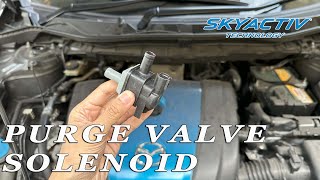
Typical fix: Replace the purge solenoid valve. 🎬 Watch: See how to replace the purge valve solenoid yourself.
Est. part cost: $70-$120 - Cracked or Disconnected EVAP Hoses ⚪ Low Probability Rubber hoses, especially in areas with extreme temperatures or near the engine, can become brittle and develop small cracks over time.
How to confirm: A visual inspection may reveal obvious cracks or loose connections. The most reliable method is a smoke test, where a mechanic injects pressurized smoke into the EVAP system and looks for where it escapes. This is the definitive test if the gas cap and purge valve are known to be good.
Typical fix: Replace the damaged section of hose.
Est. part cost: $10-$50 - Faulty Canister Vent Valve/Solenoid ⚪ Low Probability → Shop Vapor Canister This valve, located near the charcoal canister at the rear of the vehicle, can get stuck or fail to seal, preventing the system from holding pressure during its self-test. One owner on a forum reported this was the ultimate fix for a persistent P0456 with a fuel smell near the back of the car.
How to confirm: This valve is normally open and closes when commanded by the PCM for a system test. It can be tested with a capable scan tool to see if it actuates correctly. A smoke test will also reveal if it is failing to seal.
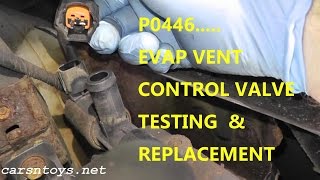
Typical fix: Replace the canister vent valve. 🎬 Watch: How to test and replace the canister vent valve.
Est. part cost: $80-$150
Rare But Worth Checking
- Cracked EVAP Charcoal Canister: → Shop Vapor Canister The canister itself can develop a hairline crack. This is often caused by physical damage or repeatedly overfilling the fuel tank ('topping off'), which can saturate the charcoal with liquid fuel and damage the canister housing.
- Leaking Fuel Tank or Filler Neck: → Shop Fuel Tank While rare, a small rust perforation or a crack in the fuel filler neck can cause a P0456 code. This would typically be found during a professional smoke test.
Diagnosis Steps

- Verify the Check Engine Light is on and code P0456 is present using an OBD-II scanner.
- Inspect the fuel cap area. Remove the cap and thoroughly clean the metal lip of the filler neck with a cloth or light abrasive pad to remove any debris or corrosion.
- Reinstall the genuine Mazda fuel cap, turning it until you hear at least two or three clicks to ensure it's fully torqued.
- Clear the code with the scanner. Drive the vehicle for several days to allow the EVAP monitor to run its self-test. The test often runs after the car has sat overnight and the fuel level is between 15-85%. It may take 2-5 days for the light to return if the problem persists.
- If the code returns, replace the gas cap with a new, genuine Mazda part (BNYF-42-250). Aftermarket caps are a common cause of failure. Clear the code and drive again.
- If the code still returns, perform a visual inspection of all accessible EVAP hoses in the engine bay and under the vehicle for obvious cracks, damage, or loose connections.
- Test the purge solenoid valve in the engine bay. With the engine off, remove the valve and try to blow through it. If air passes, it is stuck open and needs to be replaced.
- If the leak source is still not found, the most effective next step is to have a professional smoke test performed. This will fill the system with visible smoke, making even the smallest leak easy to pinpoint.
Parts You'll Likely Need
- Fuel Filler Cap
(OEM #BNYF-42-250 (replaces bn8b42250, bn8f42250, and others))— This is the most common cause of P0456 on this vehicle, as confirmed by Mazda TSBs. Using an OEM cap is critical as its shaped fluoroelastomer seal is superior to the simple rubber O-rings found on many aftermarket caps, which often fail to seal correctly.
Trusted brands: Mazda (OEM)
OEM price range: $50-$65
Aftermarket price range: $15-$30 - Vapor Canister Purge Solenoid Valve
(OEM #PE01-18-751)— This is the second most likely component to fail. It's an electromechanical part that wears out over time and can get stuck open, causing a persistent small leak. A failure can sometimes also lead to a rough idle.
Trusted brands: Mazda (OEM), Bosch, Denso
OEM price range: $90-$120
Aftermarket price range: $40-$80
Related Codes That Often Appear With This One
- P0455 — This code indicates a large EVAP leak. Seeing both P0455 and P0456 can sometimes point to an intermittent or borderline leak, such as a very loose gas cap or a failing valve that is sometimes stuck partially open.
- P0457 — This code specifically means 'EVAP System Leak Detected (Fuel Cap Loose/Off)'. A faulty cap can sometimes trigger P0456 or P0457 depending on the exact leak size detected by the PCM.
- P0442 — This code indicates a 'medium' leak, between the small leak of P0456 and the large leak of P0455. Seeing it with P0456 can indicate a leak that is on the borderline between detection thresholds.
Technical Service Bulletins (TSBs) & Recalls
- 01-005-19-3548: States the most likely cause for P0456 is the customer not closing the fuel cap completely. Covers 2013-2019 CX-5 models.
- 01-008-15-3045: An earlier, superseded bulletin with the same conclusion, pointing to the fuel cap as the primary cause for P0456. Covers 2013-2016 CX-5 models.
Platform-Specific Known Issues
- Mazda Technical Service Bulletin #01-005-19-3548 (for 2013-2019 CX-5 and other models) identifies that P0456 is most likely caused by the fuel cap not being completely closed by the customer after refueling. The procedure advises educating the customer on proper tightening (2+ clicks) if no other leak is found.
- Mazda Technical Service Bulletin #01-008-15-3045 (for 2013-2016 CX-5) is an earlier, superseded bulletin with the same conclusion, pointing to the fuel cap as the primary cause for P0456.
Mechanic-Grade Diagnostic Values
- EVAP Canister Purge Valve (PE01-18-751) resistance — expected: 30 - 38 ohms (with engine cool). Failure: A reading outside this range, particularly an open circuit (infinite resistance), indicates a failed coil.
- EVAP Canister Vent Solenoid resistance — expected: 48 - 65 ohms. Failure: A reading outside this range indicates a faulty solenoid coil.
- Fuel Tank Pressure (FTP) Sensor voltage at atmospheric pressure — expected: Approximately 1.5V (Key On, Engine Off, gas cap removed). Failure: A voltage stuck high (near 5V) or low (near 0V) suggests a faulty sensor or wiring issue.
Scan Tool Commands That Help
- Mazda M-MDS (IDS): EVAP System Leak Test (KOEO) — This was the original dealer-level software command to initiate a system leak test. However, Mazda discontinued this automated test in IDS update version 100 for 2013-2016 CX-5 models, favoring the use of an external EVAP leak tester (smoke machine).
- Autel or similar bidirectional scanner: Active Test: EVAP Canister Vent Valve — This command allows a technician to manually toggle the vent valve between 'On' (closed) and 'Off' (open). This is used to verify the valve is not stuck and to seal the system for a smoke test. A clicking sound should be audible from the rear of the vehicle when the command is sent.
Wiring & Ground Locations
- Purge Solenoid Valve Connector — In the engine bay, typically mounted on or near the intake manifold.. This 2-wire connector provides power and PCM ground signal to the valve. One wire should have battery voltage with the key on, while the other is pulsed to ground by the PCM to open the valve. A damaged wire (e.g., chewed by rodents) or corroded pin can cause a P0443 (Purge Control Circuit) code but could also prevent the valve from operating correctly, contributing to a leak code.
- Canister Vent Valve Connector — At the rear of the vehicle, on or near the charcoal canister, which is typically located above the rear subframe near the fuel tank.. This 2-wire connector powers the vent valve to close it during the EVAP self-test. A poor connection here will prevent the valve from closing, creating a large leak and likely triggering codes P0449 or P0455, but it can be a factor in intermittent P0456 codes if the connection is marginal.
Real Owner Repair Stories
- Reddit user 'start_and_finish' on r/CX5 (2014 Mazda CX-5) — Check engine light with codes P0442 and P0456, and a smell of gas towards the back of the car.
❌ Tried (didn't work) Applying silicone to the original gas cap., Replacing the gas cap with a new one.
✅ What actually fixed it The owner reported it 'ended up being an electronic valve in the back that had failed.' This was repaired by the dealership under warranty and the problem was resolved. This strongly indicates the canister vent valve was the culprit.
"I Checked Everything" — The Actual Cause
- A recurring pattern for P0456 is a problem with the fuel filler neck's sealing surface. A smoke test may initially appear clean or inconclusive if the cap is tight, but micro-corrosion or rust on the metal lip where the cap's gasket sits can create a tiny, intermittent leak. The fix is to thoroughly clean the filler neck rim with a mild abrasive pad before installing a new OEM gas cap.
- In one documented case, after replacing the purge valve and gas cap, the final fix for a persistent P0456 was a rusted fuel filler neck that was only discovered after a careful smoke test.
OEM Part Supersession History
bn8b42250, bn8f42250, bn8f42250a, bn8f42250b, bn8f42250c, bn8f42250d, bn8f42250e, bn8f42250f→BNYF-42-250— Standard part evolution and design updates by Mazda.
Model Year Variations Within This Range
- 2013-2016 (KE) vs 2017-2019 (KF): While the 2017 model year marked a significant redesign (Gen 2 / KF) with updated exterior styling, a more premium interior, and the introduction of G-Vectoring Control, there is no evidence of major changes to the fundamental design or common failure points of the EVAP system related to code P0456. The primary causes (gas cap, purge valve) remain consistent across both generations within this year range.
Helpful Videos
Used OEM Parts in Stock
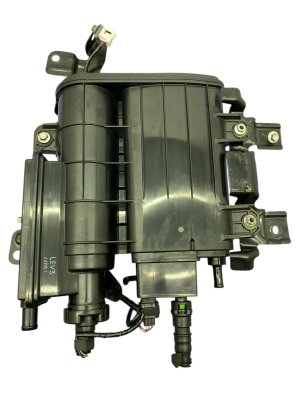
New Aftermarket Parts Available

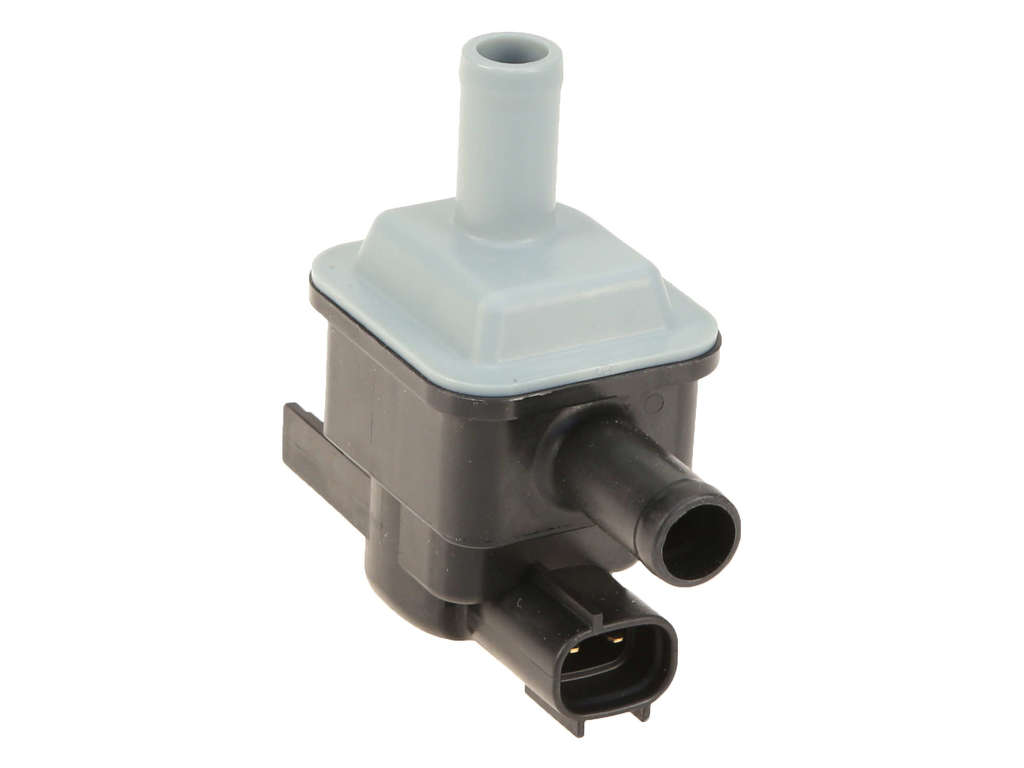
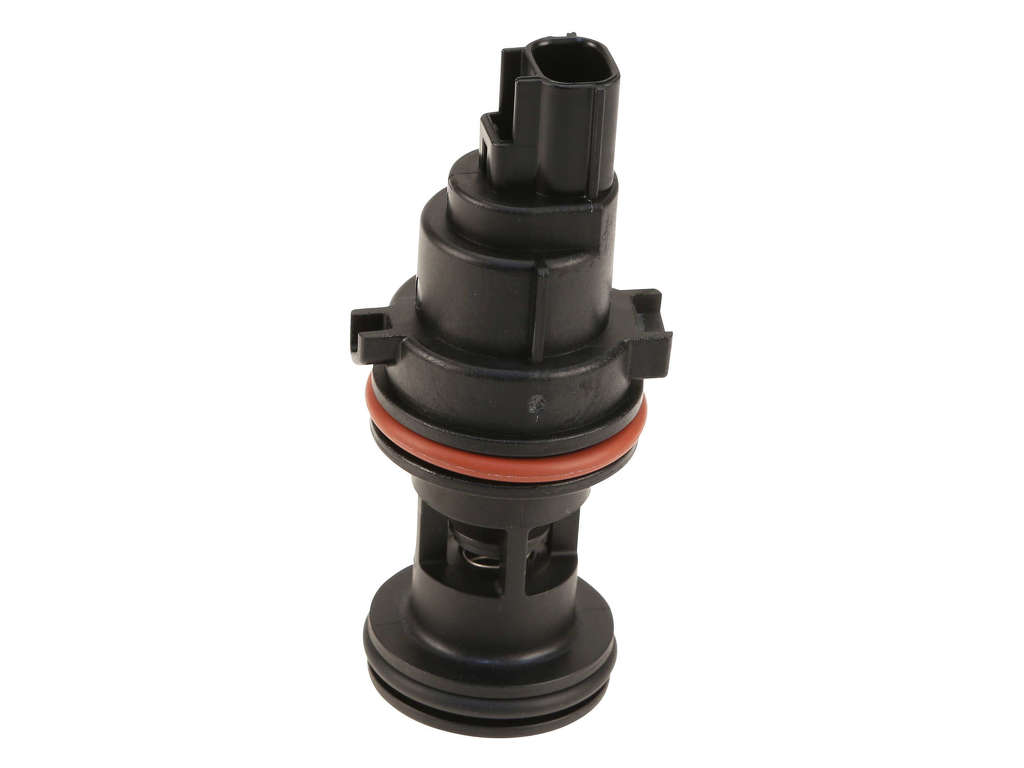

The information in this article is provided for general reference and educational purposes only. Vehicle specifications, procedures, and part compatibility can vary by production date, trim level, and region. Always consult your vehicle's factory service manual and verify part numbers before purchasing or performing repairs. Safety-critical components such as airbags, seat belts, and braking systems should be installed by a qualified professional.
- Mazda CX-5:
- 🧭 Diagnostic Flowchart
- 🎬 Helpful Videos
- 🛍️ Shop This Part
- What's Unique About the 2014-2019 Mazda CX-5
- Symptoms You May Notice
- Most Likely Causes
- Rare But Worth Checking
- Diagnosis Steps
- Parts You'll Likely Need
- Related Codes That Often Appear With This One
- Technical Service Bulletins (TSBs) & Recalls
- Platform-Specific Known Issues
- Mechanic-Grade Diagnostic Values
- Scan Tool Commands That Help
- Wiring & Ground Locations
- Real Owner Repair Stories
- "I Checked Everything" — The Actual Cause
- OEM Part Supersession History
- Model Year Variations Within This Range
- 🎟️ Get 5% Off