

P0456 on 2008-2014 Mercedes-Benz C-Class: EVAP Small Leak Causes and Fixes
On the W204 C-Class, code P0456 is most often caused by a cracked fuel pump or fuel filter housing seal located under the rear seat, not the gas cap. A smoke test is the best diagnostic, and replacing the cracked housing seal (around $30-$60 in parts) is the likely fix. Other common causes include a faulty purge valve in the engine bay.
- Don't just replace the gas cap; it's probably not the problem on your C-Class.
- The most likely culprit is a cracked plastic cover for the fuel pump or filter, located under the rear seat.
- A professional smoke test is the fastest way to accurately find the leak, saving you from replacing unnecessary parts.
- You can continue to drive the car with this code, but you will fail an emissions test.
- If you experience hard starts after refueling, suspect the EVAP purge valve in the engine bay.
What's Unique About the 2008-2014 Mercedes-Benz C-Class
While a loose gas cap is the most common cause for P0456 on many vehicles, the 2008-2014 (W204) C-Class has a well-documented tendency for the plastic covers of the fuel pump and fuel filter/sending unit to develop hairline cracks. These components are located under the rear seat base. This issue is frequently the true source of the leak and often goes undiagnosed by those who only check the more common culprits. A self-identified Mercedes-Benz technician on Reddit confirms that the gas cap is rarely the culprit on these models. A former dealer tech on MBWorld.org stated that 95% of the time, the issue is a fuel sending unit or charcoal canister.
Symptoms You May Notice
- Check Engine Light is on.
- No noticeable change in driving performance.
- A faint fuel smell may be present around the rear of the vehicle, particularly after parking or filling the tank.
- In rare cases associated with a faulty purge valve, difficulty starting the engine immediately after refueling.
- A strong gas odor may also be detectable inside the car cabin, as noted in NHTSA ODI #11557044.
- Replacing the gas cap is the most common misdiagnosis. Many owners replace it, but the P0456 code returns because the actual leak is elsewhere, often at the fuel pump cover under the rear seat.
Most Likely Causes
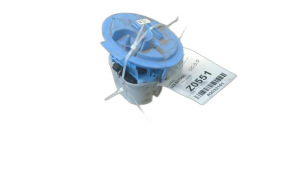
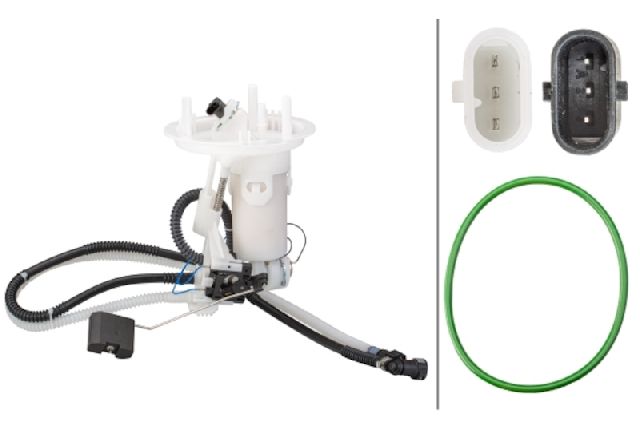
- Cracked Fuel Pump or Fuel Filter/Sending Unit Cover Seal 🔴 High Probability → Shop Fuel Pump The plastic used for the fuel unit covers on top of the fuel tank can become brittle and develop hairline cracks over time, leading to a small vapor leak. This is a widely reported failure on the W204 and related platforms.
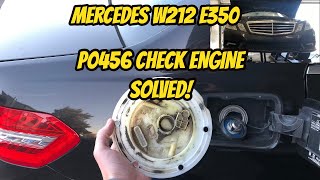
How to confirm: Remove the rear seat cushion to access the two round covers on the fuel tank. Visually inspect the black plastic covers for fine cracks or fuel residue. A smoke test is the definitive method; smoke will be seen escaping from the cracked housing. A YouTube video on a related W212 chassis clearly shows these cracks forming on the plastic housing. 🎬 Watch: How to find and fix these fuel unit cracks. NHTSA ODI #10550307 describes a case where a smoke test successfully located a leak at the fuel sending unit after a P0456 code appeared.
Typical fix: Replace the cracked fuel pump or fuel filter cover. This involves removing the lock ring, disconnecting the lines, and installing a new cover/seal assembly. The part is often referred to as the Fuel Pump Module Cover.
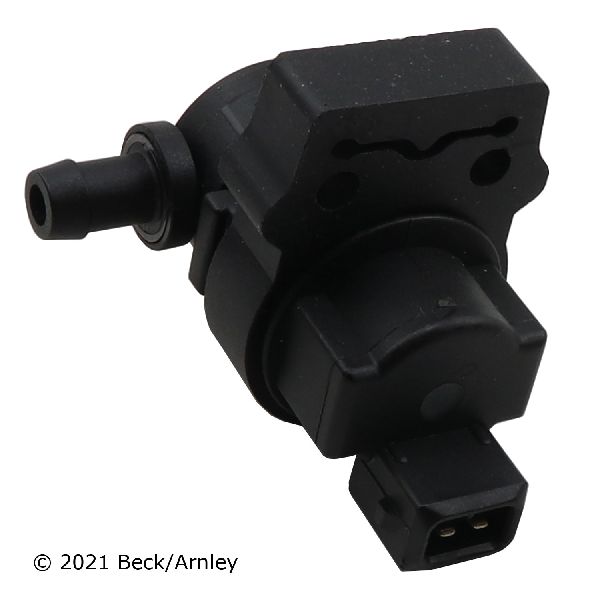
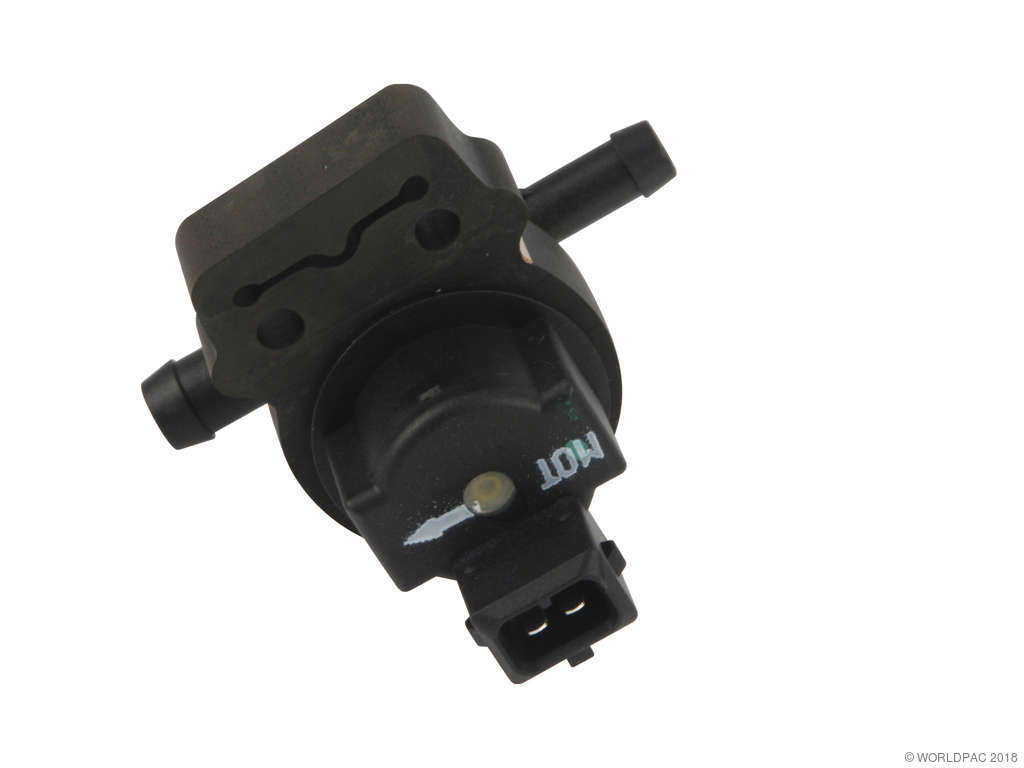
Est. part cost: $30-$60 - Faulty EVAP Purge Valve (Regeneration Valve) 🟡 Medium Probability → Shop Vapor Canister The purge valve is a common failure point on many modern vehicles. It can get stuck open or closed, causing a leak in the EVAP system.
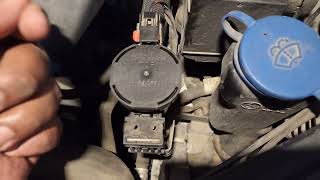
How to confirm: The purge valve is located in the engine bay, under the left side air intake duct. When the engine is off and the valve is unplugged, it should be closed. Try to blow through it; if air passes, the valve is stuck open and faulty. A failing valve can sometimes cause a loud ticking sound audible from the driver's seat or difficulty starting after getting gas.
Typical fix: Replace the purge valve. It is typically a straightforward replacement involving disconnecting electrical and hose connectors. 🎬 See this step-by-step purge valve replacement walkthrough.
Est. part cost: $80-$120 - Cracked or Disconnected EVAP Hoses 🟡 Medium Probability Rubber hoses become brittle with age and can crack, especially at connection points. This is common for lines connected to the charcoal canister in the rear wheel well.
How to confirm: Perform a thorough visual inspection of all EVAP lines from the engine bay to the charcoal canister and fuel tank. A smoke test will quickly reveal leaks from any cracked or disconnected hoses.
Typical fix: Replace the damaged section of hose. Ensure you use fuel-vapor-rated hose.
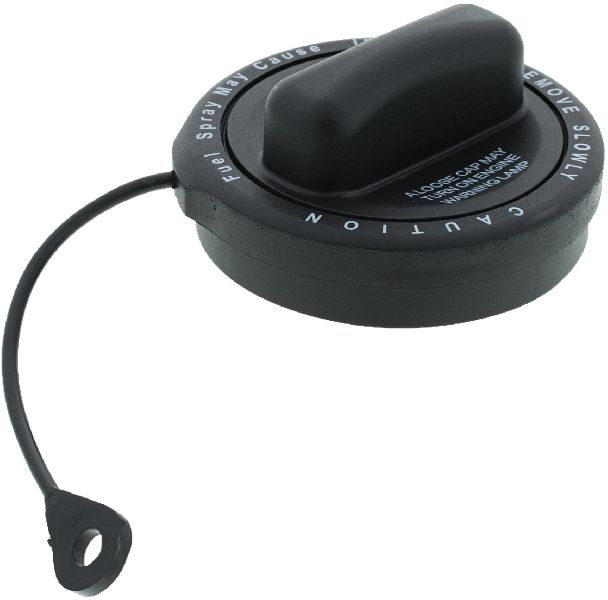
Est. part cost: $10-$40 - Loose or Faulty Gas Cap ⚪ Low Probability → Shop Fuel Tank Cap
How to confirm: First, ensure the cap is tightened until it clicks. Inspect the rubber O-ring seal on the cap for cracks, dirt, or damage. While this is a common fix for many cars, it is less often the root cause on this specific Mercedes model, a fact repeated by experienced technicians and owners in forums.
Typical fix: Clean the cap seal and filler neck opening. If the seal is damaged, replace the gas cap with an OEM or high-quality aftermarket part. Many users report that aftermarket caps do not seal as well as OEM.
Est. part cost: $20-$50
Rare But Worth Checking
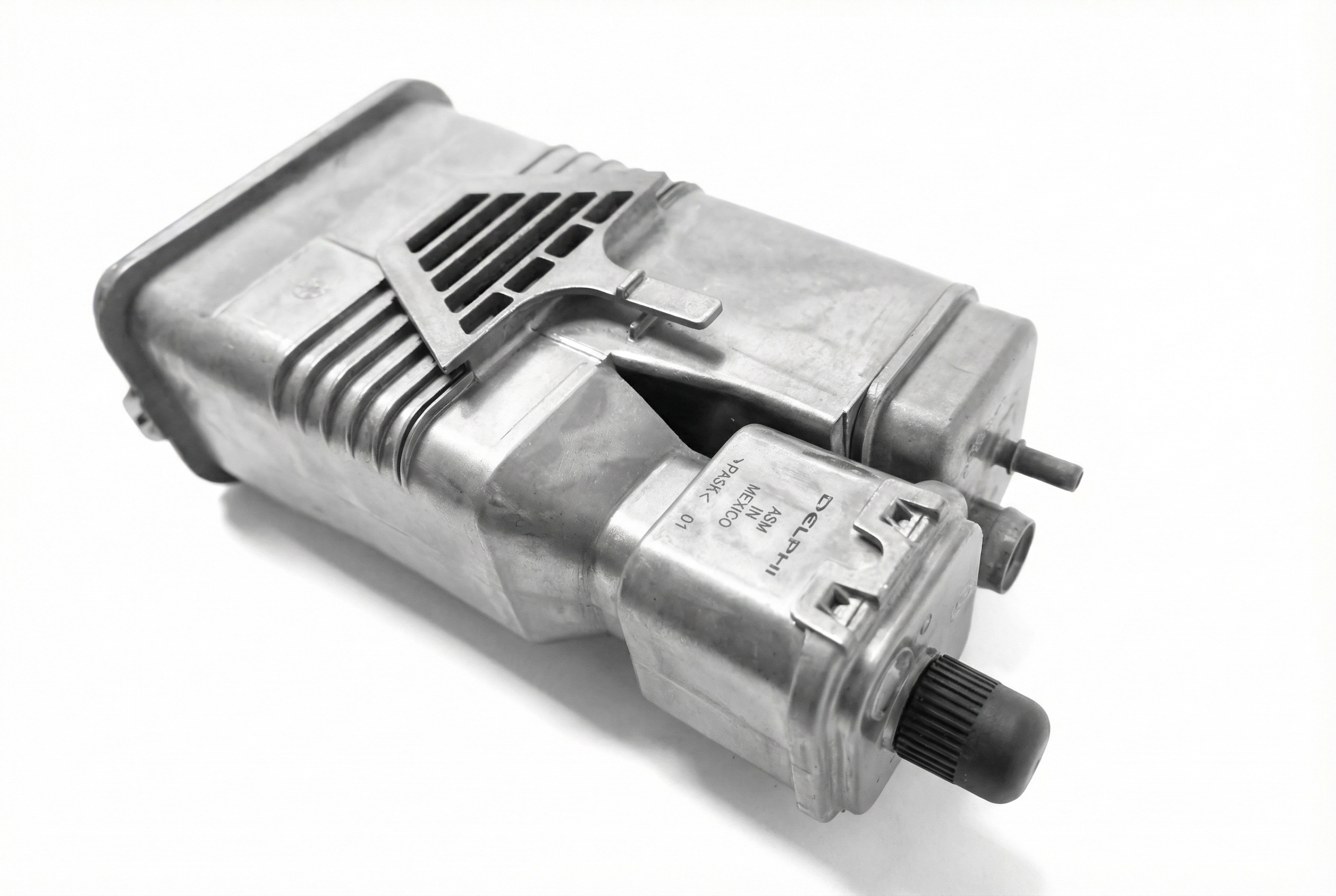
- Leaking Charcoal Canister: → Shop Vapor Canister The canister itself, located in the rear passenger-side wheel well, can develop a crack. This is usually found with a smoke test after other common causes are ruled out.
- Cracked Fuel Filler Neck Assembly: → Shop Fuel Filler Neck In rare cases, the complex plastic assembly of the fuel filler neck can develop a hard-to-find leak. This may require removing the entire assembly to bench test with a smoke machine to locate.
Diagnosis Steps
- Inspect the Gas Cap: Check that the cap is tight and the seal is not cracked or dirty. Clean the seal and the filler neck. Clear the code and see if it returns after a few drive cycles.
- Visual Inspection: Check all visible EVAP hoses in the engine bay and around the charcoal canister (in the rear wheel well) for obvious cracks or loose connections.
- Inspect Fuel Pump/Filter Covers: This is a critical step for this vehicle. Remove the rear seat bottom. Unscrew the access panels and carefully inspect the top of the fuel pump and sending unit housings for hairline cracks or any signs of fuel residue.
- Perform a Smoke Test: This is the most effective method. Introduce low-pressure smoke into the EVAP service port. A professional scan tool (like XENTRY/DAS) may be needed to command the vent valve closed to properly seal and test the system. 🎬 Watch: A professional smoke test and diagnosis guide.
- Watch for Smoke: Look for smoke escaping from any hoses, the purge valve, the charcoal canister, the gas cap, or, most importantly on this car, the fuel pump/filter covers under the rear seat.
- Test the Purge Valve: If no smoke is found, remove the purge valve in the engine bay. With it disconnected, attempt to blow through it. If air passes, it needs to be replaced.
Parts You'll Likely Need
- Fuel Pump/Filter Sealing Cover
(OEM #2044700438)— This is the most probable cause of a P0456 leak on the W204 platform due to the plastic cracking over time. Note: This part is often specific to vehicles with PZEV emissions (Option Code 917).
Trusted brands: Mercedes-Benz OE, APA/URO Parts
OEM price range: $40-$60
Aftermarket price range: $25-$45 - EVAP Purge Valve
(OEM #A0004708593 / 000-470-85-93)— A common failure point in the EVAP system; it can get stuck open, creating a small leak. A user on MBWorld fixed their P0456 by replacing this part.
Trusted brands: Bosch, Mercedes-Benz OE
OEM price range: $100-$130
Aftermarket price range: $60-$90 - Gas Cap
(OEM #222-470-02-05 (example, verify by VIN))— Though a less likely cause on this model, it's an inexpensive and easy part to replace as a first step if the seal is visibly damaged.
Trusted brands: Mercedes-Benz OE, Blau
OEM price range: $30-$50
Aftermarket price range: $15-$25
Technical Service Bulletins (TSBs) & Recalls
- While no specific TSB for P0456 was identified, Mercedes-Benz has issued recalls for other fuel-system-related leaks on the W204 platform, highlighting the importance of checking VIN for open recalls.
Platform-Specific Known Issues
- The plastic housings for the in-tank fuel pump and fuel filter are known to develop hairline cracks, which is a primary cause for code P0456 on the W204 C-Class.
Mechanic-Grade Diagnostic Values
- EVAP Purge Valve (Y58/1) connector voltage — expected: Approximately 9V with ignition on, engine off. Approximately 12.25V with engine running.. Failure: No voltage or significantly lower voltage suggests a wiring or SAM module issue.
- EVAP Charcoal Canister Shut-Off Valve (Y58/4) solenoid coil resistance — expected: 20 to 30 Ohms. Failure: A reading outside this range indicates a damaged internal winding, requiring valve replacement.
- Fuel Tank Pressure Sensor (B4/3) signal — expected: Voltage should change in response to pressure/vacuum during an EVAP test. Specific values vary, but the sensor should not be static.. Failure: A static or out-of-range voltage reading during a test, when no leak is present, points to a faulty sensor.
Scan Tool Commands That Help
- Mercedes-Benz XENTRY/DAS: EVAP System Leak Test (Major/Minor Leak) — This is the guided, automated test to confirm the presence of a leak. The system commands the vent valve closed and monitors the fuel tank pressure sensor to detect a pressure drop.
- Mercedes-Benz XENTRY/DAS: Actuation of Purge Valve (Y58/1) — To functionally test the purge valve. The technician can command it to open and close while monitoring system pressure or listening for the valve's click to confirm it is not stuck.
- Mercedes-Benz XENTRY/DAS or professional bidirectional scanner: Close Charcoal Canister Shut-Off Valve (Y58/4) — This is a mandatory step before performing a smoke test. The valve must be commanded shut to seal the EVAP system, allowing the smoke to build pressure and reveal leaks.
Wiring & Ground Locations
- Front SAM (Signal Acquisition and Actuation Module) — Under the hood on the driver's side, in a black box next to the brake fluid reservoir.. This module contains fuses critical for the EVAP system. Check Fuse 4, 6, 25, 27, and 34 for issues related to the purge valve, canister valve, and other engine management functions that can affect the EVAP test.
- Rear SAM (Signal Acquisition and Actuation Module) — In the trunk on the passenger side, behind a trim panel.. Contains the fuse for the fuel pump and potentially the charcoal canister shutoff valve. Check fuse 42 in this location.
- Main Body Ground (W10) — In the trunk, near the battery. It's the main ground strap from the battery negative terminal to the chassis.. A poor main ground can cause a host of intermittent and difficult-to-diagnose electronic issues, including faulty sensor readings from the EVAP system. Ensure it is clean and tight.
Real Owner Repair Stories
- YouTube user Leo Lee (2013 Mercedes-Benz C250 (C204/W204)) — Check Engine Light with codes P0456 and P0457, persistent gas fumes.
❌ Tried (didn't work) Replaced gas cap, Replaced EVAP purge valve in engine bay, Replaced hose connected to purge valve, Replaced entire charcoal canister assembly with sensor
✅ What actually fixed it After spending approximately $500 on parts that did not fix the issue, the owner discovered a small, cracked hose in the vicinity of the charcoal canister was the actual source of the leak and fuel smell. - MBWorld.org Forums user (2014 C250 with 146k miles) — Check Engine Light with codes P0441 (Incorrect Purge Flow) and P0451 (Pressure Sensor Range/Performance).
❌ Tried (didn't work) Replaced gas cap, Replaced fuel tank pressure sensor
✅ What actually fixed it The user did not post a final fix, but provided valuable diagnostic data: they tested the purge valve connector and confirmed it received 12.25V with the car running. This correctly ruled out a wiring/power supply issue and pointed the diagnosis toward a mechanically failed purge valve or a blockage elsewhere in the system. - NHTSA ODI #11331485 — An owner reported that the check engine light continued to trigger P0456 despite replacing the gas cap and purge valve less than a year prior. The owner noted a persistent smell of gas specifically when filling up the tank.
"I Checked Everything" — The Actual Cause
- While no direct stories were found for P0456, a related pattern exists for other EVAP codes. If a smoke test is performed and no leaks are found, the problem is likely not a physical leak (crack/hole) but an electrical or component failure. This could be a faulty Fuel Tank Pressure sensor giving false readings, or a vent/purge valve that is electrically commanded to close but is not sealing mechanically, which can sometimes be missed during a smoke test if not actuated correctly.
When the Usual Fixes Don't Work
- While replacing the cracked fuel pump cover is the most common fix, it is not guaranteed. As one owner's story shows, it's possible to spend hundreds of dollars on the most common culprits (purge valve, canister, gas cap) only to find the root cause was a simple, inexpensive cracked rubber hose that was overlooked during initial inspections. This highlights the importance of a thorough diagnostic process, preferably with a smoke machine, before replacing expensive components.
OEM Part Supersession History
2044700238→2044700438 (also listed as A2044700438)— Likely a revision to the plastic material or molding process to improve durability and prevent cracking.
Heads up: This part is typically for vehicles with PZEV emissions (Option Code 917). Using it on a non-PZEV car may work, but it is critical to verify the requirement via VIN to ensure compatibility with the rest of the fuel system.
Model Year Variations Within This Range
- 2008-2014: The most significant variation is the emissions package. Vehicles with PZEV (Partial Zero Emissions Vehicle, Option Code 917), primarily sold in California and certain other states, have different EVAP components, including the fuel pump sealing cover and the charcoal canister. It is essential to decode the vehicle's VIN to check for option code 917 before ordering any EVAP system parts to ensure compatibility.
Documented NHTSA Reports
- NHTSA ODI #11474174: An owner reported a persistent fuel smell specifically when the gas tank is full, accompanied by engine code P0456.
- NHTSA ODI #10628089: A report describes the check engine light for P0456 appearing shortly after refueling and then going out once the tank reaches approximately 1/2 full, repeating at the next fill-up.
Diagnostic Flowchart
Other Known Issues on This Vehicle
Issues unrelated to this code that are worth knowing about as an owner of this generation:
- Rear Subframe Corrosion/Failure 🔴 High — Extremely common, especially on vehicles from climates with road salt. Can occur at any mileage. Mercedes has an extended 20-year warranty/goodwill program in many regions. (Ref: Extended warranty/goodwill policy, not a formal recall in all regions.)
- Electronic Steering Lock (ESL) Failure 🔴 High — Very common failure. Often starts intermittently and leads to a permanent no-start condition where the key is not recognized. Typically occurs after 5-10 years.
- M272 V6 Engine Balance Shaft Gear Wear 🔴 High — Affects M272 V6 engines built before ~2009 (up to engine serial number 2729..30 468993). The gear wears prematurely, typically between 80k-120k miles, requiring an engine-out repair. (Ref: Subject of a class-action lawsuit and a technical service bulletin, but repairs are now out of pocket.)
- Timing Chain Stretch (CGI Engines) 🟠 Medium — Affects later model direct-injection (CGI) 4-cylinder engines. Can cause rattling on startup and timing-related codes (P0016) around 75k-100k miles (120,000-150,000 km).
Used vs. New Parts: Buying Guide for This Vehicle
When a used part is the smart pick: For this specific repair, using used parts is generally not recommended for the common failure items. A used fuel pump cover carries a high risk of having the same hairline cracks or developing them soon. A used purge valve or pressure sensor is an unknown quantity. A used part might be considered for a purely structural component like the fuel filler neck if it's visually inspected and confirmed to be crack-free.
Donor-vehicle mileage cap: roughly under 50000 miles for the part to have meaningful remaining life.
What to inspect on the donor part:
- For a fuel pump cover, inspect the plastic under bright light and magnification for any signs of micro-cracks, especially around the hose connections.
- For any hose, ensure the rubber is still pliable and not hardened or brittle.
- Verify the donor vehicle does not have the same P0456 code stored.
OEM-only on this vehicle (don't cheap out):
- Fuel Pump/Filter Sealing Cover: Given this is a known design flaw and the part is relatively inexpensive, using a new Genuine Mercedes part (2044700438) is the safest bet to ensure a long-lasting seal.
- Gas Cap: Aftermarket gas caps are notorious for not sealing correctly and causing EVAP codes to return. Stick with an OEM cap.
Aftermarket brands forum-validated for this vehicle:
- Bosch: Bosch is an original equipment manufacturer for Mercedes-Benz, and their version of the EVAP Purge Valve is a reliable alternative to the part from a Mercedes-Benz dealer.
Brands owners have reported issues with on this vehicle:
- Unbranded/white-box parts: For critical sealing components like the fuel pump cover, avoid no-name brands as the quality of the plastic and rubber seals is paramount and often where corners are cut.
Real Owner Stories
Aggregated from forums and TSBs cited above. Mileages and costs reflect what owners reported in those sources.
2008-2014 Mercedes-Benz C-Class (W204)
Symptoms: Check engine light for a small EVAP leak; owner initially suspected the gas cap but was advised by a technician that caps are rarely the issue on these vehicles.
What fixed it: A smoke test was performed to identify the leak, which is the proper diagnostic procedure for this platform.
Source hint: Reddit (r/mercedes_benz) - P0456 Faulty code: gas/fuel leakage
2008-2014 Mercedes-Benz C-Class (W204)
Symptoms: Check Engine Light with code P0456; owner attempted to replace the gas cap but it did not resolve the issue.
What fixed it: Replacing the purge valve.
Cost: $116-$116
Source hint: MBWorld.org - Check Engine Light Code P0456 Small EVAP Leak
Mercedes-Benz G-Wagon (Shared EVAP Principles)
Symptoms: P0456 code appeared; owner checked the gas cap first but the light remained.
What fixed it: The dealer diagnosed a cracked fuel pump with dried gas residue around the seals.
Source hint: common_causes: Cracked Fuel Pump or Fuel Filter/Sending Unit Cover Seal (Owner Experience)
2010 Mercedes-Benz E350 (W212 Platform Mate)
Symptoms: Check engine light on with P0456 code; visual inspection revealed hairline cracks on the plastic housing of the fuel unit.
What fixed it: Replacement of the cracked fuel pump cover/housing.
Source hint: YouTube - Mercedes E350 P0456 CODE CEL SOLVED Step by Step DIY W212 W204 Check Engine Light
Related OBD-II Codes
Frequently Asked Questions
Is there a recall for the P0456 code on my W204 C-Class?
I replaced my gas cap but the P0456 code is still there. What is the most likely cause for a Mercedes?
Why does my C-Class have trouble starting only after I fill up the gas tank?
How can I confirm if my fuel pump cover is cracked without going to a mechanic?
Can I use an aftermarket gas cap to fix this EVAP leak?
Is the P0456 code related to the common rear subframe corrosion issue on the C-Class?
Helpful Videos
Used OEM Parts in Stock
New Aftermarket Parts Available


The information in this article is provided for general reference and educational purposes only. Vehicle specifications, procedures, and part compatibility can vary by production date, trim level, and region. Always consult your vehicle's factory service manual and verify part numbers before purchasing or performing repairs. Safety-critical components such as airbags, seat belts, and braking systems should be installed by a qualified professional.
- Mercedes-Benz C-Class:
- 🧭 Diagnostic Flowchart
- 🎬 Helpful Videos
- 🛍️ Shop This Part
- What's Unique About the 2008-2014 Mercedes-Benz C-Class
- Symptoms You May Notice
- Most Likely Causes
- Rare But Worth Checking
- Diagnosis Steps
- Parts You'll Likely Need
- Technical Service Bulletins (TSBs) & Recalls
- Platform-Specific Known Issues
- Mechanic-Grade Diagnostic Values
- Scan Tool Commands That Help
- Wiring & Ground Locations
- Real Owner Repair Stories
- "I Checked Everything" — The Actual Cause
- When the Usual Fixes Don't Work
- OEM Part Supersession History
- Model Year Variations Within This Range
- Documented NHTSA Reports
- Other Known Issues on This Vehicle
- Used vs. New Parts: Buying Guide for This Vehicle
- Real Owner Stories
- 2008-2014 Mercedes-Benz C-Class (W204)
- 2008-2014 Mercedes-Benz C-Class (W204)
- Mercedes-Benz G-Wagon (Shared EVAP Principles)
- 2010 Mercedes-Benz E350 (W212 Platform Mate)
- Related OBD-II Codes
- Frequently Asked Questions
- 🎟️ Get 5% Off