

P0456 on 2010-2016 Mercedes-Benz E-Class: EVAP Small Leak Causes and Fixes
On a 2010-2016 E-Class (W212), P0456 is most often caused by a cracked plastic fuel pump or sending unit cover under the rear seat. Before paying for a complex diagnosis, lift the rear seat cushion and check for a fuel smell, especially after refueling. The replacement flange/cover is relatively inexpensive (~$50-85), but other causes like a faulty purge valve or, less commonly, the gas cap are also possible. An extended warranty was issued for this issue on some 2010-2011 models.
- P0456 on a W212 E-Class is a minor issue that won't stop you from driving, but it will cause a failed emissions test.
- The most likely cause is not the gas cap, but a cracked plastic fuel pump/sending unit cover under the rear seat.
- Checking for a fuel smell under the rear seat cushion is a free and effective first diagnostic step.
- If the cause isn't obvious, a smoke test is the most reliable way to find the small leak without replacing unnecessary parts.
What's Unique About the 2010-2016 Mercedes-Benz E-Class
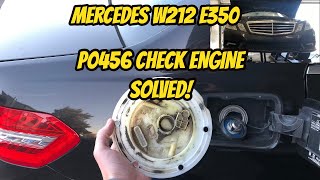
While many cars with a P0456 code have a simple loose gas cap, the W212 E-Class has a more specific and common point of failure. The plastic covers (flanges) for the fuel pump and fuel sending unit, located under the rear seat, are known to develop hairline cracks. This issue is so prevalent that it should be the first vehicle-specific check performed, often before a more generalized smoke test. 🎬 Watch: Step-by-step DIY guide to solving P0456 on a W212. Mercedes-Benz acknowledged this issue by extending the warranty to 15 years/150,000 miles for the fuel filter unit on certain 2010-2011 E-Class models, which can cause this code.
Generation note: The 2010-2016 year range covers the W212 generation of the E-Class. This includes the pre-facelift (2010-2013) and facelift (2014-2016) models. The common causes and fixes for code P0456 are generally applicable across this entire generation, with the fuel pump/sender cover crack being a widely documented issue.
Symptoms You May Notice
- Check Engine Light is on.
- A faint to strong fuel smell may be noticeable, particularly from the rear seat area or outside the vehicle, often more pronounced after filling the gas tank. NHTSA ODI #11474174 confirms this symptom, noting a distinct fuel smell specifically when the gas tank is full.
- In rare cases related to a failing purge valve, difficulty starting the engine immediately after refueling may occur.
- The cabin may experience a strong gas odor alongside the check engine light, as documented in NHTSA ODI #11557044.
- Immediately replacing the gas cap without checking the fuel pump/sender covers under the rear seat, which is the most probable cause on this specific vehicle.
- Replacing the charcoal canister when the leak is actually from the fuel pump cover, as both are in the rear of the vehicle and can be confused during diagnosis without a precise smoke test.
Most Likely Causes
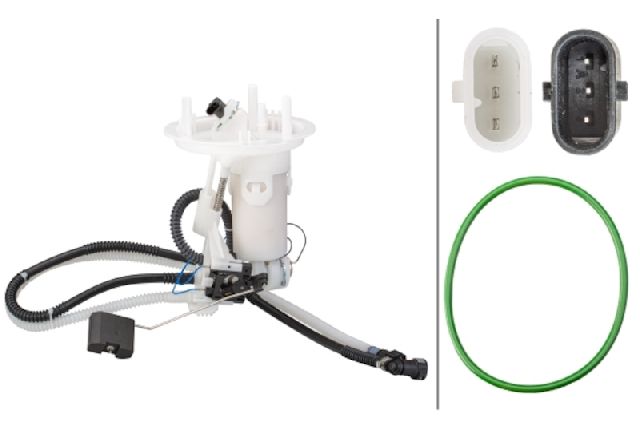
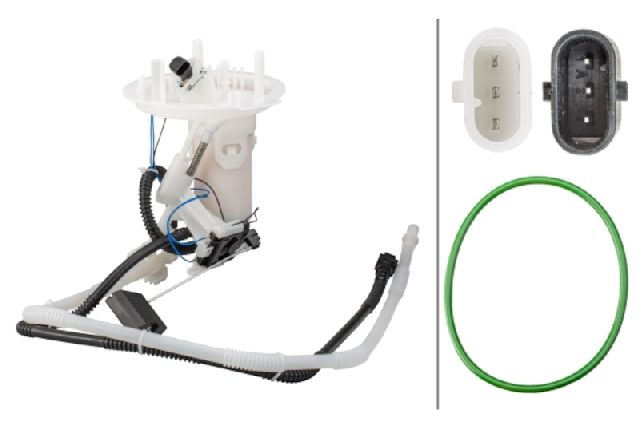
- Cracked Fuel Pump or Sending Unit Cover/Flange 🔴 High Probability → Shop Fuel Pump The plastic covers, which seal the top of the fuel tank under the rear seat, can become brittle and develop hairline cracks over time, leading to a vapor leak. This is a well-documented failure on the W212 and related platforms. Mercedes issued an extended warranty for some 2010-2011 models for this exact issue. NHTSA ODI #10550307 describes a case where a smoke test pinpointed the leak to the driver's side fuel sending unit, with the owner noting the smell was as if someone had spilled gasoline on the floor.
How to confirm: Remove the rear seat bottom cushion (it pulls up firmly from the front). Unscrew the round metal access panels on the driver (sending unit) and passenger (fuel pump) sides. A strong fuel smell, visible cracks, or fuel residue/staining on the white plastic unit indicates a leak. A smoke test will 🎬 See how to replace the fuel filter unit to stop gas smells. definitively show smoke escaping from this area.
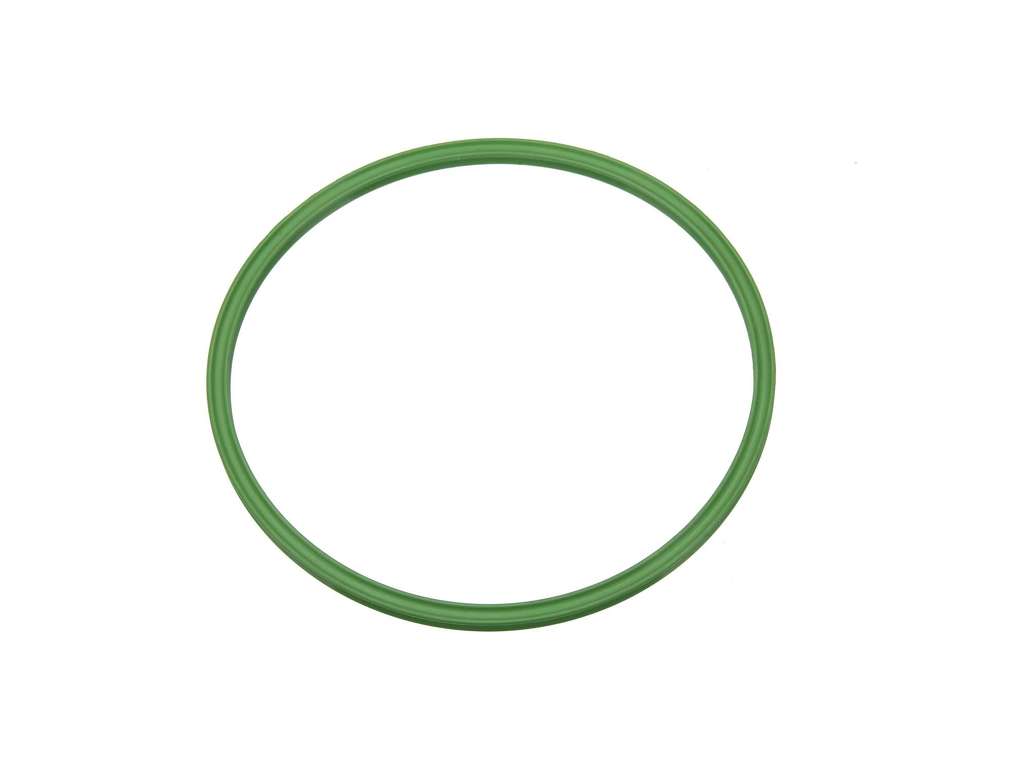
Typical fix: Replace the cracked plastic cover/flange and its corresponding rubber gasket. The part itself is a locking ring/cover for the fuel pump or sending unit. Disconnecting the battery is recommended before starting this repair.
Est. part cost: $50-$85 - Faulty EVAP Purge Valve 🟡 Medium Probability → Shop Vapor Canister The purge valve (or solenoid) is an electromechanical part that is constantly working. It can fail by sticking open, closed, or developing a leak in its body, which is a common failure on many modern vehicles. However, owners should be aware that replacing this part may not always solve the issue; NHTSA ODI #11331485 reports a case where the P0456 code and fuel smell persisted even after replacing the purge valve and gas cap.
How to confirm: Located in the engine bay, the valve should be closed with the engine off. Remove the valve and try to blow through it; if air passes, it is stuck open and faulty. A hand-held vacuum pump can also be used to test if it holds vacuum. Shortly after starting the car, you should be able to feel or hear it ticking, which indicates it is operating.
Typical fix: Replace the EVAP purge valve. It is typically a straightforward replacement with two hoses and an electrical connector. 🎬 Watch this professional diagnosis and fix for Mercedes EVAP codes.
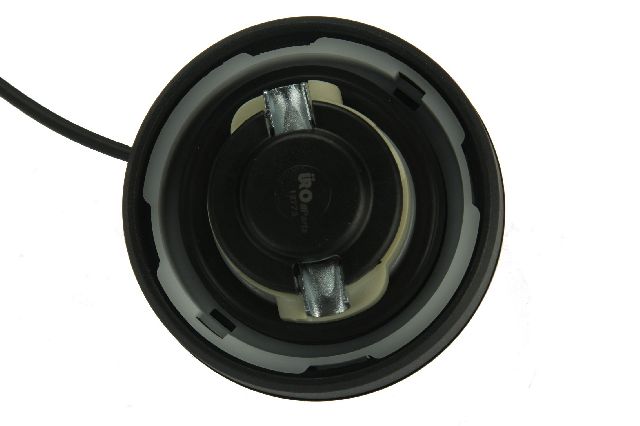
Est. part cost: $50-$150 - Loose or Faulty Gas Cap ⚪ Low Probability → Shop Fuel Tank Cap While this is a top cause on many vehicles, a Mercedes technician noted it's less common on this platform unless the cap is visibly damaged, very old, or the seal is dried out. It's an easy check, but less likely to be the root cause compared to the fuel pump flange.
How to confirm: Ensure the cap is tightened until it clicks. Inspect the rubber O-ring for cracks, stiffness, or damage. If it looks worn, replacement is an inexpensive diagnostic step. Some owners have tried placing a plastic bag over the filler neck before tightening the cap as a temporary test.
Typical fix: Replace the gas cap with a high-quality OEM or equivalent part. Aftermarket caps can sometimes cause sealing issues.
Est. part cost: $25-$50 - Leaking Charcoal Canister or Vent Valve ⚪ Low Probability → Shop Vapor Canister The canister, often located in a rear wheel well, can develop cracks from age or road debris impact. The associated vent valve can also fail, though this is less common for a *small* leak code.
How to confirm: A visual inspection may reveal cracks on the canister body. The definitive method is a smoke test, which will show smoke exiting the canister, its connections, or the vent valve.
Typical fix: Replace the charcoal canister assembly or the vent valve if it is sold separately.
Est. part cost: $200-$350
Rare But Worth Checking
- Cracked or Disconnected EVAP Hoses: The plastic and rubber hoses running from the tank to the canister and up to the engine can become brittle and crack, especially at connection points. A smoke test is the best way to find such a leak.
- Leaking Fuel Filler Neck: → Shop Fuel Filler Neck Less common on the W212 than on some prior models (like the 2005 C-Class), but the assembly where you insert the fuel nozzle can develop cracks or have seal failures, causing a vapor leak. This would be found with a smoke test.
Diagnosis Steps
- Read the code with an OBD-II scanner to confirm P0456 is present. Note if it is a 'stored', 'pending', or 'permanent' code.
- Inspect the gas cap. Ensure it is tight and the seal is not cracked or worn. If in doubt, it's an inexpensive part to replace, but don't stop here.
- Perform the most important vehicle-specific check: Remove the rear seat bottom cushion. This is done by pulling up sharply on the front edge of the cushion on both the driver and passenger sides. Unscrew the 8mm bolts holding the two black metal access covers. Check for a strong fuel odor or visible cracks/residue on the white plastic fuel pump (passenger side) and sending unit (driver side) flanges. This is the most common failure point.
- If no smell is present at the fuel pump covers, locate the EVAP purge valve in the engine bay (often near the windshield washer fluid reservoir). With the engine off, disconnect it and test if it's properly sealed using a vacuum pump or by attempting to blow through it. It should be closed.
- Visually inspect the charcoal canister and its hoses, located behind a wheel well liner (typically rear passenger-side), for any obvious cracks or damage.
- If the leak source is still not found, a smoke test is the most effective next step. This involves feeding low-pressure, UV-dyed smoke into the EVAP system (usually via the purge valve line or a special adapter) and watching for where it escapes. This will pinpoint the exact location of the small leak, whether it's a hose, the filler neck, or the canister.
Parts You'll Likely Need
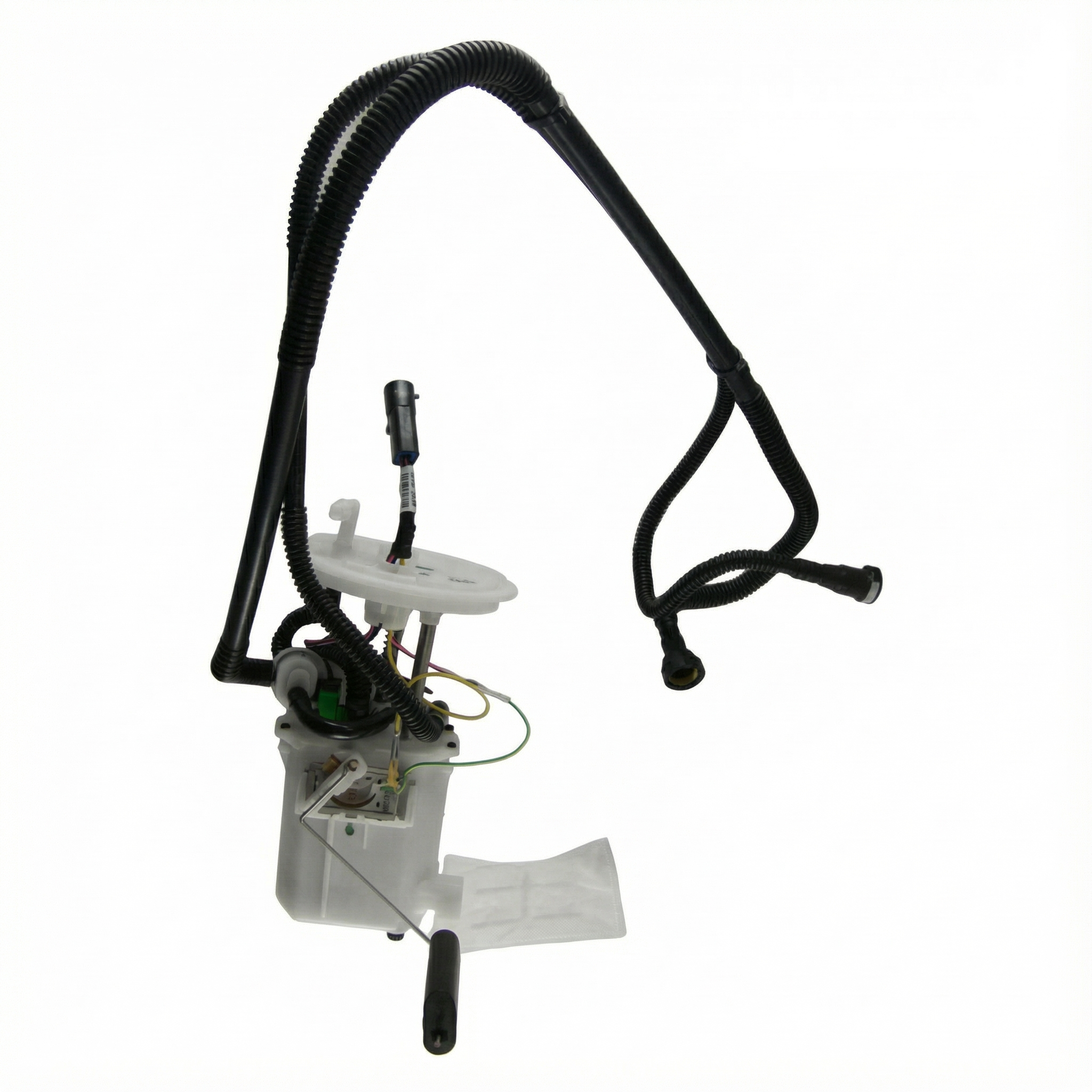
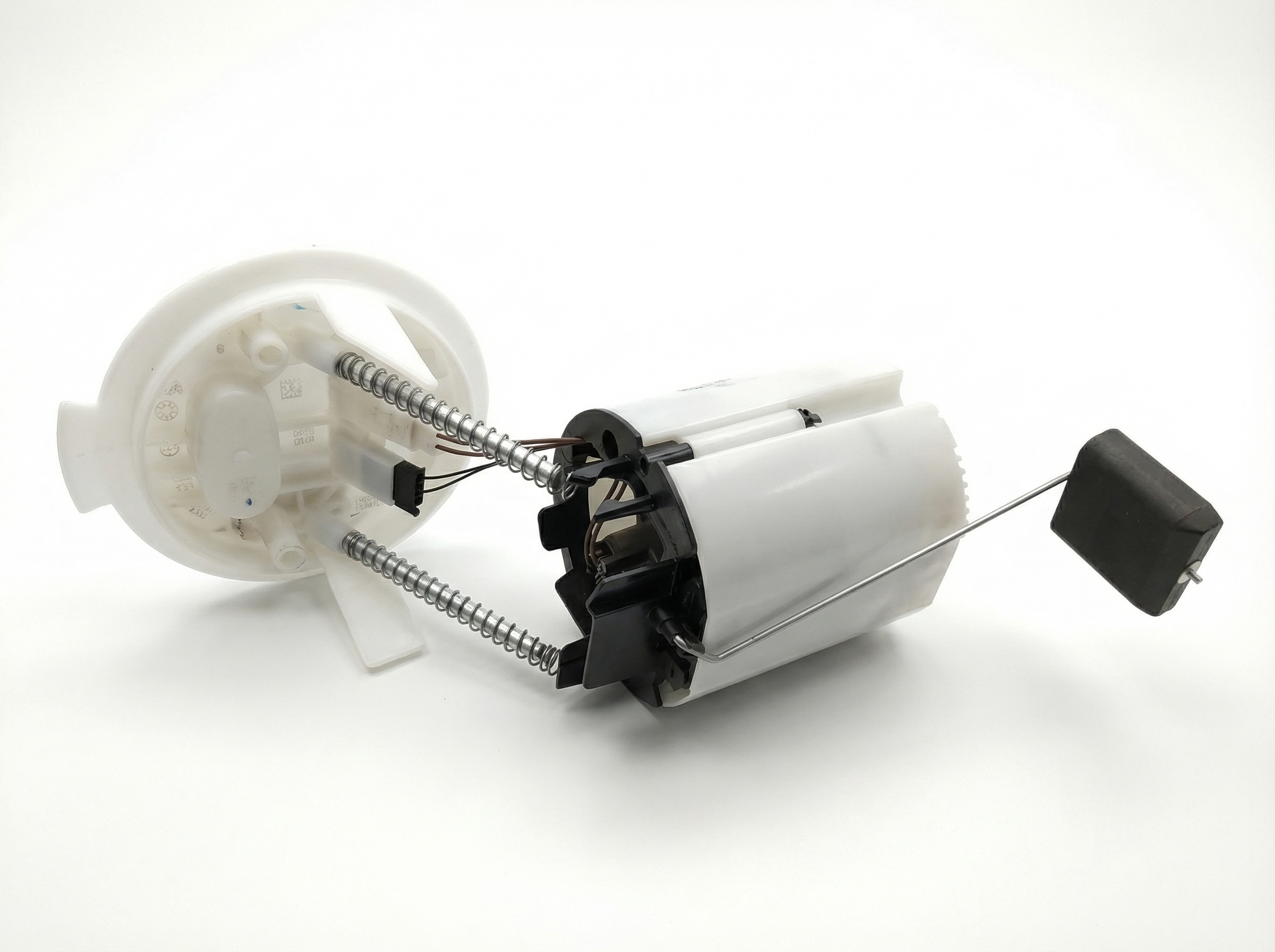
- Fuel Pump Sending Unit Cover/Flange
(OEM #A2184700094 (Supersedes older numbers, check VIN))— This is the most probable cause of a P0456 leak on the W212 platform due to the plastic cracking. There is one on the driver's side (sender) and one on the passenger side (pump).
Trusted brands: Genuine Mercedes-Benz, VDO
OEM price range: $60-$90
Aftermarket price range: $40-$70 - Vapor Canister Purge Valve
(OEM #A2124702493)— A common failure item in EVAP systems that can get stuck open, causing a leak.
Trusted brands: Bosch, Genuine Mercedes-Benz
OEM price range: $90-$182
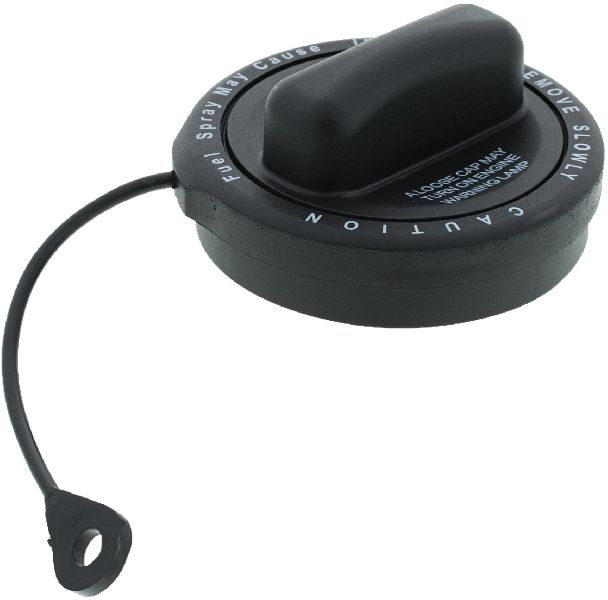
Aftermarket price range: $40-$80 - Fuel Cap
(OEM #A2214700705 (Check VIN))— An easy and inexpensive first step, though less likely to be the sole cause on this vehicle compared to others.
Trusted brands: Genuine Mercedes-Benz, Blau
OEM price range: $30-$50
Aftermarket price range: $15-$30 - Charcoal Canister
(OEM #A2124700259 (Check VIN))— Can develop cracks over time, leading to leaks, but is a less common cause for this specific code.
Trusted brands: Genuine Mercedes-Benz
OEM price range: $300-$400
Aftermarket price range: $150-$250
Technical Service Bulletins (TSBs) & Recalls
- While not a TSB, Mercedes-Benz USA issued an extended warranty for the 'Fuel Filter Unit' on certain 2010-2011 C/E/GLK class vehicles to 15 years/150,000 miles due to potential fuel seepage from the flange, which causes fuel odor and can trigger a P0456 code.
- An earlier extended warranty was also issued for the 2003-2009 E-Class (W211) and 2006-2011 CLS-Class for similar fuel tank component leaks, showing a history of this issue with the component materials.
Platform-Specific Known Issues
- The plastic material used for the fuel pump and sending unit covers under the rear seat is prone to developing hairline cracks, which is a well-documented source for P0456 codes on the W212 platform. This was subject to an extended warranty (15yr/150k miles) for certain 2010-2011 models.
- After repair, a 'permanent' P0456 code may remain stored in the ECU even after clearing, and will only disappear after the vehicle's internal EVAP monitor completes its self-test successfully over several drive cycles. [2
Mechanic-Grade Diagnostic Values
- EVAP Purge Valve (Solenoid) Coil Resistance — expected: 32 ohms ±5%. Failure: A reading significantly outside this range (open circuit or short) indicates a faulty solenoid coil.
- Fuel Tank Pressure Sensor Voltage — expected: 5V reference signal from the ECU. When jumping the signal wire to ground, the scan tool should read 0V. When jumping the 5V reference to the signal wire, it should read 5V.. Failure: If the sensor is plugged in and shows 0V, then unplugging it makes it jump to 5V, the sensor itself is likely shorted internally. If the reference voltage is missing, there is a wiring or ECU issue.
- Low-Pressure Fuel System Pressure — expected: ~60 PSI (approx. 4-5 BAR). Failure: Pressure significantly below this range could indicate a failing in-tank fuel pump, though this would likely present with other codes and drivability issues, not just P0456.
Scan Tool Commands That Help
- Mercedes-Benz XENTRY/DAS (Dealer-level scanner): Fuel Tank Leak Test — This is a guided function that commands the EVAP system to seal itself (by closing the vent valve) and performs a pressure/vacuum test on demand. It is used by technicians to verify a leak exists and to confirm a repair has been successful without waiting for multiple drive cycles.
Wiring & Ground Locations
- W10 — Engine bay, at the top of the front strut mount (typically driver's side).. This is a primary engine bay ground point. A corroded or loose connection here can cause intermittent electrical issues for various engine components, including sensors and solenoids within the EVAP system.
- W70 / W9 — Engine bay, near the fuse box and underneath the windshield cowl area.. These are additional major ground points in the engine compartment. The EVAP purge valve is located in this vicinity, and its proper function relies on a solid ground connection.
- Fuel System Control Unit (N118) — Under the rear seat, typically on the right (passenger) side near the door.. This module directly powers the fuel pump. While not a direct cause of a P0456 leak, knowing its location is critical for any electrical diagnosis of the fuel pump or sending unit circuits. It receives power via fuses in the front and rear SAMs.
Real Owner Repair Stories
- YouTube channel 'Mike Icee' (Mercedes-Benz W212 E350) — Check Engine Light with code P0456.
❌ Tried (didn't work) Replacing the gas cap O-ring.
✅ What actually fixed it The fuel pump cap/cover under the rear seat was found to have multiple hairline cracks. Replacing this plastic cover resolved the P0456 code. - NHTSA ODI #10628089 — An owner reported that the check engine light for code P0456 would illuminate shortly after filling up with gasoline and would go out once the tank reached about half full, repeating at the next fill-up.
OEM Part Supersession History
212470249305, 212470249328→A2124702493— Standard part evolution and consolidation.Older, unlisted numbers→A2184700094— Likely material or design improvements to address the cracking issue. This is the current part number for the right-side (passenger) fuel pump cover/flange.
Heads up: Always verify with VIN, but A2184700094 is the widely accepted replacement for the W212.
Model Year Variations Within This Range
- 2013-2016 (approx.): Later model year W212s with petrol engines may be equipped with a 3-phase Brushless DC (BLDC) fuel pump. This can be identified by a 6-wire connector at the fuel pump cover (4 for the pump, 2 for the level sensor), whereas older models used a simpler 2-wire pump. This affects the electrical diagnosis and control via the Fuel System Control Unit (N118).
Diagnostic Flowchart
Other Known Issues on This Vehicle
Issues unrelated to this code that are worth knowing about as an owner of this generation:
- 7G-Tronic (722.9) Transmission Conductor Plate Failure 🔴 High — Common on models approaching 80k-120k miles. Can cause harsh shifting, getting stuck in gear, or limp mode. (Ref: Fault codes like 0717, 0718 are common indicators.)
- M276 Engine: Timing Chain Tensioner Rattle on Startup 🟠 Medium — Primarily affects early M276 engines (approx. 2011-2014). A rattling noise for a few seconds on a cold start indicates insufficient oil pressure at the tensioners. (Ref: Mercedes issued a service bulletin and updated parts (check valves, tensioners) to resolve this.)
- M276 Engine: Oil Leaks into Camshaft Position Sensors/Wiring Harness 🟠 Medium — Common across many Mercedes engines. Oil wicks from the sensor connector through the engine harness, potentially damaging the ECU. (Ref: No recall, but a common preventative fix is to install inexpensive 'pigtail' harnesses that block the oil's path.)
- Fading Interior Wood Trim 🟡 Low — Very common on W212 models, especially those exposed to sunlight. The wood trim, particularly on the center console and doors, can fade and lose its luster.
- Electronic Steering Lock (ESL) Failure 🔴 High — A well-known W212 issue where the ESL motor fails, preventing the car from starting and leaving the steering wheel locked. Often happens without warning.
- Airmatic Suspension Leaks 🟠 Medium — On models equipped with air suspension, the air struts can develop leaks with age and mileage (typically over 100k miles), causing the car to sag at one corner, usually overnight.
Used vs. New Parts: Buying Guide for This Vehicle
When a used part is the smart pick: For this specific code, sourcing used parts is generally not recommended for the most common failures. However, a used charcoal canister assembly from a low-mileage, non-corrosion-area vehicle could be a cost-effective option if it has been confirmed as the point of failure.
Donor-vehicle mileage cap: roughly under 60000 miles for the part to have meaningful remaining life.
What to inspect on the donor part:
- For a charcoal canister, inspect the plastic body for any cracks, especially around the hose connections.
- Ensure all electrical connectors and hose ports are intact and not brittle.
- Avoid parts from regions with heavy road salt use, as this can degrade plastic and electrical connections.
OEM-only on this vehicle (don't cheap out):
- Fuel Pump / Sending Unit Cover (Flange): This is the #1 failure point due to the original plastic cracking over time. A used part will have the same age-related weakness and is very likely to fail soon, if it isn't already cracked. Always buy this part new from Genuine Mercedes or a top-tier OEM like VDO.
- Gas Cap: Given the low cost and critical sealing function, a new OEM cap is the only sensible choice to eliminate it as a variable.
Aftermarket brands forum-validated for this vehicle:
- Bosch (for purge valve)
- VDO (often the OEM for the fuel pump assembly/cover)
- Pierburg (for fuel pump components)
Brands owners have reported issues with on this vehicle:
- Unbranded, 'white-box' fuel pump covers/flanges from online marketplaces. These often use inferior plastic that may not seal correctly or may crack prematurely, leading to a repeat of the same P0456 code.
Real Owner Stories
Aggregated from forums and TSBs cited above. Mileages and costs reflect what owners reported in those sources.
2011 Mercedes-Benz E350 (W212)
Symptoms: Check engine light with code P0456; visible hairline cracks found on both the driver and passenger side fuel unit covers.
What fixed it: Replacement of the cracked fuel unit covers/flanges.
Source hint: YouTube - Mercedes E350 P0456 CODE CEL SOLVED Step by Step DIY W212 W204 Check Engine Light
2011 Mercedes-Benz C300 (W212 platform mate)
Symptoms: Fuel smell and EVAP codes; discovered a cracked fuel pump top cover after removing the rear seat.
What fixed it: Replacing the cracked plastic fuel pump top cover.
Source hint: YouTube - How to fix Code P0455, P0442, P0456 Mercedes Benz/ 2011 Mercedes c300
2010-2014 Mercedes-Benz C300 (W212 platform mate)
Symptoms: Permanent P0456 code remained after clearing; owner confirmed a cracked left-side tank access flange was the source.
What fixed it: Replacing the cracked left-side tank access flange.
Source hint: MBWorld.org Forums - PO456 permanent code C300 w212
Mercedes-Benz C-Class (W204 platform mate)
Symptoms: Difficulty starting the engine immediately after refueling.
What fixed it: Replacement of the EVAP purge valve.
Source hint: MBWorld.org Forums - Check Engine Light Code P0456 Small EVAP Leak
Documented NHTSA Reports
Mercedes-Benz E-Class Platform
Symptoms: An owner reported a very small EVAP leak (P0456) where the check engine light would trigger shortly after refueling and extinguish when the tank reached half full (NHTSA ODI #10628089). Another report (NHTSA ODI #10550307) noted a fuel smell so strong it was like gasoline spilled on the floor, which a smoke test confirmed was leaking from the driver's side fuel sending unit.
Related Mercedes-Benz Models
Symptoms: Owners of similar platforms have reported the P0456 code accompanied by a strong gas odor in the cabin (NHTSA ODI #11557044). In some cases, replacing the gas cap and purge valve did not resolve the fuel smell experienced after filling the tank (NHTSA ODI #11331485).
Related OBD-II Codes
Frequently Asked Questions
Is there an extended warranty for the fuel leak issue on my 2010-2011 E-Class?
Why does my E350 have trouble starting only after I fill up the gas tank?
I cleared the P0456 code on my W212, but my scanner says it is still 'Permanent'. Why?
Where is the most common leak location for a P0456 on a W212 E-Class?
Can I use an aftermarket gas cap to fix the P0456 code?
How can I check the fuel pump flanges for cracks myself?
Helpful Videos
![Gas Smell in 2010 [W212] Mercedes Benz E350 - Replace Fuel Filter](https://img.youtube.com/vi/tUv512sxsoQ/mqdefault.jpg)
![How to Fix P0456 Engine Code in 7 Minutes [7 DIY Methods / Only $3.44]](https://img.youtube.com/vi/njt81AALI3U/mqdefault.jpg)
Used OEM Parts in Stock

New Aftermarket Parts Available

The information in this article is provided for general reference and educational purposes only. Vehicle specifications, procedures, and part compatibility can vary by production date, trim level, and region. Always consult your vehicle's factory service manual and verify part numbers before purchasing or performing repairs. Safety-critical components such as airbags, seat belts, and braking systems should be installed by a qualified professional.
- Mercedes-Benz E-Class:
- 🧭 Diagnostic Flowchart
- 🎬 Helpful Videos
- 🛍️ Shop This Part
- What's Unique About the 2010-2016 Mercedes-Benz E-Class
- Symptoms You May Notice
- Most Likely Causes
- Rare But Worth Checking
- Diagnosis Steps
- Parts You'll Likely Need
- Technical Service Bulletins (TSBs) & Recalls
- Platform-Specific Known Issues
- Mechanic-Grade Diagnostic Values
- Scan Tool Commands That Help
- Wiring & Ground Locations
- Real Owner Repair Stories
- OEM Part Supersession History
- Model Year Variations Within This Range
- Other Known Issues on This Vehicle
- Used vs. New Parts: Buying Guide for This Vehicle
- Real Owner Stories
- 2011 Mercedes-Benz E350 (W212)
- 2011 Mercedes-Benz C300 (W212 platform mate)
- 2010-2014 Mercedes-Benz C300 (W212 platform mate)
- Mercedes-Benz C-Class (W204 platform mate)
- Documented NHTSA Reports
- Mercedes-Benz E-Class Platform
- Related Mercedes-Benz Models
- Related OBD-II Codes
- Frequently Asked Questions
- 🎟️ Get 5% Off