

P0456 on 2012-2015 Mercedes-Benz ML-Class: Causes and Fixes for a Small EVAP Leak
The P0456 code on a 2012-2015 Mercedes ML-Class indicates a very small leak in the fuel vapor system. The most common and easiest fix is to inspect and tighten or replace the gas cap. If that doesn't solve it, a cracked fuel pump cover/seal, the purge valve, or a cracked hose are the next likely culprits, often requiring a smoke test to pinpoint.
- P0456 is not an urgent issue and will not affect how your ML-Class drives, but it will cause an emissions test failure.
- Always start with the simplest fix: check that your gas cap is tight and its seal is in good condition. Replace it with an OEM part if in doubt.
- If a new gas cap doesn't fix the code, the next most likely causes are the EVAP purge valve or a cracked vacuum hose.
- Finding the exact source of a very small leak can be very difficult. A professional smoke test is the fastest and most reliable way to pinpoint the problem.
What's Unique About the 2012-2015 Mercedes-Benz ML-Class
On this generation of Mercedes-Benz SUVs (W166 chassis), while the gas cap is a common starting point, it's often not the root cause. Owners and technicians frequently report that components like the fuel pump's sealing ring/cover, the fuel filler neck, or the EVAP purge valve can develop small cracks or leaks that are difficult to see without a smoke test. A Reddit user with a similar issue on their G-Wagon had the dealer diagnose a cracked fuel pump with dried gas residue around the seals, a fix also documented on other Mercedes models. Unlike some vehicles where a specific hose is a known weak point, the P0456 on the ML-Class requires a more thorough diagnosis across the entire system. Documented reports such as NHTSA ODI #11557044 highlight that this code is frequently accompanied by a strong gas odor inside the car cabin.
Symptoms You May Notice
- Check Engine Light is on
- A faint fuel smell may be noticeable, particularly around the rear of the vehicle, inside the cabin near the back seat, or after refueling.
- In rare cases, if the purge valve fails in the open position, it can cause difficulty starting the vehicle immediately after refueling.
- Replacing the charcoal canister when the leak is actually a small, inexpensive hose connected to it.
- Assuming an aftermarket gas cap is working correctly. OEM caps are strongly recommended as they are designed to meet the precise pressure requirements of the system.
- Guessing and replacing parts like the purge valve without performing a smoke test, which is the most definitive diagnostic step for small leaks.
Most Likely Causes
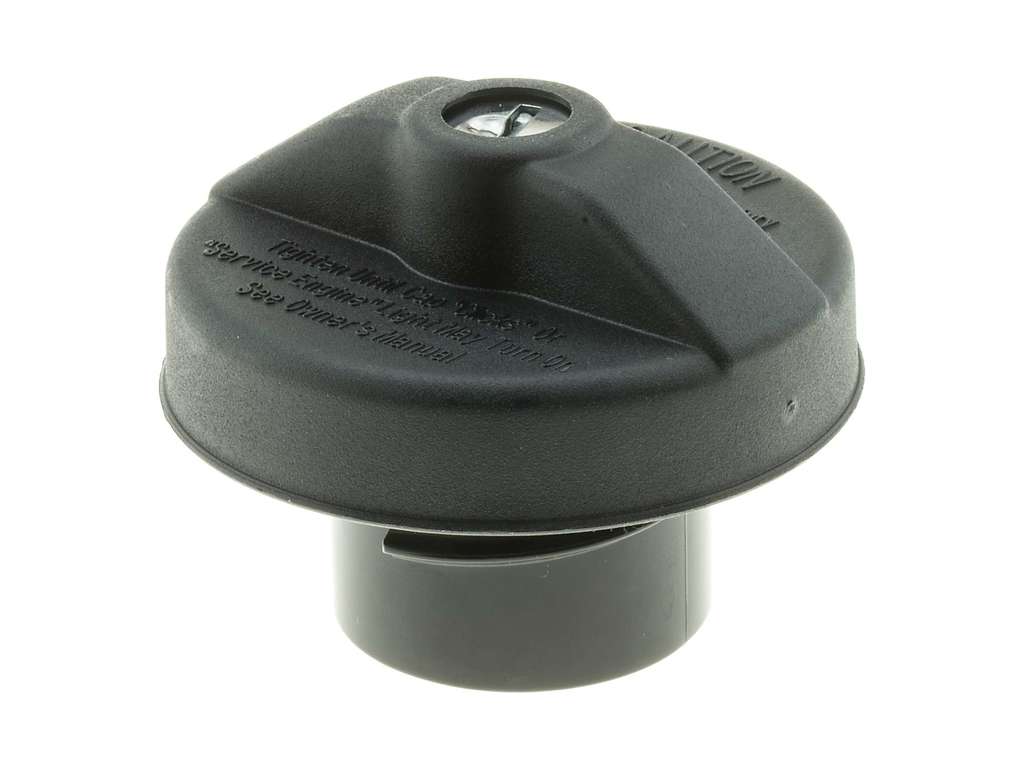
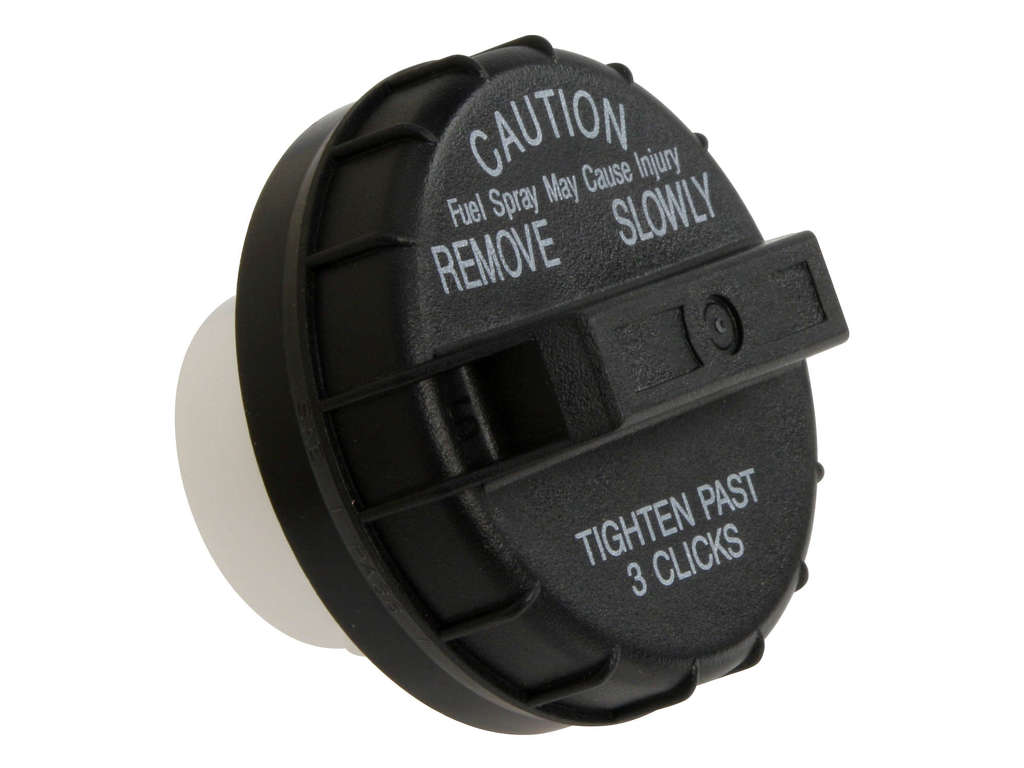
- Loose or Faulty Gas Cap 🔴 High Probability → Shop Fuel Tank Cap The gas cap is a frequently used part and its seal can wear out or be damaged over time. It's also easy to forget to tighten it properly after refueling. On this model, the cap has a spring-loaded mechanism and needs to be turned several times to ensure it's locked.
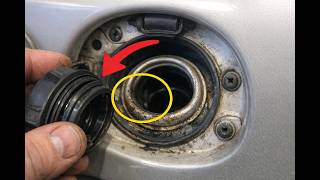
How to confirm: Remove the gas cap and inspect the rubber O-ring for cracks, dryness, or damage. Ensure the cap clicks at least three times when tightened. Clean the sealing surface on the fuel filler neck. 🎬 Watch: Why aftermarket caps fail and how to fix the filler neck. Clear the codes and drive for a few days. The EVAP test may not run immediately.
Typical fix: Replace the gas cap with a new OEM part. Aftermarket caps are a common cause of this code as they may not seal correctly to Mercedes' specific pressure requirements.
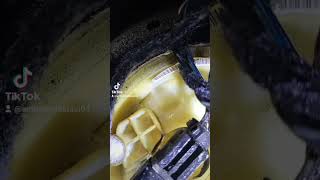
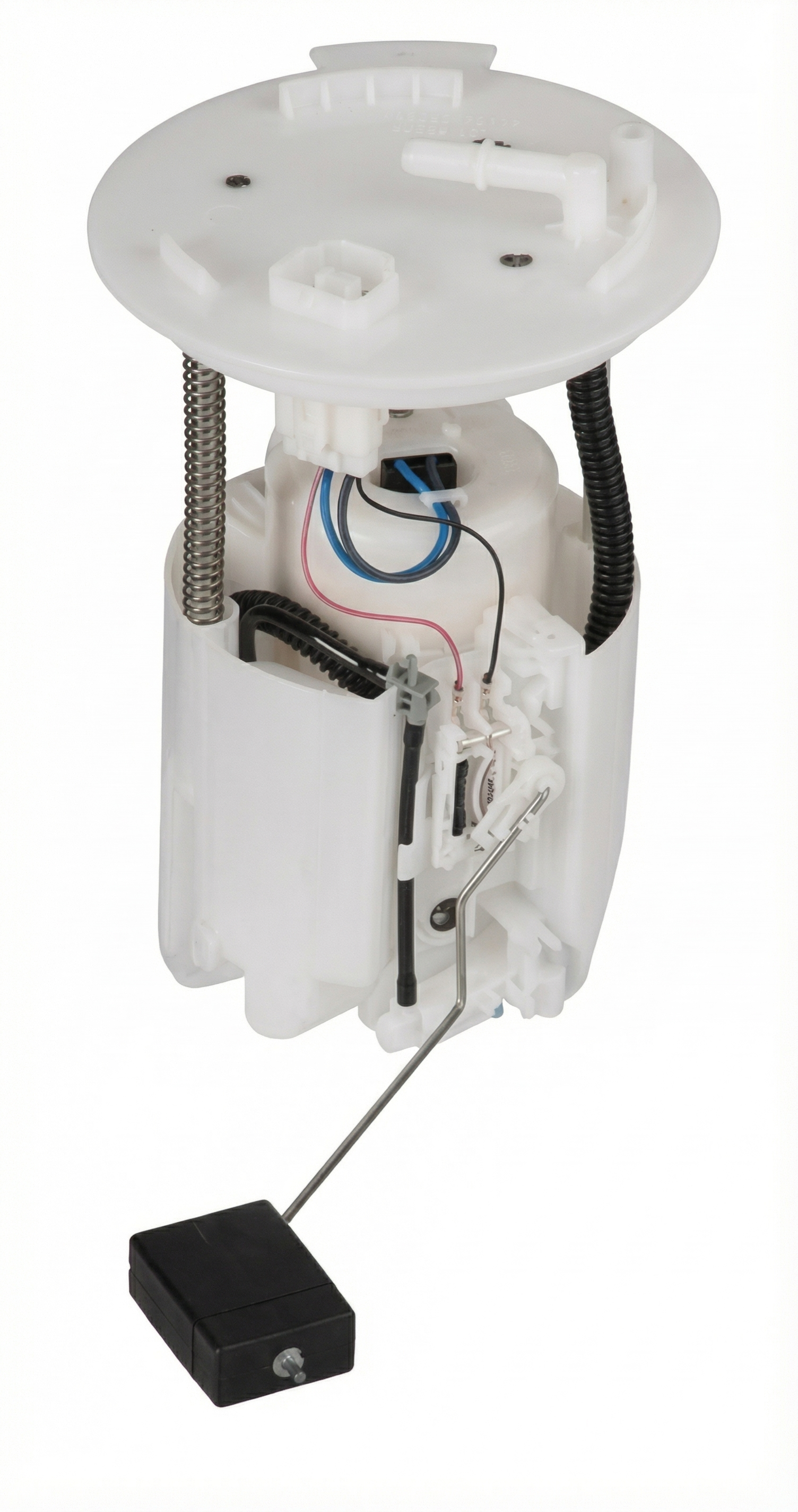
Est. part cost: $30-$60 - Leaking Fuel Pump Sealing Ring or Cover 🟡 Medium Probability → Shop Fuel Pump The fuel pump is accessed from under the rear seat and is sealed to the tank with a large gasket and a plastic lock ring or cover. Over time, the plastic cover can develop hairline cracks, causing a vapor leak. This is a documented failure point on various Mercedes models of this era.
How to confirm: A fuel smell may be present inside the cabin, especially in the back seat area. A technician would remove the rear seat cushion to access the fuel pump cover plates (there are two, one on each side) and inspect for cracks or fuel/vapor residue. A smoke test will definitively show smoke escaping from the cracked cover. NHTSA ODI #10550307 describes a case where a smoke test successfully located a leak at the fuel sending unit after a P0456 code appeared.
Typical fix: Replace the cracked fuel pump cover or the sealing gasket. This is a relatively inexpensive part but requires accessing the top of the fuel tank.
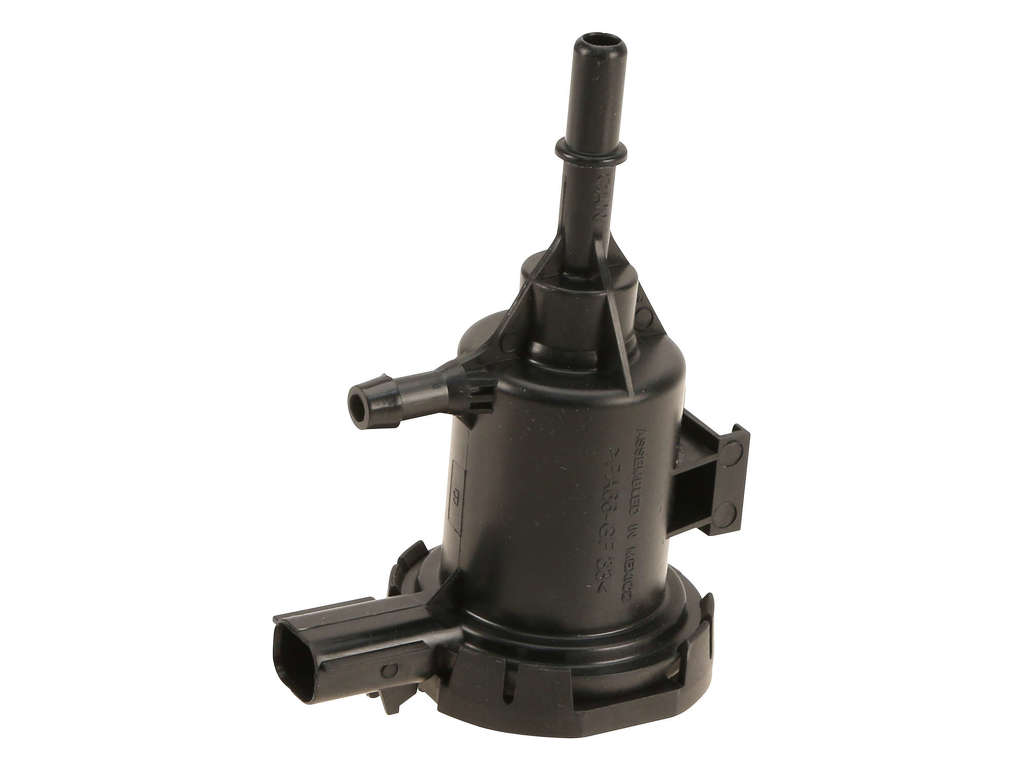
Est. part cost: $30-$50 - Faulty EVAP Purge Valve 🟡 Medium Probability → Shop Vapor Canister The purge valve (or purge solenoid) can get stuck slightly open, creating a small leak path. This is a common failure point in many modern EVAP systems. However, as noted in NHTSA ODI #11331485, some owners find the code returns even after replacing both the gas cap and purge valve if a fuel smell persists during fill-ups.
How to confirm: The valve is normally closed. With the engine off, disconnect the valve and try to blow through it; if air passes, it's faulty. A professional would use a scan tool to command the valve open and closed while observing system pressure. You can also often feel or hear it clicking shortly after the car starts, which indicates it is operating, but doesn't confirm it's sealing properly.
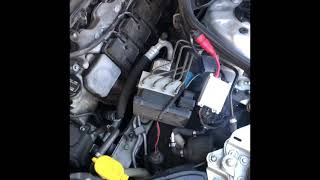
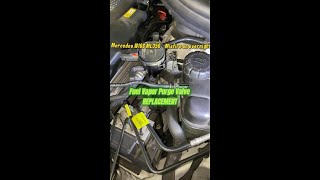
Typical fix: Replacement of the EVAP purge valve. 🎬 Watch: Step-by-step purge valve replacement on the W166 chassis.
Est. part cost: $80-$150 - Cracked EVAP Hoses or Lines 🟡 Medium Probability
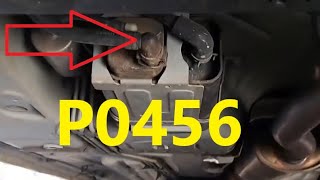
How to confirm: A visual inspection may reveal cracked, brittle, or disconnected rubber hoses, especially at connection points near the charcoal canister or purge valve. The most effective method is to have a smoke test performed, which forces smoke into the EVAP system and makes even tiny leaks visible.
Typical fix: Replace the specific cracked hose or line.
Est. part cost: $20-$100 - Leaking Fuel Filler Neck ⚪ Low Probability → Shop Fuel Filler Neck On some Mercedes models, the plastic fuel filler neck assembly can develop hairline cracks, causing a very small, hard-to-find leak. This was a known issue on some earlier Mercedes platforms. NHTSA ODI #11474174 notes that a fuel smell when the tank is full is a common symptom associated with this code.
How to confirm: This is very difficult to confirm without a smoke test. A technician may hear a faint hissing or see smoke escaping from the filler neck area behind the wheel well liner during the test.
Typical fix: The fuel filler neck assembly needs to be replaced.
Est. part cost: $400-$500
Rare But Worth Checking
- Cracked Charcoal Canister: → Shop Vapor Canister While not as common for a *small* leak, the plastic housing of the charcoal canister can develop hairline cracks. This is usually found with a smoke test.
- Faulty Fuel Tank Pressure Sensor: → Shop Fuel Tank In rare cases, the sensor that detects the leak may be faulty itself, sending incorrect data to the computer. This usually triggers other codes as well, but not always.
Diagnosis Steps
- Read the code with an OBD-II scanner to confirm P0456 is the only code present.
- Inspect the gas cap. Remove it, check the seal for damage, and clean the filler neck sealing surface. Reinstall it, ensuring it clicks multiple times. Clear the code and drive for a few days to see if it returns. Note that the vehicle's self-test for the EVAP system only runs under specific conditions (e.g., fuel level between 15% and 85%).
- If the light returns, perform a thorough visual inspection of all accessible EVAP hoses and lines under the hood and near the rear of the vehicle for any obvious cracks or disconnections.
- Listen for a fuel smell inside the cabin, particularly in the rear seat area. If present, remove the rear seat cushion to access the two fuel pump/sending unit covers and inspect them for visible cracks or residue.
- Locate the EVAP purge valve in the engine bay. With the engine off, disconnect it and see if you can blow through it. If you can, it has failed.
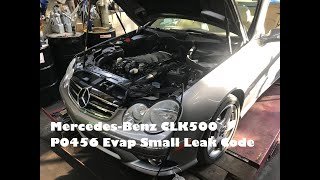
- If the cause is still not apparent, the most effective next step is a professional smoke test. A machine fills the EVAP system with a harmless, visible smoke under low pressure. The smoke will escape from any leak, no matter how small, pinpointing the exact location of the fault. 🎬 See how a professional smoke test identifies tiny Mercedes leaks.
Parts You'll Likely Need
- Fuel Tank Cap
(OEM #A2214700705)— This is the most common cause and the easiest part to replace. The seal wears out over time, causing a small vapor leak.
Trusted brands: Mercedes-Benz (OEM)
OEM price range: $30-$60
Aftermarket price range: $15-$30 - EVAP System Purge Valve
(OEM #0004708893 (Bosch), A0004708893 (MB))— This valve can fail by sticking slightly open, which creates a constant small leak in the system. Part numbers can vary, so VIN confirmation is essential.
Trusted brands: Bosch, Mercedes-Benz (OEM)
OEM price range: $100-$150
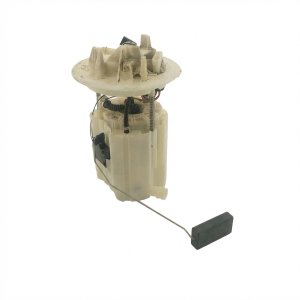
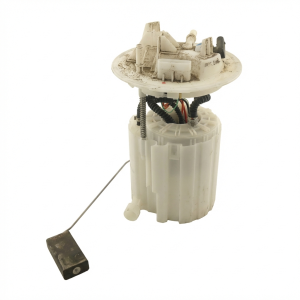
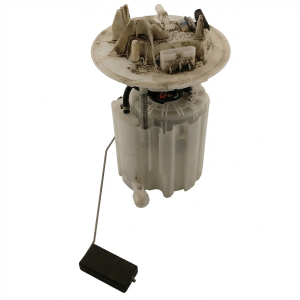
Aftermarket price range: $50-$90 - Fuel Pump Locking Ring / Cover
(OEM #A2114710179 (Example, VIN specific))— A known failure point on this platform era; the plastic cover develops hairline cracks causing a small vapor leak detectable by a smoke test or fuel smell in the cabin.
Trusted brands: Mercedes-Benz (OEM)
OEM price range: $30-$50 - Fuel Filler Neck — Though less common, the plastic assembly can develop hairline cracks that are very difficult to find without a smoke test, leading to a persistent P0456 code.
Trusted brands: Mercedes-Benz (OEM)
OEM price range: $400-$500
Related Codes That Often Appear With This One
- P0442 - Evaporative Emission System Leak Detected (Medium Leak)
Technical Service Bulletins (TSBs) & Recalls
- NHTSA ID: 10232231 / MB Recall 2023010003 (January 27, 2023) - While not for P0456 specifically, this recall addresses water intrusion into the spare wheel well which can damage the fuel pump control unit on 2012-2019 ML/GLE models. This highlights a known issue with moisture in the rear of the vehicle, which could potentially affect nearby EVAP components over time.
Mechanic-Grade Diagnostic Values
- EVAP Canister Purge Valve Resistance — expected: 30 to 38 ohms (for standard valve). Failure: A reading outside this range indicates a faulty valve coil.
- EVAP Canister Purge Valve Resistance (Bosch-specific example) — expected: Approximately 32 ohms. Failure: Significant deviation from this value suggests an internal electrical fault.
Scan Tool Commands That Help
- Mercedes Xentry/DAS: EVAP System Leak Test (Major/Minor Leak) — This is the factory-level guided test to command the system to seal and pressurize/pull a vacuum to check for leaks. It's the most precise way to confirm a P0456 leak condition before using a smoke machine.
- Mercedes Xentry/DAS: Actuation of Purge Valve (Y58/1) — Allows a technician to manually command the purge valve open and closed to check its mechanical and electrical operation while monitoring fuel tank pressure sensor data.
- Mercedes Xentry/DAS: Actuation of Shut-off Valve (Y58/4) — Used to command the charcoal canister vent/shut-off valve closed to seal the system for a leak test. A failure of this component to seal is a common leak point.
Wiring & Ground Locations
- SAM Control Unit (Signal Acquisition and Actuation Module) — Under the hood, typically in a fuse/relay box. The purge valve wiring connects back to this module.. The SAM unit provides the power and control signal to the EVAP purge valve. A fault in the driver circuit within the SAM or a wiring issue between the SAM and the valve could mimic a valve failure.
- Rear SAM / Fuel Pump Control Unit — Located in the rear of the vehicle, often in the spare tire well or side panel.. This module controls the fuel pump and receives data from the fuel tank pressure sensor. Water intrusion in this area, a known issue on the W166 platform, can cause corrosion and electrical faults related to the EVAP system.
Real Owner Repair Stories
- MBWorld.org Forum User (2005 C230K (W203, but demonstrates a common Mercedes issue)) — Persistent P0456 code, failed smog test.
❌ Tried (didn't work) Replaced gas cap, Replaced purge valve
✅ What actually fixed it A smoke test revealed a leak at the fuel filler neck. Replacing the fuel filler neck assembly permanently resolved the code. - YouTube video by Mike Icee (Mercedes E350 (W212, similar era and components)) — P0456 check engine light.
❌ Tried (didn't work) Replaced the gas cap o-ring
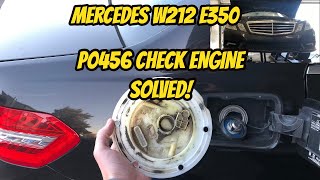
✅ What actually fixed it The plastic fuel pump cover/locking ring under the rear seat had multiple hairline cracks. Replacing this cover, which costs around $30-$50, solved the small EVAP leak. - Reddit user comment (2018 G-Wagon) — P0456 code, no fuel smell or visible leak.
❌ Tried (didn't work) Checked gas cap
✅ What actually fixed it A dealer diagnosis found a cracked fuel pump with dried gas residue around the seals, which was causing the vapor leak. - NHTSA ODI #10628089 — An owner reported that the check engine light for P0456 would illuminate shortly after filling up with gasoline and would go out once the tank reached about half full, repeating at the next fill-up.
"I Checked Everything" — The Actual Cause
- In some cases, particularly on Chrysler/Jeep vehicles but applicable as a diagnostic theory, a P0456 code can be set with no physical leak found during a smoke test. The cause can be a software glitch in the Powertrain Control Module (PCM) that misinterprets data from the fuel tank pressure sensor. The fix in this scenario is a software update (a 'flash') for the PCM performed by a dealer.
OEM Part Supersession History
A2214700605→A2214700705— Updated design or material for the fuel tank cap to improve sealing and durability.Not specified→0004708893 / A0004708893— This is the current and widely used part number for the EVAP purge valve (regeneration valve) across many Mercedes models of the era. Earlier numbers have been consolidated into this part.
Heads up: While this is a common number, always confirm with VIN as several different physical valve designs were used.
Diagnostic Flowchart
Other Known Issues on This Vehicle
Issues unrelated to this code that are worth knowing about as an owner of this generation:
- M276 V6 Engine Oil Leaks 🟠 Medium — Common after 60,000 miles. Leaks often originate from the front upper timing covers (leaking onto the alternator), camshaft position sensors (wicking oil into the wiring harness), and the oil filter housing gasket.
- OM642 V6 Diesel Oil Cooler Seal Leak 🔴 High — Very common issue, typically occurring between 60,000-100,000 miles. The original seals degrade, causing a major oil leak into the engine 'V' which then runs down the back of the engine, often being misdiagnosed as a rear main seal leak. The repair is labor-intensive (12+ hours). (Ref: Mercedes issued an updated seal made of Viton to address the problem.)
- M276 V6 Timing Chain Rattle / Tensioner Wear 🟠 Medium — A rattling noise on startup can indicate wear on the secondary timing chain tensioners. This was more prominent on early engines due to a lack of check valves to maintain oil pressure at startup, leading to premature wear.
- OM642 Diesel DPF/AdBlue System Faults 🟠 Medium — Frequent complaints after 60,000 miles, especially on vehicles used for short trips. Issues include clogged DPF, failed NOx sensors, and AdBlue heater failures, leading to check engine lights and limp mode.
- Airmatic Suspension Failures 🟠 Medium — The air struts can develop leaks and the compressor can wear out, typically after 80,000 miles or with age. Symptoms include the vehicle sagging at one corner when parked or a rough ride.
- Water Ingress in Rear Cargo Area 🟡 Low — Water can leak into the spare tire well, potentially damaging the fuel pump control unit and other electronics located there. (Ref: NHTSA ID: 10232231 / MB Recall 2023010003)
Used vs. New Parts: Buying Guide for This Vehicle
When a used part is the smart pick: For larger, non-wear components like the Fuel Filler Neck or the Charcoal Canister, a used part from a low-mileage, non-corroded donor vehicle can be a cost-effective option. These parts typically fail from age-related cracking or external damage rather than internal wear.
Donor-vehicle mileage cap: roughly under 75000 miles for the part to have meaningful remaining life.
What to inspect on the donor part:
- For plastic parts (filler neck, canister), inspect meticulously for any hairline cracks, especially around mounting points and hose connections.
- Check for signs of heavy corrosion on any metal components, particularly if the donor vehicle was from a salt-belt region.
- Ensure all hose connection nipples are intact and not brittle.
- For a fuel filler neck, check that the sealing surface where the gas cap sits is clean and free of damage or rust.
OEM-only on this vehicle (don't cheap out):
- Gas Cap: Aftermarket gas caps are a frequent cause of EVAP codes on Mercedes-Benz vehicles due to not meeting the precise pressure-sealing specifications. Always use an OEM cap (part #A2214700705).
- Fuel Pump Locking Ring / Seal: Given the low cost of the new OEM part and the labor involved to access it under the rear seat, using a new part is strongly recommended to ensure a proper, long-lasting seal.
Aftermarket brands forum-validated for this vehicle:
- Bosch: Bosch is the Original Equipment Manufacturer (OEM) for many Mercedes-Benz electrical components, including the EVAP Purge Valve. A Bosch-branded part is often identical to the dealer part without the Mercedes-Benz markup.
Brands owners have reported issues with on this vehicle:
- Unbranded/No-name gas caps from online marketplaces should be avoided as they are a common source of persistent P0456 codes.
Real Owner Stories
Aggregated from forums and TSBs cited above. Mileages and costs reflect what owners reported in those sources.
2013 ML350 4Matic
Symptoms: Check engine light is on with trouble codes P0442 and P0456.
What fixed it: The owner sought diagnosis for the small EVAP leak codes; common resolutions for this platform include inspecting the fuel pump sealing ring and the purge valve.
Source hint: MBWorld.org - '2013 ML350 4Matic check engine light on-trouble codes P0442 + P0456....'
Related OBD-II Codes
Frequently Asked Questions
I smell fuel inside my 2013 ML350 near the back seat; could this be related to P0456?
Does the recent Mercedes recall for water intrusion in the spare wheel well affect my EVAP system?
Can I use an aftermarket gas cap to fix the P0456 code on my ML-Class?
How many times should I click the gas cap on my 2012-2015 ML to ensure it's sealed?
Why does my ML-Class have trouble starting only after I fill up the gas tank?
Is there a specific engine issue on the ML350 that might be confused with an EVAP leak?
Helpful Videos
![How to Fix P0456 Engine Code in 7 Minutes [7 DIY Methods / Only $3.44]](https://img.youtube.com/vi/njt81AALI3U/mqdefault.jpg)
Used OEM Parts in Stock
New Aftermarket Parts Available



The information in this article is provided for general reference and educational purposes only. Vehicle specifications, procedures, and part compatibility can vary by production date, trim level, and region. Always consult your vehicle's factory service manual and verify part numbers before purchasing or performing repairs. Safety-critical components such as airbags, seat belts, and braking systems should be installed by a qualified professional.
- Mercedes-Benz ML-Class:
- 🧭 Diagnostic Flowchart
- 🎬 Helpful Videos
- 🛍️ Shop This Part
- What's Unique About the 2012-2015 Mercedes-Benz ML-Class
- Symptoms You May Notice
- Most Likely Causes
- Rare But Worth Checking
- Diagnosis Steps
- Parts You'll Likely Need
- Related Codes That Often Appear With This One
- Technical Service Bulletins (TSBs) & Recalls
- Mechanic-Grade Diagnostic Values
- Scan Tool Commands That Help
- Wiring & Ground Locations
- Real Owner Repair Stories
- "I Checked Everything" — The Actual Cause
- OEM Part Supersession History
- Other Known Issues on This Vehicle
- Used vs. New Parts: Buying Guide for This Vehicle
- Real Owner Stories
- 2013 ML350 4Matic
- Related OBD-II Codes
- Frequently Asked Questions
- 🎟️ Get 5% Off