

P0456 on 2011-2017 Nissan JUKE: EVAP Very Small Leak Causes and Fixes
For a 2011-2017 Nissan Juke, code P0456 most often means you have a loose gas cap or a bad O-ring on the EVAP vent control valve. Always check the gas cap first (free). If that doesn't fix it, the vent valve O-ring is a common, well-documented failure that is inexpensive to replace. Nissan TSBs specifically instruct technicians to replace only the O-ring, not the entire valve, after confirming the leak with a smoke test. However, a 2022 TSB update states the O-ring is no longer sold separately,
- Always check your gas cap first. Ensure it's tight and the seal is clean before attempting any other repairs.
- Be aware that the EVAP vent control valve O-ring is a very common failure on the 2011-2017 Juke, as documented by Nissan.
- This code does not indicate a mechanical problem that affects driving, but it will prevent you from passing an emissions inspection.
- If you replace the gas cap and the light returns, the next logical step is to inspect the vent valve O-ring or have a smoke test performed to find the exact leak source.
What's Unique About the 2011-2017 Nissan JUKE
While a loose gas cap is a common cause for P0456 on any car, Nissan has specifically identified a frequent failure point on the Juke and many other models from this era. The O-ring for the EVAP canister vent control valve is known to degrade and cause this exact code. Nissan issued several Technical Service Bulletins (TSBs), primarily the NTB17-082 series, detailing this specific problem and explicitly stating that P0456 is often NOT caused by a loose gas cap on these vehicles. This makes the vent valve O-ring a highly probable cause that goes beyond the usual suspects.
🎬 Watch: A breakdown of the two most common Nissan EVAP failures.Diagnostic Flowchart
Tap your situation to follow the diagnostic path that matches what you're seeing on this vehicle.
Symptoms You May Notice
- Check Engine Light is on
- A faint fuel smell may be noticeable, particularly around the rear of the vehicle after it has been parked.
- In some cases, other warning lights like Vehicle Stability Control (VSC) may illuminate alongside the check engine light.
- Replacing the entire EVAP canister when only the vent valve O-ring is needed. The TSBs specifically advise against this unless the canister itself is confirmed to be the source of the leak.
- Replacing the purge valve in the engine bay when the leak is actually at the vent valve near the fuel tank.
- Repeatedly replacing the gas cap when the issue is the vent valve O-ring, as advised by Nissan's own service bulletins.
Most Likely Causes
- Loose or Faulty Gas Cap 🔴 High Probability → Shop Fuel Tank Cap This is the most common cause for any EVAP code on any vehicle. The cap's seal can wear out, or it may simply not have been tightened properly after refueling. However, Nissan TSBs NTB13-097 and NTB17-082 specifically note to check for other causes, as a loose cap is often NOT the root problem for this code on these vehicles.
How to confirm: Ensure the gas cap is tightened until it clicks several times. Inspect the rubber seal on the cap for cracks, dirt, or stiffness. Clear the code and drive for a few days to see if it returns. A forum user noted that the ECM needs to run its self-test under specific conditions (fuel between 1/4 and 3/4 tank, car parked for an hour or more), so the light may not go off immediately even if fixed.
Typical fix: Tighten or replace the gas cap. It is often recommended to use an OEM (Original Equipment Manufacturer) cap to ensure a perfect seal. An applicable OEM part number is 17251-3JA0A.
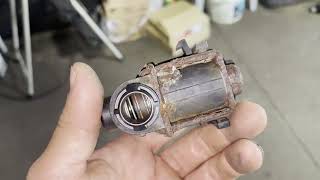
Est. part cost: $15-$40 - Leaking EVAP Vent Control Valve O-Ring 🔴 High Probability → Shop Vapor Canister Nissan has issued multiple Technical Service Bulletins (NTB17-082 series) specifically identifying a leak at the vent control valve O-ring as a primary cause for P0456 on the Juke (F15) and many other models. This is a known weak point where the rubber O-ring degrades. The TSB explicitly states to check this before other components and instructs technicians *not* to replace the entire valve if only the O-ring is leaking.
How to confirm: A smoke test is the definitive method. A technician injects smoke into the EVAP system and will see it leaking from the point where the vent control valve mounts to the charcoal canister, located near the rear driver's or passenger's side wheel well. Visual inspection of the O-ring may reveal cracks or hardening.
Typical fix: Replace the vent control valve O-ring seal. Per TSB NTB17-082b, the entire valve does not need to be replaced, only the O-ring. The part number for the seal is cited as 16618-JF00A. Important Update: A later revision of the TSB (NTB17-082E, from 2022) states the O-ring is no longer available as a separate service part and advises replacing the vent control valve as a complete assembly. This means depending on parts availability, you may need to buy the whole valve.
Est. part cost: $5-$15 (O-ring only), $60-$90 (Full Valve Assembly) - Faulty EVAP Canister Purge Valve 🟡 Medium Probability → Shop Vapor Canister This valve, located in the engine bay on top of the engine, can get stuck slightly open, creating a small leak path that the system detects. While less common than the rear vent valve issue for this specific code, it is still a possible failure point.
How to confirm: With the engine off, remove the valve and try to blow through it. It should be closed and not allow air to pass. A scan tool can also command the valve to open and close to test its function; a stuck valve will not click.
Typical fix: Replacement of the purge valve solenoid.
Est. part cost: $40-$90 - Cracked or Disconnected EVAP Hose ⚪ Low Probability Rubber hoses throughout the EVAP system can become brittle and crack over time due to heat and age, creating small leaks. This is a general vehicle aging issue, not specific to the Juke.
How to confirm: Visually inspect all accessible EVAP lines, especially at connection points. Squeezing the hoses may reveal hidden cracks. A smoke test is the most effective way to find a small crack that isn't obvious.
Typical fix: Replace the cracked section of hose.
Est. part cost: $10-$30
Rare But Worth Checking
- Cracked Charcoal Canister: → Shop Vapor Canister The plastic housing of the charcoal canister itself can develop hairline cracks, causing a leak. This is less common than valve or hose failures but is a possibility, especially if the vehicle has been impacted from below.
- Faulty Fuel Tank Pressure (FTP) Sensor: → Shop Fuel Tank In rare cases, the sensor that measures the pressure can fail and send incorrect data to the computer, making it think there is a leak when there isn't one. This will often be accompanied by other codes.
- Cracked Fuel Pump Housing / Seal: → Shop Fuel Pump In a documented case on a 2013 Sentra (a platform mate), a P0456 code that resisted all common fixes was ultimately traced to a tiny, heat-induced crack on the plastic top of the fuel pump assembly, under the rear seat. This leak was so small it did not show up on a smoke test until the fuel level was low.
Diagnosis Steps
- Read the code with an OBD-II scanner to confirm P0456 is present.
- Inspect the gas cap. Remove it, check the seal for damage, and retighten it until it clicks multiple times. Clear the code and drive for a few days, keeping the fuel level between 1/4 and 3/4 full to allow the EVAP monitor to run.
- If the code returns, perform a visual inspection of all visible EVAP hoses and connections in the engine bay and under the vehicle.
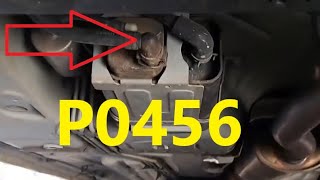
- Locate the EVAP canister and vent control valve. On the Juke, this is typically at the rear of the car, near the rear axle, sometimes behind a plastic shield. The valve is a small black plastic component mounted directly onto the larger black charcoal canister.
- Given the high probability on this vehicle, specifically inspect the EVAP canister vent control valve and its O-ring seal.
- If no obvious faults are found, the most effective next step is to have a professional perform a smoke test. This involves filling the EVAP system with a harmless, visible vapor to precisely locate the source of the tiny leak.
- Using a scan tool, a technician can command the purge and vent valves to open and close to test their electronic function and listen for an audible click.
Parts You'll Likely Need
- Fuel Cap
(OEM #17251-3JA0A)— This is the most frequent and simplest fix for any P0456 code, though less likely to be the sole cause on this specific vehicle according to TSBs.
Trusted brands: Nissan (OEM), Stant
OEM price range: $25-$40
Aftermarket price range: $15-$25 - EVAP Vent Control Valve O-Ring
(OEM #16618-JF00A)— A known failure point specifically identified by Nissan TSBs for causing code P0456 on the Juke. Note: TSB NTB17-082E (Feb 2022) indicates this part is no longer sold separately, requiring replacement of the entire valve assembly.
Trusted brands: Nissan (OEM)
OEM price range: $5-$15
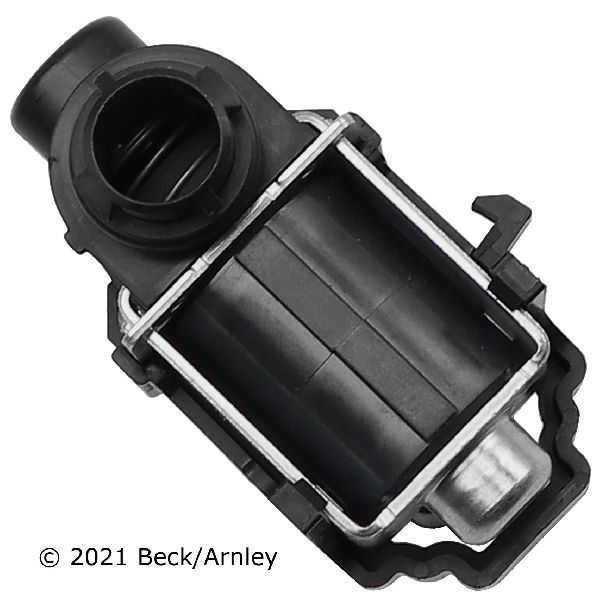
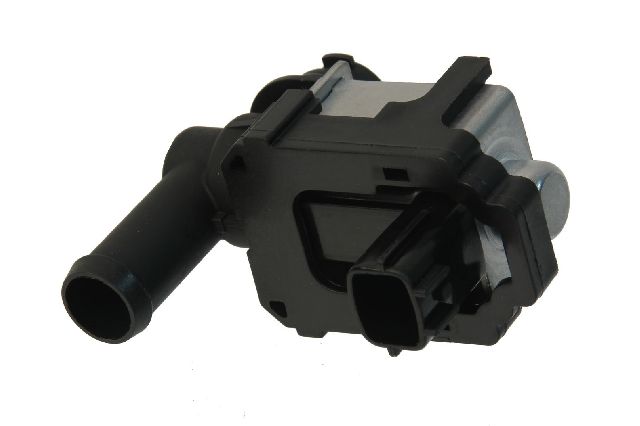
Aftermarket price range: $5-$10 - EVAP Canister Vent Control Valve
(OEM #14935-JF02C)— If the valve itself is faulty (stuck, rusted) or if the O-ring is no longer sold separately, the entire assembly must be replaced. This part often comes with a new O-ring. It supersedes previous part numbers like 14935-JF00A/B/D/E.
Trusted brands: Nissan (OEM), Bosch, Dorman (911-503 is a common cross-reference, but fitment for Juke specifically should be verified)
OEM price range: $60-$90
Aftermarket price range: $40-$70
Related Codes That Often Appear With This One
- P0442 — This code indicates a 'medium' EVAP leak. If the small leak from P0456 worsens (e.g., a crack in a hose gets bigger), it may trigger a P0442 code. Some owners report seeing both codes appear as the leak progresses.
- P0455 — This code indicates a 'large' EVAP leak. It can appear with P0456 if a component fails intermittently or if there are multiple leaks of different sizes.
Technical Service Bulletins (TSBs) & Recalls
- NTB17-082a/b/e: 'NISSAN; DTC P0456 CAUSED BY EVAP LEAK AT VENT CONTROL VALVE O-RING'
- NTB13-097g/j: 'EVAP LEAK DTC P0442, P0455, P0456 INFORMATION'
Platform-Specific Known Issues
- Nissan Technical Service Bulletin NTB17-082 explicitly states that DTC P0456 on the F15 Juke is commonly caused by a leak at the vent control valve O-ring. The bulletin advises technicians to replace only the O-ring, not the entire valve assembly, after confirming the leak location.
- An important update to the above is TSB NTB17-082E, issued in Feb 2022, which amends the procedure. It states the O-ring is no longer available as a separate service part and now instructs technicians to 'Replace the vent control valve as an assembly'. This is a critical change for repair strategy.
- TSB NTB13-097j clarifies diagnostic procedures for all EVAP codes (P0442, P0455, P0456) and emphasizes that a loose gas cap is a possibility but that proper flowchart diagnosis should be followed, hinting that other causes are common.
Mechanic-Grade Diagnostic Values
- EVAP Canister Vent Control Valve Solenoid Resistance — expected: 20 - 30 Ohms. Failure: A reading outside this range (especially infinite resistance) indicates a failed solenoid coil.
- EVAP Canister Purge Valve Solenoid Resistance — expected: 20 - 30 Ohms. Failure: A reading outside this range indicates a failed solenoid coil.
- Fuel Tank Pressure (FTP) Sensor Voltage (Key On, Engine Off) — expected: ~1.5V to 2.5V at atmospheric pressure (normal operating range 0.5V - 4.5V). Failure: Voltage stuck near 0V or 5V indicates a sensor or wiring fault. The voltage should change when vacuum or pressure is applied during testing.
- EVAP Vent/Purge Valve Power Supply — expected: Battery Voltage (~12V) on one pin of the connector with ignition on.. Failure: No voltage indicates a wiring or fuse issue upstream of the valve.
Scan Tool Commands That Help
- Nissan CONSULT-III plus: EVAP System Test (Active Test) — This is the factory-level procedure to diagnose the EVAP system. The test involves using bidirectional commands to seal the system and check for pressure changes.
- Professional OBD-II Scan Tool with Bidirectional Control: Vent Valve Control & Purge Valve Control — To test the system dynamically: 1. Command the Vent Valve 'Closed' to seal the system. 2. Command the Purge Valve 'Open' (e.g., 10-20%) while the engine is running to apply vacuum. 3. Monitor the Fuel Tank Pressure (FTP) sensor voltage. It should drop, indicating a vacuum is building. If it doesn't, there's a blockage or faulty purge valve. 4. Command the Purge Valve 'Closed' and observe the FTP voltage. If it rises back to atmospheric pressure quickly, a leak is present.
Wiring & Ground Locations
- EVAP Vent Control Valve Connector — At the EVAP canister vent control valve, located near the charcoal canister at the rear of the vehicle.. This connector provides power and the control signal from the ECM. One pin should have battery voltage with the key on, and the other is a switched ground provided by the ECM to activate the valve. Checking for power here is a key step in diagnosing a non-responsive valve.
- Ground Distribution Points — Various locations on the vehicle's chassis and engine block.. A poor ground for the EVAP system components or the ECM can cause erratic sensor readings or failed valve activation. Specific ground point locations (e.g., G1, G2) for the F15 Juke are detailed in the 'Ground Distribution' section of the factory service manual.
"I Checked Everything" — The Actual Cause
- A faulty Fuel Tank Pressure (FTP) sensor can send incorrect voltage readings to the ECM, causing it to believe a leak exists when the system is perfectly sealed. A smoke test would show no leaks, but the code would persist until the sensor itself is tested and replaced.
- In some vehicles, a failing or weak battery can cause low system voltage, leading to erratic behavior from various sensors, including the FTP sensor. This can cause the ECM to incorrectly flag a P0456 code. If the battery is over 4-5 years old and other common EVAP fixes have failed, testing the battery's health is a valid, though rare, diagnostic step.
OEM Part Supersession History
14935-JF00A, 14935-JF00B, 14935-JF00C, 14935-JF00D, 14935-JF00E→14935-JF02C— Part has been revised and updated by the manufacturer over time.16618-JF00A (Vent Valve O-Ring)→14935-JF02C (Full Valve Assembly)— The O-ring is no longer offered as a separate service part by Nissan as of 2022.
Heads up: According to TSB NTB17-082E, if the O-ring is the cause of the leak, the entire vent control valve assembly must now be replaced.
Model Year Variations Within This Range
- 2011-2014 vs 2015-2017: The EVAP Canister Purge Valve, located in the engine bay, may have a different part number for early models versus models from the 2015 facelift onward. Parts vendors distinguish between pre-2015 and post-2014 parts, so it is critical to verify the correct part for your specific model year when ordering.
Helpful Videos
Used OEM Parts in Stock
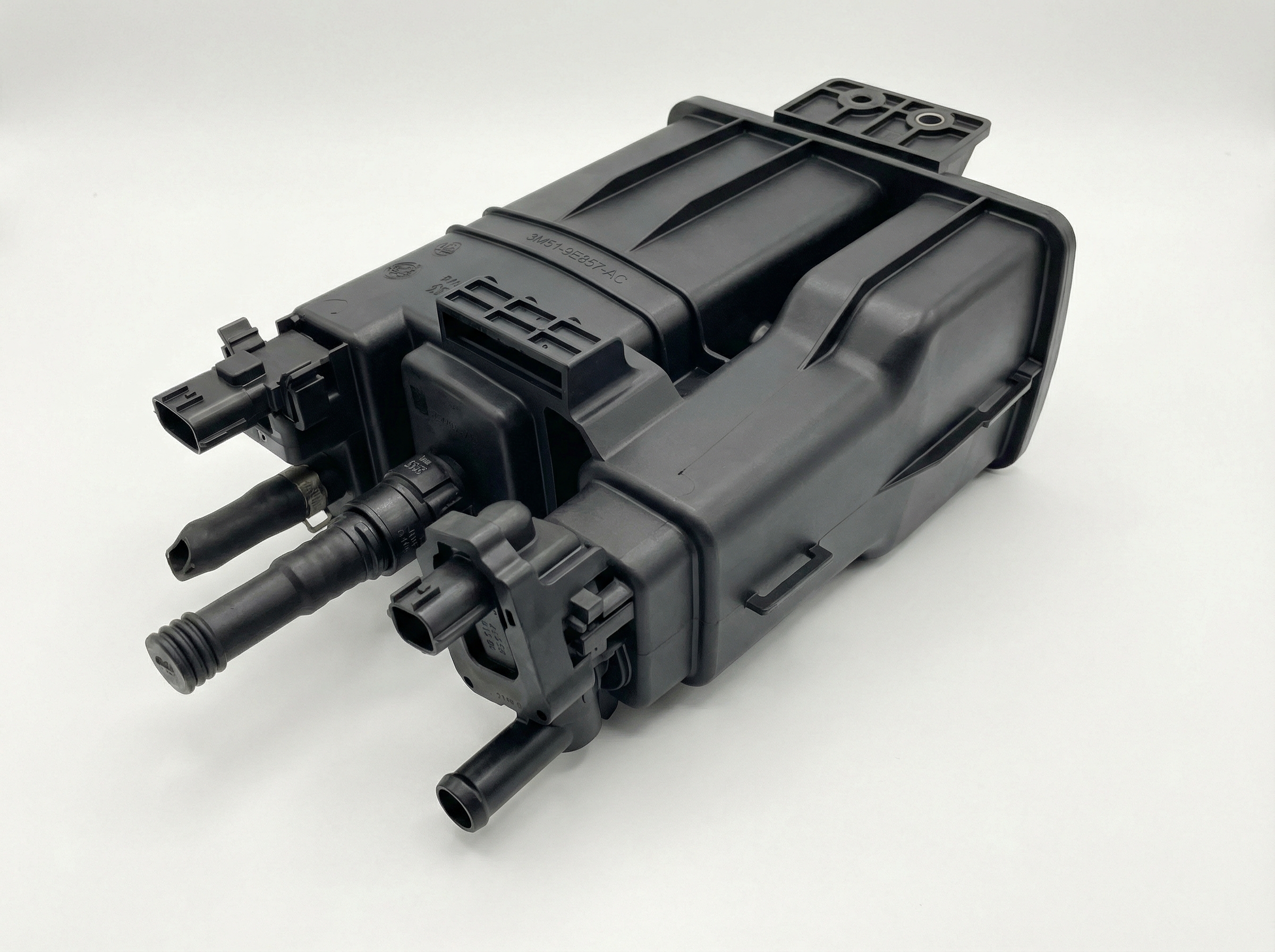
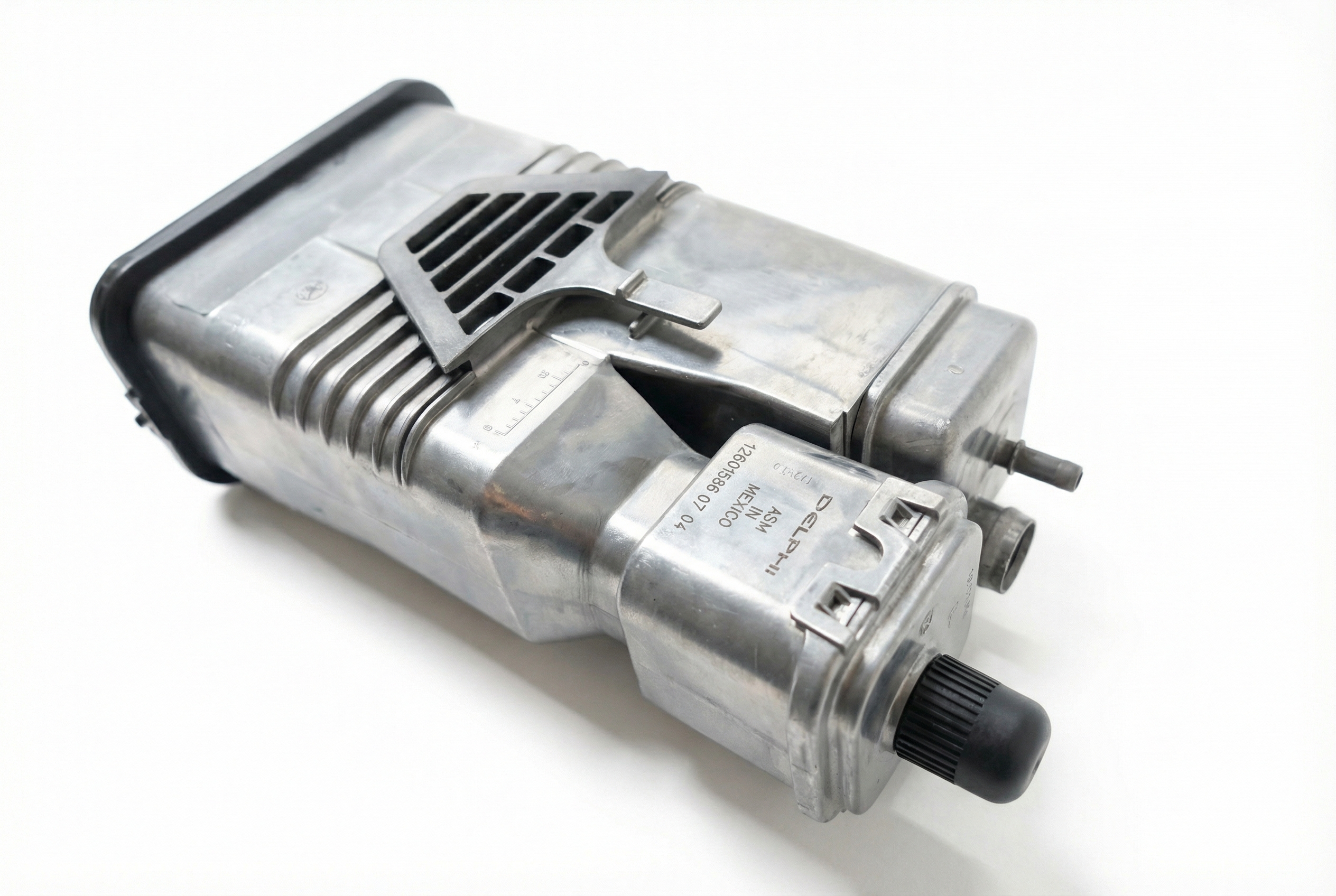
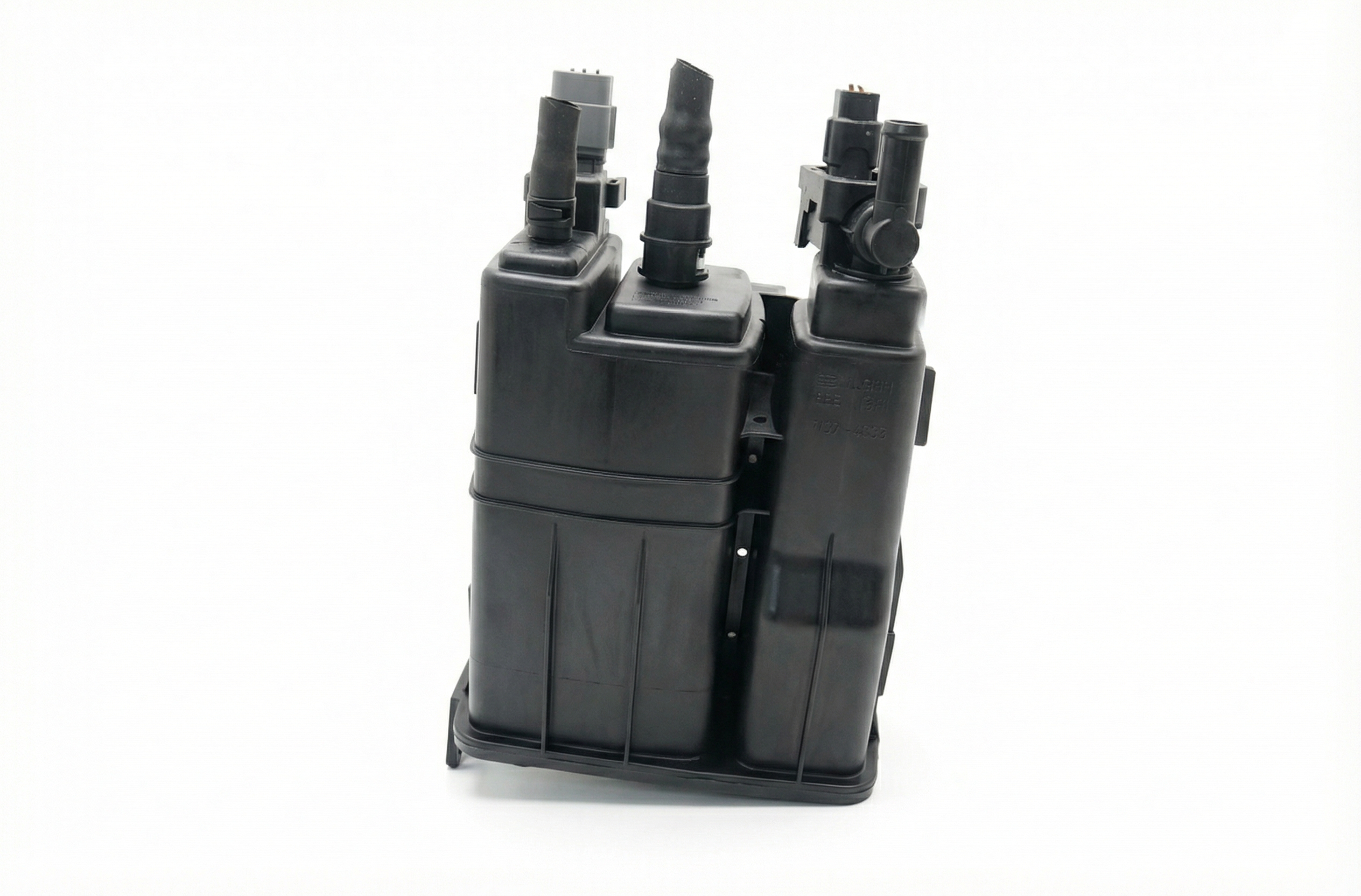
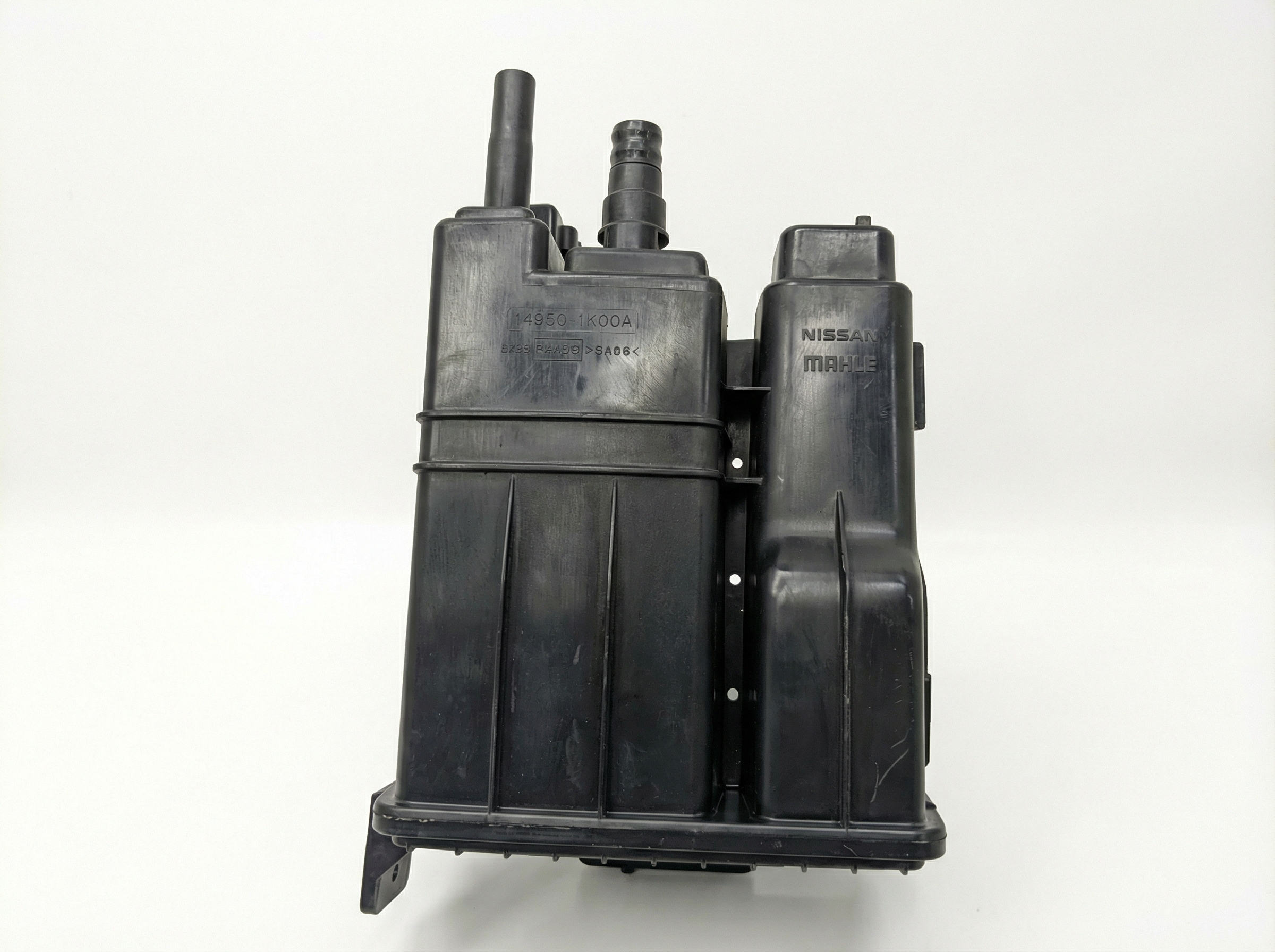
New Aftermarket Parts Available


The information in this article is provided for general reference and educational purposes only. Vehicle specifications, procedures, and part compatibility can vary by production date, trim level, and region. Always consult your vehicle's factory service manual and verify part numbers before purchasing or performing repairs. Safety-critical components such as airbags, seat belts, and braking systems should be installed by a qualified professional.
- Nissan JUKE:
- 🧭 Diagnostic Flowchart
- 🎬 Helpful Videos
- 🛍️ Shop This Part
- What's Unique About the 2011-2017 Nissan JUKE
- Symptoms You May Notice
- Most Likely Causes
- Rare But Worth Checking
- Diagnosis Steps
- Parts You'll Likely Need
- Related Codes That Often Appear With This One
- Technical Service Bulletins (TSBs) & Recalls
- Platform-Specific Known Issues
- Mechanic-Grade Diagnostic Values
- Scan Tool Commands That Help
- Wiring & Ground Locations
- "I Checked Everything" — The Actual Cause
- OEM Part Supersession History
- Model Year Variations Within This Range
- 🎟️ Get 5% Off