

P0456 on 2018-2025 Nissan KICKS: Causes and Fixes for EVAP Small Leaks
On a 2018-2025 Nissan Kicks, code P0456 is most often caused by a loose gas cap, a faulty EVAP vent control valve, or a leaking fuel filler tube seal. Start by tightening the gas cap; if that doesn't work, the EVAP vent control valve is a common failure point identified in Nissan TSBs. The original issue was a cheap O-ring, but newer TSBs advise replacing the entire valve assembly.
- P0456 on a Nissan Kicks indicates a very small leak in the emissions system.
- Always check the gas cap first; a loose or worn cap is the most common and cheapest fix.
- Nissan has identified specific known issues causing this code: the EVAP vent control valve O-ring (especially on 2019 models) and the fuel filler tube seal (on 2025 models).
- While the issue is not urgent and won't affect drivability, it will cause an automatic failure on an emissions test.
- A professional smoke test is the fastest way to accurately diagnose the leak's location if the gas cap isn't the problem.
What's Unique About the 2018-2025 Nissan KICKS
The Nissan Kicks, sharing its platform and components with other models like the Versa and Rogue, is susceptible to well-documented EVAP system failures. Nissan has issued several Technical Service Bulletins (TSBs) that point technicians directly to common failure points. The most notable is TSB NTB17-082E, which addresses a leak at the EVAP vent control valve O-ring. While earlier bulletins advised replacing just the O-ring, the latest revision mandates replacing the entire valve assembly as the O-ring is no longer sold separately. Additionally, for the newer 2025+ Kicks with a capless fuel filler, TSB NTB26-006 identifies a leaking fuel filler tube lower seal as a specific cause. This makes diagnosis more straightforward compared to vehicles where the cause is less predictable.
Diagnostic Flowchart
Tap your situation to follow the diagnostic path that matches what you're seeing on this vehicle.
Generation note: The 2018-2024 Kicks are the first generation (P15) and primarily use a 1.6L HR16DE engine. The 2025 model year marks the beginning of the second generation (P16), which features a larger 2.0L engine and a capless fuel filler system. 🎬 Watch: How to replace the purge valve on 2025 models. While the EVAP system components are similar, TSB NTB17-082E for the vent control valve applies to all 2008 and newer Nissans, covering both generations. However, a TSB for a leaking fuel filler tube seal (NTB26-006) specifically calls out the 2025 model year, linking the issue to the new capless design.
Symptoms You May Notice
- Check Engine Light is on
- A faint fuel smell, particularly after the vehicle has been parked.
- "Loose Fuel Cap" warning on the dashboard, even if the cap is tight.
- Difficulty starting the engine, especially right after refueling (less common).
- Replacing the entire EVAP vent control valve when only the O-ring was needed. TSB NTB17-082b specifically advised to only replace the O-ring. However, this is now a moot point as the most recent TSB, NTB17-082E, mandates replacing the entire valve assembly as the O-ring is no longer available separately.
- Repeatedly replacing the gas cap when the actual leak is at the vent control valve, which is a very common issue on Nissans. 🎬 Watch: A breakdown of the two most common Nissan fixes.
Most Likely Causes
- Loose or Faulty Gas Cap 🔴 High Probability → Shop Fuel Tank Cap This is the most common cause for a P0456 code on any vehicle due to user error (not tightening it enough) or the seal wearing out over time. It is highly recommended to use a genuine OEM cap if replacement is needed, as aftermarket caps are known to cause sealing issues.
How to confirm: Ensure the gas cap is tightened until it clicks at least once. Inspect the rubber seal on the cap for cracks, dirt, or signs of wear. A temporary test can be done by cleaning the seal and applying a thin layer of petroleum jelly to see if it improves the seal.
Typical fix: Tighten or replace the gas cap.
Est. part cost: $20-$45 for OEM - EVAP Vent Control Valve or O-Ring Leak 🔴 High Probability → Shop Vapor Canister Vent Valve Nissan issued TSB NTB17-082E specifically for this issue on all 2008+ models, including the Kicks. The O-ring that seals the valve to the canister fails, causing a small leak. The valve itself, located near the charcoal canister at the rear of the vehicle, can also fail from exposure to road debris and moisture.
How to confirm: A smoke test is the definitive method. A technician will inject smoke into the EVAP system and look for it escaping from the area where the vent control valve mounts to the EVAP canister.
Typical fix: Replace the entire vent control valve assembly. The most recent TSB (NTB17-082E) states the O-ring is no longer sold separately and instructs technicians to replace the whole valve. The part number for the valve assembly often supersedes older numbers and may be 14935-JF02C.
Est. part cost: $60-$90 - Leaking Fuel Filler Tube Lower Seal 🟡 Medium Probability → Shop Fuel Filler Neck This issue is specifically identified for the 2025 model year Kicks (and other models with capless fuel fillers) in Nissan TSB #NTB26-006. It indicates a potential design or material issue with the seal on the newer generation's capless system.
How to confirm: A smoke machine test will show a visible leak coming from the fuel filler tube lower seal, as described in the TSB. The TSB suggests a preliminary fix attempt by inserting and removing the supplied fuel funnel five times to try and reseat the seal before proceeding with replacement.
Typical fix: If reseating the seal fails, the entire fuel filler tube must be replaced.
Est. part cost: $30-$70 - Faulty EVAP Canister Purge Valve 🟡 Medium Probability → Shop Vapor Canister The purge valve (or purge solenoid) is a common failure point on many modern vehicles. It can get stuck slightly open, creating a constant small leak path when it should be closed.
How to confirm: The valve, normally located in the engine bay, can be tested to see if it holds a vacuum when closed. When removed from the vehicle, you should not be able to blow air through it when it is unpowered.
Typical fix: Replace the canister purge valve.
Est. part cost: $50-$150
Rare But Worth Checking
- Cracked or Brittle EVAP Hose or Line: Rubber and plastic lines, especially small vacuum hoses in the engine bay, can become brittle over time and develop small cracks. These are often difficult to see without a smoke test.
- Cracked Charcoal Canister: → Shop Vapor Canister The canister body itself can develop hairline cracks, leading to a small leak. This is less common than valve or seal failures.
- Faulty Fuel Tank Pressure Sensor: → Shop Fuel Tank A malfunctioning fuel tank pressure sensor can send incorrect data to the ECM, making the computer think there is a leak when there isn't. This will often, but not always, be accompanied by other trouble codes.
Diagnosis Steps
- Inspect the Gas Cap: For models with a cap, remove it, check the seal for damage or debris, and reinstall it, ensuring it clicks several times. For capless models, inspect the filler opening for debris.
- Clear the Code: Use an OBD-II scanner to clear the code and drive for a few days to see if it returns. The EVAP monitor runs only under specific conditions (e.g., stable fuel level, specific ambient temperature, after the vehicle has sat for several hours), so it may take time for the light to reappear.
- Visual Inspection: Visually inspect all accessible EVAP hoses and lines between the engine bay and the fuel tank for obvious cracks, disconnections, or damage. Pay close attention to the small vacuum lines around the purge valve in the engine bay.
- Professional Smoke Test: This is 🎬 See how a smoke machine pinpointed this exact leak. the most effective diagnostic step. A mechanic will command the vent valve closed with a scan tool and inject pressurized smoke into the EVAP system. The smoke will escape from the location of the leak, making it easy to pinpoint, whether it's the vent valve O-ring, a hose, or the filler neck seal.
- Test Solenoids: The purge and vent solenoids can be tested with a scan tool to ensure they are actuating correctly or tested with a hand-held vacuum pump to see if they seal properly.
Parts You'll Likely Need
- Gas Cap
(OEM #17251-1F52A (verify with VIN))— This is the most frequent and simplest fix for a P0456 code. The seal wears out over time. Using an OEM cap is strongly recommended.
Trusted brands: Nissan OE, Stant
OEM price range: $25-$40
Aftermarket price range: $15-$30 - EVAP Vent Control Valve
(OEM #14935-JF02C (supersedes 14935-JF00A, -B, -C, -D, -E))— A known failure point documented in Nissan TSB NTB17-082E. The original O-ring leak now requires the replacement of the entire valve assembly.
Trusted brands: Nissan OE
OEM price range: $60-$90 - EVAP Canister Purge Valve
(OEM #14930-EN20A (verify with VIN))— A common failure item that gets stuck open, preventing the system from sealing properly.
Trusted brands: Bosch, Hitachi, Delphi
OEM price range: $100-$160
Aftermarket price range: $40-$90
Related Codes That Often Appear With This One
- P0442 — This code indicates a medium-sized EVAP leak. If a small leak (P0456) worsens, or if there are multiple small leaks, it may eventually trigger a P0442.
- P0455 — This code indicates a large EVAP leak. It often appears with P0456 if there are multiple leak points or if a component fails catastrophically (e.g., a hose becomes disconnected).
Technical Service Bulletins (TSBs) & Recalls
- NTB26-006: Points to a leaking fuel filler tube lower seal on 2025 models with capless systems.
- NTB17-082E: The most current bulletin, superseding previous versions. It applies to all 2008+ Nissans and states that if P0456 is caused by a leak at the vent valve O-ring, the entire valve assembly must be replaced.
- NTB17-082b: An older version of the bulletin that advised replacing only the O-ring (part 16618-JF00A). This part is no longer sold separately for this repair.
- NTB13-097J / NTB13-097g: General information bulletins for EVAP leak codes P0442, P0455, and P0456, confirming their relevance and instructing technicians to first rule out a loose fuel cap.
Platform-Specific Known Issues
- A leaking O-ring on the EVAP vent control valve is a known issue for the Kicks and many other Nissan models, as detailed in TSB #NTB17-082E. The current fix requires replacing the entire valve assembly.
- For the 2025 Kicks with a capless fuel filler, a leaking fuel filler tube lower seal has been identified by Nissan as a specific cause in TSB #NTB26-006.
Mechanic-Grade Diagnostic Values
- EVAP Canister Vent Control Valve Solenoid Resistance — expected: 48 - 65 Ohms. Failure: A reading of 0 Ohms (short circuit) or infinite/OL (open circuit) indicates a failed coil.
- EVAP Canister Purge Valve Solenoid Resistance — expected: 30 - 38 Ohms. Failure: A reading significantly outside this range, or 0/OL, indicates a faulty solenoid coil.
- Fuel Tank Pressure (FTP) Sensor Voltage (Key On, Engine Off) — expected: ~1.5V - 2.5V (varies by atmospheric pressure and fuel level). Failure: Voltage stuck high (e.g., near 5V) or low (near 0V) regardless of gas cap removal, or does not change when vacuum is applied to the system.
Hidden / Shadow Codes Worth Checking
- Mode $06, TID:$82: This is a non-continuous monitor test ID for the EVAP system small leak test. A failing value in this test can indicate a borderline leak condition even before the P0456 diagnostic has fully matured and set a permanent code. (see via An advanced OBD-II scan tool with Mode $06 functionality. The raw data may require Nissan-specific definitions to interpret correctly.)
Scan Tool Commands That Help
- Nissan CONSULT-III plus: EVAP System Leak Check (Active Test) — This is the dealer-level procedure used to verify a repair. The scan tool commands the vent control valve closed, allowing the technician to pressurize the system with tool J-42909 and monitor for pressure decay to confirm the leak is fixed.
- Advanced Generic Scan Tool: Vent Solenoid Activation / EVAP System Test — Used to command the vent valve closed to seal the system for a smoke test. It can also be used to check for a weak valve seal by closing the valve and monitoring the FTP sensor reading for a pressure drop over several minutes.
Wiring & Ground Locations
- EVAP Vent Control Valve Connector — At the EVAP vent control valve, mounted on or near the charcoal canister at the rear of the vehicle.. This connector provides power and ground to the valve. It is common for one pin to have constant 12V power with the key on, while the other is a ground controlled by the ECM. A wiring issue here can prevent the valve from closing, causing a leak test to fail.
- Fuel Tank Pressure (FTP) Sensor Connector — Typically mounted on the fuel tank or on the EVAP canister.. This is a 3-wire connector carrying a 5V reference, a ground, and the signal wire. A fault in the 5V reference or ground wire can cause the sensor to send incorrect readings, falsely triggering a P0456 code.
Real Owner Repair Stories
- YouTube comment on a P0456 repair video for a Nissan Sentra (2005 Nissan Sentra (demonstrates a common Nissan issue)) — Intermittent P0456 Check Engine Light that would come and go for months.
❌ Tried (didn't work) Replacing the gas cap with a new OEM part from the dealership.
✅ What actually fixed it The video creator replaced the entire EVAP canister vent valve. A commenter pointed out that Nissan TSB NTB17-082a specified the actual failure was just the O-ring on the valve, and replacing the valve assembly worked because it came with a new O-ring.
"I Checked Everything" — The Actual Cause
- If a comprehensive smoke test reveals no visible leaks, the most likely culprit is a faulty Fuel Tank Pressure (FTP) sensor. The sensor may be sending incorrect voltage signals to the ECM, making the computer believe a pressure drop (leak) has occurred when the system is mechanically sealed. This is a classic case of a sensor fault mimicking a physical leak.
OEM Part Supersession History
14935-JF00A, 14935-JF00B, 14935-JF00C, 14935-JF00D, 14935-JF00E→14935-JF02C— Part revision and consolidation for the EVAP Vent Control Valve. The latest TSBs instruct replacing the entire assembly rather than just the O-ring, making the new assembly the standard repair part.14930-ET000, 14930-EN200→14930-EN20A— Part revision for the EVAP Canister Purge Valve.
Model Year Variations Within This Range
- 2025-: The introduction of the second-generation (P16) Kicks with a capless fuel filler system brought a new, specific failure point. TSB NTB26-006 addresses a leak at the fuel filler tube lower seal, a problem not applicable to the 2018-2024 models with traditional gas caps.
Helpful Videos
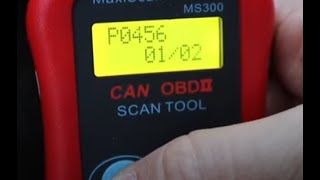
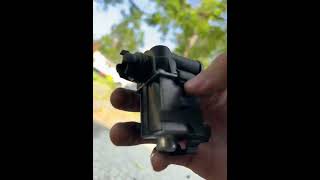
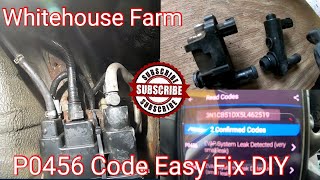
Used OEM Parts in Stock
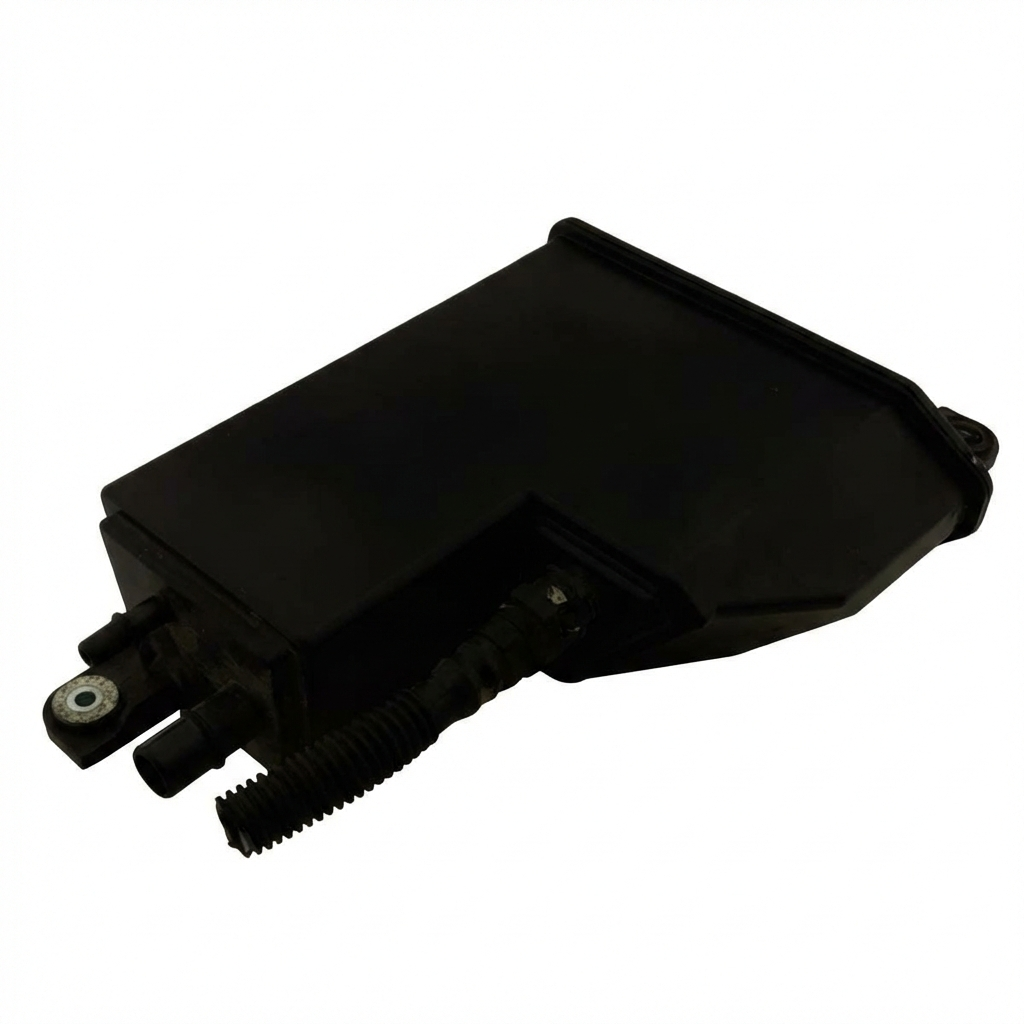
New Aftermarket Parts Available


The information in this article is provided for general reference and educational purposes only. Vehicle specifications, procedures, and part compatibility can vary by production date, trim level, and region. Always consult your vehicle's factory service manual and verify part numbers before purchasing or performing repairs. Safety-critical components such as airbags, seat belts, and braking systems should be installed by a qualified professional.
- Nissan KICKS:
- 🧭 Diagnostic Flowchart
- 🎬 Helpful Videos
- 🛍️ Shop This Part
- What's Unique About the 2018-2025 Nissan KICKS
- Symptoms You May Notice
- Most Likely Causes
- Rare But Worth Checking
- Diagnosis Steps
- Parts You'll Likely Need
- Related Codes That Often Appear With This One
- Technical Service Bulletins (TSBs) & Recalls
- Platform-Specific Known Issues
- Mechanic-Grade Diagnostic Values
- Hidden / Shadow Codes Worth Checking
- Scan Tool Commands That Help
- Wiring & Ground Locations
- Real Owner Repair Stories
- "I Checked Everything" — The Actual Cause
- OEM Part Supersession History
- Model Year Variations Within This Range
- 🎟️ Get 5% Off