

P0456 on 2012-2019 Porsche 911: EVAP System Very Small Leak Causes and Fixes
For a 2012-2019 Porsche 911, a P0456 code is most often caused by a loose or faulty gas cap. If that's not the issue, the next most likely culprit is a failed or simply loose EVAP purge valve in the front trunk ('frunk'). Less commonly, a second purge valve assembly in the engine bay may be the cause.
- Always start with the simplest fix: check that your gas cap is tight. If it's old, replace it.
- If the code returns, the most likely cause on a 991 is a faulty EVAP valve, either in the frunk or the engine bay.
- A professional smoke test is the most efficient way to find the leak without guessing and replacing unnecessary parts.
- Be aware that repairs in the engine bay, especially on 991.2 models, can be significantly more expensive than those for components in the frunk.
What's Unique About the 2012-2019 Porsche 911
On the 911 (991 generation), the EVAP system has key components in both the front trunk ('frunk') and the rear engine bay. While a loose gas cap is a universal cause, 991 owners frequently report failures of specific EVAP valves. There is a notable difference between the 991.1 and 991.2 sub-generations; some repairs, particularly for the purge valve and vent lines in the engine bay on 991.2 models, can be significantly more labor-intensive and costly, sometimes requiring the engine to be lowered for access.
Generation note: Yes, this range covers the entire Porsche 911 '991' generation, which is split into two phases: the 991.1 (2012-2016) with naturally aspirated engines, and the 991.2 (2017-2019) with turbocharged engines for Carrera models. While many EVAP parts are similar, the location and labor to replace engine-bay components can differ. For example, replacing the engine bay purge valve assembly on a 991.2 can be more complex and may require lowering the engine slightly for access.
Symptoms You May Notice
- Check Engine Light is on (may display as "Engine Control Fault, Driving Permitted").
- A faint fuel smell may be present in rare cases, typically with larger leaks. If a fuel smell is detected inside the cabin, the vehicle should be inspected by a professional immediately.
- No noticeable impact on drivability or performance.
- A 'pending' P0456 code may be stored and readable with a scanner without illuminating the Check Engine Light.
- Replacing expensive components like the Leak Detection Pump or engine bay purge valve before thoroughly checking, cleaning, and/or replacing the inexpensive gas cap.
- Assuming the purge valve is bad when it may just be a loose connection at the charcoal canister in the frunk.
Most Likely Causes
- Loose or Faulty Gas Cap 🔴 High Probability → Shop Fuel Tank Cap The gas cap seal is a simple rubber O-ring that can dry out, crack, or get dirty over time, preventing a proper seal. This is the most common and simple cause for any vehicle. Some owners have specifically reported that the optional 'Aluminum Look' gas cap can cause sealing issues, triggering the P0456 code.
How to confirm: Ensure the cap is tightened until it clicks at least three times. Inspect the green or black rubber O-ring for any cracks, stiffness, or debris. If it looks worn, it's best to replace it. If you have the aluminum-look cap and the code persists, try swapping to the standard OEM black plastic cap.
Typical fix: Tighten or replace the gas cap.
Est. part cost: $25-$50 - EVAP System Purge Valve (Frunk Location) 🟡 Medium Probability → Shop Vapor Canister Forum discussions for the 991 platform frequently point to the EVAP purge valve located in the frunk as a culprit. Sometimes the valve itself fails, but often the connection to the charcoal canister simply becomes loose, creating a small leak. One owner reported fixing the code just by pushing the valve back on tightly.
How to confirm: A smoke test is the most reliable method. A technician will inject smoke into the EVAP system; if the valve or its connection is leaking, smoke will be seen exiting it. A visual and physical check is also worthwhile. Remove the main plastic cover in the frunk (above the battery) and check that the valve is securely seated on the charcoal canister. A functional valve should have a resistance of 26 ± 4 ohms at 20°C. 🎬 Watch: A quick guide to testing the vapor purge valve.
Typical fix: Reseat or replace the faulty purge valve. The valve in the frunk is a very simple DIY job, often taking less than a minute to replace.
Est. part cost: $150-$250 - EVAP System Purge Valve / Vent Line Assembly (Engine Bay Location) ⚪ Low Probability → Shop Vapor Canister A second purge valve and line assembly is located in the engine bay. The plastic lines can become brittle and crack from engine heat, or the valve itself can fail. This is a known issue, particularly on 991.2 models.
How to confirm: A smoke test is the primary method for confirming a leak in this area, as the components are difficult to access and inspect visually. The leak would originate from the left side of the engine bay.
Typical fix: Replace the faulty purge valve and line assembly. This is more involved than the frunk-mounted valve, requiring removal of the rear wing and airbox on 991.1 models. On 991.2 models, it can be even more complex, potentially requiring the engine to be lowered.
Est. part cost: $200-$300 - EVAP Leak Detection Pump (LDP) Failure ⚪ Low Probability → Shop Vapor Canister The LDP, also called the DMTL pump, is a small electric pump that pressurizes the system for testing. Its internal components can fail, or the plunger can get dirty, preventing a proper seal and causing it to report a leak. The pump housing itself can also crack.
How to confirm: This is best diagnosed with a Porsche-specific scan tool (PIWIS) that can command the pump to run and monitor its status. A smoke test can also reveal a cracked pump housing. The LDP is located in the frunk, attached to the charcoal canister.
Typical fix: Replace the Leak Detection Pump assembly. Some owners have had success simply cleaning the pump's internal plunger.
Est. part cost: $200-$300
Rare But Worth Checking
- Cracked Charcoal Canister: → Shop Vapor Canister The charcoal canister itself can develop a hairline crack, causing a leak. This is uncommon but is usually found during a smoke test when smoke emanates from the canister body itself. Overfilling the fuel tank past the automatic shut-off can saturate the canister with liquid fuel, leading to its premature failure.
- Rodent Damage to EVAP Hoses: In one documented case on Rennlist, a persistent P0456 was caused by rodents chewing through an EVAP vacuum hose in the engine bay. The repair was extremely labor-intensive, requiring the engine to be lowered for access, resulting in a multi-thousand dollar repair bill.
Diagnosis Steps
- Read the code with an OBD-II scanner to confirm P0456 is the primary code. Note if it is 🎬 Watch: This video explains the P0456 code and common fixes. 'pending', 'stored', or 'permanent'.
- Inspect the gas cap. Remove it, check the seal for damage, and clean it. Reinstall and ensure it clicks several times. Clear the code. If you have the optional aluminum-look cap, consider testing with a standard black plastic cap.
- Drive the vehicle for several days to see if the Check Engine Light returns. The EVAP monitor runs only under specific conditions, often during an overnight cooldown with the fuel tank between 1/4 and 3/4 full.
- If the light returns, perform a visual and physical inspection of the EVAP components in the frunk. Remove the main plastic cover above the battery. Locate the purge valve on the charcoal canister (passenger side) and firmly press on it to ensure it's not loose. Check associated hoses for any obvious cracks or loose connections.
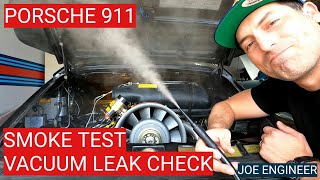
- If no obvious issues are found, the next step is a professional smoke test. 🎬 See how to perform a smoke test on a Porsche. This test fills the EVAP system with a harmless, visible smoke under low pressure.
- Observe where the smoke escapes. Common points include the frunk purge valve, the LDP, the gas cap seal, or a cracked hose/valve in the engine bay.
- Replace the component identified by the smoke test as the source of the leak.
- After repair, clear the codes and perform a drive cycle to confirm the fix.
Parts You'll Likely Need
- Fuel Cap
(OEM #9P1201241)— This is the most frequent and simplest fix for a P0456 code. The seal wears out over time. The optional aluminum-look cap has also been cited as a cause.
Trusted brands: Genuine Porsche
OEM price range: $25-$50
Aftermarket price range: $15-$30 - EVAP System Purge Valve (Frunk)
(OEM #99711012900)— A very common failure point on the 991 and 981 platforms, as reported by owners. It can get stuck, its housing can leak, or the connection can simply come loose.
Trusted brands: Bosch, Genuine Porsche
OEM price range: $180-$250
Aftermarket price range: $100-$150 - EVAP System Purge Valve / Vent Line Assembly (Engine Bay)
(OEM #9A111009120)— This entire assembly, located in the engine bay, can fail due to cracked lines or a faulty integrated valve. It is a less common but more labor-intensive repair.
Trusted brands: Genuine Porsche
OEM price range: $200-$280 - EVAP Leak Detection Pump (LDP)
(OEM #99160662105)— This pump is critical for the system's self-test and can fail, leading to a leak code. A 997.2 owner reported this part being recommended by a dealer as a common fix, though it did not solve their specific issue.
Trusted brands: Bosch, Genuine Porsche
OEM price range: $200-$300
Aftermarket price range: $150-$200
Related Codes That Often Appear With This One
- P0455 — Indicates a large EVAP leak. If both are present, it may point to a completely disconnected hose or a very bad seal.
- P0442 — Indicates a medium-sized EVAP leak. Seeing this with P0456 might suggest an intermittent or growing leak.
- P24D6 — Indicates a Tank Pressure Sensor Electrical Fault. This code has been reported by 991.2 owners in conjunction with EVAP issues, pointing to a faulty sensor in the engine bay that often requires lowering the engine to replace.
Platform-Specific Known Issues
- On 991.2 models (2017-2019), replacement of the engine bay-mounted EVAP vent line or pressure sensor can be extremely labor-intensive, with some owners reporting dealer quotes requiring the engine to be partially lowered, leading to very high repair costs.
- The optional 'Aluminum Look' gas cap has been identified by some owners as a source of the P0456 code, which was resolved by switching back to the standard black plastic OEM cap.
Mechanic-Grade Diagnostic Values
- EVAP Canister Purge Valve Resistance — expected: 26 ± 4 Ohms at 20°C (68°F). Failure: A reading significantly outside this range indicates an electrical fault in the valve's solenoid coil.
- EVAP System Test Conditions (DMTL) — expected: Vehicle Speed: 0; Engine Speed: 0; Fuel Level: 10-54 liters; Battery Voltage: 11.02-14.5V; Ambient Temp: 4-35.3°C. The test runs after the engine has been off for at least 10 seconds following a drive of over 20 minutes.. Failure: The EVAP monitor will not run if these conditions are not met, preventing diagnosis. This is critical information for verifying a fix after a repair.
Hidden / Shadow Codes Worth Checking
- N/A (Contextual Sub-Faults): While Porsche does not use 'shadow codes' in the same way as other manufacturers, a Porsche technical bulletin notes that for EVAP faults like P0456, the associated 'fault combination and sub-fault information may vary depending on engine type and DME software version'. This means the PIWIS dealer tool can provide more granular diagnostic detail than a generic code reader. (see via Porsche PIWIS Tester (version 2 or 3))
Scan Tool Commands That Help
- PIWIS Tester: Tank Leakage Test (Short Test) — This function is used to command the vehicle's onboard diagnostic system to perform the EVAP leak test on demand, rather than waiting for the automatic drive cycle conditions to be met. It is essential for verifying that a repair has fixed the leak without having to wait several days.
- PIWIS Tester: Automatic/Manual Programming & Coding — If a control unit related to the emissions system (like the DME) is replaced, it must be coded to the vehicle's VIN and specific configuration. The PIWIS tool is required for this procedure.
- PIWIS Tester: View Actual Values — Allows a technician to monitor live data from all vehicle sensors, including the fuel tank pressure sensor, valve states, and LDP pump motor current draw, to diagnose component-level failures.
Wiring & Ground Locations
- CAN Gateway Module — Located on the driver's side, above the fuse box and under the steering column.. This is a central communication hub. A technician may need to tap into this to diagnose network communication issues between the DME and other modules. Pinouts can vary: one source indicates CAN High is Pin A10 (orange/brown) and CAN Low is Pin A20 (orange/red), while another suggests CAN High is a white wire and CAN Low is a light blue wire. Cross-referencing with a vehicle-specific diagram is critical.
- Engine Bay Purge Valve Assembly — Located on the left (driver's) side of the engine bay, mounted to a bracket on the cylinder 1-3 intake runner.. Knowing the precise location is key for visual inspection and smoke testing, as access requires removing the rear wing and potentially the airbox.
Real Owner Repair Stories
- Rennlist user 'RP4S911' (Porsche 991 with 17,000 miles) — Check Engine Light with code P0456.
❌ Tried (didn't work) Replacing the gas cap.
✅ What actually fixed it The EVAP purge valve located in the frunk had become slightly loose from its connection to the charcoal canister. The valve itself was not faulty. Firmly pushing the original valve back on until it was tightly seated resolved the code. - 6SpeedOnline user 'skyak' (2012 Porsche 911 Turbo S (997.2, but parts and system are highly relevant to 991.1)) — Persistent P0456 code, preventing the car from passing a smog test.
❌ Tried (didn't work) Replacing the gas cap., Replacing the Fuel Vapor Leak Detection Pump (LDP).
✅ What actually fixed it After a smoke test produced inconclusive results and common parts were replaced, the final fix was replacing the 'Fuel Tank Vent' line assembly (Part No. 9A111009371). - Rennlist user 'jpc' (2015 Porsche 991.1 Base) — P0456 code accompanied by a faint smell of gas inside the car.
❌ Tried (didn't work) Initial inspection of the gas cap.
✅ What actually fixed it Diagnosis at the dealership revealed that rodents had chewed through an EVAP vacuum hose in the engine bay. The repair required lowering the engine for access and took 15 hours of labor, costing over $3,000.
"I Checked Everything" — The Actual Cause
- In a well-documented case on a 997.2 Turbo S (which shares EVAP architecture with the 991), a persistent P0456 was not resolved by replacing the gas cap or the Leak Detection Pump. A smoke test performed by an independent shop was 'somewhat inconclusive'. The problem was ultimately solved by replacing the engine bay's Fuel Tank Vent line assembly, suggesting the leak was in a location or of a nature that the smoke test did not clearly reveal.
When the Usual Fixes Don't Work
- While the gas cap and frunk purge valve are the most common culprits, they are not always the cause. In one instance, after a new gas cap and a new Leak Detection Pump failed to fix a P0456, the root cause was determined to be a cracked Fuel Tank Vent line in the engine bay, which was found even after a smoke test was inconclusive. This highlights that if the simple fixes don't work, a more complex and hard-to-find leak in the engine bay plumbing is a real possibility and should be investigated before replacing more components in the frunk.
OEM Part Supersession History
99711012900→N/A— This is the widely cited part number for the frunk-mounted EVAP purge valve.
Heads up: Some related EVAP components, like certain purge solenoids, are noted as 'Exc. X51 Power Package'. Always verify part compatibility with the vehicle's specific options, as performance packages can alter emissions-related plumbing.
Model Year Variations Within This Range
- 2017-2019 (991.2 models): The 991.2 Carrera models feature 3.0L twin-turbo engines, which alters the engine bay layout compared to the naturally aspirated 991.1. This can make accessing EVAP lines and valves on the engine more complex. The rear engine cover also changed from horizontal slats (991.1) to vertical slats (991.2).
- 2016 onwards (start of 991.2): The interior received a significant update, most notably the Porsche Communication Management (PCM) system, which gained support for Apple CarPlay. The steering wheel design was also updated.
Diagnostic Flowchart
Real Owner Stories
Aggregated from forums and TSBs cited above. Mileages and costs reflect what owners reported in those sources.
2007 Porsche 911 Carrera S — 17000 miles
Symptoms: Got the P0456 small evap leak trouble code shortly after filling the tank to half-full with premium. The car ran fine, but the code came back immediately upon restart after clearing it.
What fixed it: Replaced the purge valve with a correct Bosch unit. Tested the old valve and found it was leaking.
Source hint: Rennlist
Porsche 911 (991) — ~20000 miles
Symptoms: Triggered a P0456 code for a very small EVAP leak on a low-mileage vehicle.
What fixed it: Found the purge valve in the frunk was loose. Pushing it back on securely solved the issue.
Source hint: Rennlist.com: 'P0456 Code - Very Small EVAP leak - FIXED'
2017 Porsche 911 (991.2)
Symptoms: Experienced a recurring P0456 error code.
What fixed it: Traced the leak to the optional aluminum gas cap not sealing correctly; switching to the standard OEM cap fixed it permanently.
Source hint: Rennlist.com: 'Aluminum Look Gas Cap may produce P0456 Error Code'
Porsche 911 (991)
Symptoms: P0456 code accompanied by a noticeable fuel smell.
What fixed it: Diagnosed as a rodent-chewed vacuum hose in the engine bay, requiring 15 hours of labor to replace.
Source hint: Rennlist.com: 'P0456 Tank system very tiny leak'
Related OBD-II Codes
Frequently Asked Questions
I have the optional 'Aluminum Look' gas cap on my 911. Could this be causing my P0456 code?
Why is the repair quote for an EVAP vent line so high on my 2017-2019 (991.2) Porsche 911?
Where is the EVAP purge valve located on the 991 platform, and can I check it myself?
Can overfilling my 911's gas tank cause a P0456 code?
What are the specific conditions required for the EVAP monitor to run and clear a pending P0456 code?
Does the P0456 code affect drivability on the 911?
Helpful Videos
![How to Fix P0456 Engine Code in 7 Minutes [7 DIY Methods / Only $3.44]](https://img.youtube.com/vi/njt81AALI3U/mqdefault.jpg)
![How to Fix P0456 Engine Code in 3 Minutes [2 DIY Methods / Only $4.44]](https://img.youtube.com/vi/v_QDSjd1-Lw/mqdefault.jpg)
Used OEM Parts in Stock
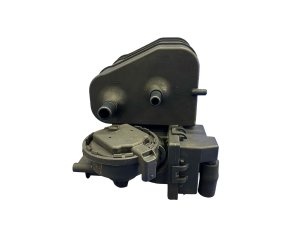
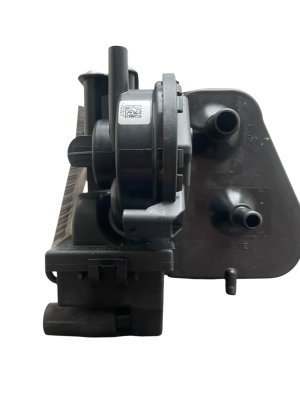
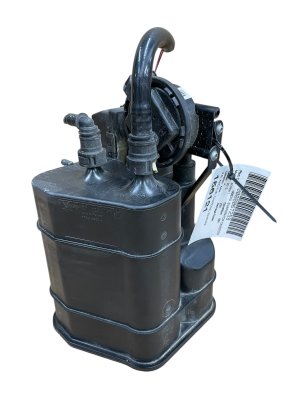
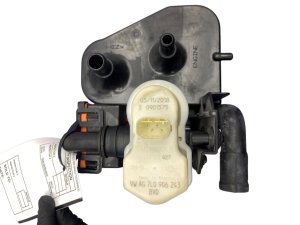
New Aftermarket Parts Available


The information in this article is provided for general reference and educational purposes only. Vehicle specifications, procedures, and part compatibility can vary by production date, trim level, and region. Always consult your vehicle's factory service manual and verify part numbers before purchasing or performing repairs. Safety-critical components such as airbags, seat belts, and braking systems should be installed by a qualified professional.
- Porsche 911:
- 🧭 Diagnostic Flowchart
- 🎬 Helpful Videos
- 🛍️ Shop This Part
- What's Unique About the 2012-2019 Porsche 911
- Symptoms You May Notice
- Most Likely Causes
- Rare But Worth Checking
- Diagnosis Steps
- Parts You'll Likely Need
- Related Codes That Often Appear With This One
- Platform-Specific Known Issues
- Mechanic-Grade Diagnostic Values
- Hidden / Shadow Codes Worth Checking
- Scan Tool Commands That Help
- Wiring & Ground Locations
- Real Owner Repair Stories
- "I Checked Everything" — The Actual Cause
- When the Usual Fixes Don't Work
- OEM Part Supersession History
- Model Year Variations Within This Range
- Real Owner Stories
- 2007 Porsche 911 Carrera S — 17000 miles
- Porsche 911 (991) — ~20000 miles
- 2017 Porsche 911 (991.2)
- Porsche 911 (991)
- Related OBD-II Codes
- Frequently Asked Questions
- 🎟️ Get 5% Off