

P0456 on 2014-2018 Ram ProMaster: EVAP Small Leak Causes and Fixes
For a P0456 on a Ram ProMaster, the most common causes are a faulty EVAP purge valve or a bad leak detection pump (ESIM). Before replacing parts, check if TSB #18-088-16 applies, as a simple PCM software update at the dealer may be the actual fix. If hardware is the cause, the ESIM and its O-ring are frequent culprits.
- P0456 is a minor issue that indicates a small vapor leak in the fuel system; it will not stop you from driving but will cause an emissions test failure.
- Before buying any parts, check if your ProMaster is eligible for a PCM software update under TSB #18-088-16, as this may fix the problem for free or low cost.
- If a software update isn't the issue, the most likely failed parts are the EVAP purge valve in the engine bay or the ESIM pump on the charcoal canister.
- For vehicles with a traditional gas cap, checking that it's tight and the seal is good is a crucial first step. For capless systems, ensure the filler neck is clean.
- If simple fixes don't resolve the code, a smoke test is the most reliable method to find the exact source of the leak without guessing.
What's Unique About the 2014-2018 Ram PROMASTER
For the Ram ProMaster, a P0456 code has a significant non-part-related cause. Manufacturer Technical Service Bulletin (TSB) #18-088-16 reveals that the PCM software itself can be overly sensitive and falsely trigger this code on certain 2014 models. In many cases, a dealer-installed software update is the correct first step in diagnosis, potentially fixing the issue without any parts being replaced. This is a critical distinction from many other vehicles where P0456 is almost always a physical part failure.
Diagnostic Flowchart
Tap your situation to follow the diagnostic path that matches what you're seeing on this vehicle.
Symptoms You May Notice
- Check Engine Light is on
- A faint fuel smell may be noticeable in some cases
- Failure to pass an emissions inspection
- A "Check Gas Cap" or similar message may appear on the dashboard display
- Replacing the gas cap when the vehicle has a capless fuel filler system.
- Replacing multiple EVAP components on a 2014 model without first checking for the PCM software update specified in TSB #18-088-16.
- Replacing the entire charcoal canister when only the much cheaper ESIM or its O-ring has failed.
- Immediately assuming a complex leak before thoroughly checking the purge valve, ESIM, and fuel filler neck seal, which are the most common culprits.
Most Likely Causes
- Outdated Powertrain Control Module (PCM) Software 🔴 High Probability As documented in TSB #18-088-16 Rev. A, the original PCM software for some 2014 models is sensitive and can incorrectly flag a small leak. This TSB specifically lists P0456 as a code that can be resolved with a software update, often alongside other unrelated codes like P0335 and P2610, pointing to a logic error rather than a physical leak.
How to confirm: A Ram dealership can check your vehicle's VIN against their service records to see if TSB #18-088-16 applies and if the update has already been performed. This should be the first step for any 2014 model year vehicle.
Typical fix: Reprogramming the PCM with the latest available software at a dealership.
Est. part cost: $0 - Faulty Evaporative System Integrity Monitor (ESIM) / Leak Detection Pump 🔴 High Probability → Shop Vapor Canister The ESIM, located on the charcoal canister, is a known weak point across many Chrysler/Ram/Jeep products. It contains a small, gravity-based weighted valve that can fail or get stuck. The O-ring that seals it to the canister can also degrade, crack, or flatten, causing a leak by itself.
How to confirm: Visually inspect the ESIM and its O-ring for damage. The part is installed with a quarter-twist motion; ensure it is seated correctly and not installed upside down, which will cause it to fail. A smoke test is the definitive way to confirm a leak at the ESIM body or seal.
Typical fix: Replace the ESIM and its O-ring seal. The part twists into place on the charcoal canister. 🎬 See how to locate and swap the ESIM module. It is often recommended to replace the O-ring anytime the ESIM is removed.
Est. part cost: $25-$50 - Faulty EVAP Purge Valve / Solenoid 🟡 Medium Probability → Shop Vapor Canister This is a common failure item on many Chrysler/Ram products using the 3.6L Pentastar engine. The valve can get stuck open or fail to seal properly, creating a small, constant leak in the system that is detected by the ESIM during a test cycle.
How to confirm: With the engine off, disconnect the valve (located in the engine bay) and try to blow air through it. If air passes, it is stuck open and has failed. A mechanic can also command it open and closed with a scan tool to check its operation.
Typical fix: Replace the purge valve. It is typically located in the engine bay on or near the intake manifold, making it relatively easy to access. 🎬 Watch: This video shows how to replace the purge valve.
Est. part cost: $25-$65 - Loose or Faulty Gas Cap / Capless Filler Neck Issue 🟡 Medium Probability → Shop Fuel Tank Cap While many ProMaster models have a capless system, those with a traditional cap can experience this code if the cap is loose, damaged, or if the seal is old and cracked. For capless systems, dirt or debris in the filler neck can prevent the spring-loaded door from creating a proper seal, which the system will detect as a small leak.
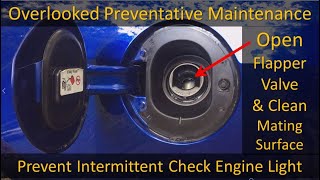
How to confirm: For traditional caps, tighten it until it clicks three times and inspect the rubber seal for cracks. For capless systems, use a clean rag and a small funnel or tool to gently open the flap and wipe the sealing surface clean. 🎬 Watch: A quick guide to cleaning your capless filler neck.
Typical fix: Tighten or replace the gas cap. Clean the capless fuel filler neck sealing area.
Est. part cost: $0-$30 - Cracked or Disconnected EVAP Hoses ⚪ Low Probability Over time, rubber and plastic hoses can become brittle and crack, especially those exposed to engine heat or road debris under the vehicle. A common failure point can be the lines near the charcoal canister or the purge solenoid.
How to confirm: A visual inspection of all accessible EVAP lines between the engine, charcoal canister, and fuel tank may reveal obvious damage. A professional smoke test is the most effective way to find small, hard-to-see leaks in the hose network.
Typical fix: Replace the cracked section of hose or re-secure a loose connection.
Est. part cost: $10-$40
Rare But Worth Checking
- Cracked Charcoal Canister: → Shop Vapor Canister The plastic housing of the canister itself can develop a hairline crack, creating a leak. This is often difficult to spot without a smoke test, which would show smoke seeping from the body of the canister.
- Leaking Fuel Filler Neck: → Shop Fuel Filler Neck Corrosion or physical damage to the metal tube leading from the gas cap area to the tank can cause a small vapor leak. This was the confirmed fix for one owner after replacing other parts.
- Rodent Damage: Rodents have been known to chew on the plastic EVAP lines, particularly in areas that are hard to see, like on top of the fuel tank or along the frame rails.
Diagnosis Steps
- Read the code with an OBD-II scanner to confirm P0456 is present and note any other codes.
- Inspect the fuel filler area. If it has a cap, inspect the seal for damage and ensure it is tightened properly. If capless, clean the filler neck seal with a rag. Clear the code and drive to see if it returns.
- If you own a 2014 ProMaster, contact a Ram dealer with your VIN to determine if TSB #18-088-16 Rev. A applies. If so, having the PCM reprogrammed is the next logical step.
- Visually inspect the EVAP purge valve and its hoses in the engine bay for obvious cracks or loose connections.
- Test the purge valve. With the engine off, remove the valve and try blowing through it. If air passes, it's faulty and needs replacement.
- Locate the charcoal canister near the fuel tank and inspect the ESIM and its O-ring for cracks or damage. Ensure it is installed correctly (not upside down).
- If the leak is still not found, perform a professional smoke test. This involves injecting low-pressure, vaporous smoke into the EVAP service port to pinpoint the exact location of the pinhole leak. Check for smoke from hoses, the canister body, the ESIM seal, and the fuel filler neck.
Parts You'll Likely Need
- Evaporative System Integrity Monitor (ESIM)
(OEM #04861962AD)— This leak detection switch is a known weak point on many Ram/Chrysler vehicles and is often the source of the leak. It supersedes part numbers 4861962AA, 4861962AB, and 4861962AC.
Trusted brands: Mopar, Dorman (P/N: 310-219), Standard Motor Products (P/N: LDP12)
OEM price range: $35-$60
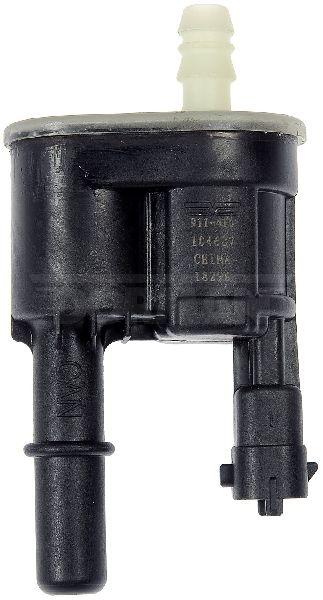
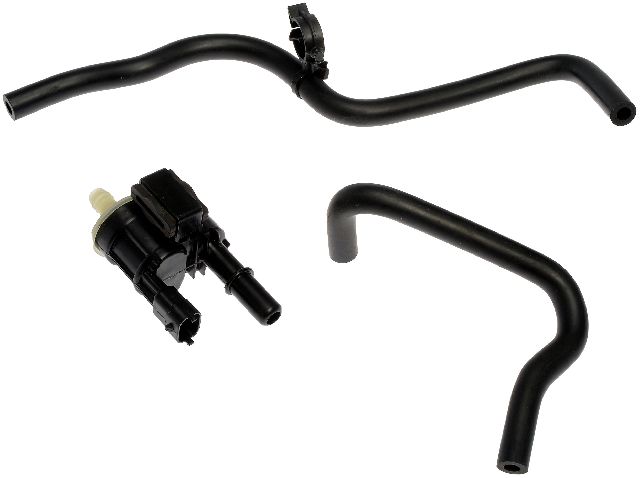
Aftermarket price range: $25-$45 - EVAP Purge Valve / Solenoid
(OEM #4627694AB)— This is a very common failure item that sticks open, causing a persistent small leak. It is shared with many other vehicles using the 3.6L Pentastar engine.
Trusted brands: Mopar, Standard Motor Products (P/N: CP796), Dorman (P/N: 911-410)
OEM price range: $40-$70
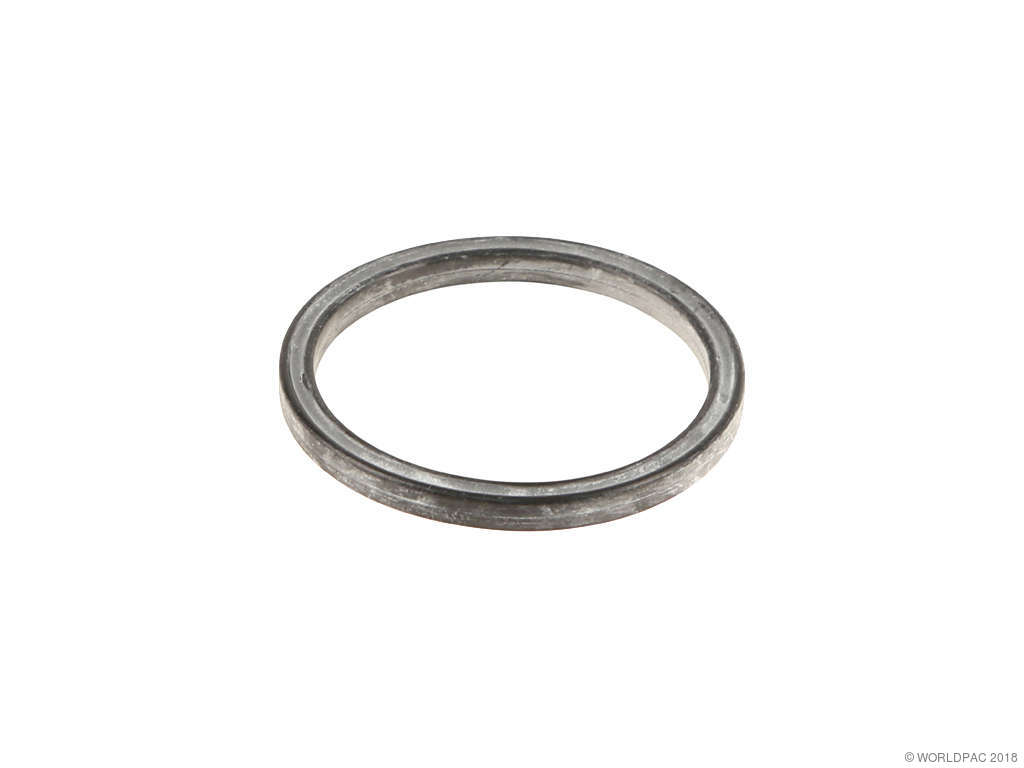
Aftermarket price range: $25-$50 - ESIM O-Ring / Seal
(OEM #55398717AA)— The O-ring that seals the ESIM to the charcoal canister can become brittle and fail independently of the ESIM itself. It is a cheap part to replace and should be considered anytime the ESIM is serviced.
OEM price range: $5-$15
Aftermarket price range: $3-$10
Related Codes That Often Appear With This One
- P0457 — Indicates a larger EVAP leak, but can appear with P0456 if a loose gas cap is detected or if test results are intermittent.
- P0441 — Indicates incorrect purge flow, often caused by a faulty purge valve, which is also a primary cause of P0456. TSB #18-030-16 also links this code to a potential software update fix.
- P0335 — TSB #18-088-16 Rev. A notes that P0456 can appear alongside P0335 (Crankshaft Position Sensor Circuit) due to a PCM software issue, not necessarily a direct mechanical link.
- P2610 — Similar to P0335, TSB #18-088-16 Rev. A links P0456 with P2610 (PCM Internal Engine Off Timer Performance) as a potential software glitch that can be fixed with a PCM update.
Technical Service Bulletins (TSBs) & Recalls
- 18-088-16 REV. A: Addresses a software issue on 2014 models that can cause a false P0456, often with codes P0335 and P2610. The fix is a PCM reflash.
- 18-030-16: Pertains to the ProMaster City, but shows that P0456 and P0441 are often linked and can be caused by sensitive PCM software.
- 18-089-19: Mentions the dealer-level 'Small Leak Verification Test (SLVT)' used with the wiTECH tool to diagnose P0456.
Platform-Specific Known Issues
- PCM Software Update: TSB #18-088-16 Rev. A states that for some 2014 ProMaster models with the 3.6L engine, a P0456 code can be triggered by overly sensitive diagnostic software. Owners on forums have confirmed that a dealer reflash resolved the code without any parts being replaced. This should be the primary diagnostic step for affected vehicles.
- Capless Fuel Filler: The capless fuel filler system requires periodic cleaning of its internal seal to prevent small leaks that can trigger a P0456 code. This is a common maintenance oversight that can lead to a false diagnosis of a component failure.
Mechanic-Grade Diagnostic Values
- Fuel Tank Pressure Sensor Voltage (Key On, Engine Off) — expected: 1.3V to 1.7V at atmospheric pressure. Failure: A reading of 0V or 5V indicates a sensor or wiring fault. A fixed low reading can be caused by an open in the 5V reference wire or a short to ground in the signal wire. A fixed high reading can be caused by an open ground wire.
Scan Tool Commands That Help
- wiTECH (Chrysler/Ram Dealer Tool): Small Leak Verification Test (SLVT) — This is the mandatory first step in dealer diagnosis for P0456, per TSB #18-048-23. It must be run to verify a leak is present before component replacement and must be run again after the repair (including PCM software updates) to confirm the fix, as a standard drive cycle is not sufficient to validate the repair during a single dealer visit.
Wiring & Ground Locations
- Primary Engine Ground Strap — A braided strap that connects from the transmission case to a bolt on the top of the driver-side transmission mount. It can be accessed by removing the driver-side headlight.. A poor primary engine ground can cause inconsistent or corrupted data from various sensors reporting to the PCM. This can lead the PCM to misinterpret sensor data and set false codes, including EVAP codes.
- EVAP Canister Purge Valve Connector — On the intake manifold in the engine bay.. A poor connection or corroded pins at this connector can prevent the purge valve from closing properly, creating a small leak that triggers P0456.
- ESIM / Leak Detection Pump Connector — On the ESIM, which is mounted to the charcoal canister near the fuel tank.. A bad connection here can cause the EVAP self-test to fail or report incorrect results, leading to a false P0456 code.
Real Owner Repair Stories
- RamForum.com user (Not specified, but within the generation that uses an ESIM.) — P0456 code.
❌ Tried (didn't work) Replacing the gas cap, Replacing the EVAP purge valve
✅ What actually fixed it The ESIM (Evaporative System Integrity Monitor) was the actual faulty part. - RamForum.com user (Not specified, but within the generation that uses an ESIM.) — P0456, P0440, P0441 codes.
❌ Tried (didn't work) A smoke test found no leaks.
✅ What actually fixed it The dealer recommended replacing the entire fuel tank, stating a non-serviceable part on the tank was the cause of the small leak.
"I Checked Everything" — The Actual Cause
- In one case documented on a forum, a smoke test did not reveal any leaks, yet the P0456 code persisted. A technician ultimately recommended replacing the entire fuel tank, suggesting that a non-serviceable component integrated into the tank was the source of the leak.
- A technician noted that the standard shop EVAP air/smoke tester, which applies pressure, may pass the system even with a very small leak. The vehicle's own diagnostic runs under vacuum during a cool-down cycle, which can reveal leaks the pressure test misses. The dealer-level 'Small Leak Verification Test' (SLVT) on a scan tool is more accurate as it simulates the vacuum condition and uses the fuel tank pressure sensor to monitor for decay.
OEM Part Supersession History
4627694AA→4627694AB— Standard part revision/update by the manufacturer.
Model Year Variations Within This Range
- 2014: The Powertrain Control Module (PCM) software on 2014 models was overly sensitive and could falsely trigger P0456. TSB #18-088-16 addresses this with a software update, a fix not typically required for later model years for this specific reason.
- 2013 and newer (including this range): Starting in 2013, Chrysler vehicles were equipped with a fuel tank pressure sensor that is utilized by the dealer's wiTECH scan tool for the 'Small Leak Verification Test' (SLVT). This provides a more robust diagnostic test compared to older models that relied solely on the ESIM switch state.
Helpful Videos

Used OEM Parts in Stock

New Aftermarket Parts Available


The information in this article is provided for general reference and educational purposes only. Vehicle specifications, procedures, and part compatibility can vary by production date, trim level, and region. Always consult your vehicle's factory service manual and verify part numbers before purchasing or performing repairs. Safety-critical components such as airbags, seat belts, and braking systems should be installed by a qualified professional.
- Ram PROMASTER:
- 🧭 Diagnostic Flowchart
- 🎬 Helpful Videos
- 🛍️ Shop This Part
- What's Unique About the 2014-2018 Ram PROMASTER
- Symptoms You May Notice
- Most Likely Causes
- Rare But Worth Checking
- Diagnosis Steps
- Parts You'll Likely Need
- Related Codes That Often Appear With This One
- Technical Service Bulletins (TSBs) & Recalls
- Platform-Specific Known Issues
- Mechanic-Grade Diagnostic Values
- Scan Tool Commands That Help
- Wiring & Ground Locations
- Real Owner Repair Stories
- "I Checked Everything" — The Actual Cause
- OEM Part Supersession History
- Model Year Variations Within This Range
- 🎟️ Get 5% Off