

P0456 on 2019-2023 Ram ProMaster: Causes and Fixes for a Small EVAP Leak
For a P0456 code on a Ram ProMaster, the most common causes are a faulty EVAP purge valve in the engine bay or a failed leak detection pump (ESIM) on the charcoal canister. Always check the gas cap or capless filler neck first. A purge valve is about $25-$100, while an ESIM is $30-$60.
- P0456 is a minor issue that indicates a small leak in the fuel vapor system; it will not stop you from driving but will cause an emissions test failure.
- Do not immediately assume the issue is complex. Start by checking the gas cap or cleaning the capless fuel filler neck.
- The two most common parts to fail on a ProMaster for this code are the EVAP purge valve (in the engine bay) and the leak detection pump/ESIM (on the charcoal canister near the fuel tank).
- If simple part swaps don't fix the code, a smoke test is the most reliable way to find the exact source of the leak.
What's Unique About the 2019-2023 Ram PROMASTER

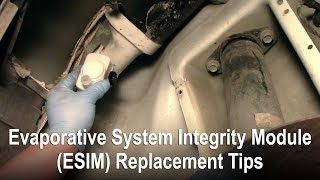
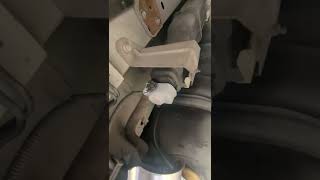
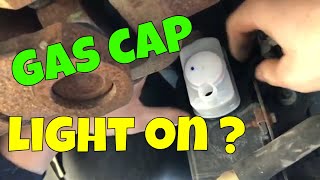
The Ram ProMaster, like many modern Chrysler/Ram products, uses an Evaporative System Integrity Monitor (ESIM), also called a leak detection pump, to test for EVAP leaks. This component is a known high-failure item and is often the root cause of a P0456 code. Unlike a simple gas cap issue on older vehicles, diagnosing this code on a ProMaster often points to either the ESIM (located on the charcoal canister near the fuel tank) or the EVAP purge valve in the engine bay. 🎬 Watch: Step-by-step guide to replacing the purge valve. The ESIM uses a gravity-based switch to detect pressure changes, which is why correct installation orientation is critical.
Diagnostic Flowchart

Tap your situation to follow the diagnostic path that matches what you're seeing on this vehicle.
Symptoms You May Notice
- Check Engine Light is on.
- A "Check Fuel Cap" or "Gas Cap" message may appear on the dashboard, even if the cap is tight or the vehicle is capless.
- A faint fuel smell near the vehicle (this is rare for a small leak).
- Inability to pass a state emissions inspection.
- Slight decrease in fuel economy over time.
- Replacing only the gas cap without checking other components. While it's a good first step, the purge valve and ESIM are very common failures on this platform.
- Replacing the ESIM with a cheap aftermarket part that fails quickly or installing it in the incorrect orientation.
- Firing the 'parts cannon' by replacing multiple components without a proper diagnosis. A smoke test is often cheaper than replacing several good parts.
Most Likely Causes

- Faulty EVAP Purge Valve/Solenoid 🔴 High Probability → Shop Vapor Canister The purge valve is a constantly working solenoid that can wear out or get stuck slightly open over time, creating a small leak. This is a common failure point on many vehicles, including the ProMaster.
How to confirm: Locate the purge valve in the engine bay. Disconnect it from power and try to blow air through it. If any air passes, the valve is stuck open and is faulty.
Typical fix: Replace the purge valve. This is a simple repair involving disconnecting two hoses and one electrical connector.
Est. part cost: $25-$100 - Faulty EVAP Leak Detection Pump (ESIM) 🔴 High Probability → Shop Vapor Canister The ESIM is a widely documented high-failure part on many Chrysler, Dodge, Jeep, and Ram vehicles. It uses a gravity-based switch that can fail, or its sealing O-ring can degrade. Owners on forums frequently report replacing this part to solve P0456.
How to confirm: The ESIM is located on the charcoal canister near the fuel tank. After ruling out the gas cap and purge valve, this is the next most likely component. It can be difficult to test without a scan tool, so replacement is a common diagnostic step. Ensure the old part's O-ring is inspected for damage, as the seal itself can be the point of failure.
Typical fix: Replace the ESIM and its O-ring. The part twists into the charcoal canister. It is critical to install the new part in the correct rotational orientation, as it is gravity-dependent.
Est. part cost: $30-$60 - Loose or Faulty Gas Cap / Capless Filler Neck Issue 🟡 Medium Probability → Shop Fuel Tank Cap For models with a traditional gas cap, the rubber seal can crack or degrade over time. For capless systems, debris like dirt or grass can prevent the spring-loaded flap from sealing correctly. Using a non-OEM gas cap is a frequent cause of issues.
How to confirm: Inspect the gas cap seal for cracks or brittleness. For capless systems, clean the filler neck opening and ensure the flap moves freely and seals tightly.
Typical fix: Replace the gas cap with a quality OEM part. For capless systems, clean the opening thoroughly with a rag and some cleaner. A special funnel is often required to open the flap for cleaning.
Est. part cost: $15-$50 - Cracked or Disconnected EVAP Hose ⚪ Low Probability Plastic and rubber hoses can become brittle with age and exposure to heat and elements, leading to small cracks. Rodent damage is also a possibility. A forum user reported finding a hose near the firewall had rubbed through.
How to confirm: A visual inspection may reveal an obvious crack or disconnected line, but a definitive diagnosis requires a smoke test. A shop can inject smoke into the EVAP system, and it will escape from the location of the leak.
Typical fix: Replace the damaged section of the hose.
Est. part cost: $10-$50
Rare But Worth Checking
- Cracked Charcoal Canister: → Shop Vapor Canister The plastic housing of the canister itself can develop hairline cracks, often due to damage from road debris or from consistently overfilling the fuel tank, which saturates the canister with liquid fuel. This is usually found with a smoke test.
- PCM Software Glitch: In some cases, particularly on related platforms, the P0456 code can be triggered by overly sensitive software logic in the Powertrain Control Module (PCM). A dealer may need to perform a flash update to the latest software revision to resolve the issue, even if no physical leak exists.
Diagnosis Steps

- Read the code with an OBD-II scanner to confirm P0456 is the primary code present.
- Inspect the gas cap (if equipped). Check for a tight fit and examine the rubber seal for cracks or damage. For capless systems, clean the fuel filler neck and ensure the seal is free of debris.
- Clear the code and drive for a few days to see if it returns. The EVAP monitor runs under specific conditions (e.g., fuel level between 15-85%, specific ambient temperatures), so it may take time.
- If the code returns, locate and test the EVAP purge valve in the engine bay. Disconnect it and attempt to blow through it. If air passes, it needs to be replaced.
- If the purge valve is good, the next most likely culprit is the Evaporative System Integrity Monitor (ESIM) on the charcoal canister, located near the fuel tank.
- Inspect the ESIM's O-ring for damage. Consider replacing the ESIM and its O-ring, as it is a very common failure point and an inexpensive part.
- If the above steps do not resolve the issue, perform a visual inspection of all accessible EVAP hoses between the engine, canister, and fuel tank for obvious cracks or damage, paying close attention to areas near heat sources or where rubbing could occur.
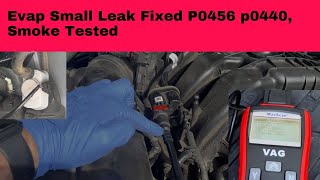
- If the leak source is still not found, the most definitive diagnostic step is to have a professional smoke test performed to pinpoint the exact location of the small leak. Low-cost smoke machines are also available for DIY use.
- Check for any available PCM software updates with a dealer or using a high-end scan tool, as TSBs for similar vehicles indicate software can sometimes be the cause.
Parts You'll Likely Need
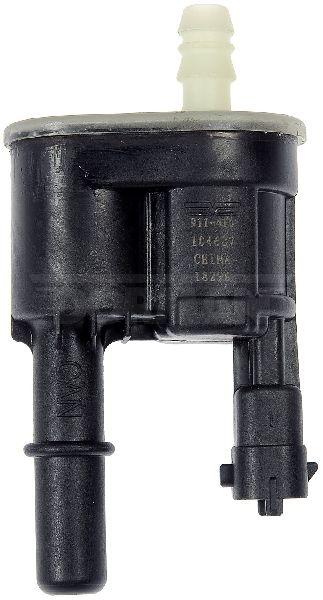
- EVAP Purge Valve / Solenoid
(OEM #4627182AA)— This valve gets stuck open, creating a small, constant leak in the system. It's a very common failure point and is easy to access in the engine bay.
Trusted brands: Mopar, Dorman, Standard Motor Products (SMP)
OEM price range: $60-$100
Aftermarket price range: $25-$60 - EVAP Leak Detection Pump (ESIM)
(OEM #04861963AD)— Also known as an Evaporative System Integrity Module, this is a known weak point on Ram vehicles. It fails internally or its seal degrades, causing it to report a false leak or create a real one.
Trusted brands: Mopar, Dorman (P/N 310-219), Standard Motor Products (SMP)
OEM price range: $40-$75
Aftermarket price range: $25-$50 - Gas Cap — The seal on the gas cap is a simple but critical part of the sealed EVAP system. It can easily crack or wear out, causing a small leak. It's always the first and cheapest part to check. Using an aftermarket cap is a common cause of this code.
Trusted brands: Mopar, Stant
OEM price range: $20-$40
Aftermarket price range: $15-$25
Related Codes That Often Appear With This One
- P0455 — This code indicates a large EVAP leak. A component that is starting to fail might first cause a small leak (P0456) and eventually a large one (P0455). Both codes are cited together in TSB #1400522REVB.
- P0457 — This code indicates a leak detected due to a loose fuel cap. It often appears alongside P0456 if the system suspects the cap is the issue, even when the real problem is the ESIM or another component.
- P0441 — Indicates incorrect purge flow. This often appears with P0456 because a faulty purge valve can cause both a leak and improper flow. Some TSBs for related vehicles suggest a PCM update can fix both codes simultaneously.
Technical Service Bulletins (TSBs) & Recalls
- 1804823: Details the use of the dealer-specific wiTECH Small Leak Verification Test (SLVT) for diagnosing P0456.
- 1400522REVB: Groups P0456 with other common EVAP leak codes (P0455, P04EC, P04EE), suggesting a unified diagnostic approach.
- 18-008-16 REV. B: While for a different vehicle (ProMaster City), it shows a history of PCM updates being required to fix false P0456 codes, which could be relevant.
Platform-Specific Known Issues
- The manufacturer has issued Technical Service Bulletins (TSBs) that mention P0456 in relation to EVAP system diagnostics, confirming it is a known issue. TSB #1804823 refers to a specific dealer diagnostic test (SLVT - Small Leak Verification Test) using the wiTECH scan tool.
- TSB #1400522REVB groups P0456 with other EVAP leak codes (P0455, P04EC, P04EE), indicating a common diagnostic path for various leak sizes.
- Owner forums like ramforum.com and promasterforum.com are filled with threads from owners who have successfully fixed the P0456 code by replacing either the purge valve or the ESIM module, confirming these as the top two culprits.
Mechanic-Grade Diagnostic Values
- EVAP Purge Valve Solenoid Coil Resistance — expected: 14 to 30 Ohms. Failure: A reading of infinite resistance (open circuit) or near-zero resistance (short circuit) indicates a failed solenoid coil.
- EVAP Purge Valve Connector Voltage (Key On, Engine Off) — expected: One pin should have battery voltage (approx. 12V) and the other pin (PCM ground control) will also read battery voltage when the valve is not commanded on.. Failure: Absence of 12V power on the supply pin indicates a wiring or fuse issue upstream. The ground control pin voltage should drop to near 0V when the valve is activated by a scan tool.
- Fuel Tank Pressure (FTP) Sensor Voltage (via Scan Tool) — expected: Approximately 2.5V at atmospheric pressure (system open).. Failure: Voltage should decrease as vacuum is applied and increase as pressure is applied. A static or unresponsive voltage suggests a faulty sensor.
Scan Tool Commands That Help
- wiTECH (Stellantis Dealer Tool): Small Leak Verification Test (SLVT) — Mandated by TSB #1804823 for diagnosing P0456. It must be run to verify a leak is present before repairs and again after repairs to confirm the fix. A standard road test is not sufficient to verify the repair. The test operates under vacuum and can identify leaks that a standard pressure/smoke test might miss.
Wiring & Ground Locations
- Primary Engine/Transmission Ground Strap — A braided strap running from a bolt on the transmission case to one of the bolts on the top of the transmission mount. It is best accessed by removing the driver's side headlight assembly.. While not specific to the EVAP system, this is the primary engine ground. A poor or intermittent ground connection here can cause inconsistent sensor readings and corrupt data being sent to the PCM, potentially leading to a variety of false trouble codes.
Real Owner Repair Stories
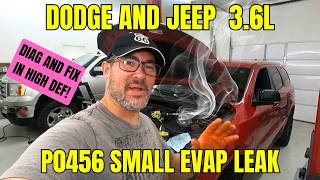
- YouTube channel 'Joy of Wrenching' (2017 Dodge Durango with 3.6L Pentastar engine (similar platform)) — Check Engine Light with code P0456.
❌ Tried (didn't work) Visual inspection of the capless fuel filler.
✅ What actually fixed it A smoke test revealed a crack in the plastic EVAP hose connected to the purge valve in the engine bay. Replacing the cracked hose assembly resolved the code. - YouTube channel 'Fix it Angel' (Jeep/Dodge/Chrysler vehicle (2012-2019, similar EVAP system)) — Check Engine Light with code P0456.
❌ Tried (didn't work) Visual inspection of engine bay EVAP hoses showed no leaks during smoke test.
✅ What actually fixed it A smoke test revealed a faint trail of smoke leaking from the Evaporative System Integrity Module (ESIM) itself, located in the driver's side rear wheel well area. The leak was from the component, not the hoses connected to it. Replacing the ESIM and its O-ring fixed the problem.
"I Checked Everything" — The Actual Cause
- On modern Chrysler/Ram vehicles, it is possible for a standard EVAP smoke/pressure test to pass, yet still have a legitimate P0456 code. This occurs because the PCM monitors the system for small leaks under vacuum as the vehicle cools down, not under pressure. A very small leak, such as a hairline crack on the fuel pump module's plastic top, may only become apparent under vacuum. A technician noted that even if a pressure test passes, a bouncing indicator bubble can suggest a tiny leak. The definitive test in this scenario is the dealer-level wiTECH 'Small Leak Verification Test' (SLVT), which uses vacuum to replicate the PCM's own monitoring conditions and can confirm a leak that pressure tests miss.
OEM Part Supersession History
4861963AA, 4861963AB, 4861963AC, 4891729AA→04861963AD— Standard part revision and consolidation by the manufacturer for the Evaporative System Integrity Module (ESIM).
Model Year Variations Within This Range
- 2022-2023: The ProMaster received a significant refresh for the 2022 model year, including a new 9-speed automatic transmission (replacing the 6-speed) and an updated 3.6L Pentastar engine with variable valve lift. While many core components like the oil cooler and general hose routing appear similar, the transmission, engine head, and starter are different. The EVAP system components and logic for P0456 are not documented as having changed, but technicians may find different bracketry and component layouts in the engine bay compared to 2019-2021 models.
Helpful Videos
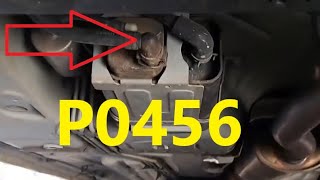

![How to Fix P0456 Engine Code in 7 Minutes [7 DIY Methods / Only $3.44]](https://img.youtube.com/vi/njt81AALI3U/mqdefault.jpg)

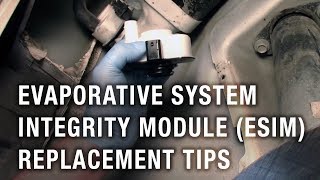
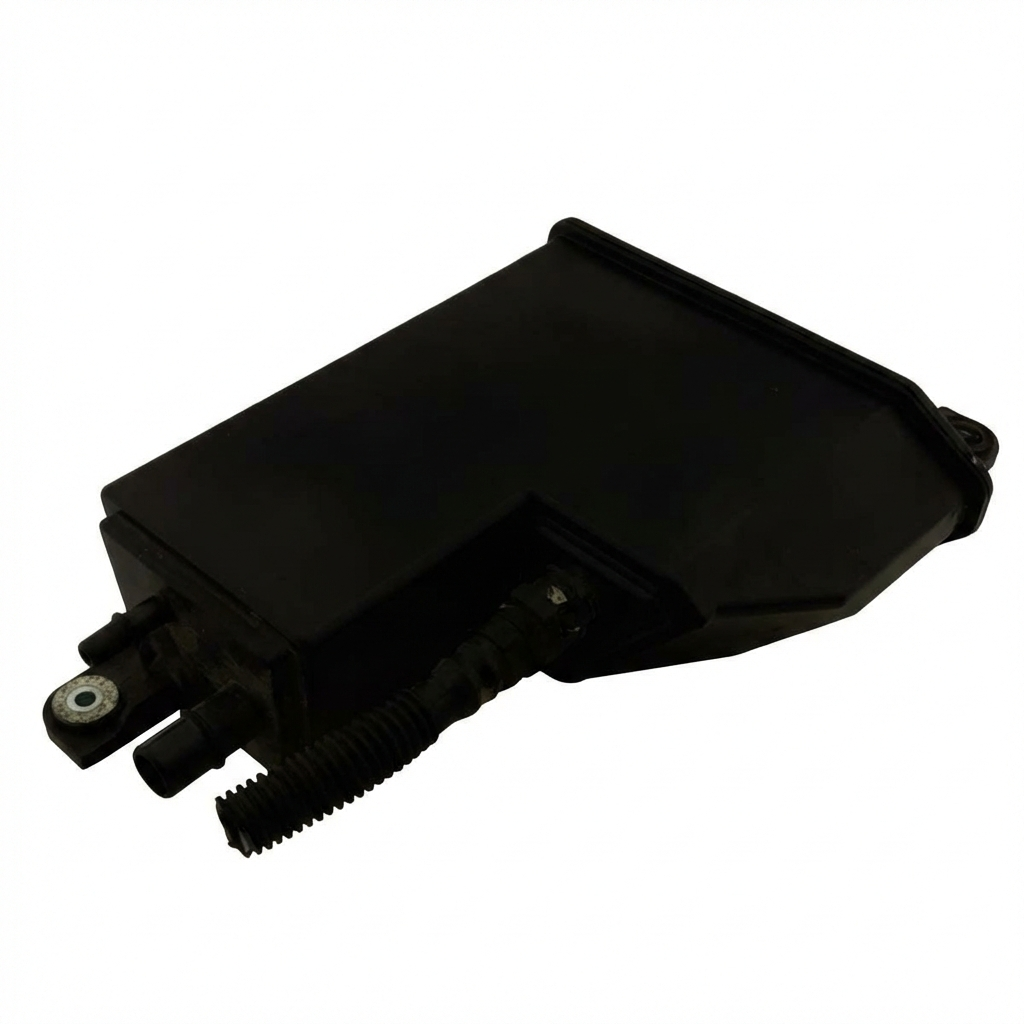
Used OEM Parts in Stock
New Aftermarket Parts Available


The information in this article is provided for general reference and educational purposes only. Vehicle specifications, procedures, and part compatibility can vary by production date, trim level, and region. Always consult your vehicle's factory service manual and verify part numbers before purchasing or performing repairs. Safety-critical components such as airbags, seat belts, and braking systems should be installed by a qualified professional.
- Ram PROMASTER:
- 🧭 Diagnostic Flowchart
- 🎬 Helpful Videos
- 🛍️ Shop This Part
- What's Unique About the 2019-2023 Ram PROMASTER
- Symptoms You May Notice
- Most Likely Causes
- Rare But Worth Checking
- Diagnosis Steps
- Parts You'll Likely Need
- Related Codes That Often Appear With This One
- Technical Service Bulletins (TSBs) & Recalls
- Platform-Specific Known Issues
- Mechanic-Grade Diagnostic Values
- Scan Tool Commands That Help
- Wiring & Ground Locations
- Real Owner Repair Stories
- "I Checked Everything" — The Actual Cause
- OEM Part Supersession History
- Model Year Variations Within This Range
- 🎟️ Get 5% Off