

Saab 9-3 P0456: EVAP System Very Small Leak Causes and Fixes (2003-2011)
For a 2003-2011 Saab 9-3, code P0456 is most often caused by a loose or faulty gas cap. Before buying any parts, ensure the cap is tightened until it clicks and inspect the filler neck for corrosion. If the light returns, the next most likely cause is a failed EVAP purge valve in the engine bay, an inexpensive and easy part to replace that can cause rough cold starts when faulty.
- Always check the gas cap first for code P0456. Make sure it's an OEM cap, it's tight, and the filler neck is clean before attempting any other repairs.
- The second most likely culprit is the EVAP purge valve in the engine bay, which is a low-cost part and simple to replace for a DIYer. A failure here can also cause rough cold starts.
- You can continue to drive the car with this code, but you will not pass an emissions test until the leak is fixed.
- If a new OEM gas cap and a new purge valve don't solve the issue, a smoke test is the most effective way to find the tiny leak elsewhere in the system.
What's Unique About the 2003-2011 Saab 9-3
On the second-generation Saab 9-3 (YS3F), the EVAP system is sensitive, and official Saab diagnostic documents frequently point to an improperly tightened gas cap as the primary trigger for this code. 🎬 Watch: A helpful explanation of the P0456 small leak code. Many owners and technicians mistakenly replace parts like the purge valve or vent solenoid when the actual issue is just a loose cap or a dirty fuel filler neck sealing surface. The system performs its self-test under very specific conditions (e.g., fuel level between 15-85%, specific ambient and engine temperatures), sometimes up to 45 minutes after the engine is shut off, which can make it seem like the code appears randomly.
Symptoms You May Notice
- Check Engine Light is on.
- A faint smell of gasoline, possibly more noticeable after refueling or around the fuel door.
- Failure to pass a state emissions inspection.
- Rough idle or difficulty starting, particularly on a cold start, 🎬 See why a faulty valve causes hard cold starts. if the purge valve is stuck open.
- Replacing the purge valve or other EVAP components before verifying the gas cap is tight and sealing correctly. Saab service documents specifically warn against this.
- Immediately assuming a smoke test is needed. The vast majority of P0456 codes on this car are solved with a gas cap or purge valve replacement, which should be checked first to save money.
- Confusing the EVAP Purge Valve (in the engine bay) with the EVAP Vent Valve (near the fuel tank). The purge valve is the more common failure for this code.
Most Likely Causes
- Loose or Faulty Gas Cap 🔴 High Probability → Shop Fuel Tank Cap Saab's own service information highlights this as a very common reason for the code, often due to user error in not tightening the cap sufficiently after refueling. Aftermarket caps are also a frequent cause as their seals may not meet OEM specifications for a perfect seal.
How to confirm: Remove the gas cap, inspect the rubber O-ring seal for cracks, hardening, or debris. Also, inspect the metal lip of the fuel filler neck for rust or dirt that could prevent a seal. Reinstall the cap, tightening until it clicks several times. Clear the code and drive for a few days to see if it returns.
Typical fix: Tighten the existing cap correctly. If the seal is damaged or the cap is worn, replace it with a new, high-quality OEM cap (Part No. 12793325). Clean the filler neck sealing surface with a Scotch-Brite pad to ensure a flush fit.
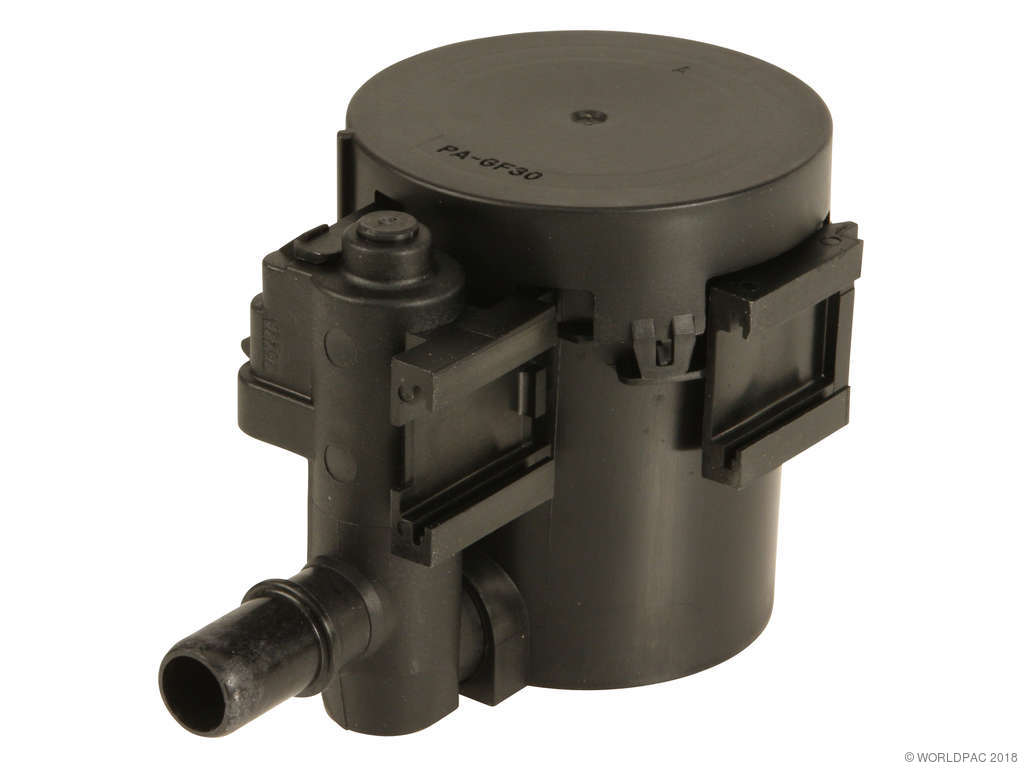
Est. part cost: $15-$40 - Faulty EVAP Purge Valve (Solenoid) 🟡 Medium Probability → Shop Vapor Canister This valve is located in the hot engine bay and can fail over time, typically by sticking slightly open, creating a small leak path. This can lead to a vacuum leak that causes rough running on startup before the engine is warm.
How to confirm: The valve is normally closed. Remove the valve (located at the front of the engine, under the plastic cover) and try to blow through it. If any air passes through, it has failed. A professional can also command it open and closed with a scan tool to test its function, but a simple blow test is very effective.
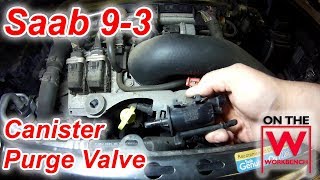
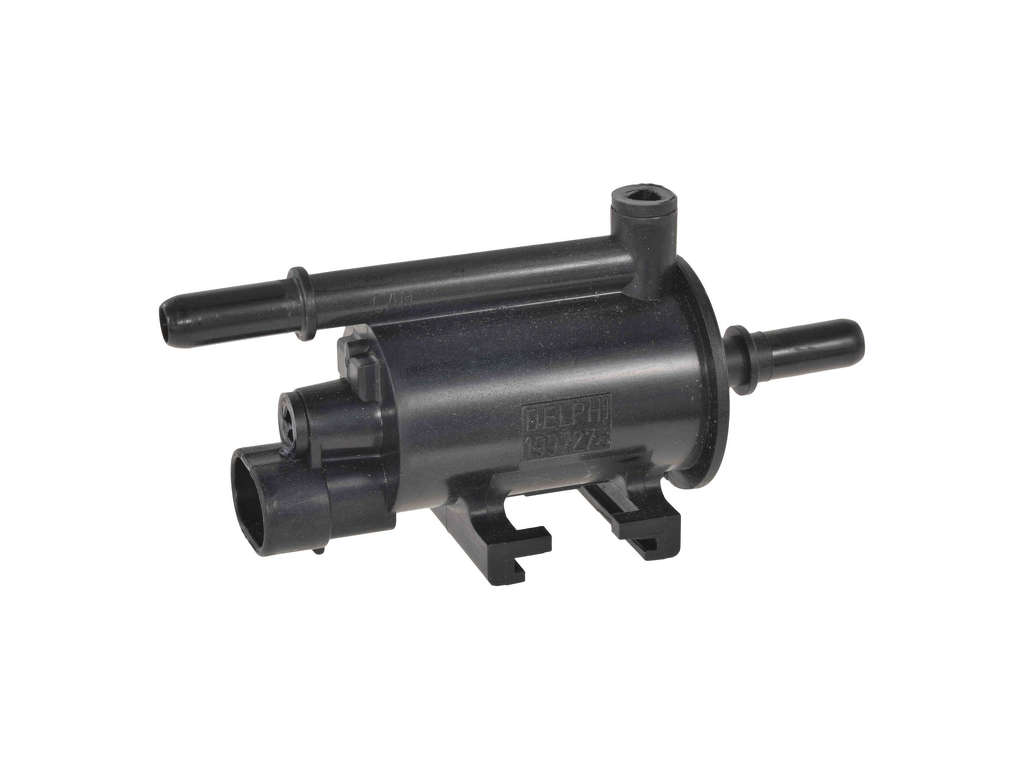
Typical fix: Replacement of the purge valve is straightforward. It is held by a simple clip on a bracket and has two quick-disconnect hose fittings and one electrical connector. This is a common DIY job that takes less than 30 minutes. 🎬 Watch this step-by-step guide to replacing the purge valve.
Est. part cost: $25-$60 - Cracked or Disconnected EVAP Hoses ⚪ Low Probability
How to confirm: A visual inspection may reveal obvious cracks, especially at connection points where the plastic and rubber lines become brittle. However, for a very small leak, a smoke test is the most effective diagnostic method. This involves injecting pressurized smoke into the EVAP system's service port and looking for where it escapes.
Typical fix: Replace the damaged section of hose. Small cracks at the ends of hoses can sometimes be trimmed and re-secured with a new clamp. Pay close attention to the hoses connected to the purge valve and charcoal canister.
Est. part cost: $10-$50
Rare But Worth Checking
- Faulty EVAP Canister Vent Valve (Solenoid): → Shop Vapor Canister This valve is located near the fuel tank and charcoal canister, typically above the rear axle. It is normally open and closes to seal the system for testing. While it can fail (often by not closing fully), it is less common than the purge valve for this specific code on the 9-3. A faulty vent valve is more often associated with difficulty filling the fuel tank.
- Cracked Charcoal Canister: → Shop Vapor Canister Physical damage from road debris or age can cause the plastic housing of the charcoal canister to crack, creating a leak. This is usually found during a smoke test. Replacement can be costly.
- Leaking Fuel Filler Neck: → Shop Fuel Filler Neck Corrosion or dirt on the lip of the filler neck can prevent the gas cap from sealing properly, even if the cap itself is good. Thoroughly cleaning the sealing surface with a mild abrasive pad can resolve this. In severe cases of rust, the entire filler neck may need replacement.
- Faulty Fuel Tank Pressure (FTP) Sensor: → Shop Fuel Tank The FTP sensor reports pressure and vacuum levels in the tank to the ECM. If the sensor provides incorrect readings, the computer may falsely believe there is a leak. This is uncommon and would likely be accompanied by other diagnostic codes.
Diagnosis Steps
- Read the code with an OBD-II scanner to confirm P0456 is present.
- Inspect the gas cap. Remove it, check the O-ring seal for cracks or damage, and clean any debris from the cap and filler neck. Ensure it is an OEM or high-quality equivalent cap.
- Reinstall the gas cap, ensuring you turn it until it clicks at least three times.
- Clear the code using the scanner. Drive the vehicle for several days under varied conditions (city/highway, with fuel level between 1/4 and 3/4 full). The EVAP monitor runs under specific conditions, so it may take time for the light to either stay off or return.
- If the code returns, perform a visual inspection of all accessible EVAP hoses in the engine bay, looking for obvious cracks or loose connections.
- Locate the EVAP purge valve at the front of the engine under the plastic cover. With the engine off, disconnect it and try to blow through it. If any air passes, the valve is faulty and must be replaced.
- If the gas cap and purge valve are confirmed to be good, the most reliable next step is to have a professional perform a smoke test to precisely locate the source of the very small leak. This can identify hairline cracks in hoses, the charcoal canister, or the vent valve.
Parts You'll Likely Need
- Fuel Cap (Gas Cap)
(OEM #12793325)— This is the most frequent cause of P0456 due to a worn seal or improper tightening. Using a genuine OEM cap is highly recommended as many aftermarket caps do not seal correctly.
Trusted brands: Saab (Genuine), ACDelco
OEM price range: $25-$40
Aftermarket price range: $15-$25 - Vapor Canister Purge Valve
(OEM #12597567 (For 4-cyl, may be superseded by 12606684). 19432156 (For V6, supersedes 12611801))— A common failure point that gets stuck slightly open, creating a constant small leak. It's an easy and inexpensive DIY replacement located in the engine bay.
Trusted brands: ACDelco (OEM supplier), Bosch, Dorman
OEM price range: $40-$60
Aftermarket price range: $25-$45
Related Codes That Often Appear With This One
- P0442 — This code indicates a 'medium' EVAP leak. If the source of the P0456 'very small' leak worsens over time (e.g., a small crack in a hose gets bigger), it can eventually trigger a P0442.
- P0455 — This code indicates a 'large' EVAP leak. It often appears if the gas cap is left off entirely or if a major component like the purge valve is stuck wide open.
- P0300-P0306 — Misfire codes (random or specific cylinders) can occur alongside P0456 if the purge valve is stuck open, creating a constant, un-metered vacuum leak that disrupts the air-fuel mixture, especially during cold starts.
Technical Service Bulletins (TSBs) & Recalls
- While no specific Saab TSB for P0456 on the 9-3 was found, TSBs for other manufacturers like Nissan (NTB17-082E) and Audi (2040924) confirm that EVAP system components like vent valve O-rings are known causes for this code, reinforcing the diagnostic path. Some vehicle platforms have also received software updates to address overly sensitive EVAP monitors that could falsely trigger a P0456.
Platform-Specific Known Issues
- Rough Idle on Cold Start: A unique symptom tied to P0456 on the Saab 9-3 can be a rough idle or misfires immediately after a cold start. This happens when the purge valve (12597567) fails by sticking slightly open, creating a small vacuum leak that the engine management system can't compensate for until it enters closed-loop operation. Many owners report this symptom disappearing immediately after replacing the purge valve.
- Purge Valve Location and Access: → Shop Vapor Canister On all 2003-2011 Saab 9-3 models, the purge valve is conveniently located at the very front of the engine, just under the plastic engine cover, making it one of the easiest EVAP components to access and replace.
Mechanic-Grade Diagnostic Values
- EVAP Canister Vent Valve (Shut-off Solenoid) Resistance — expected: 24.5 ± 1.5 Ohms at 20°C (68°F). Failure: A reading significantly outside this range, or an open/infinite reading, indicates a failed solenoid coil.
- EVAP Canister Purge Valve Resistance — expected: Approximately 20-36 Ohms. Failure: An open circuit (infinite resistance) or a direct short (zero resistance) indicates the internal coil is bad.
Scan Tool Commands That Help
- Saab Tech2: Seal EVAP System — This command manually closes the canister vent valve, sealing the system. It is the first step before performing a manual pressure or smoke test to ensure the system is closed as it would be during a self-test.
- Saab Tech2: Activation: Canister Purge Valve / Canist. Close Valve — Allows a technician to individually command the purge and vent valves open or closed to test their mechanical function without having to remove them from the vehicle.
- Saab Tech2: Initiate EVAP Diagnosis — Forces the vehicle's computer to run the EVAP leak self-test on demand (if all preconditions are met), which is useful for verifying a repair without waiting for the monitor to run naturally over several drive cycles.
Wiring & Ground Locations
- G7 — On the engine control module's top right attachment lug.. This is a primary ground for the engine control module (Trionic T8), which controls all EVAP components. A poor connection here can cause erratic behavior of sensors and solenoids.
- G2 — On the side of the left-hand structure strut by the connector bracket in the engine bay.. This is a main chassis and battery ground point. Multiple systems, including the underhood electrical center that powers EVAP components, rely on this ground.
- G34S — On the floor below the left A-pillar, near the kick panel.. This serves as a grounding point for components inside the cabin and can be related to the instrument panel electrical center. While less direct, poor grounding can affect modules that communicate with the ECM.
Real Owner Repair Stories
- Jeep KJ and KK Liberty Forum user (Jeep Liberty (principle applies to any vehicle)) — Persistent P0456 code.
❌ Tried (didn't work) Smoke test (passed with no visible leaks), Solenoid, charcoal canister, and leak detection pump tested, Filler neck connection checked, Gas cap sealed off with tape to rule it out
✅ What actually fixed it The fuel tank was dropped and pressurized slightly. A very small bubble appeared at the fuel pump retaining ring. The plastic on the fuel pump housing itself had crumbled under the ring, creating a leak so small it was invisible to a standard smoke test with the tank installed. Replacing the fuel pump housing, retaining ring, and O-ring seal resolved the code.
"I Checked Everything" — The Actual Cause
- A known cause for a P0456 code, even after a smoke test shows no leaks, is a minuscule leak at the fuel pump sealing ring/O-ring on top of the fuel tank. The leak can be so small that smoke is not visible without dropping the tank and pressurizing it. In one documented case, the plastic of the fuel pump housing itself had deteriorated under the retaining ring, which was only discovered upon removal.
OEM Part Supersession History
12597567→12606684— Standard part revision and consolidation by the manufacturer (ACDelco/GM).
Heads up: The new part number (12606684) is a direct replacement for the original on 4-cylinder Saab 9-3 models and should be fully compatible.
Model Year Variations Within This Range
- 2008-2009: The EVAP self-test for these years may run up to 45 minutes after the engine is shut off, observing pressure changes in a sealed tank.
- 2010-2011: The diagnostic procedure was changed. It now involves closing the vent valve and opening the purge valve while monitoring fuel tank pressure to see if it drops, with different calibrations for various cold and warm start conditions.
Diagnostic Flowchart
Real Owner Stories
Aggregated from forums and TSBs cited above. Mileages and costs reflect what owners reported in those sources.
2006 Saab 9-3 Aero
Symptoms: Experienced multiple misfire codes (P0300-P0306) alongside a P0456 code, accompanied by rough starts.
What fixed it: Advised to fix the P0456 first by replacing the gas cap and purge valve, as the faulty valve is known to cause the vacuum leak responsible for the rough starts and misfires.
Source hint: Reddit r/saab thread titled 'Help request 06 9-3 Aero engine issues'
2003-2011 Saab 9-3
Symptoms: P0456 code present along with a rough idle immediately after a cold start.
What fixed it: Replacing the purge valve (part #12597567) cured both the P0456 code and the cold start rough idle.
Source hint: SaabCentral Forums thread 'P0456 EVAP very small leak'
2006 Saab 9-3
Symptoms: Vehicle had a rough cold start issue, though no check engine light or code was initially present.
What fixed it: Replaced the vapor canister purge valve, which immediately fixed the rough cold start issue.
Source hint: YouTube video 'Saab 9-3 Vapor Canister Purge Valve'
2004 Saab 9-3
Symptoms: Needed to replace the canister purge valve to address EVAP system issues.
What fixed it: Performed a simple DIY replacement by removing the plastic engine cover, disconnecting the hoses and electrical connector, and swapping the valve.
Source hint: YouTube video '2004 Saab 9-3: Canister Purge Valve Replacement' by KVGarage
Related OBD-II Codes
Frequently Asked Questions
Why does my 2003-2011 Saab 9-3 have a rough idle on cold start along with the P0456 code?
What is the correct OEM gas cap part number for the Saab 9-3 to fix a P0456?
Where is the EVAP purge valve located on my Saab 9-3?
How can I test the purge valve on my Saab 9-3 without a scan tool?
Are there any TSBs for the Saab 9-3 regarding the P0456 code?
Can a P0456 code cause misfire codes on my Saab 9-3 Aero?
Helpful Videos

We Have This Part in Stock


The information in this article is provided for general reference and educational purposes only. Vehicle specifications, procedures, and part compatibility can vary by production date, trim level, and region. Always consult your vehicle's factory service manual and verify part numbers before purchasing or performing repairs. Safety-critical components such as airbags, seat belts, and braking systems should be installed by a qualified professional.
- Saab 9-3:
- 🧭 Diagnostic Flowchart
- 🎬 Helpful Videos
- 🛍️ Shop This Part
- What's Unique About the 2003-2011 Saab 9-3
- Symptoms You May Notice
- Most Likely Causes
- Rare But Worth Checking
- Diagnosis Steps
- Parts You'll Likely Need
- Related Codes That Often Appear With This One
- Technical Service Bulletins (TSBs) & Recalls
- Platform-Specific Known Issues
- Mechanic-Grade Diagnostic Values
- Scan Tool Commands That Help
- Wiring & Ground Locations
- Real Owner Repair Stories
- "I Checked Everything" — The Actual Cause
- OEM Part Supersession History
- Model Year Variations Within This Range
- Real Owner Stories
- 2006 Saab 9-3 Aero
- 2003-2011 Saab 9-3
- 2006 Saab 9-3
- 2004 Saab 9-3
- Related OBD-II Codes
- Frequently Asked Questions
- 🎟️ Get 5% Off