

P0456 on 2008-2014 Scion xD: EVAP System Small Leak Causes and Fixes
For a 2008-2014 Scion xD, code P0456 is most often caused by a loose or faulty gas cap. Before buying any parts, tighten the cap until it clicks and clear the code. If it returns, an OEM gas cap is the next best step and costs around $25-$40. If the cap doesn't fix it, the next most likely cause is a small, cracked vacuum hose in the engine bay near the purge solenoid.
- Start with the simplest and most likely fix: inspect and tighten your gas cap. If the code returns, replace it with an OEM Toyota/Scion cap.
- If a new gas cap doesn't solve the issue, carefully inspect the small rubber EVAP hoses in the engine bay for cracks, especially around the purge solenoid.
- This code does not indicate an urgent mechanical problem, and the car is safe to drive.
- Do not replace expensive components like the charcoal canister without a definitive diagnosis from a smoke test.
What's Unique About the 2008-2014 Scion xD
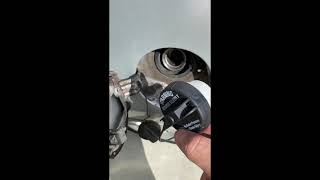
The Scion xD shares its 1.8L 2ZR-FE engine and many EVAP system components with the Toyota Corolla and Matrix of the same era. This makes troubleshooting P0456 fairly predictable. The most common 🎬 Watch: Step-by-step guide to fixing P0456 on a Scion xD cause is a worn gas cap seal, and owners strongly recommend using a genuine Toyota/Scion OEM part for a lasting fix. The second most common failure point, especially on higher-mileage vehicles, is age-related cracking of the small rubber vacuum hoses in the engine bay connected to the purge valve. Less frequently, the charcoal canister can fail, sometimes due to overfilling the gas tank, which can saturate the canister with liquid fuel. The canister for the xD is shared with the Yaris.
Symptoms You May Notice
- Check Engine Light is on
- A faint fuel smell (in rare cases)
- Failure to pass an emissions/smog test
- Replacing the charcoal canister or purge valve before thoroughly checking the gas cap and inspecting the EVAP hoses in the engine bay.
- Using a cheap aftermarket gas cap which fails to seal properly, leading the owner to believe the problem is more complex.
Most Likely Causes
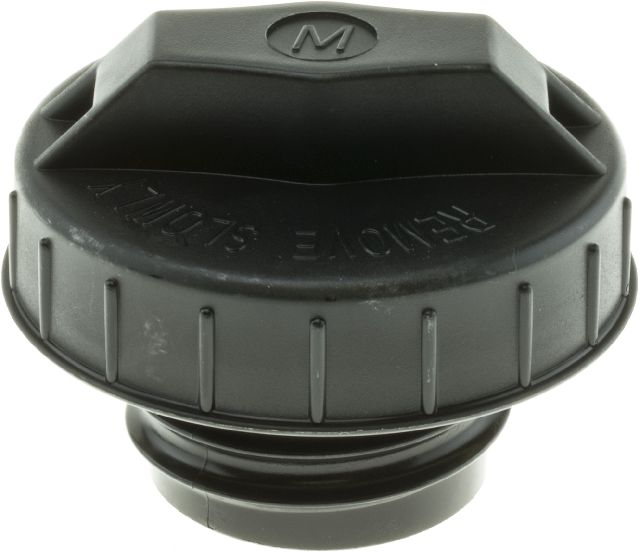
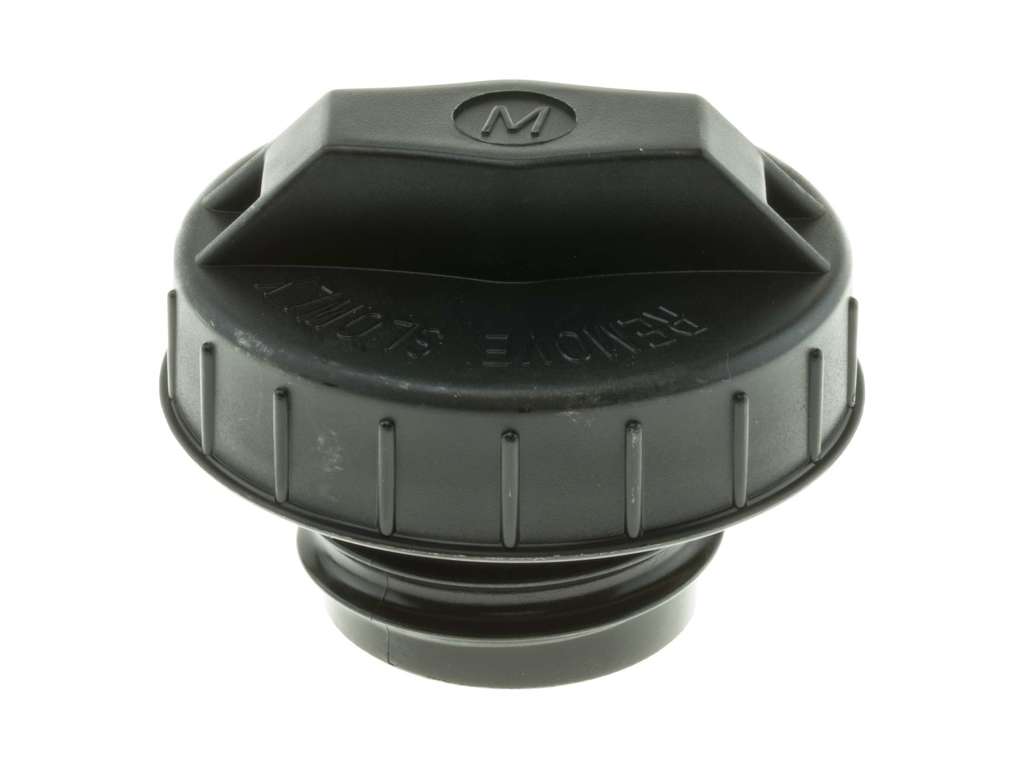
- Loose, Worn, or Incorrect Gas Cap 🔴 High Probability → Shop Fuel Tank Cap This is the most common cause for any P0456 code. The rubber O-ring on the cap can dry out, crack, or deform over time, preventing a proper seal. Aftermarket caps are frequently reported by owners on forums like ScionLife.com to cause this code, even when new.
How to confirm: First, ensure the cap is tightened until it clicks at least once. Inspect the cap's seal for any visible cracks, stiffness, or damage. Clean the rim of the fuel filler neck where the cap seals with a cloth to remove any dirt or rust. If the cap feels loose or doesn't offer resistance when removed, the seal is likely bad.
Typical fix: Replace the gas cap with a new OEM (Original Equipment Manufacturer) part. Aftermarket caps are often cheaper but may not seal correctly, leading to a repeat code.
Est. part cost: $25-$40 - Cracked EVAP Vacuum Hose 🟡 Medium Probability → Shop Vacuum Hose Rubber hoses in the engine bay become brittle with age and exposure to heat cycles. A small crack can easily develop in the lines running to and from the purge solenoid, which is a very common failure point after the gas cap is ruled out.
How to confirm: Visually inspect all accessible EVAP hoses in the engine bay, particularly those connected to the purge valve (solenoid). A user on ScionLife.com found a cracked hose near the EVAP solenoid was the cause after replacing the gas cap. A Reddit user also pointed to a small tear in a hose as the likely culprit after a gas cap replacement failed to solve the issue. A smoke test is the definitive way to find a leak in a hose.
Typical fix: Replace the cracked section of the hose. It's important to use fuel-vapor-rated hose, not standard vacuum line, as fuel vapors will degrade regular vacuum hose over time.
Est. part cost: $10-$30 - Faulty Vapor Canister Purge Valve (Purge Solenoid) ⚪ Low Probability → Shop Vapor Canister The purge valve, which controls the flow of fuel vapors to the engine, can fail by getting stuck slightly open or not sealing completely, creating a small leak path. This is a common part across many Toyota models.
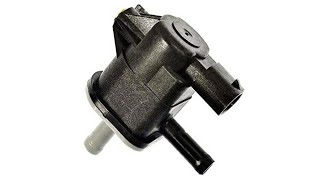
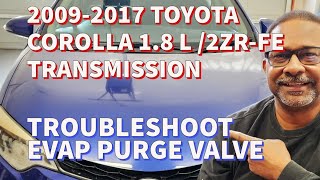
How to confirm: The purge valve is normally closed when the engine is off. With the valve removed from the vehicle, you should not be able to blow air through it. If air passes through, it has failed. A scan tool can also be used to command the valve to open and close to test its function. You can also test the resistance across the two pins, which should be between 15 and 38 ohms. 🎬 See how to diagnose a bad purge valve on this engine
Typical fix: Replace the purge valve. On the Scion xD, this part is located in the engine bay and is relatively easy to access and replace, typically requiring no tools to disconnect the hoses and electrical connector.
Est. part cost: $40-$90
Rare But Worth Checking
- Cracked or Failed Charcoal Canister: → Shop Vapor Canister A crack in the canister body or an internal failure can cause a P0456 code. This is less common for a small leak but possible. Forum users have noted that over-filling the gas tank can flood the canister with liquid fuel, causing it to fail. A very heavy canister or one that rattles when shaken may be defective. This is an expensive part and should only be replaced after a definitive diagnosis, usually with a smoke machine. The canister for the xD is shared with the Yaris.
- Leaking Fuel Filler Neck: → Shop Fuel Filler Neck The metal pipe leading to the gas tank can develop rust or corrosion on the lip where the gas cap seals. This prevents even a new gas cap from sealing properly. In more severe cases, the neck itself can develop a pinhole leak from rust. A visual inspection and cleaning of the sealing surface is a good first step. A smoke test will confirm a leak in the pipe itself.
Diagnosis Steps
- Read the Code: Use an OBD-II scanner to confirm P0456 is the active code.
- Check the Gas Cap: Remove the gas cap. Inspect the rubber O-ring for cracks, dirt, or stiffness. Clean the fuel filler neck rim. Reinstall the cap, ensuring it clicks at least once.
- Clear the Code and Drive: Clear the code with the scanner and drive for a few days. The EVAP monitor runs under specific conditions (often with the fuel tank between 1/4 and 3/4 full, after the car has sat for several hours), so it may take several drive cycles for the light to return if the problem isn't fixed.
- Visual Inspection (Engine Bay): If the code returns, open the hood and inspect the small rubber hoses connected to the EVAP purge solenoid. On the Scion xD, this is located in the engine bay, often near the intake manifold. Pay close attention to bends and connection points for any cracks.
- Replace the Gas Cap: If no obvious hose leaks are found, the next logical and cost-effective step is to replace the gas cap with a genuine OEM part.
- Test the Purge Valve: Remove the purge valve. While it is unplugged, try to blow air through it. If air passes, the valve is stuck open and needs to be replaced. Alternatively, measure the resistance across the terminals; a reading outside of 15-38 ohms indicates failure.
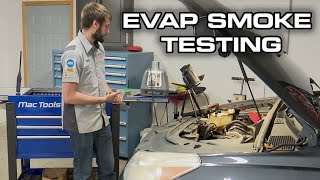
- Smoke Test: If the problem persists, the most effective way to find a small leak is with a smoke machine. A professional mechanic can inject smoke into the EVAP system and see where it escapes. This can definitively pinpoint leaks in hoses, the charcoal canister, the fuel filler neck, or the fuel tank itself. 🎬 Watch: How to perform a smoke test to find hidden leaks
Parts You'll Likely Need
- Fuel Tank Cap
(OEM #77300-52040)— This is the most frequent cause of a P0456 code. The original cap's seal wears out over time, and aftermarket caps often fail to provide a perfect seal.
Trusted brands: Toyota (OEM)
OEM price range: $25-$40
Aftermarket price range: $10-$25 - Vapor Canister Purge Valve / Solenoid
(OEM #25860-21090)— Can get stuck partially open, creating a small leak path. It's a common failure point after the gas cap has been ruled out. This part is shared across many Toyota/Scion models.
Trusted brands: Toyota (OEM), Denso, Standard Motor Products
OEM price range: $60-$90
Aftermarket price range: $30-$60
Related Codes That Often Appear With This One
- P0441 — P0441 (Incorrect Purge Flow) can appear with P0456 if the leak is related to a faulty purge valve that is not functioning correctly or a cracked hose connected to it.
- P0455 — P0455 indicates a large EVAP leak. If you see both, it might suggest an intermittent issue, a component that is failing badly (like a very loose gas cap or disconnected hose), or a problem that has worsened over time.
Platform-Specific Known Issues
- Some owners on ScionLife.com have noted that the charcoal canister on the xD can be expensive and prone to failure from water intrusion or being saturated by fuel from over-topping the gas tank. In some cases, a less expensive canister from a Scion xB (like Standard Motor Products part CP429) can be adapted by swapping the mounting brackets.
Mechanic-Grade Diagnostic Values
- Vapor Canister Purge Valve (Solenoid) Resistance — expected: 15 to 38 ohms across the two terminals when cool.. Failure: A reading significantly outside this range, or an open circuit (infinite resistance), indicates a failed solenoid coil.
- Purge Valve Connector Voltage — expected: Approximately 12V (battery voltage) at the power supply terminal with Key On, Engine Off (KOEO).. Failure: No voltage suggests a blown fuse (e.g., EFI or ECU-IG), a break in the wiring, or a failed relay.
- Fuel Tank Pressure (FTP) Sensor Voltage — expected: Approximately 3.3V at atmospheric pressure with Key On, Engine Off (KOEO).. Failure: Voltage that is stuck high (near 5V) or low (near 0V) regardless of pressure changes, or does not respond when the system is sealed and vacuum is applied.
Hidden / Shadow Codes Worth Checking
- Mode $06, Test ID $81: This monitor ID in Toyota's Mode $06 data corresponds to the EVAP system 0.020" leak check. It displays the actual system pressure drop value measured by the ECU during the test. A value exceeding the maximum threshold will cause P0456 to set. (see via A professional scan tool capable of reading Mode $06 data. The results are typically displayed in raw hexadecimal values that need to be converted.)
Scan Tool Commands That Help
- Toyota Techstream: Active Test: Control the Purge VSV — This bidirectional command allows a technician to manually open and close the purge valve. It's used to verify if the valve is physically working and to check for a corresponding change in engine idle or fuel trims, confirming flow.
- Toyota Techstream: Utility: EVAP System Check (Auto Operation) — This is an automated test sequence that commands all EVAP solenoids to seal the system and runs a leak check, monitoring the fuel tank pressure sensor. It's the most definitive way to confirm if a P0456 fault is currently active or if a repair was successful without waiting for multiple drive cycles.
Wiring & Ground Locations
- Canister Pump Module Ground — Shares a ground point with other rear components, designated as 'O1' located in the back door area according to wiring diagrams.. The canister pump module contains the vent valve and sometimes the pressure sensor. A poor ground at this location can cause erratic operation of the vent valve or incorrect pressure readings, leading to false leak codes.
- ECM Ground Points — The Engine Control Module (ECM) uses multiple ground points, including 'A1' and 'A2' on the left side of the engine compartment and 'A3' behind the left end of the dash.. A faulty ECM ground can cause a wide range of issues, including incorrect interpretation of sensor data from the EVAP system, potentially leading to a false P0456 code.
Real Owner Repair Stories
- ScionLife.com user 'travisbklein' (2013 Scion xD) — Multiple EVAP codes, VSC and trac lights on.
❌ Tried (didn't work) Replacing the gas cap., Replacing the purge solenoid in the engine compartment.
✅ What actually fixed it Replaced the entire vapor canister assembly (Toyota part 77740-52090). The user noted that the canister for the xB (Standard Motor Products CP429) is a much cheaper alternative that can be used by swapping the mounting brackets. - YouTube video 'How To Fix Check Engine Light (Code P0456) On 2009 Scion XD' (2009 Scion xD) — Check Engine Light with codes P0456, P0441, and P0455.
❌ Tried (didn't work) Initial diagnosis pointed to a leak.
✅ What actually fixed it Replacing the gas cap with a $10 aftermarket part and clearing the codes resolved the issue.
OEM Part Supersession History
77300-52040→77300-06040— Part consolidation and design update by Toyota.
Heads up: The new part number 77300-06040 is the current OEM replacement and is fully compatible. The original part number 77300-52040 is also superseded by 77300-52030, which is also replaced by 77300-06040.
Diagnostic Flowchart
Other Known Issues on This Vehicle
Issues unrelated to this code that are worth knowing about as an owner of this generation:
- Water Pump Failure 🟠 Medium — Commonly reported between 50,000 and 100,000 miles. Symptoms include a grinding/whining noise from the belt area and coolant leaks.
- Alternator Failure 🟡 Low — Some owners report premature alternator failure, sometimes due to a faulty decoupler pulley. Not widespread but a documented point of failure.
- Brake System Vacuum Port Freezing (2008-2009 models) 🔴 High — Affects early models in extremely cold climates, leading to a loss of power brake assist. (Ref: Safety Recall (NHTSA ID not specified, but notice exists) to install a redesigned intake air connector.)
- Excessive Oil Consumption 🟡 Low — While the 2ZR-FE engine is generally reliable, some instances of excessive oil consumption have been noted by owners, though less prevalent than on earlier Toyota 1.8L engines.
- Head Gasket Failure (2008 models) 🔴 High — Some reports indicate a higher-than-average incidence of head gasket failure on the 2008 model year around 112,000 miles.
Used vs. New Parts: Buying Guide for This Vehicle
When a used part is the smart pick: A used charcoal canister assembly from a low-mileage, accident-free donor vehicle can be a smart choice, as the OEM part is very expensive. Ensure the donor vehicle is from a dry climate to reduce the risk of water intrusion.
Donor-vehicle mileage cap: roughly under 60000 miles for the part to have meaningful remaining life.
What to inspect on the donor part:
- Check the canister for any physical cracks or damage.
- Shake the canister; there should be no rattling sounds or feeling of liquid sloshing inside.
- Inspect the plastic hose ports for brittleness or cracks.
- If possible, ask for the VIN of the donor car to check its history for flood or major rear-end damage.
OEM-only on this vehicle (don't cheap out):
- Fuel Tank Cap: Forum and mechanic consensus strongly advises using only a genuine Toyota/Scion (OEM) gas cap. Aftermarket caps are a very common cause of repeat P0456 codes due to improper sealing.
Aftermarket brands forum-validated for this vehicle:
- Purge Valve / Solenoid: Denso (often the original OEM supplier), Standard Motor Products (SMP).
- Charcoal Canister: Standard Motor Products (SMP) part CP429 for the Scion xB is reported to be a direct fit for the xD if the mounting brackets are swapped, offering significant cost savings.
Brands owners have reported issues with on this vehicle:
- Gas Caps: Generic, unbranded, or 'white-box' gas caps from online marketplaces or discount auto parts stores should be avoided as they frequently fail to seal correctly.
Documented NHTSA Reports
- A manufacturer service bulletin (referenced in NHTSA Action Number 10033635) notes that some Scion vehicles may exhibit a MIL on condition with DTCs P0455, P0441, or P0456.
- An owner reported a check engine light with EVAP codes including P0456, P043E, P043F, and P2419, which they associated with manufacturer TSB EG047-06 (NHTSA ODI #10569421).
Real Owner Stories
Aggregated from forums and TSBs cited above. Mileages and costs reflect what owners reported in those sources.
2010 Scion xD
Symptoms: Check engine light with codes P0456, P0455, and P0441. Owner tried both aftermarket and OEM gas caps without success.
What fixed it: The source suggests the issue may be a flooded charcoal canister due to overfilling the gas tank.
Source hint: ScionLife.com: A 2010 xD owner with P0456, P0455, and P0441
Scion xD
Symptoms: P0456 EVAP code; replaced the gas cap but the light remained.
What fixed it: Found a cracked hose going to the EVAP solenoid in the engine bay and temporarily fixed it with tape.
Source hint: ScionLife.com: A user ('BeckSTAR') confirmed that after replacing the gas cap, the P0456 code was ultimately resolved by finding and temporarily taping a cracked hose
Scion xD
Symptoms: P0456 code persisted after replacing the gas cap.
What fixed it: Identified a small tear in an EVAP hose.
Source hint: Reddit (r/MechanicAdvice): A user with a P0456 on their Scion xD posted a picture of a small tear in an EVAP hose
Related OBD-II Codes
Frequently Asked Questions
I bought an aftermarket gas cap for my Scion xD but the P0456 code is still there. Why?
Is there a cheaper alternative for a failing charcoal canister on the Scion xD?
Where is the purge valve located on the 2008-2014 Scion xD?
Can overfilling my gas tank cause the P0456 code?
How can I test if my Scion xD purge valve is actually bad?
My 2008 Scion xD has a P0456; are there other major issues I should watch for on this specific year?
Helpful Videos
We Have This Part in Stock


The information in this article is provided for general reference and educational purposes only. Vehicle specifications, procedures, and part compatibility can vary by production date, trim level, and region. Always consult your vehicle's factory service manual and verify part numbers before purchasing or performing repairs. Safety-critical components such as airbags, seat belts, and braking systems should be installed by a qualified professional.
- Scion xD:
- 🧭 Diagnostic Flowchart
- 🎬 Helpful Videos
- 🛍️ Shop This Part
- What's Unique About the 2008-2014 Scion xD
- Symptoms You May Notice
- Most Likely Causes
- Rare But Worth Checking
- Diagnosis Steps
- Parts You'll Likely Need
- Related Codes That Often Appear With This One
- Platform-Specific Known Issues
- Mechanic-Grade Diagnostic Values
- Hidden / Shadow Codes Worth Checking
- Scan Tool Commands That Help
- Wiring & Ground Locations
- Real Owner Repair Stories
- OEM Part Supersession History
- Other Known Issues on This Vehicle
- Used vs. New Parts: Buying Guide for This Vehicle
- Documented NHTSA Reports
- Real Owner Stories
- 2010 Scion xD
- Scion xD
- Scion xD
- Related OBD-II Codes
- Frequently Asked Questions
- 🎟️ Get 5% Off