

P0456 on 2014-2018 Subaru Forester: Causes and Fixes for a Very Small EVAP Leak
On a 2014-2018 Subaru Forester, code P0456 is most often caused by a loose or worn-out gas cap. Before buying any parts, ensure the cap is tightened until it clicks. If the light returns, a new OEM gas cap is an inexpensive first step, typically costing $25-$40. Aftermarket caps are not recommended as they frequently cause sealing issues.
- P0456 means your Forester has a very small leak in the emissions system, which is not a critical mechanical issue.
- Always start by checking that your gas cap is tight. If it is, replacing the gas cap with an OEM part is the most likely and cheapest fix.
- The vehicle is safe to drive, but you will not be able to pass an emissions inspection until the issue is resolved.
- If a new gas cap doesn't fix the problem, a smoke test is the most reliable way to find the leak, which could be a cracked hose or a faulty valve.
- Avoid using aftermarket gas caps, as they are a known cause of persistent EVAP codes on Subarus.
What's Unique About the 2014-2018 Subaru Forester
While P0456 is a universal code, Subarus of this era, including the Forester, are known for having sensitive EVAP systems. Owners frequently report this code, and the solution is overwhelmingly a simple and inexpensive fix like the gas cap. Unlike older Subarus which were prone to filler neck rust, this is less common on the 2014-2018 Forester, shifting the diagnostic focus to the cap and other rubber or plastic components first. A peculiar and well-documented issue on Subarus is the potential for spiders to build webs inside the EVAP canister vent hose, causing a blockage that can trigger this code.
Symptoms You May Notice
- Check Engine Light is on
- A faint fuel smell, particularly around the rear of the vehicle.
- On Subarus, an EVAP code like P0456 will often cause the cruise control light to flash and disable the system as a safety precaution.
- Replacing the charcoal canister or purge valve before checking the gas cap. Always start with the simplest and most common cause.
- Using a cheap aftermarket gas cap, which often fails to seal correctly and does not fix the problem.
Most Likely Causes
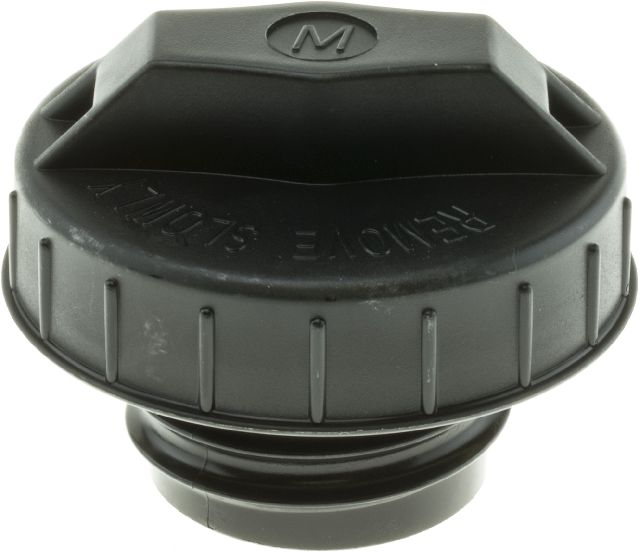
- Loose or Faulty Gas Cap 🔴 High Probability → Shop Fuel Tank Cap The gas cap is the most frequently handled part of the EVAP system, and its seal can wear out or be improperly secured after refueling. It is the number one cause for this code across most vehicles, including the Forester.
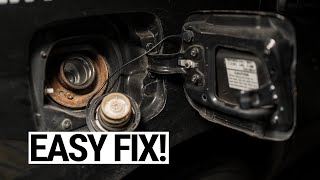
How to confirm: Ensure the gas cap is tightened until it clicks at least once. 🎬 Watch: Two quick DIY methods to fix a P0456 code. Inspect the rubber O-ring on the cap for cracks, stiffness, or damage. If the light returns after tightening and clearing the code, the cap seal is likely faulty. Also inspect the filler neck lip for rust or debris that could prevent a good seal.
Typical fix: Replace the gas cap. It is highly recommended to use an OEM (Original Equipment Manufacturer) cap from Subaru, as aftermarket caps are notorious for having incorrect threading or seal hardness, leading to persistent or new EVAP codes. NHTSA ODI #10490077 notes an instance where a gas cap seal failed after only two years and 40,000 miles, causing the P0456 code to trigger repeatedly after refueling.
Est. part cost: $25-$40 - Cracked or Disconnected EVAP Hoses 🟡 Medium Probability Rubber hoses become brittle over time due to heat cycles and exposure to the elements. Small cracks can develop, especially at connection points near the engine's purge valve or at the charcoal canister assembly.
How to confirm: Visually inspect all accessible EVAP hoses, which are typically thin black lines running from the charcoal canister (near the fuel tank) to the purge valve in the engine bay. Look for visible cracks, splits, or loose connections. A professional smoke test is the definitive way to find a leak that isn't visible.
Typical fix: Replace the cracked section of hose. Small hose clamps can be used to secure any loose connections. TSB 11-152-14 for other Subaru models of this era recommends adding spring clamps to the purge valve hoses to prevent leaks, suggesting this is a known weak point.
Est. part cost: $10-$50 - Faulty Purge Control Solenoid Valve ⚪ Low Probability → Shop Vapor Canister Purge Solenoid This valve, located in the engine bay, controls the flow of fuel vapors from the charcoal canister to the engine. It can get stuck partially open, creating a small leak path that the system detects during its self-test.
How to confirm: The purge valve is normally closed when the engine is off. You can remove the valve and try to blow through it; if air passes, it is stuck open and faulty. A mechanic can also command it open and closed with a scan tool to test its function.
Typical fix: Replace the purge control solenoid valve. This is a relatively simple replacement with two hoses and an electrical connector. 🎬 See this walkthrough for replacing and testing the purge valve.
Est. part cost: $40-$100 - Faulty Canister Vent Valve / Drain Valve ⚪ Low Probability → Shop Vapor Canister Located near the charcoal canister, this valve is normally open to allow air into the system but closes during the self-test. It can get stuck or fail to seal completely due to dirt, debris, or insect nests (like spider webs), which is a known Subaru quirk.
How to confirm: This valve can be tested by applying 12V power to it; it should click and close. If it doesn't close or is stuck, it needs replacement. This is often found during a smoke test when smoke escapes from the vent, or if the valve is found to be physically obstructed.
Typical fix: Replace the canister vent valve assembly. In some cases, simply cleaning debris or spider webs out of the valve's filter box and attached hoses can resolve the issue.
Est. part cost: $50-$150
Rare But Worth Checking
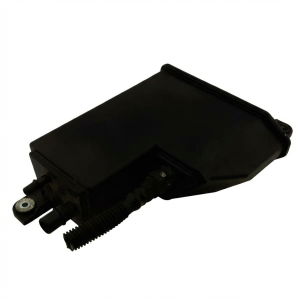
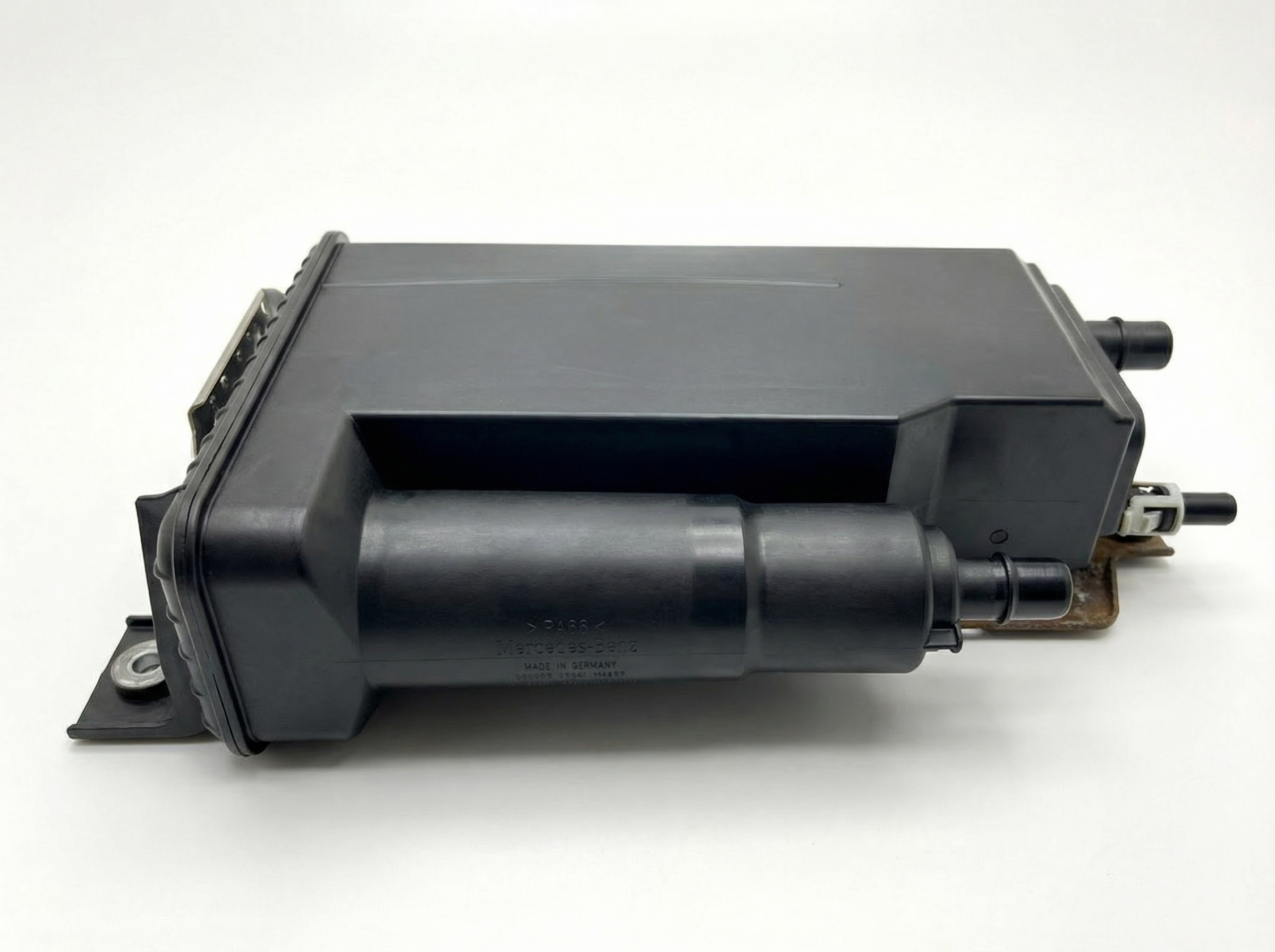
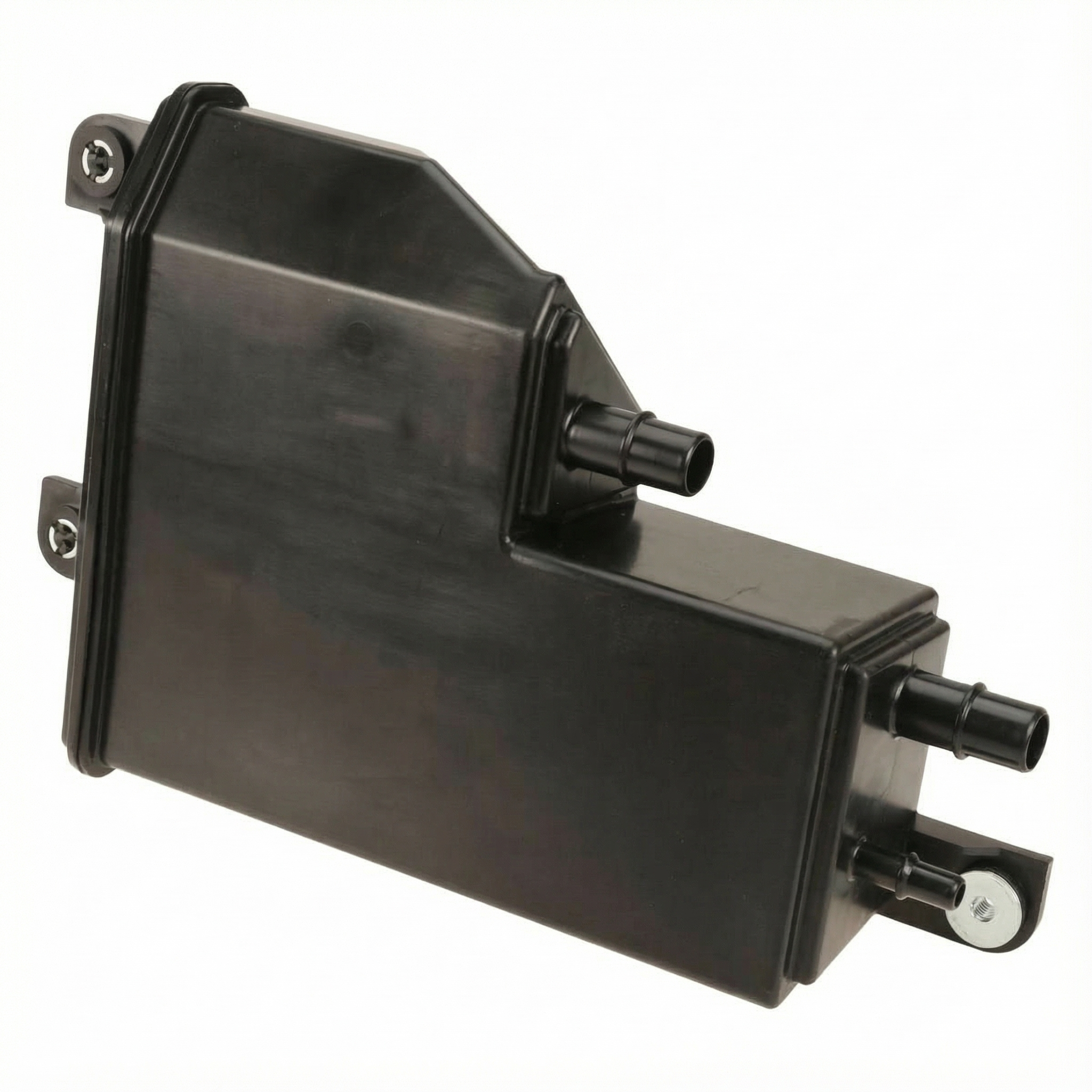
- Cracked Charcoal Canister: → Shop Vapor Canister The plastic housing of the canister can develop hairline cracks from age or impact from road debris, creating a leak. This is almost always found with a smoke test.
- Leaking Fuel Filler Neck: → Shop Fuel Filler Neck While more common on older Subarus, rust or damage to the metal pipe leading to the gas tank can still occur, preventing the gas cap from sealing properly. A visual inspection of the sealing surface and a smoke test are needed to confirm.
- Faulty Roll Over Valve: Though less common, NHTSA ODI #10524491 describes a case where a recurring P0456 code led to a recommendation to replace the roll over valve when other components were not definitively identified as the leak source.
Diagnosis Steps
- Read the code with an OBD-II scanner to confirm P0456 is present.
- Inspect the gas cap. Remove it, check the seal for damage, and reinstall it, ensuring it clicks at least once. Clean any rust or debris from the filler neck sealing surface.
- Clear the code with the scanner. Drive the vehicle for a few days to see if the Check Engine Light returns. The EVAP monitor often runs after the vehicle has sat overnight and the fuel tank is between 1/4 and 3/4 full.
- If the code returns, replace the gas cap with a new OEM part, clear the code, and drive again.
- If the code persists, perform a visual inspection of all accessible EVAP hoses under the hood and near the fuel tank for obvious cracks or disconnections.
- Inspect the EVAP vent valve assembly (near the charcoal canister at the rear of the vehicle) for obstructions like spider webs or debris in its filter box or hoses.
- If no visual faults are found, the most effective next step is a professional smoke test. This involves feeding low-pressure smoke into the EVAP system and watching where it escapes, pinpointing the exact location of the leak.
- Based on the smoke test results, replace the leaking component, which could be a hose, purge valve, vent valve, or the charcoal canister itself.
Parts You'll Likely Need
- Gas Cap
(OEM #42038VA010)— This is the most frequent cause of a P0456 code due to a worn seal or improper tightening. Using an OEM cap ensures a perfect seal, as aftermarket versions are a common source of repeat failures.
Trusted brands: Subaru (OEM)
OEM price range: $25-$40
Aftermarket price range: $15-$30 - Vapor Canister Purge Valve
(OEM #16131AA060)— Can get stuck partially open, creating a constant small leak path that the system detects during its self-test. Located in the engine bay for easy access.
Trusted brands: Subaru (OEM), Dorman (994-042), Carquest (CPC1749), Wells (2M1461)
OEM price range: $40-$60
Aftermarket price range: $30-$50 - Vapor Canister
(OEM #42035FJ000)— The canister assembly, which may include the vent valve on some designs, can crack or the integrated valve can fail, preventing the system from sealing. A smoke test is required to confirm a leak from the canister body.
Trusted brands: Subaru (OEM)
OEM price range: $200-$300
Aftermarket price range: $150-$250
Related Codes That Often Appear With This One
- P0457 — This code specifically indicates a leak detected due to a loose or missing fuel cap, which is the most common cause of P0456 as well.
- P0442 — This code indicates a 'small leak' in the EVAP system, which is slightly larger than the 'very small leak' of P0456. They share the same potential causes and diagnostic procedures.
Technical Service Bulletins (TSBs) & Recalls
- 11-126-12: Addresses reprogramming the ECM for P0456 on some 2012 models, but advises to always perform full diagnostics first as a real leak is likely. While not for the 2014-2018 generation, it shows a history of Subaru ECMs being sensitive to EVAP parameters.
- 11-152-14: Pertains to 2015 Legacy/Outback 3.6L models, directing technicians to add spring clamps to the canister purge control solenoid valve hose to fix P0456. This indicates a known weakness at hose connection points that may also apply to the Forester.
Platform-Specific Known Issues
- A surprisingly common cause for P0456 on Subarus is an obstruction in the EVAP vent hose assembly by spider webs or other insect nests. The filter box for the vent valve is an attractive place for them to build, which blocks airflow and prevents the system from breathing correctly during the test cycle, mimicking a leak.
Mechanic-Grade Diagnostic Values
- Purge Control Solenoid Valve Resistance — expected: 15 - 30 Ohms between the two pins.. Failure: A reading far outside this range, such as 0 Ohms (short) or infinite/OL (open), indicates a faulty internal coil.
- Canister Vent Valve / Drain Valve Resistance — expected: 20 - 50 Ohms between the two pins.. Failure: A reading of 0 Ohms or infinite/OL (open circuit) means the solenoid coil is bad and the valve needs to be replaced.
- Purge Control Solenoid Valve Function (Manual Test) — expected: The valve is normally closed. With the valve removed, you should not be able to blow air through it. When 12V is applied to the pins, it should make an audible 'click' and open.. Failure: If air passes through when unpowered, it is stuck open. If it does not click and open when 12V is applied, it is seized.
- Canister Vent Valve / Drain Valve Function (Manual Test) — expected: The valve is normally open. When 12V is applied to the pins, it should make an audible 'click' and close, blocking airflow.. Failure: If the valve does not click or fails to close when powered, it is faulty.
Scan Tool Commands That Help
- Subaru Select Monitor (SSM) or equivalent professional scan tool: Evaporative System Leak Test — This is a guided diagnostic function that commands the vent valve to close, sealing the EVAP system. The tool then monitors the fuel tank pressure sensor to check if the system holds pressure. It's the first step a dealer technician would use before initiating a smoke test.
- Subaru Select Monitor (SSM) or equivalent professional scan tool: Actuation Test: Purge Valve / Vent Valve — Allows the technician to manually command the purge and vent valves to cycle on and off. This is used to confirm if the solenoids are responding to ECM commands and can help isolate a stuck valve without having to remove it for manual testing.
Wiring & Ground Locations
- Purge Control Solenoid Valve Connector — In the engine bay, typically mounted on or near the intake manifold. It will have a 2-wire electrical connector and two vacuum hoses attached.. A loose or corroded connector can prevent the valve from operating, and the attached hoses can crack or disconnect, creating a leak.
- Canister Vent Valve / Drain Valve Connector — At the rear of the vehicle, mounted on or next to the charcoal canister assembly. The canister is typically located behind the passenger-side rear wheel, partially shielded by the wheel well liner.. This component is exposed to road spray and debris, making its connector and wiring susceptible to corrosion and damage. The hoses connected here are also common failure points.
Real Owner Repair Stories
- YouTube comment on a P0456 repair video (Not specified, but relevant to general P0456 diagnosis) — Persistent P0456 code.
❌ Tried (didn't work) Replacing the purge valve, Replacing the gas cap
✅ What actually fixed it A smoke test revealed the actual cause was a leaking fuel filler neck. - YouTube video by user Chase Schrader (2004 Subaru Forester (older generation, but EVAP system is analogous)) — P0457 code (related EVAP code) and very slow fueling.
✅ What actually fixed it The vent valve on the charcoal canister was replaced. Critically, the user discovered the EVAP hoses connected to the valve were filled with charcoal pellets from a deteriorating canister. He cleaned out the hoses and replaced the old, rusty hose clamps with new ones to ensure a tight seal.
"I Checked Everything" — The Actual Cause
- If a comprehensive smoke test reveals no leaks, the issue may not be a physical leak but an electrical one. A faulty Fuel Tank Pressure (FTP) sensor can send incorrect data to the ECM, making it believe a leak exists when the system is perfectly sealed. In this scenario, the sensor itself is the point of failure, not the integrity of the EVAP system hoses or components.
Model Year Variations Within This Range
- 2014-2018: While the 2014-2018 Forester is a single generation (SJ), there were two primary engines: the 2.5L naturally aspirated and the 2.0L turbocharged (XT). The general EVAP system layout is the same, but the exact location of components in the engine bay, like the purge valve, and the routing of hoses may differ slightly. Always verify part numbers with the vehicle's VIN before ordering.
Diagnostic Flowchart
Other Known Issues on This Vehicle
Issues unrelated to this code that are worth knowing about as an owner of this generation:
- Excessive Oil Consumption 🔴 High — Common in 2011-2015 models with the FB25 engine, particularly earlier in the generation. Consumption can be as high as 1 quart every 1,000-1,200 miles. (Ref: Subject of class-action lawsuit (Yaegar v. Subaru), resulting in a warranty extension to 8 years/100,000 miles for affected vehicles to cover short block replacement.)
- Lineartronic CVT (TR580) Failure/Hesitation 🔴 High — Widespread enough to prompt a warranty extension. Symptoms include shuddering, jerking, hesitation, and sometimes stalling. Valve body solenoid failures are a common root cause. (Ref: Subaru extended the powertrain warranty for the CVT to 10 years/100,000 miles for many 2014-2018 models.)
- Rear Coil Spring Fracture 🟠 Medium — Common on 2014-2016 models, especially in regions using road salt. The protective coating fails, leading to corrosion and breakage. (Ref: Subaru Service Program WUT-05 was issued to replace the rear springs on affected 2014-2016 Foresters.)
- Parasitic Battery Drain 🟡 Low → Shop Vehicle Battery — Owners report batteries dying unexpectedly after short periods. Believed to be caused by the CAN system not allowing modules to fully sleep. (Ref: TSB 11-175-17 and 11-172-17 address this for 2017-2018 models via an ECM reprogram, indicating it's a known software-related issue.)
- Easily Cracked Windshields 🟡 Low — Numerous owner complaints state the factory windshield is thin and prone to cracking from minor impacts.
Used vs. New Parts: Buying Guide for This Vehicle
When a used part is the smart pick: For this repair, obtaining a used charcoal canister assembly or a fuel filler neck from a junkyard can be a cost-effective option, especially if the original part failed due to rust. These are primarily structural parts where function can be visually verified.
Donor-vehicle mileage cap: roughly under 80000 miles for the part to have meaningful remaining life.
What to inspect on the donor part:
- For fuel filler necks, source from a vehicle in a dry, salt-free climate to minimize the chance of rust.
- Inspect plastic housings (like the charcoal canister) for any hairline cracks or signs of impact.
- Check that all hose connection nipples are intact and not brittle.
- Ensure any included rubber hoses are still pliable and not hardened or cracked.
OEM-only on this vehicle (don't cheap out):
- Gas Cap: Aftermarket gas caps are a very common cause of repeat P0456 codes on Subarus. The OEM cap is strongly recommended as its seal material and threading are designed to meet the system's sensitive pressure requirements.
Brands owners have reported issues with on this vehicle:
- Generic/unbranded gas caps from online marketplaces or auto parts stores are frequently reported by owners to cause sealing issues.
Real Owner Stories
Aggregated from forums and TSBs cited above. Mileages and costs reflect what owners reported in those sources.
2014-2018 Subaru Forester
Symptoms: Check Engine Light was on and an aftermarket gas cap was not resolving the issue.
What fixed it: Replacing the aftermarket cap with a new OEM Subaru gas cap.
Source hint: subaruforester.org forum threads
2014-2018 Subaru Forester — ~120000 miles
Symptoms: P0456 code appearing on a higher-mileage vehicle in a harsh climate.
What fixed it: Replacing cracked EVAP hoses near the charcoal canister.
Source hint: subaruforester.org forum threads
2015 Subaru Outback 3.6L
Symptoms: Small EVAP leak detected (P0456).
What fixed it: Adding spring clamps to the canister purge control solenoid valve hose as directed by the manufacturer.
Source hint: TSB 11-152-14
2014-2018 Subaru Forester
Symptoms: The EVAP system was unable to breathe correctly during the test cycle, mimicking a leak.
What fixed it: Cleaning out spider webs and insect nests from the EVAP vent hose assembly and filter box.
Source hint: vehicle_specific_issues section regarding Subaru vent hose obstructions
Documented NHTSA Reports
Subaru Forester Owner Report
Symptoms: The Check Engine Light illuminated with code P0456. A technician suggested replacing the roll over valve, although they could not be certain it was the definitive cause.
What fixed it: Recommendation to replace the roll over valve after the code reappeared multiple times.
Source hint: NHTSA ODI #10524491
Subaru Legacy Owner Report
Symptoms: The gas cap seal failed after only two years and 40,000 miles of use, triggering the P0456 code.
What fixed it: The owner noted the code occurred 4 out of 5 times after filling up the gas tank, indicating a recurring seal failure.
Source hint: NHTSA ODI #10490077
Related OBD-II Codes
Frequently Asked Questions
Why is my cruise control light flashing on my Subaru Forester along with the Check Engine Light?
Can I use an aftermarket gas cap to fix the P0456 code on my Forester?
Does TSB 11-152-14 apply to my Forester's P0456 issue?
Is there a specific Subaru quirk I should look for when diagnosing a small EVAP leak?
When does the Forester's EVAP monitor actually run to check if my P0456 fix worked?
Could my Forester's P0456 code be related to a computer programming issue?
Helpful Videos
![How to Fix P0456 Engine Code in 3 Minutes [2 DIY Methods / Only $4.44]](https://img.youtube.com/vi/v_QDSjd1-Lw/mqdefault.jpg)
Used OEM Parts in Stock
New Aftermarket Parts Available


The information in this article is provided for general reference and educational purposes only. Vehicle specifications, procedures, and part compatibility can vary by production date, trim level, and region. Always consult your vehicle's factory service manual and verify part numbers before purchasing or performing repairs. Safety-critical components such as airbags, seat belts, and braking systems should be installed by a qualified professional.
- Subaru Forester:
- 🧭 Diagnostic Flowchart
- 🎬 Helpful Videos
- 🛍️ Shop This Part
- What's Unique About the 2014-2018 Subaru Forester
- Symptoms You May Notice
- Most Likely Causes
- Rare But Worth Checking
- Diagnosis Steps
- Parts You'll Likely Need
- Related Codes That Often Appear With This One
- Technical Service Bulletins (TSBs) & Recalls
- Platform-Specific Known Issues
- Mechanic-Grade Diagnostic Values
- Scan Tool Commands That Help
- Wiring & Ground Locations
- Real Owner Repair Stories
- "I Checked Everything" — The Actual Cause
- Model Year Variations Within This Range
- Other Known Issues on This Vehicle
- Used vs. New Parts: Buying Guide for This Vehicle
- Real Owner Stories
- 2014-2018 Subaru Forester
- 2014-2018 Subaru Forester — ~120000 miles
- 2015 Subaru Outback 3.6L
- 2014-2018 Subaru Forester
- Documented NHTSA Reports
- Subaru Forester Owner Report
- Subaru Legacy Owner Report
- Related OBD-II Codes
- Frequently Asked Questions
- 🎟️ Get 5% Off