

P0456 on 2010-2014 Subaru Legacy: Causes and Fixes for a Very Small EVAP Leak
On a 2010-2014 Subaru Legacy, code P0456 is most often caused by a loose or worn-out gas cap. If a new gas cap doesn't fix it, the next most likely causes are a leaking purge solenoid valve hose, the valve itself, or a rusted fuel filler neck. A new OEM gas cap costs around $30, while other fixes range from inexpensive clamps to a few hundred dollars for a new filler neck.
- Start with the simplest fix: check that your gas cap is tight. If it's old, replace it with an OEM part.
- If the code returns, inspect the small hoses on the purge control solenoid in the engine bay; they are a known Subaru weak point and may just need clamps.
- This code does not affect how the car drives, so you have time to diagnose it properly.
- For leaks that aren't obvious, a smoke test is the fastest and most accurate way to find the problem.
- For 2011-2012 models, be aware that a software update exists, but only pursue it after a thorough check for physical leaks has been completed.
What's Unique About the 2010-2014 Subaru Legacy
For the fifth-generation Subaru Legacy and its Outback platform-mate, this code is extremely common and has known patterns. Subaru issued a Technical Service Bulletin (TSB 11-126-12) for 2011-2012 models acknowledging that the engine control module's sensitivity could sometimes falsely trigger the P0456 code, for which a software update is available. Another TSB points to a known weak spot: hoses connecting to the purge control solenoid can leak, a problem fixed by simply adding spring clamps. Furthermore, a widely-documented issue on Subarus of this era, particularly in regions using road salt, is the fuel filler neck rusting through, creating a small EVAP leak long before it becomes a fuel leak.
Symptoms You May Notice
- Check Engine Light is on.
- Cruise control light flashing and system disabled (a common Subaru reaction to any CEL).
- Vehicle Dynamics Control (VDC) / Traction Control light on and system disabled.
- A faint fuel smell, particularly around the rear of the car or near the fuel filler door (this is uncommon for a small leak but possible).
- No noticeable impact on vehicle performance or drivability.
- Replacing the charcoal canister when the actual problem is a small, inexpensive hose leak nearby or a rusted filler neck.
- Replacing the fuel tank pressure sensor, which rarely fails in a way that causes this specific code.
- Getting the ECM reprogrammed at a dealer without first performing a smoke test to find a physical leak.
Most Likely Causes
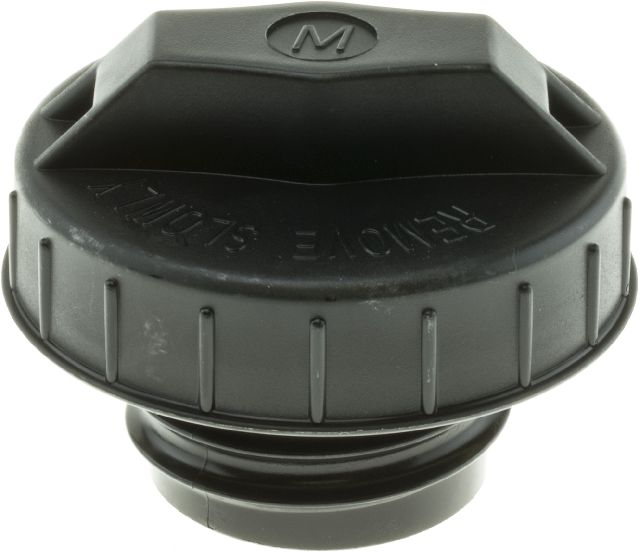
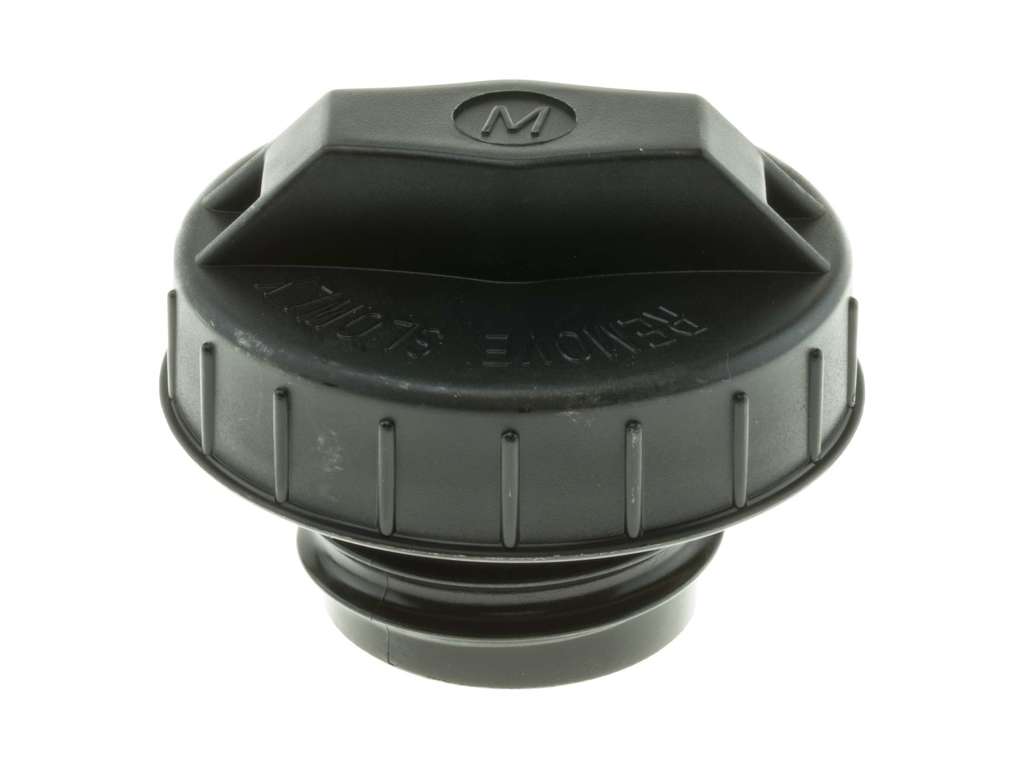
- Loose or Worn Gas Cap 🔴 High Probability → Shop Fuel Tank Cap This is the most common cause on all vehicles. The rubber O-ring seal on the cap degrades over time, and owners may forget to tighten it properly after refueling. It is the first, cheapest, and easiest thing to check.
How to confirm: Inspect the gas cap's rubber seal for cracks, stiffness, or damage. Ensure the cap is tightened until it clicks at least once. If the seal is suspect, replacement is the best confirmation. A genuine OEM cap is strongly recommended as some aftermarket caps are known to cause sealing issues.
Typical fix: Replace the gas cap with a new OEM part. Aftermarket caps can sometimes have sealing issues.
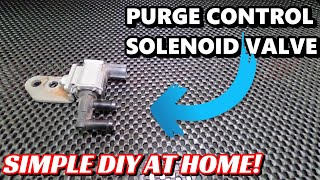
Est. part cost: $25-$40 - Leaking Canister Purge Control Solenoid Valve or Hoses 🟡 Medium Probability → Shop Vapor Canister Purge Solenoid Subaru TSB 11-152-14 specifically identifies that hoses connected to the purge solenoid may not have had clamps from the factory, leading to small leaks over time. The valve itself can also fail by sticking slightly open.
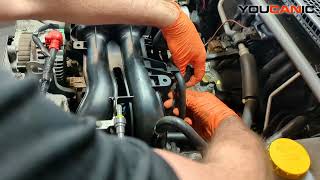
How to confirm: Locate the purge solenoid in the engine bay, typically near the intake manifold. 🎬 See how to test and replace the purge control solenoid. Visually inspect the small rubber hoses connected to it for cracks, brittleness, or loose connections. With the engine running, you can sometimes feel for vacuum leaks with your finger near the connections. A smoke test is the definitive way to find a leak here. A technician may also cycle the valve with a scan tool to see if it sticks.
Typical fix: Add spring clamps (Subaru part # 909170069) to both ends of the main hose on the purge solenoid. If the hoses are cracked, replace them. If the valve itself is leaking (stuck open), it will need to be replaced.
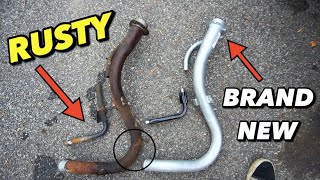
Est. part cost: $5-$10 for clamps, $40-$80 for a new solenoid - Rusted or Cracked Fuel Filler Neck 🟡 Medium Probability → Shop Fuel Filler Neck Subarus from this era, especially those in the 'rust belt', are known for having the fuel filler neck rust out. The metal pipe corrodes, creating pinhole leaks that the EVAP system detects. This often happens where the pipe is covered by a plastic shield, trapping moisture and salt.
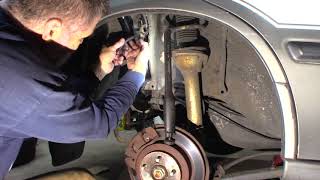
How to confirm: Remove the driver's side rear wheel and the plastic splash shield in the wheel well to get a clear view of the entire filler neck pipe. Inspect thoroughly for rust, flaking metal, and dampness, especially around brackets and the upper bend. A smoke test will quickly reveal a leak here.
Typical fix: The fuel filler neck must be replaced. This is a DIY-possible job but can be difficult due to rusted bolts. 🎬 Watch: A step-by-step guide to replacing a rusted filler neck. It is often recommended to replace associated vent valves and hoses at the same time.
Est. part cost: $150-$250 for an OEM filler neck - Cracked or Disconnected EVAP System Hoses 🟡 Medium Probability Rubber hoses throughout the EVAP system, especially in the engine bay and near the charcoal canister in the rear, become brittle with age and exposure to the elements.
How to confirm: Visually inspect all accessible EVAP lines for obvious cracks, especially at connection points and bends. A professional smoke test is the most effective way to find a small leak in a hose that isn't easily visible.
Typical fix: Replace the cracked section of hose. Ensure new clamps are used.
Est. part cost: $10-$30 - Faulty EVAP Vent Valve / Drain Valve ⚪ Low Probability → Shop Vapor Canister Vent Valve The vent valve (also called a drain valve by Subaru), located near the charcoal canister, can fail to close properly, creating a leak. It is exposed to road debris and moisture, which can cause it to fail or for its filter to become clogged.
How to confirm: The valve is normally open. A scan tool can command it to close for testing. A definitive test involves a smoke machine to see if the valve seals when commanded shut. On many Legacys of this generation, the valve is accessible inside the trunk near the spare tire.
Typical fix: Replace the vent/drain valve assembly.
Est. part cost: $70-$120
Rare But Worth Checking
- Cracked Charcoal Canister: → Shop Vapor Canister While not extremely common for a *small* leak, a hairline crack in the plastic canister body can occur, often from road debris impact. This is more often associated with fueling issues (gas pump clicks off) or larger leak codes like P0442.
- Sensitive or Outdated ECM Software: For 2011-2012 models, Subaru TSB 11-126-12 suggests the ECM logic may be too sensitive. The TSB explicitly states this should only be considered after a thorough diagnosis confirms no physical leak exists. Do not assume the software is the problem without ruling out actual leaks first.
Diagnosis Steps
- Read the code with an OBD-II scanner to confirm it is P0456.
- Inspect the gas cap. Ensure it is tight (clicked multiple times) and the seal is not cracked or brittle. If in doubt, replace it with an OEM cap. This is the cheapest and most common fix.
- Clear the code and drive for a few days to see if the light returns. The EVAP monitor runs under specific conditions (often with 1/4 to 3/4 tank of fuel), so it may take time.
- If the light returns, perform a visual inspection of the engine bay. Locate the purge control solenoid and check its hoses for cracks or loose connections, as noted in Subaru TSBs.
- Inspect the fuel filler neck. Remove the driver's side rear wheel and splash guard. Thoroughly check the entire metal pipe for rust, flaking, or pinholes. This is a very common failure point.
- Visually inspect the EVAP hoses running to the rear of the vehicle and around the charcoal canister for any obvious damage.
- If no visible leaks are found, the most effective next step is to have the system tested with a smoke machine. This involves injecting a harmless, visible vapor into the EVAP system to pinpoint the exact location of the leak. 🎬 Watch: How a smoke test identifies small EVAP leaks.
- Based on the smoke test results, replace the leaking component, which could be a hose, valve, filler neck, or the canister itself.
Parts You'll Likely Need
- Fuel Cap
(OEM #42038VA010 (supersedes older numbers like 42038AE03B))— This is the most frequent cause of P0456. The seal wears out, causing a leak that the system detects. An OEM cap is strongly recommended for a perfect seal.
Trusted brands: Subaru (Genuine)
OEM price range: $25-$40
Aftermarket price range: $15-$30 - Canister Purge Control Solenoid Valve
(OEM #16102AA430 (for 2.5L Non-Turbo), 16102AA391 (for 2.5L Turbo), 16102AA500 (for 3.6L))— This valve can get stuck open, creating a leak path. It's a known issue, and the hoses connecting to it are also a common failure point. Part number varies by engine.
Trusted brands: Subaru (Genuine), Denso
OEM price range: $60-$90
Aftermarket price range: $40-$70 - Fuel Tank Filler Neck Pipe
(OEM #42066AJ02A (or similar, verify by VIN))— A very common failure on these models in rust-prone areas. The pipe corrodes and creates a small leak detectable by the EVAP system.
Trusted brands: Subaru (Genuine)
OEM price range: $150-$250
Aftermarket price range: $100-$180 - Hose Clamp
(OEM #909170069)— A specific Subaru TSB recommends adding these clamps to the purge solenoid hoses, as they may be missing from the factory and can loosen over time.
Technical Service Bulletins (TSBs) & Recalls
- 11-126-12: DTC P0456 Reprogramming File Availability for 2011-2012 Legacy/Outback. This bulletin notes that a reprogramming file is available to address the P0456 trouble code.
- 11-152-14: DTC P0456 / Clamps Added to Canister Purge Control Solenoid Valve Hose. This bulletin describes adding clamps to the canister purge control solenoid valve hose to address the P0456 code.
Platform-Specific Known Issues
- TSB 11-126-12: For 2011-2012 models, an ECM reprogramming may be available to correct over-sensitive logic for P0456 detection. This should only be done after confirming no physical leak exists via a smoke test.
- TSB 11-152-14: Points to leaks at the canister purge control solenoid valve hose connections, which can be fixed by adding spring clamps. While this TSB was for 2015 models, the underlying design and issue are relevant to the 2010-2014 generation.
- Rusted Fuel Filler Neck: A widespread, well-documented problem for this generation, especially in the salt belt. The neck rusts through, causing a small EVAP leak.
Mechanic-Grade Diagnostic Values
- Canister Purge Control Solenoid Valve Resistance — expected: Approximately 30-38 Ohms at 68°F (20°C).. Failure: A reading significantly outside this range (open circuit or short) indicates a faulty solenoid coil.
- EVAP Drain Valve / Vent Valve Resistance — expected: Approximately 20-30 Ohms.. Failure: No reading (open circuit) or a reading far outside the expected range means the valve's internal coil is bad.
- EVAP Drain Valve / Vent Valve Connector Voltage — expected: Approximately 12V (battery voltage) on one of the two pins with the key in the ON position.. Failure: Low or no voltage indicates a wiring issue between the power source and the valve, not a faulty valve itself.
Scan Tool Commands That Help
- Subaru Select Monitor (SSM) or equivalent professional scan tool: EVAP System Test / Forced Self-Test — This is the recommended first step before smoke testing on later models. It commands the vehicle's own leak check module (ELCM) to run its diagnostic routine, which can help determine if the fault is with a valve, sensor, or an actual physical leak without introducing external pressure or smoke.
- Subaru Select Monitor (SSM) or equivalent professional scan tool: Purge Valve Duty Cycle Control / Vent Valve ON/OFF — Used to manually operate the EVAP solenoids. A technician can command the purge valve to cycle while monitoring vacuum with a gauge to see if it sticks intermittently. Commanding the vent valve closed is a required step before performing a smoke test to seal the system.
Wiring & Ground Locations
- Engine Control Module (ECM) — Under the passenger side of the dashboard, located behind the glove box.. The ECM is the computer that receives data from the fuel tank pressure sensor and controls the purge and vent valves. All wiring for these components terminates here.
- Body Integrated Unit (BIU) — Under the driver's side of the dashboard, to the right of the steering column.. The BIU manages various body-related electrical functions and communicates with the ECM. While not a primary cause, a fault here can sometimes lead to erroneous codes or communication issues.
- Purge Control Solenoid Connector — On the purge solenoid itself, near the intake manifold in the engine bay.. This is the primary connection point for testing voltage and resistance of the purge solenoid. The wire colors and pinout are needed for accurate diagnosis.
Real Owner Repair Stories
- NHTSA ODI #10490077 — An owner reported that the gas cap seal failed after only two years and 40,000 miles, causing the vehicle to trip trouble code P0456. The issue occurred 4 out of 5 times the gas tank was filled.
- Reddit user comment (Subaru (model not specified, but behavior is consistent with Legacy)) — Check Engine Light with code P0456.
❌ Tried (didn't work) Initially unknown
✅ What actually fixed it The EVAP purge valve was replaced. After replacement, the check engine light turned off on its own after some driving and did not return. - LegacyGT.com forum user (2013 Subaru Legacy 2.5i Premium) — Check engine light on, with blinking brake light and cruise control light. Cruise control was disabled. Code was for an EVAP leak.
❌ Tried (didn't work) The user was in the initial diagnosis phase when posting.
✅ What actually fixed it The thread was archived before a final solution was posted, but it serves as a real-world example of the exact symptom cluster (CEL + blinking cruise/brake) that owners of this specific model experience with a P0456 code.
"I Checked Everything" — The Actual Cause
- In some cases, a vehicle can pass a smoke test (showing no physical leaks) but still repeatedly set a P0456 code. This often points to one of two issues: 1) An intermittent electronic fault, such as a purge solenoid that only sticks open under specific conditions and doesn't leak when tested cold. 2) A glitch in the Engine Control Module (ECM) software, where the leak detection logic is too sensitive. For some vehicles, a technical service bulletin (TSB) may exist for a software reflash to correct this. This should only be considered after a physical leak has been definitively ruled out.
OEM Part Supersession History
42038AE03B→42038VA010— Updated design for better sealing and durability.
Model Year Variations Within This Range
- 2011-2012: The Engine Control Module (ECM) software on these specific years may have overly sensitive logic for detecting small EVAP leaks. Subaru issued TSB 11-126-12 to address this, which involves reprogramming the ECM. This should only be performed after confirming no physical leaks exist.
- 2010-2012 (with California Emissions): Some models with California PZEV (Partial Zero-Emission Vehicle) specifications may use different EVAP components, including the vapor canister and some valves, compared to the standard Federal emissions versions. It is critical to verify the vehicle's emissions standard (often on a sticker under the hood) before ordering parts like the purge solenoid or vapor canister.
Diagnostic Flowchart
Real Owner Stories
Aggregated from forums and TSBs cited above. Mileages and costs reflect what owners reported in those sources.
5th Gen Subaru Legacy GT
Symptoms: Owner received the P0456 error code.
What fixed it: Confirmed the first step is checking the gas cap.
Source hint: LegacyGT.com thread titled '5th Gen LGT-Error code P0456'
Subaru
Symptoms: P0456 code persisted after replacing the gas cap and canister purge valve.
What fixed it: Community recommended performing a smoke test and checking the fuel filler neck for rust.
Source hint: Reddit r/subaru thread titled 'P0456, not gas cap, not canister purge valve. What's next?'
Subaru
Symptoms: Rust ate through the fuel filler neck, causing EVAP symptoms.
What fixed it: Replaced the rusted fuel filler neck.
Source hint: Ultimate Subaru Message Board thread titled 'Help! Rust ate my fuel filler neck.'
2010-2014 Subaru Outback
Symptoms: Triggered a P0456 code.
What fixed it: Owners confirmed fixes related to the purge control solenoid valve, vent/drain valve, and replacing the notorious rusted fuel filler neck.
Source hint: subaruoutback.org multiple threads discussing P0456
Related OBD-II Codes
Frequently Asked Questions
Does TSB 11-126-12 apply to my 2010 Subaru Legacy?
I heard there is a Subaru TSB about adding clamps to a hose. Does that apply to my 2010-2014 Legacy?
Why did my cruise control and traction control lights come on at the same time as the check engine light?
Should I buy an aftermarket gas cap to fix P0456 on my Legacy?
Why is my fuel filler neck rusting out and causing this code?
I have a 2012 Outback with P0456. Is the diagnosis the same as the Legacy?
Helpful Videos
![How to Fix P0456 Engine Code in 7 Minutes [7 DIY Methods / Only $3.44]](https://img.youtube.com/vi/njt81AALI3U/mqdefault.jpg)

Used OEM Parts in Stock
New Aftermarket Parts Available


The information in this article is provided for general reference and educational purposes only. Vehicle specifications, procedures, and part compatibility can vary by production date, trim level, and region. Always consult your vehicle's factory service manual and verify part numbers before purchasing or performing repairs. Safety-critical components such as airbags, seat belts, and braking systems should be installed by a qualified professional.
- Subaru Legacy:
- 🧭 Diagnostic Flowchart
- 🎬 Helpful Videos
- 🛍️ Shop This Part
- What's Unique About the 2010-2014 Subaru Legacy
- Symptoms You May Notice
- Most Likely Causes
- Rare But Worth Checking
- Diagnosis Steps
- Parts You'll Likely Need
- Technical Service Bulletins (TSBs) & Recalls
- Platform-Specific Known Issues
- Mechanic-Grade Diagnostic Values
- Scan Tool Commands That Help
- Wiring & Ground Locations
- Real Owner Repair Stories
- "I Checked Everything" — The Actual Cause
- OEM Part Supersession History
- Model Year Variations Within This Range
- Real Owner Stories
- 5th Gen Subaru Legacy GT
- Subaru
- Subaru
- 2010-2014 Subaru Outback
- Related OBD-II Codes
- Frequently Asked Questions
- 🎟️ Get 5% Off