

P0456 on 2007-2011 Toyota Camry: EVAP Small Leak Causes and Fixes
For a 2007-2011 Camry, a P0456 code is most often caused by a loose or worn-out gas cap. Before buying any parts, tighten the cap and inspect the seal. If that doesn't work, a new genuine OEM Toyota gas cap is a common, inexpensive fix (around $25-$40) that often resolves the issue where aftermarket caps fail. If the light returns, suspect a small, cracked vacuum hose near the purge valve in the engine bay.
- Always start with the simplest fix: check that your gas cap is tight and its seal is in good condition.
- If you need a new gas cap, spend the extra money for a genuine Toyota part (77300-06040) to avoid sealing issues with aftermarket caps.
- The next most likely culprit on these older Camrys is a small, cracked vacuum hose near the top of the engine by the purge valve.
- If you own a 2010 or 2011 4-cylinder model, be aware of TSB T-SB-0049-12, as the problem could be software-related and not a physical leak.
- Do not replace the expensive charcoal canister unless a smoke test has definitively confirmed it is the source of the leak.
What's Unique About the 2007-2011 Toyota Camry
For this generation of Camry (XV40), the most common culprits for a P0456 code, aside from the universal gas cap issue, are age-related failures. Rubber EVAP hoses in the engine bay, particularly the short ones connected to the purge valve (VSV), are known to become brittle and develop tiny, hard-to-see cracks from years of heat exposure. A Reddit user with a 2009 Camry experienced the code returning two months after a gas cap replacement, pointing to these intermittent, temperature-sensitive hose leaks. Additionally, for 2010-2011 models with the 2AR-FE (4-cylinder) engine, Toyota issued a Technical Service Bulletin (T-SB-0049-12) acknowledging that the P0456 code could be triggered erroneously due to overly sensitive computer logic, with the fix being an ECM software update.
Symptoms You May Notice
- Check Engine Light is on
- Vehicle Stability Control (VSC) light may also be illuminated
- A faint fuel smell may be noticeable, especially after parking or around the gas cap area.
- Difficulty fueling (gas pump clicks off repeatedly) if the canister or vent is clogged.
- A subtle hissing sound from the fuel tank area when opening the gas cap can occur if the canister is blocked.
- Immediately replacing the charcoal canister. This is an expensive part and is less likely to be the cause than a simple gas cap or vacuum hose. A smoke test should always be performed before condemning the canister.
- Using a cheap aftermarket gas cap. Many owners replace the cap with an aftermarket one, which fails to seal properly, leading them to believe the cap was not the issue and unnecessarily pursue more expensive repairs.
Most Likely Causes
- Loose or Worn Gas Cap 🔴 High Probability → Shop Fuel Tank Cap This is the most common cause on all vehicles. The rubber O-ring on the cap degrades over time, losing its ability to create a perfect seal. Many owners report that only a genuine OEM Toyota cap will solve the problem, as aftermarket caps often fail to seal correctly, leading to a recurring code.
How to confirm: First, ensure the cap is tightened until it clicks several times. Remove the cap and inspect the rubber gasket for cracks, stiffness, or damage. Also, check the fuel filler neck for rust or debris that could prevent a seal. A temporary test is to apply a thin layer of petroleum jelly to the gasket to see if it helps create a seal.
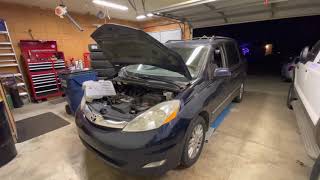
Typical fix: Replace the gas cap with a genuine OEM Toyota part (Part No. 77300-06040). 🎬 Watch: A quick guide on fixing the P0456 gas cap code. Forum users on Reddit strongly advise against cheaper aftermarket caps, as they are a frequent source of chasing the same code after a supposed fix.
Est. part cost: $25-$40 - Cracked EVAP Vacuum Hose 🟡 Medium Probability → Shop Vacuum Hose Rubber hoses in the engine bay, especially the short ones connected to the purge valve (VSV), become brittle from engine heat and age, leading to small, often invisible cracks. These cracks can be temperature-sensitive, opening up when cold and sealing when warm, causing the code to appear intermittently.
How to confirm: With the engine cover off, visually inspect the vacuum hoses connected to the purge solenoid on top of the engine. A common failure point is a crack right at the end of the hose where the clamp sits. Gently flex the hoses to reveal any hidden cracks. A professional smoke test is the definitive way to find a small hose leak.
Typical fix: Replace the cracked section of the hose. This is often a simple and inexpensive repair using a new piece of vacuum hose and spring clamps.
Est. part cost: $5-$20 - Faulty Purge Valve (VSV) 🟡 Medium Probability → Shop Vapor Canister The purge valve (or Vacuum Switching Valve, VSV, in Toyota terminology) can fail by getting stuck slightly open, creating a small leak path when it should be sealed. This is a known failure point across many Toyota models.
How to confirm: The valve is normally closed. Disconnect the valve and try to blow through it; if any air passes, it is stuck open and faulty. You can also test it by applying 12V power to see if it clicks open and holds a seal when de-energized. A smoke test will also show smoke exiting the valve if it's not sealing.
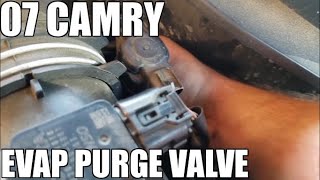
Typical fix: Replace the purge valve assembly. It is located in the engine bay and is typically easy to access, held by one bolt and two hoses. 🎬 See this walkthrough on how to replace the purge valve.
Est. part cost: $70-$120 - Cracked Charcoal Canister ⚪ Low Probability → Shop Vapor Canister The plastic housing of the canister, located under the car near the fuel tank, can develop hairline cracks over time due to age and exposure to road debris. The integrated vent valve can also fail. This is a less common but expensive failure.
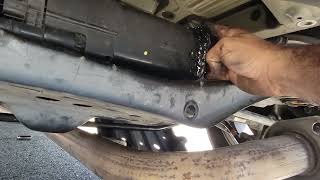
How to confirm: This is difficult to confirm without a smoke test. A mechanic will introduce smoke into the EVAP system and look for it escaping from the canister assembly. A Reddit user with a 2007 Camry posted a video of a smoke test showing a clear leak from the canister body itself after replacing the gas cap.
Typical fix: Replace the entire charcoal canister assembly. This is a more involved and expensive repair. Removing the spare tire can provide better access.
Est. part cost: $250-$400
Rare But Worth Checking
- Rusty Fuel Filler Neck: → Shop Fuel Filler Neck Even with a new gas cap, rust or corrosion on the metal lip of the filler neck can prevent a proper seal. This is common in regions that use road salt. The fix involves carefully cleaning the rust off the lip with emery cloth and applying a light coat of silicone grease. Manufacturer Bulletin #T-SB-0086-16 notes that in some vehicles, the fuel filler neck may be out of position, leading to a "no click" or "no spring return" condition when sealing the cap.
- Spider Webs in Vent Line: Spiders can build nests inside the EVAP vent hoses, typically near the charcoal canister. This blockage can alter system pressures during the self-test and trigger a P0456 code. While rare, mechanics have reported this as a cause after other diagnostics fail to find a leak. Toyota has issued TSBs for other models regarding spider intrusion in EVAP lines.
Diagnosis Steps
- Read the code with an OBD-II scanner to confirm P0456 is the primary code present.
- Inspect the gas cap. Remove it, check the seal for cracks or hardness, and clean any debris from the cap and filler neck. Reinstall it, ensuring it clicks multiple times.
- Clear the code. The EVAP monitor runs under specific conditions (e.g., cool-down period with fuel level between 1/4 and 3/4 tank), so it may take a few days of driving to see if the light returns.
- If the code returns, replace the gas cap with a Genuine Toyota OEM part (77300-06040). This is the most common fix and worth doing before further diagnostics.
- If the code persists, pop the hood and remove the plastic engine cover.
- Visually inspect all small rubber vacuum hoses connected to the purge valve (VSV) on top of the engine. Pay close attention to the ends of the hoses near the clamps for tiny cracks.
- For 2010-2011 models with the 2AR-FE engine, consult a dealer or qualified shop about TSB T-SB-0049-12 to see if an ECM update is required before replacing parts.
- If no visual faults are found, the most effective next step is a professional smoke test to pinpoint the exact location of the leak. 🎬 Watch: How to use a smoke machine to find small leaks. This can identify hard-to-see cracks in hoses, a faulty purge valve, a leaking fuel tank gasket, or a cracked charcoal canister.
Parts You'll Likely Need
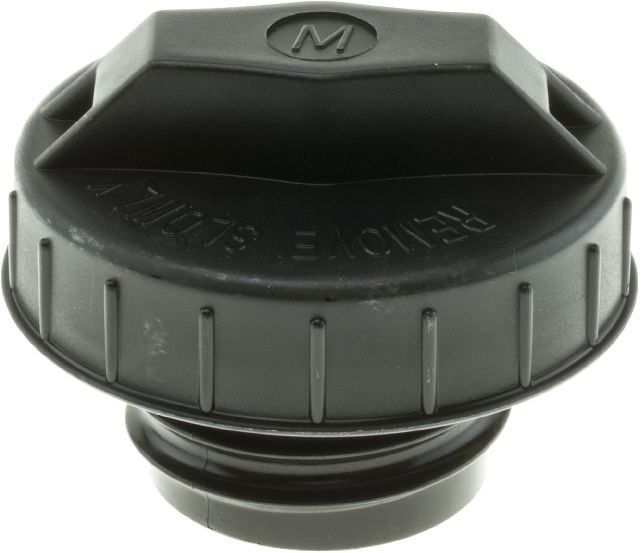
- Fuel Tank Cap
(OEM #77300-06040)— This is the most frequent cause. The seal wears out, causing a leak. Using an OEM cap is critical for a proper seal, as confirmed by numerous owner experiences on forums. This part number supersedes 77300-52030 and 77300-52040.
Trusted brands: Toyota (Genuine OEM)
OEM price range: $25-$40
Aftermarket price range: $15-$25 - Vapor Canister Purge Valve / VSV
(OEM #90910-12276)— This valve in the engine bay often fails by not sealing completely, creating a persistent small leak. It's a common point of failure after the gas cap.
Trusted brands: Toyota (Genuine OEM), Denso, Standard Motor Products (SMP)
OEM price range: $70-$120
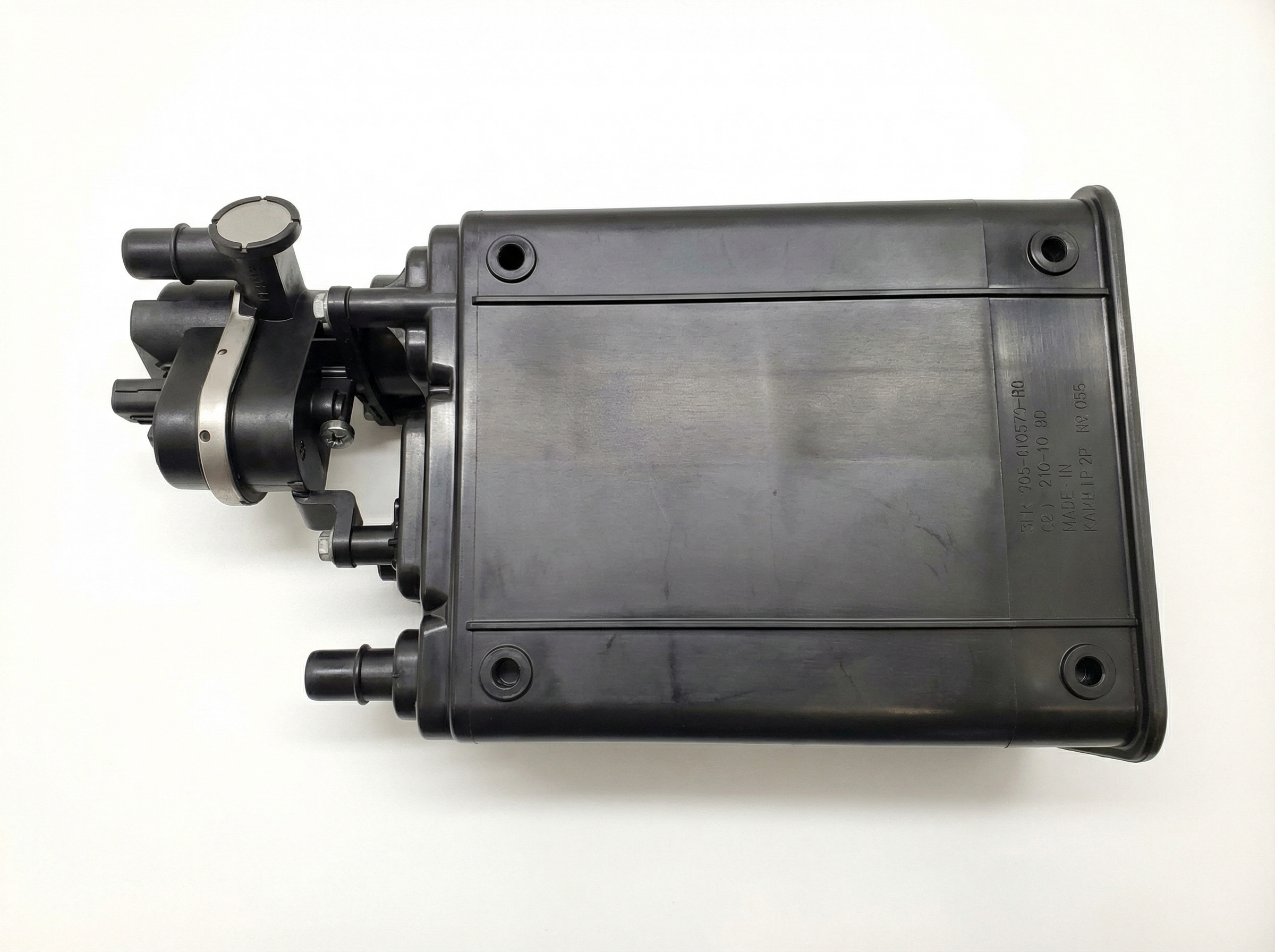
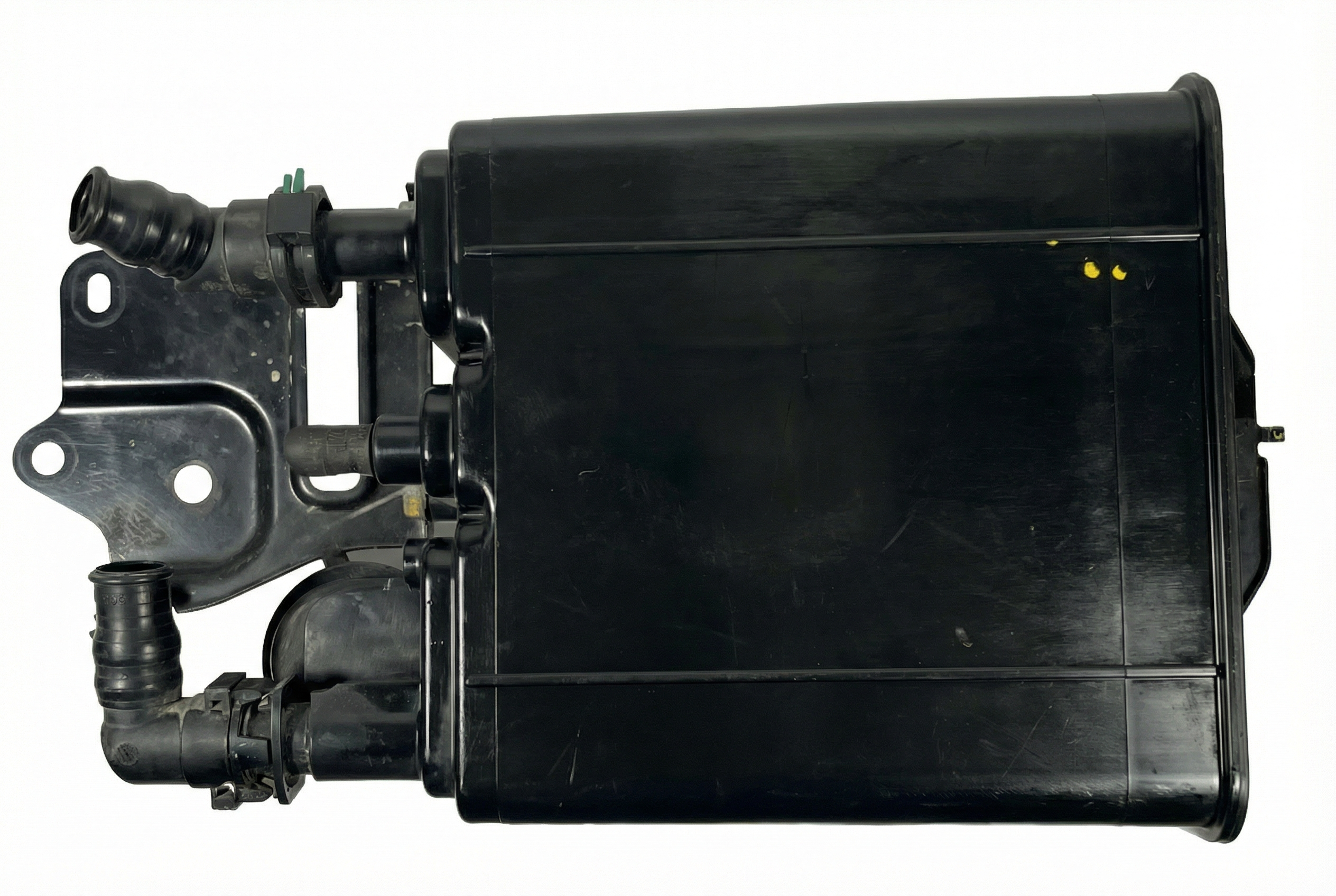
Aftermarket price range: $40-$80 - Charcoal Canister Assembly
(OEM #77740-06210)— This part (for California emissions models) can crack and cause a leak. It's less common and should be confirmed with a smoke test before replacement. Federal emissions models use a different part number. Check the emissions label under the hood to confirm which version your car has.
Trusted brands: Toyota (Genuine OEM), Dorman
OEM price range: $250-$400
Aftermarket price range: $150-$250
Related Codes That Often Appear With This One
- P0441 — Incorrect Purge Flow. This can appear alongside P0456 if the purge valve is malfunctioning, causing both a leak (when it should be closed) and improper flow (when it should be open).
- P0455 — EVAP Large Leak Detected. If a small leak worsens over time, or if the gas cap is left very loose, the system may eventually log a large leak code as well.
- P2442 — Secondary Air Injection System Switching Valve Stuck Open. NHTSA ODI #11235367 describes a case where P0456 appeared alongside P2442 and other codes, resulting in the vehicle being unable to go above 40 MPH.
Technical Service Bulletins (TSBs) & Recalls
- T-SB-0049-12 - MIL 'ON' DTC P0456
- Bulletin #T-SB-0086-16 - Describes a "no click" or "no spring return" condition from the fuel cap when fully seated, which may cause MIL ON with DTC P0456.
Platform-Specific Known Issues
- TSB T-SB-0049-12: For 2010–2011 Camry models with the 2AR-FE engine, a MIL ON with DTC P0456 may occur when no physical leak exists. The ECM logic was too sensitive and Toyota issued a software update to correct it. Diagnosis should confirm this TSB does not apply before replacing physical parts on these specific models.
- Brittle Engine Bay Hoses: The specific layout of the 2AZ-FE and 2GR-FE engines in the XV40 chassis exposes the short vacuum hoses at the purge valve to significant heat, causing them to crack prematurely compared to other EVAP hoses under the car.
Hidden / Shadow Codes Worth Checking
- Mode 6, Test ID $81: This refers to the onboard monitor test for the 0.020" (small) leak check. A failing value in Mode 6 can confirm the P0456 without waiting for the check engine light to return after a repair attempt. A user on a forum noted a 'bad purge flow monitor' in their Mode 6 scan, pointing them toward the purge valve system. (see via A professional scan tool or an advanced OBD-II scanner app that can display Mode $06 data.)
Scan Tool Commands That Help
- Toyota Techstream: Evaporative System Check (Utility) — This is a guided, automated test that allows a technician to bypass the 5-hour cold soak period normally required for the EVAP monitor to run. The utility commands the purge and vent valves to seal the system, draws a vacuum, and monitors the pressure decay to confirm a leak or verify a repair. It can individually test different parts of the system (e.g., tank only vs. tank and canister) to help isolate the leak source.
- Toyota Techstream: Active Test — Allows for manual, individual control of EVAP components. A technician can command the 'VSV for EVAP' (Purge Valve) or 'VSV for CCV' (Canister Vent Valve) to open or close. This is used to confirm if a valve is physically stuck or not responding to commands from the ECM, which is crucial for diagnosis when a smoke test shows no leaks.
Wiring & Ground Locations
- Ground Point EA — Located on the left front fender, inside the engine compartment.. According to the 2007 Camry wiring diagram, this is a shared ground point for multiple engine bay components. While not a primary suspect, a corroded or loose ground at this location could cause intermittent issues with EVAP solenoids or sensors that rely on it for a stable ground reference, leading to erratic behavior and fault codes.
Real Owner Repair Stories
- YouTube video by 'Taller Tamburiny' (2014 Toyota Camry (similar EVAP system design)) — P0456 code for a very small EVAP leak.
❌ Tried (didn't work) A smoke test was performed, but the leak was too small to be visually detected from the smoke alone.
✅ What actually fixed it After the smoke test failed to show the leak, the technician sprayed soapy water around the top of the fuel pump assembly (under the rear seat). Bubbles formed, revealing a hairline crack in the plastic housing of the fuel pump module itself, right at the seal. Replacing the fuel pump assembly resolved the P0456 code. - Reddit user /u/ChuckTambo (2014 Toyota Camry, 2.5L, 130k miles) — Persistent P0456 code.
❌ Tried (didn't work) Replaced gas cap with OEM part., Had a smoke test performed, which found a leak at the charcoal canister vent valve., Replaced the charcoal canister assembly with an OEM part.
✅ What actually fixed it The code returned 5 days after replacing the canister. The user was advised that after 130k miles, rubber hoses can develop tiny, intermittent cracks that are hard to find even with a smoke test, suggesting the next step is to meticulously inspect all vacuum lines between the tank, canister, and engine. The final resolution was not posted, but the story highlights that even after replacing a smoke-test-identified part, the issue can persist due to other, smaller, age-related leaks. - NHTSA Owner Report (NHTSA ODI #11586715) — An owner reported a persistent P0456 error stating the gas cap was faulty. Despite replacing the cap multiple times, the code remained, illustrating that the system may continue to flag the cap even when the leak is located elsewhere.
"I Checked Everything" — The Actual Cause
- In one documented case on a similar platform, a mechanic performed a smoke test for P0456 and found no visible smoke. Suspecting a very minute leak, he sprayed soapy water on the fuel pump assembly under the rear seat and discovered bubbles forming from a hairline crack in the plastic housing. The leak was too small for the smoke to be obvious but large enough to be detected by the soap solution and to trigger the code.
- A Reddit user reported their mechanic performed a smoke test and found no leaks for a P0456 code. The mechanic suggested the charcoal canister or a blocked fuel filler neck could be the cause, but without definitive proof. The check engine light would turn off during warmer weather (60-70°F) and come back on in colder temperatures (below 40°F), indicating a temperature-sensitive leak, likely a hairline crack in a plastic component or a hardened rubber hose that contracts in the cold.
- NHTSA ODI #10350227 describes a situation where a dealer claimed an animal had made a small pinhole in the gas return line, causing the P0456 code to trigger.
- NHTSA ODI #11419086 notes a case where a small leak in the evaporative emission control system was diagnosed as P0456, requiring a detailed inspection at a dealership to confirm the source.
OEM Part Supersession History
77300-52030, 77300-52040→77300-06040— Standard part consolidation and design updates by Toyota over the years.
Heads up: The newer part number, 77300-06040, is the correct and current replacement for the entire 2007-2011 Camry range and is backward compatible with the older numbers.
Model Year Variations Within This Range
- 2010-2011: For models with the 2AR-FE (4-cylinder) engine, Toyota issued TSB T-SB-0049-12. This bulletin addresses cases where the P0456 code is set due to overly sensitive ECM logic, not an actual leak. The fix is a software update for the ECM, which should be performed before replacing any hardware.
- 2007-2011: Vehicles were produced with either Federal (ULEV) or California (PZEV) emissions specifications. These systems use different charcoal canister assemblies and may have other minor component differences. It is critical to check the Vehicle Emissions Control Information label under the hood to order the correct replacement parts, especially the expensive charcoal canister.
Diagnostic Flowchart
Real Owner Stories
Aggregated from forums and TSBs cited above. Mileages and costs reflect what owners reported in those sources.
2007 Toyota Camry
Symptoms: Check Engine Light illuminated with a P0456 code. Visual inspection revealed a cracked, brittle vacuum hose at the purge valve.
What fixed it: Replaced the cracked section of the vacuum hose at the purge valve.
Source hint: YouTube (DanielJaegerFilms)
2009 Toyota Camry SE
Symptoms: The P0456 code returned after 2 months of initially clearing it, highlighting the intermittent nature of temperature-sensitive hose leaks.
What fixed it: Traced and repaired an intermittent EVAP hose leak.
Source hint: Reddit (r/MechanicAdvice)
2007 Toyota Camry 3.5L V6
Symptoms: P0456 code persisted even after replacing the gas cap with an OEM Toyota part.
What fixed it: A professional smoke test confirmed a leak from the charcoal canister body itself, requiring replacement of the canister assembly.
Source hint: Reddit (r/MechanicAdvice)
2010-2011 Toyota Camry (2AR-FE)
Symptoms: MIL ON with DTC P0456 occurred, but diagnostics showed no physical leak existed in the EVAP system.
What fixed it: Updated the ECM software logic to correct overly sensitive EVAP monitor parameters.
Source hint: TSB T-SB-0049-12
Related OBD-II Codes
Frequently Asked Questions
Does TSB T-SB-0049-12 apply to my Camry for the P0456 code?
Why did my VSC (Vehicle Stability Control) light come on with the Check Engine Light?
Which gas cap should I buy to fix the P0456 code on my XV40 Camry?
Where are the EVAP vacuum hoses located that commonly crack on this generation Camry?
How can I test the purge valve (VSV) on my Camry to see if it's causing the leak?
Why is it hard to put gas in my Camry after getting a P0456 code?
Helpful Videos
Used OEM Parts in Stock
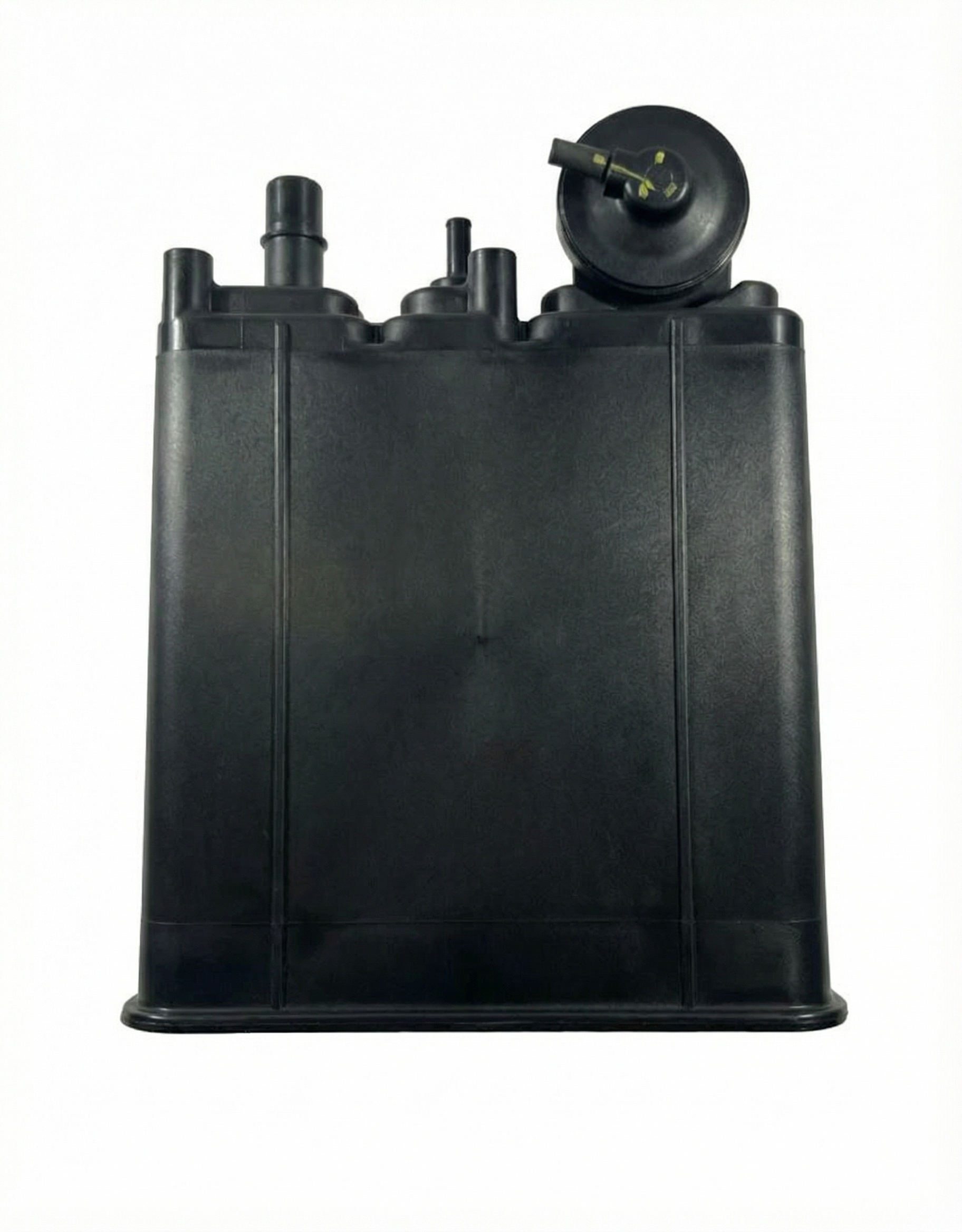
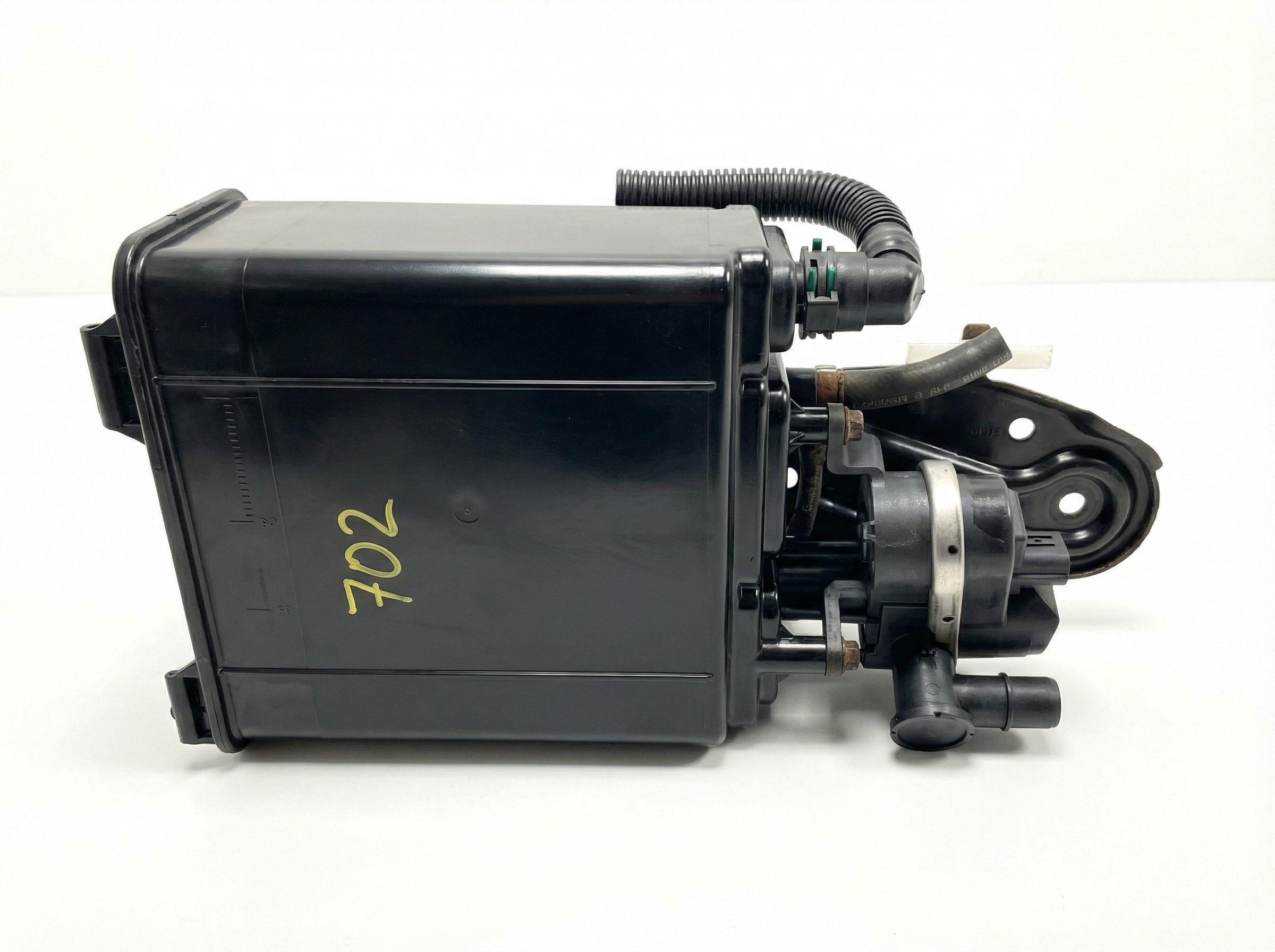
New Aftermarket Parts Available

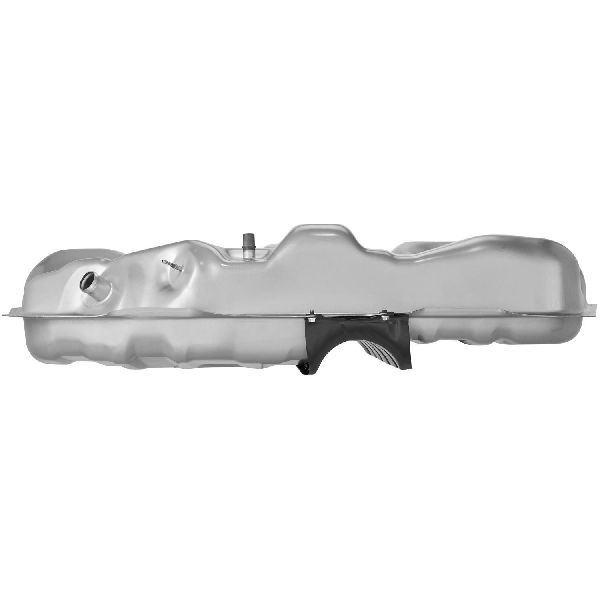

The information in this article is provided for general reference and educational purposes only. Vehicle specifications, procedures, and part compatibility can vary by production date, trim level, and region. Always consult your vehicle's factory service manual and verify part numbers before purchasing or performing repairs. Safety-critical components such as airbags, seat belts, and braking systems should be installed by a qualified professional.
- Toyota Camry:
- 🧭 Diagnostic Flowchart
- 🎬 Helpful Videos
- 🛍️ Shop This Part
- What's Unique About the 2007-2011 Toyota Camry
- Symptoms You May Notice
- Most Likely Causes
- Rare But Worth Checking
- Diagnosis Steps
- Parts You'll Likely Need
- Related Codes That Often Appear With This One
- Technical Service Bulletins (TSBs) & Recalls
- Platform-Specific Known Issues
- Hidden / Shadow Codes Worth Checking
- Scan Tool Commands That Help
- Wiring & Ground Locations
- Real Owner Repair Stories
- "I Checked Everything" — The Actual Cause
- OEM Part Supersession History
- Model Year Variations Within This Range
- Real Owner Stories
- 2007 Toyota Camry
- 2009 Toyota Camry SE
- 2007 Toyota Camry 3.5L V6
- 2010-2011 Toyota Camry (2AR-FE)
- Related OBD-II Codes
- Frequently Asked Questions
- 🎟️ Get 5% Off