

P0456 on 2008-2013 Toyota Highlander: Causes and Fixes for a Very Small EVAP Leak
For a P0456 code on a 2008-2013 Toyota Highlander, the most likely cause is a loose or worn-out gas cap. If that doesn't fix it, check for a small, cracked rubber vacuum hose in the engine bay near the purge valve. A new OEM gas cap costs around $20-$30 and is highly recommended over aftermarket versions. These two issues account for the vast majority of P0456 cases on this vehicle.
- Always check the gas cap first for a P0456 code. Ensure it's tight and the seal is in good condition.
- If the gas cap isn't the issue, the next most likely culprit on a 2008-2013 Highlander is a small, cracked rubber EVAP hose in the engine bay.
- Do not replace expensive parts like the charcoal canister without first confirming the leak's location with a smoke test.
- Using a genuine Toyota (OEM) gas cap is recommended for the best seal and to avoid persistent issues.
What's Unique About the 2008-2013 Toyota Highlander
On this generation of Highlander, and many Toyotas from this era using the 2GR-FE engine, the small rubber hoses used in the EVAP system are known to become brittle and crack over time due to engine heat. A very common failure point is the short hose connected to the purge valve (also called a Vacuum Switching Valve or VSV by Toyota) located in the engine compartment. While the gas cap is always the first suspect, these cracked hoses are a frequent underlying cause for a P0456 code on this platform, often found right where the hose bends or connects to a fitting.
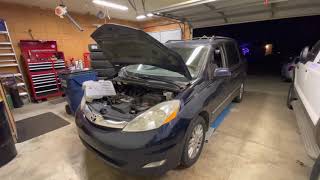
🎬 Watch: A quick fix for common Toyota EVAP hose leaks.Symptoms You May Notice
- Check Engine Light is on
- A VSC (Vehicle Stability Control) warning light may sometimes appear along with the Check Engine Light.
- A very faint fuel smell (this is rare for a small leak and more common with larger EVAP leaks like P0455)
- Reduced vehicle performance; one owner reported a situation where the vehicle would not go above 40mph on city streets or highways while P0456 and other codes were present (NHTSA ODI #11235367).
- Replacing the charcoal canister before performing a smoke test. The canister is very expensive and far less likely to be the cause than a simple cracked hose or bad gas cap.
- Using an aftermarket gas cap, which may not seal to Toyota's specifications, leading to a persistent code and unnecessary further diagnosis.
Most Likely Causes
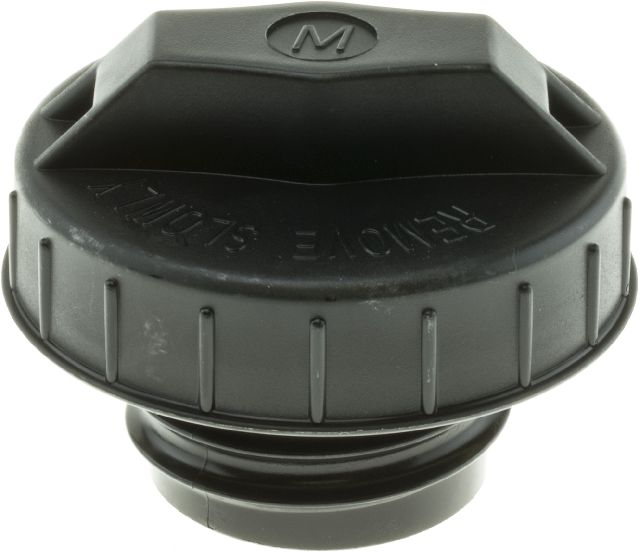
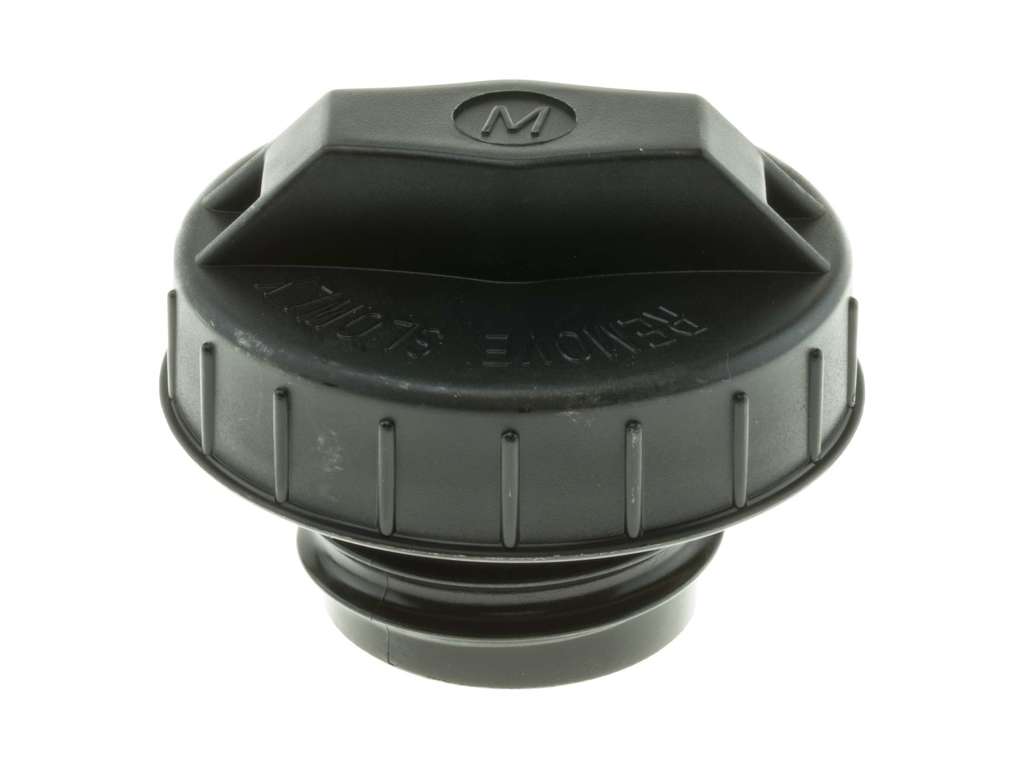
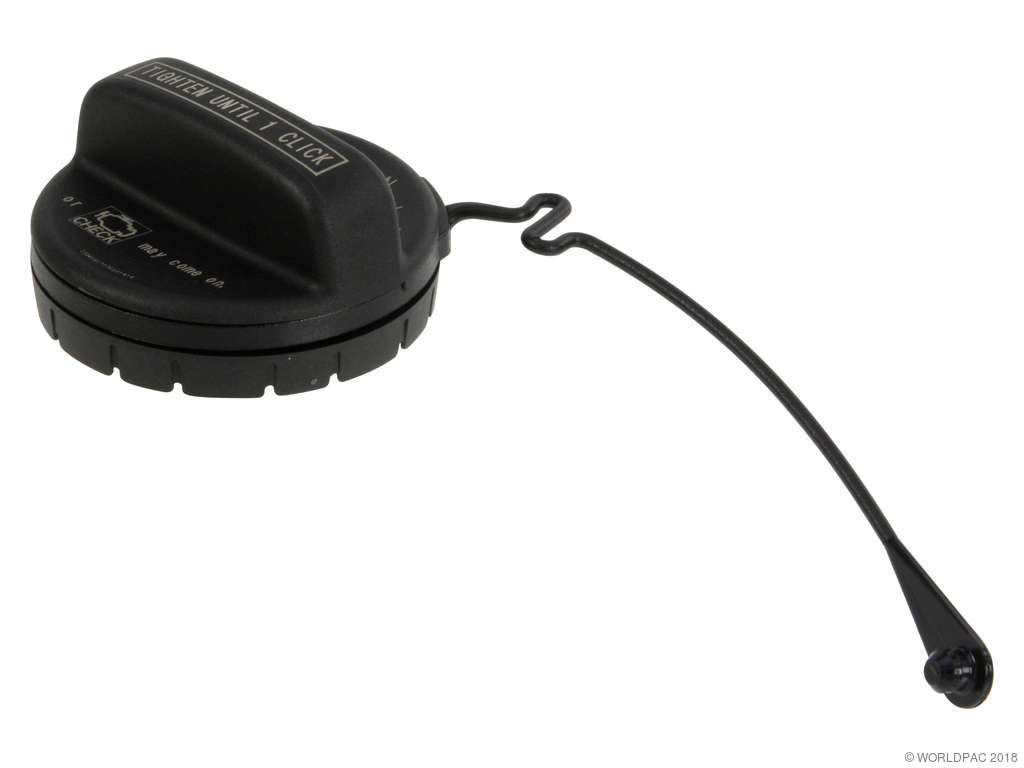
- Loose or Worn Gas Cap 🔴 High Probability → Shop Fuel Tank Cap The gas cap seal is a rubber O-ring that degrades over time with exposure to fuel and weather, losing its ability to create a perfect seal. This is the most common cause for any EVAP code.
How to confirm: First, ensure the cap is tightened until it clicks at least once. Inspect the rubber gasket on the cap for cracks, stiffness, or damage. If the seal looks worn or the light returns after tightening, replacement is the next step. Many owners report that only a genuine OEM cap will solve the problem permanently.
Typical fix: Replace the gas cap. It is highly recommended to use a genuine OEM cap, as many aftermarket caps do not seal correctly and can cause the code to persist or return shortly after.
Est. part cost: $20-$35 - Cracked EVAP System Hose 🔴 High Probability Rubber hoses in the engine bay, particularly those connected to the purge valve, are exposed to constant heat cycles, causing them to become brittle and develop small, hard-to-see cracks. This is a well-documented failure point on the 2GR-FE engine family.
How to confirm: Remove the engine cover and visually inspect the small rubber hoses connected to the purge solenoid/valve. Pay close attention to the ends of the hoses and any bends, as this is where cracks often start. Gently flexing the hoses can reveal hidden cracks. A smoke test is the definitive method if a visual crack cannot be found.
Typical fix: Replace the cracked section of hose. This can often be done with a small piece of bulk vacuum hose of the correct diameter from any auto parts store.
Est. part cost: $5-$20 - Faulty Vapor Canister Purge Valve (VSV) 🟡 Medium Probability → Shop Vapor Canister This solenoid is an electromechanical part that cycles frequently and can wear out, getting stuck open or not sealing completely, creating a leak path in the system.
How to confirm: The valve is normally closed. With the engine off, remove the valve and try to blow through it; if air passes, it's stuck open and faulty. You can also use a scan tool to command it open and closed while listening for a click, or apply 12V directly to its pins to check for actuation. A resistance check across the two pins should yield a reading between 23 and 26 ohms at 68°F (20°C).
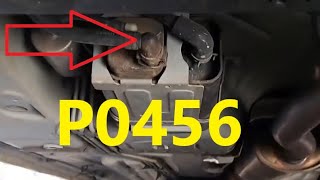
Typical fix: Replace the purge valve assembly, which is typically located in the engine bay and is easy to access. 🎬 See this walkthrough on how to replace the purge valve.
Est. part cost: $70-$130 - Leaking Charcoal Canister or Vent Valve ⚪ Low Probability → Shop Vapor Canister The canister is located underneath the vehicle near the fuel tank and can be damaged by road debris or corrosion over many years. The associated vent valve on the canister can also fail, though this is less common for a *very small* leak code.
How to confirm: A visual inspection may reveal cracks in the plastic body of the canister. A professional smoke test is the most reliable way to confirm a leak in the canister assembly or its associated vent valve, as the leak may be in a seam or gasket not visible otherwise.
Typical fix: Replace the entire charcoal canister assembly. On many Toyotas, the vent valve is integrated into the canister. This is an expensive part and should only be replaced after a smoke test confirms it is the source of the leak.
Est. part cost: $650-$1000
Rare But Worth Checking
- Faulty Fuel Tank Pressure Sensor: → Shop Fuel Tank This is uncommon. The sensor itself can fail and send incorrect data to the computer, making it think there is a leak when there isn't one. This would typically be suspected only after a smoke test confirms the system has no actual leaks.
- Cracked Fuel Filler Neck: → Shop Fuel Filler Neck Rust and corrosion can, over time, create small pinholes in the metal fuel filler neck where the gas cap seals, preventing any cap, new or old, from sealing properly. This is more common in regions that use road salt. A manufacturer service bulletin, T-SB-0086-16, notes that in some vehicles the fuel filler neck may be out of position, leading to a "no click" or "no spring return" condition from the fuel cap, which can trigger P0456.
- Damaged Gas Return Line: While rare, external factors can cause physical damage. NHTSA ODI #10350227 describes a case where a dealer identified a small pinhole in the gas return line as the cause for a P0456 code.
Diagnosis Steps
- Read the code with an OBD-II scanner to confirm P0456 is present.
- Inspect the gas cap. Remove it, check the seal for damage, and reinstall it, ensuring it clicks multiple times. Note that a "no click" condition may indicate a filler neck issue as described in T-SB-0086-16.
- Clear the code and drive for a few days to see if it returns. The EVAP monitor often runs after the vehicle has been off for several hours, typically with the fuel tank between 1/4 and 3/4 full.
- If the code returns, purchase and install a new OEM Toyota gas cap (Part No. 77300-06040). Clear codes and drive again. This inexpensive step resolves a high percentage of cases.
- If the code persists, remove the plastic engine cover.
- Carefully inspect all small rubber vacuum and EVAP hoses around the intake manifold and connected to the purge valve. Bend them slightly to reveal any hidden cracks. The hose connecting to the purge valve is a primary suspect.
- If no visual leaks are found, the most effective next step is to have a professional smoke test performed. This involves injecting pressurized, UV-dyed smoke into the EVAP system to pinpoint the exact location of the leak. 🎬 Watch: Professional diagnostic strategies and smoke tests for small leaks.
- Based on the smoke test results, replace the leaking component, which could be a hose, the purge valve, or the charcoal canister.
- If a smoke test shows no leaks, further diagnosis of the fuel tank pressure sensor and purge/vent valve electrical circuits may be needed.
Parts You'll Likely Need
- Fuel Tank Cap
(OEM #77300-06040)— This is the most common and cheapest fix. The seal wears out, causing a small leak that triggers the code. Always start here, and always use a genuine OEM part.
Trusted brands: Toyota (OEM)
OEM price range: $20-$35
Aftermarket price range: $10-$25 - Vapor Canister Purge Valve
(OEM #90910-12276 (or 25860-31070 for the assembly))— Located in the engine bay, this valve can get stuck or fail to seal completely, creating a leak path. It's a common failure point after the gas cap and hoses are ruled out.
Trusted brands: Denso, Aisin, Standard Motor Products, Dorman
OEM price range: $90-$150
Aftermarket price range: $40-$80 - Charcoal Canister Assembly
(OEM #77740-48140)— This part can develop cracks in its housing or have an internal vent valve failure, though it's less common than other causes. It's an expensive part and should only be replaced after a smoke test confirms it is the source of the leak.
Trusted brands: Toyota (OEM)
OEM price range: $700-$1050
Aftermarket price range: $200-$400
Related Codes That Often Appear With This One
- P0441 — Incorrect Purge Flow. This often points more directly to a malfunctioning purge valve or vent valve, rather than just a leak.
- P0455 — EVAP System Leak Detected (Gross Leak). This is a larger leak. Seeing both may indicate an intermittent or worsening leak, or a component that has failed completely.
Technical Service Bulletins (TSBs) & Recalls
- T-SB-0034-13: Addresses a clunking or popping noise from the steering intermediate shaft during turns, recommending replacement with an updated part.
- T-SB-0086-16: Discusses a condition where the fuel cap may not click or have a spring return when seated, potentially leading to MIL illumination with codes P0455 or P0456.
Mechanic-Grade Diagnostic Values
- Purge Valve (VSV) Coil Resistance — expected: 23 to 26 Ω at 20°C (68°F). Failure: Resistance outside of this range, or an open/short circuit, indicates a faulty coil.
- Purge Valve (VSV) to Body Ground Resistance — expected: 10 kΩ or higher. Failure: A low resistance reading indicates a short to ground within the valve assembly.
Scan Tool Commands That Help
- Toyota Techstream: Utility -> Evaporative System Check (Automatic Mode) — This command forces the vehicle's computer to run the entire EVAP monitor self-test sequence. It can be used to verify a fix is complete without waiting for the monitor to run naturally over several drive cycles. The test takes approximately 8-23 minutes and requires specific conditions (e.g., fuel level < 90%, engine off).
- Toyota Techstream: Active Test -> Activate the VSV for Evap Control — This allows a technician to manually command the purge valve (VSV) ON and OFF. While the valve is commanded, a technician can check for vacuum at the valve's port or listen for an audible click to confirm mechanical operation, helping to isolate a faulty valve.
Wiring & Ground Locations
- Ground Point A3 — Behind the left front headlight assembly.. According to wiring diagrams, the Canister Pump Module, a key component in the EVAP system that includes the vent valve and pressure sensor, uses this ground point. A corroded or loose connection at A3 could cause intermittent or failed operation of the pump module, potentially leading to incorrect pressure readings and triggering EVAP codes.
Real Owner Repair Stories
- Reddit user u/ChuckTambo in r/AskMechanics (2014 Toyota Camry 2.5L (Similar EVAP system design), 130k miles) — Persistent P0456 code, slight stumbling at idle.
❌ Tried (didn't work) Replaced gas cap with OEM part., Replaced charcoal canister vent valve assembly (OEM) after a smoke test indicated a leak there.
✅ What actually fixed it The code returned 5 days after replacing the canister. The final resolution was not posted by the original user, but a responding mechanic noted that after 130k miles, tiny cracks in the rubber EVAP hoses become extremely common and can be missed even by a smoke test, suggesting there was likely a second, smaller leak in a hose that became the new weakest point after the canister was fixed. - NHTSA ODI #11586715 — An owner reported a persistent EVAP emission leak where the P0456 error stated the gas cap was faulty. Despite replacing the cap multiple times, the issue remained unresolved, highlighting that the cap is not always the culprit.
- NHTSA ODI #11419086 — An owner reported that a forced visit to a dealer for inspection resulted in a diagnosis of P0456, which was described as a small leak in the evaporative emission control system.
"I Checked Everything" — The Actual Cause
- A common 'smoke test clean' scenario for P0456 involves an intermittently failing purge valve (VSV). The valve may hold vacuum perfectly when tested cold (engine off) and pass a smoke test, but under specific engine running conditions (heat, vibration, duty-cycle command from the ECM), it may not seal 100%, creating a very small leak path. This is often diagnosed by using a scan tool to monitor fuel tank pressure while commanding the purge valve on and off during a drive cycle, or by replacing the valve when all other physical leaks have been ruled out.
OEM Part Supersession History
Not specified, but multiple revisions exist.→77740-48140— Standard design updates and supplier changes over the production run.
Heads up: Part number 77740-48140 is specified for the 2008-2013 Highlander, including Hybrid models. Using a canister from a different generation or model, even if it physically fits, may result in persistent codes due to different internal valve calibrations or sensor specifications.
Model Year Variations Within This Range
- 2008-2010 vs 2011-2013: The Highlander received a facelift for the 2011 model year. While the 2GR-FE engine and basic EVAP system architecture remained the same, there can be minor differences in wiring harness routing and connector locations. For example, wiring diagrams for a 2011 model may show slightly different junction connector or ground point identifiers than a 2008 model. However, the primary components (purge valve, canister, gas cap) and their failure modes for P0456 are consistent across the 2008-2013 range.
Diagnostic Flowchart
Other Known Issues on This Vehicle
Issues unrelated to this code that are worth knowing about as an owner of this generation:
- Rupturing VVT-i Oil Supply Hose 🔴 High — Common on early models (2008-2010). A rubber section of the high-pressure oil line can burst, leading to rapid oil loss and catastrophic engine failure. (Ref: Toyota issued a Limited Service Campaign (LSC) to replace the rubber hose with an all-metal line (Part No. 15772-31030). Most vehicles should have been repaired, but it's critical to verify.)
- Steering Intermediate Shaft Clunk/Pop 🟠 Medium — A common issue where a clunking or popping noise is heard and felt through the steering wheel during turns. (Ref: Toyota TSB T-SB-0034-13 describes the issue and the fix, which is to replace the shaft with an updated part (Part No. 45220-48171). The repair is straightforward for a mechanic.)
- Timing Cover Oil Leak 🟡 Low — A slow oil seep or leak can develop from the timing chain cover gasket over time. It is often not urgent but can be an expensive repair due to the labor involved.
- Water Pump Failure 🟠 Medium — The water pump on the 2GR-FE can be prone to premature failure, identified by a coolant leak or a grinding noise from the passenger side of the engine.
- Cold Start VVT Cam Gear Rattle 🟠 Medium — On cold startups, a brief but loud rattling noise may occur for a few seconds, indicating a problem with the VVT-i cam gear assembly. This was more common on 2008-2009 models. (Ref: A TSB was issued for this, and the repair involves replacing the VVT-i cam gear assemblies, which is a labor-intensive job.)
Used vs. New Parts: Buying Guide for This Vehicle
When a used part is the smart pick: A used charcoal canister assembly from a reputable auto recycler can be a smart choice, as a new OEM part is very expensive (over $700). It is a non-wear item that typically only fails due to physical damage or internal valve failure, which can be tested.
Donor-vehicle mileage cap: roughly under 120000 miles for the part to have meaningful remaining life.
What to inspect on the donor part:
- Inspect the used canister for any visible cracks, stress marks, or signs of heat damage on the plastic housing.
- Ensure all hose connection nipples are intact and not broken or brittle.
- If possible, ask the seller if the donor vehicle had any EVAP-related trouble codes.
- Prioritize parts from vehicles in dry climates to minimize corrosion on electrical connectors and internal components.
OEM-only on this vehicle (don't cheap out):
- Gas Cap: Aftermarket gas caps are notoriously unreliable for Toyota EVAP systems and are a common cause of repeat failures. Always use a genuine Toyota OEM cap (77300-06040).
- Charcoal Canister Assembly: While a used OEM part is a good option, avoid aftermarket canisters. They often use lower-quality materials and valves that may not meet the precise pressure specifications of the Toyota system, leading to persistent codes.
Aftermarket brands forum-validated for this vehicle:
- Denso (for Purge Valve/VSV): Denso is an original equipment manufacturer for Toyota, so their parts are generally identical to the ones sold in a Toyota box.
Brands owners have reported issues with on this vehicle:
- Generic or unbranded gas caps from online marketplaces.
- No-name charcoal canister assemblies.
Real Owner Stories
Aggregated from forums and TSBs cited above. Mileages and costs reflect what owners reported in those sources.
2008-2013 Toyota Highlander 2GR-FE
Symptoms: Check Engine Light and P0456 code; found a small, age-hardened cracked rubber hose on the purge valve.
What fixed it: Replaced the small cracked section of rubber hose.
Source hint: YouTube - DanielJaegerFilms
Toyota Highlander 2GR-FE
Symptoms: P0442 and P0456 codes present.
What fixed it: Replaced a cracked hose located between the service valve and the purge valve.
Source hint: YouTube - Jose Ruiz
Toyota Highlander (2GR-FE Platform)
Symptoms: EVAP codes persisted after using an aftermarket gas cap.
What fixed it: Installed a genuine OEM Toyota gas cap; users noted aftermarket caps are 'hit or miss' and often fail to seal.
Source hint: TacomaWorld - "P0456 - Which Gas Cap works best?"
Related OBD-II Codes
Frequently Asked Questions
Does TSB T-SB-0034-13 for the 2008-2013 Highlander address the P0456 EVAP code?
I have a P0456 on my 2010 Highlander; can I use any gas cap from the local auto parts store?
Why is my VSC light on at the same time as the Check Engine Light for P0456?
Where should I look for cracked hoses on my 2GR-FE 3.5L V6 engine?
How can I test the Vapor Canister Purge Valve (VSV) on my Highlander?
Is the charcoal canister a common failure for a 'very small leak' like P0456?
Helpful Videos

Used OEM Parts in Stock

New Aftermarket Parts Available


The information in this article is provided for general reference and educational purposes only. Vehicle specifications, procedures, and part compatibility can vary by production date, trim level, and region. Always consult your vehicle's factory service manual and verify part numbers before purchasing or performing repairs. Safety-critical components such as airbags, seat belts, and braking systems should be installed by a qualified professional.
- Toyota Highlander:
- 🧭 Diagnostic Flowchart
- 🎬 Helpful Videos
- 🛍️ Shop This Part
- What's Unique About the 2008-2013 Toyota Highlander
- Symptoms You May Notice
- Most Likely Causes
- Rare But Worth Checking
- Diagnosis Steps
- Parts You'll Likely Need
- Related Codes That Often Appear With This One
- Technical Service Bulletins (TSBs) & Recalls
- Mechanic-Grade Diagnostic Values
- Scan Tool Commands That Help
- Wiring & Ground Locations
- Real Owner Repair Stories
- "I Checked Everything" — The Actual Cause
- OEM Part Supersession History
- Model Year Variations Within This Range
- Other Known Issues on This Vehicle
- Used vs. New Parts: Buying Guide for This Vehicle
- Real Owner Stories
- 2008-2013 Toyota Highlander 2GR-FE
- Toyota Highlander 2GR-FE
- Toyota Highlander (2GR-FE Platform)
- Related OBD-II Codes
- Frequently Asked Questions
- 🎟️ Get 5% Off