

P0456 on 2004-2009 Toyota Prius: EVAP Very Small Leak Causes and Fixes
For a 2004-2009 Toyota Prius, the P0456 code almost always points to a loose or faulty gas cap. Before buying any parts, ensure the cap is tight and the seal is intact. If that doesn't fix it, an OEM replacement cap (Part No. 77300-47010) is the next logical step, costing around $30-$50. Many owners on forums like PriusChat stress that aftermarket caps often fail to seal properly.
- Start with the simplest and most likely fix: check that your gas cap is tight. If the light comes back, buy a new OEM Toyota gas cap (77300-47010).
- Do not immediately buy expensive parts. A P0456 code is a *very small* leak, and it's often something simple.
- If a new gas cap doesn't solve the problem, the next step is a professional smoke test to pinpoint the exact location of the leak before replacing any other parts like the expensive charcoal canister.
- You can continue to drive the car without causing damage, but you won't be able to pass an emissions test until the check engine light is off.
What's Unique About the 2004-2009 Toyota Prius
The second-generation Prius (2004-2009) uses a flexible bladder inside a rigid fuel tank. While this design is unique, it does not appear to be a common cause for the P0456 code specifically. The most frequent issues are consistent with other Toyota vehicles of the era, primarily related to the gas cap and other standard EVAP components. Owners on PriusChat and other forums consistently find that using non-OEM gas caps can lead to this code, as they may not seal as precisely as the original part.
Symptoms You May Notice
- Check Engine Light is on.
- A faint fuel smell may be noticeable, but this is rare for such a small leak. Some owners notice it more when parked in an enclosed space like a garage.
- Replacing the charcoal canister before performing a smoke test. The canister is an expensive part, and the leak is often a much cheaper component like a hose or gas cap.
- Using an aftermarket gas cap. Many Prius owners on PriusChat report that only an OEM Toyota gas cap will seal correctly and resolve the code long-term.
Most Likely Causes
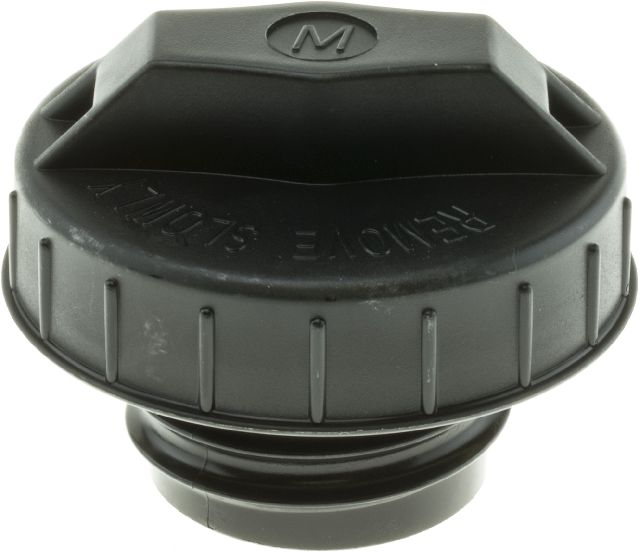
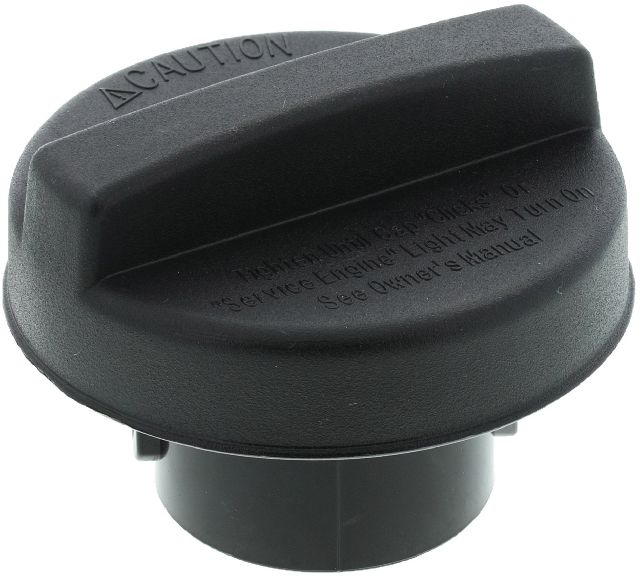
- Loose or Faulty Gas Cap 🔴 High Probability → Shop Fuel Tank Cap This is the most common cause for any EVAP leak code on any vehicle. Seals degrade over time, and users may forget to tighten the cap properly.
How to confirm: Ensure the gas cap is tightened until it clicks at least once. Inspect the rubber O-ring on the cap for cracks, stiffness, or damage. Many forum users report that only an OEM cap provides a reliable seal.
Typical fix: Tighten the cap. If the seal is damaged or the issue persists, replace the gas cap with a new OEM part (Toyota P/N: 77300-47010).
Est. part cost: $30-$50 - Cracked or Disconnected EVAP Hoses 🟡 Medium Probability Rubber hoses become brittle with age and exposure to heat cycles, leading to small, hard-to-see cracks, especially at connection points to other components like the purge valve or canister.
How to confirm: Visually inspect all accessible EVAP lines running from the charcoal canister (near the fuel tank) to the purge valve in the engine bay. A smoke test is the most effective way to find a leak 🎬 Watch: A mechanic performs a smoke test on a Prius that isn't visually obvious.
Typical fix: Replace the cracked or disconnected section of hose. Small clamps may be needed.
Est. part cost: $10-$40 - Faulty Charcoal Canister or Vent Valve ⚪ Low Probability → Shop Vapor Canister The charcoal canister assembly, which includes multiple valves, can develop hairline cracks in its plastic body or the integrated vent valve can fail, causing a leak. It is a known failure point on this platform.
How to confirm: A smoke test is the best method to confirm a leak in the canister body. The vent valve can be tested with a capable scan tool to see if it actuates correctly. Smoke will visibly escape from cracks in the canister housing.
Typical fix: Replace the charcoal canister assembly. On the Gen 2 Prius, the valves are typically integrated into the canister assembly (OEM P/N: 77740-47040, superseded by 77740-47050).
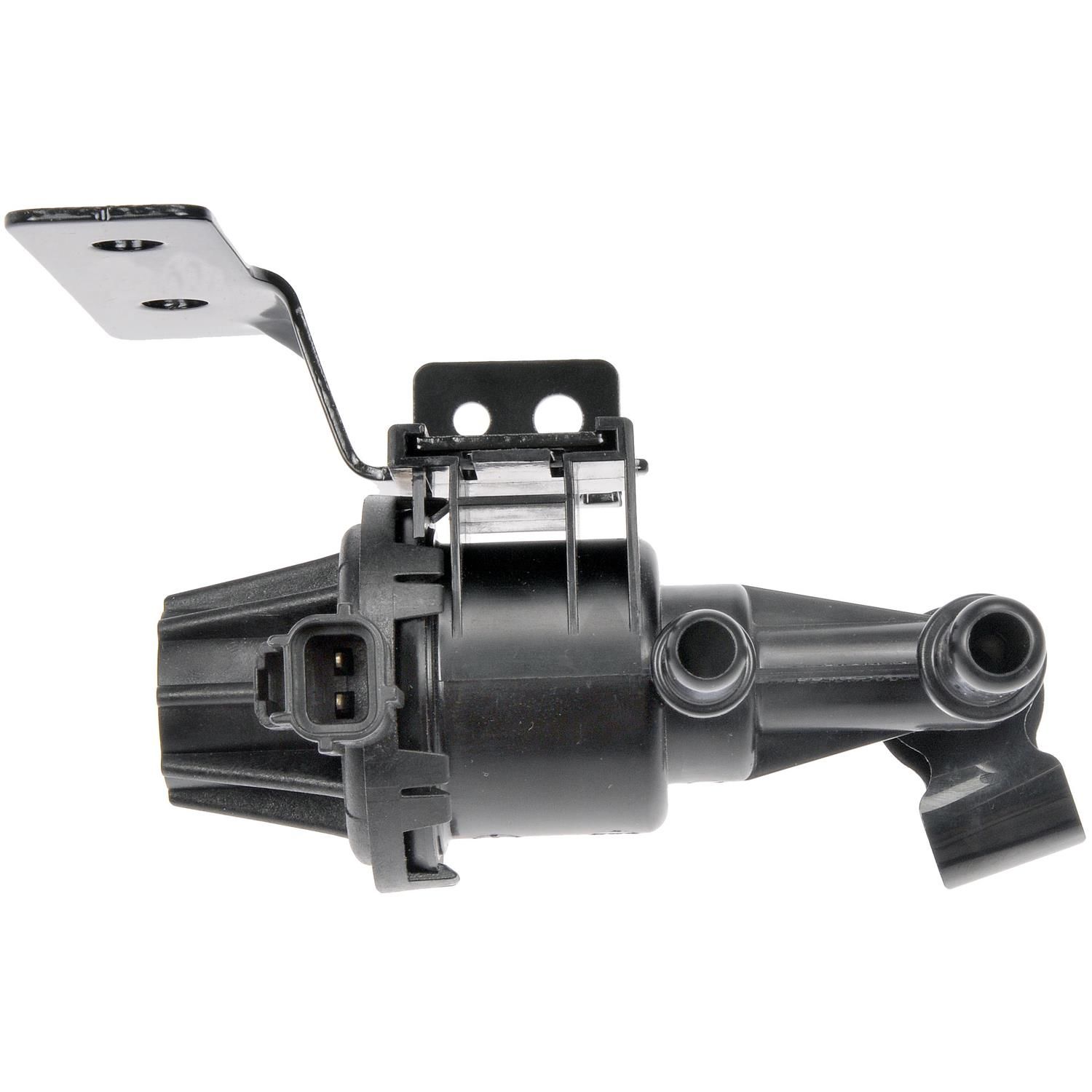
Est. part cost: $280-$420 - Sticking or Failed Purge Valve (VSV) ⚪ Low Probability → Shop Vapor Canister
How to confirm: The purge valve (or Vapor Switching Valve, VSV) is normally closed when the car is off. Remove the valve (located in the engine bay) and try to blow through it; if air passes, it's stuck open and needs replacement. Tapping it may temporarily fix it, confirming the diagnosis.
Typical fix: Replace the purge valve. The plastic connector can become brittle, so be careful during removal.
Est. part cost: $50-$100
Rare But Worth Checking
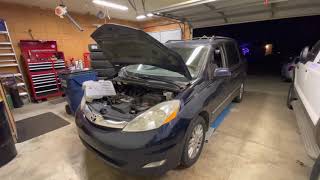
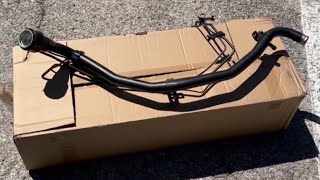
- Cracked Fuel Filler Neck: → Shop Fuel Filler Neck Rust or physical damage can cause small cracks in the metal pipe leading to the gas tank. This is more common in areas with heavy road salt usage. A smoke test will reveal leaks in this area. One PriusChat user reported this as their specific fix after a shop diagnosis, costing around $360 for parts and labor. 🎬 Watch: Step-by-step guide to replacing a Toyota fuel filler neck
- Faulty Fuel Tank Pressure Sensor: → Shop Fuel Tank The sensor itself can fail and incorrectly report a leak to the ECM. This is rare and should only be considered after a smoke test has confirmed there are absolutely no physical leaks in the system.
Diagnosis Steps
- Verify the Check Engine Light is on and code P0456 is present using an OBD-II scanner.
- Inspect the gas cap. Remove it, check the seal for damage, and reinstall it, ensuring it clicks several times.
- Clear the code with the scanner and drive the vehicle for a few days. The EVAP monitor often runs hours after the car is turned off, so it may take time for the code to reappear if the leak is still present.
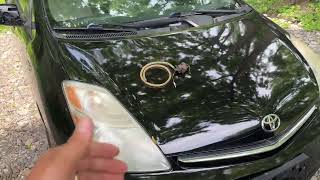
- If the code returns, replace the gas cap with a new OEM part (77300-47010). This is an inexpensive and highly probable fix, recommended by 🎬 See this quick video on inspecting and replacing the gas cap countless owners.
- If the code still persists, perform a thorough visual inspection of all EVAP hoses and connections between the engine bay and the rear of the vehicle near the fuel tank. Pay close attention to brittle-looking hoses at connection points.
- The most definitive diagnostic step is to have a professional smoke test performed. A machine injects low-pressure, non-toxic smoke into the EVAP system's service port. Any leak will be visible as smoke escapes from the cracked component.
- Based on the smoke test results, replace the leaking component. This could be a hose, the purge valve, the fuel filler neck, or the charcoal canister assembly.
- After repair, clear the code and perform several drive cycles, including overnight rests, to allow the EVAP monitor to run and confirm the fix.
Parts You'll Likely Need
- Fuel Tank Cap
(OEM #77300-47010)— This is the most common cause of a P0456 code due to a worn seal or improper tightening. Forum consensus strongly advises against aftermarket caps.
Trusted brands: Toyota (OEM)
OEM price range: $30-$50
Aftermarket price range: $15-$30 - Charcoal Canister Assembly
(OEM #77740-47050 (supersedes 77740-47040))— If the gas cap and hoses are good, the canister assembly is the next most likely component to fail by developing cracks in the housing. It is a relatively expensive part, so a smoke test is essential to confirm it's the source of the leak before purchasing.
Trusted brands: Toyota (OEM), Denso, Standard Motor Products
OEM price range: $280-$420
Aftermarket price range: $150-$250
Technical Service Bulletins (TSBs) & Recalls
- T-SB-0130-10 (Rev1): While this TSB is for the 2010 Prius, it discusses the P0456 code and points toward potential charcoal canister issues, showing it's a known problem area for the Prius platform in general.
- T-SB-0213-09: This TSB for the 2010 Corolla/Matrix addresses a false P0456 code that could be set with no physical leak, requiring an ECM logic update. This highlights the sensitivity of Toyota's EVAP monitoring from this era.
- TSB Bulletin #T-SB-0086-16: This bulletin for related Toyota models notes that a "no click" or "no spring return" condition from the fuel cap can lead to DTC P0456, and in some instances, the fuel filler neck may be out of position.
Platform-Specific Known Issues
- A user on PriusChat with a 2007 Prius chased a recurring P0456 for a year. The light would come on faster in cold weather. A smoke test performed by a shop ultimately revealed a leak in the fuel filler neck, which was replaced, solving the problem. The total cost was around $360.
- Multiple threads on PriusChat emphasize the importance of using an OEM gas cap. One user states, 'I did that first with a Toyota OEM expensive cap,' as a primary, low-cost diagnostic step before moving to more complex possibilities.
- NHTSA ODI #10350227 describes a case where a dealer claimed a small pinhole in the gas return line was responsible for the P0456 code.
Mechanic-Grade Diagnostic Values
- Engine Bay Purge Valve (VSV) Resistance — expected: Approximately 32 ohms at room temperature for an OEM part (P/N 90910-12276).. Failure: Readings significantly lower, such as 24-28 ohms, often indicate a lower-quality aftermarket part that may not function correctly with the ECU. An open or shorted reading indicates failure.
- Charcoal Canister Pressure Test — expected: With the purge and air inlet ports closed, the canister should hold 20 kPa (5.91 in.Hg) of pressure for at least 1 minute.. Failure: A drop in pressure indicates a crack or leak in the canister housing itself.
- Vent Valve / Canister Close Valve (CCV) Wiring Voltage — expected: With the ignition key in the ON position, one of the two wires at the valve's connector should show 12V.. Failure: Absence of 12V power points to a wiring or fuse issue upstream of the valve. The other wire is a ground controlled by the ECU.
Scan Tool Commands That Help
- Toyota Techstream (or equivalent bidirectional scanner): EVAP System Test / Vent Valve Control — This command is essential during a smoke test. The technician must command the vent valve (or Canister Close Valve - CCV) closed to seal the EVAP system, allowing it to be pressurized with smoke to find leaks.
- Toyota Techstream (or equivalent bidirectional scanner): Purge VSV Control — Allows the technician to manually open and close the purge valve in the engine bay to check for correct mechanical operation (a 'click') and to see if it seals properly when commanded closed.
Wiring & Ground Locations
- Charcoal Canister Assembly — Under the rear of the vehicle, near the left rear corner, just ahead of the fuel tank.. This is the location for the canister, vent valve (CCV), and a vacuum switching valve (VSV), all of which can be sources of leaks or electrical faults. The wiring harness and ground connections in this area are exposed to road debris and corrosion.
- Purge Valve (VSV) — In the engine bay, typically located below the air intake pipe.. This valve controls the flow of vapors to the engine. A failure of the valve or its wiring can cause a leak or a circuit code.
- Hybrid Vehicle Control ECU — Located behind the right side of the dashboard.. This is one of the main computers that monitors the EVAP system. While unlikely to be the cause, diagnosing wiring issues may require tracing circuits back to this module's connectors.
Real Owner Repair Stories
- Jacoby Automotive Service Blog (2008 Toyota Prius) — Check engine light with code P0456.
❌ Tried (didn't work) Replacing the gas cap.
✅ What actually fixed it A smoke test revealed a very small leak from a rubber hose under the hood. Replacing the cracked hose resolved the code. - PriusChat / Reddit User Post (2004 Toyota Prius) — Check engine light with code P0443 (Purge Control Valve Circuit), a closely related code.
❌ Tried (didn't work) Swapping the fuel cap with another known-good one.
✅ What actually fixed it The user tested the original purge valve (VSV) in the engine bay with a 9V battery and found it no longer clicked. They purchased a salvaged (used) valve from eBay for £15, which tested good and fixed the problem after installation. - NHTSA ODI #11586715 — An owner reported that despite replacing the gas cap multiple times, the P0456 error persisted, indicating the issue may lie elsewhere in the EVAP system.
- NHTSA ODI #11419086 — A dealer inspection confirmed code P0456, identifying a small leak in the evaporative emission control system that required professional diagnosis.
- NHTSA ODI #11235367 — One owner was quoted over $2,400 for repairs involving P0456 and secondary air injection system codes, illustrating how EVAP issues can sometimes be bundled with more expensive system failures.
OEM Part Supersession History
77740-47040→77740-47050— Standard part revision by the manufacturer.
Diagnostic Flowchart
Other Known Issues on This Vehicle
Issues unrelated to this code that are worth knowing about as an owner of this generation:
- Combination Meter (Speedometer) Failure 🟠 Medium — Very common as the vehicle ages. The display may intermittently or permanently go blank, affecting the speedometer, fuel gauge, and shift indicator. (Ref: Toyota issued a warranty enhancement (ZTV) for this issue, but it has since expired. The common failure is a single capacitor on the circuit board.)
- Brake Actuator Assembly Failure 🔴 High — A frequent and expensive failure. Symptoms include a loud, frequent buzzing/pumping noise from under the hood, and multiple brake-related warning lights. Failure can lead to a loss of braking assist. (Ref: Toyota has had recalls and warranty extensions for brake components on various Prius generations, but coverage for the Gen 2 actuator is a common owner complaint.)
- Excessive Oil Consumption 🟠 Medium — Common on higher-mileage (100k+) engines. Many owners report consuming a quart of oil every 1,000-2,000 miles. The primary cause is often attributed to piston ring design and carbon buildup.
- Inverter Coolant Pump Failure 🔴 High — A well-known issue that can cause the hybrid system to shut down, triggering a P0A93 code and master warning lights. (Ref: A recall was issued to replace the electric water pump for the hybrid system due to a risk of the motor stopping and causing the hybrid system to stall.)
- HID Headlight Failure/Flickering 🟡 Low — Common on models equipped with High-Intensity Discharge (HID) headlights. The bulbs or ballasts can fail, causing intermittent flickering or complete failure. This is a frequent topic on owner forums.
Used vs. New Parts: Buying Guide for This Vehicle
When a used part is the smart pick: For electronic solenoids like the engine bay purge valve (VSV) or the rear vacuum switching valve, a used part from a salvage yard can be a very cost-effective repair. These parts are often durable and can be tested before purchase or installation.
Donor-vehicle mileage cap: roughly under 150000 miles for the part to have meaningful remaining life.
What to inspect on the donor part:
- Visually inspect the plastic housing for any cracks or damage.
- Check that electrical connector pins are straight and free of corrosion.
- If possible, test the valve's function by applying 12V (or a 9V battery) to the pins; you should hear a distinct 'click' as the solenoid actuates.
- Ensure vacuum/air ports are clear of debris.
OEM-only on this vehicle (don't cheap out):
- Gas Cap: The overwhelming consensus on forums is that aftermarket gas caps fail to provide a reliable, long-term seal, leading to a quick return of the P0456 code. Always use a genuine Toyota OEM cap (77300-47010).
Aftermarket brands forum-validated for this vehicle:
- Denso: As the original equipment manufacturer for many Toyota parts, Denso is a reliable alternative to Toyota-branded parts.
- Standard Motor Products (SMP): Mentioned as a re-boxer that sometimes puts genuine Toyota parts in their own box (e.g., part CP724 for VSV 90910-12274).
Brands owners have reported issues with on this vehicle:
- Unbranded/generic eBay/Amazon purge valves: These often have incorrect internal coil resistance (e.g., 24-28 ohms vs. 32 ohms for OEM), which can cause the ECU to reject the part or lead to premature failure.
Real Owner Stories
Aggregated from forums and TSBs cited above. Mileages and costs reflect what owners reported in those sources.
2007 Toyota Prius
Symptoms: The owner chased a recurring P0456 for a year. The Check Engine Light would come on faster during cold weather.
What fixed it: A smoke test performed by a shop revealed a leak in the fuel filler neck, which was replaced.
Cost: $360-$360
Source hint: PriusChat - 'Every 4 or 5 days I get a P0456': A detailed thread where a user tracks the issue for a year
2004-2009 Toyota Prius
Symptoms: Check Engine Light on with code P0456; owner sought a low-cost first diagnostic step.
What fixed it: Replaced the gas cap with a Toyota OEM expensive cap.
Source hint: PriusChat.com: Multiple threads corroborate that the gas cap is the primary suspect for P0456
Related OBD-II Codes
Frequently Asked Questions
Does TSB-0130-10 apply to my 2004-2009 Prius?
Is there a specific gas cap part number I should use for my Gen 2 Prius?
Why does my Prius take so long to trigger the P0456 light again after I clear it?
Could my P0456 code be a false positive caused by the car's computer logic?
Where is the charcoal canister located on the 2004-2009 Prius?
Can I replace just the vent valve on my Prius charcoal canister?
Helpful Videos
Used OEM Parts in Stock

New Aftermarket Parts Available


The information in this article is provided for general reference and educational purposes only. Vehicle specifications, procedures, and part compatibility can vary by production date, trim level, and region. Always consult your vehicle's factory service manual and verify part numbers before purchasing or performing repairs. Safety-critical components such as airbags, seat belts, and braking systems should be installed by a qualified professional.
- Toyota Prius:
- 🧭 Diagnostic Flowchart
- 🎬 Helpful Videos
- 🛍️ Shop This Part
- What's Unique About the 2004-2009 Toyota Prius
- Symptoms You May Notice
- Most Likely Causes
- Rare But Worth Checking
- Diagnosis Steps
- Parts You'll Likely Need
- Technical Service Bulletins (TSBs) & Recalls
- Platform-Specific Known Issues
- Mechanic-Grade Diagnostic Values
- Scan Tool Commands That Help
- Wiring & Ground Locations
- Real Owner Repair Stories
- OEM Part Supersession History
- Other Known Issues on This Vehicle
- Used vs. New Parts: Buying Guide for This Vehicle
- Real Owner Stories
- 2007 Toyota Prius
- 2004-2009 Toyota Prius
- Related OBD-II Codes
- Frequently Asked Questions
- 🎟️ Get 5% Off