

P0456 on 2009-2017 Volvo XC60: EVAP Small Leak Causes and Fixes
For a 2009-2017 Volvo XC60, code P0456 is most often caused by a loose or worn-out gas cap. Before buying any parts, tighten the cap and clear the code. If it returns, a new Genuine Volvo gas cap (Part No. 31392044) is the next logical step and costs around $35-$50. This simple fix resolves the issue for a majority of owners.
- Always start with the simplest fix: tighten the gas cap. If that doesn't work, a new OEM gas cap is the most likely and cheapest repair.
- This code does not indicate a serious mechanical problem and the vehicle is safe to drive.
- Finding the leak source after replacing the gas cap is very difficult without a professional smoke test.
- If you replace the gas cap, be sure to use a Genuine Volvo part, as aftermarket caps are a known source of EVAP codes.
What's Unique About the 2009-2017 Volvo XC60
On this generation of Volvo XC60, the EVAP system is sensitive, and like many vehicles, the gas cap is the primary suspect due to the rubber seal's wear over time. While there are no major recalls for this specific issue on the 2009-2017 models, owner experiences from similar Volvo P3 platforms (like the XC70) consistently point towards aged rubber hoses, particularly the 'J-hose' near the charcoal canister, as the next most likely culprits after the gas cap. Diagnosing the leak almost always requires a smoke test due to the very small size of the leak the system can detect.
Symptoms You May Notice
- Check Engine Light is on.
- A faint fuel smell may be noticeable, but this is uncommon for a small leak.
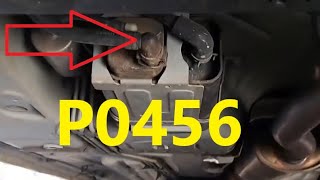
- No noticeable change in driving performance. 🎬 Watch: A quick overview of P0456 causes and common fixes.
- Replacing the fuel tank pressure sensor. While this sensor reports the pressure, it rarely fails in a way that causes a P0456 code without other accompanying sensor-specific codes.
Most Likely Causes
- Loose or Worn Gas Cap 🔴 High Probability → Shop Fuel Tank Cap The gas cap's rubber O-ring is the most frequently handled seal in the EVAP system. It naturally hardens, cracks, and degrades over 5-10 years, preventing a perfect seal. This is the most common and easiest fix.
How to confirm: First, ensure the cap is tightened until it clicks several times. Inspect the rubber gasket for cracks, stiffness, or damage. Even if it looks okay, the seal can be ineffective. Replacing it is a cheap and effective diagnostic step.
Typical fix: Replace the gas cap with a new one. It is highly recommended to use a Genuine Volvo cap (Part No. 31392044) as some aftermarket caps are known to cause sealing issues, leading to the same code. A known workaround is to buy an aftermarket Stant cap, remove its new gasket, and install it on the more robust OEM Volvo cap.
Est. part cost: $35-$50 - Cracked or Disconnected EVAP Hoses 🟡 Medium Probability Rubber hoses throughout the EVAP system become brittle with age and exposure to engine heat, leading to small cracks. Forum discussions on the similar XC70 platform specifically mention the 'J-hose' (Part No. 9155990) near the charcoal canister as a common failure point that cracks at the bend.
How to confirm: Visually inspect all accessible EVAP hoses, especially at connection points to the purge valve (in the engine bay) and the charcoal canister (located near the rear axle, ahead of the spare tire well). A professional smoke test is the most effective way to find the exact location of a very small leak.
Typical fix: Replace the cracked section of hose. The J-hose is a pre-formed part that should be replaced with an OEM component to ensure proper fit.
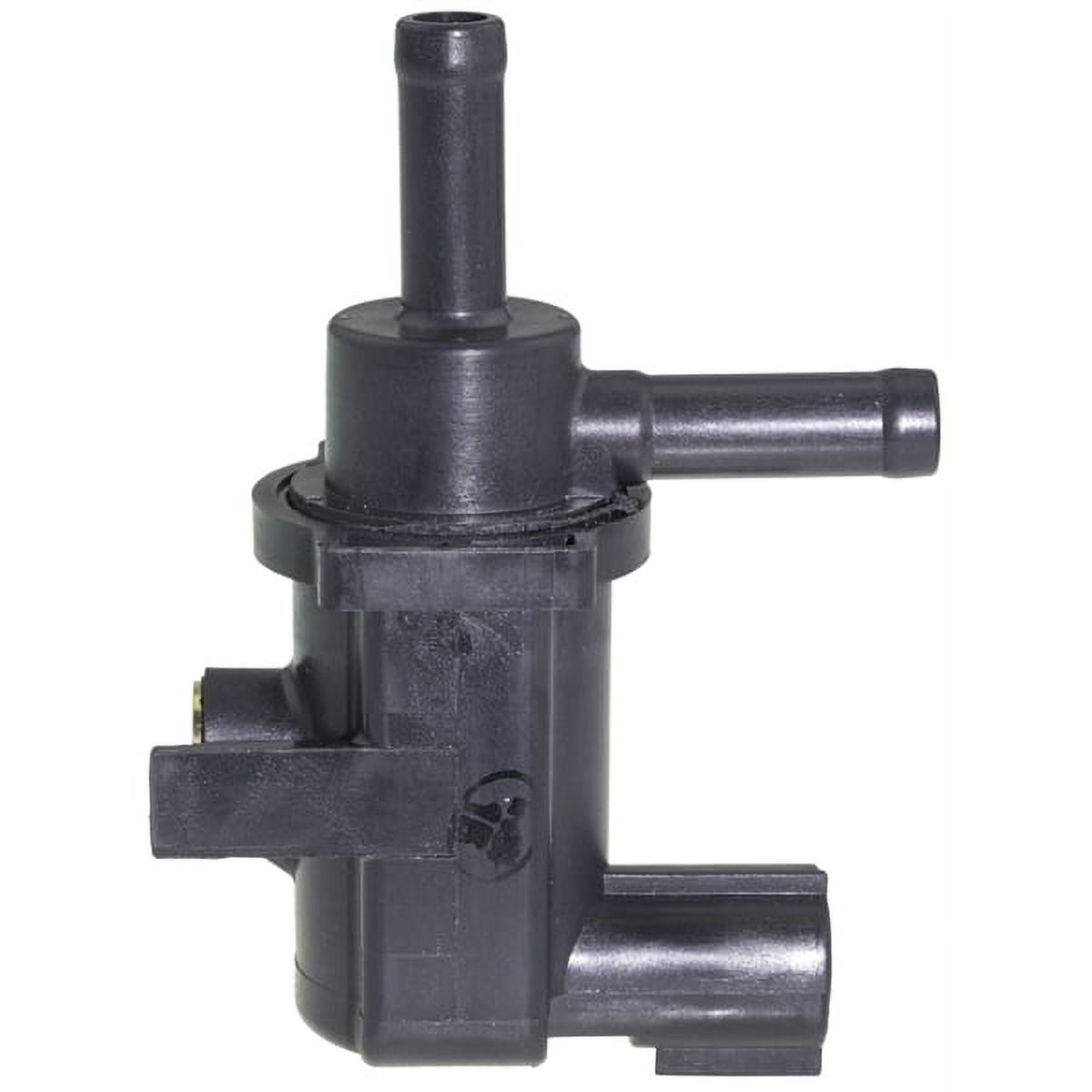
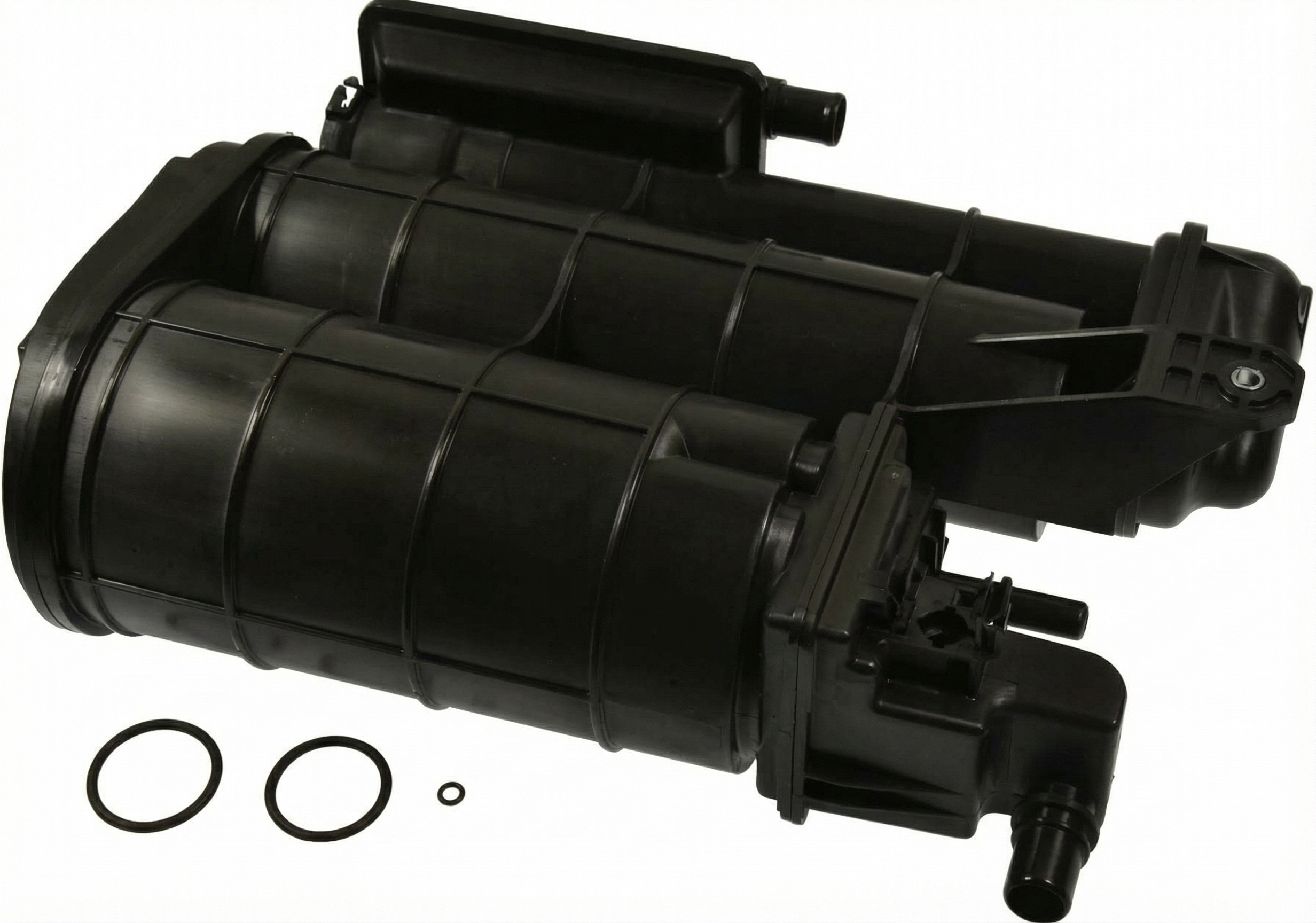
Est. part cost: $15-$75 - Faulty EVAP Purge Valve ⚪ Low Probability → Shop Vapor Canister The purge valve (or purge solenoid) can get stuck slightly open or fail to seal completely, creating a leak path from the EVAP system to the intake manifold.
How to confirm: The purge valve is normally closed. With the valve removed from the vehicle, you should not be able to blow air through it. A mechanic can also command it open and closed with a scan tool while monitoring system pressure.
Typical fix: Replace the EVAP purge valve. It is typically located in the engine bay, mounted on or near the intake manifold, and is relatively easy to access. 🎬 See this walkthrough on diagnosing and replacing the purge valve.
Est. part cost: $135-$145 - Faulty Leak Detection Pump (LDP) ⚪ Low Probability → Shop Evaporative Emissions System Leak Detection Pump The LDP is the component that pressurizes the system to test for leaks. It contains a diaphragm and seals that can fail, causing an internal leak that the ECM interprets as a system leak. The pump itself becomes the source of the P0456 code.
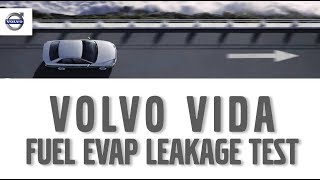
How to confirm: Diagnosis requires a specialized scan tool (like Volvo's VIDA) to actuate the pump and monitor its response. 🎬 Watch: How to use Volvo VIDA for an EVAP leakage test. A smoke test can also help determine if the pump itself is leaking externally.
Typical fix: Replace the leak detection pump. This part is located near the charcoal canister at the rear of the vehicle, often mounted on a bracket with the canister, and can be difficult to access without lowering the exhaust or other components.
Est. part cost: $90-$340
Rare But Worth Checking
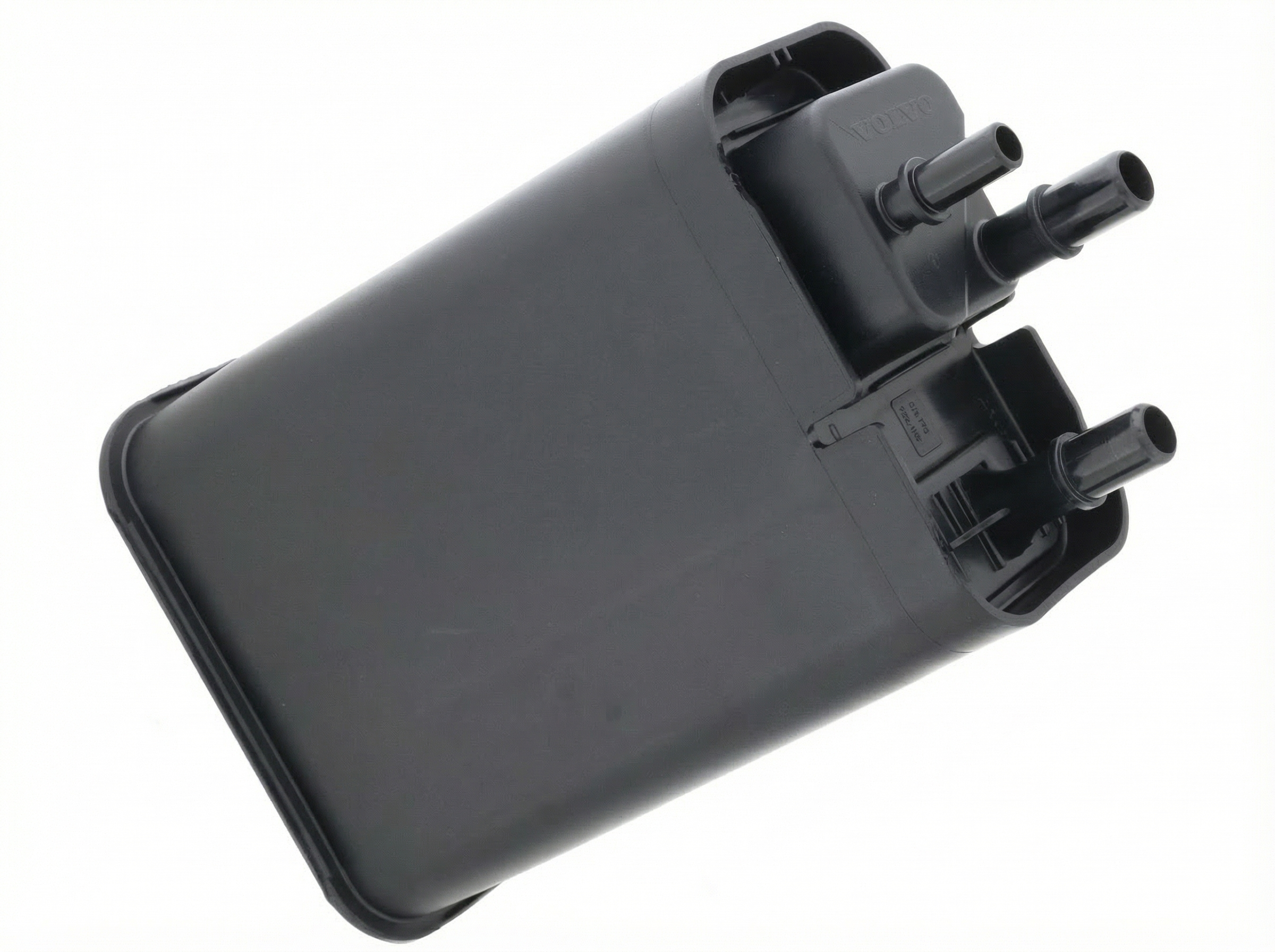
- Cracked Charcoal Canister: → Shop Vapor Canister The plastic body of the charcoal canister can develop hairline cracks from age or impact from road debris, creating a small leak. This is usually found only with a smoke test and is less common than hose or valve failures.
- Leaking Fuel Filler Neck: → Shop Fuel Filler Neck Corrosion or damage to the metal or plastic fuel filler neck, where the gas cap seals, can prevent a proper seal and cause this code. While more common on older vehicles or those in rust-prone areas, it's a possibility.
Diagnosis Steps
- Check the Gas Cap: Remove, inspect the seal for cracks or hardness, and reinstall, ensuring it clicks multiple times.
- Clear the Code: Use an OBD-II scanner to clear the P0456 code.
- Drive the Vehicle: Drive for a few days to allow the EVAP system monitor to run its self-test. The test often runs after the vehicle has been sitting for several hours (e.g., overnight) with the fuel tank between 1/4 and 3/4 full.
- If the Light Returns, Replace Gas Cap: If the Check Engine Light comes back on, the most cost-effective next step is to replace the gas cap with a Genuine Volvo part (31392044).
- Visual Inspection: If the code persists, visually inspect all visible EVAP hoses in the engine bay (around the purge valve) and around the charcoal canister/fuel tank area for obvious cracks, loose connections, or deterioration. Pay close attention to the J-hose.
- Perform a Smoke Test: The most reliable way to find a very small leak is to have a professional inject smoke into the EVAP system via the service port. The smoke will escape from the leak's location, making it visible.
- Test Components: Based on the smoke test results, test the specific component (e.g., purge valve, vent solenoid, LDP) to confirm failure before replacing it.
Parts You'll Likely Need
- Fuel Tank Cap
(OEM #31392044 (supersedes 30636587, 30769237, 31321925))— This is the most common cause. The rubber seal wears out, causing an improper seal.
Trusted brands: Genuine Volvo
OEM price range: $35-$50
Aftermarket price range: $15-$30 - EVAP Purge Valve / Solenoid
(OEM #31478982)— Can get stuck partially open, creating a small, constant leak.
Trusted brands: Bosch, Genuine Volvo
OEM price range: $135-$150
Aftermarket price range: $70-$110 - Leak Detection Pump (LDP)
(OEM #31392490 (Bosch P/N: 0261222019))— The internal mechanism of the pump can fail, causing the system to report a leak when the pump itself is the source.
Trusted brands: Bosch (OEM), Genuine Volvo, Dorman, SKP
OEM price range: $240-$330
Aftermarket price range: $90-$150
Related Codes That Often Appear With This One
- P0455 — Indicates a large EVAP leak. If both are present, it may point to a component that has failed completely, such as a hose that has become disconnected or a purge valve stuck wide open.
- P0441 — Indicates incorrect purge flow, which can be triggered if the EVAP purge valve is stuck open or closed, a condition that can also be interpreted as a leak.
Technical Service Bulletins (TSBs) & Recalls
- TJ35956: Pertains to 2018+ models but highlights the fuel filler pipe insert as a potential cause for EVAP leaks, which could be relevant context.
- Service Action S10066: Pertains to 2019-2020 models for a faulty dual purge check valve, not directly applicable but shows Volvo's focus on refining EVAP components.
- TJ31752: Not related to P0456, but an important TSB for this platform regarding excessive oil consumption on certain engines, which led to an extended warranty program.
Platform-Specific Known Issues
- Real Owner Experience: Gas Cap Solved It: → Shop Fuel Tank Cap On volvoXC.com, a user with a 2004 XC70 (P2 platform, but same P0456 issue) reported the code at 145,000 miles. The first suggestion from other members was to check the gas cap seal for cracks and then inspect the 'J hose' attached to the carbon canister. This aligns perfectly with the most common failure points.
Hidden / Shadow Codes Worth Checking
- P2404: Evaporative Emission System Leak Detection Pump Sense Circuit Range/Performance. This code is more specific to an electrical fault with the LDP circuit, but could appear alongside P0456 if the LDP is failing. (see via Standard OBD-II scanner or Volvo VIDA software.)
Scan Tool Commands That Help
- Volvo VIDA: EVAP System Leak Test Activation — This function allows a technician to command the system's valves to close, sealing the system to perform a pressure/vacuum decay test or a smoke test without having to manually access and block lines.
- Volvo VIDA: Leak Detection Pump (LDP) Diagnostic Sequence — This is a specific bidirectional test to command the LDP to run through its cycle. It's used to confirm if the LDP itself is functioning correctly, which is more accurate than just relying on the generic P0456 code.
Wiring & Ground Locations
- Charcoal Canister / LDP Assembly — Located at the rear of the vehicle, above the rear subframe and typically behind the muffler's heat deflector. Access often requires lowering the exhaust system.. This is the location for several key components, including the LDP, vent valve, and multiple hose connections (like the J-hose) that can crack and cause leaks.
- Fuse F38 — In one of the vehicle's fuse boxes (specific location varies by year, consult owner's manual).. A P3 platform wiring diagram indicates that fuse F38 may supply power to the EVAP valve. A blown fuse would likely cause a different code (circuit fault), but it's a relevant electrical point.
Real Owner Repair Stories
- volvoXC.com forum user 'gibbons' (2004 Volvo XC70 (P2 Platform, similar issue) with 145,000 miles) — P0456 Check Engine Light appeared.
❌ Tried (didn't work) Initially noticed the gas cap was not tight, but tightening it did not prevent the code from returning.
✅ What actually fixed it The user did not post a final fix, but the immediate, experienced advice from other forum members was to first inspect/replace the gas cap seal and then the 'J-hose' on the charcoal canister, indicating this is the established diagnostic path. Another user in the same thread fixed their code by swapping the gasket from a new, inexpensive Stant cap onto their original Volvo cap. - Reddit user 'Any-Sell8098' (Unknown vehicle, but general P0456 advice.) — P0456 code.
✅ What actually fixed it The user applied Vaseline to the gas cap O-ring to create a better seal, which resolved the code, confirming the cap seal was the problem. This serves as a good diagnostic trick before buying a new cap.
"I Checked Everything" — The Actual Cause
- In some cases, a smoke test may show no leaks, yet the P0456 code persists. This can happen if the Fuel Tank Pressure (FTP) sensor is faulty. The sensor may send incorrect pressure readings to the ECU, tricking the computer into thinking there is a leak when the system is perfectly sealed. This is often missed because technicians are focused on finding a physical leak, not a sensor providing bad data without setting its own specific fault code.
OEM Part Supersession History
31321575→31392490— Standard part revision or manufacturer change for the Leak Detection Pump (LDP).31372681→31478982— Standard part revision for the EVAP Purge Valve.
Diagnostic Flowchart
Other Known Issues on This Vehicle
Issues unrelated to this code that are worth knowing about as an owner of this generation:
- Excessive Oil Consumption (T6 & Drive-E Engines) 🔴 High — More common on 2012-2016 models, particularly the 4-cylinder Drive-E and T6 engines. Can start around 50,000-60,000 miles. Often attributed to piston ring design. (Ref: Volvo addressed this with Technical Journal TJ 31752 and extended warranty programs for specific VIN ranges, but it remains a well-documented owner complaint.)
- Automatic Transmission Problems 🟠 Medium — Can manifest as harsh shifting, delayed engagement, or flares between gears. More prevalent in earlier models of the generation. (Ref: No single recall, but various software updates and TSBs were issued to address shift quality. Sometimes related to worn valve bodies or torque converters.)
- Power Tailgate Failure 🟡 Low — The lifting arms for the power tailgate can fail, leading to a non-functional or slow-moving tailgate. (Ref: A recall was issued for later models (2018-2019), but earlier models in this generation also experience the issue due to motor or strut failure.)
- PCV System Clogs / Diaphragm Failure 🟠 Medium — The PCV breather box diaphragm can tear, causing a loud whistling or hissing noise at idle. If left unfixed, it can lead to oil leaks from pressure buildup. Common on the 3.2L and T6 engines. (Ref: Volvo offers a repair kit for the diaphragm, but the entire breather box may need replacement if clogged.)
- Suspension Bushing Wear 🟡 Low — Front lower control arm bushings and rear trailing arm bushings are common wear items, leading to clunking noises over bumps or less precise handling. Typically occurs after 80,000 miles.
Used vs. New Parts: Buying Guide for This Vehicle
When a used part is the smart pick: For this repair, used parts are generally not recommended due to the nature of the failures. However, a structural component like a fuel filler neck or a charcoal canister body could be sourced from a low-mileage, rust-free donor vehicle if a crack is confirmed on the original.
Donor-vehicle mileage cap: roughly under 60000 miles for the part to have meaningful remaining life.
What to inspect on the donor part:
- For a charcoal canister, ensure the plastic body has no visible cracks or stress marks, especially around mounting tabs and hose ports.
- For a filler neck, inspect for any rust, pitting, or deformation on the sealing surface where the gas cap sits.
- Verify the donor vehicle is from a dry, non-salt-belt region to minimize the risk of corrosion and brittle plastics.
OEM-only on this vehicle (don't cheap out):
- Fuel Cap: Strongly recommended to use a Genuine Volvo part, as many aftermarket caps have been reported to have poor sealing performance, causing the code to return.
- Leak Detection Pump (LDP): While the OEM part is made by Bosch, it is safest to procure the Genuine Volvo or direct Bosch-branded replacement. Cheaper aftermarket electronic pumps are a significant gamble.
Aftermarket brands forum-validated for this vehicle:
- Bosch (For LDP and Purge Valve, as they are often the original equipment manufacturer)
- Stant (Specifically for the gas cap *gasket*, which can be swapped onto an OEM cap)
Brands owners have reported issues with on this vehicle:
- Unbranded or 'white-box' gas caps and electronic components (Purge Valve, LDP) sold on marketplaces are frequently cited as having poor fitment and high failure rates for EVAP systems.
Real Owner Stories
Aggregated from forums and TSBs cited above. Mileages and costs reflect what owners reported in those sources.
2004 Volvo XC70 — 145000 miles
Symptoms: Check Engine Light on with code P0456.
What fixed it: Inspection of the gas cap seal for cracks and the 'J-hose' attached to the carbon canister.
Source hint: volvoXC.com thread titled 'P0456-Evaporative-Emissions-System-CEL'
2001 Volvo S60
Symptoms: P0456 code for a very small EVAP leak.
What fixed it: Swapping the gasket from a cheap aftermarket cap onto the sturdier OEM Volvo gas cap.
Source hint: RepairPal discussion on a 2001 S60 with P0456
Related OBD-II Codes
Frequently Asked Questions
Can I use an aftermarket gas cap to fix P0456 on my Volvo XC60?
Where is the charcoal canister and 'J-hose' located on this vehicle?
Does Technical Journal TJ 31752 relate to my EVAP system leak?
How can I confirm if my EVAP purge valve is the cause of the P0456 code?
Is there a specific condition required for the XC60 to run the EVAP self-test?
Could a faulty Leak Detection Pump (LDP) be causing this code?
Helpful Videos
We Have This Part in Stock

The information in this article is provided for general reference and educational purposes only. Vehicle specifications, procedures, and part compatibility can vary by production date, trim level, and region. Always consult your vehicle's factory service manual and verify part numbers before purchasing or performing repairs. Safety-critical components such as airbags, seat belts, and braking systems should be installed by a qualified professional.
- Volvo XC60:
- 🧭 Diagnostic Flowchart
- 🎬 Helpful Videos
- 🛍️ Shop This Part
- What's Unique About the 2009-2017 Volvo XC60
- Symptoms You May Notice
- Most Likely Causes
- Rare But Worth Checking
- Diagnosis Steps
- Parts You'll Likely Need
- Related Codes That Often Appear With This One
- Technical Service Bulletins (TSBs) & Recalls
- Platform-Specific Known Issues
- Hidden / Shadow Codes Worth Checking
- Scan Tool Commands That Help
- Wiring & Ground Locations
- Real Owner Repair Stories
- "I Checked Everything" — The Actual Cause
- OEM Part Supersession History
- Other Known Issues on This Vehicle
- Used vs. New Parts: Buying Guide for This Vehicle
- Real Owner Stories
- 2004 Volvo XC70 — 145000 miles
- 2001 Volvo S60
- Related OBD-II Codes
- Frequently Asked Questions
- 🎟️ Get 5% Off