

P0457 on 2011-2015 Kia Optima Hybrid: EVAP Leak (Loose Gas Cap) Causes and Fixes
P0457 on a Kia Optima Hybrid almost always means the gas cap is loose, off, or has a bad seal. Before anything else, tighten the cap until it clicks, clear the code, and drive. If it returns, a new OEM gas cap (Part No. 31010-3L600U) is the next step and costs around $25. If the cap doesn't fix it, the canister purge valve or canister close valve are the next most likely culprits.
- P0457 is an EVAP leak code that most often points directly to a loose, missing, or faulty gas cap.
- Always start your diagnosis by tightening and inspecting the gas cap. It's the easiest and most likely fix.
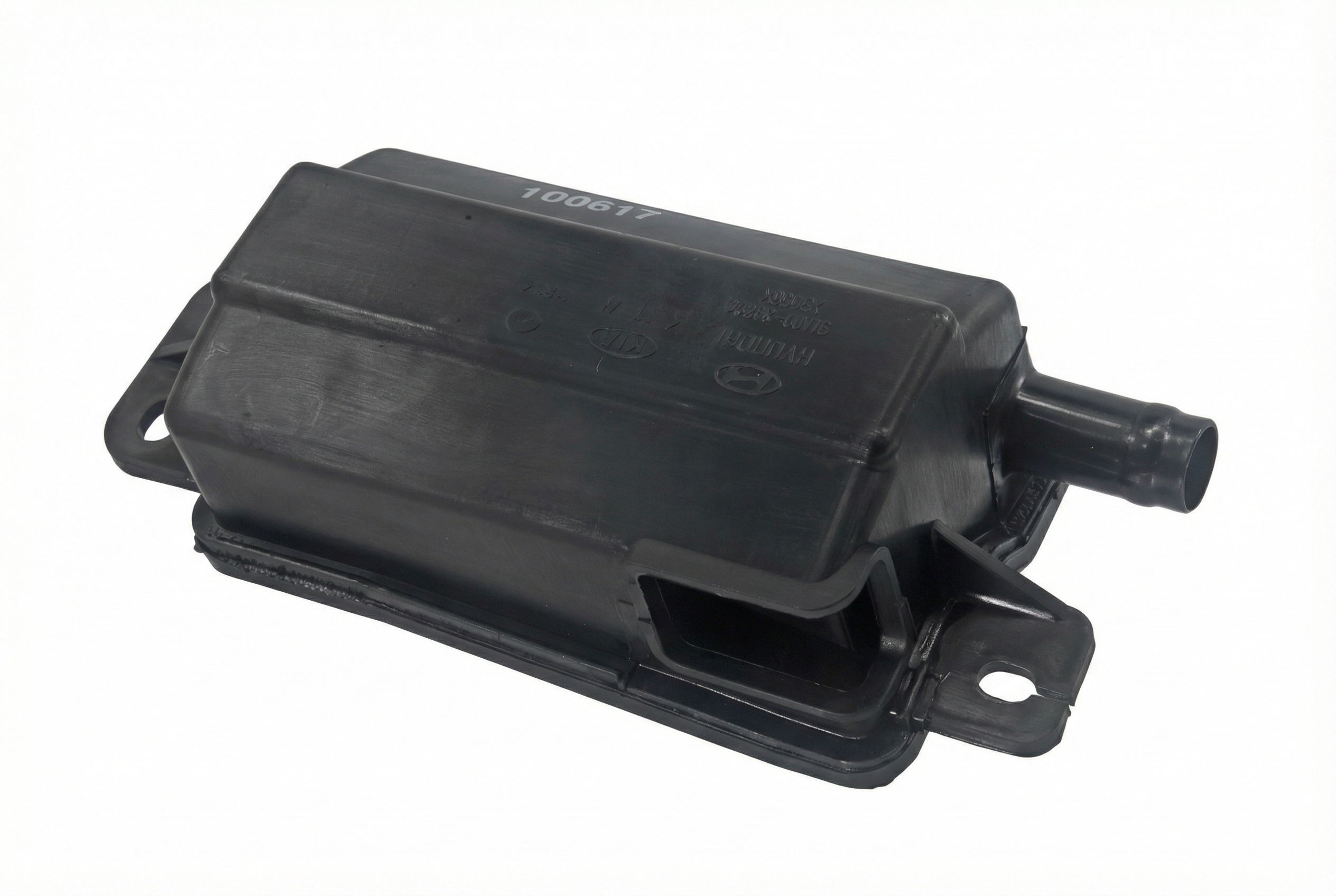
- If a new gas cap doesn't solve the issue, the next most likely culprits are the canister purge valve (in the engine bay) or the canister close valve (at the rear of the car).
- A smoke test is the most reliable professional method to find leaks that aren't obvious.
- The vehicle is safe to drive with this code, but it will not pass an emissions inspection until the leak is fixed.
What's Unique About the 2011-2015 Kia OPTIMA HYBRID
The 2011-2015 Kia Optima Hybrid uses a fairly standard EVAP system, but like many modern cars, it's sensitive. While the gas cap is the most frequent culprit, these vehicles can also be prone to issues with EVAP system valves. A Kia Technical Service Bulletin (TSB) for the related P0456 code on this exact vehicle points to the Natural Vacuum Leak Detector (NVLD) assembly as a common failure point, which can sometimes cause other EVAP codes as well. Another TSB, PS469, outlines a specific manual EVAP test for hard-to-find leaks when codes like P0457, P0455, P0456, or P0442 are present, indicating these codes can share complex causes. [⭐ MANUFACTURER TSB — highest authority]
Diagnostic Flowchart
Tap your situation to follow the diagnostic path that matches what you're seeing on this vehicle.
Symptoms You May Notice
- Check Engine Light is on.
- A noticeable smell of gasoline, especially around the rear of the car after it's been parked.
- A 'Check Fuel Cap' message may appear on the dashboard in some models.
- Slightly reduced fuel economy.
- Difficulty starting the engine right after refueling (this is a classic symptom of a stuck-open purge valve).
- Replacing the purge valve or other components before checking the gas cap. Always start with the simplest and most common cause.
- Using a cheap aftermarket gas cap, which may not seal correctly and will cause the code to return.
Most Likely Causes
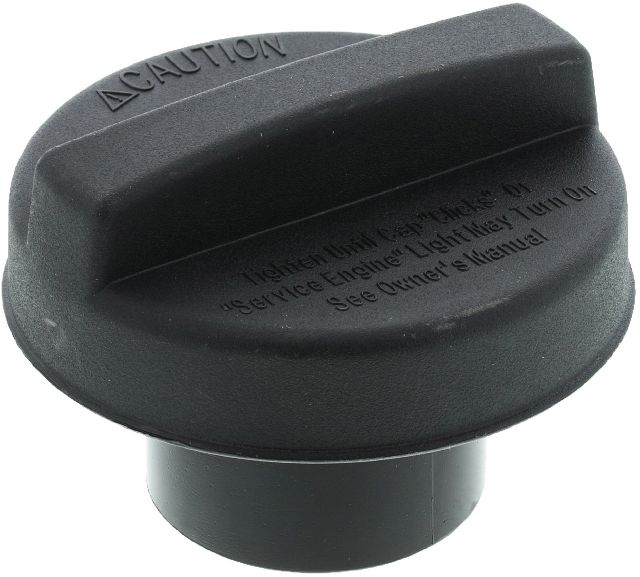
- Loose, Damaged, or Incorrect Gas Cap 🔴 High Probability → Shop Fuel Tank Cap This is the most common cause for a P0457 code on any vehicle, as it's the part of the system handled most often by the driver. Seals can wear out over time, or the cap may not be tightened correctly after refueling. Using a non-OEM cap is a frequent source of problems.
How to confirm: Ensure the gas cap is tightened until it clicks at least once. Inspect the rubber O-ring or seal on the cap for cracks, stiffness, or damage. Check that you are using an OEM (Original Equipment Manufacturer) or equivalent quality cap, as aftermarket versions are known to cause issues.
Typical fix: Tighten the cap, clear the code, and drive to see if it returns. If it does, replace the gas cap with a genuine OEM part (Kia P/N: 31010-3L600U).
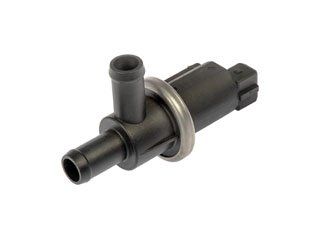
Est. part cost: $15-$35 - Faulty Canister Purge Valve (CPV) 🟡 Medium Probability → Shop Vapor Canister The purge valve controls the flow of fuel vapors from the charcoal canister to the engine. It can get stuck open or closed, causing a leak in the system. It's a common failure point on many modern vehicles, including the Optima.
How to confirm: The valve is normally closed. With the engine off, remove the valve and try to blow through it. If air passes through, it's stuck open and needs replacement. The fuse for the purge valve is located in the engine bay fuse box and is labeled "SENSOR 2". You can also test its coil resistance, which should be around 30 ohms.
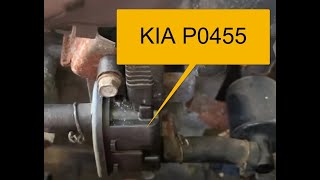
Typical fix: Replace the canister purge valve. On the Optima Hybrid, it is located in the engine bay, accessible after removing the air filter box. 🎬 See how to remove and test the purge valve.
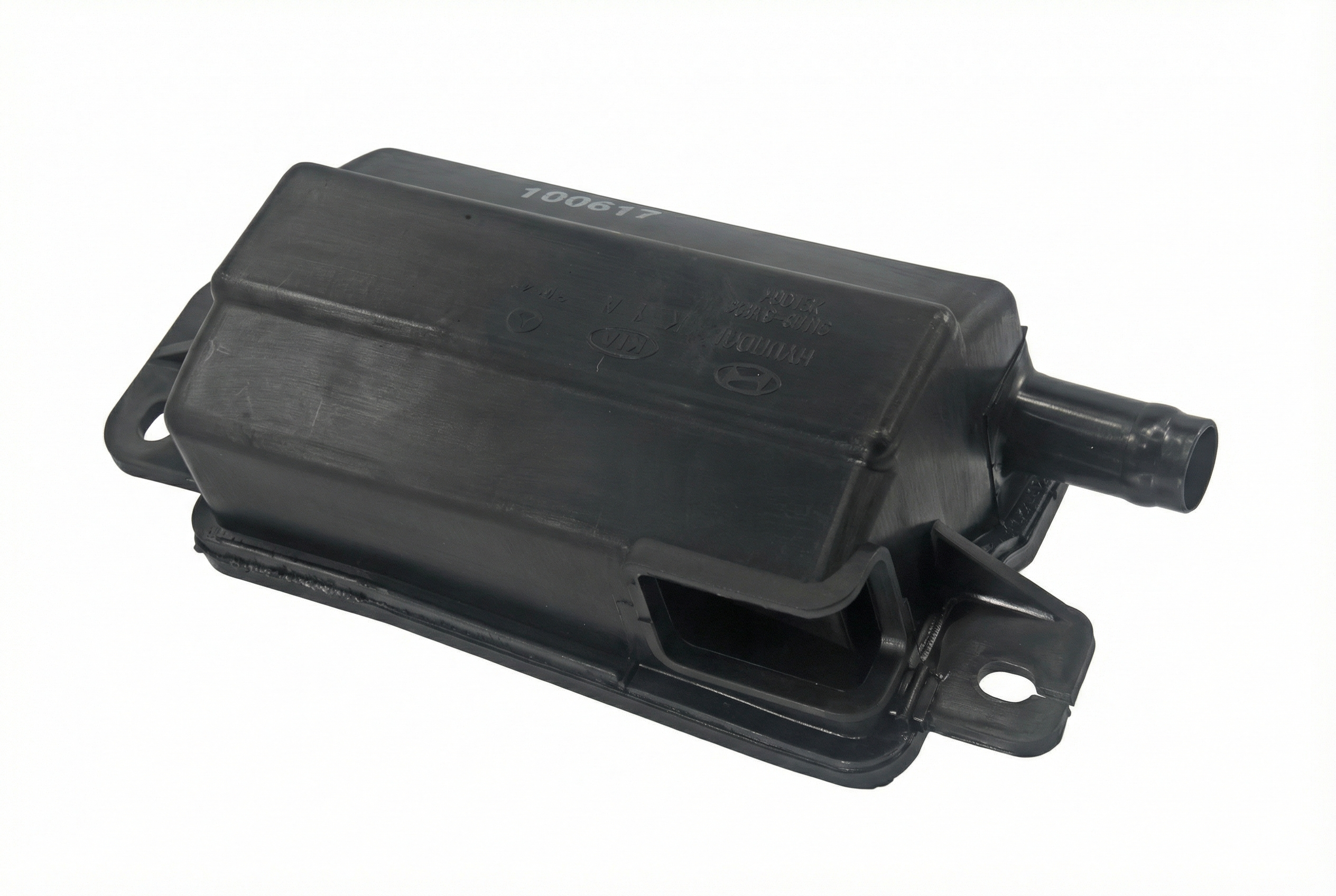
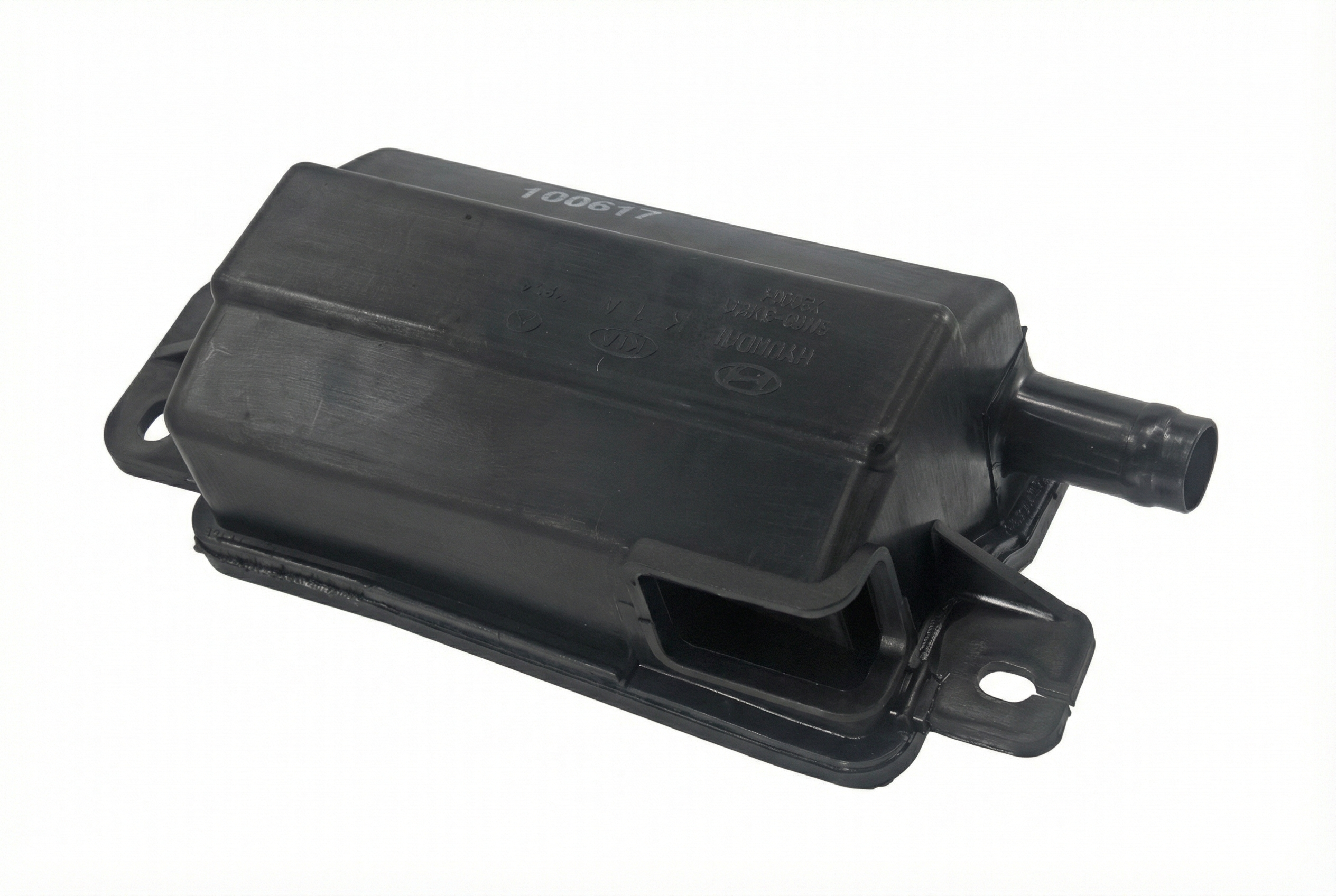
Est. part cost: $40-$90 - Faulty Canister Close Valve (CCV) / Vent Valve 🟡 Medium Probability → Shop Vapor Canister This valve, located near the charcoal canister at the rear of the car, is normally open to allow air into the canister but closes when the system runs a self-test. It is exposed to road debris and moisture, which can cause it to fail or stick, particularly in 'salt belt' states.
How to confirm: A smoke test is the most effective way to confirm a faulty CCV. Smoke will be seen escaping from the valve when it should be commanded closed. It can also be removed and tested for operation by applying 12V power; it should close and seal. Its location is typically near the charcoal canister, behind the rear driver's side wheel area.
Typical fix: Replace the canister close valve. This is located on or near the charcoal canister, behind the rear driver's side wheel area.
Est. part cost: $50-$100 - Cracked or Disconnected EVAP Hoses ⚪ Low Probability Over time, the rubber and plastic hoses that make up the EVAP system can become brittle and crack, especially in harsh climates or due to age.
How to confirm: A thorough visual inspection of all accessible EVAP lines between the engine bay and the fuel tank 🎬 Watch: Locate all EVAP components on your Kia Optima. is the first step. The definitive diagnostic method is to use a smoke machine, which fills the system with a harmless, visible vapor to pinpoint the exact location of any leaks.
Typical fix: Replace the cracked section of hose or reconnect any disconnected lines.
Est. part cost: $10-$50
Rare But Worth Checking
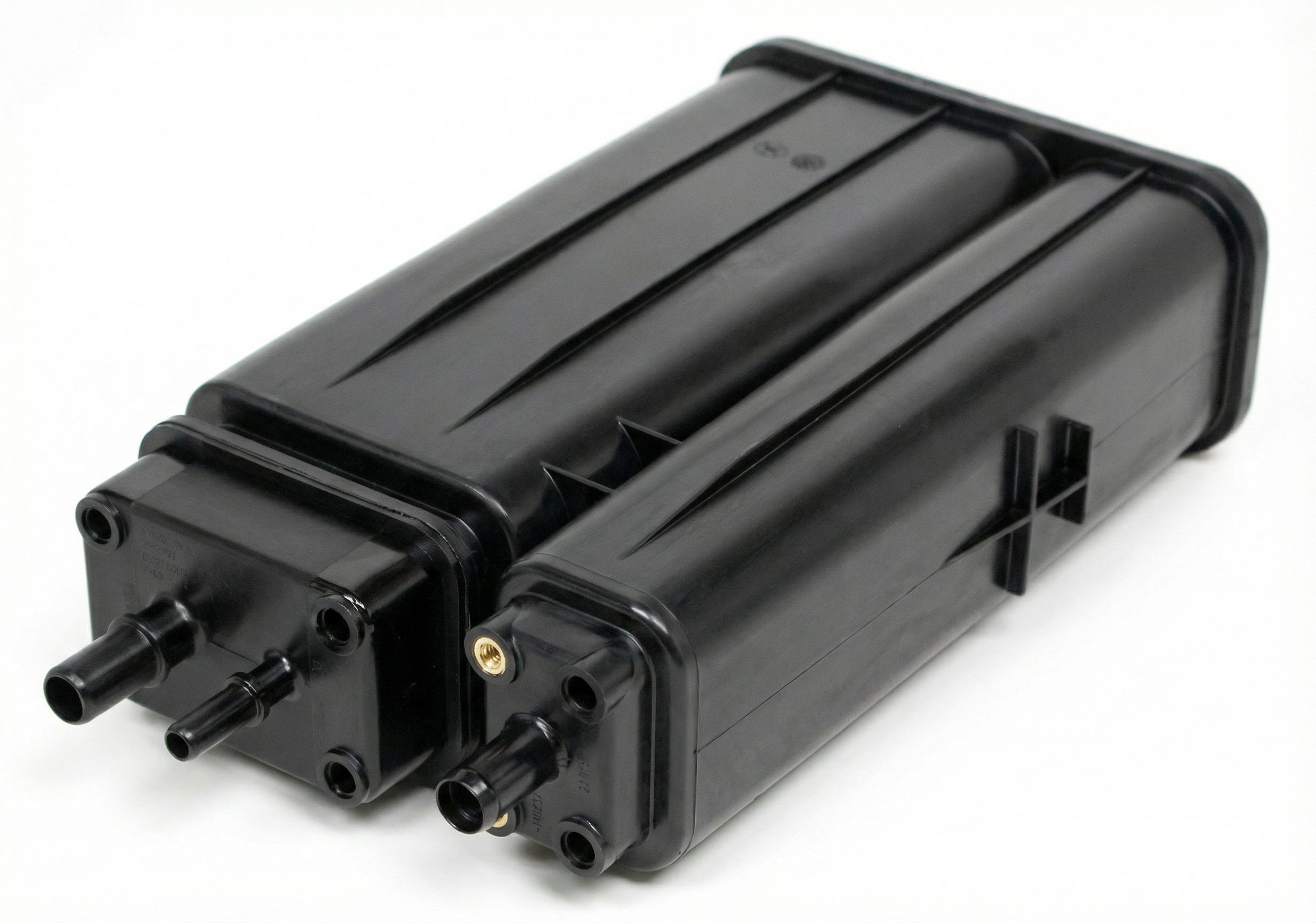
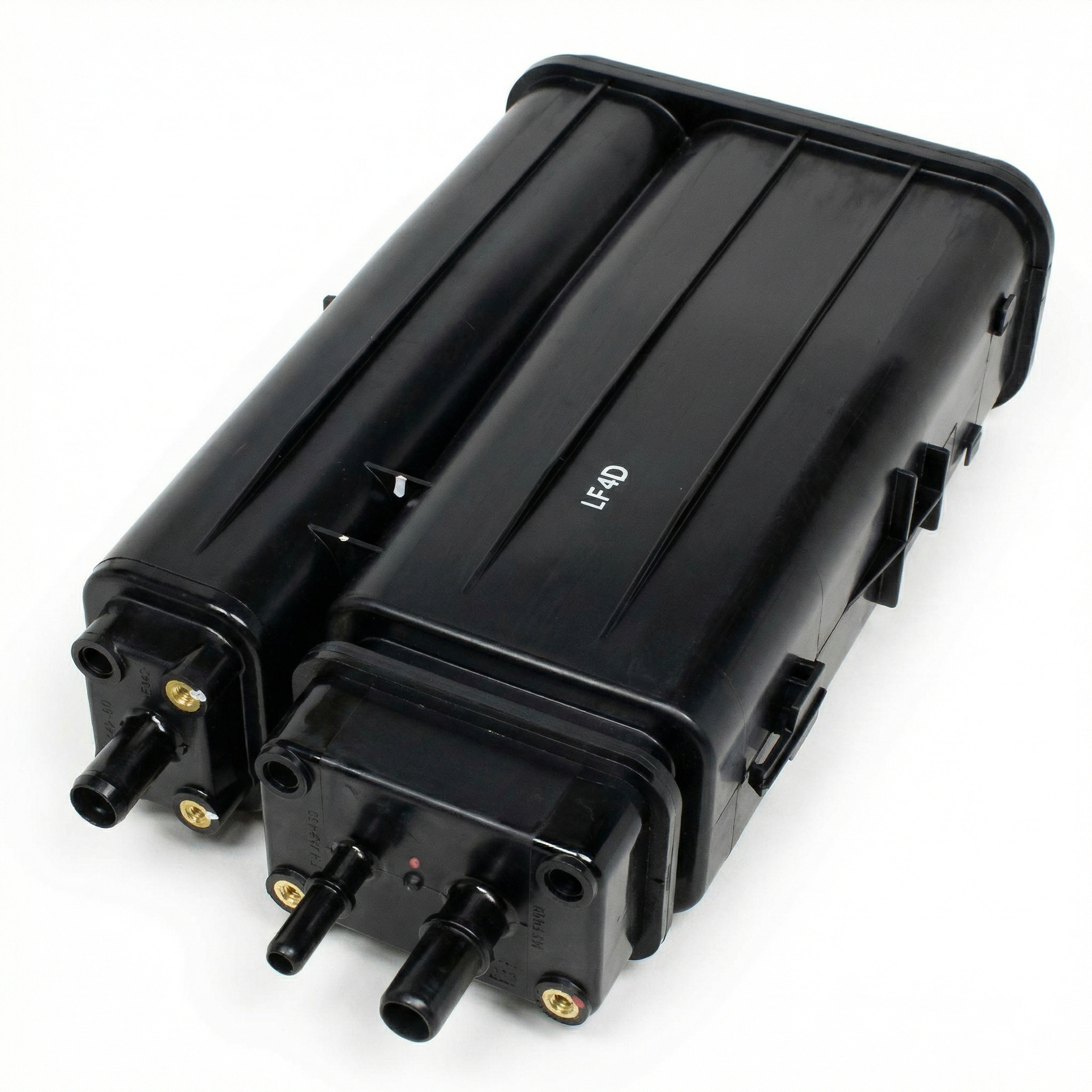
- Cracked Charcoal Canister: → Shop Vapor Canister The canister itself can develop a crack from road debris or age, creating a large leak. This has been noted as a 'Very common' issue on Optimas by some forum users. If you hear rattling from the canister when you shake it, the internal charcoal has broken apart and the canister must be replaced. 🎬 Watch: Step-by-step charcoal canister replacement walkthrough.
- Leaking Fuel Filler Neck: → Shop Fuel Filler Neck The metal pipe leading from the gas cap to the tank can rust and develop holes, causing a large EVAP leak. This is more common in areas where road salt is used.
- Faulty Fuel Tank Pressure Sensor (FTPS): → Shop Fuel Tank Rarely, the sensor that monitors the system's pressure can fail and give a false reading, triggering a leak code when no leak exists. On the Optima Hybrid, this sensor is located on top of the fuel pump assembly under the rear seat. TSBs for related codes mention checking the sensor's voltage as a primary step.
Diagnosis Steps
- Check the Gas Cap: This is the number one cause. Remove and reinstall the gas cap, ensuring it clicks several times. Clear the code and see if it returns after a few drive cycles.
- Inspect the Gas Cap: If the light returns, remove the cap and carefully inspect the seal for any cracks, tears, or signs of wear. If it looks questionable, replace it with a new OEM cap (P/N: 31010-3L600U).
- Visual Inspection: Visually inspect all accessible EVAP hoses in the engine bay and under the car near the fuel tank for obvious cracks, breaks, or disconnections.
- Perform a Smoke Test: This is the most effective way to find leaks. A smoke machine is connected to the EVAP service port, and low-pressure smoke is forced through the system. Any leaks will be revealed by escaping smoke. This can pinpoint issues with hoses, the charcoal canister, or valves.
- Test Valves: If no leaks are found, test the canister purge valve (under the hood) and the canister close valve (at the rear of the car). The purge valve should be closed with no power, and the close valve should be open with no power. They can be tested with a scan tool that can command them on and off, or by applying power directly.
- Inspect Fuel Filler Neck: During the smoke test, pay close attention to the fuel filler neck for any signs of smoke, which would indicate a rust-through or crack.
Parts You'll Likely Need
- Fuel Tank Cap
(OEM #31010-3L600U)— This is the most common failure point for code P0457. The seal wears out over time, causing a large leak. Using a genuine OEM cap is highly recommended.
Trusted brands: Kia (OEM)
OEM price range: $20-$35
Aftermarket price range: $15-$25 - Canister Purge Valve / Purge Control Solenoid
(OEM #28910-25100)— A common failure item that gets stuck open, creating a constant vacuum leak within the EVAP system. This part is shared with many Hyundai/Kia 2.4L models. Note that models built after 10/20/2011 may use P/N 28910-3E100.
Trusted brands: Bosch, Standard Motor Products, Kia (OEM)
OEM price range: $60-$90
Aftermarket price range: $40-$70 - Canister Close Valve / Vent Valve Solenoid
(OEM #31453-3Q500)— This valve is located near the rear wheel and is exposed to the elements, which can cause it to fail, especially in regions with road salt. It may be superseded by P/N 31453-3K600FFF.
Trusted brands: Kia (OEM), Dorman
OEM price range: $50-$100
Aftermarket price range: $40-$80
Related Codes That Often Appear With This One
- P0455 — P0455 indicates a 'Gross Leak Detected'. It is very similar to P0457 and can be triggered by the same faults, though P0457 is more specific to the fuel cap.
- P0456 — P0456 indicates a 'Very Small Leak'. If a component is beginning to fail, it might first cause a small leak code before worsening and triggering a large leak code like P0457.
- P0442 — P0442 indicates a 'Small Leak'. This code was mentioned alongside P0457 in a Kia TSB (PS469), suggesting they can share underlying causes that are hard to find. [⭐ MANUFACTURER TSB — highest authority]
Technical Service Bulletins (TSBs) & Recalls
- PS469: Recommends a manual EVAP test for hard-to-find leaks when codes like P0457, P0442, P0455, or P0456 are present. [⭐ MANUFACTURER TSB — highest authority]
Platform-Specific Known Issues
- A Technical Service Bulletin (PS469) exists for the 2011 Optima, which includes P0457 as a potential code for hard-to-find evaporative leaks, recommending a manual EVAP test if the self-test is inconclusive. [⭐ MANUFACTURER TSB — highest authority]
Mechanic-Grade Diagnostic Values
- Canister Purge Valve (CPV) Coil Resistance — expected: Roughly 30 ohms. Failure: A reading significantly higher or lower than 30 ohms, or an open circuit (infinite resistance), indicates a faulty coil.
- Canister Purge Valve (CPV) Functional Test — expected: Normally Closed. No air should pass through when unpowered.. Failure: If air can be blown through the valve when it is disconnected from power, it is stuck open and faulty.
- Canister Close Valve (CCV) Functional Test — expected: Normally Open. Air should pass through freely when unpowered.. Failure: The valve should close and seal when 12V is applied. If it remains open with power, or is stuck closed without power, it is faulty.
- Fuel Tank Pressure Sensor (FTPS) Power Supply — expected: 5V reference line from the ECM.. Failure: With the key on, engine off, and gas cap removed, a lack of 5V at the sensor connector indicates a wiring or ECM issue that must be fixed before further EVAP testing.
Scan Tool Commands That Help
- Kia GDS (Global Diagnostic System): EVAP Leakage Test — This function manually actuates the EVAP self-test, forcing the system to seal and run a pressure/vacuum check. It is essential for verifying a repair's effectiveness without waiting for the vehicle's monitor to run over several drive cycles.
- Professional Scan Tool (e.g., Autel): Vent Valve Activation / Close — During a smoke test, the Canister Close Valve (CCV) must be commanded shut to seal the system, as it is normally open. This function allows the technician to close the valve to check for leaks in the rest of the system.
- Professional Scan Tool (Live Data): Monitor Fuel Tank Pressure PID — With the engine running, command the purge valve 'Off' and the vent valve 'On' (closed). Monitor the fuel tank pressure. If the pressure begins to drop (create a vacuum), it indicates the purge valve is leaking internally and not fully closing.
Wiring & Ground Locations
- EVAP System Fuse 'SENSOR 2' — In the main fuse box located in the engine compartment. It is a 10A fuse.. This fuse provides power to multiple EVAP components, including the Purge Control Solenoid Valve and Canister Close Valve. A blown fuse will cause these components to be inoperative, triggering fault codes.
- Purge Control Solenoid Valve (PCSV) — On the side of the 2.4L engine, located underneath the air intake assembly. Access requires removing the airbox.. This is a primary failure point. Knowing its location is essential for visual inspection, testing resistance, and checking for a stuck-open condition.
- Canister Close Valve (CCV) — Under the rear of the vehicle, attached to the charcoal canister, which is positioned near the fuel tank.. This valve is exposed to road debris and moisture, making it prone to failure. Its location is needed for testing and replacement.
- Fuel Tank Pressure Sensor (FTPS) — On top of the fuel pump assembly, which is accessed by removing a plate under the rear passenger seat.. A faulty sensor can send incorrect pressure readings to the ECU, falsely triggering a leak code. Access is required to test its wiring and voltage.
Real Owner Repair Stories
- Mechanic report cited by Go-Parts (Kia Optima (platform-similar)) — P0442 (Small EVAP Leak) after a fuel pump replacement.
❌ Tried (didn't work) Multiple inspections of the new fuel pump and filter seal.
✅ What actually fixed it A professional smoke test revealed the leak was not from the fuel pump area, but from a faulty Canister Close Valve (CCV) at the rear of the car. Replacing the CCV resolved the code, and the mechanic noted it was a very common failure. - BobIsTheOilGuy forum user (2007 Kia Optima) — P0455 (Large EVAP Leak) and P0451 (Pressure Sensor Range)
❌ Tried (didn't work) Replacing gas cap with a Stant aftermarket part., Replacing gas cap with a new OEM part., A shop pressure test that reportedly found no leaks.
✅ What actually fixed it The issue was unresolved in the thread, but expert advice pointed to two high-probability causes beyond the gas cap: 1) The charcoal canister can develop hairline cracks near its mounting bolts. 2) The EVAP pressure sensor itself can be faulty, which requires testing with a bi-directional scanner and a vacuum gauge to confirm its operation, rather than just looking for physical leaks.
"I Checked Everything" — The Actual Cause
- In a documented case for related EVAP codes (P0455/P0451), a mechanic's pressure test found no leaks, and two different replacement gas caps (including OEM) failed to fix the issue. The suggested root cause was a faulty EVAP pressure sensor giving a bad reading. This type of failure is missed by smoke tests, as the system is physically sealed, but the sensor incorrectly reports a leak to the computer. Diagnosis requires using a scan tool to monitor the sensor's voltage/pressure reading while applying a known vacuum with a hand pump to verify its accuracy.
OEM Part Supersession History
31010-3L600, 31010-2D600, 31010-2F500, 31010-2C800→31010-3L600U— Standard part consolidation and updates.31453-3Q500→31453-3K600FFF— Part revision or supplier change for the Canister Close Valve.
Heads up: While listed as a supersession, always confirm fitment with VIN as running changes can occur.
Model Year Variations Within This Range
- 2011 (early production): The Canister Purge Valve (PCSV) may be part number 28910-2E000 on models built on or before 10/20/2011.
- 2012-2015: The Canister Purge Valve (PCSV) for models built after 10/20/2011 is typically part number 28910-3E100.
- 2011-2015: The charcoal canister part number may be either 31410-4R700 or 31410-4R500 depending on the vehicle's production date and specific emissions package (PZEV/ULEV).
Helpful Videos
Used OEM Parts in Stock

New Aftermarket Parts Available


The information in this article is provided for general reference and educational purposes only. Vehicle specifications, procedures, and part compatibility can vary by production date, trim level, and region. Always consult your vehicle's factory service manual and verify part numbers before purchasing or performing repairs. Safety-critical components such as airbags, seat belts, and braking systems should be installed by a qualified professional.
- Kia OPTIMA HYBRID:
- 🧭 Diagnostic Flowchart
- 🎬 Helpful Videos
- 🛍️ Shop This Part
- What's Unique About the 2011-2015 Kia OPTIMA HYBRID
- Symptoms You May Notice
- Most Likely Causes
- Rare But Worth Checking
- Diagnosis Steps
- Parts You'll Likely Need
- Related Codes That Often Appear With This One
- Technical Service Bulletins (TSBs) & Recalls
- Platform-Specific Known Issues
- Mechanic-Grade Diagnostic Values
- Scan Tool Commands That Help
- Wiring & Ground Locations
- Real Owner Repair Stories
- "I Checked Everything" — The Actual Cause
- OEM Part Supersession History
- Model Year Variations Within This Range
- 🎟️ Get 5% Off