

P0460 on 2015-2020 Chevrolet Silverado 6.0L: Fuel Level Sensor Circuit Malfunction Causes and Fixes
This code means your fuel gauge is unreliable. The most common cause on this truck is a failed fuel level sensor, which is part of the fuel pump module inside the gas tank. Expect to pay $250-$500 for a new fuel pump module and 3-5 hours of labor if you take it to a shop.
- P0460 on your 2015-2020 Silverado means the fuel gauge is not working correctly; do not trust it.
- The most likely culprit is the fuel level sensor, which is part of the fuel pump module in the tank.
- Before replacing the expensive fuel pump module, always inspect the wiring and the main connector on top of the tank for corrosion, as this can be a much cheaper fix.
- This is a difficult DIY repair. Getting it fixed at a shop involves 3-5 hours of labor plus the cost of the part.
- Driving with this code won't harm the engine, but running the tank completely dry can destroy the fuel pump, adding significant cost to the repair.
What's Unique About the 2015-2020 Chevrolet Silverado
The 2015-2020 Silverado HD with the 6.0L L96 engine belongs to the K2XX generation. Unlike the older GMT800/GMT900 trucks (pre-2014) that were famous for instrument cluster failures causing gauge issues, the P0460 code on this newer platform almost always points to a genuine problem in the fuel tank or its related wiring. The primary suspect is the fuel level sending unit itself, which has a finite lifespan. These trucks also utilize a Fuel Pump Control Module (FPCM) mounted on the frame, which can be a secondary, though less common, point of failure due to corrosion or water intrusion.
Generation note: The 2015-2020 year range for the Silverado HD with the 6.0L L96 engine primarily covers the K2XX platform. The 2019 model year was a split year where the 1500 moved to the new T1XX platform, but the HD trucks (2500HD/3500HD) remained on the K2XX platform until the 2020 model year refresh, which introduced a new 6.6L gas engine. Therefore, this guide is specific to the K2XX generation HD trucks.
Symptoms You May Notice
- Check Engine Light is on
- Fuel gauge is inaccurate, erratic, or stuck on Full or Empty.
- Fuel gauge needle fluctuates randomly or jumps.
- Low fuel warning light comes on unpredictably or not at all.
- Distance-to-Empty (DTE) display is inaccurate or shows dashes.
- In some cases, the fuel gauge may disappear from the display entirely.
- Replacing the instrument cluster. While this was a very common fix for fuel gauge issues on pre-2014 GM trucks, it is not a likely cause for a P0460 code on the 2015-2020 K2XX platform.
Most Likely Causes
- Faulty Fuel Level Sensor (Sending Unit) 🔴 High Probability → Shop Fuel Tank Sending Unit The sensor is a mechanical component with a resistor strip and a wiper arm that wears out over time from constant movement and exposure to fuel, leading to dead spots or an open circuit. High sulfur content in fuel can accelerate this wear.
How to confirm: With the sensor removed, use a multimeter set to Ohms to measure resistance across the sensor's terminals while slowly moving the float arm. The resistance should change smoothly without any dropouts or spikes. An infinite reading (OL) indicates a failed sensor. For this platform, the expected resistance is typically around 40 ohms at Empty and 250 ohms at Full.
Typical fix: Replace the entire fuel pump module, as the sensor is typically integrated. While the sensor is sometimes sold separately, replacing the whole module addresses the aging pump and motor at the same time, preventing a future failure.
Est. part cost: $250-$500 - Damaged Wiring or Corroded Connector 🟡 Medium Probability The main harness connector on top of the fuel tank is exposed to moisture, road salt, and debris, making it a common spot for corrosion. The wiring along the frame rail can also be chafed or damaged by road debris or improper service.
How to confirm: Visually inspect the main electrical connector on top of the fuel pump module for green or white corrosion, bent pins, or melted plastic. Trace the harness from the tank to the FPCM and PCM, looking for any breaks, chafing, or pinch points. A 'wiggle test' on the harness while monitoring live data on a scan tool can reveal intermittent connections.
Typical fix: Clean the connector terminals thoroughly with a specialized contact cleaner or replace the connector pigtail if corrosion is severe. Repair any damaged sections of the wiring harness with solder and heat shrink.
Est. part cost: $20-$50 - Faulty Fuel Pump Control Module (FPCM) ⚪ Low Probability → Shop Fuel Pump The FPCM is typically mounted to the truck's frame, where it is exposed to the elements. Corrosion can compromise the module's internal electronics or its connector pins, especially in rust-belt states.
How to confirm: After confirming the sensor and wiring are good, inspect the FPCM and its connector for corrosion or physical damage. A professional may need to use a scan tool to check for communication errors with the module or to command the fuel pump to verify FPCM function.
Typical fix: Replace the Fuel Pump Control Module and clean or replace 🎬 See how to locate and replace the FPCM its electrical connector. The new module may require programming by a dealer or a qualified shop.
Est. part cost: $80-$150
Rare But Worth Checking
- Stuck or Damaged Float Arm: Less common, but the mechanical float arm can get bent during fuel tank service or stuck due to debris in the tank, causing it to send a fixed, incorrect reading.
- Faulty Powertrain Control Module (PCM): → Shop Engine Control Module (ECM) This is very rare. The PCM's internal driver for the fuel level circuit can fail, but all other potential causes should be exhaustively ruled out before condemning the PCM.
- Poor Ground Connection: The fuel pump module's ground wire, typically attached to the frame, can corrode and cause high resistance. This can lead to erratic readings and is often overlooked. Check the ground strap near the fuel tank for rust and tightness.
Diagnosis Steps
- Scan for Codes: Confirm P0460 is present and check for other related codes 🎬 Watch: Understanding P0460 causes and fixes like P0462 or P0463, which can help pinpoint the type of circuit fault (short vs. open).
- Live Data Analysis: Use a capable OBD-II scanner to view live data for 'Fuel Level Sensor Voltage' or 'Fuel Tank Level'. Observe if the reading is stuck, erratic, or nonsensical compared to the known fuel level.
- Inspect the Fuel Pump Connector: Before major disassembly, locate the fuel pump module connector on top of the fuel tank. Disconnect it and inspect thoroughly for any signs of corrosion, moisture, or damaged pins. Clean and apply dielectric grease if needed.
- Inspect Wiring and Ground: Visually inspect the wiring harness running from the fuel tank along the frame for any obvious signs of damage, chafing, or corrosion. Locate and inspect the fuel system's primary ground connection on the frame for rust or looseness.
- Test the Sensor Circuit: If wiring appears okay, you'll need to access the fuel pump module. Using a multimeter, check for correct voltage and ground at the connector. Then, test the resistance (ohms) of the sending unit itself. The resistance value should change smoothly as you manually move the float arm up and down. A typical range for these trucks is ~40 ohms (Empty) to ~250 ohms (Full).
- Check the FPCM: If the sensor and wiring test good, locate the Fuel Pump Control Module on the frame rail. Inspect its connector for corrosion. This may require advanced diagnostics to confirm if the module itself has failed.
- Isolate the Fault: Based on the tests, determine if the fault lies with the sending unit, the wiring, or the FPCM before replacing parts.
Parts You'll Likely Need
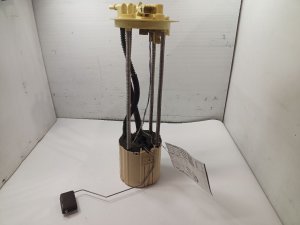
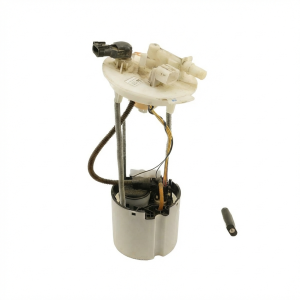
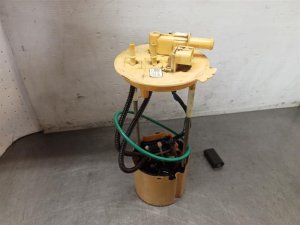
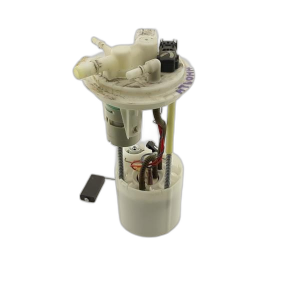
- Fuel Pump Module Assembly
(OEM #ACDelco MU2105 (GM 19370830))— This is the most common failure. The assembly includes the fuel pump, the fuel level sensor (sending unit), and the strainer. Replacing the entire module is the most reliable long-term repair.
Trusted brands: ACDelco, Delphi
OEM price range: $400-$550
Aftermarket price range: $250-$400 - Fuel Level Sensor
(OEM #SK1414)— If you are certain only the sensor has failed and the fuel pump is healthy, the sensor can sometimes be purchased separately. This is a more advanced repair and less common than replacing the whole module.
Trusted brands: ACDelco
OEM price range: $70-$120
Aftermarket price range: $40-$80
Related Codes That Often Appear With This One
- P0462 — This code indicates 'Fuel Level Sensor 'A' Circuit Low', pointing to a short in the circuit, which can be caused by the same failing sensor or wiring.
- P0463 — This code indicates 'Fuel Level Sensor 'A' Circuit High', pointing to an open circuit. It's very common to see with P0460 as it can be caused by a broken wire, corroded connector, or a completely failed sending unit.
Platform-Specific Known Issues
- source — A user on gm-trucks.com with a 2015 Silverado 2500HD reported their fuel gauge would randomly drop to empty and then return to normal, throwing a P0460 code. After verifying the wiring was intact, they opted to lift the bed and replace the entire fuel pump module. The issue was resolved, and they noted the job took about 4 hours and was manageable for a DIYer with the right tools and a helper to lift the bed.
- Corroded Connector as the Culprit: On several forums, owners have chased the P0460 code only to find the issue was not the sender but the large electrical connector on top of the fuel pump assembly. Due to its location, it's prone to collecting dirt and moisture, leading to corroded pins that cause an intermittent open or short in the fuel level sensor circuit. The fix is often to replace the connector pigtail.
Mechanic-Grade Diagnostic Values
- Fuel Level Sensor Resistance — expected: Approximately 40 Ohms (Ω) at Empty and 250 Ohms (Ω) at Full.. Failure: An infinite (OL) reading indicates an open circuit. Readings that jump or do not change smoothly when moving the float arm indicate a worn or faulty resistor strip.
- Fuel Level Sensor Circuit Wires (at the module connector) — expected: The two wires for the level sensor are typically Purple and Black with a White stripe on GM vehicles of this era.. Failure: Testing the wrong wires will lead to incorrect diagnosis. The thicker gauge wires are for the fuel pump motor (typically Gray and Black).
Scan Tool Commands That Help
- GDS2 (GM Global Diagnostic System 2): Vehicle Diagnostics -> DTC Information -> Details — To view not just the P0460 code, but also any related manufacturer-specific codes or failure type bytes that provide more context than a generic scanner.
- GDS2 (or equivalent professional scan tool): Data Display -> Fuel System Data — To monitor live data for 'Fuel Level Sensor Voltage' and 'Fuel Tank Level Remaining'. This is critical for observing if the signal is stuck, erratic, or intermittent while performing a 'wiggle test' on the harness.
- GDS2 (or equivalent professional scan tool): FPCM (Fuel Pump Control Module) Programming/Setup — After replacing the FPCM. While some sources suggest it may be plug-and-play on certain models, others state it requires programming to the vehicle's VIN to function correctly. If a new FPCM is installed and the vehicle fails to start or throws new codes, programming is the likely next step.
Wiring & Ground Locations
- Fuel Pump Control Module (FPCM) — Mounted to the frame rail, often above or near the spare tire.. The FPCM processes the signal from the fuel level sensor before sending it to other modules. Its location makes it highly susceptible to corrosion from road salt and moisture, which can damage the module itself or its connector, causing a P0460 code.
- Fuel Pump Module Ground — A black wire that runs from the fuel pump wiring harness to a bolt on the inside of the driver's side frame rail, near the fuel tank.. This is the primary ground for the entire fuel pump module, including the level sensor. Corrosion at this frame connection point creates high resistance, which can cause erratic or incorrect readings from the sensor, directly leading to a P0460 code. It is a frequently overlooked cause.
- Fuel Pump Module Connector — On top of the fuel tank, connecting the main vehicle harness to the fuel pump module assembly.. This connector contains the pins for the fuel level sensor signal (Purple wire) and its reference (Black/White wire). Due to its location, it traps dirt and moisture, making it a primary point of failure from corrosion, which causes intermittent open/short circuits.
Real Owner Repair Stories
- Reddit user in r/askcarguys (2019 Chevrolet Silverado) — Intermittent stall, then no-start condition. Codes P129F initially, but after installing a used FPCM, the fuel gauge stopped working and multiple new codes appeared.
❌ Tried (didn't work) Replacing the Fuel Pump Control Module (FPCM) with a used part from another vehicle.
✅ What actually fixed it The user concluded the used replacement FPCM was also defective. The story highlights that even with a matching part number, a used electronic module can introduce new problems and that programming may be a factor, despite dealer advice to the contrary.
OEM Part Supersession History
19258595→GM 19370830 (ACDelco MU2105)— Part number update and potential design revision.
Heads up: ACDelco MU2105 is the correct and current OEM replacement for the specified vehicle range. Using older stock or unverified numbers may lead to compatibility issues.
Diagnostic Flowchart
Other Known Issues on This Vehicle
Issues unrelated to this code that are worth knowing about as an owner of this generation:
- 6L90 Transmission Torque Converter Failure 🔴 High — Common between 80,000 and 150,000 miles, especially on trucks used for towing. Symptoms include shuddering, slipping, and eventual total failure.
- A/C Condenser Leaks 🟠 Medium — Widespread issue where the condenser develops leaks, often at the welds or from thermal stress, causing the A/C to stop blowing cold. (Ref: Special Coverage 17336 (for some models), TSB 18-NA-156)
- Premature Frame Rust 🟠 Medium — The factory wax coating on the frame is known to peel or flake off, allowing surface rust to form much quicker than expected, particularly in rust-belt states. (Ref: TSB 19-NA-255)
- EVAP Purge Valve Failure 🟡 Low → Shop Vapor Canister — The EVAP purge solenoid on top of the engine can fail, leading to EVAP-related check engine light codes and sometimes difficulty fueling.
- Active Fuel Management (AFM) Lifter Failure 🔴 High — While the 6.0L L96 in the HD trucks does NOT have AFM, it's a critical issue for the 5.3L and 6.2L engines in the sister 1500-series trucks on the same K2XX platform, causing misfires and potential engine damage. This is an important distinction for owners. (Ref: TSB 15-06-01-002F)
- Starter Motor Failure 🟡 Low — A number of owners report premature starter failure, resulting in a no-crank, no-start condition, often preceded by a single click.
Used vs. New Parts: Buying Guide for This Vehicle
When a used part is the smart pick: Almost never for this repair. The primary failure part, the fuel level sensor, is a wear item. A used fuel pump module assembly has an unknown amount of life left on both the sensor and the pump motor. The cost and labor of the job are too high to risk using a part that may fail soon after installation.
Donor-vehicle mileage cap: roughly under 20000 miles for the part to have meaningful remaining life.
What to inspect on the donor part:
- If forced to use a used part (e.g., due to availability), source it from the lowest-mileage donor possible.
- Visually inspect the connector pins on the used module for any signs of corrosion, melting, or discoloration before purchase.
- Test the resistance of the used sensor with a multimeter before installation to ensure it reads within the 40-250 ohm range and sweeps smoothly.
OEM-only on this vehicle (don't cheap out):
- Fuel Pump Module Assembly
Aftermarket brands forum-validated for this vehicle:
- Delphi: Delphi was a former division of GM, and their parts are often identical to ACDelco OE parts, sometimes even manufactured on the same production line. It is widely considered a reliable OEM-equivalent brand for this component.
Brands owners have reported issues with on this vehicle:
- Unnamed or generic 'white box' brands from online marketplaces. Forum discussions frequently warn against counterfeit parts sold on sites like Amazon and eBay. The risk of receiving a defective or short-lived part is high, and the labor involved in a comeback repair is significant.
Real Owner Stories
Aggregated from forums and TSBs cited above. Mileages and costs reflect what owners reported in those sources.
2015 Silverado 2500HD 6.0L V8 L96
Symptoms: Fuel gauge would randomly drop to empty and then return to normal, throwing a P0460 code.
What fixed it: Lifting the bed and replacing the entire fuel pump module.
Source hint: gm-trucks.com thread titled 'P0460: Fuel Level Sensor Circuit'
2015-2020 Chevrolet Silverado 6.0L V8 L96
Symptoms: Intermittent open or short in the fuel level sensor circuit caused by corroded pins in the large electrical connector on top of the fuel pump assembly.
What fixed it: Replacing the connector pigtail.
Source hint: vehicle_specific_issues: Corroded Connector as the Culprit
Related OBD-II Codes
Frequently Asked Questions
Does my 2015-2020 Silverado 2500HD with the 6.0L L96 engine suffer from the common AFM lifter failures?
My fuel gauge is jumping randomly on my 2015 Silverado; could this be a simple wiring issue?
Is there a TSB for the frame rust I'm seeing on my 2015-2020 Silverado?
Why is my Distance-to-Empty (DTE) showing dashes instead of a number?
Is the A/C condenser leak on these trucks a known issue covered by Chevrolet?
Can I replace just the fuel level sensor on my 6.0L Silverado to fix P0460?
Helpful Videos
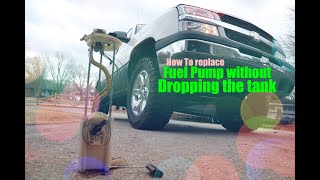
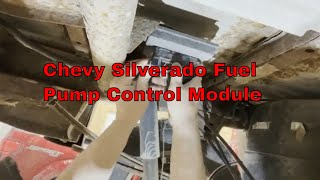

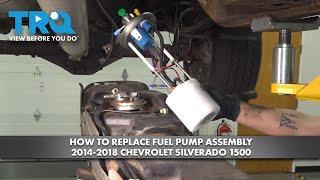

![How to Fix P0460 Engine Code in 2 Minutes [1 DIY Method / Only $11.9]](https://img.youtube.com/vi/gt5sdWRXypk/mqdefault.jpg)
Used OEM Parts in Stock
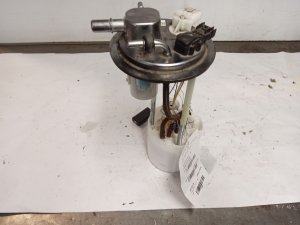
New Aftermarket Parts Available


The information in this article is provided for general reference and educational purposes only. Vehicle specifications, procedures, and part compatibility can vary by production date, trim level, and region. Always consult your vehicle's factory service manual and verify part numbers before purchasing or performing repairs. Safety-critical components such as airbags, seat belts, and braking systems should be installed by a qualified professional.
- Chevrolet Silverado:
- 🧭 Diagnostic Flowchart
- 🎬 Helpful Videos
- 🛍️ Shop This Part
- What's Unique About the 2015-2020 Chevrolet Silverado
- Symptoms You May Notice
- Most Likely Causes
- Rare But Worth Checking
- Diagnosis Steps
- Parts You'll Likely Need
- Related Codes That Often Appear With This One
- Platform-Specific Known Issues
- Mechanic-Grade Diagnostic Values
- Scan Tool Commands That Help
- Wiring & Ground Locations
- Real Owner Repair Stories
- OEM Part Supersession History
- Other Known Issues on This Vehicle
- Used vs. New Parts: Buying Guide for This Vehicle
- Real Owner Stories
- 2015 Silverado 2500HD 6.0L V8 L96
- 2015-2020 Chevrolet Silverado 6.0L V8 L96
- Related OBD-II Codes
- Frequently Asked Questions
- 🎟️ Get 5% Off