

P0460 on 2011-2024 Dodge Durango: Fuel Level Sensor Malfunction Causes and Fixes
On a 2011-2024 Dodge Durango, P0460 almost always points to a failed fuel level sensor, which is part of the fuel pump module inside the gas tank. The fix is to replace the entire fuel pump assembly, which costs between $250-$500 for the part and requires dropping the fuel tank. Because the Durango has a saddle-style tank, there are two senders; often the primary (right side) or auxiliary (left side) unit fails.
- P0460 on a Durango means the fuel gauge is unreliable; don't risk running out of gas.
- The most likely cause is a failed sending unit, which requires replacing the entire fuel pump module in the tank.
- Before buying parts, always inspect the electrical connector on top of the fuel tank for corrosion, as it's a common and cheaper fix.
- If you have a 2011-2013 model, verify that the fuel pump relay recall has been performed, as a faulty TIPM can cause various fuel system problems.
What's Unique About the 2011-2024 Dodge Durango
For the 2011-2024 Durango, the fuel level sensor is integrated into the fuel pump module, so you typically replace the whole unit. A key detail is that the Durango uses a saddle-style fuel tank to accommodate the driveshaft, which requires two separate fuel level sending units—a primary one on the passenger side (with the main fuel pump) and an auxiliary/secondary one on the driver's side. P0460 specifically refers to the 'A' circuit, which is typically the primary sender. Early models (2011-2013) are also known for a faulty fuel pump relay inside the Totally Integrated Power Module (TIPM), which was subject to a major recall. While this TIPM issue often causes a no-start condition, it points to a known weakness in the fuel delivery system's electrical control that can contribute to erratic behavior and related codes.
Generation note: This covers the entire third generation (WK2) of the Dodge Durango. However, a critical issue to be aware of is the fuel pump relay failure within the TIPM, which is most prevalent on 2011-2013 models and was addressed by a recall. The saddle-tank design with two senders is consistent across all years.
Symptoms You May Notice
- Check Engine Light is on
- Fuel gauge behaves erratically (fluctuates, stuck on full or empty).
- Low fuel warning light comes on at random times or not at all.
- Distance-to-empty display is inaccurate or shows dashes.
- Fuel gauge reads half-full after filling up (a common sign that one of the two senders has failed).
- Replacing only the fuel pump motor when the sending unit is the actual point of failure.
- Replacing the instrument cluster, as the gauge itself is rarely the problem.
- Replacing the primary fuel pump module when the auxiliary (left side) sending unit is the one that has failed. Diagnosing with a scan tool to check both senders is crucial.
Most Likely Causes
- Failed Fuel Level Sending Unit / Fuel Pump Module 🔴 High Probability → Shop Fuel Tank Sending Unit The sending unit's resistive strip wears out over time, causing incorrect readings. As it is integrated into the fuel pump module, the entire assembly is the common replacement part. The Durango has two units (primary and auxiliary), and either can fail, though the primary 'A' sensor is the one that triggers P0460.
How to confirm: After checking wiring, test the resistance of the sending unit's circuit at the fuel pump connector. As the float moves, the resistance should change smoothly within the manufacturer's specified range. An open circuit (infinite resistance) or a reading that doesn't change indicates failure. A scan tool can display live data for both the primary and secondary fuel level sensors, making it easy to see which one is providing an erratic or nonsensical reading.
Typical fix: Replace the entire fuel pump module assembly (either primary or auxiliary, depending on which has failed). This requires dropping the fuel tank or accessing the modules through ports under the rear seat. 🎬 Watch: Step-by-step fuel pump replacement walkthrough
Est. part cost: $250-$500 - Damaged Wiring or Corroded Connector 🟡 Medium Probability The main electrical connector on top of the fuel tank is exposed to the elements, making it susceptible to moisture and corrosion, which can disrupt the sensor signal.
How to confirm: Visually inspect the main harness connector on top of the fuel tank. Look for green or white corrosion, bent pins, or broken wires. Perform a wiggle test on the harness while observing the fuel gauge or live data on a scan tool.
Typical fix: Clean the connector terminals thoroughly. If corrosion is severe, the connector pigtail may need to be replaced.
Est. part cost: $20-$50 - Faulty TIPM (Totally Integrated Power Module) ⚪ Low Probability Specific to 2011-2013 models, the internal fuel pump relay can fail, leading to various fuel system issues. While typically causing a no-start, it can create power supply problems for the fuel pump module, potentially leading to erratic voltage and codes like P0460.
How to confirm: Diagnose by checking for power at the fuel pump fuse (M25) during startup. If power is intermittent or absent despite the PCM commanding the pump on, the TIPM relay is a likely suspect. Check if recall service for an external relay has been performed.
Typical fix: Install the Mopar fuel pump relay bypass kit if the recall wasn't performed. If the TIPM has other failures, it may need to be repaired or replaced.
Est. part cost: $50-$900
Rare But Worth Checking
- Faulty Powertrain Control Module (PCM): → Shop Engine Control Module (ECM) This is very rare. Before condemning the PCM, all other possibilities, including wiring and the fuel pump module itself, must be exhaustively ruled out.
- Stuck Fuel Level Float Arm: Less common than electrical failure, the physical float arm can get stuck due to debris in the tank or if the tank has been deformed from an impact. This would cause the reading to be stuck at one level regardless of the amount of fuel.
Diagnosis Steps
- Scan for Codes: Use an OBD-II scanner to confirm P0460 is present and check for any other related codes like P0461, P0462, or P0463.
- Check Live Data: This is the most important step. Use a capable scan tool to observe the live data streams for 'Fuel Level Sensor 1' (Primary/Right) and 'Fuel Level Sensor 2' (Secondary/Left). Note the voltage or percentage readings. One will likely be erratic, stuck, or show an illogical value compared to the other.
- Inspect the Fuel Pump Connectors: Access the top of the fuel tank (often under the rear seats). Disconnect the connectors for both the primary and secondary modules and inspect for any signs of corrosion, moisture, or damaged pins.
- Test the Circuit: With the key on, check for reference voltage and a good ground at the harness-side connector for the suspected faulty unit.
- Test the Sending Unit: Measure the resistance (ohms) across the sending unit pins on the fuel pump module itself. The reading should be within the factory-specified range. You can try rocking the vehicle to slosh fuel and see if the resistance value changes, indicating the float is moving.
- Verify Power Supply (TIPM Check for 2011-2013): If fuel pump operation is also suspect, verify consistent power is being supplied to the fuel pump circuit from the TIPM during startup.
- Isolate the Fault: If the wiring and power supply are good but the resistance test fails (or the live data is clearly bad for one sensor), the corresponding fuel pump/sender module is faulty. If the resistance is good but the signal is lost on the way to the PCM, the wiring is the issue.
Parts You'll Likely Need
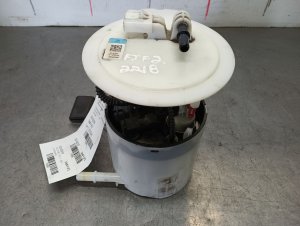
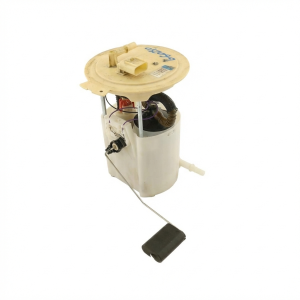
- Fuel Pump and Level Unit Module (Primary, Right Side)
(OEM #5145583AD (example for early models, verify by VIN). Newer part numbers include 68535771AA/AB.)— This is the most common failure for the P0460 code. It contains the main fuel pump and the primary fuel level sensor ('A' circuit). Part numbers vary significantly by year and engine.
Trusted brands: Mopar, Delphi, Bosch, Spectra Premium
OEM price range: $400-$550
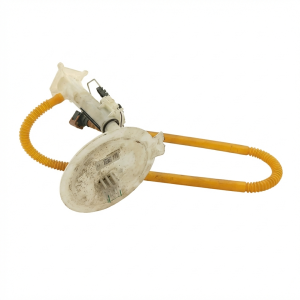
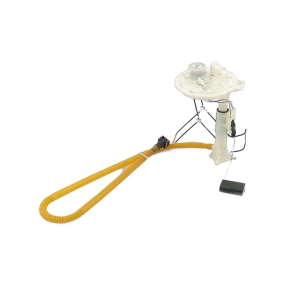
Aftermarket price range: $250-$400 - Auxiliary Fuel Level Unit (Secondary, Left Side)
(OEM #68477869AC (example for 2024 models, verify by VIN).)— This unit contains the secondary fuel level sensor. Its failure will cause an inaccurate fuel gauge but may set a different code. It's often replaced at the same time as the primary unit as a preventative measure.
Trusted brands: Mopar, Delphi
OEM price range: $200-$350
Aftermarket price range: $150-$250
Related Codes That Often Appear With This One
- P0462 — Indicates the fuel level sensor circuit voltage is specifically low (short to ground), often caused by the same failing sensor or wiring.
- P0463 — Indicates the fuel level sensor circuit voltage is specifically high (open circuit), a very common companion code pointing to a failed sending unit or broken wire.
- P0461 — Indicates the fuel level sensor circuit has a range/performance issue, meaning the signal is erratic or not changing as expected when fuel is added or consumed.
Platform-Specific Known Issues
- Early models (2011-2013) were part of a large-scale recall for a faulty internal fuel pump relay in the TIPM. This could cause a crank-no-start condition or intermittent fuel pump operation. The fix involves installing an external relay.
Mechanic-Grade Diagnostic Values
- Fuel Pressure (at engine fuel line) — expected: ~58 PSI. Failure: Significantly lower or zero pressure indicates a pump or power supply issue.
- Primary Fuel Level Sender Resistance — expected: Varies by part, but should change smoothly. An example test on a similar style Mopar unit showed ~16 Ohms at empty and ~114 Ohms at full.. Failure: An open circuit (infinite resistance), a short (0 Ohms), or values that do not change smoothly as the float arm moves indicates a failed sender.
- General Mopar Sender Resistance (Pre-1987) — expected: 73 Ohms (Full) to 10 Ohms (Empty). Failure: Readings outside this range for older vehicles, or erratic readings.
Wiring & Ground Locations
- Fuel Pump Power Wire — In the harness running to the fuel tank, at the main connector on top of the primary fuel pump module.. This wire, typically Dark Blue with an Orange stripe on 2011-2013 models, supplies power to the entire fuel pump module. Verifying power on this wire during startup is a key step to rule out a TIPM or relay issue before condemning the pump itself.
- Fuel Pump Ground — The ground wire is part of the same harness and connector as the power wire, located on top of the fuel tank. The chassis ground point is not easily accessible or commonly cited as a failure point.. A poor ground connection can cause erratic voltage signals and intermittent operation, mimicking a failed sending unit. A voltage drop test between the connector's ground pin and a clean chassis ground can verify its integrity.
Real Owner Repair Stories
- CarComplaints.com owner report (2014 Dodge Durango) — Vehicle stalled while driving over a railroad crossing. The fuel pump fuse was found to be blown.
❌ Tried (didn't work) The owner had experienced this issue multiple times before the dangerous failure.
✅ What actually fixed it Replacing the 20A fuel pump fuse allowed the vehicle to start again. The owner suspected an underlying fuel pump relay failure, similar to the issue recalled on 2011-2013 models, was causing the fuse to blow. This suggests the electrical fault may not be strictly limited to the official recall years.
OEM Part Supersession History
5145583AD→05145583AE— Standard part revision and improvement by the manufacturer.
Heads up: The new part number (05145583AE) replaces a series of older numbers including 5145583AA, 5145583AB, and 5145583AC, indicating it is the correct and latest primary pump module for early WK2 Durango models.
Model Year Variations Within This Range
- 2011-2013: These models were subject to recall N23 for a faulty internal fuel pump relay in the TIPM. The official fix is an external relay kit. This is a primary suspect for any fuel-related electrical issue on these years.
- 2014+: While not part of the official TIPM relay recall, some owner reports suggest similar electrical failures can occur, causing fuses to blow or intermittent power to the fuel pump. Also, fuel pump module part numbers change for later model years (e.g., 68304617AA, 68429733AA), making it critical to verify the correct part by VIN.
Diagnostic Flowchart
Other Known Issues on This Vehicle
Issues unrelated to this code that are worth knowing about as an owner of this generation:
- Totally Integrated Power Module (TIPM) Failure 🔴 High — Very common on 2011-2013 models. Can cause a wide range of electrical problems, including fuel pump and starter issues. A recall was issued for the fuel pump relay portion. (Ref: NHTSA Recall 14V-530 (External Fuel Pump Relay))
- Cracked Oil Filter Housing (3.6L Pentastar V6) 🔴 High — Extremely common across all model years with the 3.6L V6. The plastic housing cracks from heat cycles, causing significant oil and/or coolant leaks in the engine valley.
- HEMI Lifter/Camshaft Failure (5.7L & 6.4L V8) 🔴 High — A well-documented issue, particularly on 2011-2018 models, where a failed MDS lifter roller seizes and destroys the camshaft lobe, causing a distinct 'Hemi tick'. Repair is very expensive. (Ref: Multiple TSBs exist for 'engine ticking noise' but no recall.)
- Uconnect 8.4" Screen Delamination 🟠 Medium — Widespread on 2017+ models. The adhesive behind the touchscreen fails, causing bubbling and 'ghost touches' that make the infotainment system unusable.
- Water Leaking into Tail Lights 🟡 Low — Common on earlier models (approx. 2011-2015). A poor gasket seal from the factory allows water to collect inside the signature 'racetrack' tail light assembly, causing LEDs to fail.
- Leather Dashboard Bubbling/Lifting 🟠 Medium — Affects higher-trim models with leather dashboards, especially in hot climates. The leather separates from the underlying foam, creating large bubbles.
Used vs. New Parts: Buying Guide for This Vehicle
When a used part is the smart pick: For this repair, a used part is almost never a smart choice. The failure is typically the resistive strip on the sending unit, which is a wear item. The labor to drop the fuel tank is significant, so the risk of installing a used part with limited remaining life is not worth the small cost savings.
What to inspect on the donor part:
- Not recommended. If forced to consider, one would need to test the resistance sweep of the sending unit from the donor vehicle, which is impractical in a junkyard setting.
OEM-only on this vehicle (don't cheap out):
- While not strictly OEM-only, the fuel pump module is a critical component. Sticking to Mopar or high-quality Tier 1 OEM suppliers is strongly recommended to avoid premature failure and a repeat repair.
Aftermarket brands forum-validated for this vehicle:
- Delphi
- Bosch
- Spectra Premium
- Carter
Brands owners have reported issues with on this vehicle:
- Unbranded, 'white box' parts from online marketplaces with no warranty or brand reputation. The failure rate is reportedly high and can lead to doing the job twice.
Real Owner Stories
Aggregated from forums and TSBs cited above. Mileages and costs reflect what owners reported in those sources.
2011-2013 Dodge Durango
Symptoms: Owners reported numerous instances of premature fuel pump failure and a crank-no-start condition, often linked to the TIPM relay issue.
What fixed it: Installation of the Mopar fuel pump relay bypass kit as part of the recall for the internal TIPM relay failure.
Source hint: CarComplaints.com
2018 Dodge Durango
Symptoms: While not directly causing P0460, owners reported the Uconnect screen delaminating with bubbles and 'ghost touches,' making the infotainment system unusable.
What fixed it: Replacement of the Uconnect 8.4" screen assembly, though many owners were denied out-of-warranty coverage.
Source hint: DodgeForum.com
Related OBD-II Codes
Frequently Asked Questions
Is there a recall for the fuel system issues on my 2011-2013 Dodge Durango?
My 2012 Durango won't start and has a P0460 code; could the TIPM be the cause?
Why does my fuel gauge read half-full even after I fill the tank completely?
Can I just replace the fuel level sensor, or do I need the whole pump assembly?
Where are the fuel pump modules located on the 2011-2024 Durango?
Does the Jeep Grand Cherokee have the same P0460 issues as the Durango?
Helpful Videos

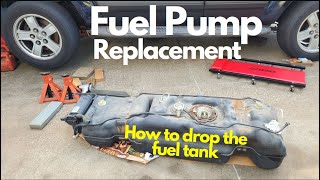
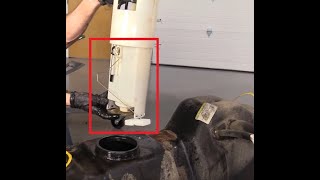
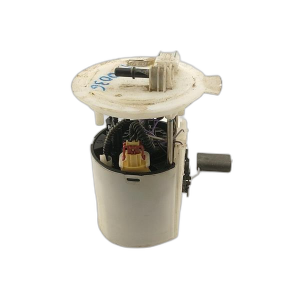
We Have This Part in Stock

The information in this article is provided for general reference and educational purposes only. Vehicle specifications, procedures, and part compatibility can vary by production date, trim level, and region. Always consult your vehicle's factory service manual and verify part numbers before purchasing or performing repairs. Safety-critical components such as airbags, seat belts, and braking systems should be installed by a qualified professional.
- Dodge Durango:
- 🧭 Diagnostic Flowchart
- 🎬 Helpful Videos
- 🛍️ Shop This Part
- What's Unique About the 2011-2024 Dodge Durango
- Symptoms You May Notice
- Most Likely Causes
- Rare But Worth Checking
- Diagnosis Steps
- Parts You'll Likely Need
- Related Codes That Often Appear With This One
- Platform-Specific Known Issues
- Mechanic-Grade Diagnostic Values
- Wiring & Ground Locations
- Real Owner Repair Stories
- OEM Part Supersession History
- Model Year Variations Within This Range
- Other Known Issues on This Vehicle
- Used vs. New Parts: Buying Guide for This Vehicle
- Real Owner Stories
- 2011-2013 Dodge Durango
- 2018 Dodge Durango
- Related OBD-II Codes
- Frequently Asked Questions
- 🎟️ Get 5% Off