

P0460 on 2016-2022 Honda Accord: Fuel Level Sensor Circuit Causes and Fixes
This code means there's a problem with the fuel level sensor circuit, causing an erratic or incorrect fuel gauge. The most common fix is replacing the fuel level sending unit, which is part of the in-tank fuel pump module. For 2018-2020 models, check for the massive fuel pump recall first, as it provides a free fix. Expect to pay $200-$500 for an aftermarket part or $400-$600 for an OEM part, with a total shop repair cost of $600-$1100.
- P0460 almost always points to a problem with the fuel level sending unit or its wiring.
- For 2018-2020 Accords, **immediately check for the open fuel pump recall** as the repair may be free.
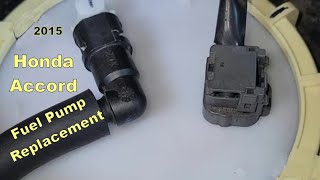
- The fix is to replace the entire fuel pump module, which is located in the fuel tank under the rear seat.
- You can continue to drive with this code, but you must manually track your fuel consumption to avoid running out of gas.
- The most likely part needed is the complete fuel pump module assembly, not just the sensor.
What's Unique About the 2016-2022 Honda Accord
For the 10th generation Accord (2018-2020), a massive fuel pump recall is the most important factor for this code. Honda recalled millions of vehicles, including the Accord, for defective fuel pump impellers that could cause the engine to stall. This recall was expanded multiple times, with NHTSA campaign numbers including 20V-314 and the larger 23V-782. Since the fuel level sending unit is an integral part of this module, owners of affected vehicles may get the entire assembly replaced for free at a dealership, which would also fix a P0460 code caused by a faulty sender. Always check for open recalls before paying for this repair.
Generation note: This range covers two Honda Accord generations with different parts: - 9th Generation (2016-2017): This generation has its own specific fuel pump modules and was not part of the major fuel pump recalls. It featured 2.4L I4 and 3.5L V6 engine options. - 10th Generation (2018-2022): This generation uses different parts and is subject to a major fuel pump recall for 2018-2020 model years that could resolve this issue. It introduced new turbocharged 1.5L and 2.0L engines.
Symptoms You May Notice
- Check Engine Light is on
- Fuel gauge behaves erratically (bouncing, stuck on full or empty, or rapid fluctuations).
- Fuel gauge reading is inaccurate or completely non-functional
- Low fuel warning light may come on unpredictably or not at all.
- Inability to pass an emissions test, as a valid fuel level is required for EVAP system self-tests.
- Replacing only the fuel pump motor when the issue is the sending unit. Since they are in the same assembly, it's best to replace the entire module.
- Assuming the instrument cluster is bad before thoroughly testing the sending unit and wiring, which are far more likely to be the cause.
- Replacing the fuel pump without checking for open recalls first on eligible 2018-2020 models, which could have provided a free repair.
Most Likely Causes
- Faulty Fuel Level Sending Unit 🔴 High Probability → Shop Fuel Tank Sending Unit The sending unit is a moving part (a float arm on a variable resistor) that can wear out, developing dead spots. For 2018-2020 models, the entire fuel pump module it's attached to was subject to a recall for a different defect (impeller), indicating potential quality control issues with the Denso-made assembly.
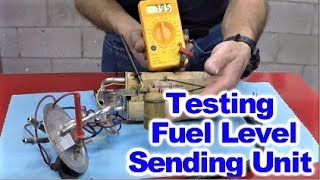
How to confirm: Access the fuel pump module under the rear seat. Disconnect the electrical connector and measure the resistance across the sender pins with a multimeter. 🎬 Watch: How to test a sending unit with a multimeter Per Honda specifications, the resistance should be approximately 105-110 Ohms when empty and 2-5 Ohms when full. If the resistance is open (infinite), shorted (zero), or jumps erratically as you move the float arm, the sender is bad.
Typical fix: Replace the entire fuel pump module. The sending unit is integrated into the module and not sold separately by Honda.
Est. part cost: $200-$600 - Wiring or Connector Issue 🟡 Medium Probability The main connector is on top of the fuel tank, under the rear seat cushion. It can be exposed to moisture from spills or physical damage if the seats are removed improperly, leading to corrosion or bent pins.
How to confirm: Visually inspect the wiring harness and the main electrical connector on top of the fuel pump module. Look for signs of corrosion (green or white powder), moisture, bent pins, or chafed wires. Perform a 'wiggle test' on the harness while monitoring the fuel level data on a scan tool to see if the reading changes, indicating an intermittent connection.
Typical fix: Clean corroded terminals with electrical contact cleaner and a small brush. Repair any broken or chafed wires. If the connector is damaged, it may need to be replaced.
Est. part cost: $0-$50 - Stuck or Damaged Float Arm ⚪ Low Probability If a vehicle sits for a very long time, rust or fuel varnish can cause the float arm to stick in one position. Less commonly, the plastic float can crack, fill with fuel, and sink, causing it to permanently read empty.
How to confirm: This can only be confirmed by removing the fuel pump module from the tank and visually inspecting the float arm. Check if it moves freely through its full range of motion and if the float itself is buoyant.
Typical fix: Replacement of the entire fuel pump module is the standard repair.
Est. part cost: $200-$600
Rare But Worth Checking
- Faulty Instrument Cluster (Gauge Control Module): → Shop Instrument Cluster If the sending unit and wiring are confirmed to be good, the problem may lie within the instrument cluster that processes and displays the signal. This is uncommon and should be diagnosed last.
- Powertrain Control Module (PCM) Failure: → Shop Engine Control Module (ECM) This is extremely rare. The PCM's input circuit for the fuel level sensor can fail due to internal component degradation, but all other possibilities should be exhausted before considering PCM replacement.
Diagnosis Steps
- Check for Recalls: First, check your vehicle's VIN on Honda's recall website (recalls.honda.com) or the NHTSA site. For 2018-2020 models, look for fuel pump recalls (e.g., NHTSA 23V-782, 20V-314). This could result in a free repair.
- Scan for Codes: Use an OBD-II scanner to confirm P0460 is the primary code. Note any other related codes like P0461, P0462, or P0463, as they can help pinpoint the electrical fault.
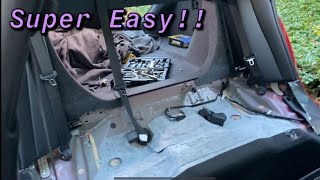
- Inspect Wiring: Remove the rear seat bottom cushion to 🎬 Watch: How to remove the back seat access the fuel pump module cover. Remove the cover and inspect the electrical connector and wiring harness for any visible damage, corrosion, or loose connections.
- Test the Sending Unit Resistance: Disconnect the connector. Using a wiring diagram, identify the pins for the fuel level sender. Connect a multimeter set to Ohms (Ω). Measure the resistance between the pins. It should be within Honda's specification, typically ~105-110 Ω at empty and ~2-5 Ω at full. An infinite reading (OL) indicates an open circuit, while 0 Ω indicates a short. Both mean the sender has failed.
- Check for Power and Ground: With the key on, use a multimeter set to DC Volts to verify that the circuit has proper power and ground at the connector according to the vehicle's service manual.
- Isolate the Fault: If the sender tests good and the wiring is intact, the problem could be in the instrument cluster or, very rarely, the PCM. This advanced diagnosis involves checking the signal at the cluster itself and is best left to a professional.
Parts You'll Likely Need
- Fuel Pump Module Assembly
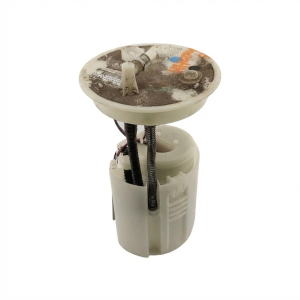
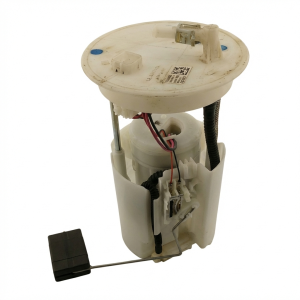
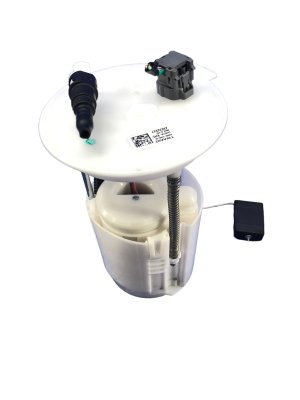
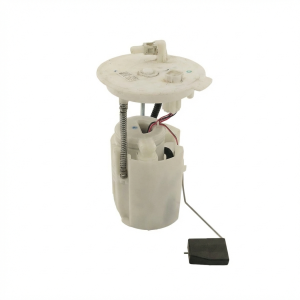
(OEM #17045-TVA-A03 (10th Gen 1.5T, supersedes 17045-TVA-A01/A02), 17045-TVC-A04 (10th Gen 2.0T, supersedes 17045-TVC-A01/A02/A03), 17045-T2B-A02 (9th Gen V6, supersedes 17045-T2B-A00/A01), 17045-T2B-L02 (9th Gen V6 Calif., supersedes 17045-T2B-L00/L01))— This is the primary failure point. The assembly includes the fuel pump, fuel level sending unit (float and resistor), and fuel strainer. It is almost always replaced as a single unit.
Trusted brands: Honda (Genuine), Denso (OEM supplier), Delphi, Spectra Premium
OEM price range: $400-$600
Aftermarket price range: $200-$500
Related Codes That Often Appear With This One
- P0461 — P0461 indicates a 'Range/Performance' issue with the sensor circuit, often triggered by the same root causes as P0460, such as a failing sensor or intermittent wiring connection.
- P0462 — This code indicates 'Circuit Low Input,' pointing to a short to ground in the wiring or a failed sensor, which is a specific type of failure within the P0460 fault domain. If P0462 is present, it should be diagnosed first.
- P0463 — This code indicates 'Circuit High Input,' pointing to an open circuit or a failed sensor, which is another specific failure mode related to P0460. If P0463 is present, it should be diagnosed first.
Technical Service Bulletins (TSBs) & Recalls
- NHTSA Recall 23V-782: A massive recall expansion covering over 2.5 million Honda/Acura vehicles, including the 2018-2020 Accord, for defective fuel pumps.
- NHTSA Recall 20V-314: An earlier, smaller version of the fuel pump recall that was later expanded.
Platform-Specific Known Issues
- Fuel Pump Recall (2018-2020 Models): American Honda issued a massive recall (NHTSA campaign 23V-782, expanding on earlier recalls like 20V-314 and 21V-215) for a defective fuel pump impeller that could cause the engine to stall. The fix is a free replacement of the entire fuel pump module, which includes the fuel level sender. This is the first thing to check if you own an affected model year, as it resolves the most common cause of P0460 for free.
Mechanic-Grade Diagnostic Values
- Fuel Level Sender Resistance — expected: Full: 2-5 Ohms, Half: 25.5-39.5 Ohms, Empty: 105-110 Ohms.. Failure: A reading of infinity (Open Loop) or near zero ohms (short) indicates a failed sender. Erratic jumping while moving the float arm also indicates failure.
- Fuel Level Sensor Signal Voltage (at PCM) — expected: The voltage should be between 0V and 5V, changing smoothly as the fuel level changes. The PCM expects the voltage to not remain static for extended periods of driving (e.g., over 50 miles).. Failure: Voltage stuck at a specific value, or reading above 4.9V or below 0.1V for a set period.
Scan Tool Commands That Help
- Honda HDS (Honda Diagnostic System): Fuel Level / Fuel Tank Data Display — To monitor the live data from the fuel level sensor as reported to the PCM. This can help differentiate between a faulty sender, a wiring issue, or a problem with the instrument cluster by showing the raw data the computer is receiving.
- Honda HDS (Honda Diagnostic System): ETCS (Electronic Throttle Control System) TEST > TP LEARNING CHECK — While not directly for fuel level, this is an example of a system self-test available in the HDS. After any major electrical work or module replacement, checking for related system resets is crucial. A fuel level sensor reset/calibration routine may be available in a similar sub-menu if the PCM software supports it.
Wiring & Ground Locations
- G101 — In the engine bay, on the driver's side, typically on the cylinder head or near the intake manifold.. This is a primary ground point for the engine harness and ECU/PCM. While the fuel pump itself has a ground in the rear (often designated G601 or similar in the trunk area), a poor engine or ECU ground at G101 can cause a variety of strange electrical issues and sensor reading faults, including those from the fuel level circuit that the PCM interprets.
- Fuel Pump Module Connector — On top of the fuel tank, accessible by removing the rear seat bottom cushion and a metal access plate.. This is the primary connection point for the fuel pump and sending unit. The pins for the level sender (typically a Yellow/White wire and a Black wire on older models) can be tested here for resistance. Corrosion or damage at this connector is a common cause of P0460.
OEM Part Supersession History
17045-TVA-A01, 17045-TVA-A02→17045-TVA-A03— Standard part revision and improvement. Likely related to the fuel pump impeller issue that prompted the large-scale recall.
Heads up: The newer part (A03) is backward compatible and is the correct replacement for the earlier versions on 2018-2022 1.5T Accords.
Model Year Variations Within This Range
- 2016-2017 (9th Generation): These models used the naturally aspirated 2.4L I4 and 3.5L V6 engines. They were not part of the major 10th-gen fuel pump recall. The fuel pump modules and part numbers are specific to this generation and are not interchangeable with 2018+ models.
- 2018-2022 (10th Generation): Marked a complete redesign with new 1.5L and 2.0L turbocharged engines. The interior was updated to a single, larger touchscreen. Models from 2018-2020 are subject to the major fuel pump recall (NHTSA 23V-782), which is a critical diagnostic consideration for P0460.
Diagnostic Flowchart
Other Known Issues on This Vehicle
Issues unrelated to this code that are worth knowing about as an owner of this generation:
- Fuel Dilution in 1.5T Engine 🔴 High — Common in 2016-2021 models, especially in cold climates or with frequent short trips. Can occur at any mileage. (Ref: Honda TSB 19-037 (software update))
- Sticky or Stiff Steering 🔴 High — Affects 2022+ models. Can appear at low mileage. Described as a 'notchy' or 'caught' feeling at highway speeds. (Ref: NHTSA Recall 24V-744 / Honda TSB 23-037)
- A/C Condenser or Compressor Failure 🟠 Medium — Common across 10th gen (2018-2022) models, often occurring after 50,000 miles. Symptoms include warm air from vents.
- Phantom/Random Automatic Emergency Braking 🔴 High — Reported frequently on 2022 models, where the Collision Mitigation Braking System (CMBS) activates without an obstacle. (Ref: NHTSA investigations are ongoing.)
- Premature Battery Failure 🟡 Low → Shop Vehicle Battery — Affects around 5% of 10th gen Accords, typically after 60,000 miles, sometimes linked to a faulty alternator.
Used vs. New Parts: Buying Guide for This Vehicle
When a used part is the smart pick: A used fuel pump module is generally NOT recommended. The part is buried inside the fuel tank, making labor a significant portion of the repair cost. The risk of a used part failing prematurely outweighs the potential savings. The only exception might be if you can pull the part yourself from a very low-mileage, recently wrecked vehicle and can verify its function.
Donor-vehicle mileage cap: roughly under 30000 miles for the part to have meaningful remaining life.
What to inspect on the donor part:
- Verify the donor vehicle was not wrecked due to an engine or electrical fire.
- Inspect the electrical connector on the module for any signs of melting, corrosion, or bent pins.
- Ensure the plastic housing is not cracked or damaged.
- If possible, check the donor vehicle's VIN for open recalls; avoid parts from vehicles that had the recall but it was never performed.
OEM-only on this vehicle (don't cheap out):
- For 2018-2020 models under the recall, the only part to use is the free OEM replacement from a Honda dealer.
Aftermarket brands forum-validated for this vehicle:
- Denso (The OEM supplier for Honda; often considered the best alternative to a Honda-branded part).
- Delphi (A major OEM supplier for other brands, known for quality fuel system components).
Brands owners have reported issues with on this vehicle:
- Generic, unbranded parts from online marketplaces. Forum discussions frequently mention premature failures of cheap, no-name fuel pump assemblies, leading to repeat labor costs.
Real Owner Stories
Aggregated from forums and TSBs cited above. Mileages and costs reflect what owners reported in those sources.
2018 Honda Accord
Symptoms: Fuel gauge was stuck on full and triggered a P0460 code.
What fixed it: Replacement of the fuel pump module via the fuel pump recall.
Source hint: DriveAccord.net - Fuel Gauge Problem
Related OBD-II Codes
Frequently Asked Questions
Is there a recall for the fuel pump on my 2018-2020 Honda Accord that might cause P0460?
Can I just replace the fuel level sending unit on my Accord to fix this code?
What should the resistance readings be for a healthy fuel sender on this vehicle?
Why is my 2018 Accord failing an emissions test with code P0460?
Could my fuel gauge issue be related to the 1.5T engine's fuel dilution problem?
Where is the fuel pump connector located on the 10th generation Accord?
Helpful Videos

Used OEM Parts in Stock
New Aftermarket Parts Available


The information in this article is provided for general reference and educational purposes only. Vehicle specifications, procedures, and part compatibility can vary by production date, trim level, and region. Always consult your vehicle's factory service manual and verify part numbers before purchasing or performing repairs. Safety-critical components such as airbags, seat belts, and braking systems should be installed by a qualified professional.
- Honda Accord:
- 🧭 Diagnostic Flowchart
- 🎬 Helpful Videos
- 🛍️ Shop This Part
- What's Unique About the 2016-2022 Honda Accord
- Symptoms You May Notice
- Most Likely Causes
- Rare But Worth Checking
- Diagnosis Steps
- Parts You'll Likely Need
- Related Codes That Often Appear With This One
- Technical Service Bulletins (TSBs) & Recalls
- Platform-Specific Known Issues
- Mechanic-Grade Diagnostic Values
- Scan Tool Commands That Help
- Wiring & Ground Locations
- OEM Part Supersession History
- Model Year Variations Within This Range
- Other Known Issues on This Vehicle
- Used vs. New Parts: Buying Guide for This Vehicle
- Real Owner Stories
- 2018 Honda Accord
- Related OBD-II Codes
- Frequently Asked Questions
- 🎟️ Get 5% Off