

P0460 on 2017-2022 Infiniti Q60: Fuel Level Sensor Circuit Causes and Fixes
On a 2017-2022 Infiniti Q60, code P0460 almost always points to a faulty fuel level sensor. This is a very common problem shared with its platform mates, the Infiniti Q50 and Nissan 370Z. Infiniti issued a Technical Service Bulletin (ITB22-015) for this exact problem, advising to replace only the sensor, not the entire fuel pump. The fix is to replace the failed sensor, which is accessible under the rear seat.
- P0460 on a 2017-2022 Q60 is a known issue addressed by Infiniti TSB ITB22-015.
- The most probable cause is a faulty fuel level sensor, which can be replaced separately from the more expensive fuel pump assembly.
- Symptoms are directly related to the fuel gauge: it will be erratic, stuck, or completely inaccurate.
- Due to the fire hazard associated with fuel system repairs, this job is recommended for professional mechanics.
- Do not ignore this code; while the car will run, you risk getting stranded without warning when you run out of fuel.
What's Unique About the 2017-2022 Infiniti Q60
The 2017-2022 Infiniti Q60 and its sibling, the Q50, are known to have this issue, to the point that Infiniti released a Technical Service Bulletin (TSB #ITB22-015) specifically for it. The TSB directly addresses the P0460 code and its relatives (P0461, P0462, P0463), confirming that the fuel level sensor is the primary component of concern. This bulletin provides a high degree of confidence that the problem isn't a random electrical fault but a recognized component failure common across the Nissan/Infiniti lineup, including the 370Z.
Diagnostic Flowchart
Tap your situation to follow the diagnostic path that matches what you're seeing on this vehicle.
Symptoms You May Notice
- Check Engine Light is on
- Fuel gauge is inaccurate, erratic, or fluctuating wildly
- Fuel gauge is stuck on full, empty, or another position
- Fuel gauge stays on full for an extended period then drops suddenly
- Low fuel warning light comes on at incorrect times or not at all
- Digital 'Distance to Empty' reading is unreliable or shows '---'
- Replacing the entire, expensive fuel pump assembly when only the less expensive, separate fuel level sensor was needed. TSB ITB22-015 explicitly warns technicians against this, stating that warranty claims for replacing the whole assembly for this issue will be charged back.
- Replacing the instrument cluster when the fault is in the wiring or the sensor itself.
Most Likely Causes
- Faulty Fuel Level Sensor (Sending Unit) 🔴 High Probability → Shop Fuel Tank Sending Unit This is a known issue for this platform, as documented in Infiniti's Technical Service Bulletin ITB22-015. The sensor's internal variable resistor contacts wear out or become corroded from fuel exposure, creating 'dead spots' in the reading. The Q60 has a saddle-style fuel tank and has two sensors (main and sub); proper diagnosis is needed to determine which one has failed.
How to confirm: A technician can use a scan tool to monitor the fuel level sensor's voltage/resistance data in real-time. If the readings are erratic, do not change when fuel is added, or don't correspond to the actual fuel level, the sensor is faulty. A resistance test with a multimeter across the sensor's pins while moving the float arm should show a smooth, continuous change. Any jumps or open readings indicate a bad sensor.
Typical fix: Replace the faulty fuel level sensor and the fuel tank O-ring/gasket. The TSB explicitly states the sensor can be replaced separately from the fuel pump assembly.
Est. part cost: $150-$300 - Damaged Wiring or Connectors ⚪ Low Probability
How to confirm: Visually inspect the wiring harness and connector at the top of the fuel tank access panel (under the rear seat) for any signs of corrosion, moisture intrusion, or physical damage. A wiggle test on the harness while monitoring live data can reveal intermittent connections.
Typical fix: Repair the damaged section of the wiring harness or clean/replace the corroded connector.
Est. part cost: $10-$50 - Failing Fuel Pump Assembly ⚪ Low Probability → Shop Fuel Pump The fuel level sensor is physically attached to the fuel pump assembly. While the sensor is the most likely failure point, some shops may recommend replacing the entire assembly as a unit, especially if the fuel pump itself is also showing signs of age or if the vehicle has high mileage.
How to confirm: This is typically diagnosed after confirming the sensor has failed. If the fuel pump is also noisy or fuel pressure is low, replacing the entire assembly is a consideration, though not required for the P0460 code alone.
Typical fix: Replace the entire fuel pump and sender assembly.
Est. part cost: $1400-$2200
Rare But Worth Checking
- Instrument Cluster Malfunction: → Shop Instrument Cluster Extremely rare. The cluster processes the signal from the sensor to move the physical needle. If the cluster's internal stepper motor fails or it loses calibration, it could mimic a sensor issue. A cluster self-test can often rule this out. This should only be considered after the sensor and wiring have been proven to be good.
- Powertrain Control Module (PCM) Fault: → Shop Engine Control Module (ECM) This is the least likely cause. A PCM failure is rare and should only be suspected after all other possibilities have been exhaustively ruled out by a professional.
Diagnosis Steps
- Verify the P0460 code is present using an OBD-II scanner. Check for any other related codes like P0461, P0462, or P0463.
- Use the scanner to view live data for the fuel level sensor(s). Observe the voltage or resistance reading. Note if it is stuck, erratic, or doesn't match the approximate fuel level in the tank.
- Initiate the instrument cluster's self-diagnostic/sweep test. If the gauge sweeps its full range correctly during the test, the cluster itself is likely not the problem.
- Perform a visual inspection of the wiring harness and connector leading to the fuel pump assembly, located under the rear seat. Look for any signs of damage, corrosion, or loose connections.
- If possible, perform a "wiggle test" on the connector and harness while watching the live data to see if the reading fluctuates, indicating a poor connection.
- Gain access to the top of the fuel tank. Disconnect the fuel pump connector.
- Use a multimeter set to Ohms (Ω) to test the resistance of the fuel level sensor pins at the connector. While monitoring the reading, have an assistant slowly move the float arm through its range of motion. The resistance should change smoothly without any dropouts or open-circuit readings. Compare the readings to the manufacturer's specifications if available.
- If the vehicle has two sensors (saddle tank), perform the resistance test on both to identify the faulty unit.
- If the sensor and wiring test good, the issue may lie with the instrument cluster or PCM, but this is very rare and requires advanced diagnostics.
Parts You'll Likely Need
- Fuel Level Sensor
(OEM #25060-4HK0A)— This is the most common failure point for code P0460 on this vehicle, as identified by Infiniti's own service bulletin.
Trusted brands: Infiniti (OEM)
OEM price range: $180-$250
Aftermarket price range: $100-$180 - Fuel Tank O-Ring / Gasket
(OEM #17342-01A00)— This seal should always be replaced whenever the fuel pump or sending unit is removed from the tank to prevent fuel leaks and vapor smells.
Trusted brands: Infiniti (OEM)
OEM price range: $15-$25
Aftermarket price range: $10-$20 - Fuel Pump and Sender Assembly
(OEM #17040-4HK1A)— Replaced only if the entire unit has failed or if the owner prefers to replace the pump and sensor together as preventative maintenance. TSB ITB22-015 advises against this for just a P0460 code.
Trusted brands: Infiniti (OEM), Bosch, Delphi
OEM price range: $1400-$2200
Aftermarket price range: $400-$800
Related Codes That Often Appear With This One
- P0461 — Both codes relate to the fuel level sensor's performance. P0461 indicates the signal is out of the expected range, while P0460 indicates it's erratic. They are often triggered together.
- P0462 — Indicates the fuel level sensor circuit input is low. This points to a short or a failed sensor, directly related to P0460.
- P0463 — Indicates the fuel level sensor circuit input is high. This points to an open circuit or a failed sensor, directly related to P0460.
Technical Service Bulletins (TSBs) & Recalls
- ITB22-015: Addresses P0460 (FUEL LEV SEN SLOSH) and related codes, identifying the fuel level sensor as the likely culprit and noting it can be replaced separately from the fuel pump assembly. Warns that warranty claims for replacing the entire pump for this issue will be rejected.
Platform-Specific Known Issues
- Infiniti Technical Service Bulletin ITB22-015 was issued specifically to address DTCs P0460, P0461, P0462, and P0463. It confirms the issue is typically with the fuel level sensor and explicitly states that the sensor can be replaced independently of the entire fuel pump assembly.
- This failure is not unique to the Q60; it is a widespread and well-documented problem on the related Infiniti Q50 and Nissan 370Z, which use a similar fuel tank and sensor design.
Mechanic-Grade Diagnostic Values
- Main Fuel Level Sensor Resistance (Passenger Side) — expected: Approximately 3 Ω at Full to 80 Ω at Empty.. Failure: Readings outside this range, jumps, or open circuits (OL) when sweeping the float arm. A user reported a faulty sensor reading 3-65 Ω.
- Sub Fuel Level Sensor Resistance (Driver Side) — expected: Approximately 3 Ω at Full to 43 Ω at Empty.. Failure: Readings outside this range, jumps, or open circuits (OL) when sweeping the float arm.
Scan Tool Commands That Help
- Nissan CONSULT: Fuel System Bidirectional Tests — Can be used to command components like the fuel pump relay to verify circuit integrity while observing raw fuel level sensor data to see if it responds as expected.
- Nissan CONSULT: Work Support > Fuel Pressure Release — This is a required safety step before disconnecting any fuel lines to perform the repair, as it safely depressurizes the fuel system.
Wiring & Ground Locations
- Fuel Pump/Sender Access Panels — Under the rear seat bottom cushion. There are two panels: one on the passenger side for the main fuel pump assembly and one on the driver's side for the sub-level sender assembly.. This is the physical location for accessing the sensors, connectors, and wiring for testing and replacement.
- Fuel Pump Assembly Ground — A ground wire with an eyelet terminal is secured to a stud on the top hat of the fuel pump assembly, inside the fuel tank.. A poor ground at this location can cause erratic sensor readings. While less common than sensor failure, it should be checked for corrosion or looseness during sensor replacement.
Real Owner Repair Stories
- YouTube channel 'goughlui' (Infiniti G37 (platform predecessor with similar electronics architecture)) — Erratic and inaccurate fuel gauge readings after the sensors and wiring were confirmed to be good.
❌ Tried (didn't work) Testing/replacing the fuel level sending units in the tank.
✅ What actually fixed it The problem was traced to cracked solder joints on resistors inside the 'Unified Meter and AC Amp' module, a small white box located in the center dash, above the CD/radio unit. Re-soldering the resistors on the module's circuit board restored proper gauge function. - MY350Z.COM forum user (Nissan 350Z (platform relative) with 230,000 miles) — Erratic fuel gauge readings.
❌ Tried (didn't work) Replacing both fuel level sensors with new OEM Nissan parts, which made the problem even worse.
✅ What actually fixed it The user discovered through testing that one of the brand new OEM sensors was also faulty, exhibiting a non-linear resistance sweep, with the reading jumping from 80 ohms at empty to the 30s just above empty. The final fix was to get another, properly functioning sensor.
When the Usual Fixes Don't Work
- While the TSB and overwhelming evidence point to the fuel level sensor as the primary cause of P0460, there are documented cases where replacing the sensor(s) does not fix the issue. In these instances, the root cause has been found to be cracked solder joints on an intermediate control unit known as the 'Unified Meter and AC Amp' module, located in the dashboard. If sensor replacement fails to resolve the code, this module is the next logical component to investigate before suspecting the instrument cluster or PCM.
OEM Part Supersession History
25060ej80a, 250601nc0a→250601NC0C— Part revision/update by manufacturer.
Heads up: This part fits older G-series models but is also listed as fitting the Q60, suggesting some cross-compatibility in the fuel sender design across generations.
Model Year Variations Within This Range
- 2017-2022: Unlike older platforms where sensor signals might go directly to the instrument cluster, the Q60 and its relatives (like the G37) route the fuel level sensor signals through a separate 'Unified Meter and AC Amp' module. A failure in this module can cause P0460 even if the sensors in the tank are good.
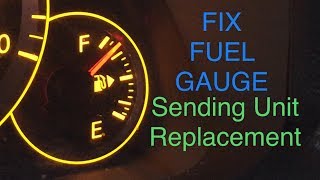
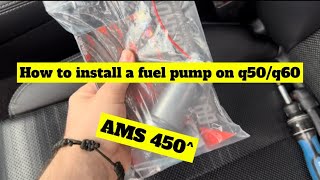
Helpful Videos


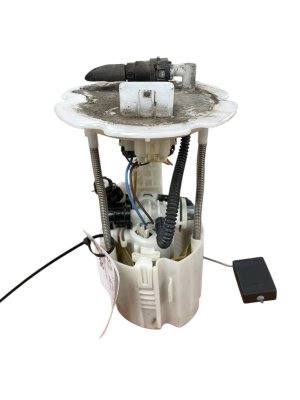
Used OEM Parts in Stock
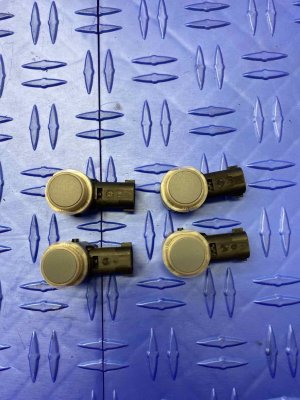
New Aftermarket Parts Available




The information in this article is provided for general reference and educational purposes only. Vehicle specifications, procedures, and part compatibility can vary by production date, trim level, and region. Always consult your vehicle's factory service manual and verify part numbers before purchasing or performing repairs. Safety-critical components such as airbags, seat belts, and braking systems should be installed by a qualified professional.
- Infiniti Q60:
- 🧭 Diagnostic Flowchart
- 🎬 Helpful Videos
- 🛍️ Shop This Part
- What's Unique About the 2017-2022 Infiniti Q60
- Symptoms You May Notice
- Most Likely Causes
- Rare But Worth Checking
- Diagnosis Steps
- Parts You'll Likely Need
- Related Codes That Often Appear With This One
- Technical Service Bulletins (TSBs) & Recalls
- Platform-Specific Known Issues
- Mechanic-Grade Diagnostic Values
- Scan Tool Commands That Help
- Wiring & Ground Locations
- Real Owner Repair Stories
- When the Usual Fixes Don't Work
- OEM Part Supersession History
- Model Year Variations Within This Range
- 🎟️ Get 5% Off