

P0460 on 2017-2024 Mazda CX-5: Fuel Level Sensor Circuit Malfunction Causes and Fixes
This code indicates a problem with the fuel level sensor circuit, causing an inaccurate fuel gauge. The most common cause is a faulty fuel level sending unit, which is part of the fuel pump module inside the gas tank. While the OEM part is costly (around $300-$450), a dealer repair can approach $800. Checking the wiring and connector at the tank is a crucial first step before replacing parts.
- P0460 means your car's computer is getting a bad signal from the fuel level sensor, making your fuel gauge unreliable.
- The most likely cause on a 2017-2024 CX-5 is a faulty fuel pump module, which contains the non-serviceable sensor. An OEM replacement part costs around $300-$450.
- Before replacing the expensive module, always check the wiring and connector under the rear seat for corrosion or damage, as this can be a simple fix.
- Some 2018-2019 models are covered by a recall (5321K) that replaces the entire fuel pump module for free, which will also fix this code.
What's Unique About the 2017-2024 Mazda CX-5
For the 2017-2024 Mazda CX-5, the fuel level sensor is integrated into the low-pressure fuel pump module, making it a single, relatively expensive unit to replace. AWD models feature a saddle-style fuel tank with two separate sending units (main and sub) to accurately measure fuel on both sides of the tank's 'hump'. While the code itself is common across many brands, certain 2018-2019 CX-5 models were part of a large recall (Mazda recall 5321K / NHTSA 21V-875) for faulty Denso low-pressure fuel pumps. The recall was for a cracking and deforming pump impeller that could cause stalling, not the level sensor specifically. However, the remedy is to replace the entire fuel pump module, which includes a new level sensor, permanently fixing any potential P0460 issue on those specific vehicles.
Generation note: The 2017-2024 model years all belong to the second generation (KF) of the Mazda CX-5. No significant differences related to this code have been noted within this generation, though some 2018-2019 models were included in a fuel pump recall which replaces the entire fuel pump and sender assembly. A key difference is that AWD models use a main and a sub fuel level sender to accommodate the saddle-shaped fuel tank.
Symptoms You May Notice
- Check Engine Light is on.
- Fuel gauge is inaccurate, erratic, fluctuating, or stuck on full or empty.
- Low fuel warning light may come on unpredictably or not at all.
- Distance-to-empty calculation on the trip computer is unreliable.
- Replacing the fuel pump when only the sending unit has failed. However, on the CX-5, these are sold as one assembly (e.g., part PYB1-13-35X), making this less of a misdiagnosis and more of a required replacement of the whole module.
Most Likely Causes
- Faulty Fuel Level Sending Unit 🔴 High Probability → Shop Fuel Tank Sending Unit The sending unit is a wear item. The resistive strip the float arm slides against can wear out, corrode, or develop open spots over time, leading to an incorrect signal. It is integrated with the fuel pump module on the CX-5. AWD models have a second 'sub' sender that can also fail.
How to confirm: Access the fuel pump module and test the sensor's resistance with a multimeter while moving the float arm. The resistance should change smoothly and be within the manufacturer's specified range. An infinite (open) or zero reading indicates failure. For the main sender, test between terminals D and C; for the sub sender (AWD), test between terminals B and A.
Typical fix: Replace the complete fuel pump module assembly.
Est. part cost: $280-$450 - Damaged Wiring or Corroded Connectors 🟡 Medium Probability The wiring harness leading to the fuel tank can be susceptible to damage or corrosion, especially the main connector on top of the fuel pump module which is often located under the rear seat. Rodent damage to wiring is also a known possibility.
How to confirm: Visually inspect the wiring harness from the PCM to the fuel tank. Unplug and inspect the connector on top of the fuel pump module for corrosion, moisture, or loose/bent pins. Perform a continuity test on the signal, ground, and power wires.
Typical fix: Repair the damaged section of the wire or clean/replace the corroded connector. One owner reported their intermittent P0460 code disappeared after simply ensuring the wiring was on tight.
Est. part cost: $5-$50
Rare But Worth Checking
- Instrument Cluster Malfunction: → Shop Instrument Cluster While rare, the gauge cluster itself can fail, preventing it from correctly displaying the information sent by the PCM. This is usually diagnosed after confirming the sensor and wiring are good.
- Powertrain Control Module (PCM) Failure: → Shop Engine Control Module (ECM) A failure of the internal PCM circuit that reads the fuel level sensor voltage is extremely rare but possible. This should be the last item to consider after all other possibilities have been exhausted.
Diagnosis Steps
- Read the code from the PCM using an OBD-II scanner to confirm P0460 is present. Check for related codes like P0461, P0462, or P0463, and diagnose them first if present.
- Observe the fuel gauge on the instrument cluster. Note if it is stuck, erratic, or clearly incorrect.
- Use a scan tool with live data to monitor the 'Fuel Level Sensor' voltage or percentage. See if the reading is stuck, irrational, or doesn't change when the vehicle is rocked side-to-side.
- Visually inspect the wiring harness and the main connector on top of the fuel pump module (usually under the rear seat) for any signs of damage, corrosion, or loose connections. Try unplugging and re-plugging the connector.
- If wiring appears intact, access the fuel level sensor. Disconnect it and use a multimeter to measure the resistance across the sensor's terminals.
- For the main sender, test across terminals D and C. For the sub sender (AWD models), test across terminals B and A.
- Manually move the float arm from empty to full. The resistance reading should change smoothly without any dropouts or spikes. Compare the empty and full resistance values to the specifications in a service manual.
- If the sensor fails the resistance test, it is faulty and the fuel pump module must be replaced. 🎬 Watch: How to test and replace a fuel level sensor
- If the sensor tests good, the fault lies in the wiring harness or, in very rare cases, the instrument cluster or PCM.
Parts You'll Likely Need
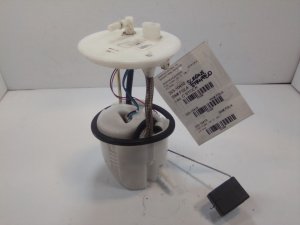
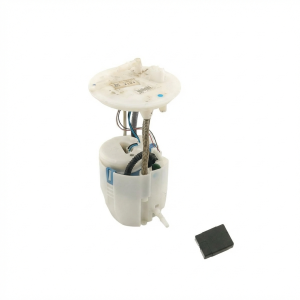
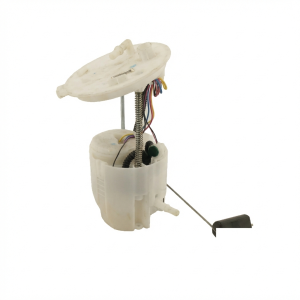
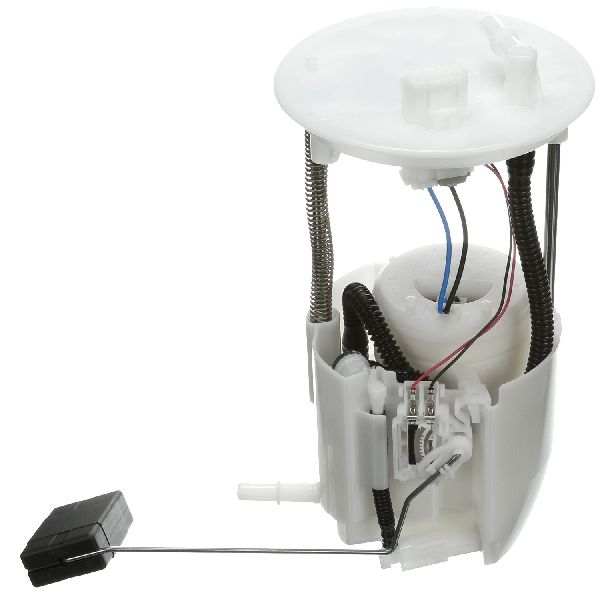
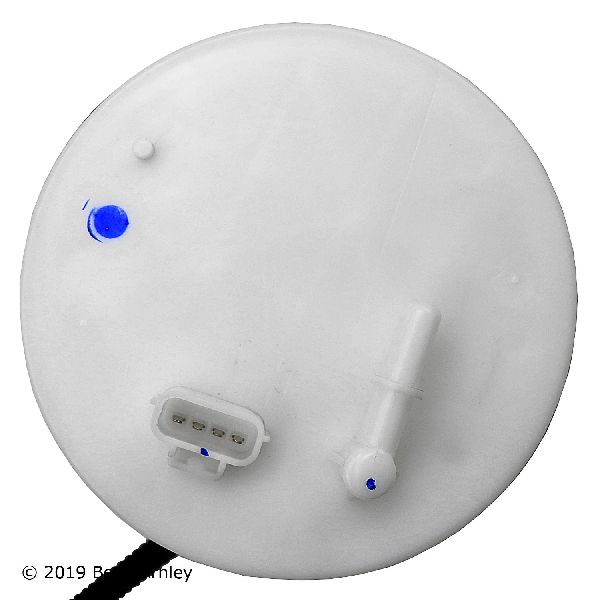
- Fuel Pump and Sender Assembly
(OEM #PYB1-13-35X (For 2.5L non-turbo))— This is the most common failure point. The sensor itself wears out, and on the CX-5 it is integrated with the fuel pump into a single module.
Trusted brands: Mazda (OEM), Delphi, Carter
OEM price range: $280 - $430
Aftermarket price range: $150 - $250
Related Codes That Often Appear With This One
- P0461 — Indicates the sensor signal is erratic or not performing within its expected range, often a precursor or companion to a full circuit failure (P0460).
- P0462 — Indicates the sensor circuit input is too low (short to ground). If seen with P0460, this should be diagnosed first.
- P0463 — Indicates the sensor circuit input is too high (open circuit). If seen with P0460, this should be diagnosed first.
Platform-Specific Known Issues
- Mazda Recall 5321K / NHTSA 21V-875: 🎬 See this video explaining the Mazda fuel pump recall Affects certain 2018-2019 CX-5 models for a faulty low-pressure fuel pump impeller made by Denso, which could cause the engine to stall. The repair involves replacing the entire fuel pump module, which includes the fuel level sensor, thereby resolving any P0460 issues.
Mechanic-Grade Diagnostic Values
- Fuel Level Sender Resistance (Main Sender) — expected: Resistance should change smoothly as the float is moved. Specific values for full and empty must be referenced from the Mazda service manual's table for the specific model year.. Failure: An infinite (open) or zero resistance reading, or a reading that jumps or doesn't change when the float is moved.
- Fuel Level Sender Resistance (Sub Sender - AWD Models) — expected: Resistance should change smoothly as the float is moved. Specific values for full and empty must be referenced from the Mazda service manual's table.. Failure: An infinite (open) or zero resistance reading, or a reading that jumps or doesn't change when the float is moved.
- Fuel Level Sensor Signal Voltage — expected: Typically around 0.5V when the tank is empty and 4.5V when the tank is full, with a smooth transition between.. Failure: Voltage is stuck at 0V, 5V, or does not change when fuel level changes.
Wiring & Ground Locations
- Fuel Pump Module Connector — On top of the fuel pump assembly, accessed by removing the rear seat cushion and an access panel.. This is the primary connection point for the fuel level sender. Terminals D & C (main sender) and B & A (sub sender, AWD) are used for resistance tests. The connector is a common point for corrosion or looseness.
- Fuel Pump Relay — Located in the relay and fuse block in the engine compartment.. While a failure here would typically cause a no-start condition (code P0230, P0231), a faulty relay could theoretically cause intermittent power issues to the fuel pump control module, which communicates with the sender.
Real Owner Repair Stories
- CarKiller Forums user (2014 Mazda CX-5 AWD, 120k miles) — Check Engine Light with code P0460.
✅ What actually fixed it The owner reported that after they "messed with the wiring to make sure it was on tight," the check engine light went off on its own. This strongly suggests the fault was a poor or intermittent connection at the fuel pump module connector.
Model Year Variations Within This Range
- 2017-2024 (AWD Models): All-Wheel Drive (AWD) models use a saddle-shaped fuel tank to accommodate the rear driveshaft. This requires two fuel level sending units: a 'main' unit integrated with the fuel pump and a 'sub' unit on the opposite side of the tank. A failure in either sender can trigger a P0460 code, and diagnosis requires testing both units.
Diagnostic Flowchart
Other Known Issues on This Vehicle
Issues unrelated to this code that are worth knowing about as an owner of this generation:
- Infotainment 'Ghost Touch' 🟠 Medium — Common on pre-2022 models. The touchscreen registers phantom inputs, changing settings or making calls randomly. (Ref: A service program (SSPB6) was issued for Mazda3 but not officially for CX-5, though the problem is identical. The common DIY fix is to disconnect the touchscreen digitizer ribbon, forcing reliance on the commander knob.)
- Cracked Cylinder Head (2.5L with Cylinder Deactivation) 🔴 High — A known, but not extremely widespread, issue primarily on 2018-2021 models with the naturally aspirated 2.5L engine featuring cylinder deactivation (CD). Can lead to coolant loss and engine failure. (Ref: No specific recall, but multiple TSBs exist related to engine issues on these models. Some owners report engine replacement under warranty.)
- Premature Brake Wear 🟡 Low — Owners frequently report needing to replace brake pads and rotors sooner than expected, sometimes under 40,000 km.
- Fuel-in-Oil Dilution (2.2 SkyActiv-D Diesel) 🔴 High — Common for diesel models used primarily for short trips, where the DPF regeneration process is frequently interrupted, causing diesel to mix with engine oil.
Used vs. New Parts: Buying Guide for This Vehicle
When a used part is the smart pick: Almost never. The fuel level sender is a wear-and-tear component and is integrated into the fuel pump module. The labor cost to access the in-tank unit is significant, making it unwise to install a used part with unknown remaining life. A used part should only be considered if it is from an extremely low-mileage wreck and the cost savings are substantial.
Donor-vehicle mileage cap: roughly under 40000 miles for the part to have meaningful remaining life.
What to inspect on the donor part:
- Verify the OEM part number on the used unit matches the required part for your vehicle (PYB1-13-35X for 2.5L non-turbo).
- Thoroughly inspect the electrical connector for any signs of heat damage, melting, or corrosion on the pins.
- Ensure the float arm is present, moves freely without binding, and is not bent or damaged.
- Check that the plastic housing is not cracked or brittle.
OEM-only on this vehicle (don't cheap out):
- Fuel Pump and Sender Assembly
Aftermarket brands forum-validated for this vehicle:
- Delphi
- Carter
Real Owner Stories
Aggregated from forums and TSBs cited above. Mileages and costs reflect what owners reported in those sources.
2023 Mazda CX-5 SE
Symptoms: Check Engine Light (CEL) came on with code P0460. The light would come and go unpredictably, staying on for a few days and then disappearing for weeks.
What fixed it: The owner reported the light eventually went away on its own after putting on more miles and has not returned for six months.
Source hint: r/CX5 - 2023 CX-5 CEL code P0460
2017 Mazda CX-5
Symptoms: P0460 code present; the 'kilometers to empty' display was extremely erratic, dropping from 400 to 0 in just a few seconds.
What fixed it: Replace the fuel sensor/fuel pump module.
Source hint: r/mazda - Engine light/ fuel sensor
2014 Mazda CX-5
Symptoms: P0460 fuel level sensor A circuit code.
What fixed it: Checked the wiring to the fuel tank to ensure it was tight; the check engine light went off on its own after securing the connection.
Source hint: CarKiller Forums - P0460 fuel level sensor A
Documented NHTSA Reports
Mazda Fuel Level Sensor Circuit Malfunction
Symptoms: An owner reported a P0460 fuel level sensor circuit issue where the engine malfunction light illuminated while the fuel sensor was failing to accurately reflect whether the car was full of fuel or not.
Source hint: NHTSA ODI #11644050
Related OBD-II Codes
Frequently Asked Questions
Is there a recall for my 2018-2019 Mazda CX-5 that might fix the P0460 code?
Where is the fuel level sensor located on the CX-5, and can I check the wiring myself?
My CX-5 is AWD; does it have more than one fuel level sensor?
What are the specific resistance test points for the CX-5 fuel sending unit?
Can a P0460 code affect my 'Distance-to-Empty' display on the dashboard?
If I have a 2023 CX-5 with an intermittent P0460, will the dealer fix it under warranty?
Helpful Videos

Used OEM Parts in Stock
New Aftermarket Parts Available

The information in this article is provided for general reference and educational purposes only. Vehicle specifications, procedures, and part compatibility can vary by production date, trim level, and region. Always consult your vehicle's factory service manual and verify part numbers before purchasing or performing repairs. Safety-critical components such as airbags, seat belts, and braking systems should be installed by a qualified professional.
- Mazda CX-5:
- 🧭 Diagnostic Flowchart
- 🎬 Helpful Videos
- 🛍️ Shop This Part
- What's Unique About the 2017-2024 Mazda CX-5
- Symptoms You May Notice
- Most Likely Causes
- Rare But Worth Checking
- Diagnosis Steps
- Parts You'll Likely Need
- Related Codes That Often Appear With This One
- Platform-Specific Known Issues
- Mechanic-Grade Diagnostic Values
- Wiring & Ground Locations
- Real Owner Repair Stories
- Model Year Variations Within This Range
- Other Known Issues on This Vehicle
- Used vs. New Parts: Buying Guide for This Vehicle
- Real Owner Stories
- 2023 Mazda CX-5 SE
- 2017 Mazda CX-5
- 2014 Mazda CX-5
- Documented NHTSA Reports
- Mazda Fuel Level Sensor Circuit Malfunction
- Related OBD-II Codes
- Frequently Asked Questions
- 🎟️ Get 5% Off