

P0460 on 2016-2017 Nissan JUKE: Fuel Level Sensor 'Slosh' Fault Explained
On a 2016-2017 Nissan JUKE, code P0460 is almost always caused by a faulty fuel level sensor. Nissan defines this as a 'SLOSH' error, meaning the signal is erratic. The fix is to replace the sensor, which is sold separately from the fuel pump assembly, for about $120-$150 for an OEM part (Part # 25060-1KM1A for AWD, 25060-1KM0A for 2WD).
- P0460 on your JUKE means the fuel level sensor is failing and giving erratic readings.
- You can continue driving, but your fuel gauge is not trustworthy. Track your mileage to avoid running out of gas.
- The most common fix is to replace the fuel level sensor, not the entire fuel pump assembly.
- An OEM replacement sensor (Part # 25060-1KM1A) is the recommended part and costs around $120-$150.
- This is a manageable DIY repair for those comfortable working with the fuel system, but requires accessing the fuel tank under the rear seat and replacing the fuel pump gasket.
What's Unique About the 2016-2017 Nissan JUKE
The key differentiator for this Nissan JUKE is the manufacturer's specific 'SLOSH' definition for P0460, which is documented in Technical Service Bulletin (TSB) NTB22-026. This bulletin acknowledges the fuel level sensor as a known issue across many Nissan models of this era, including the Juke. Unlike some vehicles where the sensor is permanently integrated, Nissan allows for the fuel level sensor to be replaced separately from the more expensive fuel pump assembly, which can save on repair costs. The TSB even warns dealerships that warranty claims for replacing the entire assembly for this issue will be rejected.
Diagnostic Flowchart
Tap your situation to follow the diagnostic path that matches what you're seeing on this vehicle.
Symptoms You May Notice
- Check Engine Light is on
- Fuel gauge is erratic, fluctuating, or stuck on full or empty.
- Inaccurate 'Distance to Empty' reading on the trip computer
- Low fuel warning light may illuminate with plenty of fuel in the tank, or not at all when the tank is empty.
- Replacing the entire fuel pump assembly when only the serviceable fuel level sensor has failed. The TSB specifically notes the sensor can be replaced separately to save cost.
- Replacing the instrument cluster before properly diagnosing the fuel level sensor and its circuit.
Most Likely Causes
- Faulty Fuel Level Sensor (Sending Unit) 🔴 High Probability → Shop Fuel Tank Sending Unit This is a known failure point acknowledged by Nissan in TSB NTB22-026. The internal variable resistor strip or its contacts wear out over time, causing the electrical signal to become erratic instead of smooth. Owners on various forums confirm this is the most common resolution.
How to confirm: Use a scan tool to monitor the fuel level sensor's live data; it will likely show erratic voltage or percentage readings that don't correspond to the actual fuel level. The definitive test is to remove the unit and measure its resistance with a multimeter while moving the float arm; the resistance should change smoothly, not jump or show an open circuit (OL). For many Nissan models, the expected resistance is approximately 4-6 ohms at Full and 78-82 ohms at Empty.
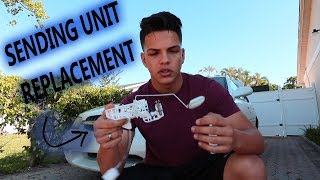
Typical fix: Replace the fuel level sensor. 🎬 See this walkthrough on replacing the fuel level sensor separately. It is located inside the fuel tank, attached to the fuel pump module, and can be accessed by removing the rear seat cushion.
Est. part cost: $120-$150 - Damaged Wiring or Corroded Connector ⚪ Low Probability The connector is located under the rear seat, making it susceptible to damage from spills or moisture if the access cover is not sealed properly. Corrosion on the connector pins can disrupt the signal.
How to confirm: Visually inspect the wiring harness and connector on top of the fuel tank access panel (usually under the rear seat) for any signs of corrosion, moisture intrusion, or physical damage. Perform a continuity test on the signal wire between the sensor and the ECM.
Typical fix: Clean the connector terminals with electrical contact cleaner or repair the damaged section of the wiring harness.
Est. part cost: $5-$50
Rare But Worth Checking
- Stuck or Damaged Float Arm: The float arm can get bent during a previous repair or become stuck due to debris in the tank, preventing it from moving with the fuel level. This can sometimes happen if a vehicle sits for a very long time.
- Faulty Instrument Cluster: → Shop Instrument Cluster In very rare cases, the gauge cluster itself can fail, causing incorrect readings even with a good sensor signal. This is sometimes seen on related platforms like the 350Z/G35, but should only be considered after the sensor and wiring have been proven to be good.
- Faulty Powertrain Control Module (PCM): → Shop Engine Control Module (ECM) This is extremely unlikely. The PCM should only be suspected if all other diagnostic steps have failed to identify the problem.
Diagnosis Steps
- Read the trouble codes with an OBD-II scanner to confirm P0460 is present.
- Observe the fuel gauge behavior. Note if it is stuck, erratic, or completely dead.
- Use the scanner to view live data for the 'Fuel Level Sensor' parameter. Rocking the vehicle or adding fuel should cause a smooth change in the reading. Erratic jumps or no change indicates a problem.
- Access the fuel pump assembly connector, typically located under the rear seat cushion after removing an access panel.
- Inspect the connector for corrosion, bent pins, or moisture.
- With the key on, backprobe the connector to check for the correct reference voltage being supplied to the sensor and test the signal wire for erratic voltage.
- If wiring seems okay, remove the fuel pump assembly from the tank. It is critical to replace the large O-ring/gasket for the fuel pump lock ring to prevent fuel leaks and fumes. 🎬 Watch: How to safely remove the in-tank fuel pump assembly.
- Disconnect the fuel level sensor from the assembly and test its resistance with a multimeter while manually moving the float arm from empty to full. The resistance should change smoothly throughout its range (e.g., ~80 Ohms empty to ~5 Ohms full). If it jumps, drops out, or reads open (OL), the sensor is bad.
- If the sensor and wiring test good, the problem may lie with the instrument cluster or PCM, but this is highly unlikely.
Parts You'll Likely Need
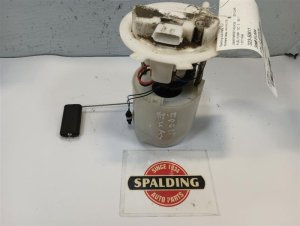
- Fuel Level Sensor / Fuel Tank Sending Unit
(OEM #25060-1KM1A)— This is the most common failure part for code P0460 on this vehicle, as confirmed by a Nissan TSB. It fits all 2011-2017 Juke models. NOTE: This part number is for All-Wheel Drive (AWD) models. 2WD models use part number 25060-1KM0A.
Trusted brands: Nissan (OEM)
OEM price range: $120-$150
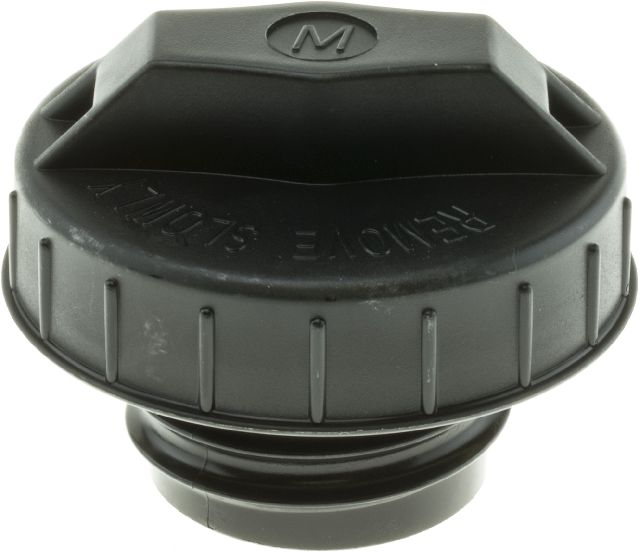
Aftermarket price range: $70-$110 - Fuel Pump Gasket / O-Ring
(OEM #17342-EM30A)— This seal must be replaced any time the fuel pump assembly is removed from the tank to ensure a proper seal and prevent dangerous fuel leaks and vapors.
Trusted brands: Nissan (OEM)
OEM price range: $25-$40
Aftermarket price range: $10-$20
Related Codes That Often Appear With This One
- P0461 — This code indicates 'Fuel Level Sensor Circuit Range/Performance,' which is closely related to the erratic signal of P0460 and is covered by the same TSB NTB22-026.
- P0462 — This code for 'Fuel Level Sensor Circuit Low Input' can be triggered if the failing sensor shorts or sends a signal below the expected range. It is also covered by TSB NTB22-026.
- P0463 — This code for 'Fuel Level Sensor Circuit High Input' can be triggered if the failing sensor has an open circuit or sends a signal above the expected range. It is also covered by TSB NTB22-026.
Technical Service Bulletins (TSBs) & Recalls
- NTB22-026: Addresses P0460, P0461, P0462, and P0463, indicating a potential issue with the fuel level sensor and confirming it can be replaced separately. It applies to a wide range of 2016-2022 Nissan vehicles.
Platform-Specific Known Issues
- Nissan issued Technical Service Bulletin NTB22-026 which covers the 2016-2017 JUKE for code P0460 ('FUEL LEV SEN SLOSH'), confirming it's a known issue and advising that the fuel level sensor can be replaced separately from the fuel pump assembly.
- A Reddit user with a 2014 Juke described the classic symptoms of this failure: the fuel gauge dropping to empty and the warning light flashing even with a full tank, which was an intermittent problem.
Mechanic-Grade Diagnostic Values
- Fuel Level Sensor Signal Voltage — expected: ~0.5 V (Empty) to ~4.5 V (Full). Failure: Voltage that is stuck, jumps erratically, or is outside the expected range.
- Fuel Level Sensor Resistance (General Nissan) — expected: ~4-6 Ohms (Full) and ~78-82 Ohms (Empty). Failure: Resistance is infinite (Open/OL), zero, or does not change smoothly when moving the float arm.
Scan Tool Commands That Help
- On-Board Diagnostics (No Tool Required): Combination Meter Self-Diagnosis Mode — To test the functionality of the instrument cluster's gauges, including the fuel gauge. This helps rule out a faulty gauge cluster if the sensor and wiring are known to be good. The procedure involves a specific sequence of turning the ignition and odo/trip meter switch.
Wiring & Ground Locations
- Fuel Pump Fuse (F20) — In the main fuse box located under the front hood, behind the battery and under the plastic air intake hose.. A blown fuse would cut power to the entire fuel pump assembly, including the level sensor, causing a loss of signal.
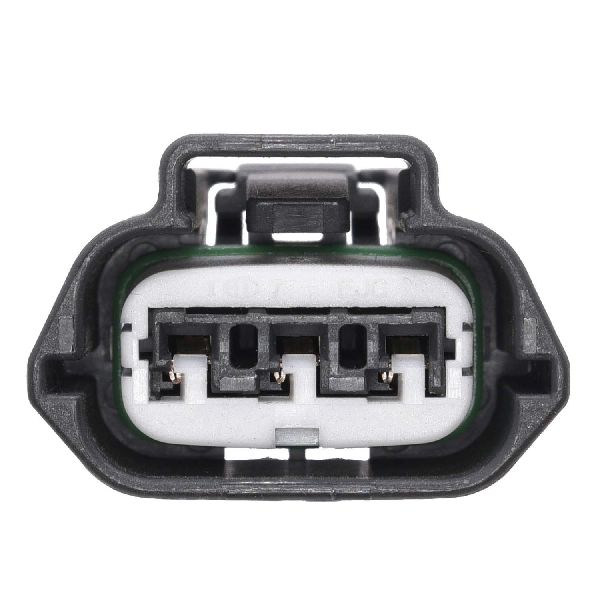
- Fuel Pump / Sending Unit Connector — On top of the fuel pump assembly, accessed from under the rear seat.. This 5-wire connector is the primary interface for the fuel level sensor. Corrosion or damage here is a common cause of the P0460 code.
OEM Part Supersession History
25060-1KM0A→N/A— N/A
Heads up: This part is for 2-Wheel Drive (2WD) models only.25060-1KM1A→N/A— N/A
Heads up: This part is for All-Wheel Drive (AWD) models only.
Helpful Videos



Used OEM Parts in Stock
New Aftermarket Parts Available


The information in this article is provided for general reference and educational purposes only. Vehicle specifications, procedures, and part compatibility can vary by production date, trim level, and region. Always consult your vehicle's factory service manual and verify part numbers before purchasing or performing repairs. Safety-critical components such as airbags, seat belts, and braking systems should be installed by a qualified professional.
- Nissan JUKE:
- 🧭 Diagnostic Flowchart
- 🎬 Helpful Videos
- 🛍️ Shop This Part
- What's Unique About the 2016-2017 Nissan JUKE
- Symptoms You May Notice
- Most Likely Causes
- Rare But Worth Checking
- Diagnosis Steps
- Parts You'll Likely Need
- Related Codes That Often Appear With This One
- Technical Service Bulletins (TSBs) & Recalls
- Platform-Specific Known Issues
- Mechanic-Grade Diagnostic Values
- Scan Tool Commands That Help
- Wiring & Ground Locations
- OEM Part Supersession History
- 🎟️ Get 5% Off