

P0460 on 2016-2022 Nissan Maxima: Fuel Level Sensor Circuit Malfunction Guide
On a 2016-2022 Nissan Maxima, P0460 almost always indicates a failed fuel level sensor in the gas tank. This causes an erratic or incorrect fuel gauge. A Nissan Technical Service Bulletin (NTB22-026) confirms this issue and clarifies that the sensor can be replaced separately from the more expensive fuel pump assembly. The repair involves accessing the top of the fuel tank, usually by removing the rear seat cushion.
- P0460 on a 2016-2022 Maxima almost always means the fuel level sensor has failed.
- Your primary symptom will be a Check Engine Light and an unreliable fuel gauge.
- Do not replace the entire fuel pump assembly. A Nissan TSB confirms the sensor (OEM Part # 25060-3TA0A) can be replaced by itself, which is much cheaper.
- You can continue driving but should track your mileage with the trip meter to avoid running out of fuel.
- The repair can be done by a DIYer with moderate skill by accessing the fuel tank from under the rear seat.
What's Unique About the 2016-2022 Nissan MAXIMA
For the 8th generation Maxima, this is a well-documented issue. Nissan issued a Technical Service Bulletin (NTB22-026) that directly addresses P0460 and related codes. The key takeaway from this bulletin is that the fuel level sensor is a separate, serviceable part. This is crucial because many repair shops might default to replacing the entire fuel pump assembly, a much more expensive repair. The TSB explicitly warns that warranty claims for a full assembly replacement for this issue will be charged back, reinforcing that only the sensor needs replacement.
Diagnostic Flowchart
Tap your situation to follow the diagnostic path that matches what you're seeing on this vehicle.
Symptoms You May Notice
- Check Engine Light is on
- Fuel gauge behaving erratically (e.g., jumping from full to empty)
- Fuel gauge stuck in one position (e.g., always on empty or full)
- Inaccurate 'Distance to Empty' reading on the trip computer
- Fuel warning light may come on unexpectedly or not at all. 🎬 Watch: A quick breakdown of P0460 causes and symptoms.
- Replacing the entire fuel pump assembly when only the fuel level sensor is needed. The TSB NTB22-026 specifically highlights that the sensor is a separate part.
- Replacing the instrument cluster before diagnosing the sensor and wiring.
Most Likely Causes
- Faulty Fuel Level Sensor 🔴 High Probability → Shop Fuel Tank Sending Unit This is a known high-failure part for this vehicle, as documented by Nissan TSB NTB22-026. The sensor's internal variable resistor wears out or gets contaminated by fuel additives or sulfur, leading to incorrect voltage signals.
How to confirm: Use a scan tool to monitor the fuel level sensor's live data while gently rocking the vehicle; if the reading is erratic, stuck, or doesn't change, the sensor is likely faulty. The definitive test is to remove the sensor and measure its resistance with a multimeter. For many Nissan models of this era, the expected resistance is approximately 4-6 Ohms when the float is in the 'Full' position and 77-83 Ohms when in the 'Empty' position. The reading must change smoothly without any jumps or dropouts as you move the float arm.
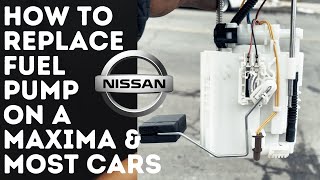
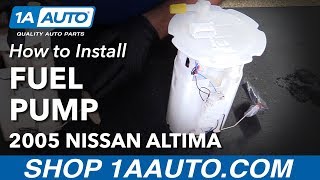
Typical fix: Replace the fuel level sensor. The sensor is located on the fuel pump assembly inside the fuel tank, accessible from under the rear seat cushion. The fuel tank O-ring (seal) must also be replaced at the same time to prevent leaks.
Est. part cost: $100-$200 - Damaged Wiring or Connectors 🟡 Medium Probability
How to confirm: Visually inspect the wiring harness leading to the fuel tank for any signs of corrosion, chafing, or physical damage. Check the connector on top of the fuel pump assembly for a secure connection and clean contacts. A poor ground connection is a common point of failure.
Typical fix: Repair the damaged section of wiring or clean/replace the faulty connector. Ensure the ground connection for the fuel pump assembly is clean and tight.
Est. part cost: $10-$50
Rare But Worth Checking
- Faulty Instrument Cluster: → Shop Instrument Cluster This is very rare. The gauge itself could be faulty, but this should only be considered after the sensor and wiring have been thoroughly tested and confirmed to be good. A diagnostic test can be run on the cluster to check its operation.
- Faulty Powertrain Control Module (PCM): → Shop Engine Control Module (ECM) This is extremely rare. A PCM failure is the last thing to suspect and should only be considered after all other possibilities have been exhausted by a professional.
Diagnosis Steps
- Read the trouble codes with an OBD-II scanner and confirm P0460 is present. 🎬 Watch: How to fix a P0460 code using fuel cleaner. Note any other related codes (P0461, P0462, P0463).
- Use a scan tool with live data capability to observe the 'Fuel Level Sensor' reading. The value is often displayed as a percentage, voltage, or resistance.
- Gently rock the vehicle side-to-side to make the fuel slosh. Observe the live data. The reading should change smoothly. If it jumps erratically, drops to zero, or doesn't move at all, the sensor is highly suspect.
- If possible, add a known quantity of fuel (e.g., 2-3 gallons) and observe if the live data reading changes appropriately. No change strongly suggests a faulty sensor.
- Inspect the wiring harness that runs to the fuel tank. Look for any obvious signs of damage, corrosion, or loose connections, paying close attention to the connector on the fuel pump sending unit.
- If wiring appears okay and the sensor signal is faulty, the next step is to access the fuel level sensor on top of the fuel tank. This typically requires removing the lower rear seat cushion.
- With the sensor removed, connect a multimeter set to Ohms to the sensor's signal and ground pins. Manually move the float arm up and down. The resistance reading should change smoothly without any dropouts or spikes. For this platform, expect a range similar to 4-83 Ohms (Full to Empty). If the reading is erratic, open (OL), or stuck, the sensor is bad and needs replacement.
- If the sensor tests good, the problem lies in the wiring or, very rarely, the instrument cluster or PCM.
Parts You'll Likely Need
- Fuel Level Sensor
(OEM #25060-3TA0A)— This is the most common failure part for code P0460 on this vehicle, as confirmed by a manufacturer TSB.
Trusted brands: Nissan (OEM), Dorman (e.g., 911-253)
OEM price range: $120-$180
Aftermarket price range: $80-$150 - Fuel Tank O-Ring / Seal
(OEM #17342-3TA0A (example, confirm with VIN))— This seal must be replaced whenever the fuel pump or sending unit is removed from the tank to prevent fuel leaks and evaporative emissions (EVAP) system leaks.
Trusted brands: Nissan (OEM)
OEM price range: $15-$30
Aftermarket price range: $10-$20
Related Codes That Often Appear With This One
- P0461 — This code ('Fuel Level Sensor Circuit Range/Performance') indicates the sensor's output is out of the expected range, often set along with P0460.
- P0462 — This code ('Fuel Level Sensor Circuit Low Input') indicates the sensor is sending a lower-than-expected voltage, often pointing to a short in the circuit or a faulty sensor.
- P0463 — This code ('Fuel Level Sensor Circuit High Input') indicates the sensor is sending a higher-than-expected voltage, often pointing to an open circuit or a faulty sensor.
Technical Service Bulletins (TSBs) & Recalls
- NTB22-026: Addresses P0460, P0461, P0462, and P0463, identifying the cause as a faulty fuel level sensor and confirming it is a separately replaceable part. It warns dealers that replacing the entire fuel pump assembly for this issue may result in warranty claim chargebacks.
Platform-Specific Known Issues
- Nissan Technical Service Bulletin NTB22-026 was issued for this code (and P0461, P0462, P0463), indicating a known issue with the fuel level sensor. It explicitly states the sensor can be replaced separately from the entire fuel pump assembly.
- Access to the fuel pump assembly, where the sensor is located, is under the rear passenger-side seat cushion. The cushion must be removed to access the service cover on the vehicle floor.
Mechanic-Grade Diagnostic Values
- Fuel Level Sensor Resistance — expected: Full Tank: ~4-6 Ω, Empty Tank: ~77-83 Ω. The resistance must sweep smoothly as the float arm is moved.. Failure: Readings are infinite (Open Line), 0 Ω (short), or jump erratically during the sweep test.
- Fuel Level Sensor Voltage (at Combination Meter) — expected: Full Tank: ~0.5V, Empty Tank: ~4.5V (on a 5V reference system).. Failure: Voltage is stuck, does not change with fuel level, or is outside the expected range (e.g., near 0V for a short, near 5V for an open).
Scan Tool Commands That Help
- Instrument Cluster: → Shop Instrument Cluster Gauge Cluster Self-Test / Sweep — To verify if the fuel gauge needle itself is physically capable of moving through its full range. If the needle sweeps correctly during the test, it confirms the gauge motor is working, pointing the diagnosis back towards the sensor or wiring. This test is often initiated with a specific sequence of key turns and button presses.
Wiring & Ground Locations
- Fuel Pump Assembly Connector — On top of the fuel pump assembly, located under an access cover beneath the rear passenger-side seat cushion.. This is the primary connection point for the fuel level sensor. All voltage and resistance tests for the sensor circuit begin here. Corrosion or loose pins at this connector are a common cause of circuit faults.
OEM Part Supersession History
25060-3TA0A→25060-3TA0A— No supersession found.
Heads up: This part number appears to be stable and consistently used across the entire 2016-2022 Maxima model range, as well as on several model years of the Nissan Altima. No significant revisions or incompatibility issues were noted in public parts catalogs.
Model Year Variations Within This Range
- 2019-2022: Nissan performed a mid-cycle refresh for the 2019 model year, which included updated exterior styling (grille, lights), new wheel designs, and the availability of the Nissan Safety Shield 360 package. However, the 3.5L V6 powertrain and fuel system components, including the fuel level sensor (part #25060-3TA0A), remained unchanged. Therefore, the diagnosis and repair for code P0460 are identical for all 2016-2022 model years.
Helpful Videos
![How to Fix P0460 Engine Code in 2 Minutes [1 DIY Method / Only $11.9]](https://img.youtube.com/vi/gt5sdWRXypk/mqdefault.jpg)
We Have This Part in Stock

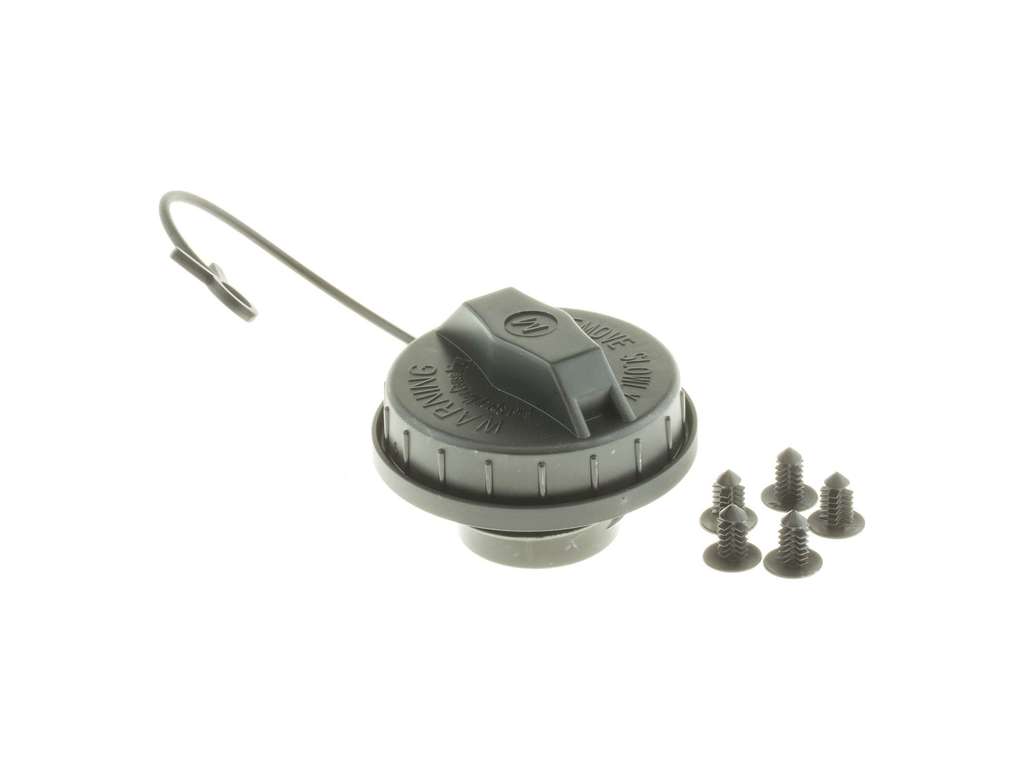
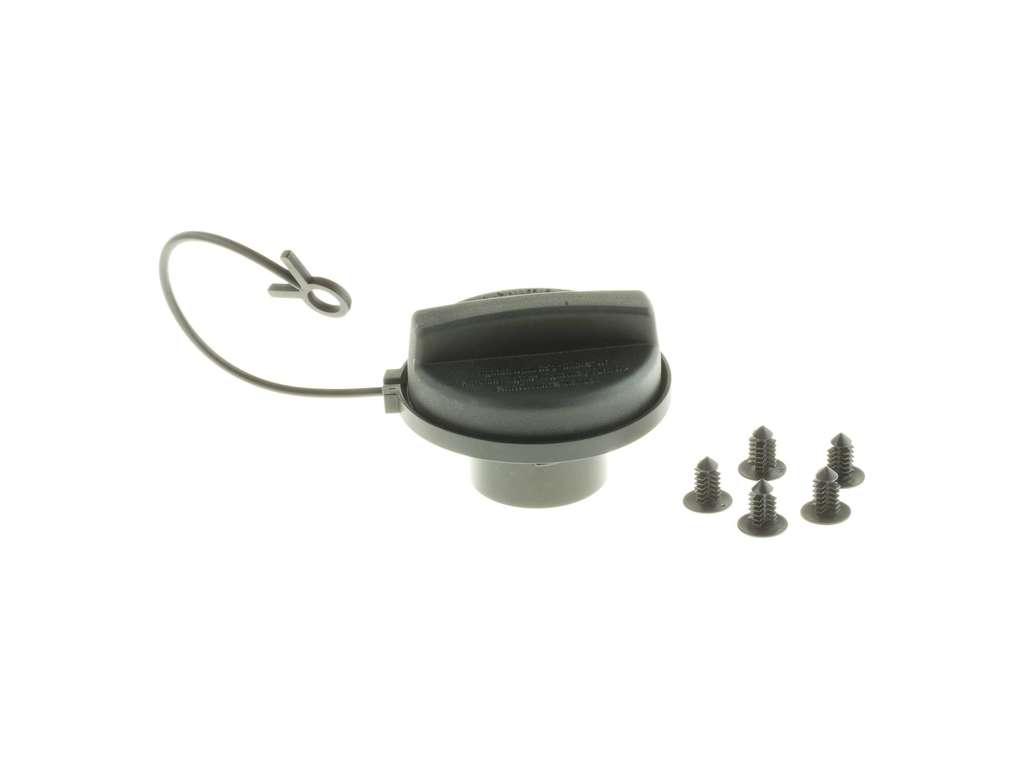
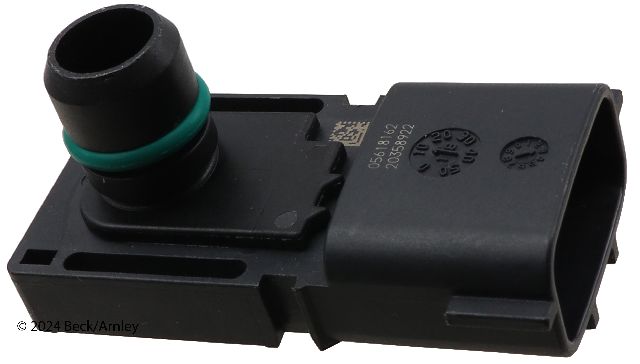

The information in this article is provided for general reference and educational purposes only. Vehicle specifications, procedures, and part compatibility can vary by production date, trim level, and region. Always consult your vehicle's factory service manual and verify part numbers before purchasing or performing repairs. Safety-critical components such as airbags, seat belts, and braking systems should be installed by a qualified professional.
- Nissan MAXIMA:
- 🧭 Diagnostic Flowchart
- 🎬 Helpful Videos
- 🛍️ Shop This Part
- What's Unique About the 2016-2022 Nissan MAXIMA
- Symptoms You May Notice
- Most Likely Causes
- Rare But Worth Checking
- Diagnosis Steps
- Parts You'll Likely Need
- Related Codes That Often Appear With This One
- Technical Service Bulletins (TSBs) & Recalls
- Platform-Specific Known Issues
- Mechanic-Grade Diagnostic Values
- Scan Tool Commands That Help
- Wiring & Ground Locations
- OEM Part Supersession History
- Model Year Variations Within This Range
- 🎟️ Get 5% Off