

P0460 on 2016-2018 Nissan NV200: Fuel Level Sensor 'Slosh' Error Causes and Fixes
On a 2016-2018 Nissan NV200, code P0460 almost always means the fuel level sensor has failed. Nissan confirms this with TSB NTB22-026. The fix is to replace only the sensor (~$100-$150), not the entire fuel pump assembly, which saves significant cost. Access is via a panel under the cargo floor mat behind the passenger seat.
- P0460 on a 2016-2018 NV200 almost certainly means your fuel level sensor has failed.
- You can continue driving, but you must track your mileage with the trip odometer to avoid running out of gas.
- Crucially, insist on replacing only the fuel level sensor (part # 25060-9SM0A) and the tank gasket, not the entire fuel pump assembly. This is the official Nissan-recommended fix and will save you hundreds of dollars.
- The repair is easier than on many vehicles because the fuel pump can be accessed via a panel in the cargo floor behind the passenger seat, so the tank does not need to be dropped.
- Always replace the fuel tank O-ring/gasket (part # 17342-1HJ0A) at the same time to prevent fuel leaks.
What's Unique About the 2016-2018 Nissan NV200
This is a very common and well-documented issue for the Nissan NV200 and its taxi variant. Nissan has issued Technical Service Bulletin (TSB) NTB22-026, which directly addresses P0460 and related codes for models up to 2022. The bulletin's key instruction is that technicians should replace only the fuel level sensor, which is available as a separate part, and not the entire, much more expensive, fuel pump assembly. The TSB even warns that warranty claims for replacing the whole assembly for this issue will be charged back, reinforcing the sensor-only fix. Unlike the larger NV vans, the NV200 has a service access panel in the cargo floor, making the repair much easier as the fuel tank does not need to be dropped.
Diagnostic Flowchart
Tap your situation to follow the diagnostic path that matches what you're seeing on this vehicle.
Symptoms You May Notice
- Check Engine Light is on
- Fuel gauge is inaccurate, erratic, or stuck (e.g., on full or empty)
- Fuel gauge needle swings rapidly or blinks.
- Distance-to-empty (DTE) display is incorrect or shows dashes.
- Low fuel warning light illuminates unpredictably or not at all.
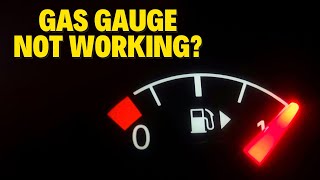
- Risk of running out of fuel unexpectedly. 🎬 See this breakdown of common causes for a broken gas gauge.
- Replacing the entire fuel pump assembly. Nissan TSB NTB22-026 specifically advises against this, as only the sensor is typically at fault and can be replaced separately. Shops unfamiliar with this TSB may quote a much higher repair cost for the full assembly.
Most Likely Causes
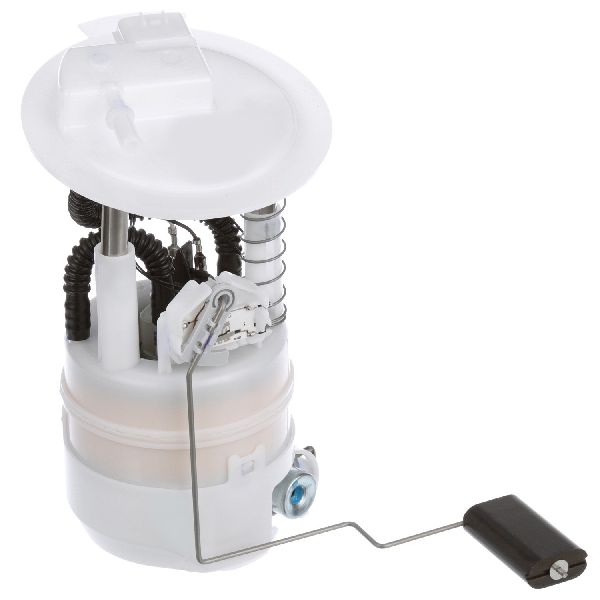
- Faulty Fuel Level Sensor (Sending Unit) 🔴 High Probability → Shop Fuel Tank Sending Unit This is a widely recognized failure on this platform, as documented by Nissan's own Technical Service Bulletin NTB22-026. The internal resistor on the sensor wears out over time, causing erratic readings. This issue is common enough that it also affects the rebadged Chevrolet City Express.
How to confirm: Use a scan tool to monitor the fuel level sensor voltage/resistance. If the values jump erratically without corresponding fuel level changes, the sensor is bad. An alternative is to test the sensor's resistance directly with a multimeter while moving the float arm; it should sweep smoothly through its range without dropouts. A user on a Nissan forum provides a good diagnostic flow: check for voltage at the cluster, then at the tank connector. If voltage is present, jumping the signal wire to the ground wire at the connector should make the gauge peg to full, confirming the sender is the fault.
Typical fix: Replace the fuel level sensor inside the fuel tank. The sensor can be purchased separately from the fuel pump assembly. The fuel pump housing O-ring/gasket should also be replaced. On the NV200, this is done by accessing a porthole in the cargo floor behind the passenger seat.
Est. part cost: $100-$150 - Damaged Wiring or Corroded Connectors ⚪ Low Probability While less common than sensor failure, the connector is located under the vehicle (via an access panel) and can be exposed to moisture if the panel seal is compromised, leading to corrosion.
How to confirm: Visually inspect the wiring harness and electrical connector at the top of the fuel pump assembly for any signs of corrosion, loose pins, or physical damage. Test for proper voltage and ground at the connector using a multimeter.
Typical fix: Repair or replace the damaged section of the wiring harness or clean/replace the connector.
Est. part cost: $10-$50
Rare But Worth Checking
- Faulty Instrument Cluster: → Shop Instrument Cluster This is very unlikely. Before suspecting the cluster, all other possibilities like the sensor and wiring should be thoroughly ruled out. A cluster self-test or gauge calibration procedure may be available and can help check gauge functionality. A faulty cluster is a possibility if there is no voltage on the signal wire at the cluster connector.
- Faulty Powertrain Control Module (PCM): → Shop Engine Control Module (ECM) PCM failure is extremely rare and should only be considered after every other possible cause has been eliminated by a professional technician.
Diagnosis Steps
- Scan the ECM for P0460 and any other related trouble codes. If P0462 or P0463 are present, troubleshoot them first.
- Perform an instrument cluster self-test to verify the gauge itself is functional. On many Nissans, this involves a sequence of holding the trip reset button while turning the ignition on. This will cause the needles to do a full sweep, confirming the gauge motor works.
- Use a scan tool with live data capability to monitor the fuel level sensor's output (often displayed as a voltage or percentage). Observe if the reading is erratic or does not match the approximate fuel level.
- Locate the fuel pump access panel. On the 2016-2018 NV200, it is in the cargo area, under the floor mat, behind the passenger seat. You may need to remove a few bolts and pry up a metal cover.
- Perform a visual inspection of the fuel pump module's electrical connector (B44) and wiring harness for any visible damage, corrosion, or loose connections.
- If wiring appears intact, disconnect the sensor and use a multimeter to test its resistance. Manually move the float arm through its full range of motion. The resistance reading should change smoothly without any dropouts or erratic jumps. Consult a service manual for the correct resistance specifications (reports for similar Nissans suggest a range of ~10 Ohms at Full to ~80 Ohms at Empty).
- If the sensor fails the resistance test, it is faulty and needs to be replaced.
- If the sensor tests good, the fault lies within the wiring harness or, very rarely, the instrument cluster or ECM.
Parts You'll Likely Need
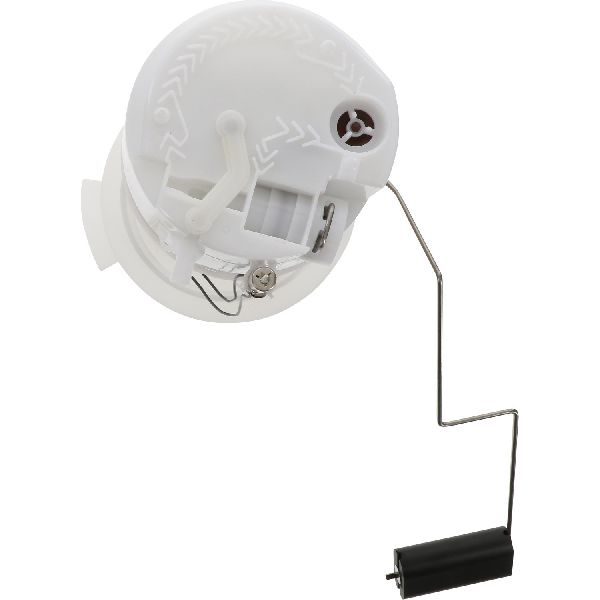
- Fuel Level Sensor
(OEM #25060-9SM0A)— This is the component that fails and causes the P0460 code, as confirmed by Nissan's service bulletin. The internal variable resistor wears out. This part number supersedes 25060-3LM0A and 25060-3LM0B.
Trusted brands: Nissan (OEM)
OEM price range: $100-$135
Aftermarket price range: $70-$110 - Fuel Pump Gasket / O-Ring
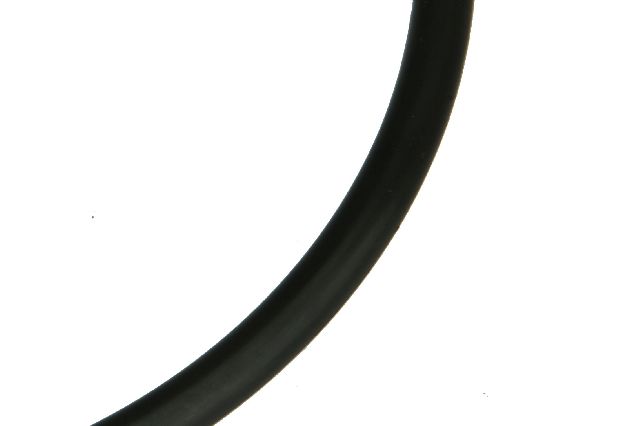
(OEM #17342-1HJ0A)— This seal must be replaced any time the fuel pump module is removed from the tank to prevent dangerous fuel leaks and future EVAP system codes. It is considered a mandatory replacement part for this job.
Trusted brands: Nissan (OEM)
OEM price range: $15-$25
Aftermarket price range: $10-$20
Related Codes That Often Appear With This One
- P0461 — This code indicates a 'Fuel Level Sensor Circuit Range/Performance' issue. It is often stored alongside P0460 as both relate to implausible signals from the same sensor.
- P0462 — This code indicates 'Fuel Level Sensor Circuit Low Input'. It can be triggered if the failing sensor's signal shorts to ground.
- P0463 — This code indicates 'Fuel Level Sensor Circuit High Input'. It can be triggered if there is an open in the failing sensor's circuit.
Technical Service Bulletins (TSBs) & Recalls
- NTB22-026: 'SERVICE INFORMATION FOR FUEL GAUGE INACCURATE WITH DTCS STORED IN ECM' - Confirms P0460 (FUEL LEV SEN SLOSH) is a known issue and advises replacing only the fuel level sensor, not the entire fuel pump assembly. It explicitly warns that warranty claims for the full assembly will be charged back.
Platform-Specific Known Issues
- Nissan issued TSB NTB22-026 specifically for this issue, confirming it's a known problem and advising the cost-saving repair of replacing only the sensor.
- Another bulletin, NTB21-004A, also reinforces that the fuel level sensor is a separate service part for the NV200.
- Unlike the larger Nissan NV vans (NV1500/2500/3500), the NV200 has a fuel pump access panel in the cargo floor, which makes this repair significantly easier and cheaper as it avoids the need to drop the fuel tank.
- A YouTube video by a Nissan technician confirms the access port location behind the passenger seat and shows how to access it by removing a few bolts and cutting the carpet if necessary.
Mechanic-Grade Diagnostic Values
- Fuel Level Sensor Resistance — expected: A smooth sweep between approximately 10 Ohms (Full) and 80 Ohms (Empty). Some sources suggest ranges like ~31-247 Ohms or ~51-300 Ohms for different Nissan models, but the key is a smooth, linear change without dropouts.. Failure: An open circuit (OL on multimeter), infinite resistance, or erratic jumps in the reading as the float arm is moved.
- Fuel Level Sensor Signal Voltage (at PCM/ECM) — expected: Approximately 0.5V (Empty) to 4.5V (Full). The voltage should change smoothly as the fuel level changes.. Failure: Voltage that is stuck, jumps erratically, or is outside the expected range.
Scan Tool Commands That Help
- Nissan CONSULT-II / CONSULT-III plus: Instrument Cluster Self-Test — To quickly verify that the fuel gauge motor and instrument cluster are functioning correctly. The test commands a full sweep of all gauges, ruling out a faulty gauge if it moves properly.
- Nissan CONSULT-II / CONSULT-III plus: Work Support > Fuel Pump Relay — While not directly for the level sensor, this bidirectional test allows a technician to cycle the fuel pump relay. This can help verify power and ground integrity to the fuel pump assembly, which shares a connector and ground path with the level sensor.
Wiring & Ground Locations
- B44 — On top of the fuel tank, accessible through the interior floor panel behind the passenger seat.. This is the 5-pin, gray harness connector for the 'Fuel level sensor unit and fuel pump unit'. It is the primary point for electrical testing (voltage, ground, and signal continuity) for the entire assembly. Corrosion or loose pins here are a common cause of the P0460 code.
- Body Grounds (General) — Common Nissan ground points are located behind the driver/passenger kick panels, under the seats, and on the firewall in the engine bay.. A poor ground connection for the fuel pump assembly or the instrument cluster can cause erratic voltage readings and trigger a P0460 code. Verifying clean and secure grounds is a key diagnostic step if the sensor and wiring test good.
OEM Part Supersession History
25060-3LM0A, 25060-3LM0B→25060-9SM0A— Part revision and consolidation by the manufacturer.
Heads up: The newer part number 25060-9SM0A is the correct replacement for the earlier parts on this vehicle.
Model Year Variations Within This Range
- 2016: The IPDM (Intelligent Power Distribution Module) part number changed in February 2016 from 284B7-3LN0A to 284B7-4AJ0A. While unlikely to be related to P0460, it's a known electrical system change within this model year range.
Helpful Videos
![How to Fix P0460 Engine Code in 2 Minutes [1 DIY Method / Only $11.9]](https://img.youtube.com/vi/gt5sdWRXypk/mqdefault.jpg)
We Have This Part in Stock



The information in this article is provided for general reference and educational purposes only. Vehicle specifications, procedures, and part compatibility can vary by production date, trim level, and region. Always consult your vehicle's factory service manual and verify part numbers before purchasing or performing repairs. Safety-critical components such as airbags, seat belts, and braking systems should be installed by a qualified professional.
- Nissan NV200:
- 🧭 Diagnostic Flowchart
- 🎬 Helpful Videos
- 🛍️ Shop This Part
- What's Unique About the 2016-2018 Nissan NV200
- Symptoms You May Notice
- Most Likely Causes
- Rare But Worth Checking
- Diagnosis Steps
- Parts You'll Likely Need
- Related Codes That Often Appear With This One
- Technical Service Bulletins (TSBs) & Recalls
- Platform-Specific Known Issues
- Mechanic-Grade Diagnostic Values
- Scan Tool Commands That Help
- Wiring & Ground Locations
- OEM Part Supersession History
- Model Year Variations Within This Range
- 🎟️ Get 5% Off