

P0460 on 2004-2015 Nissan Titan: Fuel Gauge Inaccuracy Causes and Fixes
On a 2004-2015 Nissan Titan, code P0460 is almost always caused by a faulty fuel level sending unit in the gas tank. This is a very common failure, leading to an inaccurate fuel gauge and the risk of running out of gas. The fix is to replace the sending unit, which is part of the fuel pump module. A widespread recall (10V074000) addressed this for 2005-2009 models, but 2004 models with the identical failure were excluded.
- P0460 on your Titan almost certainly means the fuel level sending unit has failed.
- Do not trust your fuel gauge. Use your trip meter to track fuel and avoid being stranded.
- A recall (10V074000) was issued for this exact problem on 2005-2009 models; check if your VIN is covered.
- The repair is labor-intensive. It's strongly recommended to replace the entire fuel pump assembly while the tank is accessed.
- 2004 models suffer from the same defect but are not covered by the recall, requiring an owner-funded repair.
What's Unique About the 2004-2015 Nissan Titan
The first-generation Nissan Titan is notorious for fuel sending unit failures. The problem was so widespread that Nissan issued a safety recall (10V074000) for 2005-2009 models due to the risk of running out of fuel unexpectedly when the gauge still showed a quarter tank. The recall involved replacing the fuel sender unit with an improved part. Owners of 2004 models have reported the exact same issue, filing numerous complaints with the NHTSA, but their VINs were not included in the official recall, causing significant frustration.
Symptoms You May Notice
- Inaccurate or erratic fuel gauge (most common symptom)
- Fuel gauge stuck at a specific level (e.g., full, empty, or 1/4 tank).
- Check Engine Light is on
- Running out of fuel unexpectedly while the gauge indicates fuel is present.
- Low fuel warning light may illuminate at incorrect times or not at all.
- Fuel gauge reading fluctuates rapidly while driving or idling.
- Replacing the instrument cluster without first testing the fuel sending unit.
- Replacing the fuel pump without replacing the attached sending unit, only to find the gauge problem persists.
- Assuming the issue is a faulty fuel pump when only the sending unit has failed.
Most Likely Causes
- Faulty Fuel Level Sending Unit 🔴 High Probability → Shop Fuel Tank Sending Unit The contacts on the sensor's variable resistor wear out or become corroded over time, often attributed to sulfur content in fuel. This causes an incorrect or open circuit in the signal sent to the ECM. This is a widely documented failure on this platform, leading to recall 10V074000 for some model years.
How to confirm: Perform an instrument cluster self-test to rule out the gauge itself. The definitive test is to access the fuel pump assembly, disconnect the sensor, and measure its resistance with a multimeter while manually moving the float arm. The resistance should change smoothly from approximately 2-5 ohms (Full) to 80-83 ohms (Empty). Any jumps, erratic readings, or an open circuit (OL) confirm a bad sensor.
Typical fix: Replace the fuel level sending unit. Since this requires dropping the fuel tank or removing the truck bed, it is highly recommended to replace the entire fuel pump module assembly at the same time, as the pump is also a common failure item. Always replace the fuel tank gasket/seal to prevent leaks.
Est. part cost: $80-$200 for the sending unit alone; $150-$400 for a complete fuel pump assembly (aftermarket).
Rare But Worth Checking
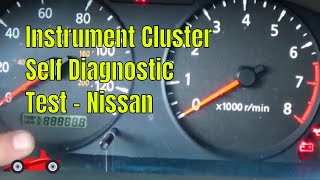
- Faulty Instrument Cluster: → Shop Instrument Cluster While possible, this is much less common than a sending unit failure. The cluster has a self-diagnostic mode that can be activated to test the gauges. If the fuel gauge sweeps correctly during the test, the cluster is likely not the problem. In some rare cases on Nissan platforms, a faulty power module on the back of the cluster has been known to cause starting issues that mimic other failures. A faulty cluster can still be the cause even if the gauge sweeps correctly in the self-test; this indicates a failure in the cluster's internal processing logic, not the gauge motor itself. 🎬 Watch this guide on diagnosing Nissan cluster and gauge failures.
- Damaged Wiring or Connectors: A break, corrosion, or short in the wiring between the fuel tank and the ECM/instrument cluster could cause the P0460 code. This is worth investigating if a new sending unit does not resolve the issue, paying close attention to the harness connector at the top of the fuel pump assembly.
Diagnosis Steps
- Verify the P0460 code is present using an OBD-II scanner.
- Check for any related recalls for your vehicle's VIN. Recall 10V074000 (Nissan Campaign ID R1010) applies to many 2005-2009 models.
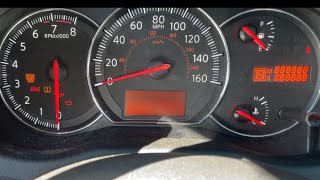
- Perform the instrument cluster self-test. 🎬 Watch this quick video on how to run the self-test. Turn the ignition off, press and hold the trip reset button, turn the ignition to ON (don't start), and continue holding the button until 'TEST' appears on the odometer. Release the button and press it again to cycle through tests until the gauges sweep. If the fuel gauge moves smoothly, the cluster is likely good.
- If the cluster test passes, the fuel sending unit is the primary suspect.
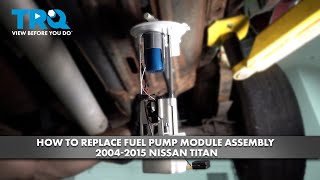
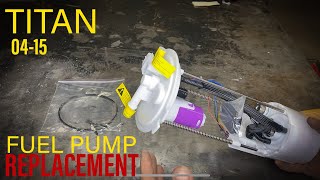
- Gain access to the top of the fuel tank. Many owners on forums prefer removing the six bolts holding the truck bed and tilting/sliding it back over dropping the heavy 🎬 See this video for helpful tips on replacing the assembly. and potentially full fuel tank.
- Inspect the wiring and connector at the fuel pump assembly for any visible damage or corrosion.
- Test the resistance of the fuel level sensor with a multimeter. Disconnect the sensor and measure the resistance between the signal and ground pins while moving the float arm. The resistance should change smoothly from approx. 2-5 ohms at full to 80-83 ohms at empty. An erratic reading or an open circuit (OL) confirms the sensor is bad.
- If the sensor and wiring test good, the issue may be a rare fault within the ECM, but this is highly unlikely.
Parts You'll Likely Need
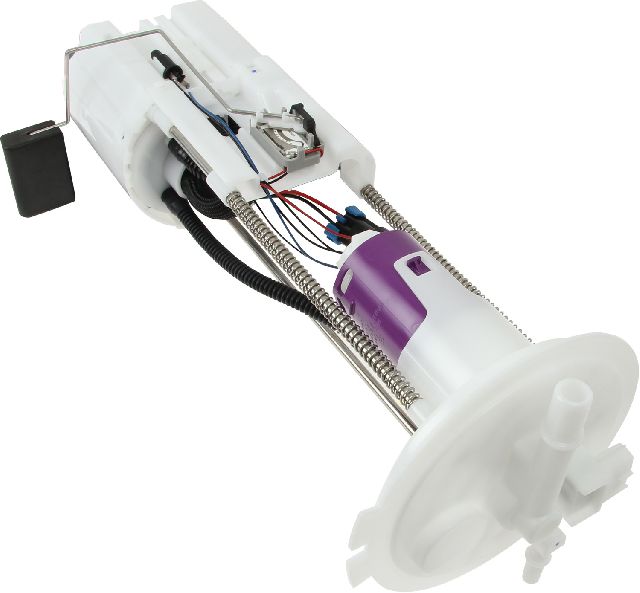
- Fuel Pump Module Assembly — This is the most comprehensive fix. It includes the new fuel pump, fuel level sending unit, and strainer, addressing all common failure points at once. Given the high labor involved, this is the recommended repair.
Trusted brands: Bosch, Delphi, Spectra Premium, Nissan OEM
OEM price range: $400-$600
Aftermarket price range: $150-$400 - Fuel Level Sending Unit
(OEM #25060-ZQ60A (superseded by 25060-ZQ60E))— This is the specific part that fails and causes the P0460 code. It can be replaced separately, but it's often wise to replace the whole assembly. Note: Part numbers vary by year and flex-fuel (FFV) vs. non-flex-fuel; always verify with VIN.
Trusted brands: Nissan OEM, Dorman, Standard Motor Products
OEM price range: $120-$200
Aftermarket price range: $75-$150 - Fuel Tank Gasket / Seal
(OEM #17342-7S000)— This seal is critical for preventing fuel leaks and EVAP system codes. It must be replaced anytime the fuel pump assembly is removed from the tank.
Trusted brands: Nissan OEM
OEM price range: $25-$40
Aftermarket price range: $15-$30
Related Codes That Often Appear With This One
- P0461: Fuel Level Sensor Circuit Range/Performance
- P0462: Fuel Level Sensor Circuit Low Input
- P0463: Fuel Level Sensor Circuit High Input
Technical Service Bulletins (TSBs) & Recalls
- NTB10-037A: Details the service procedure for the 10V074000 recall, confirming the fix is to replace the fuel level sending unit.
- TSB Bulletin #NTB22-026: Specifically addresses P0460 (Fuel Level Sensor Slosh) and related codes, noting that while the fuel level sensor can be replaced separately, the recommended repair may involve the entire fuel level sensor unit, fuel filter, and fuel pump assembly.
Platform-Specific Known Issues
- Nissan Safety Recall 10V074000 was issued for 2005-2009 models for an inaccurate fuel gauge that could lead to the vehicle running out of fuel.
- Owners of 2004 models have filed numerous complaints for the exact same failure, but their vehicles were not included in the recall.
- Technical Service Bulletin NTB10-037A (Campaign ID R1010) provides dealers with the procedure for replacing the fuel level sending unit under the recall.
Mechanic-Grade Diagnostic Values
- Fuel Level Sensor Resistance — expected: Approx. 2-5 Ohms (Full) to 80-83 Ohms (Empty).. Failure: Readings are erratic, jump, show an open circuit (OL), or are outside the specified range.
- Fuel Level Sensor Signal Wire Voltage (at pump connector) — expected: Variable voltage that changes with fuel level. Should be referenced against a stable 5V supply from the ECM/BCM.. Failure: Voltage is stuck at 0V or 5V, or does not change when rocking the vehicle to slosh fuel.
Scan Tool Commands That Help
- Instrument Cluster: → Shop Instrument Cluster Self-Diagnostic Test Mode ('TEST' on odometer) — This is the primary method to rule out a faulty gauge motor in the instrument cluster. Activating the test will cause all needles to do a full sweep. If the fuel gauge needle moves smoothly from empty to full and back, the motor is likely good, pointing towards the sending unit or wiring.
Wiring & Ground Locations
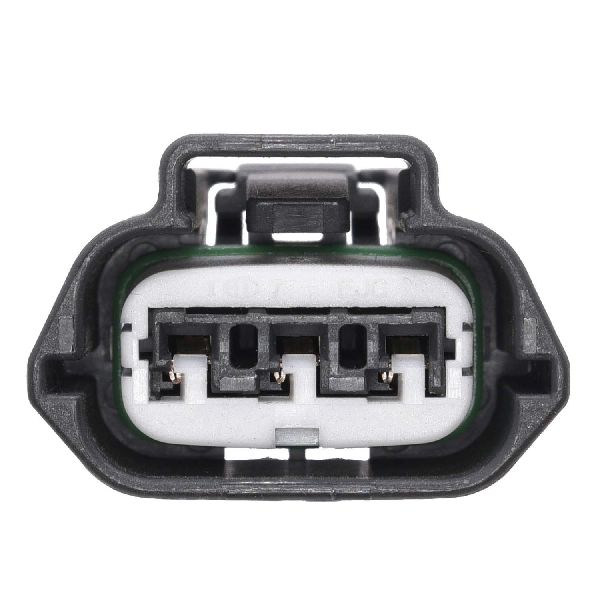
- Fuel Pump Module Connector — On top of the fuel tank, under the truck bed.. This is the main connector for the fuel pump and sending unit. The fuel level sensor signal wires are on pins 4 and 5. The solid black wire is a primary ground. Testing for resistance and voltage at these pins is the most direct way to diagnose the circuit.
- Chassis Grounds (M57, M61) — M57 is behind the left side of the dash. M61 is behind the center of the dash.. These are major ground distribution points for many interior components, including the instrument cluster and related modules. A poor ground at these locations can cause a variety of erratic electrical issues, including incorrect gauge readings.
- Engine Compartment Grounds (E15, E24) — E15 is on the right side of the engine compartment. E24 is on the left front of the engine compartment.. These are primary grounds for the ECM and other engine-related systems. While less likely to be the direct cause, verifying these grounds are clean and tight is good practice when diagnosing any electrical fault code.
Real Owner Repair Stories
- Reddit user NarcolepticSleepr (2008 Nissan Titan LE) — Ran out of gas and stalled while the fuel gauge showed almost half a tank. After refueling, the tank took 26 gallons.
❌ Tried (didn't work) Searching for instrument cluster reset procedures.
✅ What actually fixed it The user was advised by others that the fuel sending unit corrodes and fails constantly, and the definitive fix is to replace the fuel pump module assembly, which includes the sending unit. - Reddit user Substantial-Fox-4838 (Nissan Titan (year not specified, but first generation)) — Fuel gauge would stop moving above a quarter tank, causing the truck to run out of gas unexpectedly.
❌ Tried (didn't work) Replaced the fuel pump and relay once; the problem persisted., The shop then replaced the pump again, assuming the first replacement was faulty, but the problem remained (gauge now stuck at half a tank).
✅ What actually fixed it The issue was not resolved in the thread, but the story serves as a cautionary tale that the problem is squarely with the sending unit/pump assembly and that even new aftermarket parts can be defective or fail to solve the problem if they are of low quality.
OEM Part Supersession History
25060-ZQ60A→25060-ZQ60E— Improved design to address the premature wear and corrosion that caused the widespread gauge failures.
Model Year Variations Within This Range
- 2004-2015: Flex Fuel (FFV) vs. non-Flex Fuel models require different fuel pump module assemblies. FFV vehicles are designed to handle higher ethanol content and have compatible components. Installing a non-FFV pump in an FFV truck (or vice-versa) can lead to premature failure or incorrect readings. An FFV Titan can often be identified by the 4th character of the VIN being a 'B'.
- 2004 vs 2005-2009: The 2005-2009 model years were covered by Nissan Safety Recall 10V074000 for this exact issue. 2004 models, despite suffering from the identical failure, were excluded from the recall, meaning owners must pay for the repair out-of-pocket.
Diagnostic Flowchart
Other Known Issues on This Vehicle
Issues unrelated to this code that are worth knowing about as an owner of this generation:
- Cracked Exhaust Manifolds 🔴 High — Very common, often occurring between 80,000 and 120,000 miles. Caused by a design flaw leading to heat stress cracks. Results in a loud ticking noise, especially when cold. (Ref: No recall, but a well-known issue. The catalytic converter is integrated, making OEM replacement very expensive (~$2,000+).)
- Rear Axle Seal Leaks 🟠 Medium — Common failure due to a lack of a proper differential vent, causing pressure buildup that pushes fluid past the seals. Can lead to differential damage if not addressed. (Ref: Multiple TSBs issued. For 2004-2007 models, Nissan released an updated axle design. A common owner modification is to add a differential breather hose.)
- IPDM E/R (Intelligent Power Distribution Module) Failure 🔴 High — The internal ECM relay is a known failure point, causing intermittent no-start/no-crank conditions, stalling while driving, and rough idling. (Ref: A voluntary service campaign (PC068 / NTB10-137) was issued for 2004-2006 models to replace the faulty ECM relay.)
- Transmission Cooler / Radiator Failure ('SMOD') 🔴 High — The internal transmission cooler within the radiator can crack, allowing coolant and transmission fluid to mix. This is known as 'Strawberry Milkshake of Death' (SMOD) and quickly destroys the transmission. (Ref: No recall, but a widely known issue. Proactive fix is to bypass the radiator cooler with an external transmission cooler.)
Used vs. New Parts: Buying Guide for This Vehicle
When a used part is the smart pick: For repairing a P0460 code, a used fuel sending unit or complete fuel pump assembly is NEVER a smart choice. The failure is caused by wear on the sender's resistor card, a known high-failure part. A used part from a junkyard is highly likely to have the same wear and will either be faulty on arrival or fail shortly after installation, forcing you to repeat the high-labor repair.
What to inspect on the donor part:
- Not applicable, as buying this part used is strongly discouraged.
OEM-only on this vehicle (don't cheap out):
- Fuel Level Sending Unit / Fuel Pump Assembly
Aftermarket brands forum-validated for this vehicle:
- Delphi
- Bosch
Brands owners have reported issues with on this vehicle:
- Unbranded, low-cost assemblies from online marketplaces are a significant gamble. Owners have reported issues with new aftermarket parts that were faulty out of the box, leading to repeat repairs. Given the labor involved, it is not worth the risk.
Real Owner Stories
Aggregated from forums and TSBs cited above. Mileages and costs reflect what owners reported in those sources.
2011 Nissan Titan Pro-4X
Symptoms: Fuel gauge showed 1/4 tank but the tank was dry, leading to running out of fuel. The 'Distance to Empty' computer was also inaccurate, showing 90 miles of range when the tank was empty.
What fixed it: The user identified the fuel level sensor as the necessary repair.
Source hint: reddit.com - My fuel gauge is full but my fill to empty range is not updating. Any fixes?
2008 Nissan Titan LE
Symptoms: The engine suddenly cut off while driving because the fuel tank was empty, despite the gauge indicating there was still fuel.
What fixed it: Replacement of the fuel level sending unit.
Source hint: r/NissanTitan
2004 Nissan Titan
Symptoms: Inaccurate fuel gauge leading to running out of gas unexpectedly; owner expressed frustration that the 2004 model was excluded from the official recall.
What fixed it: Replacement of the fuel level sending unit.
Source hint: CarComplaints.com
Related OBD-II Codes
Frequently Asked Questions
Is there a recall for the fuel gauge issue on my 2005-2009 Nissan Titan?
My 2004 Titan has the same fuel gauge failure; is it covered under the R1010 recall?
How can I tell if the P0460 code is caused by the gauge cluster or the sending unit?
What is the specific fix recommended in TSB NTB10-037A?
Should I replace the whole fuel pump if I only have a P0460 code?
What resistance should I see when testing the Titan's fuel level sensor?
Helpful Videos
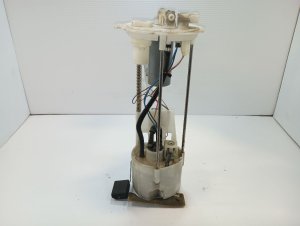
Used OEM Parts in Stock
New Aftermarket Parts Available


The information in this article is provided for general reference and educational purposes only. Vehicle specifications, procedures, and part compatibility can vary by production date, trim level, and region. Always consult your vehicle's factory service manual and verify part numbers before purchasing or performing repairs. Safety-critical components such as airbags, seat belts, and braking systems should be installed by a qualified professional.
- Nissan Titan:
- 🧭 Diagnostic Flowchart
- 🎬 Helpful Videos
- 🛍️ Shop This Part
- What's Unique About the 2004-2015 Nissan Titan
- Symptoms You May Notice
- Most Likely Causes
- Rare But Worth Checking
- Diagnosis Steps
- Parts You'll Likely Need
- Related Codes That Often Appear With This One
- Technical Service Bulletins (TSBs) & Recalls
- Platform-Specific Known Issues
- Mechanic-Grade Diagnostic Values
- Scan Tool Commands That Help
- Wiring & Ground Locations
- Real Owner Repair Stories
- OEM Part Supersession History
- Model Year Variations Within This Range
- Other Known Issues on This Vehicle
- Used vs. New Parts: Buying Guide for This Vehicle
- Real Owner Stories
- 2011 Nissan Titan Pro-4X
- 2008 Nissan Titan LE
- 2004 Nissan Titan
- Related OBD-II Codes
- Frequently Asked Questions
- 🎟️ Get 5% Off