

P0460 on 2016-2022 Nissan Versa: Fuel Gauge Problems and Sensor Fixes
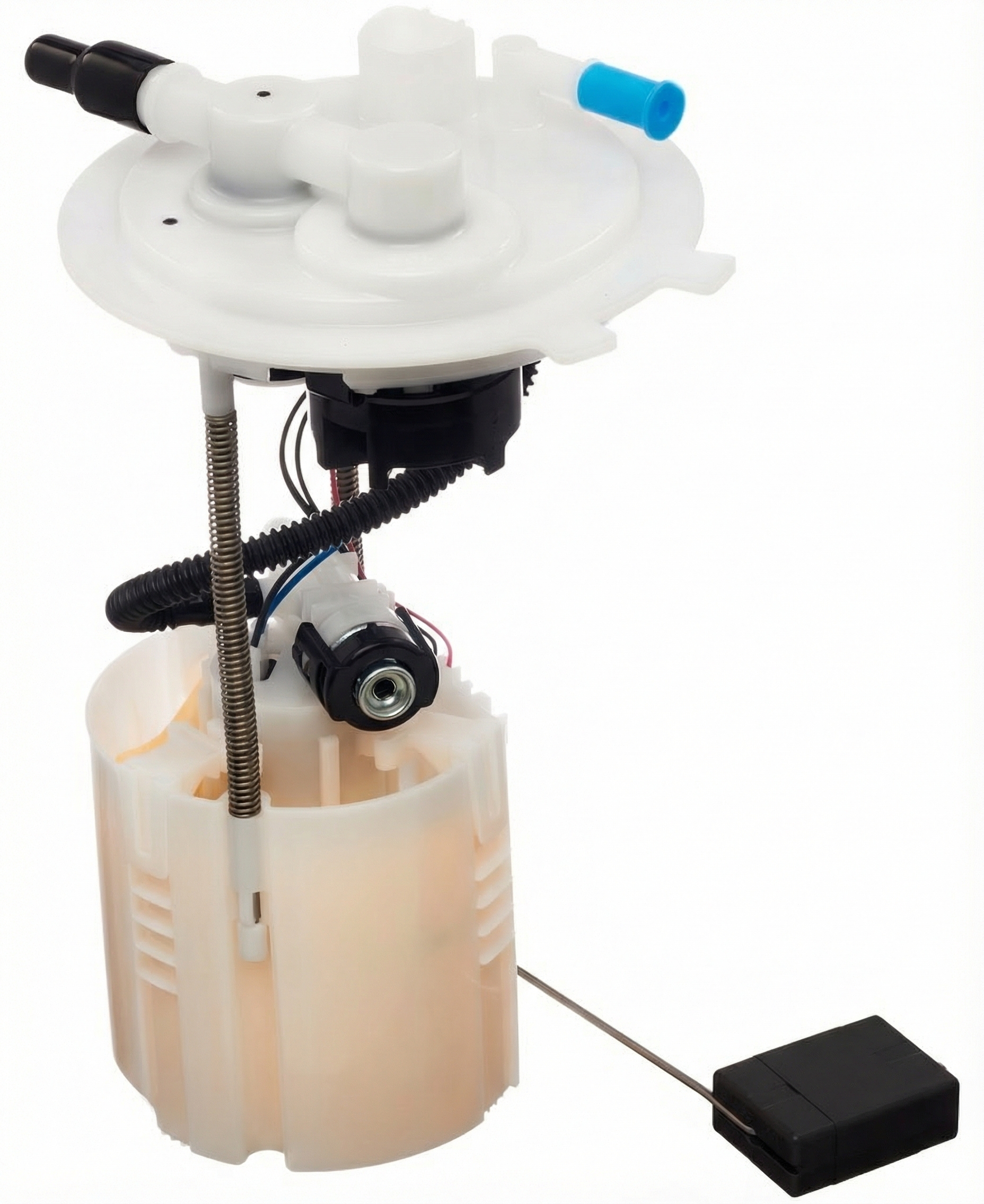
On a 2016-2022 Nissan Versa, P0460 is almost always caused by a failed fuel level sensor in the gas tank. This will make your fuel gauge erratic or inaccurate. A Nissan TSB confirms this and advises replacing only the sensor, not the entire expensive fuel pump assembly.
- P0460 on a 2016-2022 Versa almost always points to a bad fuel level sensor.
- Your car is safe to drive, but the unreliable fuel gauge means you could run out of gas.
- Nissan has issued a TSB (NTB22-026) for this exact problem.
- To save money, ensure your mechanic replaces only the fuel level sensor, not the entire fuel pump assembly, as advised by Nissan.
- Due to the fire hazard of working with gasoline, this repair is recommended for professionals.
What's Unique About the 2016-2022 Nissan VERSA
For the Nissan Versa, this code is a well-documented issue. Nissan has officially acknowledged the problem in Technical Service Bulletin NTB22-026, which applies to this entire year range and other models like the Altima and Rogue. The key takeaway from this bulletin is that the fuel level sensor is a separate, serviceable part. 🎬 Watch: Understanding the causes and fixes for the P0460 code. Technicians are specifically instructed *not* to replace the entire fuel pump assembly for this code, and that warranty claims for full assembly replacements will be charged back, underscoring the importance of this specific repair. This makes the diagnosis more straightforward and the repair significantly cheaper than on vehicles where the sensor is permanently integrated.
Diagnostic Flowchart
Tap your situation to follow the diagnostic path that matches what you're seeing on this vehicle.
Generation note: The 2016-2022 range covers two Versa generations: the second generation (N17, 2016-2019) and the third generation (N18, 2020-2022). The P0460 fault and the TSB apply to both generations, but be sure to order the correct part number for your specific model year as they are different.
Symptoms You May Notice
- Check Engine Light is on
- Fuel gauge is inaccurate, fluctuating wildly, or stuck on empty/full.
- Fuel gauge reading changes rapidly while driving or idling.
- Low fuel warning light may come on randomly or not at all.
- The 'Distance to Empty' display is unreliable or shows dashes.
- Gauge may read full after a fill-up but then drop to empty unexpectedly after some driving.
- Replacing the entire fuel pump assembly. The official Nissan TSB NTB22-026 specifically warns against this, as the fuel level sensor can be replaced separately, saving hundreds of dollars.
- Replacing the instrument cluster (fuel gauge) before properly testing the fuel level sensor and its circuit.
Most Likely Causes
- Faulty Fuel Level Sensor 🔴 High Probability → Shop Fuel Tank Sending Unit This is a known issue acknowledged by Nissan in TSB NTB22-026. The sensor's internal resistor card wears out over time, creating dead spots or open circuits in its sweep, which causes the erratic readings.
How to confirm: Use a scan tool to monitor the fuel level sensor's live data; look for erratic voltage or resistance readings that don't match the known fuel level. The definitive test is to remove the unit and test its resistance sweep with a multimeter. Connect the multimeter to the sensor's signal and ground pins and set it to Ohms. As you move the float arm from empty to full, the resistance should change smoothly. Any sudden jumps, drops to zero, or 'O.L.' (Open Loop) readings indicate a bad sensor. For many Nissan models, the resistance range is approximately 0-90 Ohms or 40-250 Ohms, but consult a service manual for exact specs.
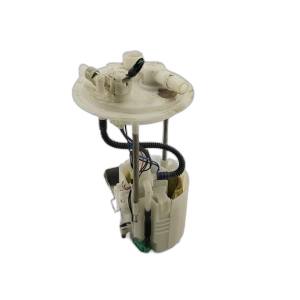
Typical fix: Replace the fuel level sensor (sending unit) inside the fuel tank. Per Nissan's TSB, the sensor should be replaced by itself, not the whole fuel pump assembly. This involves removing the rear seat cushion, opening the access panel, disconnecting the fuel lines and electrical connector, removing the fuel pump assembly locking ring, and lifting out the assembly to swap the sensor.
Est. part cost: $80-$210 - Damaged Wiring or Connectors 🟡 Medium Probability Wiring to the fuel tank is exposed to the elements under the car. Corrosion at the main connector on top of the fuel pump assembly is a common failure point that can mimic a bad sensor.
How to confirm: Visually inspect the wiring harness and connector leading to the fuel pump assembly for any signs of corrosion, fraying, or damage. Unplug the connector and check for bent or corroded pins. Perform a continuity test on the signal and ground wires between the fuel pump connector and the ECM to rule out a break in the harness.
Typical fix: Clean the corroded connector terminals with a contact cleaner or replace the connector pigtail if damage is severe. Repair any broken or frayed sections of the wiring harness.
Est. part cost: $10-$50
Rare But Worth Checking
- Faulty Instrument Cluster: → Shop Instrument Cluster Extremely rare. This should only be considered if a new sensor and verified wiring do not solve the problem. A faulty gauge within the cluster can fail to interpret a correct signal from the ECM, but this is much less likely than the sensor itself failing.
- Faulty Powertrain Control Module (PCM): → Shop Engine Control Module (ECM) This is the least likely cause. The PCM's internal circuit for reading the fuel level sensor can fail, but this is rare. The PCM should only be suspected after all other possibilities, including the sensor, wiring, and instrument cluster, have been exhaustively ruled out.
- Stuck or Damaged Float Arm: The float arm itself can become bent or get stuck, especially if the fuel tank has been damaged or if the vehicle has sat for a very long time allowing rust or debris to build up. This is a mechanical failure rather than electrical, but it produces the same result.
Diagnosis Steps
- Read the code from the ECM using an OBD-II scanner to confirm P0460 is present. Note any other related codes like P0461, P0462, or P0463.
- Observe the fuel gauge with the key on. Note if it is stuck, erratic, or reads incorrectly.
- Use a scan tool to view live data for 'Fuel Level Sensor'. Observe the voltage or resistance reading. Add a few gallons of gas or gently rock the vehicle to see if the reading changes smoothly or erratically.
- Gain access to the top of the fuel tank, which is typically under the rear seat cushion. Disconnect the battery before proceeding.
- Inspect the main electrical connector on top of the fuel pump assembly for corrosion, moisture, or loose pins.
- If the connector is clean, disconnect it. Use a multimeter set to Ohms to test the resistance of the fuel level sensor pins on the pump assembly side. Compare the reading to the factory service manual specification (e.g., 0-90 ohms).
- While monitoring resistance, have a helper gently rock the vehicle to make the fuel slosh. The resistance reading should change smoothly. If it jumps, drops to zero (short), or goes to infinity/O.L. (open), the sensor is bad.
- If the sensor tests good, the fault is likely in the wiring between the pump and the ECM. Perform continuity and voltage drop tests on the signal and ground wires.
- If wiring and the sensor are confirmed good, the issue could, in rare cases, be the instrument cluster or the ECM itself.
Parts You'll Likely Need
- Fuel Level Sensor
(OEM #25060-3AN0A (for N17 gen, ~2016-2019), 25060-5RL0A (for N18 gen, ~2020-2022))— This is the most common failure point for P0460 on this vehicle, as confirmed by Nissan's own service bulletin.
Trusted brands: Nissan Genuine Parts, Hitachi, Delphi, Spectra Premium
OEM price range: $100-$210
Aftermarket price range: $60-$120 - Fuel Pump Assembly Seal / O-Ring
(OEM #17342-EA000)— This is a one-time use part that must be replaced anytime the fuel pump assembly is removed to ensure a proper seal and prevent fuel vapor leaks and a potential check engine light for an EVAP leak.
Trusted brands: Nissan Genuine Parts
OEM price range: $15-$25
Aftermarket price range: $5-$15 - Fuel Pump Module Locking Ring
(OEM #17343-3RA0A (verify by VIN))— This plastic ring holds the fuel pump module in the tank. It can be brittle and may break during removal, especially on older vehicles. It is wise to have a replacement on hand before starting the job.
Trusted brands: Nissan Genuine Parts
OEM price range: $20-$35
Aftermarket price range: $10-$20
Related Codes That Often Appear With This One
- P0461 — P0461 indicates a range/performance issue with the sensor, often set alongside P0460 as the signal is not just faulty, but out of its expected operational range.
- P0462 — P0462 indicates the sensor circuit input is low (short to ground), which can be part of the erratic behavior that triggers P0460.
- P0463 — P0463 indicates the sensor circuit input is high (open circuit), which can also be part of the erratic behavior that triggers P0460.
Technical Service Bulletins (TSBs) & Recalls
- NTB22-026: Service Information for Fuel Gauge Inaccurate with DTCs Stored in ECM. This TSB confirms the common cause and advises replacing only the sensor, not the entire fuel pump assembly. It explicitly states warranty claims for replacing the whole assembly for this issue will be charged back to the dealer.
Platform-Specific Known Issues
- Nissan issued TSB NTB22-026 for 2016-2022 vehicles, including the Versa, for inaccurate fuel gauges with DTCs P0460, P0461, P0462, or P0463. The bulletin advises that the fuel level sensor can be replaced separately from the main fuel pump assembly.
- Owner forums frequently discuss this issue. A common owner experience is the gauge working fine, then suddenly dropping to empty with the low fuel light on, triggering the P0460 code. The fix is consistently replacing the sending unit/sensor.
Mechanic-Grade Diagnostic Values
- Fuel Level Sensor Resistance — expected: While specific OEM values for the Versa are not readily published, a functional sensor should show a smooth, continuous change in resistance when the float arm is moved from empty to full. Common ranges for similar vehicles are 0-90 Ohms or 73-10 Ohms.. Failure: A reading of 'O.L.' (Open Loop) or infinite resistance indicates an open circuit. A reading of zero or near-zero ohms that does not change indicates a short. Sudden jumps or drops in the reading as the float is moved indicate a worn or dead spot on the resistor card.
Scan Tool Commands That Help
- Nissan CONSULT-III / CONSULT-III Plus: Data Monitor for ECM — Use the Data Monitor function to select and view the live data PID for 'FUEL LEV SEN' (or similar name). This allows a technician to see the voltage or resistance value the ECM is receiving from the sensor in real-time. Rocking the vehicle or adding fuel should produce a smooth, corresponding change in the data. Erratic jumps or a static value when the fuel level is known to be changing confirms a fault in the sensor or its circuit without disassembly.
Wiring & Ground Locations
- Fuel Pump Assembly Connector — On top of the fuel tank, accessible by removing the rear seat cushion and a metal access plate.. This is the primary connection point for the fuel level sensor. The sensor's signal and ground wires pass through this connector. It is a common location for corrosion or damage, which can interrupt the signal and cause P0460.
- ECM (Engine Control Module) — For the N17 generation (2016-2019), the ECM is typically located in the engine bay, near the battery or firewall. Diagrams for a 2018 Versa show connector designations like E16 and F10.. The fuel level sensor signal wire terminates at the ECM. If the sensor and wiring at the tank test good, the next step is to test for signal continuity at the corresponding ECM pin to rule out a harness break between the tank and the module.
Real Owner Repair Stories
- Reddit user in r/Nissan (2024 Nissan Versa (N18 generation)) — Fuel gauge meter showed full and did not move, even after adding 3 gallons of fuel. However, the 'Distance to Empty' mileage display continued to drop normally.
❌ Tried (didn't work) Adding a small amount of fuel (3 gallons).
✅ What actually fixed it The issue is a known software logic behavior. The gauge display will not reset or update its reading unless a significant amount of fuel (reportedly more than 1/4 tank) is added at one time. Another user confirmed adding 3/4 of a tank caused their gauge to reset to full correctly. - YouTube video by 'fix it' (2014 Nissan Versa Note (similar N17 platform)) — Fuel gauge reading was incorrect, showing empty when it should not be.
❌ Tried (didn't work) Initial diagnosis pointed to a bad sensor requiring replacement.
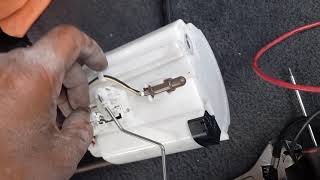
✅ What actually fixed it After removing the fuel pump assembly, the technician noticed the two small metal contacts on the sensor that sweep along the resistor card were not making proper contact. The contacts were carefully bent down to restore proper tension against the card. After reassembly, the gauge worked correctly. This was a mechanical contact issue, not a failed electronic component.
Model Year Variations Within This Range
- 2016-2019: There appears to be a running part change during the 2018 model year. Vehicles built up to approximately May 2018 typically use fuel level sensor part number 25060-3AN0A. Vehicles built from May/August 2018 onward, even within the same N17 generation, may use the newer part number 25060-5RL0A, which is also used by the N18 generation (2020-2022). It is critical to verify the correct part number by VIN before ordering.
Helpful Videos

![How to Fix P0460 Engine Code in 2 Minutes [1 DIY Method / Only $11.9]](https://img.youtube.com/vi/gt5sdWRXypk/mqdefault.jpg)


Used OEM Parts in Stock
New Aftermarket Parts Available


The information in this article is provided for general reference and educational purposes only. Vehicle specifications, procedures, and part compatibility can vary by production date, trim level, and region. Always consult your vehicle's factory service manual and verify part numbers before purchasing or performing repairs. Safety-critical components such as airbags, seat belts, and braking systems should be installed by a qualified professional.
- Nissan VERSA:
- 🧭 Diagnostic Flowchart
- 🎬 Helpful Videos
- 🛍️ Shop This Part
- What's Unique About the 2016-2022 Nissan VERSA
- Symptoms You May Notice
- Most Likely Causes
- Rare But Worth Checking
- Diagnosis Steps
- Parts You'll Likely Need
- Related Codes That Often Appear With This One
- Technical Service Bulletins (TSBs) & Recalls
- Platform-Specific Known Issues
- Mechanic-Grade Diagnostic Values
- Scan Tool Commands That Help
- Wiring & Ground Locations
- Real Owner Repair Stories
- Model Year Variations Within This Range
- 🎟️ Get 5% Off