

P0460 on 2005-2010 Pontiac G6: Fuel Level Sensor Circuit Causes and Fixes
This code means there's a problem in the fuel level sensor circuit, causing an inaccurate or dead fuel gauge. The most common cause on the G6 is a failed fuel level sensor, which is part of the fuel pump module inside the gas tank. A known issue is a fuel vapor line inside the tank blocking the sensor's float arm. Replacing the entire fuel pump module is the usual fix, but requires dropping the fuel tank as there is no access panel.
- P0460 on a Pontiac G6 means your fuel gauge is unreliable due to a fault in the fuel level sensor circuit.
- The most common fix is to replace the entire fuel pump module, as the sensor is built into it.
- A key difficulty for this repair on the G6 is that the fuel tank must be completely removed to access the fuel pump module; there is no access hatch under the seat.
- Before committing to replacing the pump, it's worth inspecting the wiring and connector on top of the tank for corrosion, which can be a cheaper fix.
- Do not ignore this code. While the car will run, you risk running out of gas, which can cause expensive damage to the fuel pump.
What's Unique About the 2005-2010 Pontiac G6
On the Pontiac G6, like many GM vehicles from this era, the fuel level sensor is integrated directly into the fuel pump module. A notable issue specific to the G6 and its Epsilon platform mates (like the Chevy Malibu and Saturn Aura) is the potential for a fuel vapor line inside the tank to shift and physically block the sensor's float arm, mimicking a sensor failure. Also, unlike many other cars, the G6 does not have a convenient access panel under the rear seat, meaning the entire fuel tank must be dropped to service the fuel pump module and sensor, a 2-3 hour job.
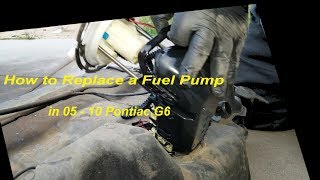
🎬 Watch: Step-by-step guide to dropping the tank and replacing the fuel pumpSymptoms You May Notice
- Check Engine Light is on.
- Fuel gauge is inaccurate, erratic, or stuck on full or empty.
- Low fuel warning light comes on at the wrong time or not at all.
- "Distance to empty" reading on the driver information center is incorrect or shows dashes.
- Replacing the instrument cluster when the problem is the in-tank sensor.
- Replacing the fuel pump for a starting issue when the P0460 code is unrelated and caused by a simple wiring fault.
- Replacing the fuel level sensor without first checking for the known vapor line obstruction issue inside the tank.
Most Likely Causes
- Failed Fuel Level Sensor 🔴 High Probability → Shop Fuel Tank Sending Unit The variable resistor contacts on the sensor wear out over time. Corrosion from sulfur in fuel can also accelerate this failure on GM vehicles of this period. The sensor's resistive elements simply fail from millions of cycles of the float arm moving across them.
How to confirm: Use a scan tool to monitor the fuel level sensor voltage. If accessible, test the sensor's resistance with a multimeter while moving the float arm; the reading should change smoothly without spikes or dropouts. For these GM vehicles, the typical range is around 40 ohms (full) to 250 ohms (empty). A jump to infinity (open) or a reading that doesn't change confirms a bad sensor.
Typical fix: Replace the fuel level sensor. On the G6, this is typically done by replacing the entire fuel pump module assembly.
Est. part cost: $200-$400 - Damaged Wiring or Corroded Connector 🟡 Medium Probability The main electrical connector on top of the fuel tank is exposed to road salt and moisture, which can lead to corrosion and poor connections. The ground point for the fuel sender, often located inside the rear of the passenger compartment, can also corrode, leading to an unstable signal.
How to confirm: Visually inspect the wiring harness and the connector at the top of the fuel tank for any signs of corrosion (green or white powder), broken wires, or bent pins. Check the ground wire (typically Black/White) for a solid connection to the chassis.
Typical fix: Clean the connector terminals with electrical contact cleaner. If the corrosion is severe or wires are broken, the connector pigtail may need to be replaced. Some aftermarket fuel pump modules come with a new pigtail connector that must be spliced in.
Est. part cost: $15-$50 - Fuel Vapor Line Interfering with Float Arm ⚪ Low Probability This is a known issue on the G6 platform where a fuel vapor line inside the tank can move and physically obstruct the float arm's movement. This prevents the sensor from reporting the correct fuel level, even though the sensor itself is working correctly.
How to confirm: This can only be confirmed by dropping the fuel tank and visually inspecting the inside of the tank to see if the float arm is being blocked. This should be the first check performed once the fuel pump module is removed.
Typical fix: Reposition and secure the interfering fuel vapor line away from the float arm's path of travel. This can often be done with a zip tie, resolving the issue with no parts cost.
Est. part cost: $0
Rare But Worth Checking
- Faulty Powertrain Control Module (PCM): → Shop Engine Control Module (ECM) This is very rare. The PCM's internal circuit for reading the fuel level sensor can fail, but all other potential causes should be exhaustively ruled out first.
- Faulty Instrument Cluster: → Shop Instrument Cluster While common on some other GM models of the era, it's a less frequent cause for the G6. The gauge itself or its stepper motor can fail, misinterpreting a good signal from the sensor. A gauge sweep test using a capable scan tool can help diagnose the cluster.
Diagnosis Steps
- Plug in an OBD-II scanner and confirm P0460 is present. 🎬 See: How to diagnose and fix a P0460 code Check for any other related codes like P0461, P0462, or P0463.
- Observe the fuel level reading on the scan tool's live data. Compare it to the gauge on the instrument cluster and your best guess of the actual fuel in the tank. A mismatch between the scan tool and the gauge may indicate a cluster issue.
- Perform a visual inspection of the wiring harness leading to the fuel tank. Look for obvious signs of damage, corrosion, or loose connections at the main connector on top of the tank.
- Since the G6 requires dropping the tank for access, this is a significant labor step. Before dropping the tank, it's wise to check the ground connection (G301 on some diagrams) which may be located under the rear seat.
- Once the tank is down and the fuel pump module is removed, first inspect for the known issue of a fuel vapor line obstructing the float arm.
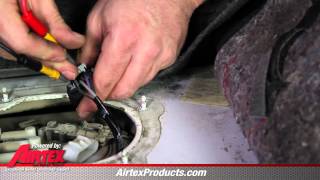
- If no obstruction is found, test the resistance (ohms) of the fuel level sensor with a multimeter while manually sweeping the float arm from empty to full. 🎬 Watch: How to test and replace a fuel level sensor The resistance should change smoothly from approximately 40 to 250 ohms. Any sudden jumps to infinity (open) or zero indicate a bad sensor.
- If the sensor tests good and there was no obstruction, the problem lies in the wiring between the tank and the PCM, or, very rarely, the PCM itself.
Parts You'll Likely Need
- Fuel Pump Module Assembly
(OEM #19179894)— The fuel level sensor is integrated into the fuel pump module. On an older vehicle, replacing the entire assembly is often the most reliable repair, as it also replaces the original fuel pump and regulator. Given the high labor cost of dropping the tank, this prevents a second repair if the pump itself fails soon after.
Trusted brands: ACDelco (MU1638), Delphi (FG1293), Spectra Premium (SP6003M, SP6632M)
OEM price range: $300-$400
Aftermarket price range: $150-$250 - Fuel Level Sensor
(OEM #13504685)— If you want to replace only the failed sensor instead of the whole pump module, it is available separately. This can save money but requires more delicate work to swap the sensor onto the old module and does not address the age of the fuel pump itself.
Trusted brands: ACDelco, Dorman
OEM price range: $70-$100
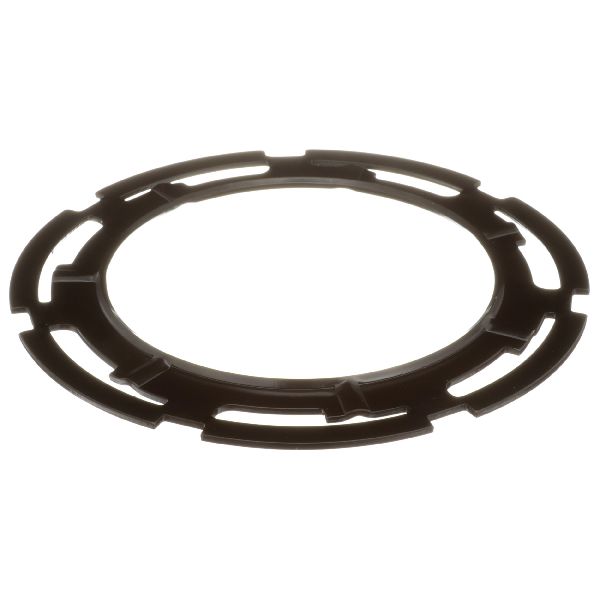
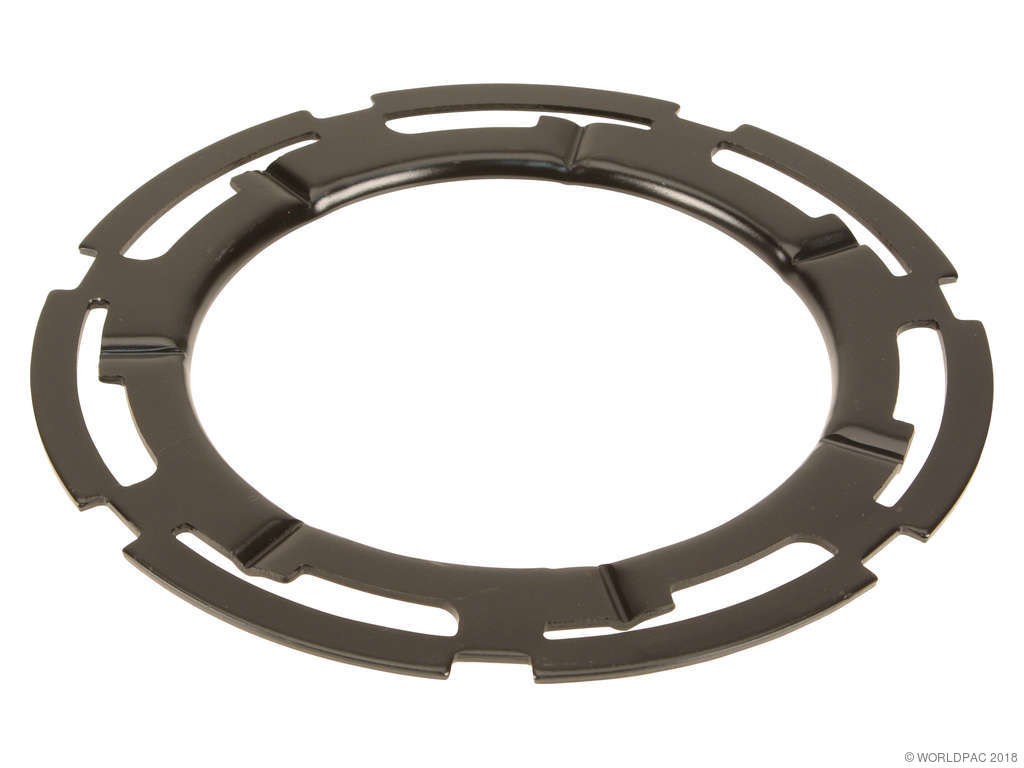
Aftermarket price range: $40-$60 - Fuel Tank Lock Ring — The metal or plastic lock ring that holds the fuel pump module in place often rusts or becomes brittle. It is highly recommended to have a new one on hand as the old one may break during removal.
Trusted brands: TRQ, Spectra Premium
OEM price range: $20-$30
Aftermarket price range: $15-$25
Related Codes That Often Appear With This One
- P0461 — This code indicates a 'Range/Performance' issue with the sensor, often triggered by the same root causes as P0460, like a worn sensor or stuck float.
- P0462 — Indicates the sensor circuit voltage is too low (short to ground), which can be caused by a failed sensor or wiring issue.
- P0463 — Indicates the sensor circuit voltage is too high (open circuit), often pointing directly to a failed sensor sending unit or a broken wire.
- P0455 — Indicates a large EVAP system leak. This can sometimes appear with P0460/P0461 if the seal for the fuel pump module is compromised or if a line was disturbed.
Technical Service Bulletins (TSBs) & Recalls
- While no TSB directly addresses P0460, RepairPal notes a common issue where a fuel vapor line interferes with the fuel level sensor, which can cause P0461 and related codes.
Platform-Specific Known Issues
- There are no recalls directly for P0460 on the Pontiac G6. However, there was a safety recall for the 2006-2007 models related to a loss of electronic power steering, which is an unrelated issue.
- A recall (NHTSA 14V252000) was issued for 2005-2010 G6 models for increased resistance in the Body Control Module (BCM) connection, which could cause various electrical issues, though not directly linked to P0460.
Mechanic-Grade Diagnostic Values
- Fuel Level Sensor Resistance — expected: Approximately 40 Ohms (Full) to 250 Ohms (Empty). This is a common range for GM vehicles of this era.. Failure: The resistance reading is infinite (Open), zero, jumps erratically, or does not change smoothly when the float arm is moved.
- Fuel Level Sensor Signal Voltage (at PCM) — expected: Approximately 0.5V (Full) to 4.5V (Empty). Note that GM systems often invert this, where a higher voltage indicates an empty tank.. Failure: Voltage is stuck at 0V, 5V, or does not change when fuel level changes.
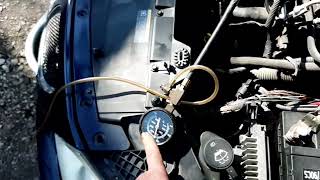
- Fuel Pump Operating Pressure — expected: 386-427 kPa (56-62 psi) with the pump commanded ON by a scan tool.. Failure: While not a direct test for P0460, low pressure could indicate a failing pump module which contains the sensor.
- Fuel Pump Connector - Signal Wire — expected: The Purple wire should have a 5V reference from the PCM when the key is on and the connector is unplugged.. Failure: No voltage or incorrect voltage indicates a wiring or PCM issue upstream of the connector.
Scan Tool Commands That Help
- GM Tech 2 / GDS2: Instrument Panel Cluster > Special Functions > Gauge Sweep — This is the definitive test to rule out a faulty instrument cluster. If the scan tool shows a valid fuel level percentage from the PCM, but the physical gauge fails to sweep correctly during this test, the cluster's stepper motor is the fault, not the P0460-related sensor.
- GM Tech 2 / GDS2: Powertrain > Data Display > Fuel Level Sensor Voltage/Percentage — Use this to monitor the live data the PCM is receiving from the sensor. Compare this reading to the physical gauge to help differentiate between a sensor/wiring issue and a cluster/BCM issue.
Wiring & Ground Locations
- Fuel Pump Connector — On top of the fuel pump module, which is accessed via a panel under the rear seat cushion.. This is the primary test point for the fuel level sensor circuit. The Purple wire is the fuel level signal, and the Black wire is the sensor ground. Corrosion here is a common cause of failure.
- G301 — On the right rear of the passenger compartment, located under the right rear seat back.. This is a primary body ground point for several components in the rear of the vehicle, including the fuel pump and sender assembly. A corroded or loose G301 can cause erratic readings and trigger a P0460 code.
- Body Control Module (BCM) — Under the right side of the center console, near the dash.. The BCM can be a factor in how the fuel level is displayed and interpreted. While less common for P0460, a recall for poor BCM terminal contact on the G6 makes it a point of interest for any widespread electrical gremlins.
Real Owner Repair Stories
- Reddit user in r/MechanicAdvice (2007 Pontiac G6 V6) — Fuel gauge was stuck on full and would not move after a fill-up. Drove 80 miles with no change. Later, the gauge moved to 7/8. No Check Engine Light was on initially.
❌ Tried (didn't work) Cycling the key on and off.
✅ What actually fixed it The user did not post a final repair, but a mechanic in the thread noted that they replace at least one GM fuel pump/sender assembly per week on G6/G5/Cobalt models for this exact issue and recommended replacing the entire fuel pump module, not just the sender, while in there. - NHTSA ODI #10275104 — An owner reported that their vehicle logged DTC P0460-4B. A technician attempted to recalibrate the steering sensors in response, but the recalibration failed.
When the Usual Fixes Don't Work
- A significant finding during Pass 3 research contradicts the Pass 2 assertion that the fuel tank must be dropped. Multiple sources, including repair guides and forum discussions, state that the 2005-2010 Pontiac G6 has a fuel pump access panel under the rear seat cushion. This dramatically reduces the labor time and difficulty of the repair, changing it from a 4/5 DIY difficulty to a more manageable 2/5 or 3/5. The most common repair remains replacing the fuel pump module, but the access method is much simpler than previously described.
Diagnostic Flowchart
Other Known Issues on This Vehicle
Issues unrelated to this code that are worth knowing about as an owner of this generation:
- Electric Power Steering (EPS) Failure 🔴 High — Very common across all model years. Can occur suddenly at various mileages, often starting around 70,000 miles. Leads to loss of power assist. (Ref: Multiple recalls and special coverage programs, including GM recall #14V153000 and special coverage 14329.)
- Steering Column Clunking Noise 🟠 Medium — Widespread issue causing a clunk or pop when turning the wheel at low speeds. Often caused by a worn intermediate steering shaft. (Ref: NHTSA Campaign #14E044000 for premature failure of a joint bearing.)
- Poor BCM Connector Contact 🟠 Medium — Connectors at the Body Control Module (BCM) can develop high resistance, causing a wide range of bizarre electrical issues, including brake light failure and cruise control problems. (Ref: GM Recall #14V252000.)
- Melted Headlight Wiring / Low Beam Failure 🟠 Medium — Very common problem where the low beam headlight bulbs fail repeatedly due to the wiring harness connector overheating and melting.
- Transmission Failure (4T45-E) 🔴 High — The 4-speed automatic transmission (4T45-E) is known for issues like failed shift solenoids, broken 3-5-R wave plates, and torque converter clutch (TCC) problems, often leading to costly repairs. (Ref: Multiple TSBs exist for specific transmission symptoms, but no widespread recall.)
- Instrument Cluster Gauge Failure 🟡 Low → Shop Instrument Cluster — Stepper motors for individual gauges (speedometer, tach, fuel) can fail, causing the needle to stick, sweep erratically, or stop working.
Used vs. New Parts: Buying Guide for This Vehicle
When a used part is the smart pick: For this repair, a used part from a junkyard is generally NOT recommended. The failure mode is wear and corrosion on the sensor contacts, and a used part has unknown remaining life. Given that accessing the pump (even with an access panel) involves working with fuel lines, the labor justifies using a new part to ensure reliability.
Donor-vehicle mileage cap: roughly under 60000 miles for the part to have meaningful remaining life.
What to inspect on the donor part:
- Verify the donor vehicle is from a dry, non-salt-belt region to minimize corrosion.
- Inspect the electrical connector pins on the used module for any signs of green corrosion or heat damage.
- If possible, test the resistance of the used sensor with a multimeter before purchase to ensure it sweeps smoothly.
Aftermarket brands forum-validated for this vehicle:
- ACDelco (OEM supplier)
- Delphi
- Spectra Premium
Brands owners have reported issues with on this vehicle:
- Unbranded, 'white box' parts from online marketplaces are a significant gamble. The cost savings are often negated by premature failure and the need to perform the labor a second time.
Real Owner Stories
Aggregated from forums and TSBs cited above. Mileages and costs reflect what owners reported in those sources.
2005 Pontiac G6
Symptoms: Owner needed instructions on how to lower the gas tank to address fuel system codes and replace the fuel pump.
What fixed it: Following the factory removal procedure to drop the fuel tank and replace the fuel pump module.
Source hint: 2CarPros Forum: 2005 Pontiac G6 Fuel Pump Replacement
2006 Pontiac G6 — ~70000 miles
Symptoms: Sudden loss of power assist while driving.
What fixed it: Repaired under GM recall #14V153000 / special coverage 14329 for the Electric Power Steering (EPS) failure.
Source hint: vehicle_specific_issues
Related OBD-II Codes
Frequently Asked Questions
Is there a recall for the P0460 code on my 2005-2010 Pontiac G6?
My fuel gauge is stuck on empty but my scan tool shows a reading; could this be the instrument cluster?
I heard a fuel line inside the tank might be causing my P0460 code. Is this common on the G6?
What is the typical resistance range for the fuel level sensor on a Pontiac G6?
Do I have to replace the whole fuel pump to fix the P0460 code?
Could a bad ground cause my fuel gauge to be erratic?
Helpful Videos



Used OEM Parts in Stock
New Aftermarket Parts Available


The information in this article is provided for general reference and educational purposes only. Vehicle specifications, procedures, and part compatibility can vary by production date, trim level, and region. Always consult your vehicle's factory service manual and verify part numbers before purchasing or performing repairs. Safety-critical components such as airbags, seat belts, and braking systems should be installed by a qualified professional.
- Pontiac G6:
- 🧭 Diagnostic Flowchart
- 🎬 Helpful Videos
- 🛍️ Shop This Part
- What's Unique About the 2005-2010 Pontiac G6
- Symptoms You May Notice
- Most Likely Causes
- Rare But Worth Checking
- Diagnosis Steps
- Parts You'll Likely Need
- Related Codes That Often Appear With This One
- Technical Service Bulletins (TSBs) & Recalls
- Platform-Specific Known Issues
- Mechanic-Grade Diagnostic Values
- Scan Tool Commands That Help
- Wiring & Ground Locations
- Real Owner Repair Stories
- When the Usual Fixes Don't Work
- Other Known Issues on This Vehicle
- Used vs. New Parts: Buying Guide for This Vehicle
- Real Owner Stories
- 2005 Pontiac G6
- 2006 Pontiac G6 — ~70000 miles
- Related OBD-II Codes
- Frequently Asked Questions
- 🎟️ Get 5% Off