

P0460 on 2019-2025 Subaru Ascent: Fuel Level Sensor Circuit Malfunction Causes and Fixes
This code means the main fuel level sensor is failing, causing an incorrect or erratic fuel gauge. The most common fix is to replace the main fuel level sending unit, which is located in the fuel tank and accessed from under the rear seat. The part costs approximately $100-$180 for an OEM sensor.
- P0460 on your Ascent means the main fuel level sensor has likely failed, leading to an unreliable fuel gauge.
- The most probable fix is replacing the main fuel sending unit (Part No. 42081XC01A), which is accessible under the rear seat.
- Before buying parts, check for simple issues like corroded wiring connectors at the top of the fuel tank.
- Check if your Ascent is covered by the fuel pump safety recall (WRG-21), as this repair would replace the entire assembly, including the sensor, at no cost.
What's Unique About the 2019-2025 Subaru Ascent
Like many all-wheel-drive Subarus, the Ascent uses a saddle-shaped fuel tank (OEM Part #42012XC00A) to make room for the driveshaft. This design requires two separate fuel level sending units: a main sensor (Sensor 'A') and a sub-sensor. Code P0460 specifically points to a problem in the circuit for the main sensor, which is typically on the passenger side. While the code itself is for the sensor circuit, it's important to be aware of a major safety recall on 2019-2020 models for a faulty low-pressure fuel pump that can cause engine stalling. Since the sensor is part of the fuel pump assembly that gets replaced under this recall (NHTSA 21V587), the repair for the recall may inadvertently fix a P0460 issue.
Symptoms You May Notice
- Check Engine Light is on
- Fuel gauge is inaccurate, erratic, or stuck (often near empty or full)
- Distance to empty (DTE) reading is incorrect
- Low fuel warning light may illuminate at the wrong time or not at all
- Replacing the sub-level sensor (the one on the other side of the tank) instead of the main 'A' sensor.
- Replacing the entire fuel pump assembly when only the sending unit has failed (though they are often sold as one unit).
- Replacing the sensor when the actual problem is a simple corroded connector or a bad ground wire.
Most Likely Causes
- Faulty Main Fuel Level Sending Unit ('A' Sensor) 🔴 High Probability → Shop Fuel Tank Sending Unit Over time, the resistive contacts on the sensor can wear out or become contaminated by fuel additives, leading to incorrect resistance readings. This is a common failure part on many vehicles, including other Subarus with similar saddle-tank designs. 🎬 See how Subaru fuel level senders fail and behave
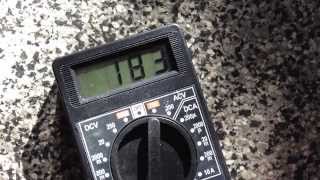
How to confirm: Access the sensor via the panel under the rear seat. Using a multimeter, measure the resistance across the sensor's pins while manually moving the float arm. 🎬 Watch how to test the sensor without removing the pump The resistance should change smoothly. If it jumps, shows an open circuit (OL), or doesn't change, the sensor is bad. For many Subarus, the range is approximately 0-5 ohms at full and 45-55 ohms at empty.
Typical fix: Replace the main fuel level sending unit. This part is often attached to the fuel pump module. Always replace the large O-ring/gasket for the access port to prevent fuel leaks and smells. The replacement part is often sold as 'Level Sensor Main'.
Est. part cost: $100-$180 - Wiring or Connector Issue 🟡 Medium Probability The connectors on top of the fuel tank are exposed to some moisture and dirt, which can lead to corrosion. A poor ground connection for the fuel pump assembly is also a common cause of erratic sensor readings.
How to confirm: Visually inspect the wiring harness and connector going to the fuel pump assembly. Check for corrosion, bent pins, or damaged wires. Use a multimeter to check for continuity and for shorts to ground between the tank connector and the PCM. Locate the chassis ground point for the fuel pump circuit and ensure it is clean and tight.
Typical fix: Clean the corroded terminals on the connector and apply dielectric grease. If the wiring is damaged, it will need to be repaired. If the ground is loose or corroded, clean the contact point and re-secure it.
Est. part cost: $5-$25 - Stuck Fuel Level Float ⚪ Low Probability This is not specific to the vehicle but can happen if debris is present in the fuel tank, which can physically jam the float arm, preventing it from moving with the fuel level. It can also become detached from its lever.
How to confirm: After accessing the fuel sending unit, visually inspect the float arm to see if it moves freely through its full range of motion. Check for any obstructions in the tank.
Typical fix: Free the stuck float arm. If the arm is damaged or detached, the sending unit assembly will need to be replaced.
Est. part cost: $0-$180
Rare But Worth Checking
- Faulty Combination Meter (Instrument Cluster): On some Subaru models, the fuel level sensor signal is processed by the instrument cluster before being sent to the PCM via CAN bus. A failure within the cluster can mimic a sensor failure. This is rare and requires advanced diagnostics to confirm. A related body code, B1500, may be present in the instrument cluster module on some Subarus with this issue.
- Faulty Powertrain Control Module (PCM): → Shop Engine Control Module (ECM) This is extremely rare and should only be considered after all other possibilities, including wiring and the sensor itself, have been thoroughly ruled out.
Diagnosis Steps
- Scan the vehicle for OBD-II codes to confirm P0460 is the primary code. Check for any related codes like P0461, P0462, or P0463.
- Use a scan tool with live data to observe the voltage or resistance readings from 'Fuel Level Sensor A' and 'Fuel Level Sensor B'. As fuel is used, the 'A' sensor reading should change. If it's stuck or erratic, it points to a fault in that circuit.
- If a scan tool is not available, gain access to the fuel pump assembly. On the Ascent, there are access panels under the rear seats (typically the passenger side for the main 'A' sensor).
- Disconnect the electrical connector for the main fuel pump/sending unit assembly.
- Inspect the connector and harness for any signs of corrosion, moisture, or damage.
- Using a multimeter set to Ohms (Ω), test the resistance between the pins for the level sensor. Manually move the float arm up and down. The resistance reading should change smoothly and consistently. If you see an open circuit (OL) or the reading jumps erratically, the sending unit is faulty.
- If the sensor tests good, check the wiring harness for continuity and for shorts to ground or power between the fuel tank and the PCM/Combination Meter.
- Check the chassis ground connection for the fuel pump assembly to ensure it is clean and tight.
Parts You'll Likely Need
- Fuel Main Gauge Sending Unit
(OEM #42081XC01A)— This is the 'A' sensor that fails and directly causes the P0460 code. It reads the fuel level on the main side of the saddle tank. Note: Some parts suppliers indicate this part is discontinued, but it is still listed for sale on others. It is often included with the fuel pump assembly.
Trusted brands: Subaru (Genuine)
OEM price range: $100-$180
Aftermarket price range: $70-$120 - Fuel Tank Gasket / O-Ring
(OEM #42025FL000)— This seal must be replaced any time the fuel sending unit or pump is removed from the tank to prevent dangerous fuel leaks and vapors. The part notes specify it cannot be reused.
Trusted brands: Subaru (Genuine)
OEM price range: $15-$30
Aftermarket price range: $10-$20
Related Codes That Often Appear With This One
- P0461 — This code indicates 'Fuel Level Sensor 'A' Circuit Range/Performance,' which is a closely related fault often triggered by the same failing sensor.
- P0462 — This code for 'Fuel Level Sensor 'A' Circuit Low Input' points to a short in the circuit, which could be caused by a failed sensor or wiring issue.
- P0463 — This code for 'Fuel Level Sensor 'A' Circuit High Input' points to an open in the circuit, often caused by a failed sensor or a broken wire.
Technical Service Bulletins (TSBs) & Recalls
- WRG-21 / WRD-20 (Recall) - Addresses potential inoperative fuel pump on 2019-2020 Ascent models.
Platform-Specific Known Issues
- Safety Recall WRG-21 / NHTSA 21V587: Low-Pressure Fuel Pump Failure: → Shop Fuel Pump Affects certain 2019-2020 Ascent models. A defective low-pressure fuel pump impeller, made from a lower density material, can deform over time, causing the pump to fail and the engine to stall while driving. Subaru dealers will replace the fuel pump assembly free of charge. Since the fuel level sensor is part of this assembly, this recall repair will likely resolve a P0460 code if the vehicle is eligible. The repair takes approximately 1 hour and 45 minutes. 🎬 Watch this step-by-step Ascent fuel pump replacement walkthrough
Mechanic-Grade Diagnostic Values
- Main Fuel Level Sensor ('A') Resistance — expected: Smoothly sweeps between approx. 0-5 Ω (Full) and 45-55 Ω (Empty).. Failure: Reading is an open circuit (OL), jumps erratically, or is stuck at one value when the float arm is moved.
- Low-Pressure Fuel System Pressure — expected: 50-60 psi. Failure: Pressure below this range indicates a potential issue with the in-tank low-pressure fuel pump, which is a known recall item.
Hidden / Shadow Codes Worth Checking
- B1500: Fuel Level Sensor Open/Short. This is a body control module code stored in the Combination Meter (instrument cluster), not the PCM. It can pinpoint the issue to the sensor circuit if P0460 is also present. (see via A scan tool capable of reading codes from the Combination Meter / Body Control Module, such as the Subaru Select Monitor (SSM) or equivalent professional scanner.)
Scan Tool Commands That Help
- Subaru Select Monitor (SSM) or equivalent: Live Data Monitoring for 'Fuel Level Sensor A' and 'Fuel Level Sensor B' — This is the primary diagnostic step to confirm which of the two sensors is malfunctioning without physically removing parts. Observing the resistance or voltage readings of both sensors while rocking the vehicle or as fuel is consumed can quickly identify the faulty unit.
- Subaru Select Monitor (SSM) or equivalent: Combination Meter Self-Test / Actuator Test — If the sensor and wiring test good, this function can be used to command a gauge sweep on the instrument cluster to verify the gauge itself is mechanically functional. This helps rule out a faulty cluster.
Wiring & Ground Locations
- Main Fuel Pump / Sensor Assembly Access Panel — Under the rear passenger-side seat. The carpet must be pulled back to reveal a metal cover held on by four Phillips screws.. This is the primary access point for testing and replacing the 'A' fuel level sensor and its connector.
- Fuel Pump Assembly Ground — The ground wire for the fuel pump assembly typically terminates at a chassis ground point near the fuel tank area.. A corroded or loose ground is a common cause of erratic voltage signals from the fuel level sensor, which can trigger a P0460 code even if the sensor itself is good.
- Combination Meter Connector (i10) — At the back of the instrument panel cluster.. On many Subarus, the fuel level sensor signal wire runs directly to this connector. The Combination Meter processes the signal and sends it to the PCM. A pin-fitment issue or corrosion here can be a rare cause of P0460.
Real Owner Repair Stories
- ScoobyNet.com forum user (2006 Subaru WRX STI (similar saddle tank and dual-sender design)) — Fuel gauge would only read half-full when the tank was completely full.
❌ Tried (didn't work) Tested the main fuel sender ('A' sensor) with a multimeter; it showed a correct and smooth resistance sweep from ~0.5 to 55 ohms.
✅ What actually fixed it The user removed and inspected the secondary (sub) fuel sender on the other side of the tank. It appeared to be physically stuck. After freeing the float arm and reinstalling, the gauge read correctly. The assumption was the sub-sender float was jammed, causing the combined reading to be incorrect.
Model Year Variations Within This Range
- 2019-2020: These model years are subject to the NHTSA 21V587 safety recall for a defective low-pressure fuel pump. The fuel level sensor is part of the recalled assembly. Later models (2021-2025) are not included in this specific recall, indicating a change in the part or manufacturing process.
Diagnostic Flowchart
Other Known Issues on This Vehicle
Issues unrelated to this code that are worth knowing about as an owner of this generation:
- CVT Transmission Problems (Chain Slip/Judder) 🔴 High — Common on 2019-2020 models. Can lead to complete transmission failure and loss of power. (Ref: Recalls WRK-21/WRK-22, WUV-07; TSB 16-136-22R; Warranty Extension (TSB 16-146-24).)
- Premature/Parasitic Battery Drain 🟠 Medium → Shop Vehicle Battery — Widespread on 2019-2020 models. Often caused by the Data Communication Module (DCM) not entering sleep mode or leaving the tailgate open. (Ref: Class Action Lawsuit (In re Subaru Battery Drain Products Liability Litigation); TSBs 07-199-21R, 15-308-23R.)
- Power Rear Gate (Tailgate) Failure 🟡 Low — Common complaint across multiple model years. The gate may refuse to open, open only partially, or fail to latch, often requiring a reset or motor replacement.
- Spontaneously Cracking Windshields 🟠 Medium — Reported frequently on 2019-2020 models, leading to a class-action lawsuit. Cracks can appear without impact. (Ref: Class Action Lawsuit)
- Grounding Bolt Fire Risk 🔴 High — Affects 271,694 2019-2022 models. An improperly torqued grounding bolt for the PTC heater can overheat and cause a fire, even when parked. (Ref: Recall WRL-22 / NHTSA 22V-907)
Used vs. New Parts: Buying Guide for This Vehicle
When a used part is the smart pick: A used part is generally not recommended for this repair. The fuel level sensor is a wear item with a finite lifespan due to the mechanical float and electrical resistor card. A used sensor from a junkyard carries a high risk of premature failure.
Donor-vehicle mileage cap: roughly under 50000 miles for the part to have meaningful remaining life.
What to inspect on the donor part:
- Verify the part number matches exactly.
- If possible, test the resistance of the used part with a multimeter before purchase to ensure it sweeps smoothly without dropouts.
- Avoid parts from vehicles that have been sitting for a long time, as fuel varnish can foul the sensor contacts.
OEM-only on this vehicle (don't cheap out):
- Fuel Tank Gasket / O-Ring: This is a critical seal that should always be purchased new OEM to ensure it is pliable and provides a perfect seal against fuel leaks and vapors.
- Fuel Level Sending Unit: While some aftermarket options exist, owner forums frequently report issues with the accuracy and longevity of non-OEM fuel senders. Given the labor involved, using a Genuine Subaru part is strongly recommended for reliability.
Brands owners have reported issues with on this vehicle:
- Unbranded or generic eBay/Amazon units: These often have incorrect resistance ranges, leading to inaccurate gauge readings from the start.
Real Owner Stories
Aggregated from forums and TSBs cited above. Mileages and costs reflect what owners reported in those sources.
2019-2020 Subaru Ascent
Symptoms: The engine could stall while driving due to a deformed fuel pump impeller made from lower density material.
What fixed it: Subaru dealers replaced the fuel pump assembly free of charge under recall WRG-21.
Source hint: Safety Recall WRG-21 / NHTSA 21V587
2018-2024 Subaru Impreza
Symptoms: Inaccurate fuel readings and the setting of code P0460 due to failures in the dual fuel-level sensor setup.
What fixed it: Replacement of the fuel level sensor/pump assembly, which was also part of the Denso fuel pump recall.
Source hint: Platform mate data for 2018-2024 Subaru Impreza
Related OBD-II Codes
Frequently Asked Questions
Is there a recall for my 2019 Subaru Ascent that might fix the P0460 code?
Where is the fuel level sensor located on the Subaru Ascent?
Can I use a used fuel level sensor from a junkyard to save money?
What are the specific resistance values I should look for when testing the Ascent's fuel sensor?
How long does the fuel pump recall repair take at a Subaru dealer?
Could my P0460 code be related to the battery drain issues common on the 2019 Ascent?
Helpful Videos


We Have This Part in Stock


The information in this article is provided for general reference and educational purposes only. Vehicle specifications, procedures, and part compatibility can vary by production date, trim level, and region. Always consult your vehicle's factory service manual and verify part numbers before purchasing or performing repairs. Safety-critical components such as airbags, seat belts, and braking systems should be installed by a qualified professional.
- Subaru Ascent:
- 🧭 Diagnostic Flowchart
- 🎬 Helpful Videos
- 🛍️ Shop This Part
- What's Unique About the 2019-2025 Subaru Ascent
- Symptoms You May Notice
- Most Likely Causes
- Rare But Worth Checking
- Diagnosis Steps
- Parts You'll Likely Need
- Related Codes That Often Appear With This One
- Technical Service Bulletins (TSBs) & Recalls
- Platform-Specific Known Issues
- Mechanic-Grade Diagnostic Values
- Hidden / Shadow Codes Worth Checking
- Scan Tool Commands That Help
- Wiring & Ground Locations
- Real Owner Repair Stories
- Model Year Variations Within This Range
- Other Known Issues on This Vehicle
- Used vs. New Parts: Buying Guide for This Vehicle
- Real Owner Stories
- 2019-2020 Subaru Ascent
- 2018-2024 Subaru Impreza
- Related OBD-II Codes
- Frequently Asked Questions
- 🎟️ Get 5% Off