

P0461 on 2019-2023 Ford Ranger: Fuel Gauge Problems and Fixes
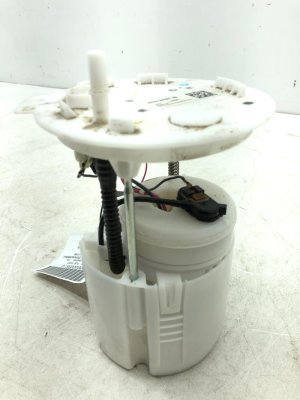
On a 2019-2023 Ford Ranger, code P0461 is almost always caused by a faulty fuel level sending unit. This part is integrated into the fuel pump assembly inside the gas tank. The fix requires dropping the fuel tank to replace the entire assembly, which can be a costly repair if not under warranty.
- P0461 on a 2019-2023 Ranger almost certainly means you need a new fuel level sending unit.
- The sending unit is part of the fuel pump assembly, so the entire module must be replaced.
- This is not a simple repair for a DIYer, as it requires safely removing the fuel tank.
- The vehicle remains safe to drive, but you must manually track your fuel level to avoid running out of gas.
- If your truck is still under the powertrain warranty, this repair should be covered by your Ford dealer.
What's Unique About the 2019-2023 Ford Ranger
The 2019-2023 Ford Ranger (T6 platform) appears prone to premature failure of the fuel level sending unit. Forum discussions among owners of these specific model years show a pattern of this code appearing on relatively new, low-mileage trucks. The issue is consistently traced back to the sending unit within the fuel tank, rather than wiring or computer problems, and is often handled as a warranty repair by dealers.
Symptoms You May Notice
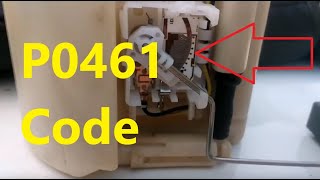
- Inaccurate or wildly fluctuating fuel gauge 🎬 Watch: Understanding P0461 causes and fixes
- Fuel gauge stuck on empty or full
- Check Engine Light is on
- Low fuel warning light may stay on or flash, even with a full tank
- Inaccurate "Distance to Empty" calculation on the trip computer
- Replacing the instrument cluster without first testing the fuel sending unit and wiring.
- Replacing the PCM without exhaustive diagnostics.
Most Likely Causes
- Faulty Fuel Level Sending Unit 🔴 High Probability → Shop Fuel Tank Sending Unit Owner reports on forums for the 2019-2023 Ranger consistently point to the sending unit failing prematurely, sometimes with fewer than 5,000 miles on the vehicle. The resistive strip on the sensor can wear out, creating dead spots, or the float arm can stick or fail. The sensor is part of the complete fuel pump module.
How to confirm: A technician can use a scan tool to monitor the fuel level sensor's voltage/resistance readings while rocking the vehicle or adding/removing fuel. If the readings are erratic or do not change, the sender is likely bad. You can also test the resistance of the sender directly at its connector with a multimeter; it should read approximately 10 ohms when full and 180 ohms when empty for this generation of Ranger.
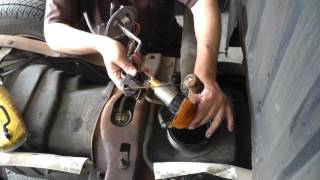
Typical fix: Replace the entire fuel pump and sender assembly. This requires dropping the fuel tank for access. 🎬 Watch: How to remove the fuel pump and sending unit
Est. part cost: $250-$500 - Wiring or Connector Issue ⚪ Low Probability
How to confirm: Visually inspect the wiring harness leading to the fuel tank for any signs of damage, corrosion, or loose connections, particularly at the connector on top of the fuel pump assembly. Check for continuity and proper voltage at the fuel pump connector using a multimeter and a wiring diagram.
Typical fix: Repair the damaged section of the wiring harness or clean/replace the faulty connector.
Est. part cost: $10-$50
Rare But Worth Checking
- Powertrain Control Module (PCM) Fault: → Shop Engine Control Module (ECM) This is very rare. The PCM should only be considered after the sending unit and all related wiring have been thoroughly tested and confirmed to be in good working order. In some cases on other vehicles, a PCM software update (reflash) has been known to fix overly sensitive monitoring logic for the fuel level circuit.
- Instrument Panel Cluster (IPC) Fault: An internal failure of the instrument cluster could prevent the gauge from displaying the correct level. A scan tool can often perform a self-test on the cluster to sweep the gauges and check for proper function. On older Rangers, a separate 'anti-slosh' module was a common failure point, but this function is integrated into the IPC on modern trucks.
Diagnosis Steps
- Read the code with an OBD-II scanner to confirm P0461 is present.
- Use a scan tool with live data capability to monitor the Fuel Level Sensor voltage or resistance PID. Observe the readings. Are they erratic or stuck at a specific value?
- Perform an Instrument Panel Cluster (IPC) self-test using a capable scan tool to check if the fuel gauge sweeps correctly. This helps rule out a faulty gauge in the cluster.
- If the gauge works but the signal is erratic, the next step is to inspect the wiring. Locate the fuel pump module connector on top of the fuel tank and check for any visible damage, corrosion, or loose pins.
- If the wiring appears okay, disconnect the connector and measure the resistance across the two pins for the fuel level sender. On a Ranger, it should be around 10 ohms (full) to 180 ohms (empty). As you gently rock the vehicle, this reading should change smoothly. If it jumps around or is an open/short circuit, the sending unit has failed.
- As a quick wiring check, you can use a jumper wire to short the signal wire pin to the ground pin in the harness-side connector. With the key on, this should make the fuel gauge read full, confirming the integrity of the wiring to the cluster.
- If the sending unit tests good, perform a continuity test on the signal and ground wires from the fuel pump connector back to the PCM to rule out a break in the wiring.
- If the sending unit and wiring are confirmed to be good, the issue may be with the PCM, though this is highly unlikely.
Parts You'll Likely Need
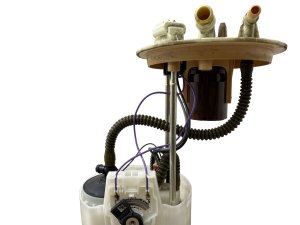
- Fuel Pump and Sender Assembly
(OEM #KB3Z-9H307-E)— This is the most common failure point for the P0461 code on this vehicle. The fuel level sensor is integrated into this assembly and is not typically sold separately. This part number supersedes KB3Z-9H307-A, KB3Z-9H307-B, KB3Z-9H307-C, and KB3Z-9H307-D.
Trusted brands: Motorcraft, Delphi
OEM price range: $450-$725
Aftermarket price range: $200-$350
Related Codes That Often Appear With This One
- P0462 — Indicates the fuel level sensor circuit input is low (short to ground), which can be caused by the same wiring faults or a failing sensor.
- P0463 — Indicates the fuel level sensor circuit input is high (open circuit), which can be caused by a broken wire, unplugged connector, or a failed sensor.
Platform-Specific Known Issues
- Premature Failure Under Warranty: Numerous owners on the Ranger5g.com forums have reported this code appearing on trucks with very low mileage, often under 20,000 miles and sometimes as low as 5,000. In nearly all documented cases, the dealer diagnosed a faulty fuel level sending unit and replaced the entire fuel pump assembly under the factory warranty.
- Owner Repair Story: A user on Ranger5g.com with a 2020 Ranger experienced a CEL with P0461. The dealer confirmed the fuel level arm sensor had failed. The repair required dropping the fuel tank to replace the entire in-tank fuel pump assembly. The owner noted the repair was covered under warranty and took the dealership a full day to complete.
Mechanic-Grade Diagnostic Values
- Fuel Level Sensor Resistance — expected: Approximately 16 ohms at Empty and 158-160 ohms at Full.. Failure: Readings are erratic, jump suddenly, or show an open/short circuit when testing.
- Fuel Level Sensor Voltage (Live Data) — expected: A smooth transition between approximately 0.5V and 4.5V.. Failure: Voltage is stuck, erratic, or outside the expected range.
Scan Tool Commands That Help
- Ford IDS (Integrated Diagnostic System): Self-Test -> All Continuous Memory DTCs — To pull all codes from all modules, which may reveal related faults in the Instrument Panel Cluster (IPC) or Body Control Module (BCM) that a generic scanner might miss.
- Ford IDS (Integrated Diagnostic System): Datalogger -> PID Monitoring — To monitor the fuel level sensor voltage or percentage PID in real-time while rocking the vehicle to check for smooth, logical changes in the signal.
Wiring & Ground Locations
- G103 / G104 — Located on the frame rail, often near the starter or fuel pump driver module area.. The fuel pump and the fuel level sending unit may share a common ground point. A corroded or loose ground at this location can cause erratic readings and trigger a P0461 code, even if the sending unit itself is functional.
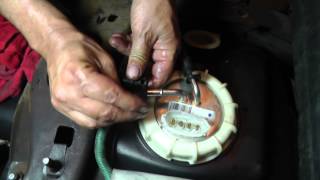
- Fuel Pump Module Connector — On top of the fuel tank, accessible after dropping the tank or, on some models, by removing the truck bed.. 🎬 Watch: How to drop the Ford Ranger fuel tank This is the primary connection point for testing the sending unit's resistance and inspecting for wiring damage or corrosion without having to remove the entire assembly from the tank initially.
OEM Part Supersession History
KB3Z-9H307-A, KB3Z-9H307-B, KB3Z-9H307-C, KB3Z-9H307-D→KB3Z-9H307-E— Standard part revision and improvement by the manufacturer to address potential issues, likely including the premature failure of the sending unit.
Diagnostic Flowchart
Other Known Issues on This Vehicle
Issues unrelated to this code that are worth knowing about as an owner of this generation:
- 10R80 Transmission Harsh/Delayed Shifting 🟠 Medium — A significant minority of owners report issues with the 10-speed automatic transmission, including harsh shifts, delayed engagement, and hunting for gears. It can occur at any mileage. (Ref: Multiple TSBs have been issued, including TSB 23-2123 and 24-2101, which address the issue through software updates or, in some cases, main control valve body overhaul.)
- Frame Surface Rust / Peeling Wax Coating 🟡 Low — Many owners, particularly in regions with winter road salt, have reported premature surface rust on the frame due to inadequate wax coating application from the factory. (Ref: Ford has addressed this with goodwill programs and TSBs (e.g., 19-NA-255 for GM, but similar principles apply to Ford's program) to have dealers re-treat affected frames, though owners report mixed success with the program.)
- SYNC 3 Infotainment System Glitches 🟡 Low — Owners report occasional issues with the SYNC 3 system, such as blank screens, freezing, backup camera staying on, or Bluetooth connectivity problems. These issues are often intermittent. (Ref: No specific recall, but standard troubleshooting involves a soft reset (holding Power and Seek Right buttons), a key cycle, or ensuring the software is updated.)
- Bucking/Surging While Cruising 🟠 Medium — Some owners experience a bucking or surging sensation, often mistaken for a misfire or torque converter shudder, while cruising at steady speeds between 30-50 mph. (Ref: This is not covered by a TSB, but a common cause identified by technicians is moisture intrusion into the EGR DPFE sensor. The fix is to replace the sensor and clean or replace the EGR inlet tube.)
Used vs. New Parts: Buying Guide for This Vehicle
When a used part is the smart pick: For this specific failure, a used part is strongly discouraged. The fuel level sending unit is a known high-failure-rate item on this platform. Buying a used assembly carries a significant risk of getting a part that has already failed or will fail shortly.
Donor-vehicle mileage cap: roughly under 15000 miles for the part to have meaningful remaining life.
What to inspect on the donor part:
- Verify the part is from a collision-damaged vehicle, not one junked for engine or electrical problems.
- Inspect the electrical connector pins for any signs of corrosion, melting, or damage.
- Ensure the plastic housing is not cracked or damaged from removal.
- If possible, test the resistance of the sending unit before purchase to ensure it is within the expected range (approx. 16-160 ohms).
OEM-only on this vehicle (don't cheap out):
- Fuel Pump and Sender Assembly
Aftermarket brands forum-validated for this vehicle:
- Motorcraft (OEM)
Brands owners have reported issues with on this vehicle:
- Unnamed or 'white-box' brands from online marketplaces should be avoided due to the critical nature of the fuel pump and the high failure rate of the original sensor design.
Real Owner Stories
Aggregated from forums and TSBs cited above. Mileages and costs reflect what owners reported in those sources.
2022 Ranger — 4600 miles
Symptoms: Solid check engine light; Ford Pass app alert stating the fuel level signal repeatedly moved in and out of normal range; fuel gauge showed 3/4 tank while driving fine.
What fixed it: Requires replacement of sensor or fuel pump components (diagnosed as P0461).
Source hint: owner_reports
2021 Ranger — 4800 miles
Symptoms: P0461 code triggered at very low mileage.
What fixed it: The dealer confirmed a bad sending unit and replaced it under warranty.
Source hint: https://www.ranger5g.com/forum/threads/pcm-detected-fuel-level-signal-in-out-if-range.26322/
2020 Ranger — ~15000 miles
Symptoms: Check Engine Light with P0461; fuel level arm sensor failure.
What fixed it: Replacement of the entire in-tank fuel pump assembly, which required dropping the fuel tank.
Source hint: vehicle_specific_issues: Owner Repair Story
2019 Ranger Lariat
Symptoms: Fuel sensor went out; gauge shows no gas (empty) all the time.
What fixed it: Replacement of the fuel pump assembly (confirmed via community diagnostic resistance testing of 10-180 ohms).
Source hint: https://www.ranger5g.com/forum/threads/2019-ranger-lariat-fuel-sensor-has-gone-out-it-shows-i-have-no-gas-all-the-time-is-this-a-easy-fix.29742/
Related OBD-II Codes
Frequently Asked Questions
Is the P0461 code on my 2019-2023 Ford Ranger covered under warranty?
What are the specific resistance values for testing the fuel level sender on a 2019-2023 Ranger?
Can I just replace the fuel level sensor, or do I need the whole fuel pump assembly?
Does the Ford Bronco share this P0461 issue since it's on the same platform?
Could my Ranger's P0461 code be caused by the 10R80 transmission issues mentioned in TSB 24-2101?
My Ford Pass app says the fuel level signal 'repeatedly moved in and out of normal operating range.' Is this P0461?
Helpful Videos

Used OEM Parts in Stock
New Aftermarket Parts Available


The information in this article is provided for general reference and educational purposes only. Vehicle specifications, procedures, and part compatibility can vary by production date, trim level, and region. Always consult your vehicle's factory service manual and verify part numbers before purchasing or performing repairs. Safety-critical components such as airbags, seat belts, and braking systems should be installed by a qualified professional.
- Ford Ranger:
- 🧭 Diagnostic Flowchart
- 🎬 Helpful Videos
- 🛍️ Shop This Part
- What's Unique About the 2019-2023 Ford Ranger
- Symptoms You May Notice
- Most Likely Causes
- Rare But Worth Checking
- Diagnosis Steps
- Parts You'll Likely Need
- Related Codes That Often Appear With This One
- Platform-Specific Known Issues
- Mechanic-Grade Diagnostic Values
- Scan Tool Commands That Help
- Wiring & Ground Locations
- OEM Part Supersession History
- Other Known Issues on This Vehicle
- Used vs. New Parts: Buying Guide for This Vehicle
- Real Owner Stories
- 2022 Ranger — 4600 miles
- 2021 Ranger — 4800 miles
- 2020 Ranger — ~15000 miles
- 2019 Ranger Lariat
- Related OBD-II Codes
- Frequently Asked Questions
- 🎟️ Get 5% Off