

P0461 on 2013-2018 Honda Accord: Fuel Level Sensor Causes and Fixes
This code means your car's computer is getting an erratic signal from the fuel level sensor, causing an incorrect fuel gauge reading. The most common fix is replacing the fuel level sending unit, which is located in the fuel tank. Expect to pay $150-$400 for a DIY repair, or $250-$600 at a shop, depending on whether just the sensor or the entire fuel pump assembly is replaced.
- P0461 on a 2013-2018 Accord means your fuel gauge is unreliable due to a problem with the fuel level sensor circuit.
- The most likely culprit is a failed fuel level sending unit located inside the fuel tank.
- Before replacing parts, check for debris in the tank that could be blocking the sensor's float arm.
- The vehicle is safe to drive, but you should track your mileage to avoid running out of fuel.
- Repair costs can differ significantly between the 2013-2017 models and the 2018 model due to a generational change in parts.
What's Unique About the 2013-2018 Honda Accord
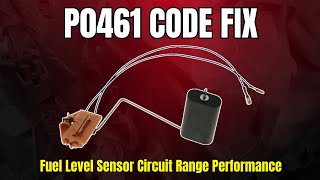
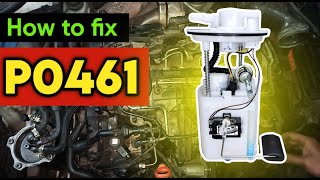
For the 2013-2018 Accord, this code is almost always a straightforward hardware issue rather than a software glitch, 🎬 Watch: Diagnostic walkthrough for P0461 on this Accord generation which has been noted on other Honda models like the Civic. A unique potential cause on this platform is debris within the fuel tank physically obstructing the sensor's float arm, leading to a false reading. The repair cost can also vary significantly between the 9th generation (2013-2017) and the 10th generation (2018) due to differences in the fuel pump assembly design. The 9th generation uses a single fuel pump module, while the 10th generation has a separate fuel pump and sending unit assembly.
Generation note: This range covers two Accord generations: the 9th (2013-2017) and the 10th (2018). While the causes and symptoms are similar, the fuel pump assembly and sending unit are different parts with significantly different costs. The 10th generation part is generally more expensive. For the 9th gen, the sending unit is integrated into the fuel pump module (part #17045-T2A-A02), whereas the 2018 1.5L model has a separate sending unit available.
Symptoms You May Notice
- Check Engine Light is on
- Fuel gauge reading is inaccurate or fluctuates wildly
- Fuel gauge is stuck on Full or Empty
- Low fuel warning light illuminates at the wrong time
- Distance-to-empty calculation is incorrect
- The vehicle may be unable to recognize a refueling event (as noted in manufacturer documentation regarding this code).
- Replacing the fuel pump when only the sending unit has failed. If the car runs fine but the gauge is wrong, the pump itself is likely okay. Some assemblies require replacing the whole unit, but check if the sender can be replaced separately first.
- Replacing the instrument cluster without a full diagnosis. This is an expensive and unlikely fix.
Most Likely Causes
- Faulty Fuel Level Sending Unit 🔴 High Probability → Shop Fuel Tank Sending Unit The variable resistor on the sending unit can wear out over time from constant contact and exposure to fuel, causing it to send an erratic or open/shorted signal. This is the most common failure point for this code.
How to confirm: Access the fuel pump assembly under the rear seat. Disconnect the sensor and measure its resistance with a multimeter while manually moving the float arm up and down. The resistance should change smoothly. For many Hondas, the expected range is approximately 2-5 ohms at Full and 105-110 ohms at Empty. If the reading jumps, drops out (infinite resistance), or doesn't change, the unit is bad.
Typical fix: Replace the fuel level sending unit. In many 9th generation Accords, the sender is integrated into the fuel pump module and the entire assembly is replaced. For the 2018 model, the sender may be a separate component.
Est. part cost: $50-$200 for the sender alone; $250-$500+ for a complete fuel pump assembly. - Debris in Fuel Tank 🟡 Medium Probability → Shop Fuel Tank Sediment or rust from poor quality fuel or age can accumulate at the bottom of the tank and physically block the float arm's movement, preventing it from accurately reflecting the fuel level.
How to confirm: Visually inspect the inside of the fuel tank when the fuel pump assembly is removed. Look for sediment or foreign objects that could impede the float.
Typical fix: Remove the fuel pump assembly and clean the debris out of the fuel tank. While the unit is out, check the sensor for proper operation.
Est. part cost: $0 if cleaning is all that's needed. - Damaged Wiring or Corroded Connector ⚪ Low Probability The main electrical connector on top of the fuel pump assembly is somewhat exposed to moisture that can get into the cabin, leading to corrosion on the pins. This corrosion can alter the voltage signal sent to the PCM.
How to confirm: Visually inspect the wiring harness and connector going to the fuel pump module. Check for green or white corrosion on the pins, or any frayed or broken wires. Perform a voltage drop test between the sensor and the PCM to check for excessive resistance in the circuit.
Typical fix: Clean the connector terminals with an electrical contact cleaner or replace the connector pigtail if corrosion is severe. Repair any broken wires.
Est. part cost: $10-$30 for a new connector pigtail.
Rare But Worth Checking
- Faulty Instrument Cluster: If the sensor and wiring test good, the gauge cluster itself could be failing to interpret the signal correctly. This is uncommon but possible, and often a last resort after other components are verified.
- Corroded Fuel Tank Ground Strap: → Shop Engine Ground Strap A bad ground can cause a variety of strange electrical issues, including an incorrect voltage reference for the fuel level sensor. Check the ground strap from the chassis to the tank area for rust or looseness.
- Faulty Powertrain Control Module (PCM): → Shop Engine Control Module (ECM) In very rare cases, the PCM's internal circuit for reading the fuel level sensor can fail. This should only be considered after all other possibilities (sensor, wiring, grounds) have been exhaustively ruled out.
Technical Service Bulletins (TSBs) & Recalls
While the Accord is primarily known for hardware failures, other Honda models have seen software-related issues for this code. For instance, TSB Bulletin #A19-035 notes that PCM software can misinterpret sensor inputs as a fuel sender issue, triggering P0461. Similarly, TSB Bulletin #ONL6LS06242021 describes how an improperly functioning on-board emission-related diagnostic can turn on the MIL and store this DTC. More recently, TSB Bulletin #A23-054 highlights that during refueling, a vehicle may be unable to recognize the event when P0461 is present.
Diagnosis Steps
- Read the trouble code with an OBD-II scanner to confirm P0461 is present.
- Using the scanner's live data function, monitor the 'Fuel Level Sensor' voltage or percentage. Observe if the reading is stuck, erratic, or doesn't change after driving a significant distance (Honda's diagnostic procedure can require driving over 100 miles to confirm the fault).
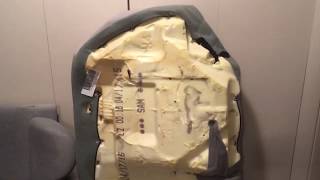
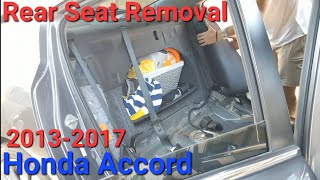
- Gain access to the fuel pump assembly, which is under the rear seat cushion. For the 2013-2018 Accord, this involves removing the lower seat cushion. 🎬 See how to remove the rear seat cushion
- Disconnect the battery. Disconnect the electrical connector on top of the fuel pump assembly and inspect the pins for any signs of corrosion or damage.
- If the connector looks good, test the sending unit. Reconnect the battery. With a multimeter, back-probe the signal and ground wires for the sensor. Check the voltage as you add or remove a small amount of fuel, or gently rock the vehicle. The voltage should change smoothly.
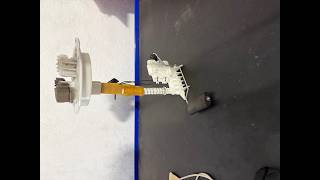
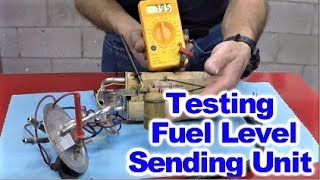
- For a more definitive test, remove the fuel pump assembly from the tank. Measure the sensor's resistance across its terminals while manually moving the float arm from empty to full. 🎬 Watch: Step-by-step guide to testing a fuel level sensor The resistance should sweep smoothly without any dead spots. A typical Honda range is ~110 Ohms (Empty) to ~2 Ohms (Full).
- If the sensor tests good, the problem is likely in the wiring harness between the sensor and the PCM, or, rarely, the PCM or instrument cluster itself.
Parts You'll Likely Need
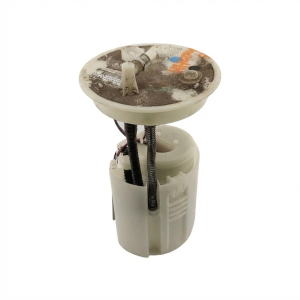
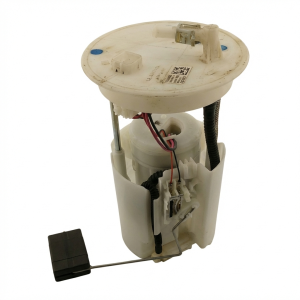
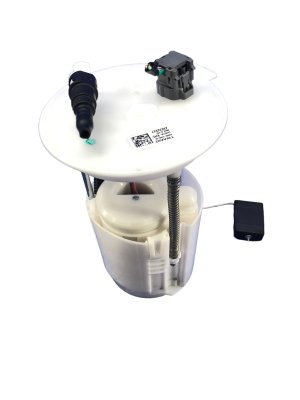
- Fuel Pump Module Assembly
(OEM #17045-T2A-A02 (for 9th Gen, 2013-2017))— For the 9th generation Accord, the sending unit is integrated with the fuel pump and sold as a single assembly. This is a comprehensive repair that also replaces the fuel pump and filter.
Trusted brands: Honda (Genuine OEM), Denso, Spectra Premium
OEM price range: $400-$600
Aftermarket price range: $250-$450 - Fuel Pump Module / Sending Unit
(OEM #17045-TVA-A03 (for 10th Gen 1.5L, 2018))— For the 2018 model (10th generation), the fuel pump module is the primary replacement part. This part number has superseded previous versions.
Trusted brands: Honda (Genuine OEM), Bosch, Delphi
OEM price range: $350-$500
Aftermarket price range: $200-$400
Mechanic-Grade Diagnostic Values
- Fuel Level Sensor Live Data Voltage — expected: ~0.5V (Empty) to ~4.5V (Full). Failure: Voltage is stuck, erratic, or outside of this range.
- Voltage between Fuel Pump 5P Connector Terminals No. 1 and No. 2 — expected: 5V to 8V with ignition switch ON (II). Failure: If voltage is not as specified, check for an open in the YEL/BLK or BLK wire, or a poor ground at G402.
- Fuel Level Sending Unit Resistance — expected: A smooth sweep between Empty and Full. Specific values vary, but a common Honda range is ~110 Ohms (Empty) to ~2 Ohms (Full).. Failure: Readings jump, drop to zero, show infinite resistance (open), or do not change when the float arm is moved.
Hidden / Shadow Codes Worth Checking
- P0460, P0462, P0463, P0464: These are related fuel level sensor circuit codes. P0462 (Circuit Low) and P0463 (Circuit High) are more specific than P0461 and can help pinpoint an electrical short or open. (see via Standard OBD-II Scanner)
- U0029, U0155: These are communication (U-series) codes. Their presence alongside P0461 could indicate a broader network issue between the PCM and the instrument panel cluster, rather than just a sensor failure. (see via Advanced scan tool like Honda HDS.)
Scan Tool Commands That Help
- Honda Diagnostic System (HDS): Live Data Monitoring (Fuel Level Sensor Output) — Use during diagnosis to watch the sensor's reported level in real-time while rocking the vehicle or driving to see if the signal is erratic, stuck, or illogical.
- Honda Diagnostic System (HDS): Clear DTCs — After the repair is complete, all codes must be cleared from the PCM to turn off the Check Engine Light and reset the system.
- Honda HDS or equivalent: PCM Idle Learn Procedure — This may be required after disconnecting the battery or replacing/resetting the PCM to allow the engine computer to recalibrate idle parameters.
Wiring & Ground Locations
- G402 — A chassis ground point, likely located near the fuel tank area.. A poor ground at G402 can cause incorrect voltage reference for the fuel level sending unit, leading to erratic readings and triggering P0461. Honda's diagnostic procedure points to checking this ground if voltage tests at the pump connector fail.
- Fuel Pump Connector (5P) — On top of the fuel pump assembly, accessible under the rear seat cushion.. This is the primary connection point for the fuel pump and sending unit. Terminals No. 1 (YEL/BLK wire) and No. 2 (BLK wire) are used for testing the sending unit circuit voltage and resistance. Corrosion or damage here is a common cause of failure.
OEM Part Supersession History
17045-T2A-A00, 17045-T2A-A01→17045-T2A-A02— Standard part revision and improvement by the manufacturer.17045-TVA-A01, 17045-TVA-A02→17045-TVA-A03— Standard part revision and improvement by the manufacturer.
Model Year Variations Within This Range
- 2013-2017 (9th Gen): Uses fuel pump module assembly 17045-T2A-A02. While a separate sending unit (17047-T2A-A00) is cataloged, it is noted as being included with the full pump assembly, making the entire module the typical service part.
- 2018 (10th Gen, 1.5L): Uses fuel pump module assembly 17045-TVA-A03. This part also includes the sending unit and fits 2018-2022 Accord models with the 1.5L engine.
Diagnostic Flowchart
Other Known Issues on This Vehicle
Issues unrelated to this code that are worth knowing about as an owner of this generation:
- Starter Motor Failure / Grinding Noise 🔴 High — Common on 2013-2016 V6 models, often occurring after the 36,000-mile warranty expires. Symptoms include intermittent no-start, clicking sounds, or a grinding noise. (Ref: Honda TSB 16-002. The fix involves replacing the starter and rotating the torque converter ring gear by one bolt hole to address a clearance issue.)
- VTC Actuator Rattle on Cold Start 🟠 Medium — Affects four-cylinder engines, causing a loud, brief rattle for about 2 seconds on cold startups. It is due to a defective VTC actuator. (Ref: Honda TSB 09-010. The bulletin provides a procedure to replace the VTC actuator.)
- LED Daytime Running Light (DRL) Failure 🟡 Low — Common on 2016-2017 models. The LED strip in the headlight assembly fails or becomes dim due to heat damage to the lens. (Ref: Honda Service Bulletin 19-042 / Warranty Extension. Honda extended the warranty for this specific issue to 10 years with unlimited mileage.)
- Fuel/Oil Dilution (1.5T Engine) 🔴 High — Primarily affects 2018 models with the 1.5L Turbo engine, especially in colder climates and with frequent short trips. Unburned fuel contaminates the engine oil, raising the oil level and reducing lubrication. (Ref: Honda issued software updates to help the engine warm up faster and offered warranty extensions for some vehicles. This issue has led to class-action lawsuits.)
- Prematurely Warped Front Brake Rotors 🟡 Low — A very common complaint across many Honda models, including the Accord. Owners report a steering wheel shake or pulsation when braking, especially from highway speeds.
Used vs. New Parts: Buying Guide for This Vehicle
When a used part is the smart pick: A used fuel pump assembly is a significant gamble, as the sending unit fails from wear and fuel exposure. It only makes sense if the donor vehicle has very low mileage, the part comes with a warranty (e.g., 1 year), and the cost saving is substantial (over 50% less than a new aftermarket part).
Donor-vehicle mileage cap: roughly under 40000 miles for the part to have meaningful remaining life.
What to inspect on the donor part:
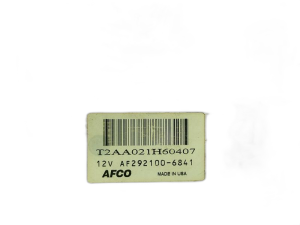
- Verify the part number on the used unit matches the required OEM number for your vehicle's generation.
- Inspect the electrical connector pins for any signs of corrosion, melting, or damage.
- Ask for the VIN of the donor car to verify its mileage and year.
- Ensure the plastic housing is not cracked or damaged from removal.
Aftermarket brands forum-validated for this vehicle:
- Denso (often the OEM supplier)
- Bosch
- Delphi
- Spectra Premium
Brands owners have reported issues with on this vehicle:
- Unnamed, no-brand 'white box' parts from online marketplaces should be avoided, as their internal resistor quality and longevity are highly questionable.
Real Owner Stories
Aggregated from forums and TSBs cited above. Mileages and costs reflect what owners reported in those sources.
2013-2017 Honda Accord
Symptoms: Owners on DriveAccord.net report fuel gauge issues where the reading fluctuates wildly or the gauge becomes inaccurate, often pointing toward a failure of the sending unit.
What fixed it: Replacement of the fuel level sending unit or the entire fuel pump module assembly.
Source hint: https://www.driveaccord.net/
2018 Honda Accord
Symptoms: Discussions regarding the 10th generation platform mention electrical gremlins, though P0461 specifically is not described as a widely reported systemic issue for this year compared to other problems. However, an owner reported a problem of the vehicle suddenly stopping while in motion on a highway, noting they had received a product update notice from Honda regarding a fuel level sensor DTC P0461 software update (NHTSA ODI #11210146).
What fixed it: Replacement of the fuel level sender, which may be a separate component on this specific model year.
Source hint: https://www.reddit.com/r/accord/
Related OBD-II Codes
Frequently Asked Questions
Is there a TSB for the P0461 fuel level sensor issue on my 2013-2018 Accord?
Can I replace just the sending unit on my 2018 Accord to fix P0461?
Where is the fuel level sensor located on the 2013-2018 Accord?
What are the resistance specifications for testing the Accord's fuel sender?
Does the 2015 Acura TLX share this same fuel sensor problem?
Could the P0461 code be related to the fuel/oil dilution issue on my 2018 1.5T Accord?
Helpful Videos


Used OEM Parts in Stock
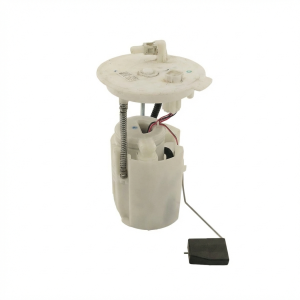
New Aftermarket Parts Available

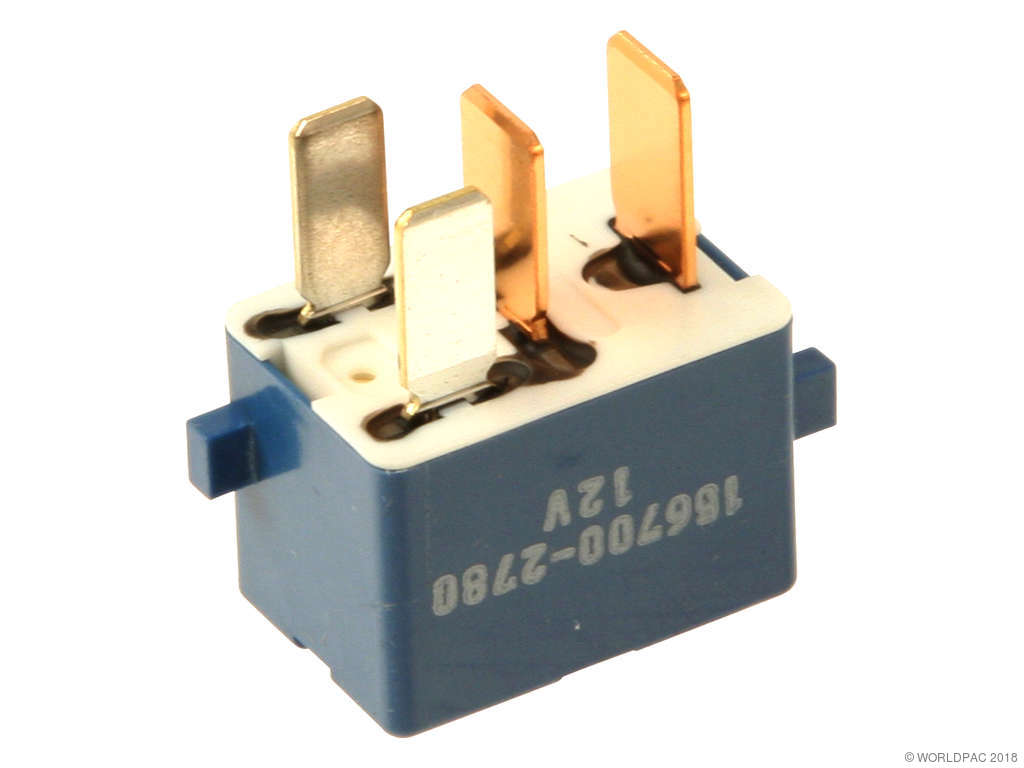

The information in this article is provided for general reference and educational purposes only. Vehicle specifications, procedures, and part compatibility can vary by production date, trim level, and region. Always consult your vehicle's factory service manual and verify part numbers before purchasing or performing repairs. Safety-critical components such as airbags, seat belts, and braking systems should be installed by a qualified professional.
- Honda Accord:
- 🧭 Diagnostic Flowchart
- 🎬 Helpful Videos
- 🛍️ Shop This Part
- What's Unique About the 2013-2018 Honda Accord
- Symptoms You May Notice
- Most Likely Causes
- Rare But Worth Checking
- Technical Service Bulletins (TSBs) & Recalls
- Diagnosis Steps
- Parts You'll Likely Need
- Mechanic-Grade Diagnostic Values
- Hidden / Shadow Codes Worth Checking
- Scan Tool Commands That Help
- Wiring & Ground Locations
- OEM Part Supersession History
- Model Year Variations Within This Range
- Other Known Issues on This Vehicle
- Used vs. New Parts: Buying Guide for This Vehicle
- Real Owner Stories
- 2013-2017 Honda Accord
- 2018 Honda Accord
- Related OBD-II Codes
- Frequently Asked Questions
- 🎟️ Get 5% Off