

P0461 on 2017-2019 Hyundai Ioniq: Fuel Level Sensor Performance, Causes, and Fixes
This code means the fuel gauge is getting an unreliable signal from the in-tank fuel level sensor. The most common fix is replacing the fuel level sending unit, which is an OEM part costing around $80-$115. The job is moderately difficult for a DIYer as it requires accessing the top of the fuel tank under the rear seat.
- P0461 on a Hyundai Ioniq points to a problem with the fuel level sensor's signal, leading to an unreliable fuel gauge.
- The most probable cause is a faulty fuel level sending unit located inside the fuel tank.
- The Ioniq Hybrid and Plug-In Hybrid models use different part numbers for the sending unit, so verify the correct part for your vehicle.
- While driving is possible, the risk of running out of fuel is high. It's best to get this fixed promptly.
- Diagnosis involves checking the sensor's signal with a scan tool or multimeter; replacement requires accessing the top of the fuel tank.
What's Unique About the 2017-2019 Hyundai Ioniq
While the P0461 code is generic, the Hyundai Ioniq platform has distinct parts for its Hybrid and Plug-In Hybrid (PHEV) models. There are no widely documented, platform-specific patterns of failure, TSBs, or recalls for this code on the 2017-2019 Ioniq. The diagnosis follows a standard procedure, but it's crucial to use the correct sending unit for your specific Ioniq variant, as the Hybrid and PHEV models use different part numbers. The Ioniq's direct platform mate, the 2017-2022 Kia Niro, shares the same fundamental design and is also known to experience this issue.
Symptoms You May Notice
- Check Engine Light is on
- Fuel gauge reading is erratic, fluctuating, or stuck on full or empty
- Low fuel warning light may illuminate even with fuel in the tank
- Cruise control may be disabled when the Check Engine Light is active for this code.
- Replacing the entire fuel pump assembly when only the sending unit has failed. While they are often housed together, sometimes the sender can be replaced separately, saving money.
- Replacing the instrument cluster fuel gauge without first diagnosing the sensor and wiring.
Most Likely Causes
- Faulty Fuel Level Sending Unit 🔴 High Probability → Shop Fuel Tank Sending Unit The sending unit is a mechanical part with a variable resistor (potentiometer) that has a wiper arm in constant contact with a resistive strip. Over time, the strip can wear out, or become contaminated by fuel additives or sulfur, creating dead spots that lead to erratic voltage signals.
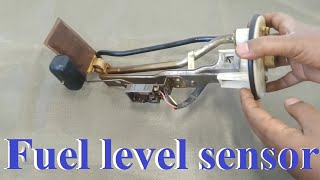
How to confirm: After accessing the unit, test the resistance (ohms) with a multimeter while manually moving the float arm. 🎬 Watch: How to test and replace a fuel level sensor The reading should change smoothly through its range. If it's erratic, jumps, or shows an open circuit (infinite resistance), the unit is bad.
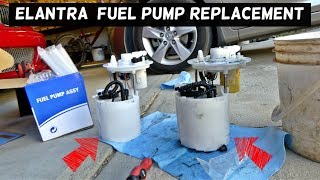
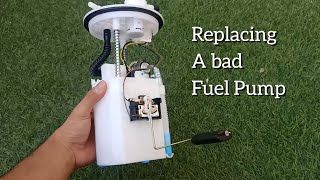
Typical fix: Replace the fuel level sending unit inside the fuel tank. This part is often attached to the fuel pump module but can usually be replaced separately.
Est. part cost: $80-$115 for an OEM part. - Wiring or Connector Issue 🟡 Medium Probability The wiring connector on top of the fuel pump assembly is located under the rear seat, making it susceptible to moisture from spills or condensation. This can lead to corrosion on the connector pins, creating high resistance and an unstable signal.
How to confirm: Visually inspect the wiring harness and connector at the top of the fuel pump assembly. Check for corrosion (green or white powder), loose pins, or frayed wires. Perform a voltage drop test on the power and ground wires; a reading above 0.1V on the ground side or 0.2V on the power side indicates excessive resistance.
Typical fix: Clean the connector terminals with a specialized contact cleaner, repair the damaged section of wire, or replace the connector pigtail.
Est. part cost: $5-$50 - Stuck or Damaged Float Arm ⚪ Low Probability Less common, but the float can get caught on other components inside the tank (like a dislodged baffle) or become saturated with fuel and sink, providing a false reading.
How to confirm: Visually inspect the float and arm mechanism when the sending unit is removed from the tank. Ensure it moves freely through its full range of motion without binding.
Typical fix: In most cases, the float is integral to the sending unit, so the entire unit is replaced. Occasionally, it may be possible to free a stuck arm.
Est. part cost: $80-$115
Rare But Worth Checking
- Faulty Powertrain Control Module (PCM): → Shop Engine Control Module (ECM) This is very rare. The PCM should only be considered after all other possibilities, including the sensor and its entire circuit, have been thoroughly tested and confirmed to be working correctly.
- Defective Instrument Cluster: An internal fault in the instrument cluster could cause the gauge to read incorrectly, but this is unlikely to be the primary cause if P0461 is the only code present, as the code is set by the PCM based on the sensor signal it receives.
- Damaged or Dislodged Fuel Tank Baffle: → Shop Fuel Tank In some vehicles, a plastic baffle inside the tank can break loose and interfere with the float arm's movement. This has been noted by owners of other vehicle makes and could theoretically occur.
Diagnosis Steps
- Scan the vehicle for any other OBD-II codes. Note the freeze frame data for P0461 to see the conditions when the fault occurred.
- Use a scan tool with live data to observe the 'Fuel Level Sensor Voltage' and 'Fuel Level Percentage'. Note if the reading is stuck, erratic, or clearly incorrect (e.g., 100% on a half-full tank).
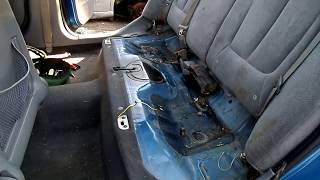
- Gain access to the top of the fuel tank, which is located under the rear seat cushion. 🎬 Watch: How to remove the rear seat cushion You will need to remove the seat bottom and then a metal access cover.
- Visually inspect the fuel pump module connector for any signs of corrosion, moisture, or damage.
- With the key on, engine off, back-probe the connector to check for proper voltage (typically a 5V reference) and a good ground (less than 0.1V).
- If power and ground are good, remove the fuel level sending unit from the tank. This requires disconnecting fuel lines and a locking ring.
- With the sensor connected but outside the tank, move the float arm by hand while observing the live data on your scan tool. The voltage should sweep smoothly from approximately 0.5V to 4.5V. Alternatively, use a multimeter set to Ohms to measure resistance across the sensor pins as you move the float. Look for smooth changes, not sudden jumps or open circuits. 🎬 See: How fuel level sensors operate and fail
- For intermittent issues, use an oscilloscope to back-probe the signal wire while driving or rocking the vehicle to spot any noise or signal dropouts that a multimeter would miss.
- If the sensor tests good, the problem is likely in the wiring between the sensor and the PCM. Perform a continuity test on the signal wire to check for breaks or shorts.
- If the sensor and wiring are confirmed to be good, the issue may be with the PCM, but this is highly unlikely.
Parts You'll Likely Need
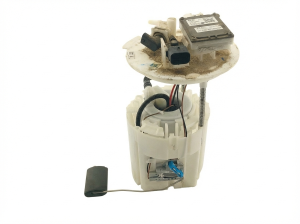
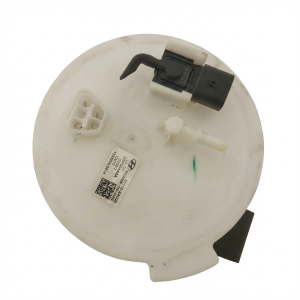
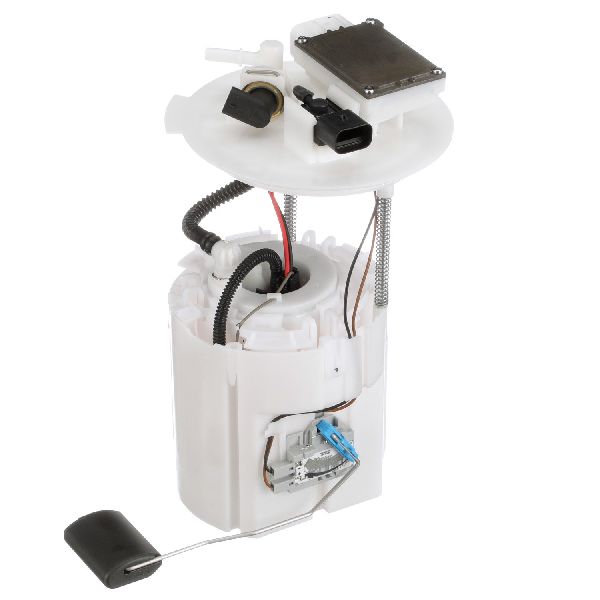
- Fuel Gauge Sending Unit (Hybrid)
(OEM #94460-G2000)— This is the sensor that fails and sends an incorrect signal. This part is for the standard Ioniq Hybrid without the plug-in feature.
Trusted brands: Hyundai (OEM)
OEM price range: $80-$115
Aftermarket price range: $50-$90 - Fuel Gauge Sending Unit (Plug-In Hybrid)
(OEM #94460-G2600)— This is the sensor that fails and sends an incorrect signal. This part is specifically for the Ioniq Plug-In Hybrid (PHEV) model.
Trusted brands: Hyundai (OEM)
OEM price range: $78-$105
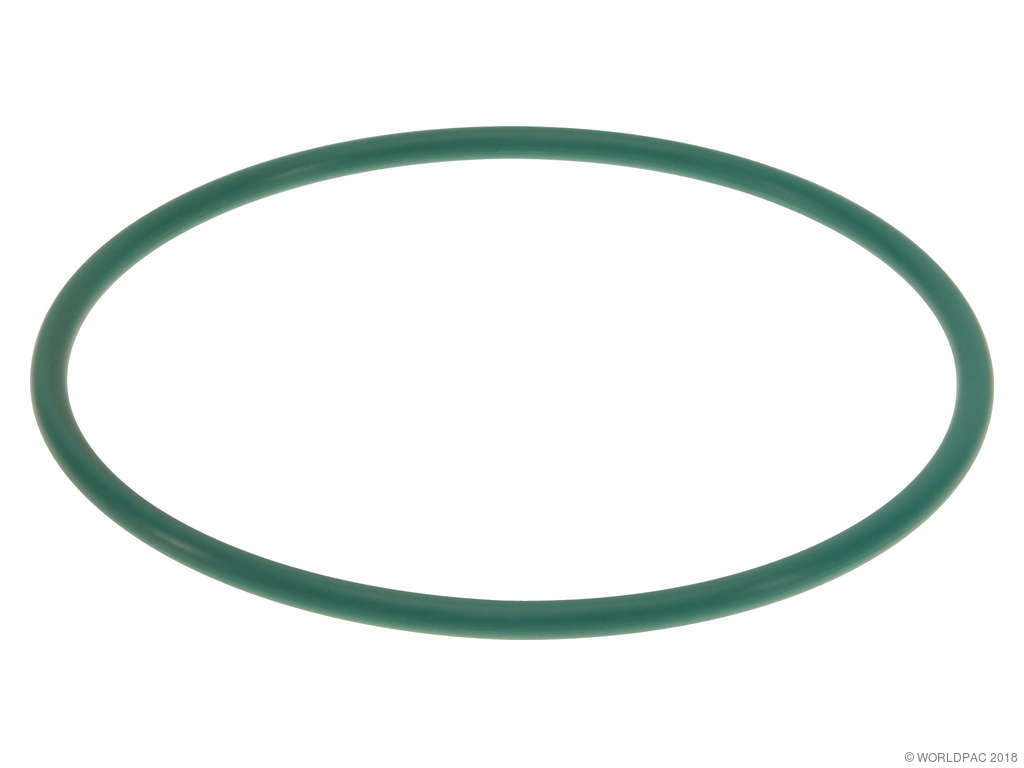
Aftermarket price range: $50-$90 - Fuel Pump Assembly Gasket / Seal — It is critical to replace the large O-ring or gasket that seals the fuel pump assembly to the tank whenever it is removed to prevent fuel leaks and evaporative emissions codes. This is often sold separately.
Trusted brands: Hyundai (OEM)
OEM price range: $10-$25
Aftermarket price range: $5-$15
Mechanic-Grade Diagnostic Values
- Fuel Level Sensor Resistance (General Hyundai/Kia) — expected: A smooth sweep between approximately 40 Ω (full) and 250 Ω (empty). Some systems may vary, for example 10 Ω (full) to 90 Ω (empty).. Failure: Readings that jump erratically, show an open circuit (infinite resistance), or are stuck at one value when the float arm is moved.
- Fuel Level Sensor Signal Voltage — expected: Approximately 0.5V (empty) to 4.5V (full).. Failure: Voltage that is stuck, outside of this range, or does not change smoothly as fuel level changes.
- Wiring Voltage Drop - Ground Side — expected: Less than 0.1V. Failure: A reading above 0.1V indicates excessive resistance in the ground circuit, which could be at the connector or a chassis ground point.
- Wiring Voltage Drop - Power Side — expected: Less than 0.2V. Failure: A reading above 0.2V indicates excessive resistance in the power feed circuit.
Scan Tool Commands That Help
- Hyundai GDS (Global Diagnostic System): Live Data / Data Analysis — Use this to monitor the fuel level sensor voltage and percentage in real-time. The GDS provides OEM-level data streams which can be more reliable than generic OBD-II scanners. This is the primary function for diagnosing P0461.
- Hyundai GDS (Global Diagnostic System): Actuation Test — While there isn't a direct actuation test for the passive fuel level sensor, the GDS can be used to command the fuel pump relay on/off. This can help verify the integrity of the fuel pump circuit wiring, which shares a harness and ground points with the level sensor.
- Hyundai GDS (Global Diagnostic System): DTC Analysis & Shop Manual — The GDS software for vehicles up to 2018 includes integrated workshop manuals and fault code diagnosis guides. After retrieving code P0461, the software provides step-by-step diagnostic procedures, wiring diagrams, and component locations specific to the vehicle.
Wiring & Ground Locations
- Fuel Pump / Sending Unit Connector — Located on top of the fuel pump assembly, accessible by removing the rear seat bottom cushion and a metal access plate.. This is the primary connection point for the fuel level sensor. Corrosion, moisture, or backed-out pins in this connector are a common cause of the P0461 code. A visual inspection and voltage/resistance tests should be performed here first.
- Chassis Ground Splice Pack — On many Hyundai/Kia vehicles of this era, the fuel pump and sender ground wire runs to a splice pack bolted to the chassis, often located in the trunk or under the rear seat area.. A corroded or loose ground at this splice pack can cause a floating ground, leading to erratic voltage readings from the fuel level sensor and triggering P0461. This is a critical point to check if the sensor itself tests good.
OEM Part Supersession History
94460-G2000→94460-G2000 (current)— No supersession found. The part number remains current for the specified application.
Heads up: This part is for the standard Ioniq Hybrid. It is not compatible with the Plug-In Hybrid (PHEV) model.94460-G2600→94460-G2600 (current)— No supersession found. The part number remains current for the specified application.
Heads up: This part is for the Ioniq Plug-In Hybrid (PHEV). It is not compatible with the standard Hybrid model.
Diagnostic Flowchart
Other Known Issues on This Vehicle
Issues unrelated to this code that are worth knowing about as an owner of this generation:
- Power Relay Assembly (PRA) Overheating 🔴 High — Common enough to trigger a recall (NHTSA 18V-704) for 2017-2018 Hybrid and PHEV models. Inadequate main relay connections can increase resistance and heat, posing a fire risk under the rear seat. (Ref: Recall 18V-704)
- Hydraulic Clutch Actuator (HCA) Oil Leak 🔴 High — Affects Hybrid and PHEV models. Burrs from manufacturing can damage an internal oil seal, leading to a leak that can cause an electrical short and potential engine compartment fire. (Ref: Recall available)
- Dual-Clutch Transmission (DCT) Hesitation/Slipping 🟠 Medium — Some owners report slipping or difficulty with gear shifts, particularly in stop-and-go traffic. Often attributed to transmission fluid condition or software calibration.
- Engine Stalling or Misfiring (Hybrid/PHEV) 🟠 Medium — Reports of stalling at low speeds have been linked to issues like clogged fuel filters or low fuel pressure.
- Unstable Electrical Ground (EV Models) 🔴 High — A recall (NHTSA 21V944000) was issued for 2017-2019 Ioniq Electric models where an unstable ground could cause the vehicle to enter fail-safe mode or accelerate unexpectedly after pedal release. (Ref: Recall 21V944000)
Used vs. New Parts: Buying Guide for This Vehicle
When a used part is the smart pick: A used fuel level sending unit from a low-mileage donor vehicle is a reasonable choice for this repair. Since it is a relatively simple electro-mechanical part without complex electronics, failure is primarily due to wear on the resistor strip. A used part can offer significant cost savings over a new OEM unit.
Donor-vehicle mileage cap: roughly under 60000 miles for the part to have meaningful remaining life.
What to inspect on the donor part:
- Verify the part number from the donor vehicle matches your required part (94460-G2000 for Hybrid, 94460-G2600 for PHEV).
- Inspect the electrical connector pins for any signs of corrosion (green or white powder) or heat damage.
- Manually move the float arm; it should travel smoothly through its entire range without binding or sticking.
- If possible, ask the seller to test the resistance with a multimeter as the arm is moved. The reading should be smooth and not jump or show an open circuit.
OEM-only on this vehicle (don't cheap out):
- Fuel Pump Assembly Gasket / Seal
Brands owners have reported issues with on this vehicle:
- Unbranded, 'no-name' sensors from online marketplaces should be treated with caution. Forum users and mechanics often report issues with incorrect resistance ranges or premature failure with very cheap aftermarket electronic parts.
Real Owner Stories
Aggregated from forums and TSBs cited above. Mileages and costs reflect what owners reported in those sources.
2017-2019 Hyundai Ioniq
Symptoms: The Check Engine Light came on for a fuel level sensor P0461, and the cruise control was also disabled while the light was active.
What fixed it: The code was cleared, which also restored the cruise control functionality.
Source hint: The Grenadier Forum - 'Check engine light - fuel level sensor P0461'
Related OBD-II Codes
Frequently Asked Questions
Where is the fuel level sensor located on my 2017-2019 Hyundai Ioniq?
Why is my cruise control not working while the P0461 code is active?
Is there a recall for the rear seat area that I should be aware of while fixing this?
Can I use a fuel level sensor from a Kia Niro to fix my Ioniq?
What part number do I need if I decide to buy a used sending unit for my Ioniq PHEV?
My Ioniq Electric is acting strange; could it be related to P0461?
Helpful Videos


Used OEM Parts in Stock
New Aftermarket Parts Available

The information in this article is provided for general reference and educational purposes only. Vehicle specifications, procedures, and part compatibility can vary by production date, trim level, and region. Always consult your vehicle's factory service manual and verify part numbers before purchasing or performing repairs. Safety-critical components such as airbags, seat belts, and braking systems should be installed by a qualified professional.
- Hyundai Ioniq:
- 🧭 Diagnostic Flowchart
- 🎬 Helpful Videos
- 🛍️ Shop This Part
- What's Unique About the 2017-2019 Hyundai Ioniq
- Symptoms You May Notice
- Most Likely Causes
- Rare But Worth Checking
- Diagnosis Steps
- Parts You'll Likely Need
- Mechanic-Grade Diagnostic Values
- Scan Tool Commands That Help
- Wiring & Ground Locations
- OEM Part Supersession History
- Other Known Issues on This Vehicle
- Used vs. New Parts: Buying Guide for This Vehicle
- Real Owner Stories
- 2017-2019 Hyundai Ioniq
- Related OBD-II Codes
- Frequently Asked Questions
- 🎟️ Get 5% Off