

P0461 on 2007-2018 Jeep Wrangler (JK): Fuel Level Sensor Performance, Causes, and Fixes
On a 2007-2018 Jeep Wrangler JK, code P0461 almost always means the fuel level sending unit has failed. Since the sender is integrated into the fuel pump module, the fix is to replace the entire assembly. This requires dropping the fuel tank. Part numbers differ for 3.8L (2007-2011) and 3.6L (2012-2018) engines. The repair costs between $150-$400 for the part.
- P0461 on a JK Wrangler means your fuel gauge is unreliable because the fuel level sensor in the tank is failing.
- The most common fix is to replace the entire fuel pump module, as the sensor is built into it. Ensure you get the correct part for your engine (3.8L for 2007-2011, 3.6L for 2012-2018).
- Before replacing the pump, inspect the wiring harness above the rear axle for chafing against the frame, as this is a known issue on off-roaded Wranglers.
- Dropping the fuel tank is required for this repair, which is a significant job. The fuel tank skid plate is often severely rusted and may need to be replaced at the same time.
What's Unique About the 2007-2018 Jeep Wrangler (JK)
For the Jeep Wrangler JK, this code is a very common issue. The fuel level sending unit is integrated directly into the fuel pump module inside the gas tank, meaning a failure of the small sensor component requires replacing the entire fuel pump assembly. Because Wranglers are often used off-road, the wiring harness leading to the fuel tank is more susceptible to damage from debris, flexing, and water intrusion. The harness can chafe against the frame crossmember above the rear axle, which can mimic the symptoms of a failed sensor. Additionally, the factory steel skid plate is notorious for trapping moisture, rusting through, and sometimes deforming the plastic fuel tank itself, which can damage the sending unit inside.
Symptoms You May Notice
- Erratic or fluctuating fuel gauge.
- Fuel gauge stuck on empty or full.
- Check Engine Light is on. 🎬 Watch: Understanding P0461 causes and fixes
- Low fuel light may be on or flashing.
- Inaccurate 'Distance to Empty' reading on the trip computer.
- Replacing the instrument cluster. The fuel gauge is just a display; the problem is almost always with the sensor in the tank or the wiring leading to it.
Most Likely Causes
- Faulty Fuel Level Sending Unit 🔴 High Probability → Shop Fuel Tank Sending Unit The sending unit is a wear item integrated into the fuel pump module. It's the most common failure point for this code on the JK platform, with many owner experiences confirming a replacement fixed the issue.
How to confirm: Test the sensor's resistance with a multimeter while moving the float arm; the reading should change smoothly. An open circuit (infinite resistance) or erratic jumps confirm failure. This requires removing the fuel pump module from the tank. The expected resistance range for a JK is approximately 50-80 ohms when full and 990-1000 ohms when empty.
Typical fix: Replace the entire fuel pump module assembly.
Est. part cost: $150-$400 - Wiring or Connector Issues 🟡 Medium Probability As an off-road vehicle, the wiring harness above the fuel tank is susceptible to damage from debris, moisture, and corrosion. Wires can chafe against the frame crossmember above the rear axle. The main connector on top of the fuel pump can also accumulate dirt and moisture, leading to corroded pins.
How to confirm: Visually inspect the wiring harness and the main connector on top of the fuel tank for damage, corrosion, or loose connections. Check for continuity and shorts on the fuel level signal circuit (typically a Dark Blue wire) and the ground circuit (typically a Black wire).
Typical fix: Repair the damaged section of wiring or clean/replace the corroded connector.
Est. part cost: $10-$50 - Improper Fuel Pump Module Alignment ⚪ Low Probability → Shop Fuel Pump A Technical Service Bulletin (TSB 18-029-14) notes that if the module is not correctly oriented (clocked) in the tank during installation, it can cause this code. This is most likely to occur after a fuel pump replacement.
How to confirm: Compare the installed position of the module to service manual specifications. There are alignment tabs on the module that must match notches on the fuel tank.
Typical fix: Drop the fuel tank and re-align the fuel pump module correctly.
Est. part cost: $0
Rare But Worth Checking
- Powertrain Control Module (PCM) Fault: → Shop Engine Control Module (ECM) This is very rare. Before suspecting the PCM, all other possibilities, including the sensor, wiring, and grounds, must be thoroughly ruled out. Manufacturer service bulletins such as TSB Bulletin #18-043-26 and TSB Bulletin #18-076-25 list P0461 as a potential code that can be stored in the PCM alongside other performance codes like P06DD.
Diagnosis Steps
- Confirm the P0461 code is active using an OBD-II scanner.
- Check for any related TSBs for your specific model year, such as TSB 18-029-14 for 2011-2014 models regarding fuel pump alignment. Additionally, TSB Bulletin #68065575A specifically instructs technicians to photograph the fuel module orientation and alignment to the fuel tank flange when a P0461 fault code is present on a JK.
- Visually inspect the wiring harness and connector on top of the fuel tank for any obvious signs of damage, corrosion, or chafing. Pay close attention to the area where the harness passes over the rear frame crossmember.
- If the wiring appears intact, the next step is to test the fuel level sending unit. This requires dropping the fuel tank.
- Before dropping the tank, run the fuel level as low as possible to make it lighter and safer to handle.
- Disconnect the battery.
- Lower the tank enough to access and disconnect the fuel lines and electrical connectors. Be extremely careful with the plastic EVAP line connectors, as they can become brittle and break.
- Remove the fuel pump module from the tank by removing the lock ring.
- Using a multimeter set to Ohms, measure the resistance across the sender's terminals while manually moving the float arm up and down. The resistance should change smoothly without any dropouts or spikes. A typical Jeep JK sender should read around 50-80 ohms at full and ~1000 ohms at empty. An erratic reading or an open circuit (infinite resistance) confirms the sending unit is faulty.
- If the resistance is erratic or shows an open circuit, the sending unit is faulty and the entire fuel pump module needs to be replaced.
- If the sender tests good, perform a continuity and short-to-ground test on the signal wire between the fuel pump connector and the PCM.
Parts You'll Likely Need
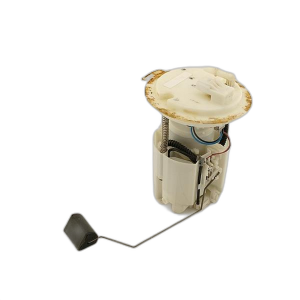
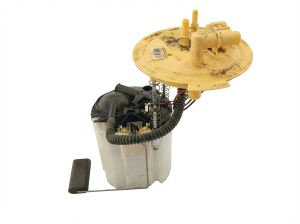
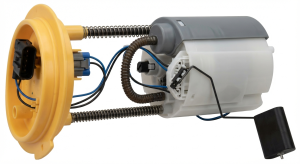
- Fuel Pump Module Assembly
(OEM #68065575AD (for 3.6L, supersedes 68065575AA/AB/AC), 5143579AC (for 3.8L))— The fuel level sending unit that causes P0461 is an integrated part of the fuel pump module. The entire assembly must be replaced to fix the faulty sensor. Part numbers vary by engine.
Trusted brands: Mopar, Bosch, Delphi, Spectra Premium
OEM price range: $250-$400
Aftermarket price range: $150-$300
Related Codes That Often Appear With This One
- P0462 — This code indicates 'Fuel Level Sensor 'A' Circuit Low Input,' suggesting a short to ground in the same circuit.
- P0463 — This code indicates 'Fuel Level Sensor 'A' Circuit High Input,' suggesting an open circuit. It is a very common related code on the JK Wrangler and points to the same root causes.
Technical Service Bulletins (TSBs) & Recalls
- TSB 18-029-14 (applies to 2011-2014 models): This bulletin addresses P0461 or P0463 codes that appear after a fuel pump replacement. It highlights that incorrect orientation (clocking) of the fuel pump module within the tank can cause the float arm to bind, leading to an inaccurate fuel level reading.
- TSB Bulletin #68065575A: Specifically for the JK, this bulletin notes that if a customer has a P0461 fault code, the orientation and alignment of the fuel module to the tank flange must be verified and documented.
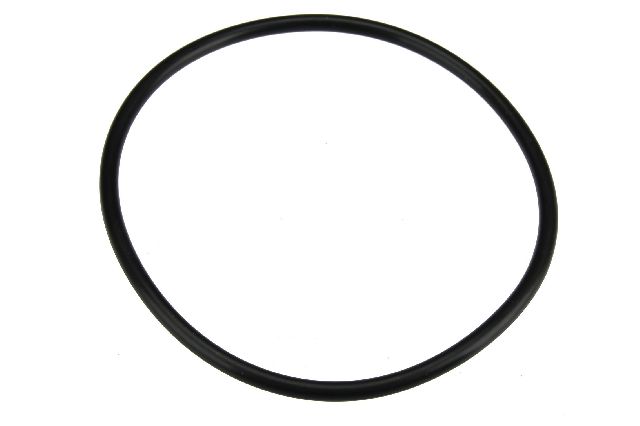
- TSB Bulletin #14-001-20: While issued for the Gladiator, this bulletin notes that a P0461 code may require the replacement of the fuel tank and O-ring to resolve the level sensor performance issue.
- TSB Bulletin #9004083: This manufacturer record indicates that a P0461 code may be accompanied by a complaint of the fuel level gauge being stuck at 7/8 of a tank.
Platform-Specific Known Issues
- The fuel tank skid plate on the JK Wrangler is known to trap moisture and can rust severely. It may need to be replaced when servicing the fuel pump. 🎬 Watch: Replacing the fuel tank, skid plate, and pump Some owners find the skid plate has rusted through and deformed the plastic tank.
- Plastic EVAP line connectors on top of the fuel tank can become brittle with age and may break during the removal process. Care must be taken when disconnecting them.
Mechanic-Grade Diagnostic Values
- Fuel Level Sending Unit Resistance — expected: Approximately 80 Ohms at Full and 998-1000 Ohms at Empty.. Failure: Readings are erratic, jump suddenly, or show an open circuit (infinite resistance) when moving the float arm through its range of motion.
- Fuel Level Sensor Signal Voltage at PCM — expected: Approximately 0.5V when the tank is empty to 4.5V when the tank is full.. Failure: Voltage is stuck at a fixed value, or is outside the expected 0.5V-4.5V range.
Wiring & Ground Locations
- Fuel Pump Module Connector — On top of the fuel pump module, accessible after lowering the fuel tank.. This is the primary connection point for the fuel level sensor. Corrosion or damage here is a common cause of P0461. Pin 2 (Dark Blue wire) is the fuel level signal, and Pin 1 (Black wire) is the main ground.
- PCM Connector C3 (Gray/Natural) — The Powertrain Control Module (PCM) is located on the firewall in the engine bay, typically on the passenger side.. This is where the fuel level signal terminates. A technician can back-probe this connector to test the signal directly at the computer, confirming the integrity of the wiring harness. The fuel level signal wire is located at Pin 13.
Real Owner Repair Stories
- JK-Forum.com user @KTMKayaker (Jeep Wrangler JKU with a swapped-in fuel tank from a 2006 TJ model.) — After installing a new Bosch fuel pump for a TJ, the fuel gauge was highly inaccurate, reading half-full when the tank was actually empty, leading to running out of gas.
❌ Tried (didn't work) Visual inspection of the float arm for obstruction., Testing the new sending unit's resistance, which changed smoothly as expected for that part.
✅ What actually fixed it The user discovered that the TJ sending unit has a resistance range of 220 ohms (empty) to 21 ohms (full), which is incompatible with the JK's computer that expects a range of ~998 ohms (empty) to 80 ohms (full). The fix required using a JK-specific fuel pump module.
OEM Part Supersession History
68065575AA→68065575AF— Progressive design updates by the manufacturer.
Heads up: Applies to 3.6L Pentastar V6 models. The full supersession chain is 68065575AA, 68065575AB, 68065575AC, 68065575AD, 68065575AE, and finally 68065575AF.5143579AC→5143579AQ— Multiple design revisions over the part's lifespan.
Heads up: Applies to 3.8L EGH V6 models. This part has a long history of revisions including AE, AF, AH, AI, AJ, AK, AL, AM, AN, AP, and finally AQ.
Model Year Variations Within This Range
- 2007-2011 vs 2012-2018: The primary difference is the engine (3.8L vs 3.6L), which requires a different fuel pump module assembly. The part numbers are not interchangeable. The fundamental cause of P0461 (sending unit failure) and the diagnostic procedure are the same for both groups.
Diagnostic Flowchart
Other Known Issues on This Vehicle
Issues unrelated to this code that are worth knowing about as an owner of this generation:
- Front Axle "Death Wobble" 🔴 High — Common, especially on lifted vehicles or those with worn suspension components. Can occur at any mileage, typically triggered by a bump at speeds over 45 mph.
- Cracked Oil Filter/Cooler Housing (3.6L Pentastar) 🟠 Medium — Very common on 2012-2018 models, often occurring between 60,000 and 120,000 miles. Leads to significant oil leaks in the engine valley.
- TIPM (Totally Integrated Power Module) Failure 🔴 High — A well-documented issue across the entire generation, causing a wide range of erratic electrical problems, including fuel pump issues, horn, wipers, and door locks acting on their own.
- Excessive Oil Consumption (3.8L EGH) 🟠 Medium — Common on the 2007-2011 models, often due to piston ring issues. Can start as early as 50,000 miles. (Ref: There were some warranty extensions and TSBs related to this issue for specific VIN ranges.)
- Cracked Exhaust Manifolds (3.8L EGH) 🟡 Low — The cast iron manifolds on the 3.8L engine are prone to cracking over time, causing an exhaust leak and a ticking noise, especially when cold.
Used vs. New Parts: Buying Guide for This Vehicle
When a used part is the smart pick: Buying a used fuel pump module is generally not recommended as the sending unit is a common wear item. However, a complete used fuel tank assembly from a low-mileage, non-rusted donor vehicle could be a cost-effective option if the entire tank and skid plate need replacement.
Donor-vehicle mileage cap: roughly under 60000 miles for the part to have meaningful remaining life.
What to inspect on the donor part:
- Check the top of the module for rust around the lock ring and connectors.
- Ensure the plastic electrical connector is not brittle or cracked.
- Inspect the fuel tank skid plate for severe rust or deformation, as this can indicate a hard life and potential damage to the tank and internal components.
OEM-only on this vehicle (don't cheap out):
- While not strictly 'OEM-only', the fuel pump module is a critical component where quality matters significantly. Using a Mopar part or a top-tier OEM supplier is strongly recommended over budget brands to avoid premature failure and the difficult job of replacing it again.
Aftermarket brands forum-validated for this vehicle:
- Bosch (Often cited as the most reliable aftermarket option)
- Delphi (Generally considered good, though some owners have reported mixed results)
Brands owners have reported issues with on this vehicle:
- Airtex
- Carter (Forum discussions frequently mention these brands having higher failure rates in Jeeps)
Real Owner Stories
Aggregated from forums and TSBs cited above. Mileages and costs reflect what owners reported in those sources.
2012 Jeep Wrangler — 43000 miles
Symptoms: Check engine light was on, after clearing the code the Jeep won't stay running. Fuel gauge seemed to register fuel levels when fuel was added.
What fixed it: The user was advised there might be a loose connection in the fuel delivery system or a problem with the fuel pump; clearing the code led to a diagnostic dead end where the vehicle would not stay running.
Source hint: JK-Forum.com thread 'Cleared code Wont stay running'
2014 Jeep Wrangler Unlimited (JKU)
Symptoms: Owner needed to verify fuel level signal accuracy using a multimeter.
What fixed it: Measured the sending unit resistance, finding it to be approximately 52 ohms empty and 1000 ohms full to confirm sensor operation.
Source hint: JK-Forum.com thread ''14 JKU gas tank wiring and ohms'
2013 Jeep Wrangler JK
Symptoms: Vehicle experienced a bucking issue, necessitating a fuel pump change.
What fixed it: Replacement of the fuel pump module; owner provided DIY tips for dropping the tank and handling the lock ring.
Source hint: JK-Forum.com thread 'My Fuel Pump Change'
Related OBD-II Codes
Frequently Asked Questions
Does TSB 18-029-14 apply to my 2015 Jeep Wrangler JK?
What are the specific resistance values I should see when testing my JK's fuel level sending unit?
Can I just replace the fuel level sensor, or do I need the whole fuel pump assembly?
Is there a specific wire color I should look for when checking the fuel signal circuit on my Wrangler?
Why is my fuel gauge acting erratic after I just replaced the fuel pump?
Are there any physical components I should be careful with while dropping the fuel tank?
Helpful Videos
Used OEM Parts in Stock
New Aftermarket Parts Available




The information in this article is provided for general reference and educational purposes only. Vehicle specifications, procedures, and part compatibility can vary by production date, trim level, and region. Always consult your vehicle's factory service manual and verify part numbers before purchasing or performing repairs. Safety-critical components such as airbags, seat belts, and braking systems should be installed by a qualified professional.
- Jeep Wrangler (JK):
- 🧭 Diagnostic Flowchart
- 🎬 Helpful Videos
- 🛍️ Shop This Part
- What's Unique About the 2007-2018 Jeep Wrangler (JK)
- Symptoms You May Notice
- Most Likely Causes
- Rare But Worth Checking
- Diagnosis Steps
- Parts You'll Likely Need
- Related Codes That Often Appear With This One
- Technical Service Bulletins (TSBs) & Recalls
- Platform-Specific Known Issues
- Mechanic-Grade Diagnostic Values
- Wiring & Ground Locations
- Real Owner Repair Stories
- OEM Part Supersession History
- Model Year Variations Within This Range
- Other Known Issues on This Vehicle
- Used vs. New Parts: Buying Guide for This Vehicle
- Real Owner Stories
- 2012 Jeep Wrangler — 43000 miles
- 2014 Jeep Wrangler Unlimited (JKU)
- 2013 Jeep Wrangler JK
- Related OBD-II Codes
- Frequently Asked Questions
- 🎟️ Get 5% Off