

P0461 on 2012-2014 Kia Rio: Fuel Level Sensor Causes and Fixes
On a 2012-2014 Kia Rio, code P0461 is very often caused by a software glitch. Before replacing parts, check with a Kia dealer for an ECM software update per TSB #TSBENG146R1. This TSB often addresses a group of codes appearing together, including P0456, P050A, and P2188. If software is not the issue, the fuel level sending unit in the gas tank is the next likely cause.
- For a 2012-2014 Kia Rio, your first step for a P0461 code should be to check with a Kia dealer about TSB #TSBENG146R1.
- A simple software update often fixes this code and may be covered by the dealer.
- Do not replace the fuel pump assembly until you have ruled out the software issue to avoid unnecessary expense.
- Symptoms are mainly an erratic or non-functional fuel gauge and an illuminated Check Engine Light.
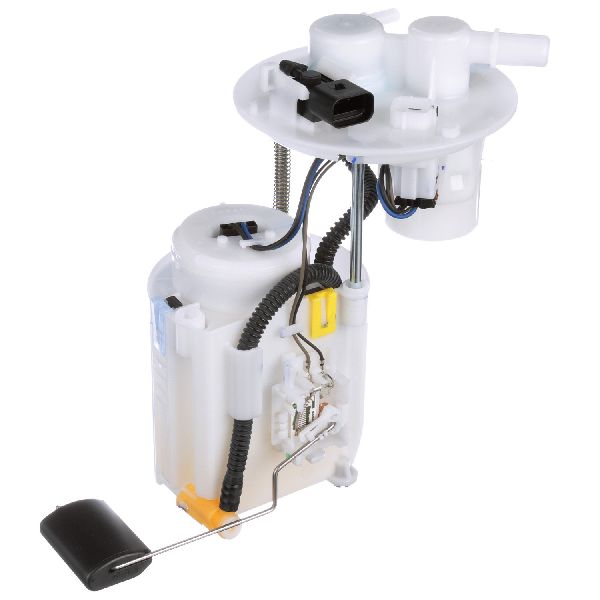
- If hardware is the cause, the fuel level sending unit, which is part of the fuel pump module, is the most likely part to have failed.
What's Unique About the 2012-2014 Kia RIO
For this specific generation of Kia Rio, the P0461 code is frequently not a hardware problem. Kia has issued Technical Service Bulletins (TSBs) indicating that outdated ECM software is a primary cause. This software glitch can incorrectly trigger P0461, often along with other unrelated codes like P0456 (EVAP leak) or P050A (cold start idle). Therefore, the first diagnostic step should always be to check the vehicle's software status with a dealer, which is a unique starting point compared to many other vehicles where this code almost always points to a bad fuel level sensor. This is corroborated by the platform-mate Hyundai Accent, which shares the engine and also has reports of software updates fixing similar fuel gauge issues.
Diagnostic Flowchart
Tap your situation to follow the diagnostic path that matches what you're seeing on this vehicle.
Symptoms You May Notice
- Check Engine Light is on
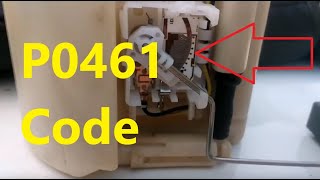
- Fuel gauge fluctuates erratically or is stuck on full or empty 🎬 Watch: Understanding P0461 causes and common sensor fixes.
- Inaccurate 'Distance to Empty' reading on the trip computer
- Low fuel warning light may stay on even with a full tank
- Odometer may stop counting miles (reported in some owner forums in conjunction with this code)
- Replacing the fuel pump assembly when only an ECM software update was needed. This is a costly mistake specific to this vehicle due to the known TSBs. Always verify the TSB status with a dealer first.
Most Likely Causes
- Outdated Engine Control Module (ECM) Software 🔴 High Probability → Shop Engine Control Module (ECM) Kia identified a software logic issue and released TSBs #TSBENG146R1 and #TSB-ENG118R2 to address it. This is a well-documented problem for this specific vehicle range.
How to confirm: Contact a Kia dealership with the vehicle's VIN. They can check if the software update from TSB #TSBENG146R1 or #TSB-ENG118R2 has been performed. If other codes like P0456, P050A, P2188, etc., are also present, it further points to the software issue.
Typical fix: The Kia dealership performs an ECM software reflash using their GDS diagnostic tool. Owners report this is often done free of charge or for a one-hour labor charge if the vehicle is out of warranty.
Est. part cost: $0 - Faulty Fuel Level Sending Unit 🟡 Medium Probability → Shop Fuel Tank Sending Unit The sending unit is a moving part (a float on a variable resistor) inside the fuel tank. Over time, the resistor can wear out or become contaminated with fuel deposits, causing erratic signals or dead spots.
How to confirm: Access the fuel pump assembly under the rear seat. Disconnect the sensor and measure its resistance with a multimeter while moving the float arm. The resistance should change smoothly without any jumps or dead spots. For many Kia/Hyundai models, the resistance range is approximately 7 ohms at full and 110 ohms at empty, though checking the specific service manual is best.
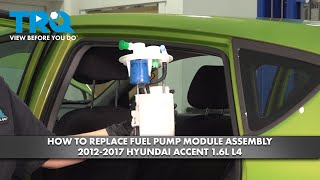
Typical fix: Replace the fuel level sending unit. On the Kia Rio, this sensor is integrated into the fuel pump module, and the entire assembly is replaced. 🎬 See this walkthrough for replacing the fuel pump assembly. The OEM part number for the assembly is often cited as 31110-1R000.
Est. part cost: $150-$450 - Wiring or Connector Issues ⚪ Low Probability The wiring harness runs from the fuel tank to the front of the car and can be susceptible to corrosion or damage, especially at the connector on top of the fuel pump assembly. Moisture can enter the connector, causing pin corrosion and intermittent signal loss.
How to confirm: Visually inspect the connector and wiring at the fuel pump module for corrosion, loose pins, or damage. Perform a continuity and voltage drop test on the signal, power, and ground wires between the sensor and the ECM.
Typical fix: Repair the damaged section of the wiring harness or clean/replace the corroded connector. Applying dielectric grease to the connector can help prevent future corrosion.
Est. part cost: $5-$50
Rare But Worth Checking
- Stuck or Damaged Fuel Float Arm: Debris in the fuel tank or physical damage can cause the float arm to get stuck, preventing it from reading the fuel level correctly. This is less common than sensor failure but worth checking when the fuel pump module is removed.
- Instrument Cluster Failure: In very rare cases, the instrument cluster itself can fail, leading to an incorrect fuel gauge reading even with a good signal from the sensor. This is usually accompanied by other gauge or display problems.
Diagnosis Steps
- Scan for additional trouble codes. If codes listed in TSB #TSBENG146R1 (like P0456, P050A, P2188, P2192, P0128, P0326, P0441) are present, prioritize checking for the software update.
- Crucial Step for this vehicle: Contact a Kia dealership with the car's VIN to determine if TSB #TSBENG146R1 or #TSB-ENG118R2 is applicable and has been performed. This step can save significant time and money.
- If the TSBs do not apply or have already been completed, proceed with hardware diagnosis.
- Access the fuel pump module connector, typically located under the rear seat cushion. You may need to remove the seat bottom to find the access panel.
- Inspect the connector for any signs of corrosion, moisture, or damage. Ensure it is securely plugged in.
- With the key on, use a scan tool to observe the live data for 'Fuel Level Sensor Voltage' or 'Fuel Level Percentage'. Note the reading.
- If possible and safe, add a known quantity of fuel (e.g., 2-3 gallons) and observe if the reading on the scan tool changes appropriately. If it doesn't change or changes erratically, the sensor is suspect.
- Disconnect the sensor and use a multimeter set to Ohms (Ω). Test the resistance of the sending unit by connecting the probes to the correct pins for the level sensor. Manually move the float arm from its lowest to highest position. The resistance should change smoothly throughout the range (e.g., from ~110Ω to ~7Ω). Any sudden drops to zero or infinite resistance indicates a faulty sensor.
- If the sensor tests good, check the wiring between the sensor connector and the ECM for continuity, shorts to power, or shorts to ground.
- If all wiring and the sensor are confirmed to be good, the issue may lie within the instrument cluster or the ECM, but this is very rare.
Parts You'll Likely Need
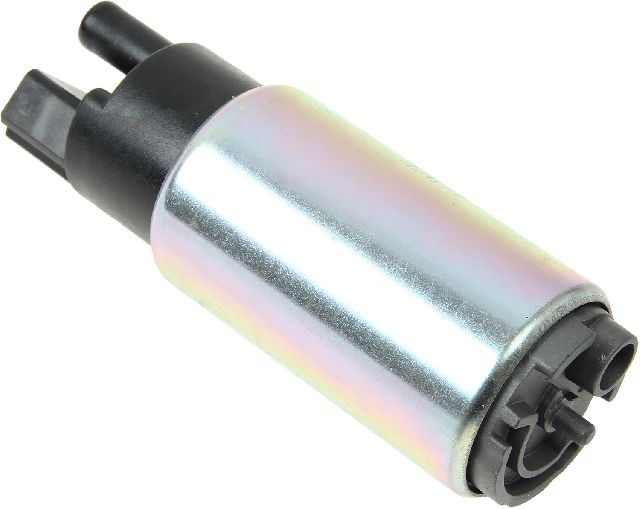
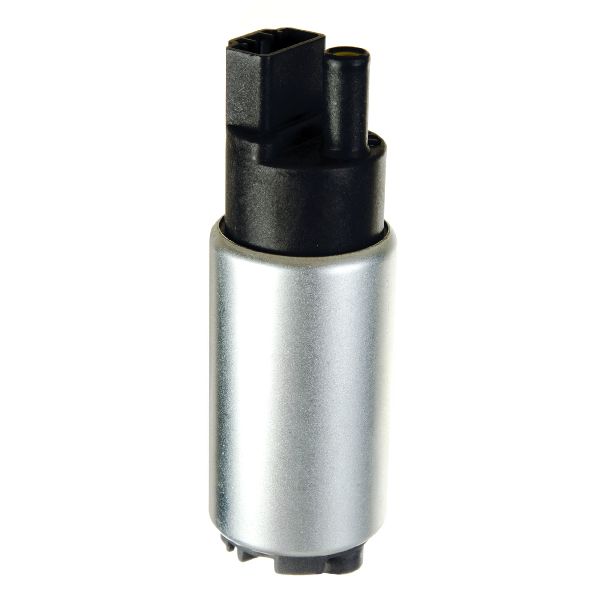
- Fuel Pump and Sender Assembly
(OEM #31110-1R000)— This is the most common hardware failure. The fuel level sensor (sender) is integrated into the fuel pump module, so the entire assembly is typically replaced to fix a faulty sensor. This part number is shared with the Hyundai Accent platform mate.
Trusted brands: Bosch, Delphi, Spectra Premium, TRQ
OEM price range: $350-$500
Aftermarket price range: $150-$300
Related Codes That Often Appear With This One
- P0456 — A very small EVAP leak code that is specifically mentioned in Kia TSB #TSBENG146R1 as being potentially caused by the same ECM software glitch.
- P050A — A cold start idle performance code also listed in the Kia TSB as being related to the software issue.
- P2188 — A 'System Too Rich at Idle' code that is also linked to the ECM software problem in TSB #TSBENG146R1.
- P0462 — Indicates 'Fuel Level Sensor Circuit Low Input'. This is a related code that points more specifically to a short or low voltage condition, but can also be triggered by the same root causes.
Technical Service Bulletins (TSBs) & Recalls
- TSBENG146R1: Recommends an ECM software upgrade for 2012-2014 Rio models that may illuminate the MIL with P0461 and several other DTCs.
- TSB-ENG118R2: An earlier version of the bulletin providing information on an ECM software upgrade for 2012-2013 Rio models with P0461 and other codes.
Platform-Specific Known Issues
- A widespread ECM software issue causes this code to be set erroneously. Kia addressed this with TSB #TSBENG146R1 and #TSB-ENG118R2, which instruct dealers to perform a software update.
- Owners on forums frequently report that the ECM update resolved the P0461 code, especially when other codes from the TSB were also present.
Mechanic-Grade Diagnostic Values
- Fuel Level Sensor Resistance — expected: Approximately 3-4 Ohms (Full) to 110-250 Ohms (Empty). The key is a smooth, linear change when moving the float arm.. Failure: The multimeter shows an open circuit (infinite resistance), a short (0 Ohms), or the value jumps erratically instead of changing smoothly.
- Fuel Level Sensor Signal Voltage at ECM — expected: Typically 0.5V (Empty) to 4.5V (Full).. Failure: Voltage is stuck at 0V, 5V, or a value that doesn't correspond to the estimated fuel level.
Scan Tool Commands That Help
- Kia GDS (Global Diagnostic System): Vehicle S/W Management — This function is used by the dealer to perform the ECM software update as specified in TSBs #TSBENG146R1 and #TSB-ENG118R2. It is the primary fix for the software-related cause of P0461.
- Kia GDS (Global Diagnostic System): Actuation Test / Guided Troubleshooting — After confirming the software is up to date, a technician can use the GDS to command the instrument cluster fuel gauge to sweep, verifying if the gauge itself is functional. It also provides guided diagnostic steps.
Wiring & Ground Locations
- Fuel Pump Assembly Access Cover — Under the rear seat cushion. The seat bottom must be unbolted and removed to access a black, sealed service cover.. This is the primary access point for testing the fuel level sensor connector and replacing the fuel pump/sender assembly without dropping the fuel tank.
- Fuel Pump Assembly Connector — On top of the fuel pump assembly, under the access cover. It is a multi-pin connector.. This is the main test point for checking the sensor's resistance and the harness voltage from the ECM. Corrosion on these pins is a potential cause of the code.
- Instrument Panel Fuse Box — Behind a cover on the driver's side of the dashboard, below the steering wheel.. Contains fuses related to the instrument cluster and other interior electronics. A blown fuse here could cause the gauge to be inoperative, though it would likely affect more than just the fuel gauge.
Real Owner Repair Stories
- kia-forums.com user (2013 Kia Rio) — Check engine light on with code P0461, fuel gauge was working intermittently but then became stuck on empty.
❌ Tried (didn't work) The user initially suspected a bad fuel sending unit and was planning to replace the fuel pump assembly.
✅ What actually fixed it The user took the car to a Kia dealership. The dealer confirmed the vehicle was eligible for the software update mentioned in the TSB. They performed the ECM reflash, which resolved the P0461 code and restored normal fuel gauge function. The repair was done under warranty.
OEM Part Supersession History
31110-1R000→31110-1R200, 31110-4L000— Part revisions and consolidation for related platforms (e.g., Hyundai Accent).
Heads up: While these parts are often listed as interchangeable, it is critical to verify the correct part number using the vehicle's VIN. Aftermarket suppliers may bundle multiple OEM numbers under one aftermarket part.
Model Year Variations Within This Range
- 2012-2013: The initial TSB for the ECM software update was #TSB-ENG118R2, specifically covering the 2012-2013 model years.
- 2012-2014: The later, revised TSB #TSBENG146R1 expanded the coverage to include the 2014 model year. For 2014, subtle aerodynamic enhancements and a revised steering wheel were also introduced, but these do not affect the P0461 diagnosis.
Helpful Videos
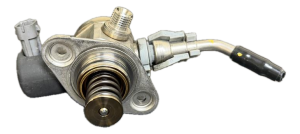
Used OEM Parts in Stock
New Aftermarket Parts Available



The information in this article is provided for general reference and educational purposes only. Vehicle specifications, procedures, and part compatibility can vary by production date, trim level, and region. Always consult your vehicle's factory service manual and verify part numbers before purchasing or performing repairs. Safety-critical components such as airbags, seat belts, and braking systems should be installed by a qualified professional.
- Kia RIO:
- 🧭 Diagnostic Flowchart
- 🎬 Helpful Videos
- 🛍️ Shop This Part
- What's Unique About the 2012-2014 Kia RIO
- Symptoms You May Notice
- Most Likely Causes
- Rare But Worth Checking
- Diagnosis Steps
- Parts You'll Likely Need
- Related Codes That Often Appear With This One
- Technical Service Bulletins (TSBs) & Recalls
- Platform-Specific Known Issues
- Mechanic-Grade Diagnostic Values
- Scan Tool Commands That Help
- Wiring & Ground Locations
- Real Owner Repair Stories
- OEM Part Supersession History
- Model Year Variations Within This Range
- 🎟️ Get 5% Off