

P0461 on 2016-2022 Nissan Frontier: Fuel Level Sensor Causes and Fixes
P0461 on a Nissan Frontier almost always means the fuel level sending unit inside the gas tank has failed. This causes an erratic or incorrect fuel gauge. The sensor can often be replaced separately from the more expensive fuel pump assembly, a key detail confirmed by Nissan TSBs.
- P0461 on a 2016-2022 Frontier is overwhelmingly caused by a failed fuel level sensor (sending unit) in the gas tank.
- Symptoms are limited to an incorrect fuel gauge and the Check Engine Light; the truck remains safe to drive, but you risk running out of fuel.
- A major cost-saving is that the sensor can be bought and replaced separately from the fuel pump. Do not replace the entire assembly unless the pump itself has also failed.
- The repair requires accessing the top of the fuel tank, which is labor-intensive and has a high DIY difficulty (4/5).
- Always replace the fuel pump module gasket when performing this repair to prevent dangerous fuel leaks.
What's Unique About the 2016-2022 Nissan FRONTIER
The Nissan Frontier, particularly the long-running D40 generation (2005-2021), has a well-documented history of fuel level sending unit failures as the trucks age. Nissan even extended the warranty for this specific part on earlier model years (2006-2012) under TSB NTB12-055b due to high failure rates, establishing a long-term pattern. A key detail confirmed by a more recent manufacturer Technical Service Bulletin (TSB NTB22-026) is that the fuel level sensor can be replaced separately from the entire fuel pump assembly, making the repair significantly less expensive than on vehicles where the two parts are integrated.
Diagnostic Flowchart
Tap your situation to follow the diagnostic path that matches what you're seeing on this vehicle.
Generation note: This range covers two Frontier generations: the end of the 2nd generation (D40, 2016-2021) and the beginning of the 3rd generation (D41, 2022). The fuel sending unit issue is extremely common and well-documented on the D40. While the D41 is a newer design, it uses similar principles and the same fuel pump gasket part number, suggesting a similar tank design. Widespread data on D41 failures is not yet available, but the issue may still occur.
Symptoms You May Notice
- Erratic or fluctuating fuel gauge (e.g., drops to empty then returns to half full)
- Fuel gauge stuck on full or empty
- Check Engine Light is on
- Low fuel warning light illuminates randomly or stays on even with a full tank
- Inaccurate "Distance to Empty" (DTE) reading on the trip computer
- Replacing the entire fuel pump assembly when only the sending unit has failed. TSB NTB22-026 specifically warns technicians against this, stating that warranty claims for a full assembly replacement for this issue will be charged back.
- Replacing the instrument cluster before thoroughly testing the sensor and wiring.
Most Likely Causes
- Faulty Fuel Level Sensor (Sending Unit) 🔴 High Probability → Shop Fuel Tank Sending Unit The variable resistor contacts on the sensor wear out over time, creating 'dead spots' in the sweep of the float arm. This wear is a known weak point on the D40 Frontier platform and its relatives.
How to confirm: Use a scan tool to monitor the fuel level sensor voltage or percentage in live data; it will jump erratically or show values that don't correspond to the known fuel level. Alternatively, remove the unit and test the sensor's resistance with a multimeter while moving the float arm; the resistance should change smoothly, not jump or show open circuits.
Typical fix: Replace the fuel level sensor. The sensor is located on the fuel pump module inside the fuel tank, which requires dropping the tank for access. Per TSB NTB22-026, it can be replaced separately from the fuel pump.
Est. part cost: $90-$200 - Damaged Wiring or Connectors 🟡 Medium Probability As a truck, the Frontier's underbody wiring is exposed to moisture, road salt, and physical damage from debris, which can lead to corrosion or breaks in the harness leading to the fuel tank.
How to confirm: Visually inspect the wiring harness running to the fuel tank for chafing, breaks, or corrosion at the connector on top of the tank. Perform a voltage drop test on the signal and ground wires if the sensor itself tests good.
Typical fix: Repair the damaged section of wire or clean/replace the corroded connector.
Est. part cost: $10-$50 - Poor Ground Connection ⚪ Low Probability The ground strap for the fuel tank or sending unit can corrode over time, especially in rust-prone areas, creating a poor ground reference and causing incorrect voltage readings.
How to confirm: Locate the ground connection for the fuel pump module and check for corrosion or looseness. Test for continuity between the sending unit ground pin at the connector and a known good chassis ground.
Typical fix: Clean the corrosion from the ground point and strap, then re-secure it. If the strap is badly corroded, replace it.
Est. part cost: $15-$30
Rare But Worth Checking
- Stuck Fuel Float Arm: Debris in the fuel tank or physical damage to the tank could cause the float arm to get stuck, preventing it from reading the fuel level correctly. This is less common than electronic failure of the sensor itself.
- Instrument Cluster Failure: While rare, the physical gauge in the dashboard can fail. This is highly unlikely if a P0461 code is present, as the code is set by the ECM based on the sensor's input signal, not by the cluster's output display.
Diagnosis Steps
- Read the trouble codes with an OBD-II scanner to confirm P0461 is present.
- Use the scanner's live data feature to observe the 'Fuel Level Sensor' voltage or percentage. Rocking the vehicle or driving over a bump should cause a smooth change, not erratic jumps. Wild fluctuations strongly point to a bad sensor.
- Visually inspect the wiring harness and connector at the top of the fuel tank for any signs of corrosion, damage from road debris, or rodent damage.
- Confirm access method. Unlike some vehicles, the Nissan Frontier does not have an access panel under the rear seats or carpet. The fuel tank must be lowered to access the fuel pump assembly.
- With the tank lowered and the fuel pump module removed, disconnect the fuel level sensor and test its resistance with a multimeter. Manually move the float arm from empty to full. The resistance should change smoothly throughout its range of motion. Any sudden jumps or open readings (infinite resistance) confirm a bad sensor.
- If the sensor tests good, check for proper voltage and a good ground at the sensor's electrical connector on the harness side to rule out a wiring issue between the tank and the ECM.
- If the sensor is bad, replace it. If the sensor and wiring are good, the issue may be with the instrument cluster or ECM, but this is very rare.
Parts You'll Likely Need
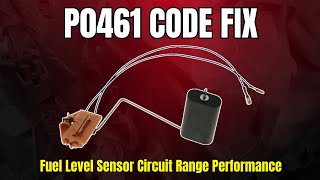
- Fuel Level Sensor
(OEM #25060-9BF1C (replaces 25060-EA00C, verify by VIN))— This is the component that fails most often, causing erratic readings. It is the direct fix for a worn-out variable resistor. The part number can vary, so VIN confirmation is crucial.
Trusted brands: Nissan (OEM), Bosch, Delphi, Dorman
OEM price range: $150-$200
Aftermarket price range: $90-$140 - Fuel Pump Module Gasket / Seal
(OEM #17342-EA000)— This seal is critical and must be replaced whenever the fuel pump module is removed from the tank to prevent dangerous fuel leaks and EVAP system codes. It is not optional.
Trusted brands: Nissan (OEM), Mahle, Carquest
OEM price range: $20-$40
Aftermarket price range: $10-$25
Related Codes That Often Appear With This One
- P0460 — This code indicates a general fault in the fuel level sensor circuit and is often logged alongside the more specific P0461, P0462, or P0463 codes, as confirmed by Nissan TSBs.
- P0462 — Indicates the fuel level sensor circuit input is low, which can be caused by the same failing sensor or a short in the wiring.
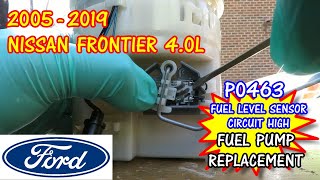
- P0463 — Indicates the fuel level sensor circuit input is high, which can be caused by the same failing sensor or an open in the wiring.
Technical Service Bulletins (TSBs) & Recalls
- NTB22-026: Confirms P0461 is addressed by replacing only the fuel level sensor, not the entire fuel pump assembly.
- NTB12-055b: An older TSB that provided a warranty extension for the same failure on 2006-2012 models, showing the long history of this issue.
Platform-Specific Known Issues
- TSB NTB22-026: Separate Sensor Replacement: Nissan Technical Service Bulletin NTB22-026, issued April 5, 2022, explicitly addresses codes P0460, P0461, P0462, and P0463. It instructs technicians NOT to replace the entire fuel pump assembly and warns that warranty claims for doing so will be charged back. This confirms the sensor is a separate, replaceable part.
- Historical Precedent: TSB NTB12-055b: For earlier D40 Frontiers (2006-2012), Nissan issued a warranty extension for the fuel sending unit, acknowledging a widespread manufacturing or design issue. This established the long-term prevalence of this specific failure on the platform.
- California Emissions Warranty Extension (Select Models/States): For 2018-2024 Frontiers sold in California and 'Section 177 States', Nissan extended the emissions warranty to 7 years/70,000 miles, which covers the in-tank fuel pump module. This is a customer satisfaction measure, not a recall, but may cover the repair if the vehicle qualifies.
Mechanic-Grade Diagnostic Values
- Fuel Level Sensor Resistance — expected: Approximately 5-7 Ω when the float is in the 'Full' position and 80-85 Ω when in the 'Empty' position.. Failure: Readings that are infinite (open circuit), zero, or jump erratically as the float arm is moved smoothly indicate a worn or failed sensor.
- Fuel Level Sensor Voltage (Live Data) — expected: A smooth transition from approximately 4.5V when full to 0.5V when empty (Note: some systems may be reversed).. Failure: Voltage that is stuck at a specific value, reads 0V, or jumps erratically without corresponding fuel level changes points to a circuit or sensor fault.
Scan Tool Commands That Help
- OBD-II Scan Tool (any with Live Data): Live Data / Data Stream for "Fuel Level Sensor" or "Fuel Tank Level" — This is the primary diagnostic step after reading the code. It allows real-time observation of the sensor's reported voltage or resistance, quickly identifying erratic behavior without needing to physically access the sensor.
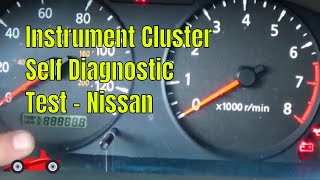
- Nissan Instrument Cluster Self-Test: Gauge Sweep / Self-Diagnostic Mode — To rule out a faulty physical fuel gauge in the instrument cluster. If the gauge sweeps correctly during the self-test but reads incorrectly during normal operation with a P0461 code present, it confirms the fault lies in the sensor circuit, not the gauge itself.
Wiring & Ground Locations
- Fuel Pump Fuse (F18) — Located in the fuse box in the engine compartment on the passenger side.. While a blown fuse typically causes a no-start condition (P0230, P0231), checking it is a crucial first step to ensure the entire fuel pump module, which houses the sensor, is receiving power.
- Fuel Pump Module Connector — On the top of the fuel tank, accessible only after lowering the tank from the vehicle's chassis.. This is the primary connection point for the fuel level sensor. It is exposed to the elements under the truck and is a common location for corrosion or damage that can disrupt the sensor's signal to the ECM.
- Fuel Pump Module Ground — The ground wire is integrated into the main electrical connector on top of the fuel tank. The circuit is grounded through the vehicle's wiring harness and ultimately to the chassis.. A poor or corroded ground connection can cause a floating reference voltage, leading to the erratic or out-of-range signals that trigger code P0461.
Real Owner Repair Stories
- Synthesized from multiple owner forums (e.g., ClubFrontier.org, NissanForums.com) (2016-2019 Nissan Frontier D40, various trims) — Check Engine Light on, fuel gauge drops to empty randomly, then may return to a correct reading after a while. Low fuel light comes on when the tank is over half full.
❌ Tried (didn't work) Using fuel system cleaners (e.g., Techron), which some owners try in hopes of cleaning a dirty sensor, but it rarely fixes a worn-out resistor., Clearing the code without repair; the code and symptoms return quickly.
✅ What actually fixed it The definitive fix was replacing the fuel level sending unit. Owners confirmed that the fuel tank must be dropped to access the fuel pump module. Following Nissan TSB NTB22-026, only the sensor and the fuel pump module gasket were replaced, not the entire expensive fuel pump assembly. After replacement, the fuel gauge returned to normal operation and the code did not return.
OEM Part Supersession History
25060-EA00C→25060-9BF1C— Likely an updated design to improve durability and address the high failure rate of the original sensor's resistor strip.
Heads up: Always verify the correct part number with the vehicle's VIN. While these parts may look identical, slight differences in resistance calibration could exist.e.g., 25060-3LM0A→25060-9SM0A— Demonstrates a common pattern across Nissan platforms (this example is from the NV van) of updating fuel level sensors to correct performance issues.
Heads up: This part is for a different Nissan model but shows the manufacturer's tendency to revise these components. Do not use this part number for a Frontier.
Model Year Variations Within This Range
- 2020-2021: For the 2020 model year, Nissan introduced the new 3.8L VQ38DD direct-injection V6 engine and 9-speed automatic transmission into the existing D40 chassis. While this was a major powertrain overhaul, the fundamental fuel tank and level sensing system design remained similar to previous years. The P0461 fault is still known to occur on these 'transitional' model years, indicating the sending unit weakness was not fully resolved with the new engine introduction.
- 2022: The 2022 model marks the start of the new D41 generation, a complete redesign. While it carries over the 3.8L V6 and 9-speed transmission from 2020-2021, the chassis and many components are new. It is too early to know if the D41 has a similar long-term failure rate for the fuel level sensor, but the operating principle is the same, making future failures possible.
Helpful Videos
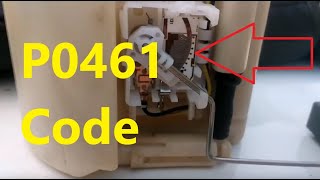
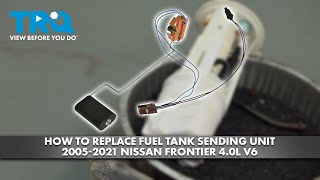
![How to Fix P0461 Engine Code in 2 Minutes [1 DIY Method / Only $11.86]](https://img.youtube.com/vi/9Mf7-bMIICY/mqdefault.jpg)


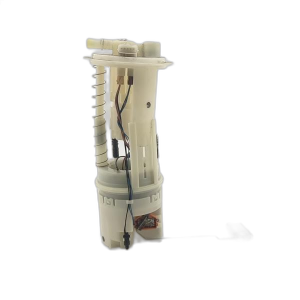
Used OEM Parts in Stock
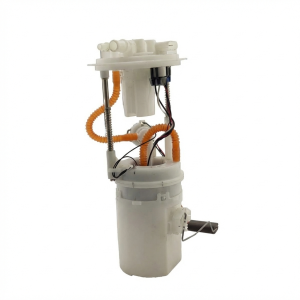
New Aftermarket Parts Available


The information in this article is provided for general reference and educational purposes only. Vehicle specifications, procedures, and part compatibility can vary by production date, trim level, and region. Always consult your vehicle's factory service manual and verify part numbers before purchasing or performing repairs. Safety-critical components such as airbags, seat belts, and braking systems should be installed by a qualified professional.
- Nissan FRONTIER:
- 🧭 Diagnostic Flowchart
- 🎬 Helpful Videos
- 🛍️ Shop This Part
- What's Unique About the 2016-2022 Nissan FRONTIER
- Symptoms You May Notice
- Most Likely Causes
- Rare But Worth Checking
- Diagnosis Steps
- Parts You'll Likely Need
- Related Codes That Often Appear With This One
- Technical Service Bulletins (TSBs) & Recalls
- Platform-Specific Known Issues
- Mechanic-Grade Diagnostic Values
- Scan Tool Commands That Help
- Wiring & Ground Locations
- Real Owner Repair Stories
- OEM Part Supersession History
- Model Year Variations Within This Range
- 🎟️ Get 5% Off