

P0461 on 2016-2022 Nissan Sentra: Fuel Level Sensor Causes and Fixes
On a 2016-2022 Sentra, P0461 almost always means the fuel level sensor in the gas tank has failed. Nissan issued a TSB (NTB22-026) about this exact problem, confirming the sensor is the culprit. The bulletin advises replacing only the sensor, not the entire fuel pump assembly. The sensor part costs around $50-$130, saving significant money over replacing the whole unit.
- P0461 on a 2016-2022 Sentra is almost certainly a bad fuel level sensor.
- Do not replace the entire fuel pump assembly; Nissan TSB NTB22-026 specifies replacing only the sensor, which is much cheaper.
- The car is safe to drive, but the unreliable fuel gauge means you could run out of gas at any time.
- This is not a beginner-friendly DIY repair due to the fire risk associated with handling gasoline.
What's Unique About the 2016-2022 Nissan SENTRA
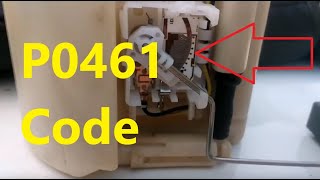
This is a well-documented issue on this platform. Nissan released Technical Service Bulletin (TSB) NTB22-026 specifically addressing P0461 and related codes on a wide range of 2016-2022 models, including the Sentra. The bulletin confirms the common failure of the fuel level sensor and importantly advises technicians to replace only the sensor, not the entire expensive fuel pump assembly. It even warns dealerships that warranty claims for replacing the entire pump assembly for this issue will be charged back, underscoring that the sensor is the intended fix. This official acknowledgment 🎬 Watch: How to fix P0461 without replacing the whole pump. makes diagnosing this code on a Sentra more straightforward than on other vehicles.
Diagnostic Flowchart
Tap your situation to follow the diagnostic path that matches what you're seeing on this vehicle.
Generation note: The 2016-2022 year range covers two Sentra generations: the B17 (2016-2019) and the B18 (2020-2022). The primary cause, a faulty fuel level sensor, and the associated TSB (NTB22-026) apply to both generations within this range, indicating a persistent issue across the platform change. Different part numbers are used for the sensor in each generation.
Symptoms You May Notice
- Inaccurate or wildly fluctuating fuel gauge.
- Fuel gauge stuck on empty or full.
- Check Engine Light is on.
- Low fuel warning light may illuminate or flash even with a full tank.
- Inaccurate "Distance to Empty" (DTE) reading on the trip computer.
- Replacing the entire fuel pump assembly. Nissan's TSB NTB22-026 specifically warns against this, as only the much cheaper sensor is usually needed. Some repair cost estimators incorrectly base their quotes on the full assembly, leading to inflated estimates over $1,500, when the actual repair should be much less.
Most Likely Causes
- Faulty Fuel Level Sensor (Sending Unit) 🔴 High Probability → Shop Fuel Tank Sending Unit This is a known failure point acknowledged by Nissan in TSB NTB22-026. The internal variable resistor on the sensor wears out over time, especially after 80,000-120,000 miles, causing it to send erratic signals. Corrosion or contamination on the sensor's electrical contacts can also cause the failure.
How to confirm: Remove the fuel pump assembly from the tank and measure the sensor's resistance with a multimeter while manually moving the float arm. The resistance should change smoothly without any sudden jumps or dead spots. A typical sensor might read low resistance (e.g., ~40 ohms) when full and high resistance (e.g., ~250 ohms) when empty; any open circuits (infinite resistance) or erratic jumps confirm failure.
Typical fix: Replace the fuel level sensor. Per TSB NTB22-026, the sensor can be replaced separately from the fuel pump module. Always replace the fuel tank O-ring seal at the same time to prevent leaks and fuel vapor smells.
Est. part cost: $50-$130 - Damaged Wiring or Corroded Connector ⚪ Low Probability
How to confirm: Visually inspect the wiring harness and connector at the top of the fuel pump assembly (usually under the rear seat) for any signs of corrosion, moisture, or physical damage like rodent chew marks. Test for proper reference voltage and ground at the connector with a multimeter.
Typical fix: Clean the connector pins or repair the damaged section of the wiring harness. In some cases, cleaning corrosion off the fuel tank grounding strap can resolve the issue.
Est. part cost: $5-$50
Rare But Worth Checking
- Stuck or Damaged Float Arm: The float arm can become physically stuck, damaged, or disconnected due to debris in the fuel tank, preventing it from moving with the fuel level. This is less common than electronic failure but should be visually checked when the sending unit is removed.
- Faulty Instrument Cluster or PCM: In very rare cases, the problem may lie with the instrument cluster that displays the fuel level or the PCM that interprets the signal. This should only be considered after the sensor and wiring have been proven to be good. Misdiagnosing this and replacing the cluster is an expensive mistake.
Diagnosis Steps
- Use an OBD-II scanner to confirm P0461 is the primary code stored and check for related codes (P0460, P0462, P0463).
- Reference TSB NTB22-026 to confirm the likely cause is the sensor itself.
- Access the fuel pump module, which is located under the rear seat cushion. Remove the access panel.
- Disconnect the electrical connector and inspect for corrosion or damage.
- With the key on, test for the correct reference voltage and ground at the connector using a multimeter.
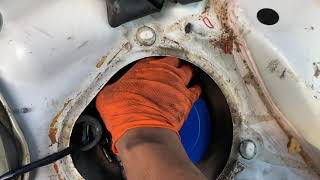
- If wiring is okay, disconnect the battery, then remove the fuel pump assembly's cam lock ring and lift the unit from the fuel tank. Be prepared for fuel spillage.
- Isolate the fuel level sensor and connect a multimeter set to Ohms across its terminals.
- Slowly move the float arm up and down. The resistance reading should change smoothly and consistently. Any erratic jumps, dead spots, or infinite readings confirm the sensor is bad.
- If the sensor tests good, re-inspect the wiring harness for less obvious damage or, in very rare cases, consider the instrument cluster or PCM as the fault.
Parts You'll Likely Need
- Fuel Level Sensor
(OEM #2016-2019 (B17): 25060-3SG0A; 2020-2022 (B18): 25060-6LB0A)— This is the component that fails most often, causing the P0461 code, as confirmed by Nissan TSB NTB22-026. Part numbers are specific to the Sentra generation.
Trusted brands: Nissan (OEM), Hitachi, Delphi, Spectra Premium
OEM price range: $70-$130
Aftermarket price range: $40-$80 - Fuel Tank O-Ring / Seal
(OEM #17342-EM30A)— This seal must be replaced any time the fuel pump assembly is removed from the tank to prevent dangerous fuel leaks and vapor smells. It is a single-use part.
Trusted brands: Nissan (OEM)
OEM price range: $10-$20
Aftermarket price range: $5-$15
Related Codes That Often Appear With This One
- P0460 — This code indicates a general fuel level sensor circuit fault and is often triggered along with P0461. It is explicitly mentioned in TSB NTB22-026.
- P0462 — Indicates the fuel level sensor circuit input is low (short to ground). This can occur if the sensor's internal resistor fails in a shorted state and is also covered by TSB NTB22-026.
- P0463 — Indicates the fuel level sensor circuit input is high (open circuit). This can happen if the sensor's resistor strip breaks or the wiring is damaged, and is also covered by TSB NTB22-026.
Technical Service Bulletins (TSBs) & Recalls
- NTB22-026: Service Information for Fuel Gauge Inaccurate with DTCs Stored in ECM. Confirms the fuel level sensor is the likely cause for P0461 and can be replaced separately. It warns dealers that warranty claims for replacing the entire fuel pump assembly for this issue will be charged back.
Platform-Specific Known Issues
- Nissan Technical Service Bulletin NTB22-026 was issued for 2016-2022 models due to inaccurate fuel gauge readings caused by a faulty fuel level sensor. The bulletin explicitly states to replace the sensor separately, not the entire fuel pump assembly.
- Owner discussions on forums like Reddit confirm that this is a common issue, with the fuel gauge becoming highly erratic and triggering the check engine light for code P0461.
Mechanic-Grade Diagnostic Values
- Fuel Level Sensor Resistance — expected: Approximately 4-8 Ω when full and 75-85 Ω when empty. The resistance should sweep smoothly with no jumps or open circuits (infinite resistance) as the float arm is moved from full to empty.. Failure: A reading of near-zero ohms (short), infinite ohms (open circuit), or any erratic jumps or dead spots during the sweep indicates a failed sensor.
- Fuel Level Sensor Circuit Voltage (at PCM or connector) — expected: Typically a range between 0.5V (Full) and 4.5V (Empty). The voltage should change smoothly as the fuel level changes.. Failure: A voltage that is stuck, erratic, or outside the expected range triggers the P0461 code.
Scan Tool Commands That Help
- Manual Procedure (No Scanner Required): Instrument Cluster Self-Diagnostic Mode (Gauge Sweep Test) — Use this test to verify if the fuel gauge needle and its stepper motor in the instrument cluster are functioning correctly. If the gauge sweeps properly during the test but reads incorrectly during normal operation, the fault is very likely in the sending unit or wiring, not the cluster itself. The procedure for Nissans of this era typically involves a sequence of turning the ignition on while holding and pressing the trip reset button.
Wiring & Ground Locations
- Fuel Pump Module Connector — Under the rear seat cushion, beneath a metal or plastic access panel. The connector is on top of the fuel pump assembly.. This is the primary connection point for the fuel level sensor. Corrosion, moisture, or backed-out pins in this connector can cause the erratic signal that triggers P0461. It is the first place to check for wiring issues.
- Fuel Tank Grounding Strap — A wire or strap connecting the metal body of the fuel tank or fuel pump assembly to the vehicle's chassis.. A poor or corroded ground connection can create a floating reference voltage, causing the sensor's signal to become unstable and out of range. Cleaning this ground connection can sometimes resolve the issue.
Real Owner Repair Stories
- Reddit user, r/Cartalk (2016 Nissan Sentra, approx. 78,000 miles) — Gas gauge intermittently reads empty upon starting the car. Turning the car off and on again temporarily fixes the reading 90% of the time.
❌ Tried (didn't work) A mechanic removed and tested the gas gauge/sending unit, confirming it was 'functioning correctly' at that moment, but could not identify the root cause of the intermittent failure.
✅ What actually fixed it The final fix was not posted by the owner, but another user commented that the fuel level sensor itself was likely bad and sending erratic signals, which aligns perfectly with the symptoms of P0461 and the guidance in TSB NTB22-026.
Model Year Variations Within This Range
- 2016-2019 vs 2020-2022: As noted in Pass 2, the B17 (2016-2019) and B18 (2020-2022) generations use different fuel level sensors with unique part numbers (25060-3SG0A for B17, 25060-6LB0A for B18). The parts are not interchangeable.
Helpful Videos


We Have This Part in Stock

The information in this article is provided for general reference and educational purposes only. Vehicle specifications, procedures, and part compatibility can vary by production date, trim level, and region. Always consult your vehicle's factory service manual and verify part numbers before purchasing or performing repairs. Safety-critical components such as airbags, seat belts, and braking systems should be installed by a qualified professional.
- Nissan SENTRA:
- 🧭 Diagnostic Flowchart
- 🎬 Helpful Videos
- 🛍️ Shop This Part
- What's Unique About the 2016-2022 Nissan SENTRA
- Symptoms You May Notice
- Most Likely Causes
- Rare But Worth Checking
- Diagnosis Steps
- Parts You'll Likely Need
- Related Codes That Often Appear With This One
- Technical Service Bulletins (TSBs) & Recalls
- Platform-Specific Known Issues
- Mechanic-Grade Diagnostic Values
- Scan Tool Commands That Help
- Wiring & Ground Locations
- Real Owner Repair Stories
- Model Year Variations Within This Range
- 🎟️ Get 5% Off