

P0461 on 2011-2018 Ram 1500: Fuel Gauge Problems and Sending Unit Fixes
This code almost always means the fuel level sensor, which is part of the fuel pump module in the tank, has failed. You'll need to replace the entire fuel pump module, which is a moderately difficult DIY job. Expect to pay $150-$300 for an aftermarket part or more for OEM. A key DIY tip: for trucks with the 32-gallon tank, you must drop the tank for access as the pump is partially under the cab; lifting the bed will not work.
- P0461 on your Ram 1500 almost certainly points to a bad fuel level sensor.
- The sensor is part of the fuel pump module, so you'll likely need to replace the entire assembly.
- This is a DIY-possible job if you're comfortable dropping the fuel tank, but it's labor-intensive. The DIY difficulty is high (4 out of 5).
- Don't ignore this code. While the truck runs fine, you risk getting stranded by running out of fuel.
- Before buying parts, inspect the wiring and connector at the top of the fuel tank for corrosion or damage, as this can sometimes be a simple fix.
What's Unique About the 2011-2018 Ram 1500
Unlike newer Ram HD trucks where P0461 is often a software issue fixed by a PCM update, on the fourth-generation Ram 1500 (2011-2018), this code is overwhelmingly caused by a hardware failure. The fuel level sending unit, a mechanical part with a float and resistor, is a known common failure item. Owners frequently find the gauge works intermittently at first before failing completely, often getting stuck on full or empty. No specific TSBs for a software reflash to fix this code on the 2011-2018 1500 are documented, pointing directly to a hardware fault.
Symptoms You May Notice
- Check Engine Light is on
- Fuel gauge behaves erratically, fluctuates, or is stuck on full or empty
- Low fuel warning light may stay on or flash, even with a full tank
- Remote start feature may be disabled (the truck's computer thinks there is no fuel)
- A "Fuel Sensor Fail" message may appear on the instrument cluster display
- Replacing the instrument cluster without testing it. The problem is almost always at the tank, not the dash.
- Replacing the PCM. This is an expensive part that is rarely the cause of a single sensor performance code.
Most Likely Causes
- Faulty Fuel Level Sending Unit 🔴 High Probability → Shop Fuel Tank Sending Unit The fuel level sensor is a wear-and-tear component consisting of a float on a metal arm that sweeps across a variable resistor. Over time, the resistor card wears out or develops dead spots from contaminants in the fuel, causing an erratic or open signal. This is a very common failure on this platform, with many owners sharing their replacement stories in online forums.
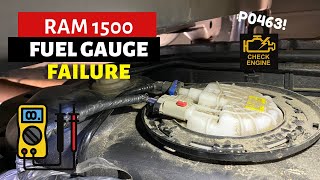
How to confirm: Using a scan tool, monitor the fuel level sensor voltage or resistance. If the reading is erratic or doesn't change when rocking the vehicle to slosh fuel, the sensor is likely bad. The definitive test is to remove the unit and test its resistance sweep with a multimeter. 🎬 Watch: How to test the sensor resistance with a multimeter While specifications can vary, a typical aftermarket sensor may read between 50-990 ohms. Some factory sensors aim for a range around 52 ohms (full) to ~1000 ohms (empty). Any open circuits (infinite resistance) or dead spots during the sweep confirm failure.
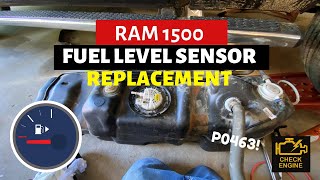
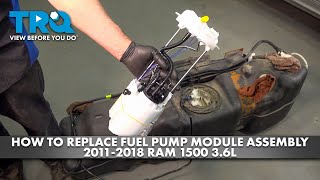
Typical fix: Replace the entire fuel pump module. The sending unit is integrated into the module, and while some have attempted to replace just the sensor with aftermarket parts, the standard, most reliable repair is to replace the complete assembly. 🎬 See this step-by-step fuel pump module replacement walkthrough
Est. part cost: $150-$600 - Wiring or Connector Issues 🟡 Medium Probability The main wiring harness connector on top of the fuel tank is exposed to road spray and debris. Corrosion can build up on the connector pins, and wires can become chafed or damaged, leading to a poor or lost signal.
How to confirm: Visually inspect the main electrical connector on top of the fuel pump module for green or white corrosion, pushed-out pins, or obvious wire damage. Check for a solid ground connection for the fuel tank. Test for reference voltage and continuity on the signal wire between the PCM and the fuel pump connector. A wiring diagram is highly recommended. The signal wire is typically a dark blue wire with a white stripe.
Typical fix: Clean the connector terminals with electrical contact cleaner and a small brush. Apply dielectric grease upon reassembly to prevent future corrosion. Repair any damaged sections of the wiring harness. Pigtail connector replacements are available.
Est. part cost: $0-$50
Rare But Worth Checking
- Faulty Powertrain Control Module (PCM): → Shop Engine Control Module (ECM) This is very unlikely. The PCM should only be considered after definitively ruling out the sending unit and all related wiring. A PCM failure would typically present with multiple other codes and more severe drivability issues.
- Faulty Instrument Cluster: An internal failure in the instrument cluster could cause the gauge to read incorrectly, but this is rare. A cluster self-test (actuator test) can usually be run with a capable scan tool to see if the gauge needle can perform a full sweep.
- Faulty Totally Integrated Power Module (TIPM): While TIPM failure is a known issue on these trucks, it typically manifests as a no-start condition due to a bad fuel pump relay, or other bizarre electrical problems, not usually an isolated P0461 code.
Technical Service Bulletins (TSBs) & Recalls
While the Ram 1500 is the primary focus, it is worth noting that the manufacturer has identified P0461 (Fuel Level Sensor 1 Performance) in broader technical documentation. For instance, manufacturer service bulletins such as TSB Bulletin #1800824 and TSB Bulletin #1800724 list P0461 as a relevant performance code alongside other emissions and fuel system faults, confirming the diagnostic parameters for this sensor across the Ram truck lineup.
Diagnosis Steps
- Confirm the code with an OBD-II scanner. Note any other codes present, especially P0462 or P0463.
- Use a scan tool with live data to observe the 'Fuel Level Sensor Voltage' or 'Fuel Level %' PID. Rock the truck side-to-side to slosh fuel in the tank. The reading should change smoothly. If it's stuck or jumps erratically, the sending unit is the prime suspect.
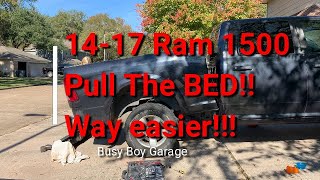
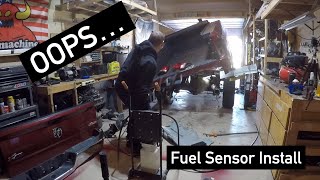
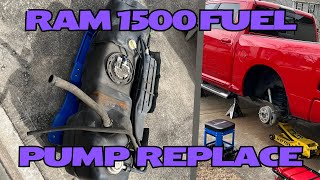
- Decide on the access method: lifting the bed or dropping the tank. Lifting the bed is often considered easier for standard tanks. CRITICAL NOTE: If your truck has the 32-gallon fuel tank, you MUST drop the tank. 🎬 Watch: How to drop the tank and replace the pump The fuel pump assembly is located partially under the cab, and there is not enough clearance to remove it by only lifting the bed.
- Gain access to the top of the fuel tank. If dropping the tank, ensure it is as empty as possible. Disconnect the filler neck and electrical connectors/fuel lines before lowering.
- Visually inspect the fuel pump module's main electrical connector. Look for any signs of corrosion, moisture, or damaged pins. Clean as necessary.
- With the key on, test the wiring at the connector. Using a wiring diagram, confirm you have a reference voltage, a good ground, and a signal wire. The signal wire is often a dark blue wire with a white stripe.
- If wiring and power are good, the fuel level sending unit is faulty. Proceed with replacing the fuel pump module. Be prepared for fuel line clips to be brittle and break; it's wise to purchase replacements beforehand.
- Before installing the new module, it's wise to plug it in electrically and move the float arm by hand while a helper watches the fuel gauge or live scan tool data to confirm the new part works correctly.
Parts You'll Likely Need
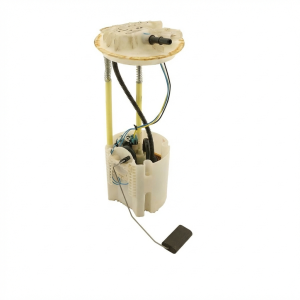
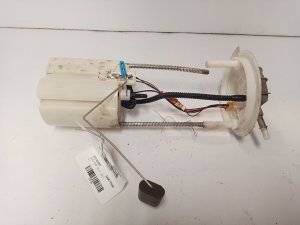
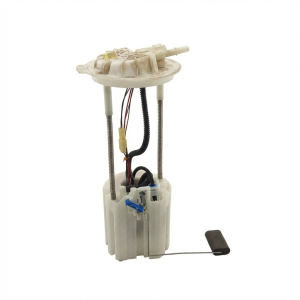
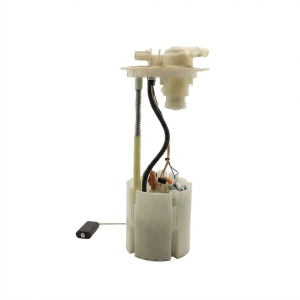
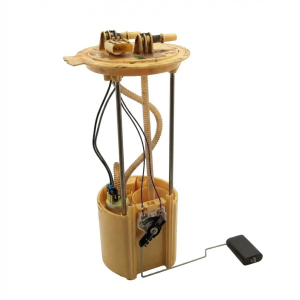
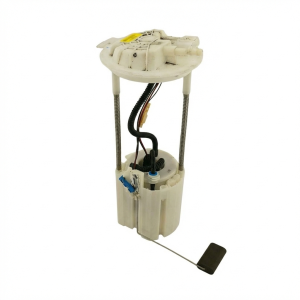
- Fuel Pump Module Assembly
(OEM #W0133-1936564 (Mopar, verify by VIN))— This is the most common cause of P0461. The fuel level sensor is integrated into this assembly and is not typically sold separately by the OEM.
Trusted brands: Mopar, Delphi, Bosch, Spectra Premium, TRQ
OEM price range: $400-$600
Aftermarket price range: $150-$300
Related Codes That Often Appear With This One
- P0462 — This code indicates 'Fuel Level Sensor Circuit Low Input,' which can occur intermittently as the sensor fails or shorts.
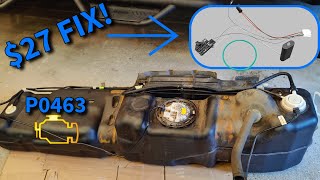
- P0463 — This code indicates 'Fuel Level Sensor Circuit High Input,' which is another common code related to a failing sensor, often indicating an open circuit in the sensor's resistor strip.
Platform-Specific Known Issues
- High Failure Rate of Sending Unit: The fuel level sending unit is a well-documented, high-failure item on the 2011-2018 Ram 1500 platform, with numerous owner accounts online detailing the same symptoms and repair.
- Remote Start Disabled: Failure of the fuel level sensor will often disable the remote start system, as the vehicle's computer prevents it from starting with a perceived empty or unknown fuel level as a safety measure.
- Repair Method Depends on Tank Size: A critical piece of information for DIY repair is that the access method depends on the fuel tank size. While lifting the bed is often easier, owners have confirmed that for the 32-gallon tank, the pump's location requires the tank to be dropped for removal.
Mechanic-Grade Diagnostic Values
- Fuel Level Sensor Resistance Sweep (OEM/Mopar) — expected: Approximately 52 Ohms at Full, increasing to ~1000 Ohms at Empty.. Failure: Readings of OL (Open Loop/infinite resistance) or sudden jumps to zero at any point in the float arm's travel indicate a dead spot on the resistor card.
- Fuel Level Sensor Resistance Sweep (Typical Aftermarket) — expected: Approximately 50 Ohms to 990 Ohms.. Failure: The sweep should be smooth without any dropouts. An erratic or non-linear change indicates a faulty sensor.
- Fuel Level Sensor Signal Wire Voltage (at connector, key-on) — expected: A variable voltage that changes with fuel level. Typically, lower voltage indicates a fuller tank (~1.0V) and higher voltage indicates an emptier tank (~10.5-11V).. Failure: A stuck voltage, or a voltage that is erratic and doesn't correspond to fuel slosh when the vehicle is rocked, points to a sensor or wiring issue.
- Fuel Level Signal Circuit (unplugged at pump) — expected: Approximately 12V (battery voltage). This is due to a pull-up resistor in the BCM/PCM circuit.. Failure: Lack of 12V indicates a problem with the wiring or the module supplying the voltage.
- Wiring Harness Continuity — expected: Less than 5.0 Ohms of resistance on the signal and ground wires between the fuel pump connector and the corresponding module (Cluster or PCM).. Failure: Resistance higher than 5.0 Ohms indicates corrosion or a break in the wire, which can cause the P0461 code.
Scan Tool Commands That Help
- wiTECH or capable aftermarket scanner: Instrument Cluster Actuator Test — To verify the physical fuel gauge needle is capable of a full sweep. This helps rule out a faulty gauge motor in the instrument cluster as the cause of an incorrect reading.
Wiring & Ground Locations
- Fuel Pump Module Connector — On top of the fuel tank, accessible by dropping the tank or lifting the bed.. This is the primary connection point for the fuel level sensor. The signal wire (Dark Blue/White) and ground wire (Black) are in this 4-pin connector. Corrosion or damage here is a very common cause of P0461.
- Fuel Tank Ground Strap — A strap connecting the fuel tank or sending unit assembly to the vehicle's frame/chassis.. A corroded or loose ground strap can cause an unstable reference for the sending unit, leading to erratic readings and triggering the code. Cleaning this connection can sometimes resolve the issue.
Real Owner Repair Stories
- Reddit user on r/ram_trucks (2014 Ram 1500) — Intermittent crank-no-start, escalating to dying while in motion.
❌ Tried (didn't work) Replaced TIPM (for a suspected bad relay), Replaced Fuel Pump (twice), Replaced Fuel Pump Module, Replaced Fuel Pump Connector, Replaced Fuel Filter
✅ What actually fixed it The user's problem remained unresolved after replacing all common components, pointing towards a more complex wiring issue or an intermittent PCM fault. Another user suggested checking the fuel pressure sensor on the fuel rail, which can cause similar unpredictable issues. - RamForum.com user (2012 Ram 1500 Sport 5.7 Hemi, 194,700 miles) — Intermittent crank-no-start, dying while driving. Gas cap warning on dash. Codes P0441 and P0456 present alongside the fuel system issues.
❌ Tried (didn't work) Replaced fuel pump (OEM), Replaced fuel pump (Amazon cheapo), Replaced fuel pump (Delphi)
✅ What actually fixed it The user was on their third fuel pump and still having issues, indicating the root cause was likely not the pump itself. The problem was unresolved but highlights a scenario where repeated replacement of the most common part does not fix the issue, pointing towards wiring, grounding, or a TIPM/PCM problem as the next logical step.
Model Year Variations Within This Range
- 2013-2018: A mid-cycle refresh occurred for the 2013 model year, introducing a new 3.6L Pentastar V6, an eight-speed automatic transmission, and electrical system changes like electric power steering and a new rotary E-Shift dial. While the fundamental cause of P0461 (sending unit failure) remained the same, wiring diagrams and module communications may differ slightly from the 2011-2012 models. Always verify wiring diagrams specific to the vehicle's year.
Diagnostic Flowchart
Other Known Issues on This Vehicle
Issues unrelated to this code that are worth knowing about as an owner of this generation:
- 5.7L HEMI Lifter/Camshaft Failure 🔴 High — Common on engines with MDS (Multi-Displacement System), often appearing after 80,000 miles. The issue typically starts as a 'Hemi tick' noise at idle and can progress to a misfire (P0300) and catastrophic engine damage if ignored.
- Cracked Exhaust Manifolds / Broken Bolts 🟠 Medium — Extremely common. The stock cast iron manifolds are prone to warping from heat cycles, which snaps the mounting bolts. This causes an exhaust leak, most audible as a ticking noise on a cold start that may quiet down as the engine warms and the metal expands. (Ref: While no recall exists, TSBs like 09-011-22 and 09-019-23 were issued for later models, outlining the problem.)
- TIPM (Totally Integrated Power Module) Failure 🔴 High — A well-documented issue for 2011-2012 models in particular. The internal, non-serviceable fuel pump relay is a common failure point, leading to crank-no-start conditions or the fuel pump running continuously. Other electrical gremlins like wipers, lights, or door locks acting erratically are also symptoms.
Used vs. New Parts: Buying Guide for This Vehicle
When a used part is the smart pick: For this specific repair, buying a used fuel pump module assembly from a junkyard is NOT recommended. The fuel level sending unit is a primary wear item, and a used part has unknown remaining life and is very likely to fail again in a short time. A used fuel tank, straps, or filler neck would be acceptable if damaged.
What to inspect on the donor part:
- Not applicable for the fuel pump module due to high risk of premature failure.
OEM-only on this vehicle (don't cheap out):
- While not strictly OEM-only, many professional technicians and forum users strongly prefer Mopar, Delphi, or Denso fuel pump modules to avoid repeat failures associated with budget brands.
Aftermarket brands forum-validated for this vehicle:
- Delphi: Frequently cited as an OEM supplier or equivalent quality; often recommended on forums.
- Denso: Also considered a high-quality OEM equivalent brand by forum users.
- Bosch: Generally considered a reliable brand, though some users have reported past issues with their fuel pumps in other applications.
Brands owners have reported issues with on this vehicle:
- Unbranded or generic 'cheapo' parts from online marketplaces like Amazon or eBay are frequently reported to fail quickly, sometimes within months, leading to repeat repairs.
- Spectra Premium: While a major aftermarket brand, some forum discussions show a preference for Delphi or Denso over Spectra for long-term reliability.
Real Owner Stories
Aggregated from forums and TSBs cited above. Mileages and costs reflect what owners reported in those sources.
2018 Ram 1500 — 37000 miles
Symptoms: The truck threw a P0461 code and the fuel gauge was stuck on full. The dealer quoted over $1000 for the repair.
What fixed it: The owner performed a DIY replacement of the fuel pump assembly. They initially tried lifting the bed but discovered that on their 32-gallon tank, they were forced to drop the tank to gain access.
Source hint: RamForum.com: Thread 'Fuel Gauge Full'
2014 Ram 1500
Symptoms: The P0461 trouble code would only appear when the fuel tank was getting low.
What fixed it: The owner identified that the symptom indicated a dead spot on the sensor's variable resistor, a common failure mode that requires replacing the fuel pump module.
Source hint: RamForum.com: Thread 'P0461 Trouble Code'
Related OBD-II Codes
Frequently Asked Questions
My remote start stopped working at the same time the check engine light for P0461 came on. Are these issues related?
I have the 32-gallon fuel tank on my Ram 1500. Can I lift the bed to replace the fuel pump, or do I have to drop the tank?
Is it possible to just replace the small fuel level sensor, or do I need to buy the entire fuel pump module?
I'm testing my old sending unit with a multimeter. What resistance values should I be looking for?
I'm inspecting the wiring harness on top of the fuel tank. What color is the signal wire for the fuel level sensor?
My fuel gauge is stuck on full and I have a P0461 code. Is this a common problem on these trucks?
Helpful Videos
Used OEM Parts in Stock
New Aftermarket Parts Available




The information in this article is provided for general reference and educational purposes only. Vehicle specifications, procedures, and part compatibility can vary by production date, trim level, and region. Always consult your vehicle's factory service manual and verify part numbers before purchasing or performing repairs. Safety-critical components such as airbags, seat belts, and braking systems should be installed by a qualified professional.
- Ram 1500:
- 🧭 Diagnostic Flowchart
- 🎬 Helpful Videos
- 🛍️ Shop This Part
- What's Unique About the 2011-2018 Ram 1500
- Symptoms You May Notice
- Most Likely Causes
- Rare But Worth Checking
- Technical Service Bulletins (TSBs) & Recalls
- Diagnosis Steps
- Parts You'll Likely Need
- Related Codes That Often Appear With This One
- Platform-Specific Known Issues
- Mechanic-Grade Diagnostic Values
- Scan Tool Commands That Help
- Wiring & Ground Locations
- Real Owner Repair Stories
- Model Year Variations Within This Range
- Other Known Issues on This Vehicle
- Used vs. New Parts: Buying Guide for This Vehicle
- Real Owner Stories
- 2018 Ram 1500 — 37000 miles
- 2014 Ram 1500
- Related OBD-II Codes
- Frequently Asked Questions
- 🎟️ Get 5% Off