

P0461 on 2019-2020 Ram 3500: Fuel Level Sensor Performance Causes and Fixes
On a 2019-2020 Ram 3500 with the 6.7L Cummins, P0461 is very often caused by a software issue that requires a dealer to update the Powertrain Control Module (PCM). Always check for software updates first. If software is not the cause, the fuel level sending unit inside the tank has likely failed. For 2020 models with the 50-gallon tank, a specific TSB notes that certain fueling habits or a PCM configuration error can also trigger the code without any part being broken.
- Always check with a Ram dealer for software updates first. A simple PCM reflash is the most common and least expensive fix for P0461 on these trucks.
- Do not trust your fuel gauge or Distance to Empty reading if this code is present. Track your mileage to avoid running out of fuel.
- If you have a 2020 model with the optional 50-gallon tank, be aware of TSB 14-002-20, which points to software configuration or fueling habits as potential causes, not necessarily a bad part.
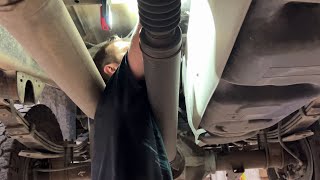
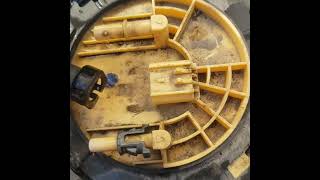
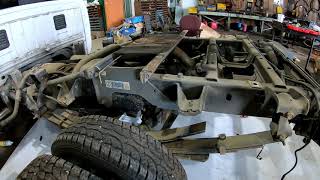
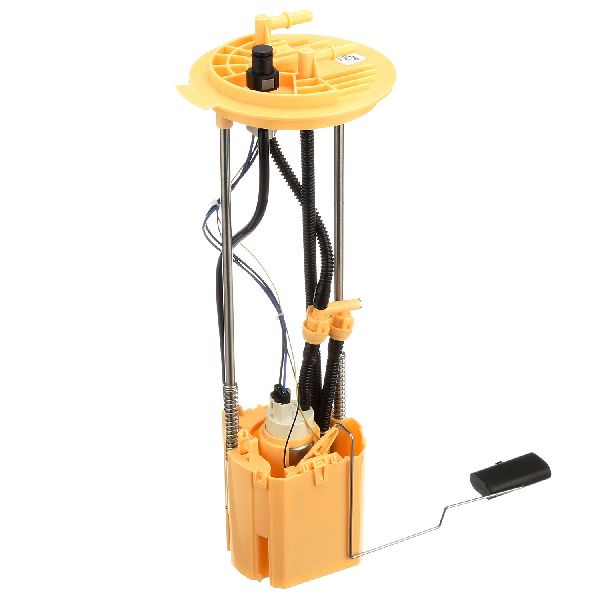
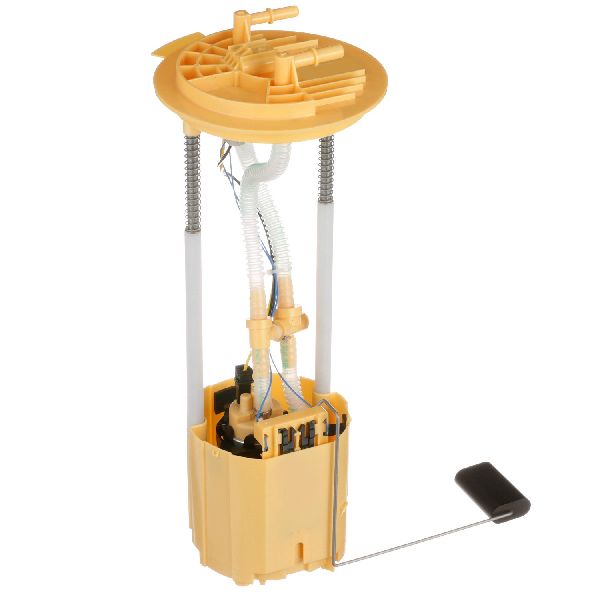
- If a hardware repair is needed, the fuel level sensor is part of the in-tank fuel pump module. Replacing it is a labor-intensive job that requires dropping the fuel tank or lifting the bed.
What's Unique About the 2019-2020 Ram 3500

For the fifth-generation Ram 3500 diesel, this code is frequently a software problem rather than a hardware failure. Ram has issued numerous Technical Service Bulletins (TSBs) that address P0461 by reprogramming the PCM, often bundling the fix with updates for other unrelated codes. This indicates the original software logic was often too sensitive. Additionally, a specific and critical TSB for 2020 models with the optional 50-gallon tank (TSB 14-002-20) notes that fueling habits can trigger the code without any part being broken. Specifically, if the tank is run below 14.9% full and then only small amounts of fuel are added over a 240-mile period, the PCM can flag a fault. This TSB applies to trucks built on or before June 11, 2020.
Diagnostic Flowchart

Tap your situation to follow the diagnostic path that matches what you're seeing on this vehicle.
Symptoms You May Notice

- Check Engine Light is on
- Fuel gauge is inaccurate, erratic, or fluctuating wildly.
- Fuel gauge is stuck on empty or full.
- Distance To Empty (DTE) display is incorrect or shows dashes
- Low fuel warning light may stay on or not come on when the tank is low.
- Immediately replacing the fuel pump module without checking for software updates. A PCM reflash is a much cheaper and very common fix for this specific code and vehicle, and should always be the first step.
Most Likely Causes

- Outdated Powertrain Control Module (PCM) Software 🔴 High Probability → Shop Engine Control Module (ECM) Multiple manufacturer TSBs (including #1800824, #1800724, #1810222REVA, #18-056-22, and #18-019-20) confirm that P0461 can be resolved with a PCM software update to correct over-sensitive fault logic.
How to confirm: A Ram dealership or a qualified shop with a wiTECH scan tool can check your vehicle's VIN for applicable TSBs and see if a software update is available. This should always be the first step.
Typical fix: Reprogramming (reflashing) the PCM with the latest manufacturer software. This is a non-mechanical repair that typically takes less than an hour.
Est. part cost: $0 - Faulty Fuel Level Sending Unit 🟡 Medium Probability → Shop Fuel Tank Sending Unit The sending unit is a mechanical component with a float and a variable resistor that is in constant motion inside the fuel tank. Over time, the resistor can wear out or the float arm can stick, causing dead spots or erratic readings.
How to confirm: If software is up-to-date, the next step is to test the sensor. A technician can use a scan tool to monitor the sensor's output voltage or resistance. A common professional technique is to jump a resistor across the sensor's connector pins (Pin 2 and 3) to see if the gauge responds; a 470-ohm resistor should simulate a half-tank reading. If the gauge moves correctly, the sending unit is bad.
Typical fix: Replace the fuel level sending unit. On these trucks, the sensor is integrated into the fuel pump module, so the entire assembly is typically replaced. This requires either dropping the fuel tank or lifting the truck bed for access. Note: Some owners report that for certain tank sizes (e.g., 32-gallon), lifting the bed does not provide enough clearance, making it mandatory to drop the tank.
Est. part cost: $390-$850 - Incorrect PCM Configuration or Fueling Habits (50-Gallon Tank) ⚪ Low Probability TSB 14-002-20 specifically applies to 2020 models with the 6.7L Cummins and optional 50-gallon tank built on or before June 11, 2020. The PCM may have an incorrect configuration or be triggered by running the tank very low (below 14.9%) and then only adding small amounts of fuel over a 240-mile interval.
How to confirm: Check with a dealer if TSB 14-002-20 (also known as RRT 20-081) applies to your VIN. The issue is confirmed by reviewing fueling habits or having a dealer check the PCM configuration with a wiTECH scan tool.
Typical fix: A dealer technician can run the 'enable 50 gallon tank routine' with a wiTECH scan tool to reconfigure the PCM. In other cases, the fix is simply advising the owner to make larger refueling stops. No parts are replaced.
Est. part cost: $0 - Wiring or Connector Issue ⚪ Low Probability The wiring harness to the fuel tank is exposed to the elements, making it susceptible to corrosion, chafing, or damage from road debris. The main 4-pin gray connector on top of the fuel tank is a common point for moisture intrusion. A corroded fuel tank ground strap can also cause a poor signal reference.
How to confirm: Visually inspect the wiring harness running to the fuel tank for any obvious damage. Disconnect the connector on top of the tank and check for corrosion or bent pins, specifically on Pin 2 (Black wire, Ground) and Pin 3 (Dark Blue/White tracer, Signal). Test for continuity and voltage at the connector and check the condition of the tank's ground strap.
Typical fix: Repair the damaged section of wiring or clean/replace the corroded connector pigtail. Clean and secure the chassis ground strap.
Est. part cost: $10-$100
Rare But Worth Checking
- Faulty Instrument Cluster: While rare, the instrument cluster itself can fail and cause incorrect gauge readings, even if the sensor is sending a correct signal. This is usually diagnosed after all other possibilities have been eliminated.
- Faulty Powertrain Control Module (PCM): → Shop Engine Control Module (ECM) A hardware failure within the PCM is extremely rare but possible. This would be suspected only after a PCM reflash fails to fix the issue and both the sensor and wiring have been proven to be good.
- Stuck Fuel Level Float Arm: Less common than electrical failure of the sensor, the float arm itself can become physically stuck or obstructed by debris or a damaged baffle inside the fuel tank, preventing it from moving with the fuel level.
Diagnosis Steps
- Connect a high-quality OBD-II scanner to confirm P0461 is the active code and check for any other DTCs.
- CRITICAL FIRST STEP: Contact a Ram dealer or a qualified shop. Provide your VIN and ask them to check for open recalls or TSBs related to P0461 or PCM software updates. TSBs like #18-056-22 and #14-002-20 are highly relevant.
- If a software update is available, have the PCM reflashed. In many cases, this will resolve the problem.
- If the code returns after a reflash, or if no update is available, the next step is to inspect the hardware.
- Visually inspect the wiring harness and the 4-pin gray connector leading to the fuel tank for any signs of damage, corrosion, or loose connections. Check the fuel tank ground strap for integrity.
- If wiring appears intact, test the circuit. A professional can do this by monitoring live data with a scan tool or by disconnecting the sensor and using a resistor. A 470-ohm resistor jumped between pins 2 and 3 should make the gauge read approximately half-full. If the gauge responds correctly, the wiring and PCM are good, confirming the sending unit has failed.
- If the sending unit is confirmed to be faulty, it must be replaced. This involves accessing the top of the fuel tank. This can be done by lifting the truck bed or dropping the fuel tank. BE ADVISED: Forum members report that for some tank configurations (e.g., 32-gallon), the access port is partially blocked by the cab, making it mandatory to drop the tank.
Parts You'll Likely Need
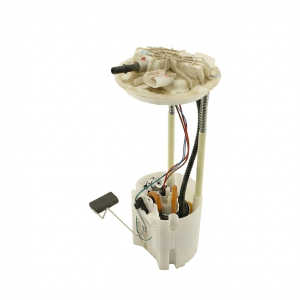
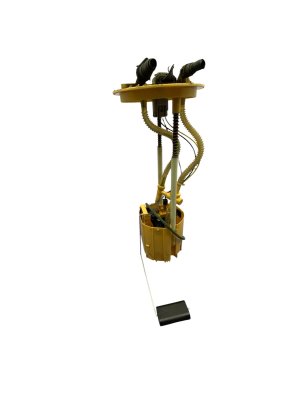
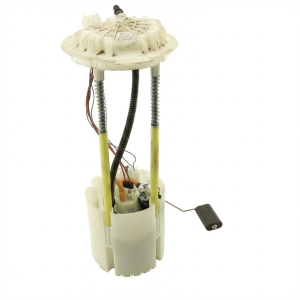
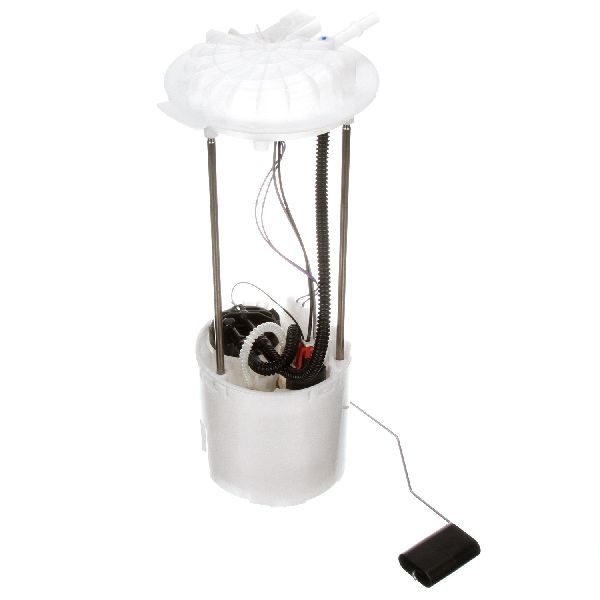
- Fuel Pump and Level Sensor Module
(OEM #68490266AB)— This is the most common hardware failure. The fuel level sensor (sending unit) is integrated into the fuel pump module and is not sold separately. This part number is for the 50-gallon tank and supersedes part number 68490266AA. Always verify the correct part number with your VIN.
Trusted brands: Mopar
OEM price range: $850-$1200
Aftermarket price range: $300-$600
Related Codes That Often Appear With This One
- P20EE — This and other codes like P0401 and P0191 are often listed alongside P0461 in TSBs that provide a comprehensive PCM software update. They don't have a direct functional relationship but are fixed by the same reflash. [Bulletin #1800824, #1800724]
- P0401 — Often included in the same PCM software updates as P0461. The codes are addressed by the same software logic improvements. [Bulletin #1800824, #1800724]
- P0191 — Frequently bundled with P0461 in PCM reflash TSBs, indicating a software calibration fix rather than a related component failure. [Bulletin #1800824, #1800724]
Technical Service Bulletins (TSBs) & Recalls
- 1800824, 1800724, 1810222REVA, 1806623, 18-056-22: These TSBs all list P0461 as one of many codes that can be fixed with a comprehensive PCM software update.
- 14-002-20: Specific to 2020 Ram 2500/3500 with the 6.7L Cummins and 50-gallon tank, this TSB addresses P0461 caused by either an incorrect PCM configuration or specific fueling habits.
Platform-Specific Known Issues
- A high number of TSBs (e.g., #1800824, #1800724, #1810222REVA, #1806623, #18-056-22) list P0461 as a code that can be resolved with a PCM software update, highlighting a known issue with the factory software calibration. [Bulletin #1800824, #1800724, #1810222REVA, #1806623, #18-056-22]
- TSB #14-002-20 for 2020 models with the 6.7L Cummins and 50-gallon tank specifically notes that P0461 can be set by fueling habits (adding small amounts of fuel when low) or a PCM configuration error, not a broken part.
Mechanic-Grade Diagnostic Values
- Fuel Level Sensor Resistance Range — expected: Between 50 Ohms (Full) and 1,000 Ohms (Empty).. Failure: A reading that is open (infinite), shorted (zero), or jumps erratically when the fuel level is changed.
- Fuel Level Sensor Voltage (Live Data) — expected: Approximately 0.5V (Full) to 4.5V (Empty).. Failure: Voltage is stuck, reads 0V, reads 5V, or fluctuates illogically with fuel level changes.
- Resistor Substitution Test — expected: Jumping a 470-ohm resistor between pins 2 and 3 of the sensor connector should result in a gauge reading of approximately half a tank.. Failure: If the gauge does not respond or gives an incorrect reading, the issue is likely in the wiring, instrument cluster, or PCM, not the sending unit.
Scan Tool Commands That Help
- wiTECH: Enable 50 Gallon Tank Routine — This specific routine is used by dealers to correct a PCM configuration error on 2020 models with the optional 50-gallon tank that can cause P0461, as detailed in TSB 14-002-20.
- wiTECH or high-level aftermarket scanner: Instrument Cluster Self-Test / Gauge Sweep — This function commands all gauges to sweep through their full range of motion. If the fuel gauge fails to move correctly during this test while other gauges work, it can indicate a fault within the instrument cluster itself, rather than the sensor or wiring.
Wiring & Ground Locations
- Fuel Pump Module Connector — On top of the fuel tank, accessible by lifting the bed or dropping the tank. It is a 4-pin gray connector with a red locking tab.. This is the primary connection point for the fuel level sensor. Pins 2 (Black wire, Ground) and 3 (Dark Blue/White tracer wire, Signal) are the specific circuits for the level sensor that need to be tested for resistance and voltage. Corrosion or damage here is a common cause of failure.
- Fuel Tank Ground Strap — A strap connecting the fuel tank or sending unit assembly to the vehicle's frame/chassis.. A corroded or loose ground strap can cause an unstable reference voltage for the sending unit, leading to erratic readings and triggering P0461. Cleaning and securing this ground is a key diagnostic step.
Real Owner Repair Stories
- HD Rams Forum user (2020 Ram with 50-gallon tank) — Check Engine Light with code P0461, accompanied by a P203F code in memory. The low fuel light did not illuminate even when the fuel gauge was in the red.
❌ Tried (didn't work) Initial diagnosis pointed towards a potential hardware failure.
✅ What actually fixed it The dealership performed the repair outlined in TSB 14-002-20 (also referred to as RRT 20-081), which involved a PCM reflash and reconfiguration. This software-based fix resolved the P0461 code without replacing any parts.
OEM Part Supersession History
68490266AA→68490266AB— Standard part revision by the manufacturer.
Heads up: This part is specific to the 6.7L Cummins with the 50-gallon fuel tank. The new part number (68490266AB) is the correct replacement for the original.
Model Year Variations Within This Range
- 2020: The 2020 model year has a specific issue related to the optional 50-gallon fuel tank, addressed by TSB 14-002-20. This TSB details how incorrect PCM configuration or specific fueling habits (adding small amounts of fuel when very low) can trigger P0461. This is not a documented issue for the 2019 model year.
Helpful Videos
Used OEM Parts in Stock
New Aftermarket Parts Available




The information in this article is provided for general reference and educational purposes only. Vehicle specifications, procedures, and part compatibility can vary by production date, trim level, and region. Always consult your vehicle's factory service manual and verify part numbers before purchasing or performing repairs. Safety-critical components such as airbags, seat belts, and braking systems should be installed by a qualified professional.
- Ram 3500:
- 🧭 Diagnostic Flowchart
- 🎬 Helpful Videos
- 🛍️ Shop This Part
- What's Unique About the 2019-2020 Ram 3500
- Symptoms You May Notice
- Most Likely Causes
- Rare But Worth Checking
- Diagnosis Steps
- Parts You'll Likely Need
- Related Codes That Often Appear With This One
- Technical Service Bulletins (TSBs) & Recalls
- Platform-Specific Known Issues
- Mechanic-Grade Diagnostic Values
- Scan Tool Commands That Help
- Wiring & Ground Locations
- Real Owner Repair Stories
- OEM Part Supersession History
- Model Year Variations Within This Range
- 🎟️ Get 5% Off