

P0462 on 2004-2014 Audi A3: Fuel Level Sensor Circuit Low Causes and Fixes
This code means your Audi's computer is getting an abnormally low voltage signal from the fuel level sensor. The most common fix is replacing the fuel level sending unit inside the fuel tank, which costs around $60-$150 for the part. Access is usually under the rear seat. On Quattro models, there are two senders, and either can be the cause.
- P0462 on your A3 almost always means a problem with the fuel level sensor in the tank.
- Before buying parts, check the wiring and connector on top of the fuel tank (under the rear seat) for corrosion or damage.
- The most likely fix is replacing the fuel level sending unit. You may be able to buy just the sender instead of the entire expensive fuel pump assembly.
- As a first step, try a battery disconnect or fuse pull to reset the system, as this has reportedly fixed the issue for at least one owner.
- Until fixed, use your trip odometer to track fuel usage to avoid running out of gas.
What's Unique About the 2004-2014 Audi A3
On the Audi A3, particularly the 8P generation, this issue is a well-documented annoyance for owners. Quattro (all-wheel drive) models use a saddle-style tank with two fuel level senders to accommodate the driveshaft. The code P0462 usually refers to the primary sender ('Sensor 1'), but a fault in either can cause gauge inaccuracies. A common failure mode reported in forums is the physical separation of the sender unit's plastic housing within the tank, causing the float to drop and send a constant 'empty' signal. While the sensor is often integrated into the fuel pump module, it can sometimes be replaced separately, saving money over replacing the entire assembly.
Generation note: The 2004-2014 range covers two Audi A3 generations: the 8P (2003-2013) and the early 8V (2012-2020). The causes and fixes for P0462 are largely the same for both generations, as the issue is typically traced back to the in-tank fuel level sender or its wiring. Quattro models in both generations feature a dual-sender setup.
Symptoms You May Notice
- Fuel gauge reads empty or is stuck in one position.
- Fuel gauge fluctuates erratically or drops to zero intermittently.
- Low fuel warning light is always on or flashing.
- Check Engine Light is illuminated.
- Distance-to-empty calculation is inaccurate or shows '---'.
- Car is difficult to start (in rare cases where a failing sender circuit affects other components).
- Replacing the entire fuel pump assembly when only the sender is bad. Some aftermarket brands and even OEM suppliers offer the sender unit separately.
- Replacing the instrument cluster before thoroughly testing the sensor and wiring.
- On Quattro models, replacing the primary sender (on the fuel pump side) when the secondary sender (in the other half of the tank) is the actual cause of the fault.
Most Likely Causes
- Faulty Fuel Level Sending Unit 🔴 High Probability → Shop Fuel Tank Sending Unit The variable resistor on the sender unit wears out over time. Forum reports for 8P models frequently cite the plastic assembly becoming brittle and separating inside the tank, causing a total loss of reading.
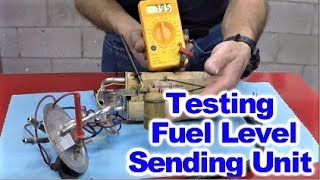
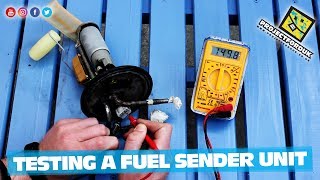
How to confirm: Access the sender via the port under the rear seat. Disconnect it and measure the resistance with a multimeter while manually moving the float arm. 🎬 See how to test a fuel sender with a multimeter. The resistance should change smoothly. For many VW/Audi vehicles, the range is approximately 40-300 ohms. If it's open (infinite resistance), shorted (near zero ohms), or jumps erratically, it has failed.
Typical fix: Replace the fuel level sending unit. In many cases, it is sold as part of the complete fuel pump module. On Quattro models, be sure to diagnose which of the two senders has failed.
Est. part cost: $60-$150 for the sender, $200-$450 for a complete fuel pump assembly. - Damaged Wiring or Corroded Connector 🟡 Medium Probability The main connector is on top of the fuel tank, under an access panel. Moisture can get trapped here, leading to corrosion on the pins for the fuel level sender, which is a very common problem.
How to confirm: Visually inspect the wiring harness and connector pins on top of the fuel pump assembly for green or white corrosion, chafed wires, or loose pins. Perform a voltage drop test on the ground and signal wires. Some forums mention having to cut the connector and solder wires directly due to persistent connection issues.
Typical fix: Clean the connector terminals with an electrical contact cleaner. If corrosion is severe, the connector pigtail may need to be replaced. Repair any damaged sections of the wiring harness.
Est. part cost: $10-$40 for a new connector pigtail. - Faulty Ground Connection ⚪ Low Probability
How to confirm: Locate the ground point for the fuel pump assembly (refer to a wiring diagram for your specific model). Ensure the connection is clean, tight, and free of corrosion. A poor ground can cause the low voltage reading that triggers the code.
Typical fix: Clean the ground connection point to bare metal and re-secure the ground wire.
Est. part cost: $0-$5
Rare But Worth Checking
- Instrument Cluster Fault: → Shop Instrument Cluster A fault within the instrument cluster itself can prevent it from correctly interpreting the signal from the fuel level sensor. This is a known issue on the 8P platform, sometimes causing a complete loss of gauge function or preventing communication with diagnostic tools. In some cases, a simple battery disconnect/reconnect or a 'capacitor discharge' can temporarily resolve software glitches. Other times, the cluster requires professional repair or replacement.
- Powertrain Control Module (PCM) Fault: In very rare cases, the input circuit within the PCM can fail. This should only be considered after all other possibilities have been exhaustively ruled out.
Diagnosis Steps
- Read the code with an OBD-II scanner to confirm P0462 is present. Use a VAG-specific tool like VCDS to check for more detailed codes in the instrument cluster module (Address 17).
- Try a simple reset first: Disconnect the battery for 30 minutes and touch the terminals together to perform a capacitor discharge, which can clear temporary glitches in the instrument cluster. Some forums also report success pulling the instrument cluster fuse for a similar reset.
- If the code returns, gain access to the fuel pump/sender unit assembly by removing the rear seat cushion and the black metal access panel.
- Visually inspect the electrical connector on top of the fuel tank for any signs of corrosion, moisture, or damaged wires. This is a common failure point.
- With the key on, use a multimeter to check for the correct reference voltage (often 5V or 12V) and ground at the connector.
- If wiring seems okay, remove the sender unit from the tank. Test the sender's resistance by connecting a multimeter to the signal and ground pins. Manually move the float arm up and down. The resistance reading should change smoothly and be within the manufacturer's specified range (e.g., approx. 40 ohms full to 280-300 ohms empty for many VW/Audi models). If the reading is erratic, zero (short), or infinite (open), the sender is faulty.
- If the sender and wiring test good, the issue may lie with the instrument cluster. Advanced diagnostics would involve checking the signal wire continuity all the way to the cluster and monitoring live data blocks with VCDS to see the resistance values the cluster is receiving.
Parts You'll Likely Need
- Fuel Level Sending Unit
(OEM #1K0919673-series (e.g., 1K0919673K, check specific VIN))— This is the most common component to fail, either through electrical failure of the variable resistor or physical damage to the float mechanism.
Trusted brands: Bosch, VDO, Topran, OEM Audi
OEM price range: $100-$180
Aftermarket price range: $60-$120 - Fuel Pump Module Assembly
(OEM #Varies significantly by engine and drivetrain (FWD vs Quattro). Check with dealer using VIN.)— Often, the sending unit is integrated into the complete fuel pump module. Replacing the entire assembly is a common repair strategy that also renews the fuel pump itself.
Trusted brands: Bosch, Delphi, VDO, Pierburg
OEM price range: $300-$500
Aftermarket price range: $200-$350
Related Codes That Often Appear With This One
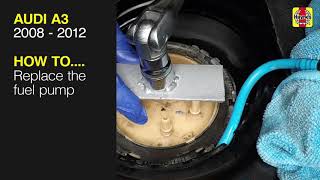
- B103E1B - Fuel Level Sensor 1 Resistance Too High (VAG-specific code that can accompany P0462 if the fault is intermittent or presents as both a short and an open circuit). 🎬 Watch this walkthrough for replacing the sensor and clearing code B103E1B.
Technical Service Bulletins (TSBs) & Recalls
- While no specific TSB number was found directly for P0462 on the A3, Audi has released service bulletins for fuel gauges reading empty after refueling on other models, which involve rerouting wiring to fix the issue. It's worth checking for TPIs (Technical Problem Information) at a dealership.
Platform-Specific Known Issues
- On Audi A3 8P models, there are forum reports of the fuel sender assembly physically separating inside the tank, causing the float to sit at the bottom and send a constant empty signal.
- Quattro models have a saddle tank with two senders. The gauge reading is a calculation of both. A P0462 code points to Sensor 1 (usually the main pump side), but issues with Sensor 2 can also cause incorrect gauge readings, sometimes without a specific code.
- Instrument cluster failure on the 8P chassis is a known issue that can mimic a P0462 fault or occur alongside it, sometimes preventing the car from starting.
Mechanic-Grade Diagnostic Values
- Fuel Level Sender Resistance (Live Data) — expected: Approximately 79 Ohms (Full) to 295 Ohms (Empty). Failure: Value is stuck, shows 0, or is otherwise outside the expected range when moving the float.
Scan Tool Commands That Help
- VCDS (or equivalent VAG-specific tool): Instrument Cluster (17) -> Measuring Blocks — To view the live resistance (Ohms) reading from Fuel Sender 1 (G) and Sender 2 (G169 on Quattro models). This allows you to see the exact value the cluster is receiving from the sender(s) without disassembly, confirming if the signal is logical.
- VCDS (or equivalent VAG-specific tool): Instrument Cluster (17) -> Adaptation (10) -> Channel 30 — To perform a fine-tune calibration of the fuel gauge needle. The default value is 128 and can be adjusted from 120-136. This is useful for correcting a gauge that is consistently off by a small amount after a repair, but it will not fix a dead or erratic sender.
- VCDS (or equivalent VAG-specific tool): Instrument Cluster (17) -> Coding (07) — To verify the cluster is correctly coded for the vehicle's options. For Quattro models, the coding must include '+0001' for the '2nd Fuel Tank Characteristic'. An incorrect coding can cause the cluster to misinterpret the sender signals, leading to an incorrect gauge reading even with good parts.
- VCDS (or equivalent VAG-specific tool): Instrument Cluster (17) -> Output Tests (03) — To command a full sweep of all gauges, including the fuel gauge. If the needle moves correctly during this test, it confirms the gauge motor itself is functional, pointing the diagnosis towards the sender, wiring, or cluster's internal logic rather than the physical needle mechanism.
Wiring & Ground Locations
- Ground Point 62 — Located on the right C-pillar.. Wiring diagrams for the A3 8P show this ground point is used by the fuel pump control unit (J538), which processes the signal from the fuel gauge sender (G). A poor connection at this specific point can cause a variety of fuel system issues, including the low voltage reading of P0462.
- Fuel Pump Connector (Top of Tank) — Under the rear seat, beneath a black metal access panel.. This is the primary connection point for the entire fuel pump assembly, including the level sender. The pins for the sender signal and ground are located here. Corrosion or damage at this connector is a very common cause of P0462 and other fuel gauge faults.
Real Owner Repair Stories
- Audi-Sport.net forum user (2004 Audi A3 8P) — Fuel gauge not working at all.
❌ Tried (didn't work) Initial diagnosis pointed towards a simple sender failure.
✅ What actually fixed it Replacing the fuel sender unit (£60). Upon removal, the owner discovered the original sender's plastic housing had separated into two pieces inside the tank, causing the float to drop to the bottom and give a constant empty reading. - AudiWorld Forums user 'ruserious' (2012 A3 2.0 TFSI Quattro) — Fuel gauge stopped working.
❌ Tried (didn't work) Replacing the fuel level sending unit., Visually inspecting the fuel pump and float., Disconnecting the car battery to reset electronics., Plugging in a different (but incorrect model) fuel pump to test gauge response.
✅ What actually fixed it A specific fuse-pull reset procedure. The owner removed cabin fuses 2 and 27, and engine bay fuses F10, F12, and F13. They then cycled the ignition on and off without starting the car, reinserted all fuses, and started the car. The fuel gauge began working correctly, indicating the fault was a persistent software glitch in one of the control modules that a simple battery disconnect did not clear.
When the Usual Fixes Don't Work
- In one documented case, replacing both the fuel sender and the fuel pump did not resolve the P0462 code and inoperative gauge. The ultimate solution was not a part replacement but a complex control module reset achieved by pulling a specific combination of fuses from both the interior and engine bay panels and cycling the ignition. This suggests that in some instances, the fault can be a persistent software glitch within the instrument cluster or related modules that is not cleared by a standard battery disconnect.
OEM Part Supersession History
1K0919673-series→Multiple revisions exist (e.g., AF, AH, K, etc.)— Revisions to address reliability or minor design changes.
Heads up: The most critical factor is FWD vs. Quattro, which use different sender setups. Part numbers like 1K0919673AH are often listed for the left-side sender on Quattro models. Always verify the exact part number required for your vehicle's VIN and drivetrain, as numerous incompatible variations exist.
Model Year Variations Within This Range
- Pre-2005 vs. Post-2005 (8P): A forum member noted that when upgrading a pre-2005 A3 8P to a newer (e.g., 2010) instrument cluster with a white display, the original fuel pump/sender unit is incompatible. The gauge will not work because the newer cluster requires a wire/signal that the older sender does not provide. A full pump/sender replacement is required to match the newer cluster.
Diagnostic Flowchart
Other Known Issues on This Vehicle
Issues unrelated to this code that are worth knowing about as an owner of this generation:
- DSG/S-Tronic Mechatronic Unit Failure 🔴 High — Common on both 6-speed (DQ250) and 7-speed (DQ200) gearboxes, especially over 80,000 miles. Symptoms include flashing 'PRNDS' indicator, jerky shifting, and loss of gears. (Ref: Various service campaigns and warranty extensions have been issued over the years. Check with a dealer.)
- 2.0T FSI/TFSI Timing Chain Tensioner Failure 🔴 High — A critical issue, particularly on earlier EA113 and EA888 Gen 1/2 engines. Failure can occur without warning, often between 60,000-100,000 miles, leading to catastrophic engine damage. A rattle on cold start is a key warning sign. (Ref: Class-action lawsuits and some TSBs exist. An updated tensioner design is the fix.)
- Dual-Mass Flywheel (DMF) Failure 🟠 Medium — Common on both TDI and manual transmission 2.0T models, typically after 80,000 miles. Symptoms include a rattling or chattering noise at idle that may go away when the clutch is pressed, and excessive vibration.
- Carbon Buildup on Intake Valves (FSI/TFSI engines) 🟠 Medium — Inherent to direct-injection engines. Causes misfires, rough idle, and loss of performance. Typically requires manual cleaning (walnut blasting) every 50,000-80,000 miles.
- Excessive Oil Consumption (2.0T TFSI EA888) 🟠 Medium — Particularly prevalent in 2009-2012 models due to piston ring design. Can lead to owners needing to add oil frequently between changes. (Ref: Subject of a class-action lawsuit which led to a settlement and repair program for affected vehicles.)
- Instrument Cluster Failure (8P) 🟡 Low → Shop Instrument Cluster — Failures of the instrument cluster are common, leading to issues like dead gauges, flickering displays, immobilizer problems preventing the car from starting, and false warnings.
Used vs. New Parts: Buying Guide for This Vehicle
When a used part is the smart pick: A used fuel sender assembly from a verified low-mileage vehicle can be a cost-effective option, especially if your failure is due to physical damage (like a broken plastic housing) rather than electrical wear. A used instrument cluster is also an option, but it will require professional programming to adapt the immobilizer and keys.
Donor-vehicle mileage cap: roughly under 60000 miles for the part to have meaningful remaining life.
What to inspect on the donor part:
- Inspect the electrical connector pins for any signs of white or green corrosion.
- Ensure the plastic housing is fully intact with no cracks or signs of separation.
- Manually move the float arm; it should travel smoothly through its full range without sticking or binding.
- If possible, test the resistance with a multimeter while moving the arm to ensure it changes smoothly.
OEM-only on this vehicle (don't cheap out):
- Instrument Cluster: While used clusters are available, adapting them to the car's immobilizer system is complex and often requires dealer-level tools or a specialized repair service to code the keys and mileage correctly.
Aftermarket brands forum-validated for this vehicle:
- Bosch
- VDO
- Continental
Brands owners have reported issues with on this vehicle:
- Unbranded, exceptionally low-cost units from online marketplaces may have a higher rate of failure or inaccurate resistance ranges, leading to a persistently incorrect fuel gauge.
Real Owner Stories
Aggregated from forums and TSBs cited above. Mileages and costs reflect what owners reported in those sources.
2004 Audi A3 8P
Symptoms: The fuel gauge was not working.
What fixed it: The fuel level sending unit was replaced. The owner discovered the original unit had physically separated into two pieces inside the fuel tank.
Cost: $60-$150
Source hint: Audi-Sport.net: A user with a 2004 A3 8P confirmed the fix was a replacement sender unit (£60) and discovered their original unit had separated into two parts inside the tank.
2012 Audi A3
Symptoms: Fuel gauge issues that were not resolved by other methods.
What fixed it: The owner pulled specific fuses and cycled the ignition, which successfully reset the system and fixed the problem.
Source hint: AudiWorld.com: A 2012 A3 owner detailed a successful fix by pulling specific fuses and cycling the ignition after other methods failed.
Audi S3 8P
Symptoms: Incorrect fuel gauge readings appeared after a friend attempted to change vehicle settings.
What fixed it: The issue was traced back to incorrect instrument cluster coding performed with VCDS. Correcting the coding resolved the gauge problem.
Source hint: Audi Owners Club (UK): A user with an S3 8P experienced incorrect gauge readings after a friend attempted to code out the seatbelt warning with VCDS, highlighting that incorrect instrument cluster coding can cause this issue.
2015 Audi A3 (8V)
Symptoms: Fuel gauge issues.
What fixed it: The issue was resolved by the dealer replacing the fuel sending unit under warranty.
Source hint: AudiWorld.com: A 2015 A3 (8V) owner had their fuel gauge issues resolved by the dealer replacing the fuel sending unit under warranty.
Related OBD-II Codes
Frequently Asked Questions
My Audi A3 is a Quattro model. Does that change how I diagnose P0462?
Could a faulty instrument cluster on my A3 cause the P0462 code?
What is the most common failure that causes P0462 on these cars?
I recently had my car coded with VCDS and now the fuel gauge is wrong. Are these related?
Should I replace just the fuel level sender or the entire fuel pump assembly?
My fuel gauge is stuck on empty, but the Check Engine Light isn't on. Could it still be a P0462 issue?
Helpful Videos


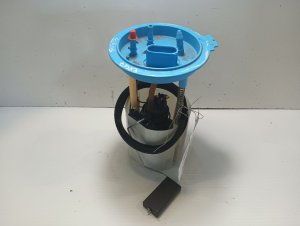
Used OEM Parts in Stock
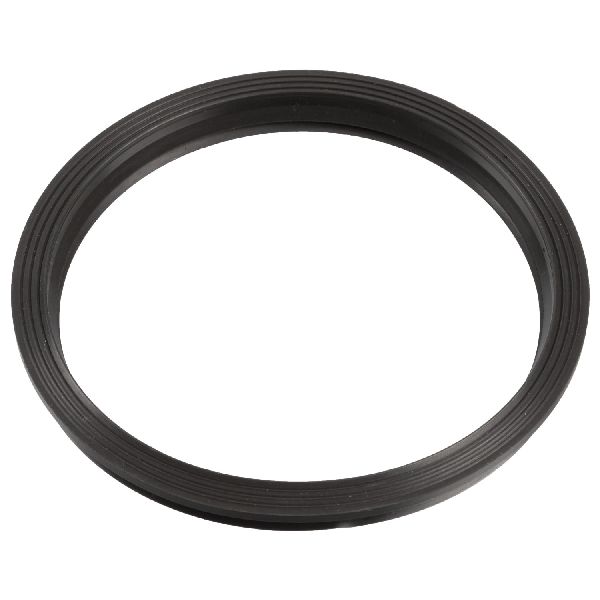
New Aftermarket Parts Available



The information in this article is provided for general reference and educational purposes only. Vehicle specifications, procedures, and part compatibility can vary by production date, trim level, and region. Always consult your vehicle's factory service manual and verify part numbers before purchasing or performing repairs. Safety-critical components such as airbags, seat belts, and braking systems should be installed by a qualified professional.
- Audi A3:
- 🧭 Diagnostic Flowchart
- 🎬 Helpful Videos
- 🛍️ Shop This Part
- What's Unique About the 2004-2014 Audi A3
- Symptoms You May Notice
- Most Likely Causes
- Rare But Worth Checking
- Diagnosis Steps
- Parts You'll Likely Need
- Related Codes That Often Appear With This One
- Technical Service Bulletins (TSBs) & Recalls
- Platform-Specific Known Issues
- Mechanic-Grade Diagnostic Values
- Scan Tool Commands That Help
- Wiring & Ground Locations
- Real Owner Repair Stories
- When the Usual Fixes Don't Work
- OEM Part Supersession History
- Model Year Variations Within This Range
- Other Known Issues on This Vehicle
- Used vs. New Parts: Buying Guide for This Vehicle
- Real Owner Stories
- 2004 Audi A3 8P
- 2012 Audi A3
- Audi S3 8P
- 2015 Audi A3 (8V)
- Related OBD-II Codes
- Frequently Asked Questions
- 🎟️ Get 5% Off