

P0462 on 2007-2014 Ford Edge: Fuel Level Sensor Circuit Low Causes and Fixes
On a 2007-2014 Ford Edge, P0462 is most often caused by a failed fuel level sending unit. This part is located in the fuel tank and requires dropping the tank to replace. Expect to pay $40-$60 for the OEM sending unit, but the total repair cost at a shop will be $500-$800 due to labor.
- P0462 on the Ford Edge almost always points to a bad fuel level sending unit inside the fuel tank.
- The repair is labor-intensive as it requires removing the fuel tank. This makes it a difficult DIY job.
- You can save significant money by replacing only the sending unit (~$50) instead of the entire fuel pump assembly (~$250+ aftermarket, ~$450+ OEM).
- Owners of 2007-2008 models in salt-belt states must check if their vehicle is affected by Safety Recall 14S22 for a corroding fuel tank, which is a fire hazard.
What's Unique About the 2007-2014 Ford Edge
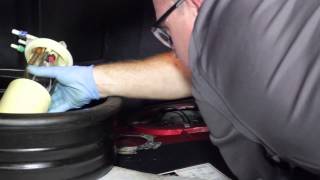
For the 2007-2014 Ford Edge, the P0462 code itself doesn't point to a unique design flaw. However, owners of 2007-2008 models should be aware of a significant safety recall (14S22) concerning fuel tank corrosion, especially in regions that use road salt. This recall addresses the potential for fuel leaks due to rust forming under the tank's mounting brackets, which is a more severe issue than the sensor fault. A key service difference exists within this generation: 2007-2010 models have a fuel pump access panel under the rear seat, making service easier, while 🎬 Watch: How to replace a fuel pump using an access panel 2011-2014 models require the fuel tank to be dropped for any fuel pump or sending unit service.
Generation note: This range covers the entire first generation of the Ford Edge, including the 2011 facelift. The causes and repair procedures for P0462 are consistent across these model years.
Symptoms You May Notice
- Check Engine Light is on
- Fuel gauge reads empty or is stuck in one position
- Fuel gauge fluctuates erratically
- Low fuel warning light stays illuminated even with fuel in the tank
- Fuel gauge is slow to respond after refueling
- Replacing the entire fuel pump assembly when only the sending unit has failed. While they are housed together, the sending unit is often available as a separate, much cheaper part.
- Replacing the instrument cluster without first diagnosing the sending unit and its circuit.
Most Likely Causes
- Failed Fuel Level Sending Unit 🔴 High Probability → Shop Fuel Tank Sending Unit The sending unit's variable resistor can wear out over time from the float arm constantly moving across its surface. Owners who frequently refuel with small amounts of gasoline may experience premature wear on a specific section of the resistor, leading to failure.
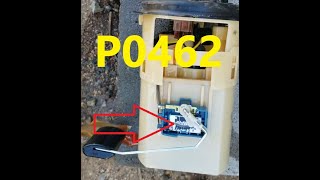
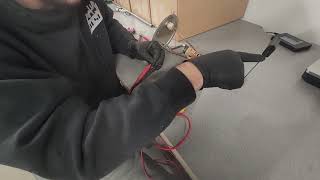
How to confirm: Access the fuel pump connector and measure the resistance of the sending unit with a multimeter. For Ford vehicles of this era, the resistance should be approximately 15-16 Ohms when empty and 158-160 Ohms when full. An open circuit (infinite resistance) or a reading that doesn't change indicates a bad sensor.
Typical fix: Replace the fuel level sending unit. This requires dropping the fuel tank (2011-2014) or accessing it via a panel under the rear seat (2007-2010) to access the fuel pump module where the sender is located.
Est. part cost: $40-$60 for an OEM Motorcraft sending unit. - Wiring or Connector Issue 🟡 Medium Probability The wiring harness leading to the fuel tank is exposed to the elements, making it susceptible to corrosion, moisture intrusion, or physical damage from road debris. The connector on top of the fuel pump module is a common point for corrosion, especially in salt-belt states.
How to confirm: Visually inspect the wiring harness and connector at the top of the fuel tank for any signs of corrosion (green or white powder), damage, or loose pins. Wiggle the harness while an assistant watches the fuel gauge; if it flickers or changes, a wiring issue is likely. Perform a continuity test on the signal and ground wires between the fuel pump connector and the PCM.
Typical fix: Repair the damaged section of the wiring harness or clean/replace the corroded connector. Dielectric grease should be applied to the new or cleaned connector to prevent future moisture intrusion.
Est. part cost: $5-$50 for wiring repair supplies.
Rare But Worth Checking
- Stuck Fuel Level Float: Less common, but the float arm can sometimes get stuck due to debris in the tank or deformation, preventing it from moving with the fuel level. This is more likely in vehicles that have been sitting for a long time.
- Faulty Instrument Cluster: → Shop Instrument Cluster In rare cases, the instrument cluster itself can fail, causing incorrect gauge readings. This is unlikely to be the cause if P0462 is the only code present.
- Powertrain Control Module (PCM) Failure: This is extremely rare. The PCM should only be considered a potential cause after all other possibilities, including the sensor and wiring, have been thoroughly ruled out.
Diagnosis Steps
- Scan the vehicle for any other stored trouble codes.
- Observe the fuel gauge behavior with the key on. Does it move at all or is it stuck on empty?
- Use a scan tool with live data to monitor the fuel level sensor voltage (or percentage) reported to the PCM. A reading consistently below the normal range (e.g., stuck at 0%) points to a circuit low condition. A voltage reading consistently below 0.5V confirms a low circuit condition.
- Gain access to the top of the fuel tank. This requires lowering the tank (2011-2014) or removing an access panel under the rear seat (2007-2010). Visually inspect the fuel pump module connector and wiring harness for any obvious signs of damage, corrosion, or loose connections.
- Disconnect the harness and use a multimeter set to Ohms to test the resistance of the fuel level sending unit. A typical Ford sensor should read around 15-16 Ohms (empty) to 158-160 Ohms (full). A reading of 0 Ohms or infinite resistance (OL) indicates a failed sensor.
- While monitoring resistance, have an assistant gently rock the vehicle side-to-side to slosh the fuel. The resistance reading should fluctuate smoothly. If it is stuck at a very low reading or shows an open circuit, the sending unit is faulty.
- If the sending unit tests good, perform a continuity and voltage drop test on the signal and ground wires between the fuel tank and the PCM to check for a short to ground or other wiring fault.
Parts You'll Likely Need
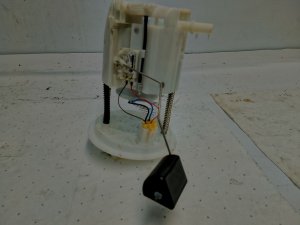
- Fuel Level Sending Unit (Sensor)
(OEM #PS-425)— This is the most common failure point for P0462. The variable resistor wears out over time.
Trusted brands: Motorcraft
OEM price range: $40-$60
Aftermarket price range: $30-$50 - Fuel Pump Module Assembly
(OEM #BT4Z-9H307-C)— Often replaced as a complete unit for convenience or if the fuel pump is also aging. The sending unit is included with the assembly. This specific part number is often cited for AWD models from 2011-2014. 🎬 Watch: Complete fuel pump module replacement walkthrough Always verify the correct part number with your vehicle's VIN.
Trusted brands: Motorcraft, Delphi, Carter
OEM price range: $400-$500
Aftermarket price range: $250-$550
Platform-Specific Known Issues
- Safety Recall 14S22: Fuel Tank Corrosion: → Shop Fuel Tank Affects 2007-2008 Ford Edge and Lincoln MKX vehicles originally sold or registered in corrosion-prone states. Moisture and road salt can get trapped under the fuel tank mounting brackets, causing the tank to rust and potentially leak fuel. This is a serious fire hazard and should be inspected by a dealer. The remedy involves inspection and, if necessary, either applying a rust inhibitor or replacing the entire fuel tank, free of charge.
- Safety Recall 13S13: Fuel Line Pulse Damper Crack: Affects some 2012-2013 Edge models with the 2.0L engine. The fuel line pulse damper housing could crack, leading to a fuel leak.
Mechanic-Grade Diagnostic Values
- Fuel Level Sensor Resistance — expected: Approximately 16 Ohms at Empty, 158 Ohms at Full.. Failure: A reading of 0 Ohms (short circuit), infinite/OL (open circuit), or a value that does not change smoothly as the fuel level changes.
- Fuel Level Sensor Signal Voltage at PCM — expected: Variable voltage, typically between 0.5V (empty) and 4.5V (full) on a 5V reference system.. Failure: A voltage signal that is persistently below the minimum threshold, often less than 0.2V-0.5V, will trigger P0462.
Scan Tool Commands That Help
- Ford IDS / FORScan / High-End Scanners: Instrument Cluster Self-Diagnostic Test (Gauge Sweep) — To quickly check if the instrument cluster gauges, including the fuel gauge, are physically capable of moving through their full range of motion. This helps rule out a physically stuck or failed gauge motor. This test is typically initiated by holding the 'OK' button on the steering wheel while turning the ignition on.
Wiring & Ground Locations
- Fuel Pump Module Connector (C429/C310A) — On top of the fuel pump module, which is located on the top of the fuel tank.. This is the primary connection point for the fuel level sensor. Corrosion, moisture intrusion, or damaged pins at this connector are a common cause of P0462, interrupting the signal to the PCM.
- Fuel Pump Driver Module (FPDM) — For later models, it is often attached to the underside of the rear floor, above the rear subframe on the left (driver's) side.. While the FPDM primarily controls the fuel pump, its wiring is bundled with the sending unit wiring. A fault in the shared harness or ground near the FPDM could potentially affect the fuel level sensor circuit.
Model Year Variations Within This Range
- 2007-2010: These earlier models are equipped with a fuel pump access panel located under the rear driver's side seat. This significantly simplifies the replacement of the fuel pump or sending unit, as the fuel tank does not need to be completely removed from the vehicle.
- 2011-2014: Following the 2011 facelift, the fuel pump access panel was eliminated. Servicing the fuel pump or sending unit on these models requires dropping the entire fuel tank, making the repair more labor-intensive and costly.
- 2011+: The interior was significantly updated, including a redesigned instrument cluster with MyFord Touch displays. While the underlying cause of P0462 remains the same, the way the information is processed and displayed by the cluster is different from the pre-facelift models.
Diagnostic Flowchart
Other Known Issues on This Vehicle
Issues unrelated to this code that are worth knowing about as an owner of this generation:
- Faulty Door Ajar Sensor 🟠 Medium — Very common, especially on 2011-2013 models. The sensor, which is integrated into the door latch, fails and causes the 'Door Ajar' light to stay on, which can drain the battery. (Ref: NHTSA investigation PE16-011 was opened, but no recall was issued. TSB 14-0011 was released for this issue.)
- Failing Brake Booster 🔴 High — A widespread problem across 2007-2015 models. A tear can develop in the booster's diaphragm, leading to a hissing sound when the brake pedal is pressed and increased pedal effort. (Ref: Ford issued Customer Satisfaction Program 13N02, extending the warranty on the brake booster to 10 years or 150,000 miles.)
- Electronic Throttle Body Failure 🟠 Medium — Common on 2011-2014 models, often occurring around 80,000+ miles. Failure causes the vehicle to abruptly enter 'limp mode' with the wrench light illuminated, resulting in a sudden loss of power. (Ref: Ford issued Customer Satisfaction Program 13N03, which extended the warranty, but it has since expired for all affected vehicles.)
- Power Transfer Unit (PTU) Failure (AWD Models) 🔴 High — The PTU (transfer case) on AWD models is prone to overheating and fluid breakdown, leading to seal leaks and eventual gear failure. This is a very expensive repair.
- Water Leaks into Cabin 🟡 Low — Leaks can occur from a clogged A/C evaporator drain hose or from poorly sealed body seams around the liftgate or firewall, leading to wet carpets and potential mold issues.
Used vs. New Parts: Buying Guide for This Vehicle
When a used part is the smart pick: A used fuel pump module assembly from a reputable salvage yard can be a cost-effective option, especially for DIY repairs on 2007-2010 models where access is easier. The primary goal is to obtain a functional OEM sending unit without the cost of a new assembly.
Donor-vehicle mileage cap: roughly under 80000 miles for the part to have meaningful remaining life.
What to inspect on the donor part:
- Check for a clean, corrosion-free electrical connector on top of the module.
- Avoid units from vehicles that show signs of sitting for a long time (e.g., heavy rust, debris in the tank area).
- If possible, ask the salvage yard to test the resistance of the sending unit before purchase.
- Ensure the donor vehicle is the same drivetrain (AWD vs. FWD) as yours, as the modules are different.
OEM-only on this vehicle (don't cheap out):
- While the entire assembly can be sourced used or aftermarket, for just the sending unit, sticking with an OEM Motorcraft part (like the PS-425) is highly recommended for reliability and correct resistance values.
Aftermarket brands forum-validated for this vehicle:
- Delphi
- Carter
Brands owners have reported issues with on this vehicle:
- Generic, unbranded 'white box' fuel pump assemblies have a high failure rate and may have incorrect resistance ranges, causing the code to return or the gauge to read inaccurately.
Real Owner Stories
Aggregated from forums and TSBs cited above. Mileages and costs reflect what owners reported in those sources.
2008 Ford F-250
Symptoms: Fuel gauge pegged on E (empty) with the low fuel light illuminated.
What fixed it: Replacing the entire fuel pump assembly, as the sensor is part of the in-tank sending unit.
Source hint: Ford Truck Enthusiasts Forums (ford-trucks.com) thread titled 'P0462- Fuel gauge pegged on E'
2011-2014 Ford Edge
Symptoms: Check engine light on and a fuel gauge that is slow to respond.
What fixed it: Replacing the fuel level sending unit, which was worn out in one spot due to frequent small refuels.
Source hint: Reddit (r/MechanicAdvice) thread titled 'Code P0462: Check engine light, slow to respond fuel gauge'
Related OBD-II Codes
Frequently Asked Questions
Is there a recall for the fuel tank on my 2007-2008 Ford Edge that might be related to fuel issues?
I have a 2012 Ford Edge with the 2.0L engine; is there a known fuel system safety issue?
How can I check if the fuel level sensor is bad on my 2010 Ford Edge without dropping the tank?
What resistance readings should I see when testing the fuel sending unit on my Ford Edge?
Why does my fuel gauge take a long time to update after I fill up the tank?
Could my habit of only putting $20 of gas in at a time be causing my P0462 code?
Is the fuel level sensor issue common on the Lincoln MKX as well?
Helpful Videos

Used OEM Parts in Stock
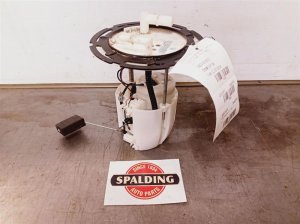
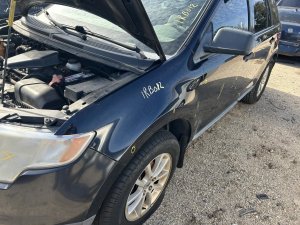
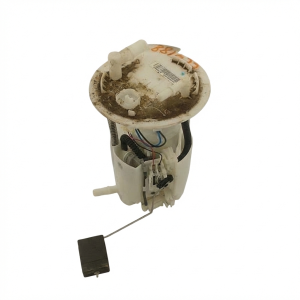
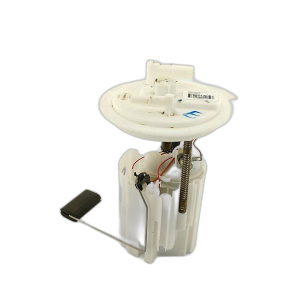
New Aftermarket Parts Available




The information in this article is provided for general reference and educational purposes only. Vehicle specifications, procedures, and part compatibility can vary by production date, trim level, and region. Always consult your vehicle's factory service manual and verify part numbers before purchasing or performing repairs. Safety-critical components such as airbags, seat belts, and braking systems should be installed by a qualified professional.
- Ford Edge:
- 🧭 Diagnostic Flowchart
- 🎬 Helpful Videos
- 🛍️ Shop This Part
- What's Unique About the 2007-2014 Ford Edge
- Symptoms You May Notice
- Most Likely Causes
- Rare But Worth Checking
- Diagnosis Steps
- Parts You'll Likely Need
- Platform-Specific Known Issues
- Mechanic-Grade Diagnostic Values
- Scan Tool Commands That Help
- Wiring & Ground Locations
- Model Year Variations Within This Range
- Other Known Issues on This Vehicle
- Used vs. New Parts: Buying Guide for This Vehicle
- Real Owner Stories
- 2008 Ford F-250
- 2011-2014 Ford Edge
- Related OBD-II Codes
- Frequently Asked Questions
- 🎟️ Get 5% Off