

P0462 on 2008-2012 Ford Escape: Fuel Gauge Problems and Fixes
On a 2008-2012 Ford Escape, P0462 often points to a faulty instrument cluster, not just the fuel sending unit. Before replacing the expensive fuel pump assembly, check for other gauge issues; a cluster repair service can be a much cheaper fix.
- For a P0462 code on a 2008-2012 Escape, the instrument cluster is a highly probable cause and should be investigated before the fuel pump.
- Symptoms often include an erratic or non-functional fuel gauge and the Check Engine Light.
- Do not immediately buy a new fuel pump assembly, which can cost over $1,000. A faulty cluster can be repaired for a fraction of that cost.
- Driving with this code is possible, but requires careful tracking of mileage to avoid running out of gas.
What's Unique About the 2008-2012 Ford Escape
For the second-generation Ford Escape (2008-2012), the instrument cluster itself is a well-documented weak point. While the fuel sending unit in the tank can fail, many owners find that the root cause of fuel gauge problems, including the P0462 code, is due to faulty soldering or component failure within the gauge cluster. This can lead to a misdiagnosis where the expensive fuel pump assembly is replaced, only for the problem to persist. This issue is so common that multiple specialized services exist just to repair these specific clusters.
Symptoms You May Notice
- Check Engine Light is on
- Fuel gauge reads empty or is stuck in one position
- Fuel gauge reading is erratic or inaccurate, possibly fluctuating wildly
- Low fuel warning light is on even with fuel in the tank
- Fuel gauge is slow to respond after refueling
- Replacing the fuel pump assembly when the instrument cluster is the actual fault. This is a very expensive mistake on this particular vehicle, as the cluster is a known high-failure item.
Most Likely Causes
- Faulty Instrument Cluster 🔴 High Probability → Shop Instrument Cluster The 2008-2012 Escape is known for internal component and soldering failures within the instrument panel, affecting gauge operation. This is a widely reported failure among owners and repair shops.
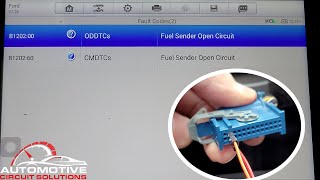
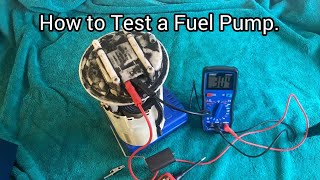
How to confirm: Check if other gauges (speedometer, tachometer) are also behaving erratically or if the cluster backlights are failing. Using an advanced scan tool, check for Body codes (B-codes) stored in the Instrument Cluster Module (ICM), such as B1202 (Fuel Sender Open Circuit). A technician can also measure the fuel sender's resistance directly at the cluster's electrical connector pins (specifically pins 12 and 25) to see if 🎬 Watch: Diagnostic test of an erratic Escape fuel gauge a correct signal is arriving from the tank. If the resistance reading is within spec at the cluster, but the gauge is still wrong, the cluster is the culprit.
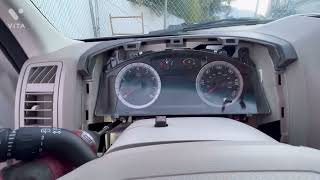
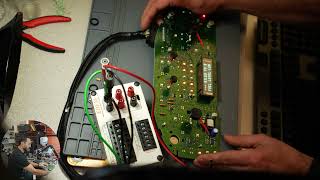
Typical fix: Send the original instrument cluster to a specialized repair service that replaces faulty components and re-solders connections. This is often 🎬 See this step-by-step instrument cluster removal walkthrough cheaper than a new cluster and avoids programming issues.
Est. part cost: $150-$300 for a mail-in repair service. - Failed Fuel Level Sending Unit 🟡 Medium Probability → Shop Fuel Tank Sending Unit Like any vehicle, the variable resistor on the sending unit can wear out over time, leading to dead spots or a complete failure. Corrosion or fuel additives can also damage the sensor contacts.
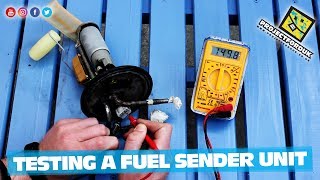
How to confirm: Access the top of the fuel tank and use a multimeter to measure the resistance of the sending unit. The resistance for a non-flex-fuel Ford of this era should be approximately 15 ohms when 🎬 Watch: How to test a fuel sender unit empty and 160 ohms when full. An open circuit (infinite resistance) or a short (zero resistance) indicates a bad sender.
Typical fix: The sending unit is part of the fuel pump module. The entire module must be replaced, which requires dropping the fuel tank or accessing it from under the rear seat.
Est. part cost: $1100-$1300 for an OEM fuel pump module. - Wiring Issue (Short to Ground) ⚪ Low Probability
How to confirm: Perform a continuity test on the signal wire between the fuel pump module connector and the instrument cluster. Check for any shorts to ground along the harness, paying attention to areas where wires might chafe or be damaged. Corrosion at the fuel tank connector is a common point of failure.
Typical fix: Locate the damaged section of the wiring harness and repair or replace it.
Est. part cost: $10-$50 for wiring repair supplies.
Rare But Worth Checking
- Stuck Fuel Level Float: The float arm on the sending unit can physically get stuck, especially if the vehicle has been sitting for a long time or if there is debris in the fuel tank. This would cause the resistance reading to be fixed in one position.
- Powertrain Control Module (PCM) Fault: It is very rare for the PCM to be the cause of this specific code. All other possibilities, especially the cluster and sending unit, should be exhaustively ruled out before considering PCM replacement.
Diagnosis Steps
- Read the codes from the PCM and the Instrument Cluster Module (ICM) using an advanced scan tool.
- Observe the fuel gauge behavior. Is it stuck on empty, full, or does it move erratically?
- Check for other symptoms of a failing instrument cluster, such as other gauges acting strangely, flickering backlights, or intermittent power to the cluster.
- If cluster failure is suspected, remove the cluster and test the resistance between pins 12 and 25 on the cluster's main connector. This directly measures the signal from the fuel sending unit.
- A normal reading for a non-flex-fuel Escape should be between ~15 ohms (empty) and ~160 ohms (full). If the reading is in this range and changes with fuel level, but the gauge is inaccurate, the cluster is faulty.
- If the resistance reading at the cluster is incorrect (open, shorted, or erratic), access the fuel pump electrical connector at the fuel tank.
- With a multimeter, check for proper voltage and ground at the connector.
- Measure the resistance (ohms) of the fuel level sending unit through the connector pins. Compare the reading to the manufacturer's specifications (~15-160 ohms).
- If the resistance is out of spec or shows an open/short, the fuel sending unit (part of the fuel pump module) is likely bad.
- If the resistance is good at the tank but the signal is bad at the cluster, inspect the wiring harness between the two for damage, corrosion, or a short to ground.
Parts You'll Likely Need
- Instrument Cluster Repair Service
(OEM #AL8Z-10849-CB (Example for 2010 model with message center))— This is a very common failure point on 2008-2012 Escapes that causes fuel gauge issues and sets P0462. Repairing the existing cluster is more cost-effective than replacement.
Trusted brands: Automotive Circuit Solutions, Circuit Board Medics
OEM price range: $500-$800 for a new cluster plus programming
Aftermarket price range: $150-$300 for a mail-in repair service - Fuel Pump Module Assembly
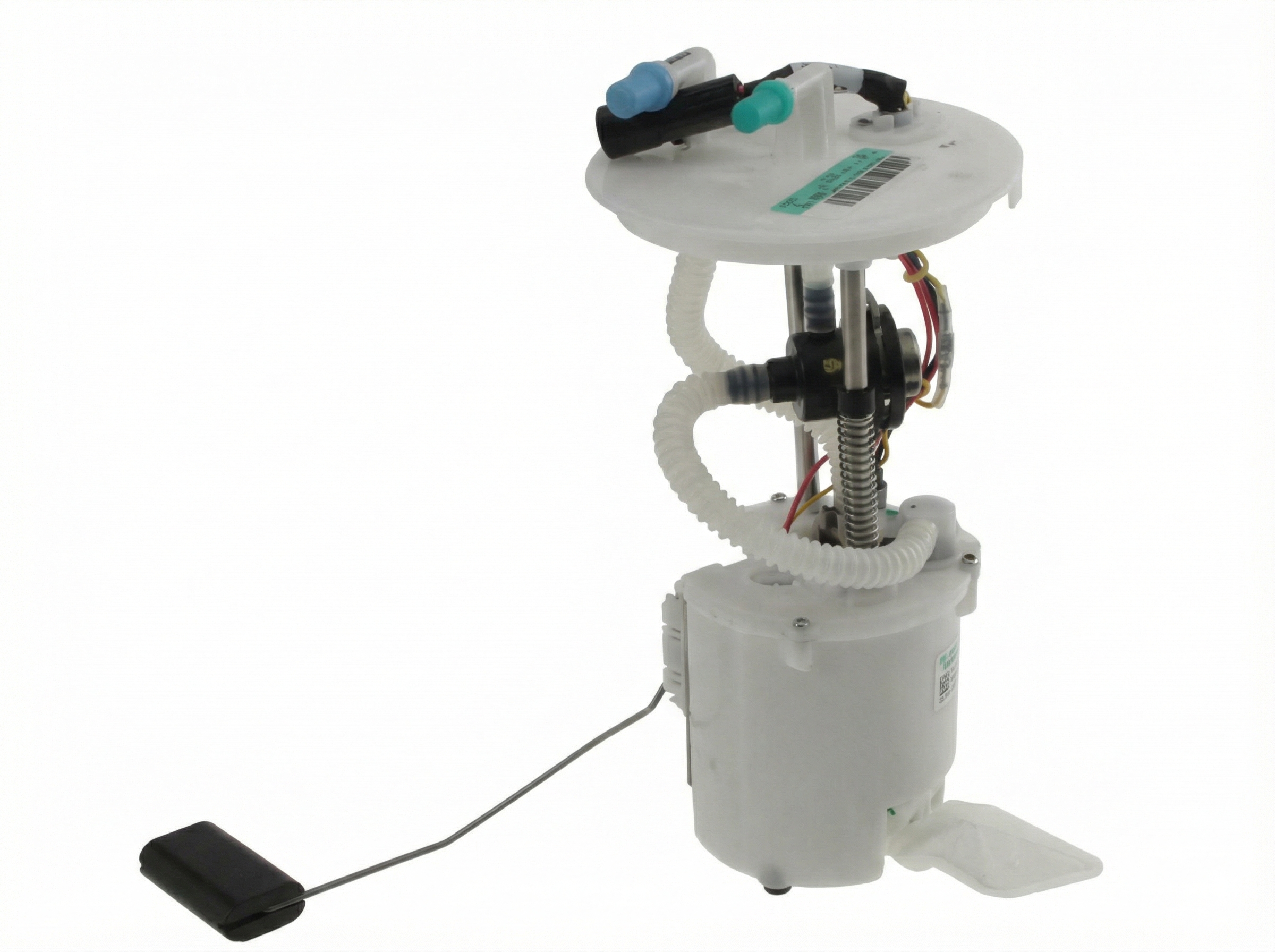
(OEM #AL8Z9H307A (Example for 2.5L engine from 08/03/2009))— If the sending unit itself has failed, the entire in-tank module must be replaced as the sender is integrated.
Trusted brands: Motorcraft, Delphi, Bosch
OEM price range: $1100-$1300
Aftermarket price range: $200-$500
Related Codes That Often Appear With This One
- P0463 — This code means 'Fuel Level Sensor Circuit High'. Seeing it alongside or intermittently with P0462 strongly points toward a failing instrument cluster or a wiring problem causing erratic signals, rather than just a failed sending unit.
- B1202 — This is a Ford-specific Body code for 'Fuel Sender Open Circuit'. It is often stored in the instrument cluster module itself and points directly to a problem in the fuel level sensing system, reinforcing the diagnosis.
Platform-Specific Known Issues
- The instrument cluster on the 2008-2012 Ford Escape is prone to internal failures that specifically affect gauge readings, including the fuel gauge. This is a widely recognized issue with multiple companies offering specialized repair services.
Mechanic-Grade Diagnostic Values
- Fuel Level Sender Resistance — expected: ~15 Ohms (Empty) to ~160 Ohms (Full) for post-1989 Ford models.. Failure: A reading of 0 ohms (short to ground) or infinite/very high resistance (open circuit).
- Fuel Level Sensor Signal Voltage at PCM/Cluster — expected: Typically between 0.5V (Empty) and 4.5V (Full).. Failure: A voltage signal stuck below 0.5V will trigger a P0462 code.
Hidden / Shadow Codes Worth Checking
- 9202: Fuel sender open circuit. This is a cluster-specific code. (see via Access the HEC (Hybrid Electronic Cluster) Dealer Test Mode by holding the trip/reset button while turning the key to the 'ON' position.)
- 9204: Fuel sender short to ground. This is a cluster-specific code. (see via Access the HEC (Hybrid Electronic Cluster) Dealer Test Mode by holding the trip/reset button while turning the key to the 'ON' position.)
Scan Tool Commands That Help
- Ford IDS / FORScan / High-End Scan Tool: Instrument Cluster Module (ICM) Active Command - Gauge Sweep — This command forces all gauges, including the fuel gauge, to sweep through their full range of motion. If the fuel gauge moves correctly during this test but reads incorrectly during normal operation, it confirms the gauge motor itself is functional and points the diagnosis toward the signal processing circuitry within the cluster or the incoming signal from the sender.
- On-Board Diagnostics (No Tool Required): HEC Dealer Test Mode — This built-in diagnostic mode can be accessed without a scan tool. It allows the user to perform a gauge sweep, view raw sensor data inputs, and check for cluster-specific DTCs (like 9202 or 9204). To enter, hold the trip odometer reset button, turn the ignition to 'ON', and continue holding until 'tESt' appears on the odometer display.
Wiring & Ground Locations
- Instrument Cluster Connector (C220) — The single large electrical connector on the back of the instrument panel cluster.. Pins 12 and 25 are the specific terminals for the fuel level sender signal. Testing resistance across these two pins directly checks the entire circuit back to and including the sending unit in the tank. This is the primary test point to differentiate a cluster failure from a sender/wiring failure.
- Fuel Pump Module Connector — On top of the fuel tank, accessible by removing the driver's side rear seat cushion and a metal access panel underneath the carpet.. This is the connection point for both the fuel pump motor and the fuel level sending unit. Corrosion or damage to the pins for the sending unit (typically the two smaller gauge wires) can cause the P0462 code.
Real Owner Repair Stories
- YouTube channel Automotive Circuit Solutions (2008-2012 Ford Escape (specific year not stated, but applies to the generation)) — Fuel gauge not working, low fuel light on, Check Engine Light with code P0463 (Circuit High), and a cluster-specific code B1202 (Fuel Sender Open Circuit).
❌ Tried (didn't work) The technician notes that simply running an active test with a scan tool makes the gauge work, which can be misleading. The core problem is the cluster's inability to process the live signal from the sender.
✅ What actually fixed it The technician confirmed the sending unit was producing a correct resistance signal (78 ohms) at the cluster connector (pins 12 and 25). This isolated the fault to the instrument cluster itself. The cluster was then repaired internally, which resolved all symptoms and codes.
OEM Part Supersession History
AL8Z-10849-GA→AL8Z-10849-CB— Standard part revision by the manufacturer.
Heads up: These parts are for models equipped 'With message center'. Clusters for base models without the message center will have a different part number.Not specified→AL8Z9H307A— This is the specified fuel pump module for 2.5L engines manufactured from 08/03/2009 onwards.
Heads up: Fuel pump modules can be specific to engine size (2.5L vs 3.0L) and model year. Always verify with VIN.
Model Year Variations Within This Range
- 2008-2012: Instrument clusters differ between models with the basic digital odometer and those with the upgraded message center display. Part numbers are not interchangeable.
- 2009-2012: The fuel pump module part number (AL8Z9H307A) is specified for vehicles built from August 3, 2009. Earlier 2008-2009 models may use a different part number.
Diagnostic Flowchart
Other Known Issues on This Vehicle
Issues unrelated to this code that are worth knowing about as an owner of this generation:
- Electric Power Steering (EPS) Failure 🔴 High — Extremely common. Can occur at any mileage, leading to a sudden loss of power assist. (Ref: NHTSA Recall 14V284000 (Ford #14S05))
- 6F35 Transmission Failure 🔴 High — Common, particularly in 2009 and newer models. Symptoms include harsh shifting, shuddering, and complete failure, often before 100,000 miles.
- Rear Shock Tower Rust 🔴 High — Very common in regions that use road salt. The upper shock mount rusts completely through the body, allowing the shock to detach and enter the cabin.
- Faulty Ignition Coils 🟠 Medium — A common cause of engine misfires and rough running.
- Leaking Axle Shaft Seal 🟠 Medium — Frequently reported on 2009-2012 models, causing transmission fluid leaks from the driver's side transaxle area.
- Broken ABS Tone Ring 🟡 Low — The front ABS tone rings are prone to cracking, which illuminates the ABS light and can cause erratic traction control activation.
Used vs. New Parts: Buying Guide for This Vehicle
When a used part is the smart pick: A used instrument cluster from a junkyard is generally NOT recommended. While cheaper, it may suffer from the same internal flaws and will have incorrect mileage. A mail-in repair service for your original cluster is the most cost-effective and reliable option as it retains your vehicle's mileage and programming. A used fuel pump is never recommended due to the high labor cost to install it and the unknown remaining lifespan.
Donor-vehicle mileage cap: roughly under 80000 miles for the part to have meaningful remaining life.
What to inspect on the donor part:
- For a cluster repair service: Choose a reputable company with a warranty and positive reviews (e.g., Automotive Circuit Solutions, Circuit Board Medics).
- For a fuel pump: There are no reliable external cues for a used part. The internal resistor strip on the sending unit cannot be inspected.
OEM-only on this vehicle (don't cheap out):
- Fuel Pump Module Assembly: While expensive, the OEM Motorcraft part is recommended for longevity and reliability. Aftermarket pumps have a higher reported failure rate, and the labor to replace one is significant.
Aftermarket brands forum-validated for this vehicle:
- Instrument Cluster Repair: Automotive Circuit Solutions, Circuit Board Medics
- Fuel Pump Module: Delphi, Bosch (if Motorcraft is unavailable or cost-prohibitive)
Brands owners have reported issues with on this vehicle:
- Generic, unbranded fuel pump assemblies from online marketplaces often have high failure rates and may not have accurate sending units, causing the problem to persist.
Real Owner Stories
Aggregated from forums and TSBs cited above. Mileages and costs reflect what owners reported in those sources.
2008 Ford Truck (Escape Platform)
Symptoms: Fuel gauge pegged on E, low fuel light on, and P0462 code stored.
What fixed it: Replacement of the in-tank fuel sending unit.
Source hint: Ford Truck Enthusiasts Forums: 'P0462- Fuel gauge pegged on E'
2009 Ford Escape (Platform-mate)
Symptoms: The fuel gauge was very slow to update or respond after filling the tank at the gas station, eventually triggering a P0462.
What fixed it: Replacing the fuel sending unit due to a failing potentiometer (variable resistor) on the sensor.
Source hint: Reddit r/MechanicAdvice: 'Code P0462: Check engine light, slow to respond fuel gauge'
Related OBD-II Codes
Frequently Asked Questions
My 2008 Ford Escape fuel gauge is stuck on empty with the low fuel light on; is there a recall for this?
Can I just buy a used instrument cluster from a junkyard to fix the P0462 code on my Escape?
I have a Mercury Mariner with the same fuel gauge problem; is the fix the same as the Ford Escape?
What are the specific resistance values I should look for when testing the fuel sender on a non-flex-fuel 2010 Escape?
Which pins on the instrument cluster should I test to verify the fuel signal is reaching the dash?
Does the 2008-2011 Mazda Tribute suffer from the same P0462 issues as the Escape?
Helpful Videos
Used OEM Parts in Stock
New Aftermarket Parts Available



The information in this article is provided for general reference and educational purposes only. Vehicle specifications, procedures, and part compatibility can vary by production date, trim level, and region. Always consult your vehicle's factory service manual and verify part numbers before purchasing or performing repairs. Safety-critical components such as airbags, seat belts, and braking systems should be installed by a qualified professional.
- Ford Escape:
- 🧭 Diagnostic Flowchart
- 🎬 Helpful Videos
- 🛍️ Shop This Part
- What's Unique About the 2008-2012 Ford Escape
- Symptoms You May Notice
- Most Likely Causes
- Rare But Worth Checking
- Diagnosis Steps
- Parts You'll Likely Need
- Related Codes That Often Appear With This One
- Platform-Specific Known Issues
- Mechanic-Grade Diagnostic Values
- Hidden / Shadow Codes Worth Checking
- Scan Tool Commands That Help
- Wiring & Ground Locations
- Real Owner Repair Stories
- OEM Part Supersession History
- Model Year Variations Within This Range
- Other Known Issues on This Vehicle
- Used vs. New Parts: Buying Guide for This Vehicle
- Real Owner Stories
- 2008 Ford Truck (Escape Platform)
- 2009 Ford Escape (Platform-mate)
- Related OBD-II Codes
- Frequently Asked Questions
- 🎟️ Get 5% Off