

P0462 on 2011-2019 Ford Explorer: Fuel Level Sensor Circuit Low Causes and Fixes
On a 2011-2019 Ford Explorer, code P0462 is most often caused by a failing fuel level sending unit, which is part of the in-tank fuel pump assembly. This results in an erratic or inaccurate fuel gauge, often stuck on empty. Expect to replace the entire fuel pump module, with DIY difficulty being high due to the need to drop the fuel tank. Before replacing parts, check the wiring harness and connector for corrosion or damage, as this is a known issue.
- The P0462 code on a 2011-2019 Ford Explorer almost always points to a problem with the fuel level sending unit.
- The sending unit is usually part of the fuel pump module, so you'll likely need to replace the entire assembly.
- This repair requires dropping the fuel tank, making it a difficult and time-consuming DIY job.
- Before replacing parts, always check the wiring and connectors for any visible damage or corrosion, as this can be a simpler fix.
What's Unique About the 2011-2019 Ford Explorer
The 2011-2019 Ford Explorer (fifth generation) integrates the fuel level sending unit with the fuel pump module inside the fuel tank. This design means that a failure of the relatively simple sending unit often requires the replacement of the entire, more expensive fuel pump assembly. While wiring issues can occur, particularly corrosion at the connector on top of the fuel tank, owner experiences suggest that the sending unit itself is the most common point of failure, leading to the frustrating and potentially misleading fuel gauge readings.
Generation note: The 2011-2019 year range covers the fifth generation of the Ford Explorer. The causes and fixes are generally consistent across this generation.
Symptoms You May Notice
- Inaccurate or erratic fuel gauge readings (e.g., stuck on empty, full, or fluctuating wildly)
- Check Engine Light is on
- Low fuel warning light illuminates even when the tank is not empty
- Fuel gauge does not update after refueling
- Fuel gauge drops to zero intermittently while driving
- Replacing the fuel pump when only the sending unit has failed (though they are often sold as an assembly).
- Assuming the instrument cluster is bad before checking the sending unit and wiring.
- Replacing parts without first inspecting the wiring harness and connector on top of the fuel tank for corrosion, which is a common and cheaper fix.
Most Likely Causes
- Faulty Fuel Level Sending Unit 🔴 High Probability → Shop Fuel Tank Sending Unit The sending unit's resistor can wear out or fail over time from the constant movement of the float arm, leading to an open or shorted circuit that sends a low voltage signal. It is integrated into the fuel pump module, which is a common replacement item.
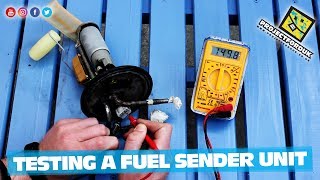
How to confirm: Test the resistance of the sending unit with a multimeter while moving the float arm. The resistance should change smoothly. 🎬 Watch: Easy steps to test a fuel sender unit For many Ford vehicles, the range is approximately 40 ohms at empty and 250 ohms at full. An open circuit or a reading that doesn't change indicates a bad sensor.
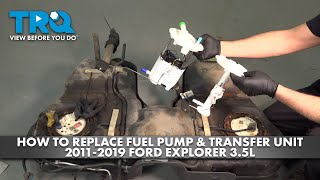
Typical fix: Replace the entire fuel pump module assembly, as the sending unit is typically not sold separately. This requires dropping the fuel tank for access. 🎬 Watch: How to replace the fuel pump and transfer unit
Est. part cost: $200-$400 for a Motorcraft assembly, $100-$250 for aftermarket. - Wiring or Connector Issues 🟡 Medium Probability The wiring harness leading to the fuel tank can be exposed to moisture and road debris, leading to corrosion or damage to the connectors and wires, especially the connector on top of the fuel pump module. This can create a short to ground, pulling the signal voltage low.
How to confirm: Visually inspect the wiring harness and connector at the top of the fuel tank for any signs of corrosion, damage, or loose connections. Perform a continuity test on the signal wire between the PCM and the fuel pump module. Wiggling the harness while observing the fuel gauge or a scan tool can help identify intermittent connection issues.
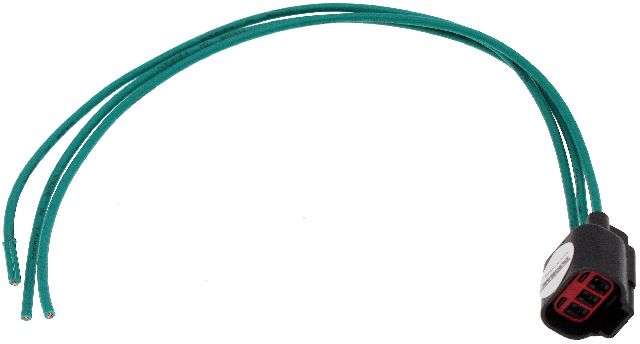
Typical fix: Repair the damaged section of the wiring harness or replace the connector pigtail. Apply dielectric grease to the connector to prevent future moisture intrusion.
Est. part cost: $20-$100 for wiring repair supplies or a new pigtail connector.
Rare But Worth Checking
- Faulty Powertrain Control Module (PCM): This is a rare cause. The PCM should only be considered after thoroughly testing the fuel level sensor and its wiring. A failed input driver within the PCM can mimic a sensor fault.
- Instrument Cluster Malfunction: → Shop Instrument Cluster It is possible for the instrument cluster itself to be faulty, but this is less common than a sending unit or wiring problem. If other gauges are also behaving erratically, the cluster might be the issue.
- Stuck Float Arm: The float arm itself can become stuck in the empty position due to debris in the tank or a physical obstruction, though this is uncommon.
Diagnosis Steps
- Check for other stored trouble codes with an OBD-II scanner.
- Visually inspect the wiring harness and connector leading to the fuel tank for any obvious signs of damage, corrosion, or loose connections. This is a critical first step.
- Using a scan tool, observe the live data for fuel level voltage from the PCM. A reading consistently below 0.5V confirms the low circuit condition. Compare this to the reading on the fuel gauge.
- If possible, access the fuel pump module connector. With the key on, check for the correct reference voltage being sent to the sending unit and check for a good ground.
- Test the resistance (ohms) of the fuel level sending unit. You will need to access the top of the fuel tank. As you move the float arm, the resistance reading on your multimeter should change smoothly and be within the manufacturer's specified range (e.g., ~40-250 ohms).
- If the sending unit tests good and the wiring is intact, the issue may lie with the instrument cluster or the PCM, though this is rare.
Parts You'll Likely Need
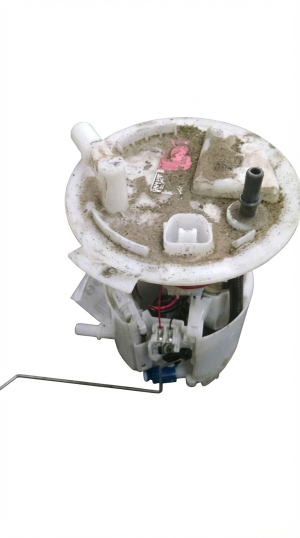
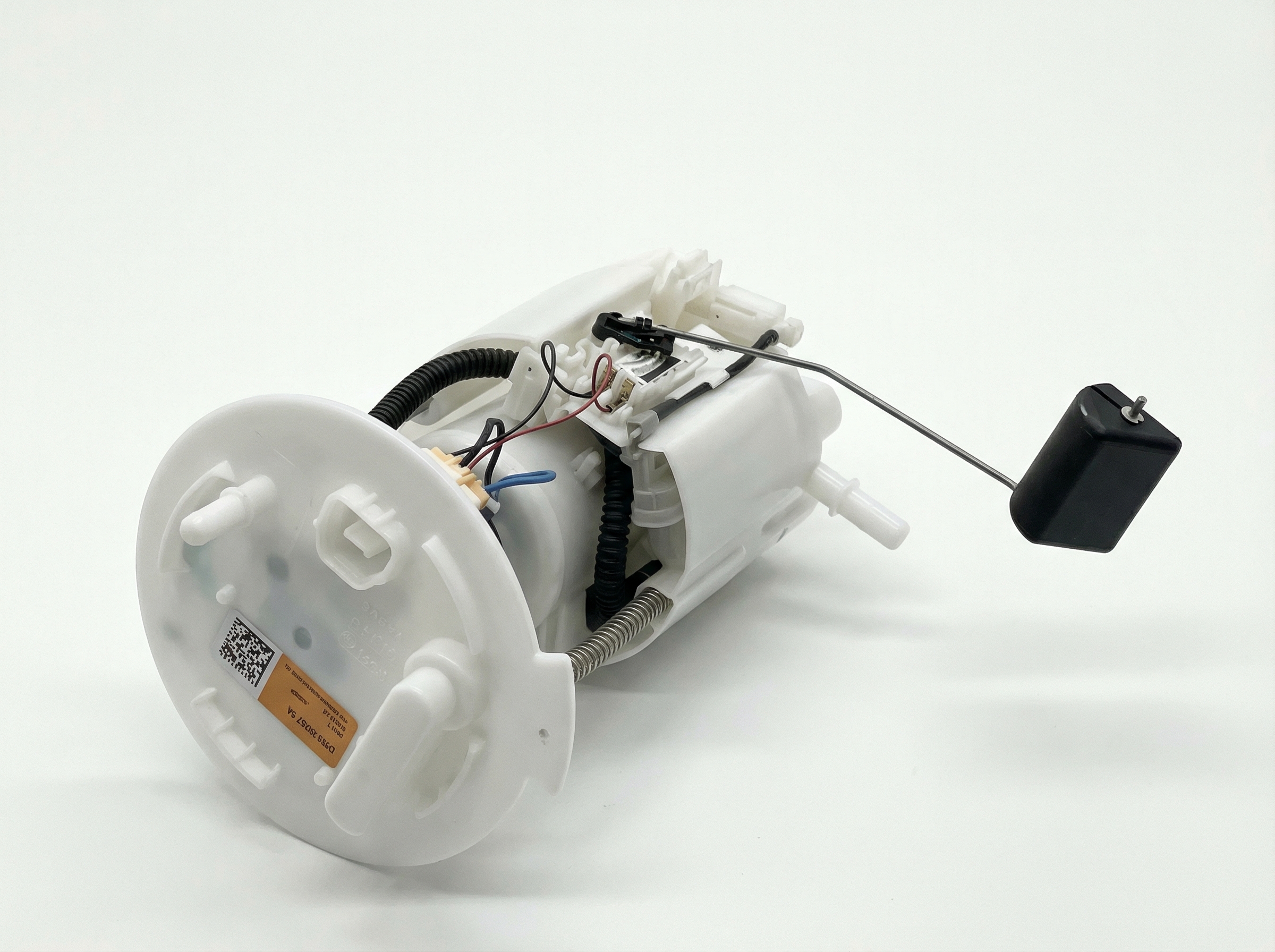
- Fuel Pump and Sender Assembly
(OEM #DB5Z-9H307-C (Fits many 2013-2019 models with 3.5L non-turbo or 3.7L engines, verify fitment))— The fuel level sending unit is the most common cause of P0462, and it is typically integrated into the fuel pump module.
Trusted brands: Motorcraft, Delphi, Carter
OEM price range: $250-$450
Aftermarket price range: $150-$300 - Fuel Tank Sending Unit
(OEM #DA8Z-9A299-B (Fits many 2013-2019 models, verify fitment))— In some cases, the sending unit may be available separately from the fuel pump. This part is often listed as the right-side or primary sending unit. 🎬 See: Visual guide of the sending units with the tank removed
Trusted brands: Motorcraft
OEM price range: $60-$110
Aftermarket price range: $40-$80
Related Codes That Often Appear With This One
- P0463 — This code indicates a 'Fuel Level Sensor 'A' Circuit High' condition. Seeing both P0462 and P0463 could point to an intermittent wiring issue or a failing sensor that is sending erratic signals, bouncing between a short (low voltage) and an open circuit (high voltage).
Platform-Specific Known Issues
- Owner Experience on ExplorerForum.com: A user with a 2013 Explorer reported the P0462 code along with a fuel gauge that read empty immediately after filling up. After confirming the wiring was okay, they replaced the entire fuel pump assembly, which resolved the issue. The consensus in the thread was that the sending unit failure is very common and replacing the whole assembly is the standard fix.
- Reddit User Story on r/FordExplorer: A 2016 Explorer owner described their fuel gauge fluctuating wildly for a week before getting stuck on empty and triggering the check engine light with code P0462. The dealership diagnosed a failed fuel level sender and replaced the fuel pump module. The repair cost was approximately $750, with the majority of the cost being labor to drop the fuel tank.
Mechanic-Grade Diagnostic Values
- Fuel Level Sensor Resistance — expected: Approximately 16 Ohms (± 2) when the tank is empty and 160 Ohms (± 4) when the tank is full. The reading should sweep smoothly when moving the float arm.. Failure: A reading of 0 Ohms, infinite resistance (OL), or a value that is stuck and does not change as the float moves.
- Fuel Level Sensor Signal Voltage at PCM — expected: Greater than 0.5V and less than 4.5V. The voltage should correspond to the fuel level (lower voltage = emptier tank).. Failure: A consistent voltage reading below 0.5V, often near 0V, indicates a short to ground or a failed sensor, triggering the P0462 code.
Scan Tool Commands That Help
- Manual / On-Board: Instrument Cluster Self-Diagnostic Mode (HEC Dealer Test) — Use this as a first step to rule out a faulty instrument cluster. If the fuel gauge performs a full sweep during this test but doesn't read correctly during normal operation, the cluster is likely good and the fault is with the sensor or wiring. To enter, press and hold the tripmeter reset button, turn the ignition to ON (II), and release the button when 'tESt' appears on the display.
- Ford IDS (or equivalent professional scanner): Self Test > All CMDTCs — The professional-grade tool can run comprehensive self-tests on individual modules, including the Instrument Panel Cluster (IPC) and Powertrain Control Module (PCM), to check for module-specific faults that may not be visible with a standard OBD-II reader.
Wiring & Ground Locations
- PCM Connector C175B, Pin 19 (example) — The Powertrain Control Module (PCM) is typically located in the engine bay, often on the firewall or near the battery.. This is the terminal where the PCM receives the signal from the fuel level sensor. Back-probing this pin (often a Yellow/Orange wire) for voltage is a definitive way to determine if a valid signal is reaching the computer. If voltage is low here but correct at the tank, a wiring issue exists between them. Pinouts can vary slightly by year, so verifying with a model-specific diagram is crucial.
- Fuel Pump/Sender Ground Wire — The ground wire for the fuel pump and sending unit is part of the main connector on top of the fuel tank and is typically a Black wire. It grounds to the chassis nearby.. A poor or corroded ground connection can cause erratic voltage readings and is a common cause for fuel system codes. While this typically causes a high voltage code (P0463), intermittent ground issues can sometimes trigger a P0462. Ensure the ground point on the chassis is clean and secure.
OEM Part Supersession History
DB5Z-9H307-B→DB5Z-9H307-C— Standard part revision, likely for improved reliability or manufacturing efficiency.
Heads up: The newer part (C) is the correct service replacement for the older part (B). When ordering, ensure you are receiving the latest revision.
Model Year Variations Within This Range
- 2016-2019: The 2016 model year marked a significant mid-generation refresh. This included updated exterior styling, revised interior controls (MyFord Touch), and a new optional 2.3L EcoBoost engine replacing the previous 2.0L. While the base 3.5L V6 remained, these changes can affect part compatibility. Always verify fuel pump and sending unit part numbers against your vehicle's specific year and engine before ordering, as there may be subtle differences between early (2011-2015) and late (2016-2019) models.
Diagnostic Flowchart
Other Known Issues on This Vehicle
Issues unrelated to this code that are worth knowing about as an owner of this generation:
- Internal Water Pump Failure (3.5L/3.7L V6) 🔴 High — Commonly occurs between 75,000 and 150,000 miles. A coolant leak near the front passenger side of the engine is a key indicator.
- Power Transfer Unit (PTU) Failure (AWD Models) 🔴 High — Can occur at various mileages, often accelerated by lack of service. Ford considered the fluid a 'lifetime' fill, which proved inadequate. (Ref: TSB 19-2017 for fluid leaks from the intermediate shaft seal.)
- Exhaust Odor / Carbon Monoxide In Cabin 🔴 High — Primarily affects 2011-2017 models. The issue was subject to a major NHTSA investigation. (Ref: TSB 16-0166, TSB 17-0044, and a Ford Field Service Action (17B25) were issued to address the problem.)
- Electronic Power Steering Rack Failure 🔴 High — A common source of complaints to the NHTSA for this generation. (Ref: Several recalls were issued for steering issues, but failures of the rack itself remain a common weak point.)
- A-Pillar Trim Detachment / Rattle 🟡 Low — Common on earlier models of the generation (2011-2013).
Used vs. New Parts: Buying Guide for This Vehicle
When a used part is the smart pick: For this specific repair, sourcing a used fuel pump assembly from a junkyard is NOT recommended. The labor to drop the fuel tank is significant, and the risk of installing a used part with limited remaining life outweighs the potential cost savings. A used part only makes sense if you are stranded and it is the only option available for immediate repair.
Donor-vehicle mileage cap: roughly under 50000 miles for the part to have meaningful remaining life.
What to inspect on the donor part:
- Verify the donor vehicle was not in a major rear-end collision that could have damaged the tank or pump.
- Inspect the electrical connector on the used unit for any signs of corrosion, melting, or pin damage.
- If possible, test the resistance of the sending unit on the used part before purchasing to ensure it sweeps smoothly within the 16-160 Ohm range.
OEM-only on this vehicle (don't cheap out):
- While not strictly 'OEM-only', using a Motorcraft (OEM) fuel pump and sender assembly is highly recommended for reliability and fitment. The cost difference is often minimal when factoring in the potential for a repeat repair.
Aftermarket brands forum-validated for this vehicle:
- Delphi
- Carter
- TRQ
Brands owners have reported issues with on this vehicle:
- Avoid unbranded, 'white-box' parts from online marketplaces. Forum discussions frequently mention premature failures from no-name aftermarket fuel pumps, leading to the same P0462 code and requiring the job to be done a second time.
Real Owner Stories
Aggregated from forums and TSBs cited above. Mileages and costs reflect what owners reported in those sources.
2013 Ford Explorer
Symptoms: The fuel gauge read empty immediately after filling up the tank and the P0462 code was present.
What fixed it: Replaced the entire fuel pump assembly after confirming the wiring was okay.
Source hint: ExplorerForum.com - 'P0462 Fuel Level Sensor A Circuit Low'
2016 Ford Explorer
Symptoms: Fuel gauge fluctuated wildly for a week before getting stuck on empty and triggering the check engine light.
What fixed it: The dealership replaced the fuel pump module.
Cost: $750-$750
Source hint: Reddit User Story on r/FordExplorer
2014 Ford Explorer
Symptoms: Fuel gauge problem and P0462 code.
What fixed it: Diagnosis confirmed the resistance of the sender was out of spec, requiring a sensor/pump replacement.
Source hint: Ford-Trucks.com - '2014 Explorer Fuel Gauge Problem'
Related OBD-II Codes
Frequently Asked Questions
Is there a specific TSB for the exhaust smell I'm noticing along with the P0462 code on my 2014 Explorer?
Can I just replace the fuel level sensor on my 2011-2019 Explorer to fix P0462?
What is the expected resistance range for the fuel sending unit on a Ford Explorer?
My 2016 Explorer's fuel gauge is fluctuating wildly; is this a known issue?
Does road salt affect the fuel system wiring on these SUVs?
Are there any other major mechanical issues I should watch for on my 2011-2019 Explorer while fixing this?
Helpful Videos
Used OEM Parts in Stock
New Aftermarket Parts Available


The information in this article is provided for general reference and educational purposes only. Vehicle specifications, procedures, and part compatibility can vary by production date, trim level, and region. Always consult your vehicle's factory service manual and verify part numbers before purchasing or performing repairs. Safety-critical components such as airbags, seat belts, and braking systems should be installed by a qualified professional.
- Ford Explorer:
- 🧭 Diagnostic Flowchart
- 🎬 Helpful Videos
- 🛍️ Shop This Part
- What's Unique About the 2011-2019 Ford Explorer
- Symptoms You May Notice
- Most Likely Causes
- Rare But Worth Checking
- Diagnosis Steps
- Parts You'll Likely Need
- Related Codes That Often Appear With This One
- Platform-Specific Known Issues
- Mechanic-Grade Diagnostic Values
- Scan Tool Commands That Help
- Wiring & Ground Locations
- OEM Part Supersession History
- Model Year Variations Within This Range
- Other Known Issues on This Vehicle
- Used vs. New Parts: Buying Guide for This Vehicle
- Real Owner Stories
- 2013 Ford Explorer
- 2016 Ford Explorer
- 2014 Ford Explorer
- Related OBD-II Codes
- Frequently Asked Questions
- 🎟️ Get 5% Off