

P0462 on 2010-2019 Ford Taurus: Fuel Level Sensor Circuit Low Causes and Fixes
On a 2010-2019 Ford Taurus, code P0462 is almost always caused by a failed fuel level sending unit, which is part of the complete fuel pump assembly. Expect to replace the entire module, which can be costly due to the part itself and the labor to access the fuel tank. AWD models have a secondary sending unit that can also fail.
- P0462 on a 2010-2019 Taurus points to a problem with the fuel level reading, not the fuel pump's operation.
- The most likely culprit is the fuel level sending unit, which is part of the fuel pump module inside the gas tank.
- Due to the integrated design, the entire fuel pump assembly must be replaced, making this a relatively expensive repair.
- AWD models have a second sending unit, which adds a layer of complexity to the diagnosis.
- Always check the wiring and connectors for corrosion or damage before replacing the expensive fuel pump module.
- Do not ignore this code, as an unreliable fuel gauge can leave you stranded.
What's Unique About the 2010-2019 Ford Taurus
For the sixth-generation Ford Taurus (2010-2019), the fuel level sensor is not a separate, easily replaceable part. Instead, it is integrated into the fuel pump module located inside the fuel tank. This design means that a simple sensor failure requires the replacement of the entire, more expensive fuel pump assembly. Accessing this module can also be labor-intensive, further increasing the repair cost. Furthermore, All-Wheel Drive (AWD) models have a more complex saddle-style fuel tank with a secondary fuel level sensor on the driver's side, which can also be a point of failure and complicates diagnosis.
Generation note: The 2010-2019 model years cover the entire sixth generation of the Ford Taurus. There was a mid-cycle refresh in 2013 which may affect part numbers for the fuel pump assembly. It's important to verify the correct part for your specific model year and drivetrain (FWD or AWD).
Symptoms You May Notice
- Check Engine Light is on
- Fuel gauge reading is inaccurate, erratic, or stuck on empty
- Low fuel warning light illuminates even with fuel in the tank
- Fuel gauge does not change after refueling
- Distance to Empty (DTE) display is inaccurate or shows dashes
- Replacing only the fuel pump itself without the entire assembly, not realizing the sending unit is the cause of the P0462 code.
- Replacing the instrument cluster before thoroughly testing the sending unit and wiring.
- On AWD models, replacing the primary fuel pump module when the fault is with the secondary (driver's side) sending unit.
Most Likely Causes
- Failed Fuel Level Sending Unit 🔴 High Probability → Shop Fuel Tank Sending Unit The sending unit's resistor can wear out over time from the float arm constantly moving across it. This wear can lead to an open or shorted circuit, causing the low voltage signal. Fuel additives and contaminants can also accelerate the wear on the resistor contacts.
How to confirm: Test the resistance (ohms) of the sending unit with a multimeter while moving the float arm. The reading should change smoothly. If it's erratic, shows an open circuit (infinite resistance), or a short (zero resistance), the unit is bad. On AWD models, both the primary (passenger side) and secondary (driver side) sending units should be tested.
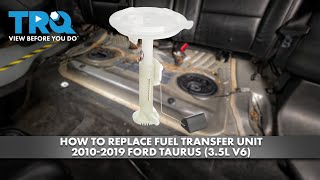
Typical fix: Replace the entire fuel pump module assembly, as the sending unit is integrated into it. On AWD models, if the secondary sender fails, it is replaced separately from the primary pump module. 🎬 See how to replace the secondary fuel transfer unit
Est. part cost: $250-$600 - Wiring Harness Issues 🟡 Medium Probability The wiring harness leading to the fuel tank can be exposed to moisture and road debris, leading to corrosion on the connectors or chafed wires that short to ground. The connector on top of the fuel pump module is a common spot for corrosion.
How to confirm: Visually inspect the wiring harness and connector at the top of the fuel pump module for any signs of corrosion, damage, or loose connections. Perform a voltage drop test on the signal and ground circuits. A short to ground in the signal wire will cause a constant low reading.
Typical fix: Repair the damaged section of the wiring harness or clean/replace the corroded connector.
Est. part cost: $10-$50
Rare But Worth Checking
- Stuck Fuel Level Float: The float arm can sometimes get stuck in the low position, especially if the vehicle has been sitting for a long time or if the fuel tank is deformed. A related issue on some Ford vehicles is a stuck-open canister purge valve causing excessive vacuum that deforms the plastic fuel tank, which can impede float movement.
- Faulty Instrument Cluster: → Shop Instrument Cluster While rare, the instrument cluster (the part of the dashboard with the gauges) can fail internally, causing incorrect fuel gauge readings. This is usually diagnosed after the sending unit and wiring have been confirmed to be good. A scan tool can often command a gauge sweep test to verify cluster functionality.
- Powertrain Control Module (PCM) Failure: This is a very uncommon cause. The PCM's internal driver for the fuel level circuit can fail, but all other potential causes should be ruled out before suspecting the PCM.
Diagnosis Steps
- Read the trouble codes with an OBD-II scanner to confirm P0462 is present.
- Use a scan tool to observe the live data from the fuel level sensor (Fuel Level Input or FLI). Check if the reading is stuck at a very low value (e.g., 0 volts or 0%).
- Inspect the wiring harness and connector leading to the fuel tank for any visible damage, corrosion, or loose connections.
- If wiring appears okay, gain access to the fuel pump module connector. With the key on, check for the correct reference voltage and a good ground at the connector.
- If power and ground are good, the next step is to test the fuel level sending unit itself. This often requires removing the fuel pump module from the tank.
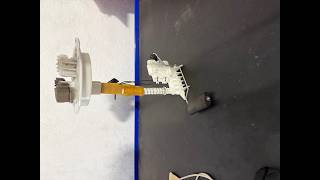
- With the module removed, connect a multimeter set to Ohms to the sending unit's terminals. Manually move the float arm up and down and watch the resistance reading. It should sweep smoothly through its range without any dropouts or erratic jumps. 🎬 Watch: Step-by-step guide to testing a fuel level sensor A typical Ford range is approximately 15 ohms at empty and 160 ohms at full.
- If the sending unit fails the resistance test, the entire fuel pump module needs to be replaced.
- If the sending unit tests good, the problem is likely in the wiring between the module and the PCM, or in a rare case, the instrument cluster or PCM itself.
Parts You'll Likely Need
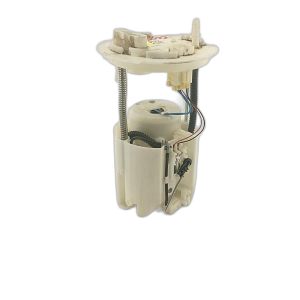
- Fuel Pump and Sender Assembly
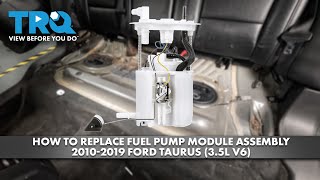
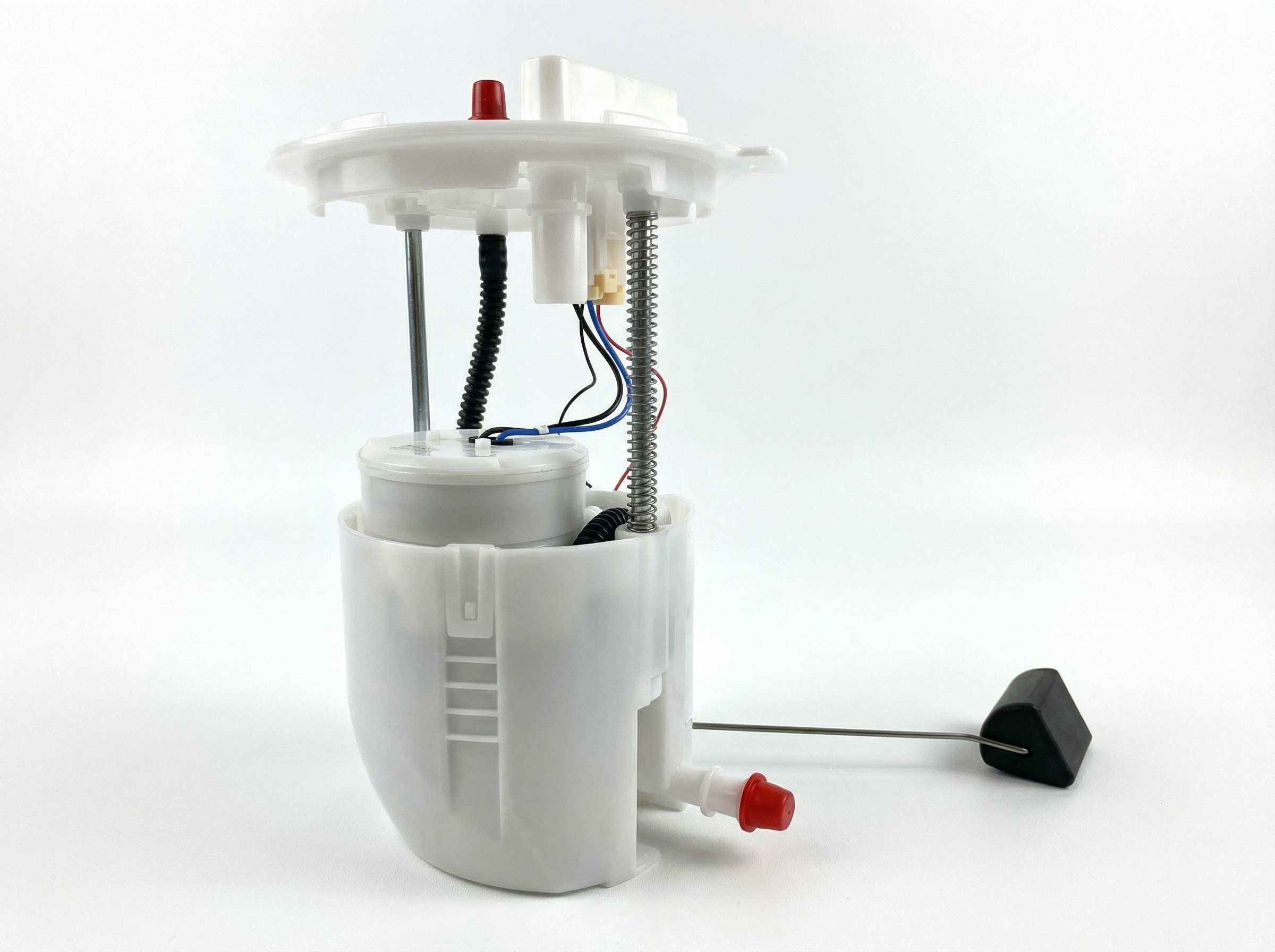
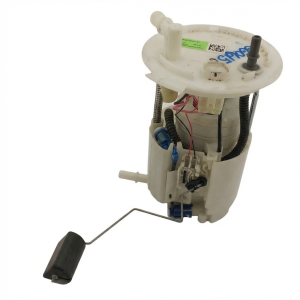
(OEM #AG1Z-9H307-A (2010-2012), DG1Z-9H307-P (2013-2019 FWD), DG1Z-9H307-J (2013-2019 AWD Primary))— This is the most common failure point. The integrated fuel level sending unit wears out, causing the P0462 code. The entire module must be replaced. 🎬 Watch: How to replace the fuel pump module assembly
Trusted brands: Motorcraft, Delphi, Spectra Premium, TRQ
OEM price range: $400-$580
Aftermarket price range: $250-$450
Related Codes That Often Appear With This One
- P0463 — This code means "Fuel Level Sensor 'A' Circuit High". Seeing it with P0462 can indicate an intermittent wiring problem where the signal is fluctuating between being shorted (low) and open (high).
Technical Service Bulletins (TSBs) & Recalls
- TSB 16-0001: Some 2013-2016 Taurus Police vehicles may exhibit DTC P0627, requiring replacement of the Fuel Pump Control Module. While not directly for P0462, it indicates known issues within the fuel pump control system on this platform.
- Recall 18V-735 (18S32): Addresses a malfunctioning Canister Purge Valve (CPV) that can stick open, causing excessive vacuum, deforming the fuel tank, and leading to inaccurate or erratic fuel gauge indications. This could potentially cause the float arm to bind, triggering a P0462.
Platform-Specific Known Issues
- AWD Models Have Two Sending Units: The All-Wheel Drive Taurus uses a saddle tank that straddles the driveshaft, requiring two fuel level sending units. The primary unit is part of the fuel pump module on the passenger side, and a secondary, pump-less unit is on the driver's side. A failure of either can cause gauge inaccuracies, though P0462 typically points to the primary 'A' circuit. Diagnosis must confirm which unit has failed.
Mechanic-Grade Diagnostic Values
- Fuel Level Sender Resistance — expected: Approximately 16 Ohms (Full) to 158 Ohms (Empty).. Failure: Readings are erratic, jump, show an open circuit (infinite resistance), or are significantly outside the specified range when sweeping the float arm.
- Fuel Level Sensor Signal Voltage (at PCM or sensor connector, Key On Engine Off) — expected: Approximately 0.5V (Empty) to 4.5V (Full) on a 5V reference circuit.. Failure: Voltage is consistently below 0.2V, indicating a short to ground or a failed sensor, which triggers P0462.
Scan Tool Commands That Help
- Ford Integrated Diagnostic System (IDS): Datalogger / Live Data Monitoring of Fuel Level Input (FLI) PID — To observe the real-time voltage, resistance, or percentage reading from the fuel level sensor as reported to the PCM. This is a critical first step to confirm the PCM is receiving the 'low' signal and helps differentiate between a sensor/wiring fault and an instrument cluster display problem.
Wiring & Ground Locations
- Primary Fuel Pump Module Connector — Underneath the rear passenger-side seat. The seat bottom must be removed, and a metal access panel is located under the carpet/insulation.. This is the primary access point for testing voltage, ground, and the signal wire resistance directly at the fuel pump module without dropping the fuel tank. Corrosion or damage at this connector is a common cause of fuel level sensor circuit faults.
OEM Part Supersession History
DG1Z-9H307-J→DG1Z-9H307-P— Standard part number update by the manufacturer for the primary fuel pump and sender assembly.
Model Year Variations Within This Range
- 2010-2012 vs 2013-2019: The OEM part number for the fuel pump and sender assembly is different due to the mid-cycle refresh in 2013. Pre-refresh (2010-2012) uses a different part (e.g., AG1Z-9H307-A) than the post-refresh (2013-2019) models (e.g., DG1Z-9H307-P). The parts are not interchangeable.
Diagnostic Flowchart
Other Known Issues on This Vehicle
Issues unrelated to this code that are worth knowing about as an owner of this generation:
- Internal Water Pump Failure (3.5L & 3.7L V6) 🔴 High — Commonly occurs between 80,000 and 150,000 miles. Failure is catastrophic as coolant leaks into the engine oil, destroying the engine if not caught immediately via the external weep hole.
- Power Transfer Unit (PTU) Failure (AWD Models) 🔴 High — Widespread issue due to the gear oil being cooked by the nearby exhaust, with no factory-provided drain plug for service. Failures can occur as early as 60,000 miles. Symptoms include a burning/propane smell and grinding noises.
- Electronic Throttle Body (ETB) Failure 🟠 Medium — Common across many Ford models of this era, causing the vehicle to suddenly enter 'limp mode' with reduced power. Can occur at various mileages. (Ref: Customer Satisfaction Program 16B32 extended the warranty on this part.)
- Transmission Problems 🟠 Medium — Owners report issues with slipping, hard shifts, or delayed engagement, particularly in earlier years of the generation.
Used vs. New Parts: Buying Guide for This Vehicle
When a used part is the smart pick: Generally not recommended. The labor to access or drop the fuel tank is significant, making it unwise to install a used part with an unknown lifespan. The risk of premature failure and repeating the labor outweighs the initial cost savings.
Donor-vehicle mileage cap: roughly under 50000 miles for the part to have meaningful remaining life.
What to inspect on the donor part:
- Check for any corrosion on the electrical connector pins.
- Ensure the plastic housing is not cracked, brittle, or showing signs of heat damage.
- Verify the float arm moves freely without binding or sticking.
OEM-only on this vehicle (don't cheap out):
- Fuel Pump and Sender Assembly
Aftermarket brands forum-validated for this vehicle:
- Motorcraft (OEM)
- Delphi (often the OEM supplier, but ensure it's not a lower-quality aftermarket line)
- Bosch
Brands owners have reported issues with on this vehicle:
- Unbranded, low-cost units from online marketplaces are frequently cited in forums as having high premature failure rates.
Real Owner Stories
Aggregated from forums and TSBs cited above. Mileages and costs reflect what owners reported in those sources.
2013 Ford Taurus Limited
Symptoms: The fuel gauge dropped to empty and the check engine light came on.
What fixed it: Replacement of the entire fuel pump assembly.
Source hint: TaurusClub.com Forum: '2013 Taurus Limited fuel gauge issue'
2004 Ford Taurus
Symptoms: P0462 code returned even after the fuel pump was replaced.
What fixed it: The owner was advised to avoid cheap aftermarket pumps and to check for wiring issues, as the signal wire shorting to ground can cause a constant low reading.
Source hint: 2CarPros: 'Trouble Code P0462?'
Related OBD-II Codes
Frequently Asked Questions
I have a 2015 Taurus Police Interceptor; is there a TSB for fuel system issues?
My 2013 Taurus fuel gauge is erratic; could this be related to the fuel tank recall?
I have an AWD Taurus. Does it have more than one sending unit to check for P0462?
Can I just replace the sending unit sensor, or do I need the whole pump assembly?
What resistance values should I look for when testing the Taurus fuel sender?
Is it worth buying a used fuel pump module from a donor Taurus to save money?
Helpful Videos

Used OEM Parts in Stock
New Aftermarket Parts Available



The information in this article is provided for general reference and educational purposes only. Vehicle specifications, procedures, and part compatibility can vary by production date, trim level, and region. Always consult your vehicle's factory service manual and verify part numbers before purchasing or performing repairs. Safety-critical components such as airbags, seat belts, and braking systems should be installed by a qualified professional.
- Ford Taurus:
- 🧭 Diagnostic Flowchart
- 🎬 Helpful Videos
- 🛍️ Shop This Part
- What's Unique About the 2010-2019 Ford Taurus
- Symptoms You May Notice
- Most Likely Causes
- Rare But Worth Checking
- Diagnosis Steps
- Parts You'll Likely Need
- Related Codes That Often Appear With This One
- Technical Service Bulletins (TSBs) & Recalls
- Platform-Specific Known Issues
- Mechanic-Grade Diagnostic Values
- Scan Tool Commands That Help
- Wiring & Ground Locations
- OEM Part Supersession History
- Model Year Variations Within This Range
- Other Known Issues on This Vehicle
- Used vs. New Parts: Buying Guide for This Vehicle
- Real Owner Stories
- 2013 Ford Taurus Limited
- 2004 Ford Taurus
- Related OBD-II Codes
- Frequently Asked Questions
- 🎟️ Get 5% Off