

P0462 on 2016-2019 Honda Civic: Fuel Gauge Problems, Causes, and Fixes
On a 2016-2019 Honda Civic, P0462 is most often caused by a failed fuel level sending unit, which is part of the fuel pump module. However, a software glitch is also a known possibility for this generation, so you should check with a dealer for updates before replacing parts. A new fuel pump module costs around $375 for an OEM part.
- P0462 indicates your fuel gauge is unreliable because the computer is getting a low voltage reading from the fuel level sensor.
- FIRST, call a Honda dealer with your VIN to check for software updates. A known software glitch on this Civic generation can cause this exact problem, and an update may be a simple, low-cost fix.
- If software is not the issue, the most likely culprit is a failed fuel level sending unit, which requires replacing the entire fuel pump module inside the gas tank.
- Do not trust your fuel gauge while this code is active. Use your trip odometer to track mileage and prevent running out of fuel.
What's Unique About the 2016-2019 Honda Civic
For the 10th generation (2016-2021) Honda Civic, this code is not always a straightforward hardware failure. This platform has documented instances of software glitches in the Instrument Cluster Module (ICM) or Powertrain Control Module (PCM) causing fuel gauge-related trouble codes. Honda issued a Technical Service Bulletin (TSB A19-035) for the closely related code P0461 on the 2019 model, where the fix is a simple software update. This history makes it critical to investigate potential software updates as a first step before assuming the expensive fuel pump module has failed. Repair databases specifically call out a potential "ICM software glitch" for P0462 on 2016-2019 Civics.
Symptoms You May Notice
- Fuel gauge reads empty or is stuck in one position, often immediately after starting the car
- Check Engine Light is illuminated
- Low fuel warning light stays on even with fuel in the tank
- Fuel gauge needle behaves erratically, fluctuating wildly or dropping to zero intermittently
- "Range" or "Miles to Empty" display is inaccurate, blank, or shows dashes
- Replacing the fuel pump module when the actual cause is a software glitch. This leads to an expensive and unnecessary repair, as the code will likely return until the software is updated.
- Replacing the fuel pump when the issue is a simple wiring short to ground between the tank and the PCM.
Most Likely Causes
- Faulty Fuel Level Sending Unit 🔴 High Probability → Shop Fuel Tank Sending Unit The sending unit is a wear item with a moving float arm and a variable resistor that can fail over time. It is the most common hardware failure for this code across all makes. The contacts on the resistor can wear out, or the float arm can get stuck. 🎬 See this video on common causes and fixes for code P0462
How to confirm: Access the fuel pump module connector under the rear seat. Disconnect it and measure the resistance (Ohms) across the two sending unit pins. Compare the reading to the manufacturer's specification. While exact specs for the 10th gen are not published in standard manuals, typical Honda values are approximately 5-7 ohms at Full and 105-110 ohms at Empty. A reading near zero or infinite (open) indicates failure.
Typical fix: Replace the entire fuel pump module assembly. For most Honda models, including this Civic, the sending unit is integrated and not sold separately.
Est. part cost: $150-$450 - Instrument Cluster or Powertrain Control Module Software Glitch 🟡 Medium Probability → Shop Instrument Cluster This specific generation of Civic has known software issues that can cause the computer to misinterpret signals from various sensors. The existence of TSB A19-035 for a related fuel level code (P0461) strongly suggests that software is a likely culprit for P0462 as well.
How to confirm: Contact a Honda dealership with your vehicle's VIN. Ask them to check for any open campaigns, warranty extensions, or Technical Service Bulletins (TSBs) related to the instrument cluster or PGM-FI (PCM) software for fuel gauge issues.
Typical fix: The dealer performs a software update (reflash) on the affected module. This is often done for free if it's part of a product update campaign.
Est. part cost: $0-$200 - Wiring Issue (Short to Ground) ⚪ Low Probability Wiring issues are not specific to this vehicle but can occur from damage, corrosion, or improper repairs. The signal wire from the sending unit to the PCM may be pinched or chafed, causing it to contact the vehicle's chassis.
How to confirm: Using a multimeter, check the fuel level sensor signal wire for continuity to a known good ground. If there is continuity (near zero ohms), the wire is shorted to ground somewhere in the harness. This test should be done with both the sensor and the PCM disconnected to isolate the harness.
Typical fix: Locate the short in the wiring harness and repair the damaged section. This can be a time-consuming process of tracing the wire from the fuel tank to the instrument cluster or PCM.
Est. part cost: $5-$50
Rare But Worth Checking
- Faulty Instrument Cluster: → Shop Instrument Cluster In rare cases, the internal circuitry of the instrument cluster itself can fail, preventing it from correctly processing and displaying the fuel level even with a good signal from a known-good sensor and wiring. This is a last-resort diagnosis. 🎬 Watch: How to run a diagnostic self-test on your instrument cluster
- Faulty Powertrain Control Module (PCM): A failure of the PCM's internal driver circuit is extremely rare but possible. This is a last-resort diagnosis after all other possibilities have been exhausted.
Diagnosis Steps
- Read the trouble codes with an OBD-II scanner to confirm P0462 is present.
- CRITICAL FIRST STEP: Call a Honda dealership with your VIN. Inquire about any software updates or TSBs for the PGM-FI (PCM) or instrument cluster related to fuel gauge inaccuracy. Reference TSB A19-035 as an example of a similar software-based fix.
- If a software update is available, have the dealer perform it before any other diagnosis. This is the most common non-hardware fix.
- If no software update is available, proceed with hardware diagnosis. Access the fuel pump module, which is located under an access panel beneath the rear seat (often on the passenger side). 🎬 Watch: How to remove and replace a Honda fuel sending unit
- Visually inspect the connector and wiring harness for any signs of damage, corrosion, or loose pins.
- With the key on, use a multimeter to test the resistance of the fuel level sending unit at the connector. The resistance should be within the factory specification (e.g., approx. 5-110 Ohms) and change as the fuel level changes.
- If the resistance is out of specification (often near zero ohms for a 'low' circuit code), the sending unit has failed.
- If the sending unit tests good, you must then check the wiring harness. Disconnect the harness at both the fuel pump and the PCM/cluster and check the signal wire for a short to ground using a multimeter.
- If wiring and sender are good, the fault may lie in the instrument cluster itself, which is a rare but possible failure point.
Parts You'll Likely Need
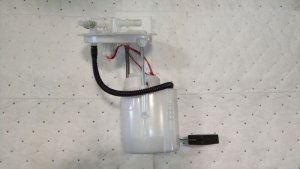
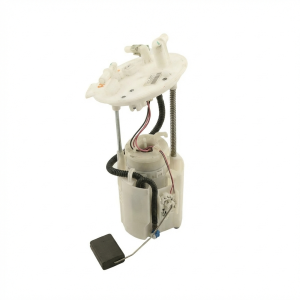
- Fuel Pump Module Assembly
(OEM #17045-TBA-A03 (For 2.0L models), 17045-TBF-A03 (For 1.5L Si models))— This is the most common hardware failure for code P0462. The fuel level sending unit is integrated into this assembly and is not typically sold separately by Honda. Part numbers vary by engine and trim.
Trusted brands: Honda (OEM), Denso, Spectra Premium, Delphi
OEM price range: $370-$450
Aftermarket price range: $150-$280
Related Codes That Often Appear With This One
- P0463 — This code for 'Circuit High' is the opposite of P0462. It often appears during diagnosis if you disconnect the fuel level sensor connector, which creates an open circuit. Seeing P0463 after disconnecting the sensor helps confirm the wiring to the computer is likely intact.
- P0461 — This code for 'Circuit Range/Performance' is closely related. A TSB (A19-035) for the 2019 Civic with this code points directly to a software issue, providing strong evidence that software is a potential cause for P0462 as well.
Technical Service Bulletins (TSBs) & Recalls
- While not directly for P0462, TSB A19-035 for the 2019 Civic is highly relevant. It addresses the related code P0461 by applying a PGM-FI software update, which establishes a precedent for software-related fuel gauge errors on this platform.
- Honda has also issued multiple fuel-pump related recalls and warranty extensions for this generation, such as for oil dilution software updates and failing low-pressure fuel pumps (Recall 20-040), making it essential to check all dealer communications for a specific VIN.
Platform-Specific Known Issues
- The 10th generation Civic platform is known to have software glitches that can incorrectly trigger fuel system-related diagnostic codes. A Technical Service Bulletin for a related code (P0461) on the 2019 model year specifies a software update as the fix, highlighting the importance of checking for software updates before replacing hardware on this vehicle.
- While not directly related to P0462, this generation Civic with the 1.5T engine is also known for fuel dilution of the engine oil, especially in cold climates with short-trip driving patterns. This indicates a broader sensitivity in the fuel system management.
Mechanic-Grade Diagnostic Values
- Fuel Level Sensor Resistance — expected: Approximately 5-10 Ohms when Full, and 105-110 Ohms when Empty. This is a typical Honda range; exact 10th gen specs are not widely published.. Failure: A reading of 0 Ohms (short) or infinite/OL (open circuit) indicates a failed sender.
- Fuel Level Sensor Signal Voltage — expected: Varies based on fuel level, typically within a 0.5V (Empty) to 4.5V (Full) range.. Failure: A voltage signal consistently below 0.5V will trigger P0462.
Scan Tool Commands That Help
- Honda HDS (or manual procedure): Instrument Cluster Self-Diagnostic Function — To verify if the instrument cluster's gauge motors, LCDs, and indicators are functioning correctly. This test includes a gauge sweep function that moves the fuel gauge needle from minimum to maximum, helping to rule out a faulty gauge motor in the cluster itself.
Wiring & Ground Locations
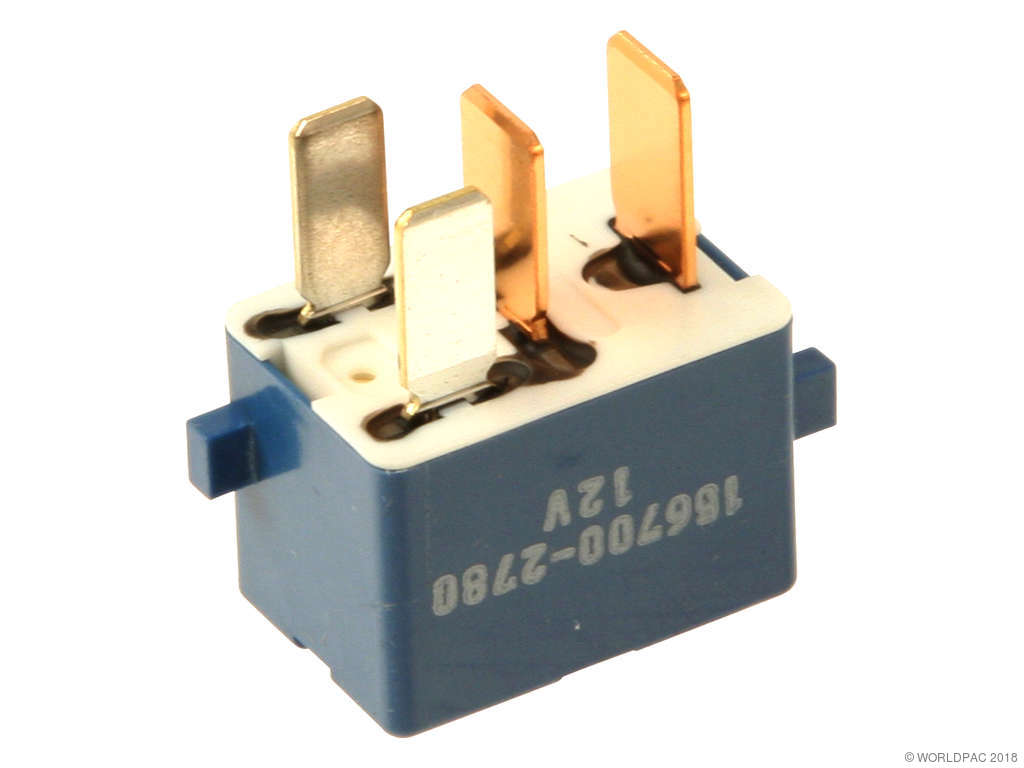
- Fuel Pump Relay — In the under-hood fuse box. It is typically the first of a group of three blue relays located above the specialty fuses.. While a relay failure is unlikely to cause a P0462 (it would more likely cause a no-start), knowing its location is part of a complete fuel system electrical diagnosis.
- Fuel Pump Module Connector — Under the rear seat, beneath a metal access panel. The rear seat cushion must be removed to access it.. This is the primary access point for testing the fuel level sender's resistance and checking voltage on the circuit without dropping the fuel tank.
OEM Part Supersession History
17045-TBA-A00, 17045-TBA-A01, 17045-TBA-A02→17045-TBA-A03— Standard part revision and improvement by the manufacturer.
Heads up: The latest part number (17045-TBA-A03) is the correct replacement for all prior versions for 2.0L models within the specified year range.17045-TBF-A00, 17045-TBF-A01, 17045-TBF-A02→17045-TBF-A03— Standard part revision and improvement by the manufacturer.
Heads up: The latest part number (17045-TBF-A03) is the correct replacement for all prior versions for 1.5L Si models within the specified year range.
Diagnostic Flowchart
Other Known Issues on This Vehicle
Issues unrelated to this code that are worth knowing about as an owner of this generation:
- A/C Condenser Failure 🔴 High — Extremely common on 2016-2018 models. Pinhole leaks develop, causing loss of refrigerant. The issue was so widespread Honda issued a warranty extension to 10 years/unlimited miles for the condenser. (Ref: TSB 19-091 (Warranty Extension))
- 1.5L Turbo Engine Oil Dilution 🔴 High — Common in cold climates and/or with frequent short trips. Fuel mixes with engine oil, raising the oil level and reducing lubrication, which can lead to premature engine wear. (Ref: Multiple software update TSBs (e.g., 18-114) and a warranty extension on certain engine components were issued.)
- Sticky or Notchy Steering 🟠 Medium — Reported across the 10th generation. The electronic power steering (EPS) rack can develop a 'sticky' or notchy feeling, especially at highway speeds, making it difficult to make small corrections. (Ref: No recall for 10th gen, but a known issue often requiring expensive steering rack replacement. A recall was issued for later 11th gen models for a similar issue.)
- Broad Fuel Pump Recalls 🔴 High → Shop Fuel Pump — Multiple recalls were issued for 2018-2020 models for low-pressure fuel pumps with impellers that could fail, causing the engine to stall while driving. (Ref: NHTSA recalls 20V314000, 21V215000, etc.)
Used vs. New Parts: Buying Guide for This Vehicle
When a used part is the smart pick: A used fuel pump module from a reputable salvage yard can be a cost-effective option, especially if the donor vehicle has low mileage. Given the primary failure is often the electronic sending unit rather than the pump motor itself, a used assembly can be a viable repair.
Donor-vehicle mileage cap: roughly under 60000 miles for the part to have meaningful remaining life.
What to inspect on the donor part:
- Verify the part number on the used unit matches your original or its superseded number.
- Inspect the electrical connector for any signs of corrosion, melted plastic, or bent pins.
- If possible, ask the salvage yard for the VIN of the donor car to check its history for accidents or flood damage.
- Ensure the plastic housing is not cracked or damaged, especially around the hose connections and mounting flange.
OEM-only on this vehicle (don't cheap out):
- While aftermarket options exist, the OEM Honda (often manufactured by Denso) fuel pump assembly is recommended for best fitment and reliability, particularly to avoid compatibility issues with the vehicle's sensitive electronics.
Aftermarket brands forum-validated for this vehicle:
- Denso (often the OEM supplier)
- Delphi
- Spectra Premium
Brands owners have reported issues with on this vehicle:
- Unbranded, no-name parts from online marketplaces should be avoided, as they have a high failure rate and can cause repeat repairs.
Real Owner Stories
Aggregated from forums and TSBs cited above. Mileages and costs reflect what owners reported in those sources.
2019 Honda Civic
Symptoms: The vehicle was experiencing fuel level sensor logic issues resulting in a diagnostic trouble code.
What fixed it: The dealer performed a PGM-FI software update as per the manufacturer's service bulletin.
Source hint: TSB A19-035
2016-2019 Honda Civic
Symptoms: The fuel gauge was behaving erratically and the check engine light was on due to an ICM software glitch.
What fixed it: The issue was identified as a software glitch in the Instrument Cluster Module (ICM).
Source hint: iCarsoft US (repair_db)
Related OBD-II Codes
Frequently Asked Questions
Does TSB A19-035 apply to my 2019 Honda Civic if I have a fuel gauge issue?
Can I replace just the fuel level sending unit on my 10th gen Civic?
Is there a recall for the fuel system on the 2016-2019 Civic that might cause P0462?
Where is the fuel level sensor located on this vehicle for testing?
What are the typical resistance values I should see when testing the Civic's sending unit?
Could the oil dilution issue on my 1.5T engine be related to my fuel gauge code?
Helpful Videos
![How to Fix HONDA P0462 Engine Code in 2 Minutes [1 DIY Method / Only $11.9]](https://img.youtube.com/vi/OCSiN8nZtqU/mqdefault.jpg)
Used OEM Parts in Stock
New Aftermarket Parts Available


The information in this article is provided for general reference and educational purposes only. Vehicle specifications, procedures, and part compatibility can vary by production date, trim level, and region. Always consult your vehicle's factory service manual and verify part numbers before purchasing or performing repairs. Safety-critical components such as airbags, seat belts, and braking systems should be installed by a qualified professional.
- Honda Civic:
- 🧭 Diagnostic Flowchart
- 🎬 Helpful Videos
- 🛍️ Shop This Part
- What's Unique About the 2016-2019 Honda Civic
- Symptoms You May Notice
- Most Likely Causes
- Rare But Worth Checking
- Diagnosis Steps
- Parts You'll Likely Need
- Related Codes That Often Appear With This One
- Technical Service Bulletins (TSBs) & Recalls
- Platform-Specific Known Issues
- Mechanic-Grade Diagnostic Values
- Scan Tool Commands That Help
- Wiring & Ground Locations
- OEM Part Supersession History
- Other Known Issues on This Vehicle
- Used vs. New Parts: Buying Guide for This Vehicle
- Real Owner Stories
- 2019 Honda Civic
- 2016-2019 Honda Civic
- Related OBD-II Codes
- Frequently Asked Questions
- 🎟️ Get 5% Off