

P0462 on 2016-2022 Honda Pilot: Fuel Level Sensor Circuit Low Causes and Fixes
On a 2016-2022 Honda Pilot, code P0462 is almost always caused by a failed fuel level sending unit, which is part of the in-tank fuel pump assembly. This results in an inaccurate or empty fuel gauge. The most common fix is to replace the entire fuel pump module. This issue is frequently reported by owners immediately after the fuel pump safety recall service (NHTSA 23V-855), often due to improper installation of the new unit's float arm.
- P0462 on a 2016-2022 Pilot means the fuel level sensor circuit has a low voltage reading, which will make your fuel gauge inaccurate.
- The most likely cause is a failed fuel level sending unit, which is part of the fuel pump module.
- This vehicle generation has a major recall for the fuel pump. If the P0462 code appears right after the recall service, the cause is very likely an error during the reinstallation of the pump assembly.
What's Unique About the 2016-2022 Honda Pilot
For the 2016-2022 Honda Pilot, this code is often linked to the broader fuel pump assembly. This generation was subject to a major safety recall (NHTSA 23V-855, Honda Service Bulletin 24-010) for defective fuel pump motor impellers that could swell, seize, and cause stalling. While the recall's primary symptom is DTC P0087 (Fuel Rail Pressure Too Low), the fuel level sending unit is an integral part of the same fuel pump module that is replaced during the recall service. Owners have reported P0462 or related fuel gauge issues appearing after the recall work, sometimes due to improper installation of the new module's float arm, a claim widely corroborated in owner forums.
Symptoms You May Notice
- Check Engine Light is on
- Fuel gauge reads empty, full, or is otherwise erratic and inaccurate.
- Low fuel warning light illuminates even with fuel in the tank.
- Replacing only the fuel pump motor when the sending unit is the cause of the P0462 code.
- Assuming the instrument cluster is bad before thoroughly testing the sending unit and its wiring.
Most Likely Causes
- Faulty Fuel Level Sending Unit 🔴 High Probability → Shop Fuel Tank Sending Unit The sending unit is integrated into the fuel pump module, which has known reliability issues on this platform leading to recalls. The sender's resistor track can wear out over time or fail.
How to confirm: Access the fuel pump module connector. With the ignition ON, measure voltage between the YEL/BLK and BLK wires; it should be 5-8V. If voltage is correct, turn ignition OFF, disconnect the module, and measure the resistance across the sending unit pins on the module itself. The resistance should change smoothly as the float arm is moved. An open (infinite resistance) or shorted (near-zero resistance) reading indicates a failure.
Typical fix: Replace the entire fuel pump module. The fuel level sending unit is not typically sold as a separate component for this vehicle, as it is included with the fuel pump assembly.
Est. part cost: $440-$640 - Wiring Harness Issue (Short to Ground) 🟡 Medium Probability Wiring can be damaged during other repairs, particularly the fuel pump recall service, or by rodents. The harness runs under the vehicle and can be susceptible to road debris.
How to confirm: Inspect the wiring harness leading to the fuel pump module for visible damage, corrosion, or chafing. Test for a short to ground on the signal wire (typically YEL/BLK) using a multimeter; there should be infinite resistance between the signal wire and the chassis ground.
Typical fix: Repair or replace the damaged section of the wiring harness.
Est. part cost: $10-$50 - Improper Installation After Fuel Pump Recall ⚪ Low Probability → Shop Fuel Pump The fuel pump recall is widespread for this generation. If the float arm on the new fuel pump module is not connected correctly, becomes bent, or is impeded during installation, it will not read the fuel level properly.
How to confirm: This is a diagnosis of exclusion. If the code P0462 appears immediately after the fuel pump recall service (Honda TSB 24-010) was performed, this is the most likely cause. Many owners on forums report this exact scenario.
Typical fix: The fuel pump module must be removed and reinstalled correctly by the servicing dealer, ensuring the float arm is properly seated and has a full range of motion.
Est. part cost: $0
Rare But Worth Checking
- Faulty Instrument Cluster (Gauge Control Module): → Shop Instrument Cluster While rare, the instrument cluster processes the signal from the sending unit. A failure within the cluster, such as a faulty processor or internal short, can mimic a sending unit problem.
- Faulty Powertrain Control Module (PCM): This is extremely rare. The PCM is the last component to suspect after all other possibilities, including wiring and the sensor itself, have been exhaustively tested.
Diagnosis Steps
- Scan the vehicle for DTCs to confirm P0462 is the primary code.
- Check live data on a scan tool to view the voltage from the Fuel Level Sensor 'A'. A reading consistently below 0.5V points to a low circuit fault.
- If the P0462 code appeared immediately after a fuel pump recall service (TSB 24-010), contact the dealer that performed the work, as the issue is highly likely to be an installation error.
- Inspect the wiring harness leading to the fuel tank for any visible signs of damage, corrosion, or rodent activity.
- Access the fuel pump module connector (often under the second-row seats). Disconnect it and inspect for corrosion or damaged pins.
- With the ignition ON, use a multimeter to measure voltage between the specified power and ground terminals on the harness-side connector (typically pins 1 and 2). A reading between 5-8V is expected. If voltage is absent, check the related fuse (No. 16 in the under-dash fuse box) and wiring.
- With the connector unplugged, use a multimeter set to Ohms to measure the resistance across the fuel level sensor pins on the pump module itself. Compare readings to the manufacturer's specification as you manually move the float arm. If the reading is open (OL), near zero, or does not change smoothly, the sending unit has failed.
- If wiring and the sending unit test good, the fault may lie with the instrument cluster or, rarely, the PCM.
Parts You'll Likely Need
- Fuel Pump Module Assembly
(OEM #17045-TZ5-A11 (supersedes 17045-TZ5-A10))— This is the most common failure. The fuel level sending unit is integrated into the module and is not typically sold separately. Replacing the entire assembly resolves the issue and addresses the related fuel pump motor recalls.
Trusted brands: Honda Genuine, Delphi, SKP, US Motor Works
OEM price range: $440-$640
Aftermarket price range: $90-$450
Technical Service Bulletins (TSBs) & Recalls
- 24-010: Safety Recall: 2016–21 Pilot Fuel Pump Motor
- 23-103: Safety Recall: 2017–20 Multi-Model Honda Fuel Pump Motor Stop Sale
- 20-029: 9-Speed A/T Hard Upshift with Steady Acceleration
- 20-058: Popping or Crackling from the Speakers; No Sound from the Audio System
Platform-Specific Known Issues
- Safety Recall 24-010 (NHTSA 23V-855): Affects 2016-2021 Pilots for a defective fuel pump motor impeller that can swell and cause the pump to seize, leading to a stall while driving. The primary code for this failure is P0087 (Fuel Rail Pressure Too Low).
- Post-Recall Complications: A significant number of owners have reported fuel gauge malfunctions (P0462) immediately following the recall repair, often traced back to the float arm being installed incorrectly by the technician. This is a widely discussed topic on owner forums like Piloteers.org.
Mechanic-Grade Diagnostic Values
- Fuel Level Sensor Signal Voltage at PCM/Connector — expected: ~0.5V (Empty) to ~4.5V (Full) on a 5V reference system.. Failure: A consistent reading below 0.5V, especially near 0.1V-0.2V, indicates a low circuit fault and will trigger P0462.
- Voltage at Harness-Side Fuel Pump Connector (Ignition ON) — expected: 5V to 8V. Failure: If voltage is not present, there is an open in the YEL/BLK power wire, a bad ground (BLK wire), or a blown fuse (Under-dash No. 16, 7.5A).
- Fuel Level Sending Unit Resistance (at pump module pins) — expected: Resistance should change smoothly as the float arm is moved from empty to full. A representative range for some systems is ~247 Ohms at Empty to ~31 Ohms at Full.. Failure: A reading of near-zero ohms (short), infinite/OL (open), or readings that jump erratically indicate a failed sending unit.
Scan Tool Commands That Help
- Honda HDS (or advanced professional scanner): Instrument Cluster Self-Test / Gauge Sweep — Use this to rule out a faulty instrument panel gauge. If the fuel gauge needle sweeps its full range correctly during the test, the gauge itself is functional, and the fault is in the sending unit or wiring.
- Honda HDS: Clear DTCs — As a primary diagnostic step. After clearing the code, wait 5 seconds and re-check. If P0462 reappears immediately, it confirms a hard fault in the circuit, as opposed to an intermittent issue.
Wiring & Ground Locations
- Fuel Pump Module Connector — Under the second-row seats, beneath a metal access panel.. This is the primary access point for testing the sending unit and its harness-side wiring without dropping the fuel tank.
- Fuel Pump Connector Pinout (5P Connector) — On top of the fuel pump module.. Pin 1 (YEL/BLK) is the power feed from the gauge control module, and Pin 2 (BLK) is the ground. Testing voltage between these two harness-side pins verifies the integrity of the circuit leading to the pump.
- G402 / G403 (Ground Points) — On older Pilots, G402 is under the middle of the dash and G403 is behind the glove box. Locations are likely similar for the 3rd generation.. A poor ground connection at the end of the fuel pump's ground circuit (BLK wire) can cause incorrect voltage readings and trigger P0462. Verifying the integrity of these chassis ground points is a key step if the wire itself tests good.
Real Owner Repair Stories
- Multiple owner reports on Piloteers.org and r/hondapilot (2016-2021 Honda Pilot (various trims)) — Fuel gauge reads empty or is highly erratic, and Check Engine Light is on with code P0462. The issue appeared immediately after the vehicle was returned from the dealer for the fuel pump safety recall (TSB 24-010).
❌ Tried (didn't work) Refueling the vehicle., Clearing the code with a basic OBD-II scanner (code returns immediately).
✅ What actually fixed it Returning the vehicle to the dealership that performed the recall. The technician had to remove the fuel pump module again and correctly install the float arm, which was either bent, impeded, or not clipped in properly during the initial recall service. The repair was performed under warranty/goodwill as a correction of the recall work.
OEM Part Supersession History
17045-TZ5-A00→17045-TZ5-A10— Part revision by manufacturer, likely for reliability or manufacturing process improvements.17045-TZ5-A10→17045-TZ5-A11— Part revision by manufacturer. This is the part number associated with the fuel pump recall fix.
Model Year Variations Within This Range
- 2019-2022: The 2019 model year introduced a mid-cycle refresh with updated styling, a revised 9-speed automatic transmission (on upper trims), and a new infotainment system with a physical volume knob. However, the 3.5L V6 engine and the fuel pump module part number remained consistent, so these changes do not affect the diagnosis or repair of code P0462.
- 2016-2021: These model years are included in the major fuel pump safety recall (NHTSA 23V-855 / Honda TSB 24-010). Vehicles within this range are highly susceptible to post-recall installation errors causing P0462.
Diagnostic Flowchart
Other Known Issues on This Vehicle
Issues unrelated to this code that are worth knowing about as an owner of this generation:
- 9-Speed ZF Automatic Transmission Issues 🟠 Medium — Common on Touring and Elite trims. Symptoms include harsh/jerky shifting, hesitation, and juddering. Often occurs within the first 50,000 miles. (Ref: TSB 20-029 addresses harsh upshifts with a software update. A class-action lawsuit was also filed regarding these transmission issues.)
- Infotainment System Popping/Crashing 🟠 Medium — Widespread issue where speakers emit popping/crackling noises, followed by the infotainment screen going black and rebooting. Caused by loose MOST bus network connectors. (Ref: TSB 20-058 and warranty extension 21-012 detail the fix, which involves installing updated connectors.)
- J35Y6 Engine - VCM-Related Oil Consumption & Piston Ring Wear 🟠 Medium — A long-term concern where the Variable Cylinder Management (VCM) system can cause uneven piston ring wear, leading to increased oil consumption and potential spark plug fouling over time.
- J35Y6 Engine - Direct Injection Carbon Buildup 🟡 Low — As with many direct-injected engines, carbon can accumulate on intake valves over 60,000-100,000 miles, potentially causing rough idle or hesitation.
- Auto Idle-Stop Failure 🟡 Low — The engine may fail to restart after an auto-stop event. This is very commonly linked to a weak or aging 12V battery, which the system is highly sensitive to.
- Connecting Rod Bearing Failure 🔴 High — Affects certain 2016, 2018-2019 models. A manufacturing error can cause premature bearing wear, leading to engine seizure and catastrophic failure. (Ref: NHTSA Recall 23V-751)
Used vs. New Parts: Buying Guide for This Vehicle
When a used part is the smart pick: For this specific repair, a used part from a junkyard is NOT recommended. The high rate of failure of the original fuel pump motor (leading to a massive safety recall) and the potential for a worn-out sending unit resistor make a used assembly a significant gamble.
What to inspect on the donor part:
- Not applicable, as used parts are not advised for this component.
OEM-only on this vehicle (don't cheap out):
- Fuel Pump Module Assembly
Aftermarket brands forum-validated for this vehicle:
- Denso (Often the Original Equipment supplier for Honda; considered the best alternative to a Honda-branded part).
Brands owners have reported issues with on this vehicle:
- Generic/unbranded 'white box' parts.
- Delphi (While a major OEM supplier for many brands, at least one mechanic reported a Delphi pump failing in a Honda Pilot within a month).
- Carter (Some mechanics report poor reliability with this brand in Honda applications).
Real Owner Stories
Aggregated from forums and TSBs cited above. Mileages and costs reflect what owners reported in those sources.
2016-2021 Honda Pilot
Symptoms: Fuel gauge malfunctions immediately following the recall repair.
What fixed it: Returning to the dealer for a proper re-installation of the fuel pump module and float arm.
Source hint: piloteers.org forum threads regarding TSB 24-010
2016-2021 Honda Pilot
Symptoms: Fuel gauge failure immediately after the fuel pump recall service.
What fixed it: Dealer correction of the float arm installation.
Source hint: reddit.com/r/hondapilot threads
Related OBD-II Codes
Frequently Asked Questions
I just had the fuel pump recall (TSB 24-010) performed on my 2017 Pilot and now my fuel gauge is acting crazy. Is this related?
Can I just replace the fuel level sending unit on my 2019 Honda Pilot to fix P0462?
Is there a specific fuse I should check for fuel sensor circuit issues on the 2016-2022 Pilot?
Does the fuel pump recall for the 2016-2021 Pilot (NHTSA 23V-855) cover the P0462 code?
My 2020 Honda Passport is showing P0462; is it the same issue as the Pilot?
What voltage should I see at the fuel pump module connector when testing for P0462?
Helpful Videos
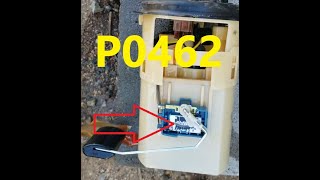
![How to Fix HONDA P0462 Engine Code in 2 Minutes [1 DIY Method / Only $11.9]](https://img.youtube.com/vi/OCSiN8nZtqU/mqdefault.jpg)
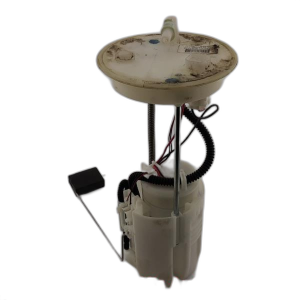
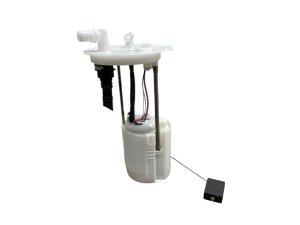
Used OEM Parts in Stock
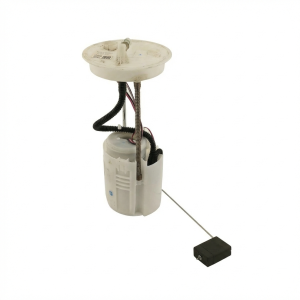
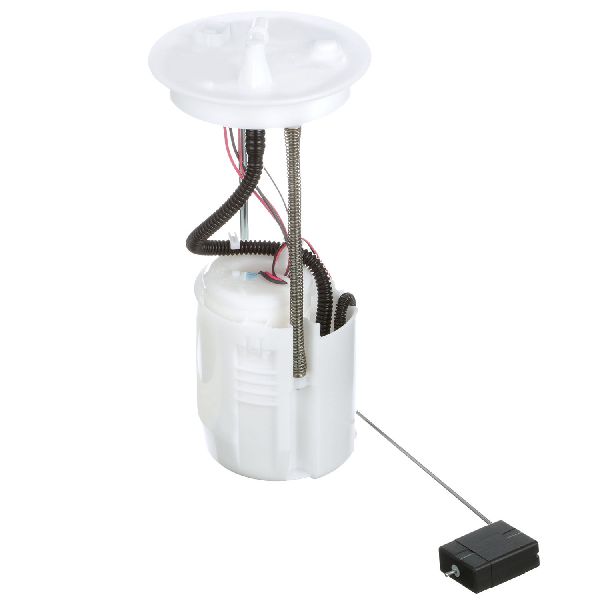
New Aftermarket Parts Available


The information in this article is provided for general reference and educational purposes only. Vehicle specifications, procedures, and part compatibility can vary by production date, trim level, and region. Always consult your vehicle's factory service manual and verify part numbers before purchasing or performing repairs. Safety-critical components such as airbags, seat belts, and braking systems should be installed by a qualified professional.
- Honda Pilot:
- 🧭 Diagnostic Flowchart
- 🎬 Helpful Videos
- 🛍️ Shop This Part
- What's Unique About the 2016-2022 Honda Pilot
- Symptoms You May Notice
- Most Likely Causes
- Rare But Worth Checking
- Diagnosis Steps
- Parts You'll Likely Need
- Technical Service Bulletins (TSBs) & Recalls
- Platform-Specific Known Issues
- Mechanic-Grade Diagnostic Values
- Scan Tool Commands That Help
- Wiring & Ground Locations
- Real Owner Repair Stories
- OEM Part Supersession History
- Model Year Variations Within This Range
- Other Known Issues on This Vehicle
- Used vs. New Parts: Buying Guide for This Vehicle
- Real Owner Stories
- 2016-2021 Honda Pilot
- 2016-2021 Honda Pilot
- Related OBD-II Codes
- Frequently Asked Questions
- 🎟️ Get 5% Off