

P0462 on 2010-2015 Hyundai Tucson: Fuel Level Sensor Circuit Low Causes and Fixes
For a 2010-2015 Hyundai Tucson, code P0462 almost always means the fuel level sending unit inside the gas tank has failed. The fuel gauge will be inaccurate or stuck on empty. This code is triggered when the sensor's voltage signal to the PCM drops below the specified threshold, typically under 0.5 volts. Replacing the sender, which is often part of the fuel pump module, is the most common fix. Some models, particularly AWD, have two sending units, so proper diagnosis of which sensor ('A' or 'B'
- P0462 on a 2010-2015 Tucson means your fuel gauge is unreliable due to a low voltage signal (below 0.5V) from the primary fuel level sensor.
- The most likely culprit is a failed fuel level sending unit located inside the fuel tank, which is a very common point of failure due to wear on the resistor.
- You can continue to drive the vehicle, but you must track your mileage with the trip odometer to avoid running out of fuel.
- Before replacing parts, check the wiring and connector at the top of the fuel tank for any obvious damage or corrosion, as this can also cause a short.
- DIY replacement is possible for those comfortable with working around the fuel system, but requires safety precautions like disconnecting the battery and working in a well-ventilated area.
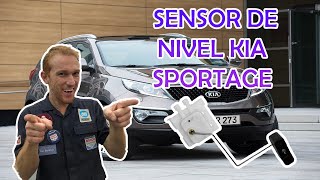
- The Kia Sportage from the same era (2010-2015) is a direct platform mate and suffers from the exact same issue with the same parts.
What's Unique About the 2010-2015 Hyundai Tucson
On the second-generation Hyundai Tucson (and its platform-mate, the Kia Sportage), this code is a very common and straightforward issue. The fuel level sensor, also known as the sending unit, is integrated into the fuel pump assembly. Some configurations, especially All-Wheel Drive (AWD) models, use a saddle-style fuel tank that requires two sending units: a primary one with the pump (Sensor 'A') and a secondary, standalone one (Sensor 'B'). P0462 specifically points to Sensor 'A'. While some other Hyundai models are known for instrument cluster failures causing similar symptoms, for the 2010-2015 Tucson, the cause of P0462 is overwhelmingly the sending unit itself or its associated wiring.
Symptoms You May Notice
- Check Engine Light is on
- Fuel gauge is stuck on empty
- Fuel gauge fluctuates erratically or reads inaccurately
- Low fuel warning light stays on even with fuel in the tank
- Fuel gauge does not change after refueling.
- Replacing the entire fuel pump assembly when only the sending unit has failed. While they are housed together, sometimes the sender can be replaced separately for less cost.
- Replacing the fuel pump/sender when the actual fault is a corroded connector or a chafed wire leading to the tank.
- On AWD models, replacing the primary sending unit (Sensor 'A') when the fault lies with the secondary sending unit (Sensor 'B'), or vice-versa. A proper scan tool can often specify which sensor circuit is at fault.
Most Likely Causes
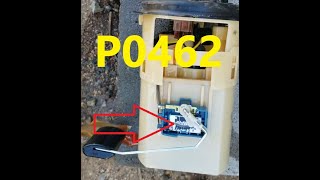
- Faulty Fuel Level Sending Unit 🔴 High Probability → Shop Fuel Tank Sending Unit The variable resistor contacts on the sensor's circuit board wear out over time or can be damaged by fuel contaminants or corrosion, leading to an internal short or open that sends a constant low voltage signal. This is a very common failure point.
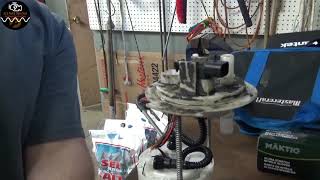
How to confirm: Access the top of the fuel pump module (under the rear seat). Disconnect the sensor and measure its resistance with a multimeter while manually moving the float arm. 🎬 See this walkthrough on testing and replacing the level sensor. The resistance should change smoothly. If it reads a constant low resistance or is open, the sender is bad. A more practical in-vehicle test is to rock the car side-to-side to slosh the fuel; if a multimeter connected to the sensor signal wire shows no change in resistance/voltage, the sender is likely stuck or failed.
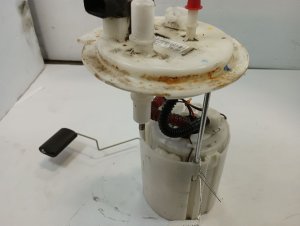
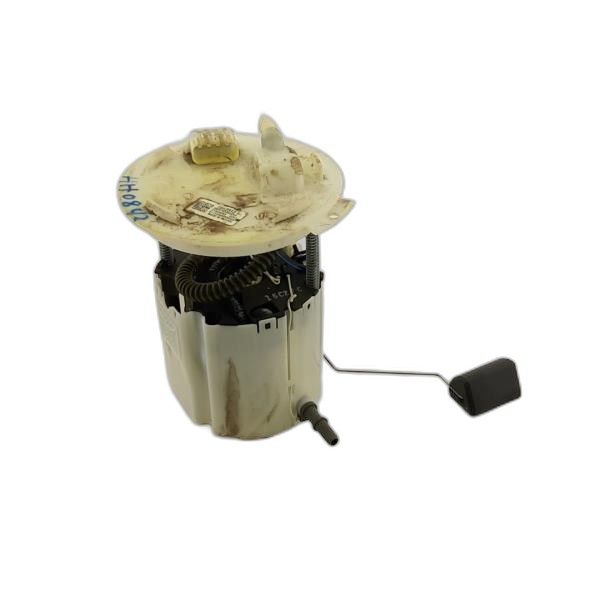
Typical fix: Replace the fuel level sending unit. On this vehicle, it is often sold as part of the entire fuel pump module (Part No. 31110-2S500), but the sender may be available separately (Part No. 94460-2S000 or 94460-2S500).
Est. part cost: $50-$150 - Shorted Signal Wire or Damaged Connector 🟡 Medium Probability The wiring harness leading to the fuel tank can become damaged or corroded over time. The main connector on top of the fuel pump assembly is exposed to dirt and moisture ingress from underneath the vehicle, which can lead to corroded pins and a short to ground.
How to confirm: Visually inspect the wiring harness running to the fuel tank for any signs of chafing, breaks, or corrosion. Unplug the electrical connector at the fuel pump module and check for bent, loose, or corroded pins. A continuity test with a multimeter can find a short to ground in the signal wire between the PCM and the fuel tank connector.
Typical fix: Repair the damaged section of the wire or clean/replace the faulty connector.
Est. part cost: $10-$50
Rare But Worth Checking
- Faulty Instrument Cluster: → Shop Instrument Cluster While rare for this specific Tucson generation, a failure within the instrument cluster's circuitry (e.g., a cracked solder joint) can cause it to misinterpret a valid signal from the fuel level sensor. This has been documented as a more common cause on other Hyundai models like the Sonata and on vehicles from other brands like Dodge. This should only be considered after the sensor and wiring have been proven to be good.
- Powertrain Control Module (PCM) Fault: This is extremely rare. A failure of the PCM's internal driver for the fuel level circuit could trigger the code. This is the last thing to suspect after all other possibilities are exhausted.
Diagnosis Steps
- Read the code with an OBD-II scanner to confirm P0462 is present.
- Use the scanner's live data function to observe the 'Fuel Level Sensor' voltage. A reading consistently below 0.5V (or even 0.2V) points to a circuit low condition.
- To avoid running out of gas, use your trip odometer to track mileage until the repair is made.
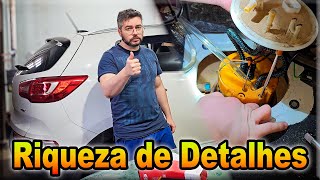
- Gain access to the fuel pump module, which is located under the rear seat cushion. You will likely need to remove the seat bottom. 🎬 Watch: Accessing the fuel pump module on a 2010 Tucson.
- Disconnect the battery before proceeding.
- Unplug the electrical connector from the fuel pump module. Inspect it for any signs of corrosion, moisture, or damage.
- Identify the wires for the fuel level sensor using a wiring diagram for your vehicle. Test for a short to ground on the signal wire.
- Perform a resistance test on the sensor's pins at the module. A typical Hyundai/Kia sender might have a range like 7 Ohms (Full) to 110 Ohms (Empty), though exact specs should be verified. If the resistance is stuck at a very low value or doesn't change when the car is rocked side-to-side, the sending unit is bad.
- If you remove the unit, move the float arm by hand and watch for a smooth change in resistance on a multimeter. Any jumps or dead spots indicate failure.
- If wiring and the sensor are confirmed to be good, the problem may lie with the instrument cluster or PCM, which requires more advanced diagnostics.
Parts You'll Likely Need
- Fuel Level Sensor (Sending Unit)
(OEM #94460-2S000 or 94460-2S500)— This is the most common failure point for code P0462. The internal resistor wears out, causing a permanent low voltage signal. Note: 94460-2S000 is often cited for 2010-2013 models, while 94460-2S500 may apply to later models or be an updated part number.
Trusted brands: Hyundai Genuine, Kia Genuine, Bosch, Delphi
OEM price range: $100-$160
Aftermarket price range: $60-$110 - Fuel Pump Assembly
(OEM #31110-2S500)— In many cases, the sending unit is sold as part of the complete fuel pump assembly. This part includes the fuel pump, filter, and the level sensor. This is a more expensive but often more convenient repair.
Trusted brands: Hyundai Genuine, Denso, Carter
OEM price range: $250-$350
Aftermarket price range: $150-$220
Technical Service Bulletins (TSBs) & Recalls
- No specific Technical Service Bulletins (TSBs) for P0462 on the 2010-2015 Tucson were found. The issue is generally addressed as a standard component failure.
Platform-Specific Known Issues
- On AWD models with a saddle tank, there are two fuel level sensors. P0462 refers to sensor 'A', which is typically the one integrated with the main fuel pump on the driver's side. A different code (like P0463 or one for sensor 'B') would indicate a problem with the other sensor.
Mechanic-Grade Diagnostic Values
- Fuel Level Sensor Signal Voltage — expected: 0.5V (Empty) to 4.5V (Full) on a 5V reference system.. Failure: A reading consistently below 0.5V, and often under 0.2V, will trigger P0462.
- Fuel Level Sensor Resistance — expected: Approximately 7 Ohms (Full) to 110 Ohms (Empty). Note: These are typical Hyundai values and should be verified.. Failure: A reading of 0 ohms indicates a shorted sensor. An open circuit (infinite resistance) or a value that does not change smoothly when moving the float arm indicates a failed sensor.
- Sensor Ground Wire to Chassis Ground — expected: < 1.0 Ohm. Failure: A reading greater than 1.0 Ohm indicates high resistance in the ground circuit, which can cause incorrect voltage readings.
Hidden / Shadow Codes Worth Checking
- U0155: Lost Communication With Instrument Panel Cluster (IPC) Control Module. This is not a shadow code for P0462, but its presence alongside P0462 would strongly suggest the instrument cluster is the root cause of the fault, rather than the fuel sender itself. (see via Standard OBD-II scanner.)
Scan Tool Commands That Help
- Professional Scan Tool (e.g., Hyundai GDS, Autel, iCarsoft): Instrument Cluster Self-Test / Gauge Sweep — After verifying the sensor and wiring are good, use this command to force the instrument cluster to sweep all its gauges, including the fuel gauge. If the fuel gauge fails to move or behaves erratically during the self-test, it confirms a fault within the instrument cluster itself.
Wiring & Ground Locations
- Fuel Pump Assembly Connector — On top of the fuel pump module, accessed by removing the rear seat bottom cushion.. This is the primary connection point for the fuel level sensor. It is a 6-pin connector on many models. The pins for the level sensor signal and ground must be tested here for voltage, resistance, and continuity. Corrosion or damage to these specific pins is a common cause of P0462.
- ECM Pin 71 — At the Engine Control Module (ECM) harness connector.. On some diagrams, this pin is listed as the 'Fuel Pump Relay control output'. While this controls the pump itself, the sensor signal wire will also terminate at the ECM/PCM. A vehicle-specific wiring diagram is required to identify the exact pin for the Fuel Level Sensor 'A' signal to test for shorts or opens between the tank and the module.
OEM Part Supersession History
94460-2S000→94460-2S500— Standard part revision or supplier change.
Heads up: Generally considered interchangeable for 2010-2013 models, but verifying with VIN is recommended.94460-2S600→94460-2S601— Part revision for 2014+ models.
Heads up: These parts are for 2014-2015 models, particularly AWD versions, and are not compatible with pre-2014 vehicles due to changes from the model refresh.
Model Year Variations Within This Range
- 2014-2015: The 2014 model year marked a significant refresh for the Tucson, including new GDI engines and revised trim levels. The fuel level sending unit part number changed for these models, especially for AWD configurations, to 94460-2S600 (later 94460-2S601). Using a sender from a 2010-2013 model (e.g., 94460-2S500) in a 2014+ vehicle may not work correctly.
Diagnostic Flowchart
Used vs. New Parts: Buying Guide for This Vehicle
When a used part is the smart pick: Almost never. The fuel level sender is a wear item with a moving contact on a resistor board. A used part from a junkyard likely has significant wear and could fail soon after installation, forcing you to do the job twice. It only makes sense if the donor vehicle has exceptionally low mileage (under 30,000 miles) and the part is significantly cheaper.
Donor-vehicle mileage cap: roughly under 30000 miles for the part to have meaningful remaining life.
What to inspect on the donor part:
- Verify the part number on the used unit matches the required part for your vehicle's year and drivetrain (AWD/FWD).
- Inspect the electrical connector for any signs of corrosion, melting, or damaged pins.
- If possible, test the resistance of the used part before purchase by manually moving the float arm and ensuring the resistance changes smoothly without dropouts.
OEM-only on this vehicle (don't cheap out):
- No parts in this repair are strictly OEM-only.
Aftermarket brands forum-validated for this vehicle:
- Delphi
- Bosch
- Spectra Premium
- Denso
Brands owners have reported issues with on this vehicle:
- Unbranded, no-name parts sold on marketplace sites without a warranty or clear return policy should be avoided, as their internal resistor quality can be poor, leading to premature failure.
Real Owner Stories
Aggregated from forums and TSBs cited above. Mileages and costs reflect what owners reported in those sources.
2010 Hyundai Sonata
Symptoms: The P0462 code was still present even after replacing the entire fuel pump assembly. A scanner showed a 0-volt reading from the sensor.
What fixed it: The problem was diagnosed as a short to ground in the signal wire between the PCM and the fuel tank, which required a wiring repair.
Source hint: CarKiller.com Forums: A user with a 2010 Hyundai Sonata (a close relative) posted about having P0462 even after replacing the fuel pump assembly
Related OBD-II Codes
Frequently Asked Questions
My 2012 Tucson is All-Wheel Drive. Does that change the diagnosis for a P0462 code?
Where is the fuel level sensor located on my 2010-2015 Tucson?
Do I have to buy the entire expensive fuel pump assembly to fix this, or can I just replace the sensor?
Are there any official recalls or TSBs from Hyundai for the P0462 code on this Tucson?
My fuel gauge is stuck on empty because of this code. How can I avoid running out of gas before I get it fixed?
Is it a good idea to buy a used fuel level sensor from a junkyard for my Tucson?
Does the Kia Sportage from the same era have this same fuel gauge problem?
Helpful Videos

Used OEM Parts in Stock
New Aftermarket Parts Available


The information in this article is provided for general reference and educational purposes only. Vehicle specifications, procedures, and part compatibility can vary by production date, trim level, and region. Always consult your vehicle's factory service manual and verify part numbers before purchasing or performing repairs. Safety-critical components such as airbags, seat belts, and braking systems should be installed by a qualified professional.
- Hyundai Tucson:
- 🧭 Diagnostic Flowchart
- 🎬 Helpful Videos
- 🛍️ Shop This Part
- What's Unique About the 2010-2015 Hyundai Tucson
- Symptoms You May Notice
- Most Likely Causes
- Rare But Worth Checking
- Diagnosis Steps
- Parts You'll Likely Need
- Technical Service Bulletins (TSBs) & Recalls
- Platform-Specific Known Issues
- Mechanic-Grade Diagnostic Values
- Hidden / Shadow Codes Worth Checking
- Scan Tool Commands That Help
- Wiring & Ground Locations
- OEM Part Supersession History
- Model Year Variations Within This Range
- Used vs. New Parts: Buying Guide for This Vehicle
- Real Owner Stories
- 2010 Hyundai Sonata
- Related OBD-II Codes
- Frequently Asked Questions
- 🎟️ Get 5% Off