

P0462 on 2016-2017 Nissan Quest: Fuel Level Sensor Circuit Low Causes and Fixes
On a 2016-2017 Nissan Quest, code P0462 almost always means the fuel level sensor inside the gas tank has failed. This will cause an inaccurate or empty fuel gauge. A Nissan Technical Service Bulletin (NTB22-026) confirms the sensor can be replaced separately from the more expensive fuel pump assembly, making for a cost-effective repair. Accessing the sensor requires removing the second-row seats and pulling back the carpet to get to an access panel.
- P0462 on a 2016-2017 Quest almost always points to a failed fuel level sensor.
- Your primary symptom will be an inaccurate or non-functional fuel gauge and a Check Engine Light.
- Per Nissan TSB NTB22-026, you should only replace the fuel level sensor (Part No. 25060-1JA0A), not the entire fuel pump assembly, which saves considerable money.
- The repair involves removing the second-row seats and pulling back the carpet to access a service panel on the floor; the fuel tank does not need to be dropped.
- Before buying parts, inspect the wiring harness for damage, as this can sometimes be the cause.
What's Unique About the 2016-2017 Nissan QUEST
For this generation of Nissan Quest, the P0462 code is a well-documented issue. Nissan released a Technical Service Bulletin (NTB22-026) that covers this exact code across many of its 2016-2022 models. The bulletin highlights that the fuel level sensor is a common failure point and, importantly, clarifies that the sensor can be replaced as a standalone part without needing to purchase the entire fuel pump module. Nissan explicitly warns dealerships that warranty claims for replacing the whole assembly for this issue will be charged back, reinforcing that only the sensor should be replaced.
Diagnostic Flowchart
Tap your situation to follow the diagnostic path that matches what you're seeing on this vehicle.
Symptoms You May Notice
- Check Engine Light is on
- Fuel gauge is inaccurate, erratic, or stuck on empty.
- Low fuel warning light may be on even with fuel in the tank.
- The 'Distance to Empty' calculation on the trip computer is inaccurate or shows dashes.
- Replacing the entire fuel pump assembly. The provided TSB NTB22-026 specifically advises against this, as the sensor is a separate, serviceable part. Replacing the whole assembly is unnecessarily expensive and goes against manufacturer guidance.
Most Likely Causes
- Failed Fuel Level Sensor (Sending Unit) 🔴 High Probability → Shop Fuel Tank Sending Unit This is a known common failure item acknowledged by Nissan in TSB NTB22-026. The internal variable resistor on the sensor wears out over time, causing the signal to become erratic or short out, sending a voltage below the specified range.
How to confirm: Using a scan tool to monitor live data from the fuel level sensor will likely show a fixed low voltage (e.g., <0.5V). The definitive test is to access the sensor and measure its resistance with a multimeter while moving the float arm. The resistance should change smoothly without any dead spots or open circuits. For similar Nissan platforms, the expected range is approximately 4 Ohms at full to 40 Ohms at empty. A reading that is near zero, infinite, or jumps erratically confirms a faulty sensor.
Typical fix: Replace the fuel level sensor. Per TSB NTB22-026, the sensor can be replaced separately from the fuel pump assembly. This requires accessing the top of the fuel tank, which on the Quest is done by removing the second-row seats, pulling back the carpet, and opening a service panel on the floor. Always replace the fuel pump module gasket at the same time.
Est. part cost: $110-$175 - Wiring or Connector Issue 🟡 Medium Probability The wiring harness runs underneath the vehicle to the fuel tank, making it susceptible to damage from road debris and moisture, which can lead to corrosion or a short to ground.
How to confirm: Visually inspect the wiring harness leading to the fuel pump module for any signs of damage, corrosion, or loose connections. The connector is located on top of the fuel tank, accessible under the rear carpet. Use a multimeter to check for a short to ground on the signal wire; resistance to a known good chassis ground should be very high (over 10,000 ohms). Also check for continuity on the signal and ground wires between the pump connector and the PCM.
Typical fix: Repair or replace the damaged section of the wiring harness or clean/replace the corroded connector.
Est. part cost: $5-$50
Rare But Worth Checking
- Faulty Instrument Cluster or Body Control Module (BCM): → Shop Instrument Cluster This is uncommon. Before suspecting the cluster or BCM, all sensor and wiring issues must be definitively ruled out. A faulty module might fail to correctly interpret a good signal from the sensor. A forum user with a similar issue on an older Quest considered this after other checks failed.
- Faulty Powertrain Control Module (PCM): PCM failure is extremely rare but possible. This should only be considered after all other possibilities have been exhausted by a professional.
Diagnosis Steps
- Scan for Codes: Use an OBD-II scanner to confirm P0462 is the primary code and check for any other related codes like P0461 or P0463.
- Check Live Data: Use a scan tool to observe the fuel level sensor voltage. If it's stuck at a very low value (e.g., <0.5V) regardless of the actual fuel level, it points towards a circuit low issue.
- Access the Fuel Pump Module: On the 2011-2017 Quest, this involves removing the second-row seats (driver or passenger side depending on which sensor is 'A') and pulling back the floor carpet to expose a metal access plate.
- Inspect Wiring: With the access plate removed, perform a thorough visual inspection of the fuel pump wiring harness and connector for any obvious damage, corrosion, or loose connections.
- Test the Sensor Circuit: Disconnect the fuel pump module connector. Use a multimeter to check for reference voltage and a good ground at the connector. Check the signal wire for a short to ground.
- Test the Sensor Resistance: Measure the resistance across the fuel level sensor pins on the module connector. Compare the reading to the manufacturer's specification (a similar Nissan platform uses a range of approx. 4 ohms full to 40 ohms empty). Manually move the float arm (if accessible after removing the unit) and watch for a smooth sweep on the multimeter. Any dropouts or infinite readings indicate a bad sensor.
- Isolate the Fault: If the wiring and sensor test good, the issue may lie with the instrument cluster or PCM, which would require more advanced diagnostics.
Parts You'll Likely Need
- Fuel Level Sensor
(OEM #25060-1JA0A)— This is the most common cause of code P0462 on this vehicle, as confirmed by Nissan's own service bulletin. The sensor's internal resistor fails over time.
Trusted brands: Nissan Genuine, Dorman, Hitachi
OEM price range: $150-$175
Aftermarket price range: $110-$140 - Fuel Pump Module Gasket / Seal
(OEM #17342-1HJ0A)— This seal should always be replaced whenever the fuel pump module is removed from the tank to prevent fuel leaks and future EVAP system codes.
Trusted brands: Nissan Genuine, Fel-Pro
OEM price range: $20-$30
Aftermarket price range: $10-$20
Related Codes That Often Appear With This One
- P0463 — This code is for 'Fuel Level Sensor Circuit High Input'. Seeing both P0462 and P0463 can point to a failing sensor or intermittent wiring issue causing the signal to swing between both extremes.
- P0461 — This code means 'Fuel Level Sensor Circuit Range/Performance'. It often appears when the sensor's signal is erratic or illogical, which is a common symptom of a failing sensor that also triggers P0462.
- P0460 — This code for 'Fuel Level Sensor Circuit Malfunction' is a more general fault that can accompany P0462, indicating a problem within the circuit. It is also covered by TSB NTB22-026.
Technical Service Bulletins (TSBs) & Recalls
- NTB22-026: 'SERVICE INFORMATION FOR FUEL GAUGE INACCURATE WITH DTCS STORED IN ECM' - This bulletin, dated April 5, 2022, confirms that for codes P0460, P0461, P0462, or P0463, the fuel level sensor can be replaced separately from the fuel pump assembly. It warns that warranty claims for replacing the entire assembly will be charged back.
Platform-Specific Known Issues
- A Technical Service Bulletin (NTB22-026) was issued by Nissan for a range of vehicles, including the Quest, for this specific code. It explicitly states to replace only the fuel level sensor, not the entire fuel pump assembly, to correct the issue.
- Access to the fuel pump and sensor is inside the cabin, under the second-row seats and carpet. This avoids having to drop the fuel tank but requires significant interior disassembly.
Mechanic-Grade Diagnostic Values
- Fuel Level Sensor Signal Voltage — expected: 0.5V (Empty) to 4.5V (Full) on a 5V reference system.. Failure: A consistent reading below 0.5V, especially under 0.2V, confirms a 'Circuit Low' condition.
- Fuel Level Sensor Resistance — expected: Approximately 4 Ohms (Full) to 40 Ohms (Empty). Must show a smooth, linear change when moving the float.. Failure: A reading near 0 Ohms (short), infinite Ohms (open circuit), or erratic jumps indicates a failed sensor.
- Ground Circuit Resistance at Connector — expected: < 1.0 Ohm between the ground pin and a clean chassis ground.. Failure: Resistance greater than 1.0 Ohm indicates a poor ground connection, which can cause incorrect readings.
Scan Tool Commands That Help
- Advanced OBD-II Scanner (e.g., Nissan CONSULT, iCarsoft, Autel): Signal Simulation / Actuator Test — After confirming the sensor and wiring are good, use this function to send a simulated voltage signal to the instrument cluster. If the gauge responds correctly, it proves the cluster is working, pointing back to an issue with the sensor or wiring. If the gauge does not respond, the fault is likely in the cluster or a related control module.
- Advanced OBD-II Scanner or Manual Procedure: Fuel Gauge Reset / Calibration — After a repair, if the gauge reads incorrectly or the 'Distance to Empty' is not updating, a reset may be needed. Some scanners have a specific function for this. A manual reset involving the trip/odo button may also be possible for some display issues.
Wiring & Ground Locations
- Fuel Pump Module Connector — On top of the fuel pump assembly, located under a metal access panel beneath the second-row seats and carpet.. This is the primary connection point for testing the fuel level sensor circuit, including signal voltage, resistance, and ground integrity, without dropping the fuel tank.
- Fuel Pump Ground Path — The ground for the fuel level sensor is often not a direct chassis ground at the tank. It is typically routed through the Fuel Pump Control Unit (FPCU).. Technicians should not assume a bad ground at the tank connector. The ground path must be tested back to the FPCU. Grounding the sensor wire directly to the chassis will bypass the FPCU and may cause the pump to run at full speed, which is not a valid test for the sensor circuit.
Real Owner Repair Stories
- G35Driver Forum User (Infiniti G35 (related Nissan platform)) — P0462 code, fuel gauge always shows empty.
❌ Tried (didn't work) Replacing the driver's side sending unit., Replacing the entire passenger side fuel pump assembly., Running the instrument cluster self-diagnostic test (all needles swept correctly).
✅ What actually fixed it Another user reported the final fix was repairing a broken or frayed wire found in the wiring harness located under the back seat after pulling back the sheathing. - Go-Parts Repair Article / Forum Consensus (Nissan 370Z / Infiniti G37 (related platforms)) — P0462 code and erratic fuel gauge, even after sensor replacement.
❌ Tried (didn't work) Replacing one or both fuel level sensors.
✅ What actually fixed it The fault was traced to the 'Unified Meter and A.C. Amplifier' module located behind the radio. The issue was caused by cracked solder joints on resistors inside the module. The fix was to either re-solder the joints on the circuit board or replace the module with a used unit.
OEM Part Supersession History
25060-1JA0A→No supersession found.
Heads up: This part number is confirmed for the 2016-2017 Quest.
Model Year Variations Within This Range
- 2016-2017: No significant variations related to the fuel level sensing system or the P0462 fault are documented between the 2016 and 2017 model years. Both are covered by the same TSB and use the same primary replacement parts.
Helpful Videos
![How to Fix P0462 Engine Code in 2 Minutes [1 DIY Method / Only $11.56]](https://img.youtube.com/vi/JB1Oef5z7II/mqdefault.jpg)

We Have This Part in Stock

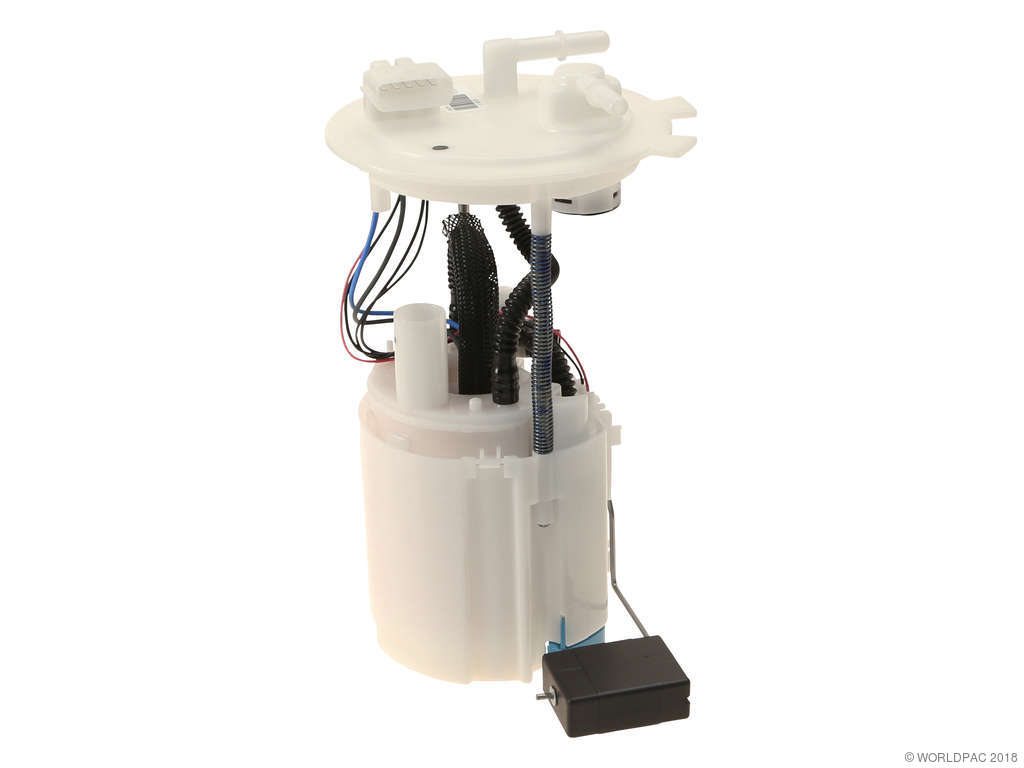
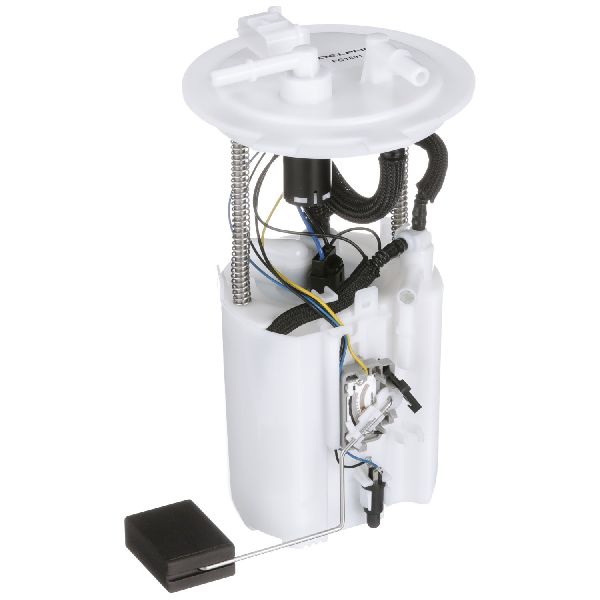

The information in this article is provided for general reference and educational purposes only. Vehicle specifications, procedures, and part compatibility can vary by production date, trim level, and region. Always consult your vehicle's factory service manual and verify part numbers before purchasing or performing repairs. Safety-critical components such as airbags, seat belts, and braking systems should be installed by a qualified professional.
- Nissan QUEST:
- 🧭 Diagnostic Flowchart
- 🎬 Helpful Videos
- 🛍️ Shop This Part
- What's Unique About the 2016-2017 Nissan QUEST
- Symptoms You May Notice
- Most Likely Causes
- Rare But Worth Checking
- Diagnosis Steps
- Parts You'll Likely Need
- Related Codes That Often Appear With This One
- Technical Service Bulletins (TSBs) & Recalls
- Platform-Specific Known Issues
- Mechanic-Grade Diagnostic Values
- Scan Tool Commands That Help
- Wiring & Ground Locations
- Real Owner Repair Stories
- OEM Part Supersession History
- Model Year Variations Within This Range
- 🎟️ Get 5% Off