

P0462 on 2014-2019 Toyota Corolla: Fuel Level Sensor Circuit Low Causes and Fixes
This code means the fuel gauge is likely inaccurate or stuck on empty. The most common cause on a 2014-2019 Corolla is a failed fuel level sending unit, which is part of the in-tank fuel pump assembly. Replacing the entire assembly is the usual fix.
- P0462 on a 2014-2019 Corolla means your fuel gauge is unreliable because the computer is getting a low voltage signal from the fuel level sensor.
- The most probable cause is a failed fuel level sending unit, which is part of the fuel pump assembly inside the gas tank.
- The standard fix is to replace the entire fuel pump module. This is not a beginner-friendly DIY job due to the fire hazard associated with handling fuel.
- Before buying parts, check the wiring and connector at the top of the fuel tank for corrosion or damage, as this can sometimes be a simple fix.
- Do not drive the vehicle for long distances, as you risk running out of fuel unexpectedly.
What's Unique About the 2014-2019 Toyota Corolla
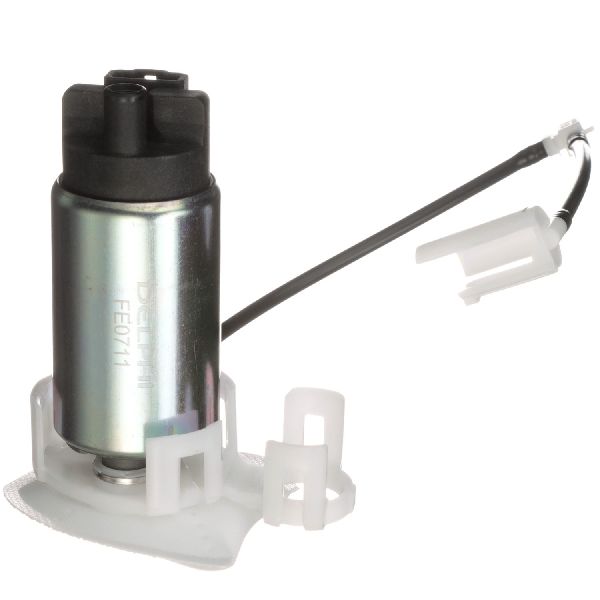
For the 11th generation Toyota Corolla (2014-2019), this code is a straightforward issue almost always pointing to the fuel sending unit. Unlike some vehicles with complex body control modules tied into the fuel system, the Corolla's system is relatively simple. The fuel level sensor is integrated into the fuel pump module in the tank, making a complete module replacement the most common and practical repair. A specific failure mode noted for this model is a worn-out resistor track on the sensor. While the sending unit is part of the main fuel pump assembly, some sources indicate the sender (gauge assembly) can be purchased and replaced separately from the pump motor itself.
Symptoms You May Notice
- Check Engine Light is on
- Fuel gauge is stuck on empty or reads inaccurately.
- Low fuel warning light stays on even with fuel in the tank.
- Fuel gauge reading fluctuates erratically or drops to zero intermittently.
- Gauge does not change after refueling.
- Replacing only the fuel pump motor when the issue is the integrated sending unit.
- Replacing the instrument cluster before thoroughly testing the sending unit and its wiring.
- Assuming the code always means a bad part without checking for wiring corrosion first.
Most Likely Causes
- Failed Fuel Level Sending Unit 🔴 High Probability → Shop Fuel Tank Sending Unit The sending unit is a wear item. The float arm moves across a variable resistor, and the resistor track can wear out over time, creating a short or an open circuit that results in a low voltage signal. This is the most common point of failure for this code on this vehicle.
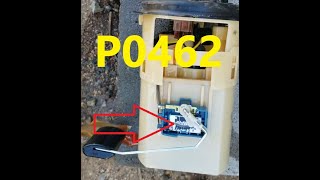
How to confirm: Access the fuel pump connector and measure the resistance of the sending unit with a multimeter. 🎬 See how to test and replace a fuel level sensor For this Corolla generation, the expected resistance is approximately 13.5-16.5 Ω when the tank is full and 405.5-414.5 Ω when empty. A reading near zero or infinite ohms (open circuit) confirms a failed sender. A 2017 Corolla with P0462 was diagnosed with a worn resistor track causing a constant low voltage reading of 0.3V.
Typical fix: Replace the entire fuel pump module assembly, which includes the fuel pump, filter, and the sending unit. Alternatively, the fuel sender gage assembly can sometimes be replaced separately.
Est. part cost: $250-$550 - Wiring Harness or Connector Issue 🟡 Medium Probability The main electrical connector on top of the fuel tank can be exposed to moisture and road salt, leading to corrosion on the pins (often appearing as green or white powder). Wires can also become chafed or damaged from road debris, leading to a short to ground.
How to confirm: Visually inspect the wiring harness and connector leading to the fuel pump assembly for any signs of corrosion, damage, or loose pins. Perform a voltage and ground test at the connector. With the key on, you should see a reference voltage (often 5V or 12V) from the PCM.
Typical fix: Clean the corroded connector pins with electrical contact cleaner and apply dielectric grease. If corrosion is severe, the connector pigtail may need to be replaced.
Est. part cost: $10-$50 for a connector pigtail
Rare But Worth Checking
- Faulty Instrument Cluster: → Shop Instrument Cluster While rare, the instrument cluster (combination meter) itself can fail, causing it to misinterpret a correct signal from the fuel level sensor. This is usually suspected only after the sending unit and wiring have been confirmed to be good. On some vehicles, the cluster is part of the sensor circuit and a bad solder joint can cause this issue.
- Faulty Powertrain Control Module (PCM): This is extremely unlikely. The PCM is the last component to suspect. All other possibilities, including the sensor, wiring, and instrument cluster, should be exhaustively ruled out before considering a PCM failure.
- Stuck Float Arm: In very rare cases, especially if a vehicle has been sitting for a long period, the float arm itself can become physically stuck in the empty position due to sediment or rust in the tank.
Diagnosis Steps
- Read the code with an OBD-II scanner and confirm P0462 is present. Note any other codes like P0463.
- Observe the fuel gauge. Note if it is stuck on empty, full, or behaving erratically.
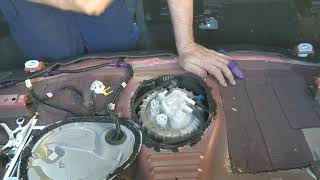
- Gain access to the fuel pump assembly, which is under the rear seat in a Toyota Corolla. 🎬 Watch: How to remove the Corolla fuel pump and sender unit
- Visually inspect the electrical connector on top of the fuel pump module for corrosion, bent pins, or damaged wires.
- With the key on, use a multimeter to check for proper reference voltage (typically 5V or 12V) and ground at the connector according to the vehicle's wiring diagram.
- Disconnect the connector and measure the resistance (Ohms) across the two pins for the fuel level sender.
- Compare the resistance reading to the manufacturer's specifications. For this Corolla, the range is approximately 13.5-16.5 Ω (Full) to 405.5-414.5 Ω (Empty). A reading of near zero or infinite resistance indicates a failed sender.
- If possible, watch the resistance reading while gently rocking the vehicle side-to-side. The reading should fluctuate as the fuel sloshes and moves the float. If it doesn't change, the sender is likely bad or stuck.
- If the sender and wiring test good, the problem may lie with the instrument cluster or, very rarely, the PCM.
Parts You'll Likely Need
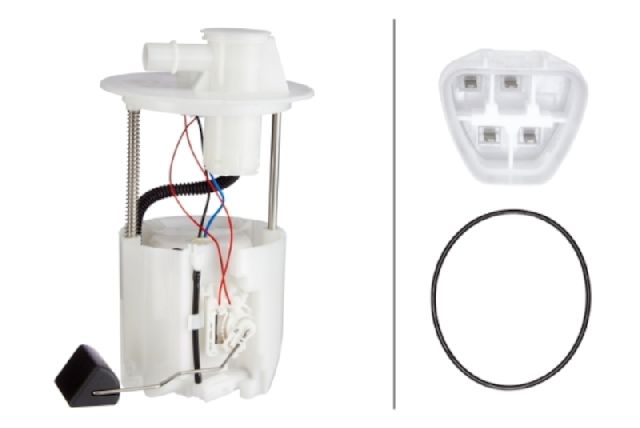
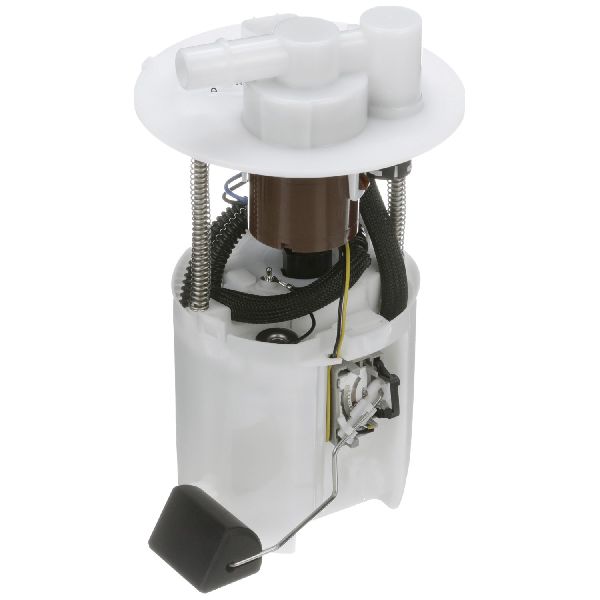
- Fuel Pump Module Assembly
(OEM #77020-02411 (replaces 77020-02410))— This is the most common failure. The fuel level sending unit is integrated into this assembly, and replacing the entire module is the standard repair. This part is confirmed to fit 2014-2019 Corollas.
Trusted brands: Toyota (Genuine OEM), Denso, Delphi, Spectra Premium
OEM price range: $390-$570
Aftermarket price range: $120-$250
Related Codes That Often Appear With This One
- P0463 — This code means "Fuel Level Sensor 'A' Circuit High". It can appear intermittently along with P0462 if the sensor's internal resistor is failing and causing erratic, out-of-range signals in both directions (too high and too low).
Technical Service Bulletins (TSBs) & Recalls
- TSB T-SB-0068-20: Addresses a squeak noise from the front lower suspension arm rear bushing, a common complaint for this generation.
Mechanic-Grade Diagnostic Values
- Fuel Level Sensor Resistance — expected: Approximately 13.5-16.5 Ω when full and 405.5-414.5 Ω when empty. The resistance should change smoothly when the float arm is moved.. Failure: A reading near zero ohms, infinite resistance (open circuit), or sudden jumps in the reading indicates a failed sensor.
- Fuel Level Sensor Signal Voltage (at PCM or sensor connector) — expected: Should range from approximately 0.5V (empty) to 4.5V (full) with the key on, engine off.. Failure: A constant reading below 0.5V (e.g., 0.3V as seen in a case study) or below 0.2V confirms a low circuit condition.
- Wiring Harness Continuity — expected: Less than 0.1 Ω on the signal and ground wires between the sensor connector and the PCM connector.. Failure: An infinite or very high resistance reading indicates a broken wire (open circuit).
Scan Tool Commands That Help
- Toyota Techstream: Active Test: Fuel Pump / Circuit Opening Relay — This command allows the technician to manually turn the fuel pump on and off. While primarily for testing the pump motor circuit, it can help confirm that the main relay and power supply to the fuel pump assembly are functioning, helping to isolate the fault to the sender unit's specific circuit.
- Professional OBD-II Scanner: Live Data / Data Stream: Fuel Level Sensor Voltage / Percentage — Monitor the fuel level sensor PID (Parameter ID). A value that is stuck at 0%, a very low number, or a voltage reading below 0.5V regardless of the actual fuel in the tank points directly to the circuit fault.
Wiring & Ground Locations
- Fuel Pump Assembly Connector — On top of the fuel pump assembly, accessible by removing the rear seat cushion and a metal service cover.. This is the primary test point. For diagnosis, the smaller wires (often yellow and pink) are for the level sensor, while the larger gauge wires (e.g., green and black/white) are for the fuel pump motor.
- EFI Fuse — In the under-hood fuse box, located on the driver's side of the engine bay. For the 2014-2018 Corolla, there are 10A fuses for the multiport fuel injection system and a 15A fuse for the injectors.. While a blown fuse is not a common cause for a circuit *low* code (which implies a short to ground), checking related fuses is a necessary preliminary step in any electrical diagnosis.
- C/OPN Relay (Circuit Opening Relay) — Located in the instrument panel junction block or engine room relay block, depending on the specific vehicle configuration.. This relay, controlled by the ECU, supplies power to the fuel pump. While a failure here typically causes a no-start condition rather than just a P0462, its circuit is intertwined with the overall fuel system wiring.
Real Owner Repair Stories
- iCarsoft US Case Study (2017 Toyota Corolla) — Check Engine Light on, fuel gauge stuck on empty.
✅ What actually fixed it Diagnosis found the fuel level sensor had a worn-out resistor track, causing a constant 0.3V signal. Replacing the fuel level sensor resolved the P0462 code.
OEM Part Supersession History
77020-02410→77020-02411— Standard part revision by the manufacturer. The newer part is a direct replacement.
Heads up: None. The parts are interchangeable.N/A→N/A— The fuel sender unit (gage assembly) can be purchased separately under part number 83320-02010, allowing for a more targeted and potentially cheaper repair than replacing the entire pump module.
Heads up: This part must be installed into the existing fuel pump module, which requires more disassembly of the unit.
Model Year Variations Within This Range
- 2014-09/2018: The primary fuel pump assembly part number 77020-02411 is specified for models built up to September 2018. While it fits the full 2014-2019 model year range according to most vendors, this production cutoff suggests a possible minor change for the very last 2019 models, though it does not appear to affect the diagnosis or common failure for P0462.
Diagnostic Flowchart
Other Known Issues on This Vehicle
Issues unrelated to this code that are worth knowing about as an owner of this generation:
- CVT Transmission Hesitation or Jerking 🟠 Medium — More common in 2014-2016 models. Some owners report jerking or momentary power loss. Often related to old fluid or early software programming. (Ref: Toyota issued Special Service Campaigns (e.g., J0D, JSD) for certain 2014-2017 models to address improper CVT programming that could lead to component wear.)
- Infotainment System Glitches (Freezing/Rebooting) 🟡 Low — Reported across the generation. Symptoms include the touchscreen becoming unresponsive, random system reboots, or failure of steering wheel controls. A failing battery can sometimes cause these symptoms. (Ref: TSB T-TT-0578-19 addresses Bluetooth connectivity concerns.)
- Squeaking Noise from Front Suspension 🟡 Low — Owners may hear a squeak or clunk from the front end when going over bumps or making turns. This is often due to worn front lower control arm bushings. (Ref: TSB T-SB-0068-20 was issued for a squeak noise from the front lower suspension arm rear bushing.)
- Timing Cover Oil Leak 🟠 Medium — A known issue where a leak develops from the front timing cover. It can be an expensive repair due to labor involved.
- Melting/Sticky Dashboard in Hot Climates 🟡 Low — While more prominent in earlier Toyota models, some owners in high-heat, high-humidity regions report dashboards becoming sticky or shiny, causing glare. This was part of a wider Toyota Warranty Enhancement Program (ZE6) for other models. (Ref: Not a formal recall for this generation, but Toyota has provided assistance for this issue on other models on a case-by-case basis.)
Used vs. New Parts: Buying Guide for This Vehicle
When a used part is the smart pick: A used fuel pump assembly from a low-mileage donor vehicle can be a cost-effective option, as the failure is typically a simple wear item (the sender resistor) and not a complex electronic module. Given the high cost of a new OEM assembly, a used part can save significant money.
Donor-vehicle mileage cap: roughly under 75000 miles for the part to have meaningful remaining life.
What to inspect on the donor part:
- Verify the donor vehicle's mileage. Aim for a part from a car with under 75,000 miles.
- Inspect the electrical connector pins on the used assembly for any signs of green or white corrosion or melted plastic.
- If possible, test the resistance of the sending unit before purchase. It should fall within the 13.5 Ω to 414.5 Ω range and not read as an open or short circuit.
- Ensure the float arm is physically intact and moves freely without binding.
OEM-only on this vehicle (don't cheap out):
- While not strictly 'OEM-only', the genuine Toyota/Denso part has the highest probability of long-term success. Fuel system components are critical and labor-intensive to replace, making reliability paramount.
Aftermarket brands forum-validated for this vehicle:
- Denso (The Original Equipment Manufacturer)
- Delphi
- Spectra Premium (Often cited as a reliable aftermarket option)
Brands owners have reported issues with on this vehicle:
- Generic, unbranded parts from online marketplaces should be avoided. Forum discussions often mention cheaper brands like Carter having higher failure rates, though experiences vary.
Real Owner Stories
Aggregated from forums and TSBs cited above. Mileages and costs reflect what owners reported in those sources.
2017 Toyota Corolla
Symptoms: The vehicle was throwing a P0462 code due to a worn resistor track on the sending unit, which resulted in a constant low voltage reading of 0.3V.
What fixed it: Diagnosis confirmed a failed sender due to wear on the resistor track.
Source hint: Article Context Pass 2 (Common Causes - Failed Fuel Level Sending Unit)
2014 Toyota Corolla
Symptoms: Infotainment system issues including an unresponsive touchscreen and non-functional buttons.
What fixed it: A failing battery was suggested as a possible cause for these electrical system glitches.
Source hint: Reddit r/COROLLA - 'Infotainment not working 2014'
Related OBD-II Codes
Frequently Asked Questions
Where is the fuel level sending unit located on my 2014-2019 Toyota Corolla?
What are the specific resistance values I should look for when testing the fuel sender on this Corolla generation?
Can I replace just the fuel sender, or do I need the whole pump assembly?
Does TSB T-SB-0068-20 relate to my P0462 fuel gauge issue?
Could a bad battery cause my fuel gauge and infotainment system to act up?
Is the Corolla iM hatchback prone to the same P0462 issues as the sedan?
Helpful Videos

![How to Fix P0462 Engine Code in 2 Minutes [1 DIY Method / Only $11.56]](https://img.youtube.com/vi/JB1Oef5z7II/mqdefault.jpg)
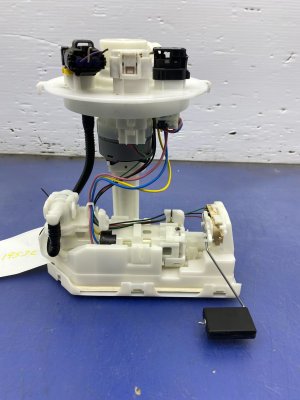
Used OEM Parts in Stock
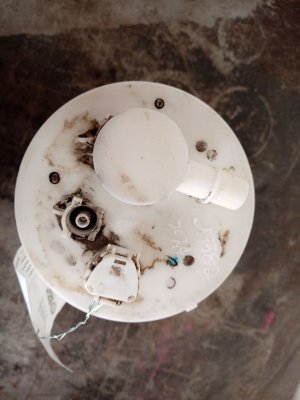
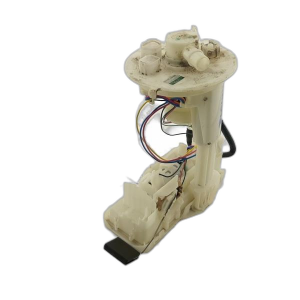
New Aftermarket Parts Available


The information in this article is provided for general reference and educational purposes only. Vehicle specifications, procedures, and part compatibility can vary by production date, trim level, and region. Always consult your vehicle's factory service manual and verify part numbers before purchasing or performing repairs. Safety-critical components such as airbags, seat belts, and braking systems should be installed by a qualified professional.
- Toyota Corolla:
- 🧭 Diagnostic Flowchart
- 🎬 Helpful Videos
- 🛍️ Shop This Part
- What's Unique About the 2014-2019 Toyota Corolla
- Symptoms You May Notice
- Most Likely Causes
- Rare But Worth Checking
- Diagnosis Steps
- Parts You'll Likely Need
- Related Codes That Often Appear With This One
- Technical Service Bulletins (TSBs) & Recalls
- Mechanic-Grade Diagnostic Values
- Scan Tool Commands That Help
- Wiring & Ground Locations
- Real Owner Repair Stories
- OEM Part Supersession History
- Model Year Variations Within This Range
- Other Known Issues on This Vehicle
- Used vs. New Parts: Buying Guide for This Vehicle
- Real Owner Stories
- 2017 Toyota Corolla
- 2014 Toyota Corolla
- Related OBD-II Codes
- Frequently Asked Questions
- 🎟️ Get 5% Off